This Is Why Palm Trees Are Often Planted In Odd Numbers In Florida
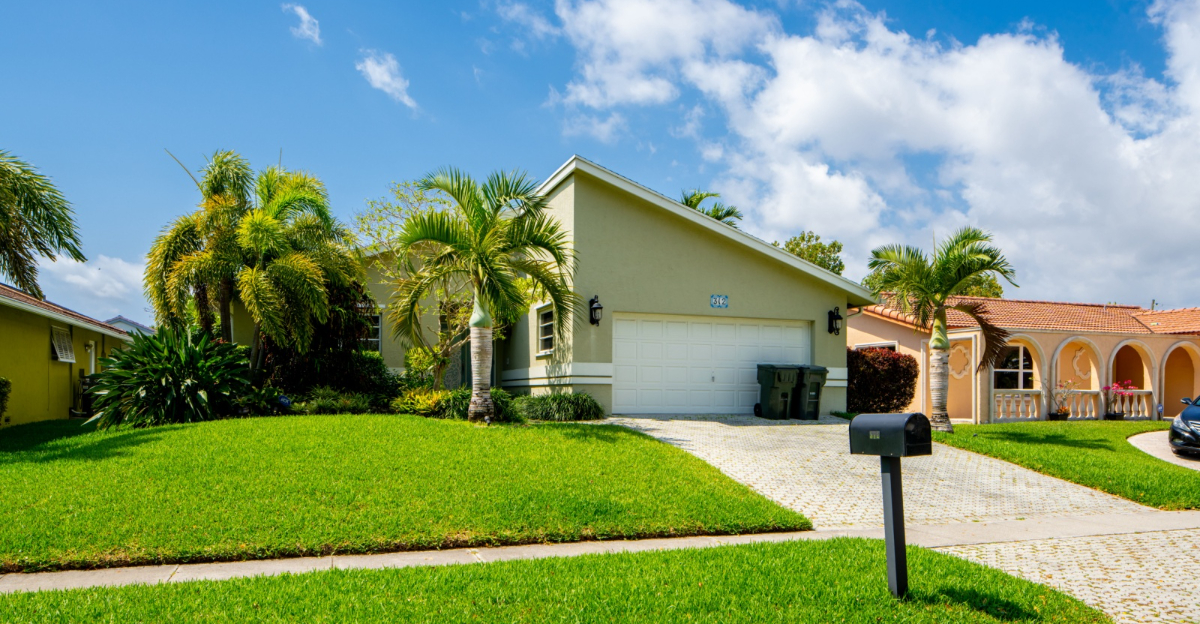
Across Florida landscapes, palm trees rarely appear in perfect pairs. A subtle pattern shows up along driveways, entryways, and garden beds where palms rise in uneven groups that feel natural and effortless.
The arrangement catches the eye without seeming staged, giving outdoor spaces a calm and balanced look that blends with Florida’s tropical atmosphere. Many landscapes follow this quiet rule, yet few people stop to question it.
The effect feels intentional, almost instinctive, shaping how a space is seen and experienced from the very first glance. Something about these uneven groupings creates a visual rhythm that designers and homeowners continue to use across the state.
The reason behind this long followed planting style may seem simple at first, but it reveals more than most expect once the pattern becomes impossible to ignore.
1. Follow The Odd Number Planting Rule
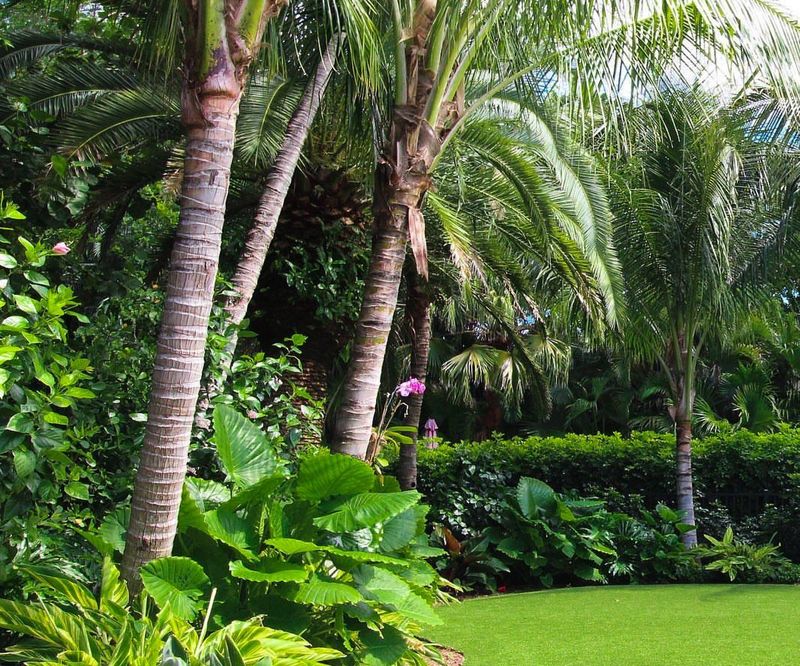
Landscape designers across Florida rely on the odd-number planting rule as a foundational guideline for creating visually appealing outdoor spaces. This practice suggests using groups of one, three, five, or seven plants rather than even numbers like two, four, or six.
The reasoning behind this approach has nothing to do with how palm trees grow or their biological needs. Instead, it’s rooted entirely in how the human eye perceives balance and arrangement.
When we look at an odd number of objects, our brain naturally finds a central focal point, which creates a sense of harmony without feeling overly structured.
Even-numbered groupings tend to divide visual attention equally between two sides, which can feel formal or rigid. In contrast, odd numbers prevent perfect symmetry and encourage a more organic viewing experience.
This makes the landscape feel less manufactured and more like something that could occur naturally.
Professional landscapers in Florida have embraced this principle for decades, applying it to everything from small residential yards to large commercial properties. The rule works particularly well with palm trees because their vertical trunks and crown shapes create strong visual statements that benefit from thoughtful arrangement.
Understanding that this is a design tradition rather than a horticultural requirement gives homeowners flexibility in their planting decisions while still achieving professional-looking results.
2. Use Groups Of Three For Natural Balance
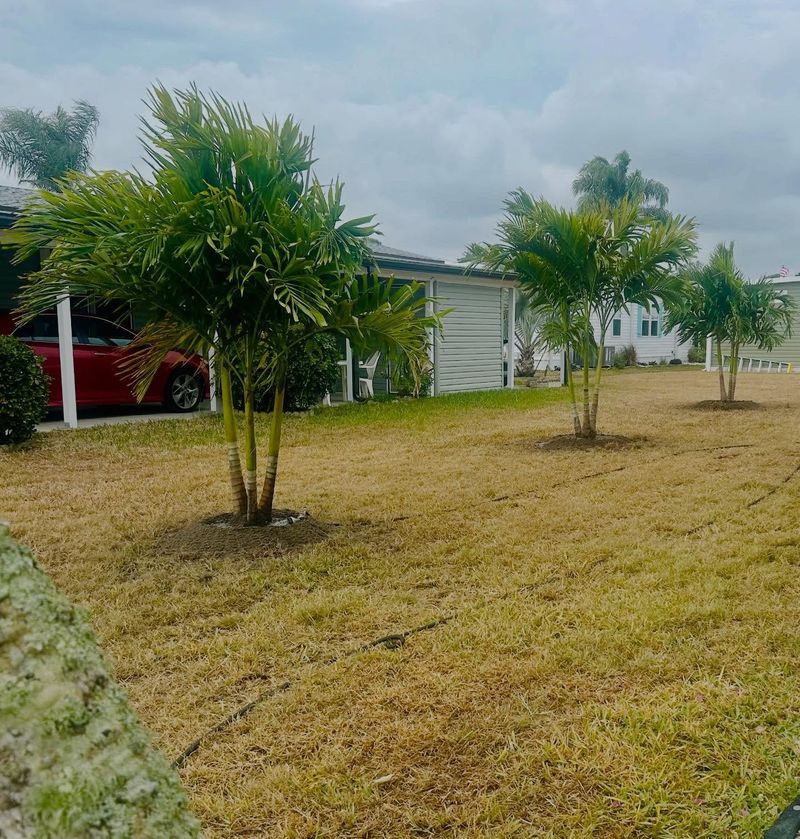
Walk through any well-designed Florida neighborhood and you’ll notice that groups of three palms appear more frequently than any other arrangement. This particular grouping has become the gold standard in residential landscaping because it strikes the perfect balance between visual interest and practical space management.
Three palms create what designers call a “triangular composition,” where the eye naturally moves between the three points without settling on any single element too long. This movement keeps the landscape dynamic and engaging.
The arrangement also provides enough mass to make a statement without overwhelming smaller yards or competing with architectural features.
From a practical standpoint, three palms fit comfortably in most Florida residential lots without requiring excessive maintenance space or creating future crowding issues. The grouping is substantial enough to frame an entrance, anchor a corner, or define a property boundary while remaining manageable for homeowners who handle their own yard care.
Spacing these three palms in an irregular triangle—rather than a straight line—enhances the natural appearance even further. Professional landscapers typically stagger the placement slightly, with one palm positioned forward and two set back at varying distances.
This depth creates dimension and prevents the flat, parade-like appearance that comes from linear arrangements.
The three-palm grouping has become so iconic in Florida landscapes that it’s almost synonymous with tropical residential design.
3. Create A More Natural Look With Odd Numbers
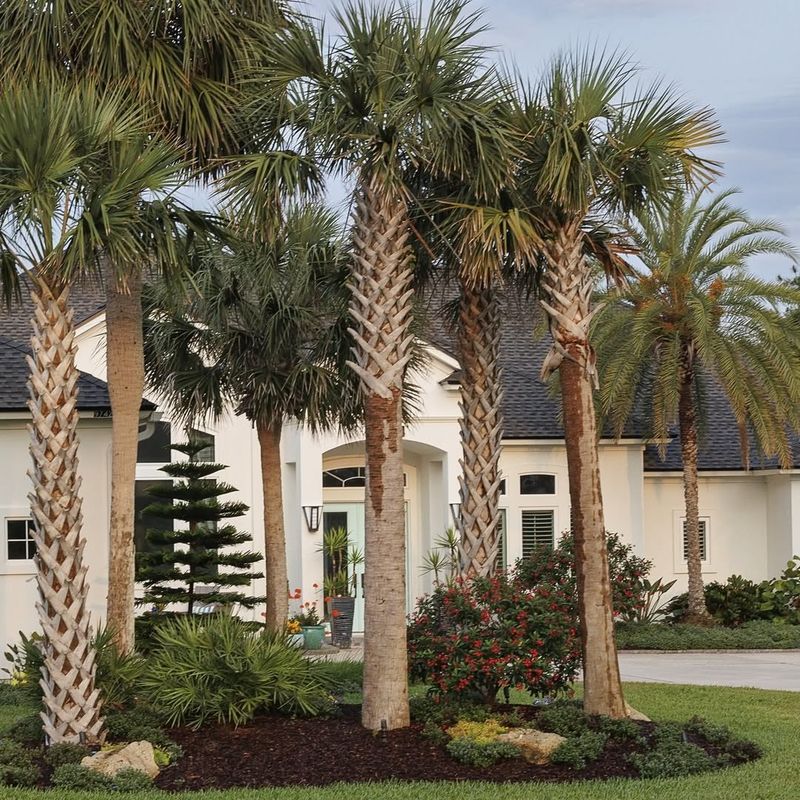
Nature rarely arranges plants in perfect pairs or symmetrical formations. When you observe wild palm groves or natural Florida hammocks, you’ll notice that palms grow in irregular clusters with varying spacing and no predictable pattern.
Odd-number planting in residential landscapes attempts to recreate this organic randomness while still maintaining intentional design.
Using odd numbers helps break up the manufactured appearance that can make a yard feel more like a showroom than a living space. Even though landscapers are deliberately placing each palm, the odd-number guideline encourages arrangements that mimic natural distribution patterns.
This creates a landscape that feels established and authentic rather than recently installed.
The technique works because odd groupings resist the human tendency to create mirror images or balanced pairs. When planting five palms, for example, there’s no way to split them evenly down a centerline, which forces a more creative and naturalistic layout.
This asymmetry is key to achieving the relaxed, tropical aesthetic that Florida homeowners typically desire.
Landscape professionals often combine the odd-number rule with varied spacing between individual palms to further enhance the natural effect. Rather than measuring equal distances, they might cluster two palms closer together while positioning a third farther away, creating visual rhythm without rigid structure.
This approach transforms a planted landscape into something that feels like it could have grown on its own over time.
4. Apply The Classic Palm Grouping Principle
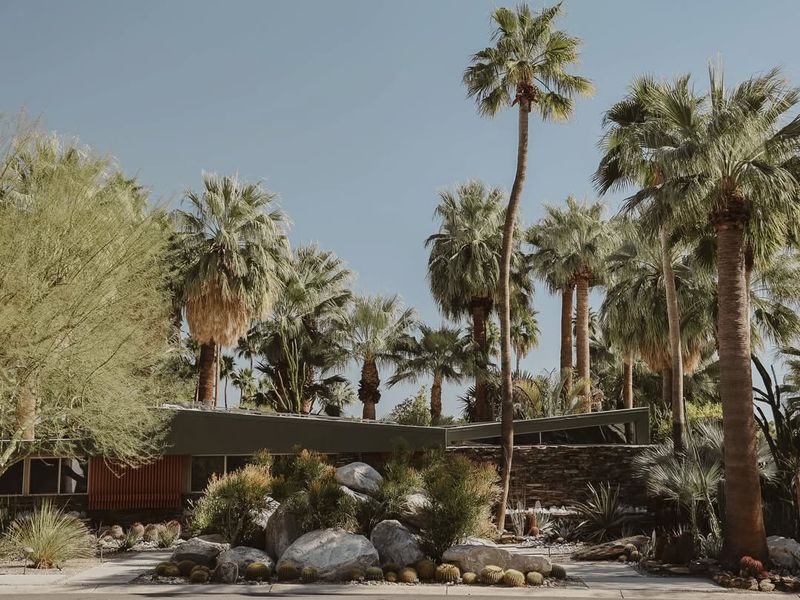
Professional landscape designers in Florida follow time-tested grouping principles that have proven effective across countless residential and commercial projects. The classic approach involves arranging palms in triangular or staggered formations that create depth and visual interest from multiple viewing angles.
The triangular layout places one palm at the front point with two positioned behind at varying distances, forming an irregular triangle when viewed from above. This arrangement ensures that no matter where you’re standing, at the street, from a window, or walking through the yard, you’ll see an appealing composition rather than palms lined up in a flat row.
Staggered groupings take this concept further by varying both the distance between palms and their position relative to a sight line. Professional landscapers avoid placing palms at consistent intervals or along straight lines, instead creating gentle curves or offset patterns that guide the eye through the landscape naturally.
These classic principles work particularly well in Florida because palm trees have such distinctive vertical forms. Their tall trunks and crown shapes create strong visual elements that need thoughtful arrangement to avoid looking too regimented.
The grouping principles help distribute visual weight across the landscape while maintaining an organized overall appearance.
Many Florida landscape companies train their crews specifically in these arrangement techniques, ensuring consistent quality across residential installations throughout the state.
5. Understand The Tradition Behind Odd Planting
The odd-number planting tradition didn’t originate in Florida; it comes from centuries of landscape design practice that spans cultures and continents. Asian garden design, European formal gardens, and American landscape architecture have all contributed to the principles that Florida landscapers use today.
Japanese garden design, in particular, has strongly influenced the odd-number preference. Traditional Japanese aesthetics emphasize asymmetry and natural balance, with specific cultural significance attached to arrangements of three, five, or seven elements.
These principles were adopted by Western landscape architects in the early twentieth century and have since become standard practice.
In Florida specifically, the tradition gained prominence as residential development expanded rapidly in the mid-to-late twentieth century. Landscape professionals sought design guidelines that would create cohesive, attractive neighborhoods while allowing for individual property variation.
The odd-number rule provided a simple, teachable principle that homeowners and contractors could apply consistently.
It’s important to recognize that this is entirely a design convention rather than a horticultural necessity. Palm trees don’t grow better in groups of three versus groups of four.
They don’t have biological needs that require odd-number arrangements. The practice persists solely because it produces results that most people find visually pleasing.
Understanding this background helps Florida homeowners make informed decisions about their own landscapes, knowing when to follow the tradition and when personal preference or practical considerations should take priority.
6. Use Even Numbers For Formal Symmetry
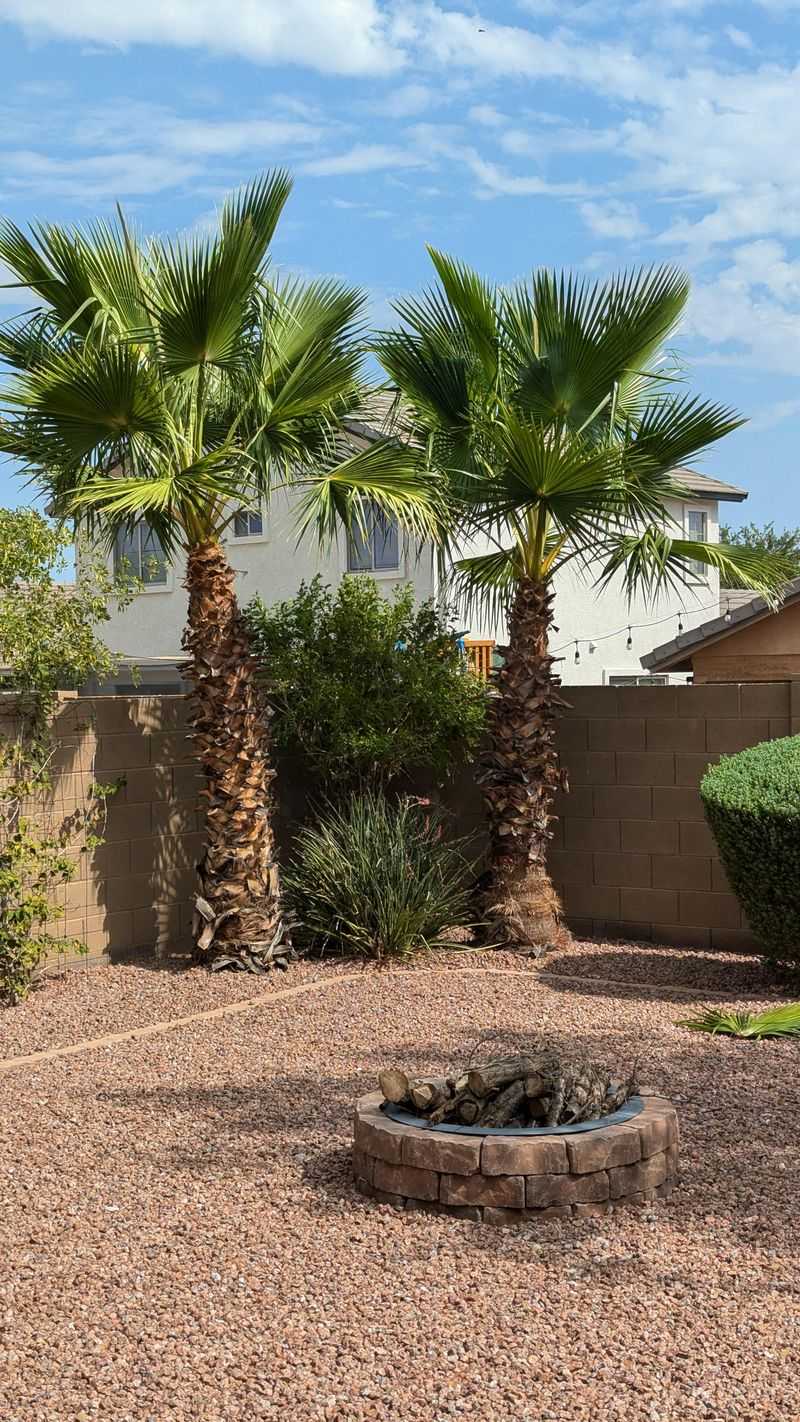
Despite the popularity of odd-number groupings, even-numbered palm arrangements have their place in Florida landscape design, particularly when formal symmetry is the desired effect. Certain architectural styles and landscape situations actually benefit from the balanced, mirror-image appearance that even numbers provide.
Formal entrances represent the most common application for even-numbered palm plantings. Two identical palms flanking a front door, driveway, or gateway create a sense of grandeur and intentional design that announces the entrance clearly.
This symmetrical approach works especially well with Mediterranean, Colonial, or contemporary architectural styles where formal balance is an important design element.
Commercial properties in Florida frequently use even-numbered palm arrangements along building facades or property boundaries. The repetition and symmetry convey professionalism and intentional planning, which many businesses prefer over the more casual appearance of odd groupings.
Four or six palms spaced evenly along a building face create visual rhythm while maintaining architectural harmony.
Even numbers also work well for allee plantings; formal rows of trees lining both sides of a pathway or driveway. This classic landscape feature requires matching numbers on each side to maintain the symmetrical corridor effect.
Many upscale Florida properties use this technique to create dramatic approach sequences.
The key is recognizing when formal symmetry serves the design intent better than naturalistic asymmetry, and having the confidence to break the odd-number rule when appropriate.
7. Adjust Spacing To Shape The Visual Impact
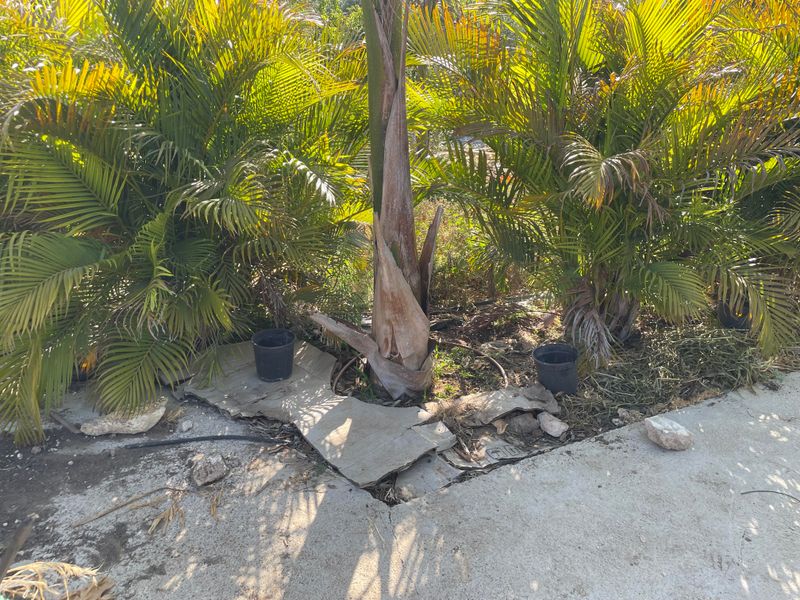
The distance between individual palms in a grouping dramatically affects the overall visual impact and how the arrangement functions within the broader landscape. Florida landscapers carefully consider spacing based on palm species, mature size, and the desired effect.
Tight spacing, i.e., placing palms relatively close together, creates a clustered, lush appearance that emphasizes the grouping as a single landscape element. This approach works well with smaller palm varieties or when creating a focal point that needs to make a bold statement.
Palms spaced three to six feet apart at planting will maintain a grouped appearance even as they mature, with their canopies potentially overlapping to create a fuller look.
Wider spacing treats each palm as a more distinct individual while still maintaining the relationship between grouped plants. Spacing palms eight to fifteen feet apart allows each tree to develop its full canopy without significant overlap, creating a more open, airy composition.
This approach is better suited to larger properties or when palms need to integrate with other landscape elements without dominating the space.
Professional landscapers also consider viewing distance when determining spacing. Palms that will be viewed primarily from the street might be spaced wider than those in a courtyard setting where closer viewing makes tighter groupings more appropriate.
Understanding how spacing affects both immediate appearance and long-term growth helps Florida homeowners create palm groupings that look good now and remain attractive as the landscape matures.
8. Design Palm Groups For Real Landscapes
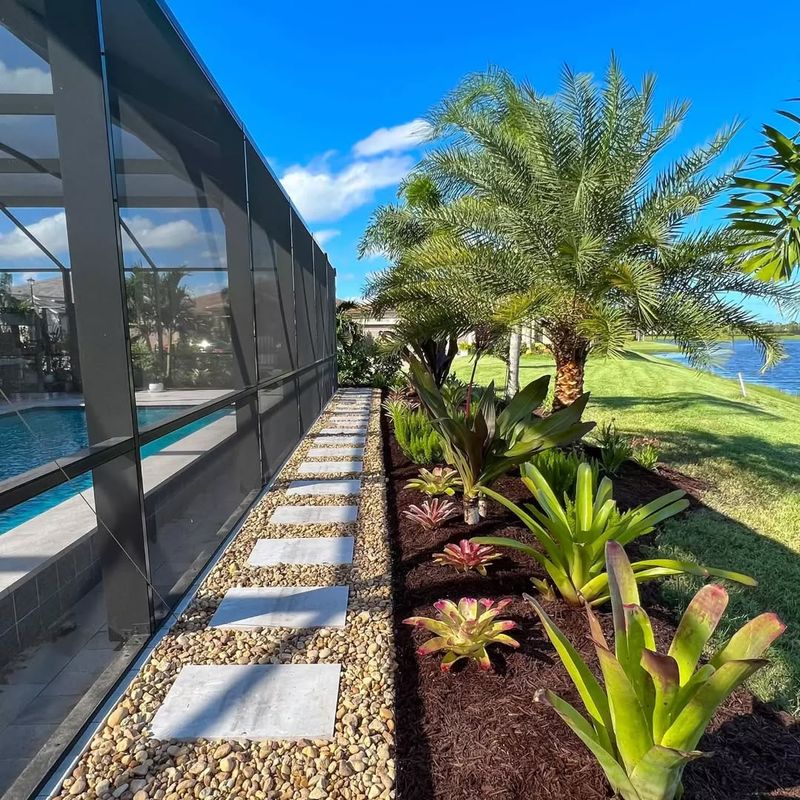
Theoretical design principles must adapt to real-world conditions when planning palm groupings for actual Florida properties. Successful landscape design balances aesthetic ideals with practical considerations like property size, existing structures, utility locations, and long-term maintenance requirements.
Yard dimensions often determine whether three, five, or seven palms make sense for a given space. A compact urban lot might accommodate only a single specimen palm or a tight grouping of three smaller varieties, while a larger suburban property could handle multiple groupings of varying sizes.
Professional landscapers evaluate the scale relationship between palm mature size and available space to avoid future crowding problems.
Existing structures and hardscaping also influence palm placement. Groupings need adequate clearance from buildings, driveways, pools, and underground utilities.
Florida building codes and homeowner association rules often specify minimum distances from structures, which can limit placement options. Smart designers work within these constraints while still achieving attractive arrangements.
Long-term growth considerations are crucial for palm groupings. What looks perfectly proportioned at installation may become overcrowded in five or ten years as palms reach mature height and spread.
Understanding species-specific growth rates and ultimate dimensions helps landscapers plan groupings that remain attractive throughout the palms’ lifespan.
Practical design also accounts for maintenance access, irrigation needs, and how palm groupings integrate with seasonal color beds, lawn areas, and other landscape features common in Florida yards.
9. Balance Height And Spread In Palm Clusters
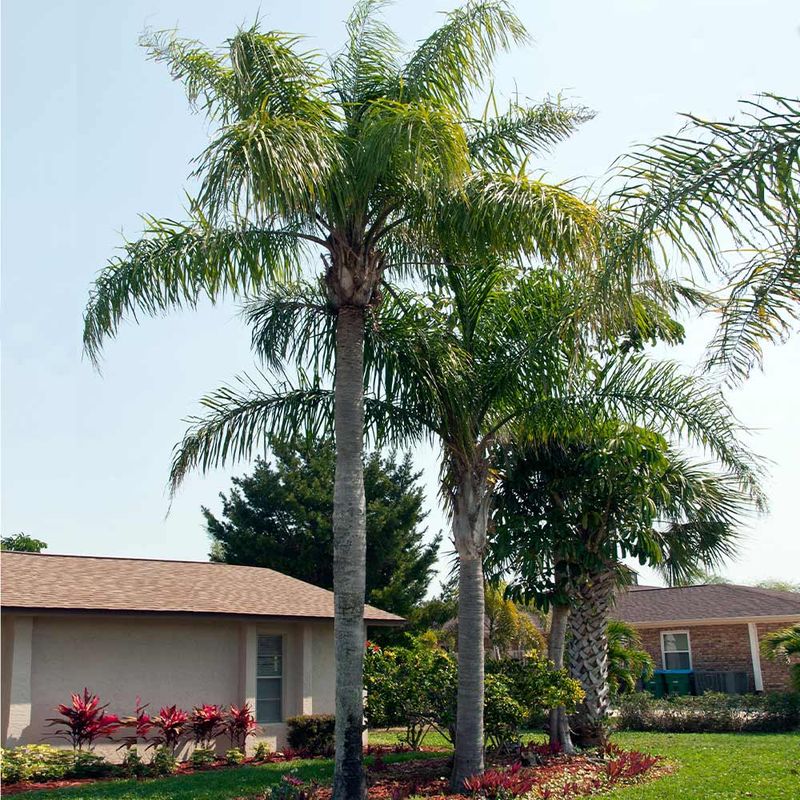
Creating visually successful palm groupings involves more than just counting plants; it requires understanding how different palm species interact based on their mature height, canopy spread, and growth habits. Florida landscapes benefit from thoughtful species selection that creates dimensional interest within grouped plantings.
Mixing palm heights within a grouping adds depth and prevents a flat, uniform appearance. Combining a taller species like Sabal palmetto with shorter varieties such as Paurotis palm creates vertical layering that makes the landscape more engaging.
The height variation helps define foreground and background elements, giving the grouping more visual complexity.
Canopy spread, i.e., the width of the palm’s crown at maturity, affects how closely palms can be planted and how they’ll look together over time. Palms with wide-spreading fronds like Triangle palm need more space between individuals than narrow-crowned species like Foxtail palm.
Professional landscapers account for these differences when spacing grouped palms to ensure adequate room for each tree’s canopy to develop properly.
Growth habits also matter in grouped plantings. Some palms develop single trunks while others produce multiple stems from the base, creating entirely different visual effects.
Clustering three single-trunk palms creates a different look than planting a single multi-trunk species, even though both approaches might occupy similar space.
Understanding these characteristics helps Florida homeowners select palm combinations that work together harmoniously while maintaining the individual character of each species.
10. Know When To Break The Odd Number Rule
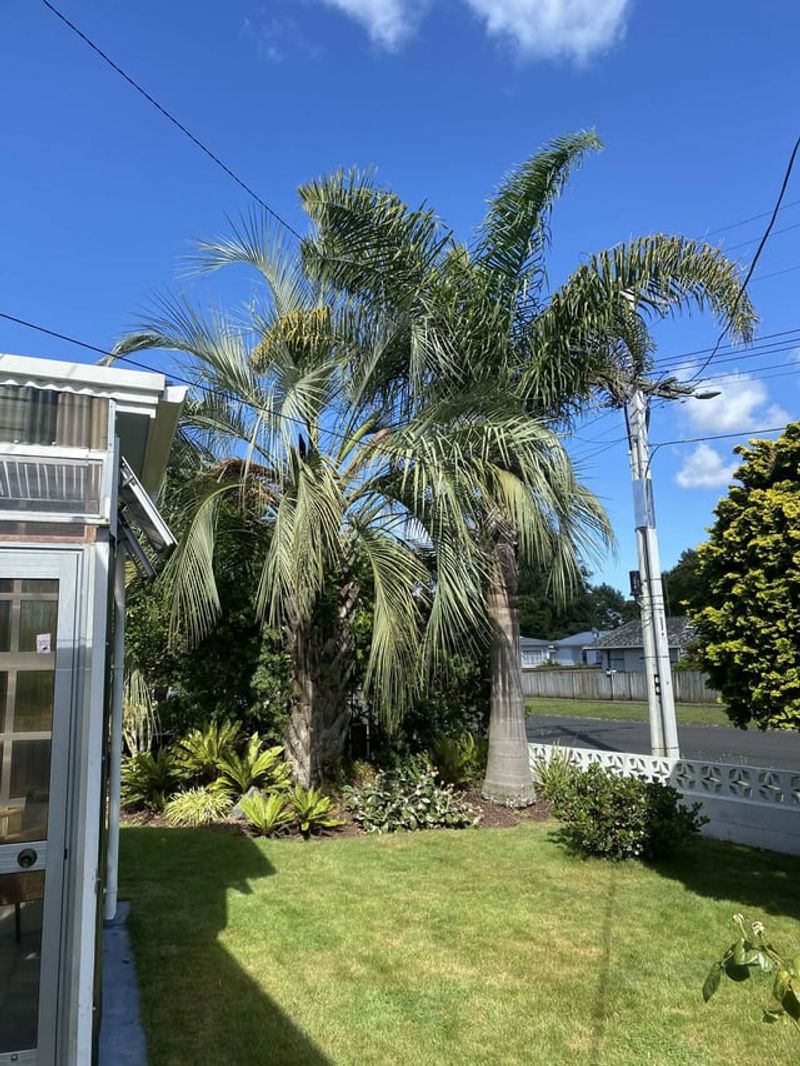
Experienced landscape designers in Florida know that design guidelines serve as helpful starting points rather than inflexible rules. Situations regularly arise where practical needs, personal preference, or site-specific conditions make breaking the odd-number tradition the better choice.
Personal taste should always factor into landscape decisions. If a homeowner genuinely prefers the symmetry of two matching palms flanking their front walk, that preference matters more than adhering to a design convention.
The goal of landscaping is creating outdoor spaces that owners enjoy, not rigidly following rules that may not suit individual situations.
Practical constraints often necessitate even-numbered arrangements. A narrow side yard might only accommodate two palms.
A specific view-framing requirement might call for four palms positioned at property corners. Budget limitations might allow for two quality specimens rather than three smaller ones.
These real-world factors legitimately override theoretical design preferences.
Existing landscape conditions sometimes make odd groupings impractical. When adding palms to an established yard with mature trees, structures, or hardscaping, available planting locations may not support ideal odd-number arrangements.
Working with what the site offers often produces better results than forcing an arrangement that doesn’t fit the space.
The most successful Florida landscapes balance design principles with practical reality, creating outdoor spaces that look professionally designed while meeting the specific needs and preferences of the property owners who live with them daily.