This Is Why Your Ohio Tomatoes Split Before You Can Pick Them
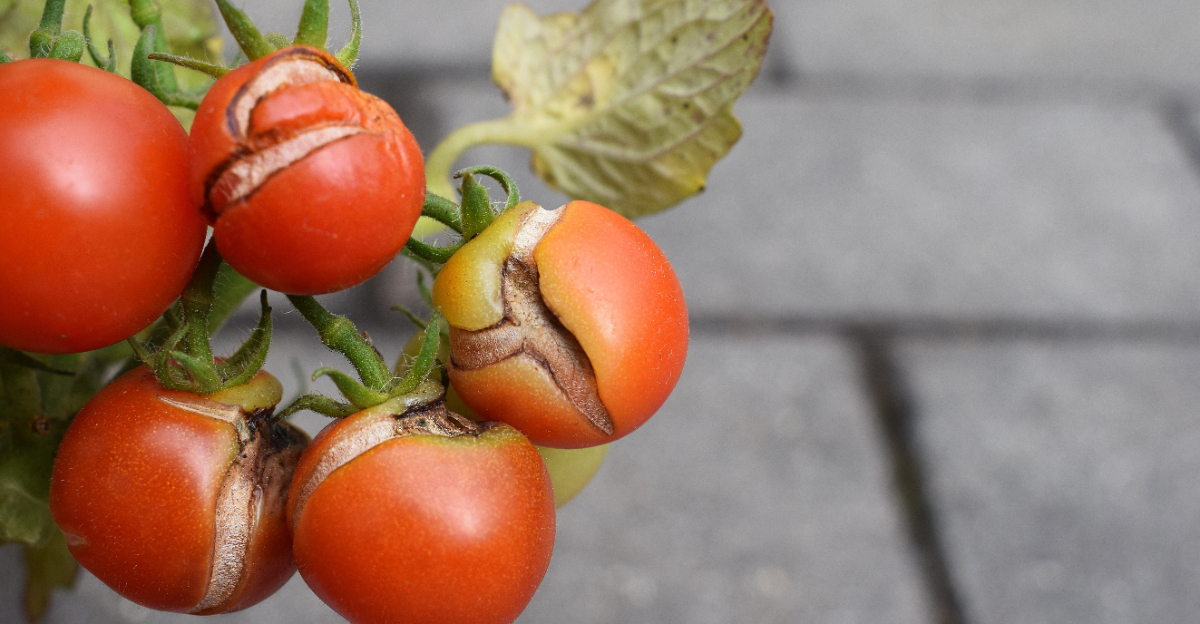
Nothing tests a gardener’s patience quite like a tomato that betrays you right at the finish line. After days of checking color, watching it size up, and picturing that first harvest, you head outside expecting a perfect pick and find a fruit split wide open instead.
It looks dramatic, feels unfair, and somehow seems to happen right when the tomato looked its best.
That’s what makes it so maddening in Ohio gardens. The plant can seem healthy, the bed can look fine, and there may be no obvious warning that anything is about to go wrong.
Then the skin gives way, and a tomato that looked ready for the kitchen suddenly looks like a problem.
A lot of gardeners blame fertilizer, pests, or bad luck. The real cause is usually much less obvious and a lot more frustrating because it often starts below the surface, long before the crack shows up.
Tiny shifts in moisture can change everything.
Spot that pattern early, and tomato splitting stops feeling like bad luck. It starts looking like something you can finally stay ahead of.
1. Uneven Watering Is The Biggest Reason Ohio Tomatoes Split
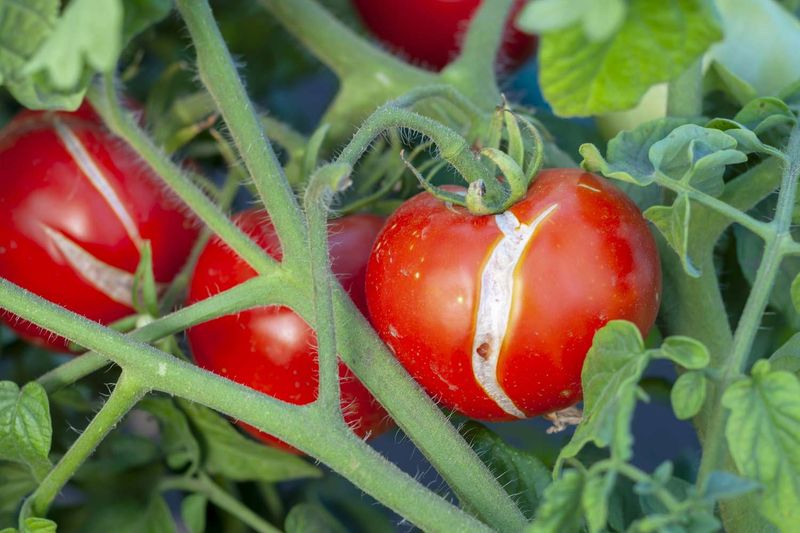
Picture this: two weeks of dry, hot weather, and then you finally get the hose out and give your tomatoes a long, deep drink. It feels like the right thing to do.
But for the tomato itself, that sudden flood of water after a drought is a shock the fruit cannot handle gracefully. The inside of the tomato swells up fast, and the skin, which has tightened during dry conditions, simply cannot stretch quickly enough to keep up.
The result is a split.
Tomatoes need about 1 to 1.5 inches of water per week, and the key word is consistency. Giving them a little water every day or every other day is far better than a massive watering session once a week.
Letting the soil dry out completely between waterings is one of the most common mistakes Ohio gardeners make, especially during hot July and August stretches.
A soil moisture meter can be a genuinely useful tool here. Stick it in the ground near the root zone before you water, and aim to keep moisture at a steady, moderate level rather than cycling between bone dry and soaking wet.
Drip irrigation is another excellent option because it delivers water slowly and evenly right at the root zone, reducing those dramatic moisture swings that cause cracking.
Consistent watering is truly the single most powerful thing you can do to protect your tomatoes from splitting.
2. Heavy Rain After Dry Weather Can Burst Ripening Fruit
Ohio summers have a pattern that every gardener here knows well: weeks of dry, blazing heat followed by a sudden afternoon thunderstorm that drops an inch of rain in an hour. For you, it might feel like relief.
For a ripening tomato, it can be a disaster. When the soil goes from parched to saturated in a short window, the plant roots take up water rapidly and push it straight into the fruit.
Your Ohio Garden Changes Every Week. Your Plan Should Too.
Gardening in Ohio changes quickly throughout the season. Every Friday you’ll receive a simple weekly plan showing exactly what to plant, prune, fertilize, harvest, and protect so you never miss the right timing.
Ripening tomatoes in mid to late summer are already under pressure. Their skins are taut, their flesh is dense, and there is not much give left.
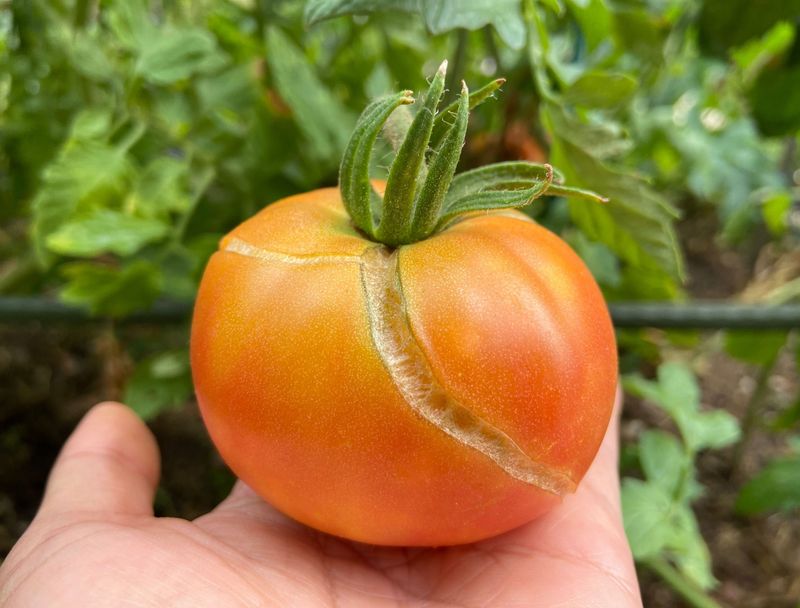
When a surge of water hits the root system after a dry spell, the fruit expands faster than the outer skin can accommodate. That pressure builds until the skin gives way, usually in a radial crack from the stem end or a concentric ring around the shoulders of the fruit.
Unfortunately, you cannot control Ohio weather. But you can reduce how dramatically your soil swings between dry and wet by watering consistently during dry stretches instead of relying on rain.
When you know a storm is coming after a dry week, giving your plants a moderate watering the day before can help ease the transition. That way, the soil is not completely parched when the rain arrives, and the uptake of water happens more gradually.
Small adjustments like this can save a surprising number of tomatoes during storm season.
3. Mulch Helps Keep Soil Moisture More Even
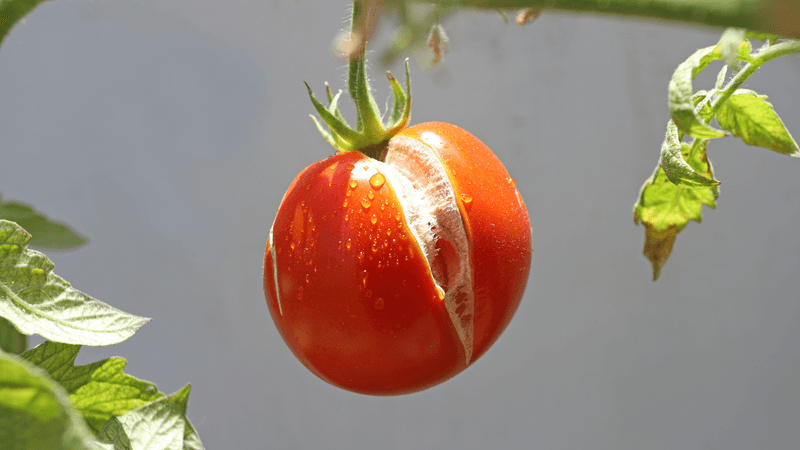
Bare soil in a tomato bed is a setup for trouble. Without any covering, the top layer of soil dries out quickly on hot days and then becomes waterlogged after rain.
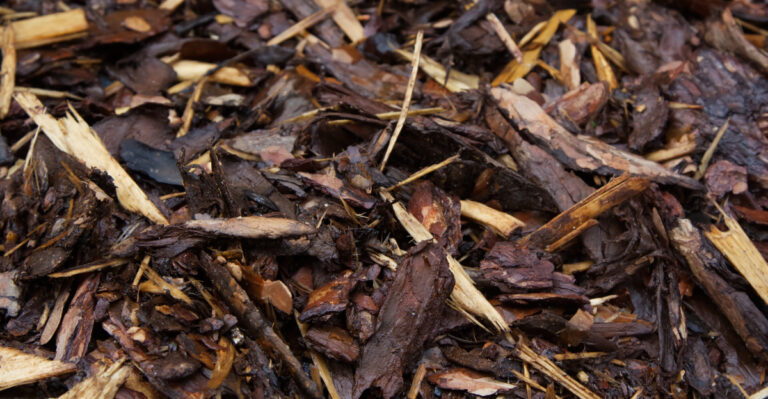
That rollercoaster of moisture conditions is exactly what leads to cracked fruit. Mulch acts like a buffer between your soil and the weather, slowing down both drying and flooding so the root zone stays in a more stable zone.
Straw is probably the most popular mulch choice for tomatoes in Ohio because it is light, easy to spread, and breaks down slowly over the season. Shredded leaves work well too, especially if you have them on hand from the previous fall.
Grass clippings can be used but should be applied in thin layers to prevent matting, which can actually trap too much moisture and cause other problems. Aim for about 2 to 3 inches of mulch around each plant, keeping it a few inches away from the main stem to prevent rot.
Beyond moisture control, mulch also keeps soil temperatures steadier. In Ohio, summer soil can heat up significantly on sunny days, which stresses plant roots and makes them less efficient at managing water uptake.
A good mulch layer can reduce that soil temperature by several degrees, which helps the whole plant stay calmer during weather swings. Applying mulch early in the season, before the heat really sets in, gives you the most benefit throughout the growing period.
4. Some Tomato Varieties Crack More Easily Than Others
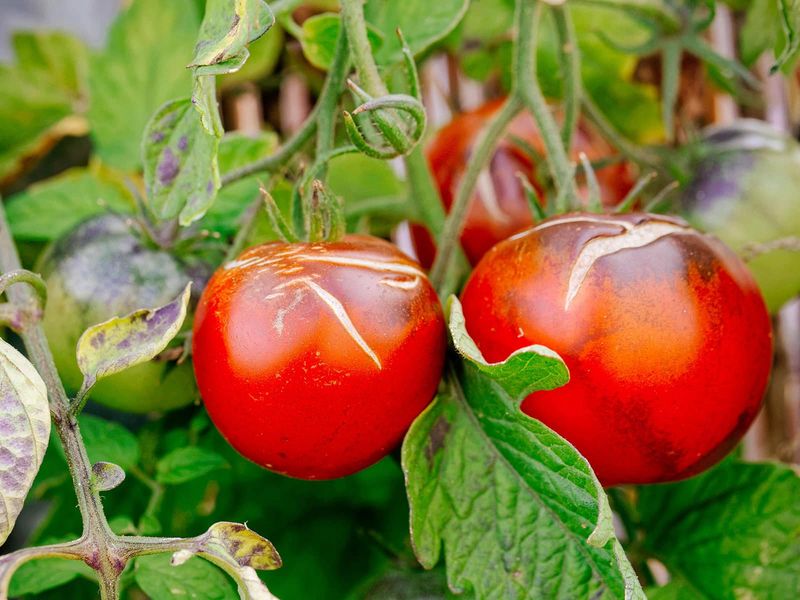
Not all tomatoes are created equal when it comes to cracking. If you have been growing Beefsteak or Brandywine tomatoes and fighting splits every summer, the variety itself might be working against you.
Large-fruited heirloom types tend to have thinner, more delicate skins that simply cannot handle rapid moisture changes as well as other varieties. Cherokee Purple is another popular heirloom that falls into this more vulnerable category.
The reason large heirlooms crack more easily comes down to skin thickness and fruit structure. Bigger tomatoes have more internal mass, which means more pressure builds up when water floods in.
Thinner skins have less tensile strength to resist that pressure. Heirloom varieties were often bred for flavor and size rather than durability, which is part of why they taste so good but can be frustrating to grow in unpredictable climates.
If cracking has been a persistent problem in your garden, switching to crack-resistant varieties is one of the most effective fixes available. Roma, Celebrity, Juliet, and Mountain Fresh are all known for holding up better under Ohio conditions.
Juliet, in particular, is a small plum-style tomato that produces heavily and almost never cracks, even after significant rain.
You do not have to give up on your favorite heirlooms entirely, but growing a mix of crack-resistant varieties alongside them gives you a much better chance of a successful harvest when summer weather gets unpredictable.
5. Fully Ripened Fruit Splits Faster During Moisture Swings
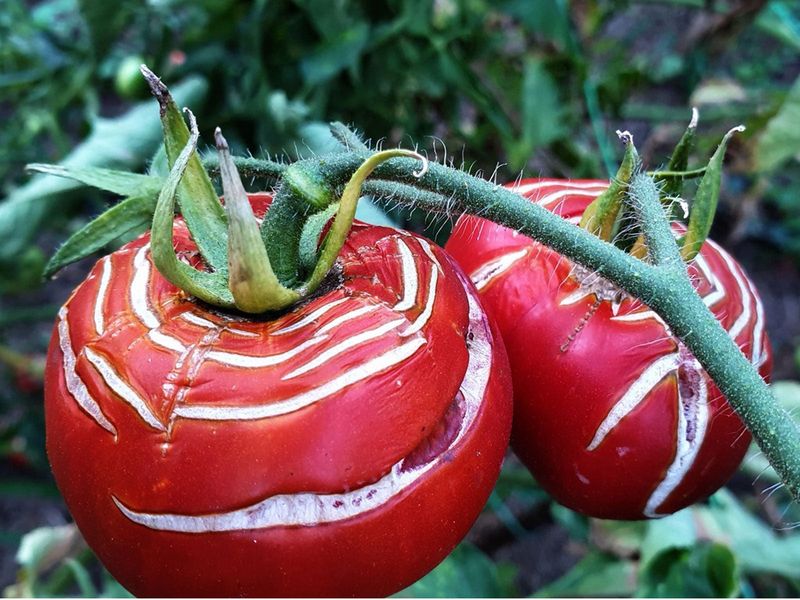
There is a short window between a perfectly ripe tomato and one that has gone too far, and in Ohio summer weather, that window can close faster than you expect. As a tomato reaches full ripeness, its skin becomes tighter and less flexible.
The flesh inside is dense and fully developed. At that stage, the fruit has almost no ability to absorb a sudden moisture surge without cracking under the pressure.
Gardeners sometimes wait until a tomato looks completely red and perfect before picking it, wanting to get every last bit of vine-ripened flavor.
But waiting too long, especially when rain is in the forecast, dramatically increases the chance of finding a split fruit the next morning.
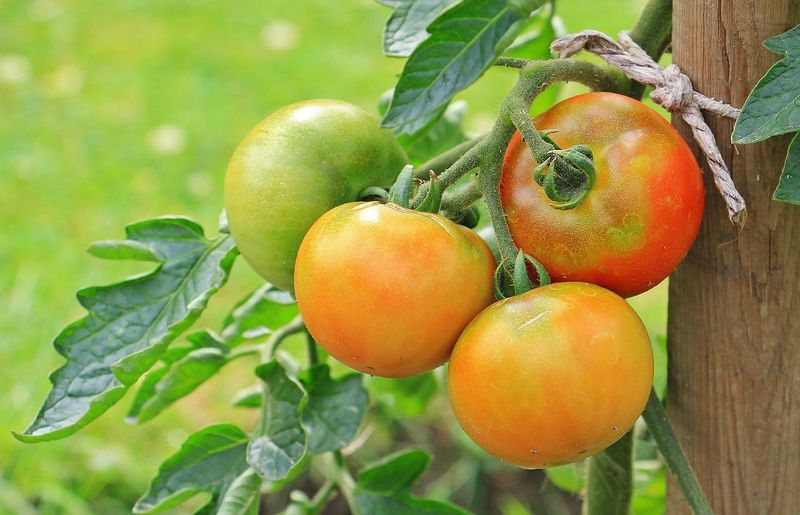
The breaker stage, which is when the tomato just begins to show its first blush of color, is actually a smart time to harvest tomatoes that have been prone to cracking.
At that point, the fruit has already developed most of its sugars and flavor compounds and will finish ripening indoors just fine.
Ripening a tomato on your kitchen counter at room temperature takes just a few days and produces results that are surprisingly close to fully vine-ripened fruit. Keep harvested tomatoes out of the refrigerator, which stops the ripening process and damages texture.
Picking at the breaker stage is especially useful during mid to late summer when Ohio rain events are more frequent and the risk of overnight cracking is at its highest.
6. Trellised Plants Still Need Consistent Water To Prevent Cracking
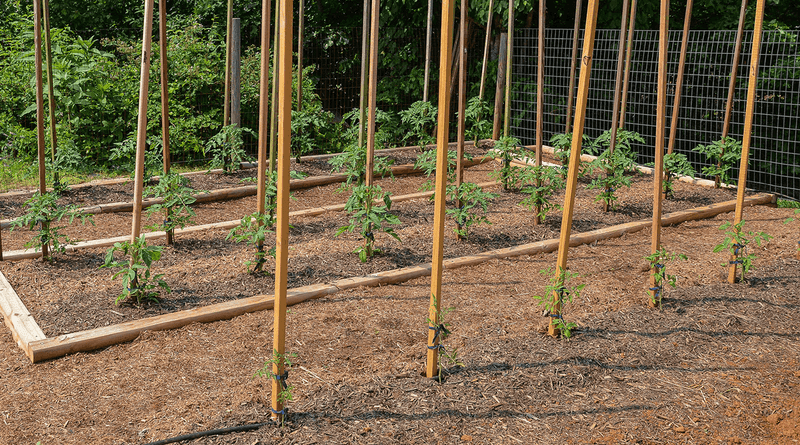
A lot of gardeners assume that once their tomatoes are staked, caged, or tied up neatly on a trellis, they have done the hard part. And good support does matter for airflow, fruit size, and keeping plants off the ground.
But here is something worth knowing: the way you support your tomato plants has almost no effect on whether the fruit cracks. Splitting is a moisture issue, not a structural one.
Whether your plants are growing up a six-foot stake, inside a wire cage, or along a Florida weave trellis, the fruit is still subject to the same internal pressure when soil moisture swings sharply.
A tomato does not care how well it is supported when a flood of water hits its root system after a two-week dry stretch.
The skin will respond the same way regardless of what the rest of the plant is doing.
That does not mean trellising is a waste of time. Proper support improves air circulation around the fruit, which can reduce some disease pressure and keep fruit cleaner.
But if you are spending time building elaborate support systems and then letting your watering schedule slide, you are solving the wrong problem. Water management has to stay at the top of your priority list all season long.
Consistent soil moisture, mulching, and timely harvesting will do far more to prevent cracking than any trellis system ever could. Keep supporting your plants, but keep watering consistently too.
7. Harvesting Slightly Early Can Help Save Prone Varieties
Timing your harvest is one of those practical moves that feels counterintuitive at first but makes a lot of sense once you understand how tomatoes actually ripen.
Many gardeners hold off picking until a tomato looks fully ripe on the vine, but for varieties that are prone to cracking, that strategy can cost you a lot of fruit.
Picking just a bit early, right when the color starts to change, is a smart way to stay ahead of the problem.
When a tomato reaches the breaker stage, it has already produced the sugars and acids that give it flavor. The ripening process from that point on is mostly about color development and softening, both of which can happen off the vine without any loss of quality.
Bring the tomato inside, set it on a counter away from direct sunlight, and let it finish ripening at room temperature over the next two to four days.
For varieties like Beefsteak and Brandywine, which crack easily and take a long time to ripen, this approach can save a significant portion of your harvest during rainy stretches.
Check your garden every day or two during mid to late summer and pick any fruit that shows even a hint of color change.
Do not wait for perfection on the vine. Getting the tomato off the plant before a storm rolls through is far better than finding a beautiful but ruined fruit the next morning.
8. Ohio Humidity Makes Moisture Swings More Intense
Ohio sits in a part of the country where summer humidity can be genuinely oppressive, and that humidity plays a bigger role in tomato cracking than most gardeners realize.
When the air is already saturated with moisture, the soil takes much longer to dry out after a rain event.
That means the root zone stays wet for an extended period, and the plant keeps absorbing water long after you might expect it to stop.
Under normal dry conditions, soil moisture evaporates at a predictable rate, giving you a somewhat natural buffer between rain events. But in humid Ohio summers, especially in July and August, that evaporation slows dramatically.
Combine that with warm temperatures, which push plants to take up more water through their roots, and you have a recipe for rapid fruit expansion even days after the last rainfall.
The practical response to Ohio humidity is to monitor your soil moisture more carefully rather than watering on a fixed schedule. If the soil is still moist two or three days after rain, skip your next watering session.
Use a simple finger test or a soil moisture meter to check conditions before adding more water. Reducing how often you water during humid stretches helps prevent the soil from staying oversaturated for too long.
Pairing smart watering habits with mulch and early harvesting gives Ohio gardeners the best overall defense against the cracking that humidity and unpredictable summer weather tend to bring every single year.