This Native Pink Wildflower Is A Texas Favorite For A Reason
Some wildflowers do not need much help to win people over. This one has a soft, cheerful look that seems to fit Texas perfectly, whether it is blooming along a roadside, brightening a meadow, or popping up in a home garden.
It brings that relaxed, natural beauty people love, but it also has a tougher side that makes it especially easy to appreciate in a state with heat, dry stretches, and unpredictable weather. When a flower looks this good and handles real Texas conditions, it tends to earn a loyal following.
That is a big reason so many gardeners keep making room for it. Pink evening primrose adds bright color without feeling fussy, and it has a way of making a space feel lighter and more alive almost overnight.
It works beautifully in wildflower plantings, cottage-style beds, and low-maintenance landscapes where a softer look still matters. For Texans who want something pretty, reliable, and full of local charm, this wildflower has more than earned its favorite status.
1. A True Texas Native Favorite
Some wildflowers feel like they were made for a specific place, and pink evening primrose feels like it was made for Texas.
Known scientifically as Oenothera speciosa, this native wildflower has been growing across the state for centuries. You can spot it from the Panhandle all the way down to South Texas.
Every spring, usually from March through July, pink evening primrose puts on a show that is hard to miss. It blankets roadsides, open fields, meadows, and pastures with soft pink blooms that seem to glow in the morning light.
Texans have come to expect this seasonal display the same way they expect bluebonnets. What makes it a true Texas favorite is how naturally it fits into the landscape. It does not need special care or fancy soil.
It simply grows where it wants to grow, and it does it beautifully. Many people in Texas consider it just as iconic as the state flower itself. Pink evening primrose is also a wonderful choice for home gardens across Texas.
Whether you have a large yard in the Hill Country or a small patch of land in the suburbs, this wildflower can thrive with very little effort. It brings a natural, relaxed beauty to any outdoor space.
Fun fact: despite its name, pink evening primrose actually opens its flowers in the morning and stays open through much of the day.
The “evening” part of its name comes from a related species that blooms at dusk. Either way, Texans are happy it shows up whenever it does.
2. Soft Pink Blooms That Stand Out
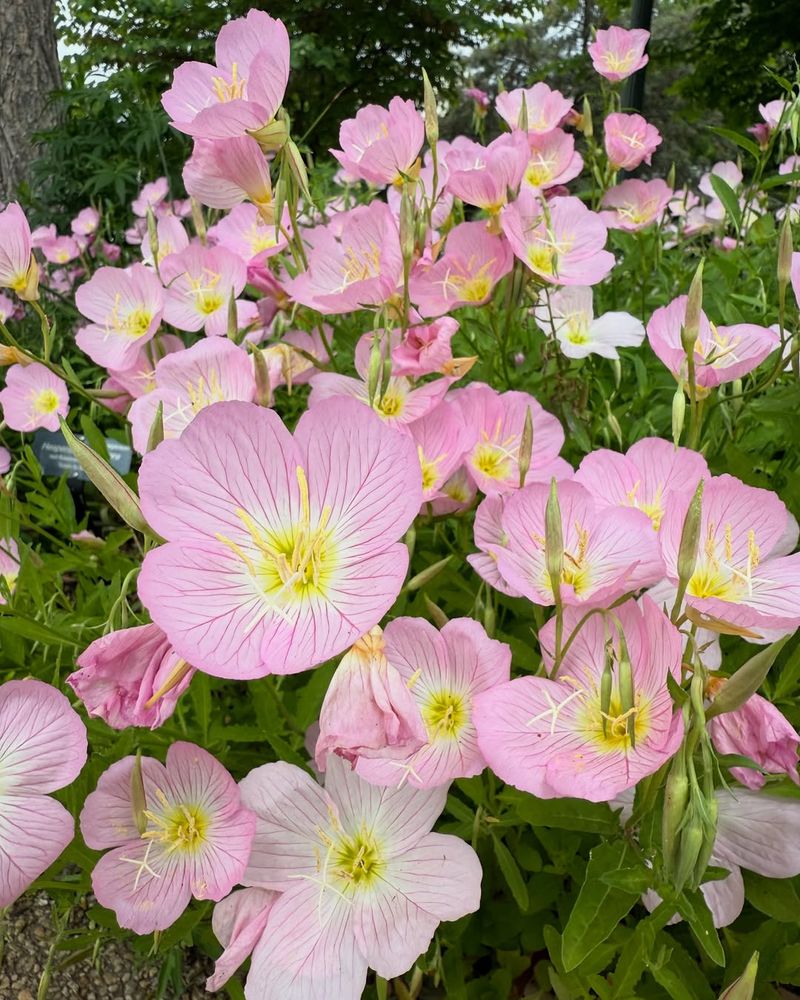
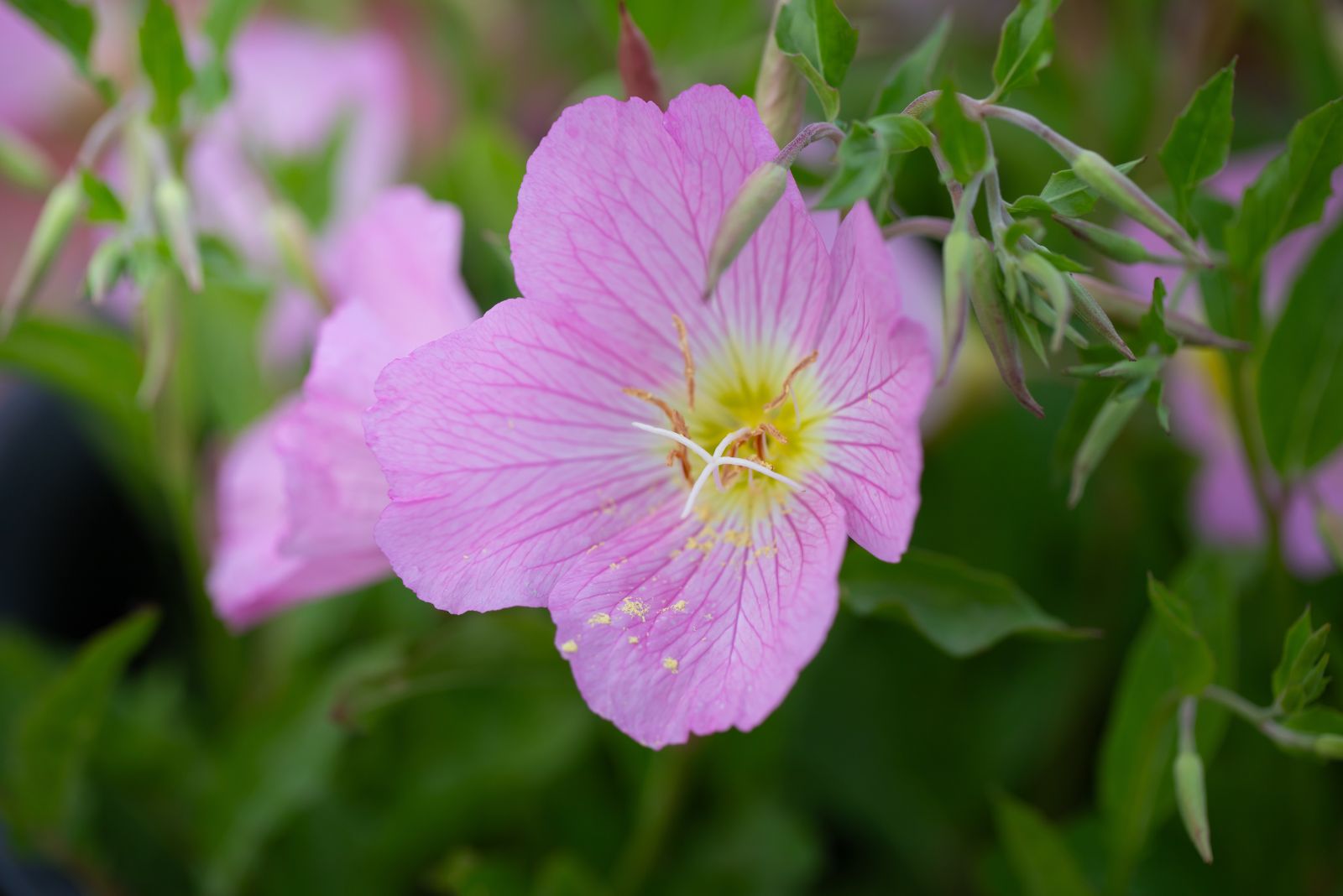
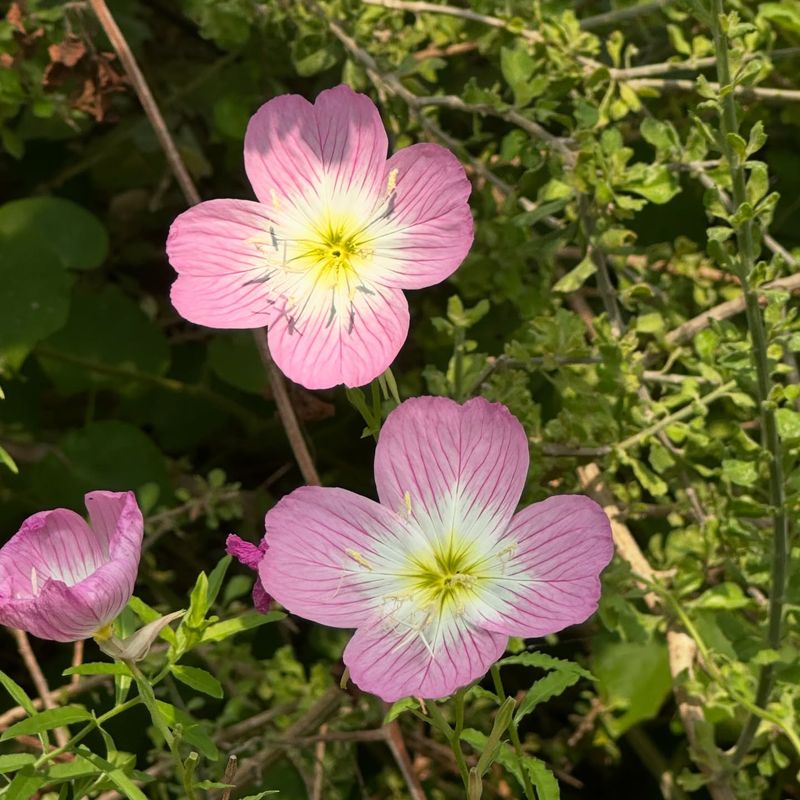
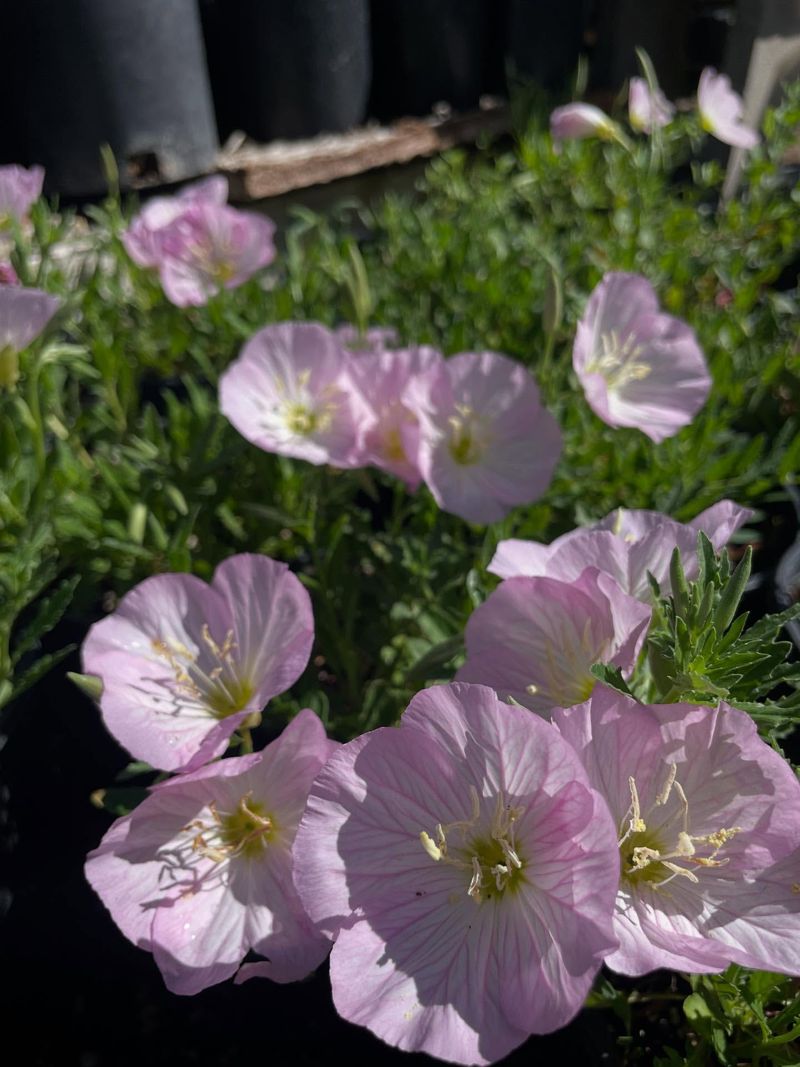
There is something about the color of pink evening primrose that just catches your eye. The blooms are a soft, rosy pink with four rounded petals that form a gentle cup shape.
Right in the center, a burst of bright yellow creates a contrast that makes each flower look almost painted by hand.
The flowers are not huge, usually about one to two inches wide, but they make up for their size in sheer number. When pink evening primrose spreads across a field or along a Texas roadside, the effect is stunning.
It looks like someone scattered confetti across the landscape. Up close, the petals have a delicate, tissue-paper quality that makes them look almost fragile. But do not let that fool you.
These blooms hold up surprisingly well even in warm Texas weather. They open fresh each morning and keep the display going for weeks at a time.
The yellow centers are more than just pretty decoration. They act as a landing pad and visual signal for pollinators, guiding bees and butterflies straight to the nectar.
So every bloom is doing double duty: looking gorgeous and feeding wildlife at the same time.
Gardeners across Texas often use pink evening primrose in wildflower mixes and meadow plantings because of how well the color blends with other native plants.
Paired with the deep purple of bluebonnets or the golden yellow of coreopsis, it creates a naturally layered color palette that feels right at home in the Texas spring landscape. It is a simple flower with a big visual impact.
3. Easy And Low Maintenance Growth
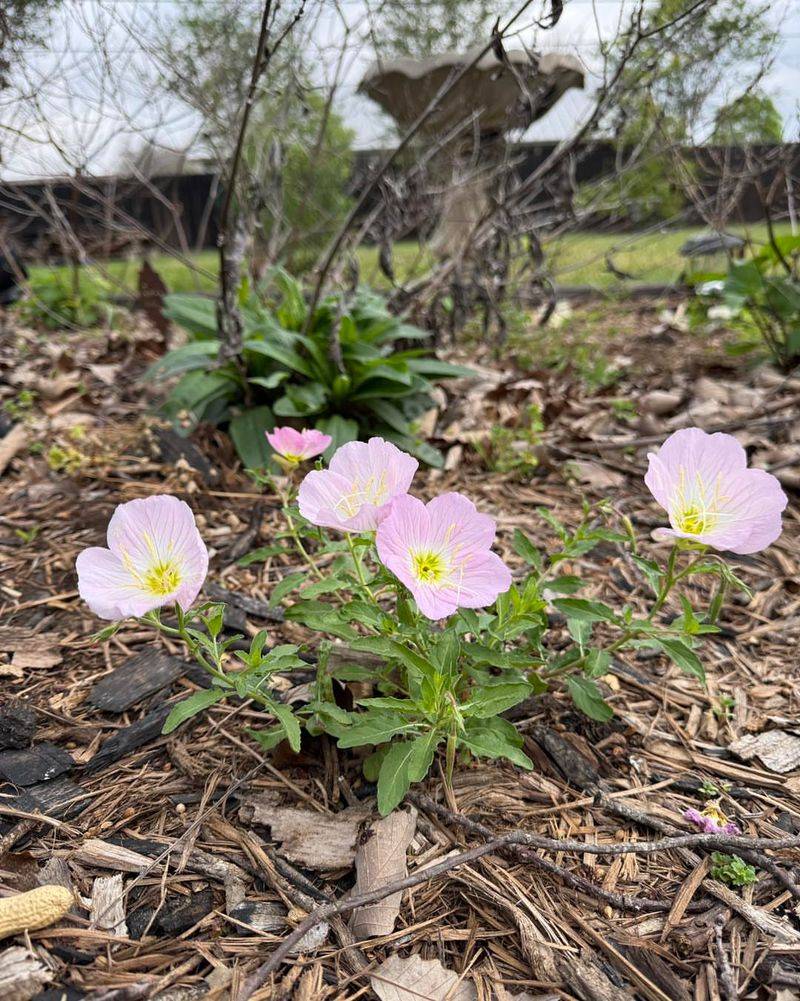
Not everyone has time to fuss over a garden, and that is exactly where pink evening primrose shines.
Once it gets established in your yard or landscape, it basically takes care of itself. No special fertilizers, no daily watering, no complicated care routines needed at all.
One of its biggest strengths is its ability to grow in poor soil. Most flowering plants get picky about soil quality, but pink evening primrose actually prefers sandy, rocky, or low-nutrient ground.
That makes it perfectly suited for the wide range of soil types found across Texas, from the clay-heavy soils of North Texas to the sandy ground of the coast.
Drought tolerance is another major selling point. Texas summers can be brutally dry, and many plants simply cannot handle long stretches without rain.
Pink evening primrose, on the other hand, is built for it. It can go weeks without water once it is well-rooted, which saves both time and money on irrigation.
Spreading is something it does naturally and enthusiastically. You do not need to replant it every year because it reseeds itself on its own.
Gardeners who want a low-effort ground cover love this quality. It fills in gaps and bare spots without any help from you.
For Texas homeowners who want a beautiful yard without a lot of work, pink evening primrose is a smart choice. It rewards you with weeks of colorful blooms in exchange for almost nothing.
That kind of easy beauty is rare, and it is a big reason why so many people across Texas keep planting it year after year.
4. Spreads Quickly Across The Landscape
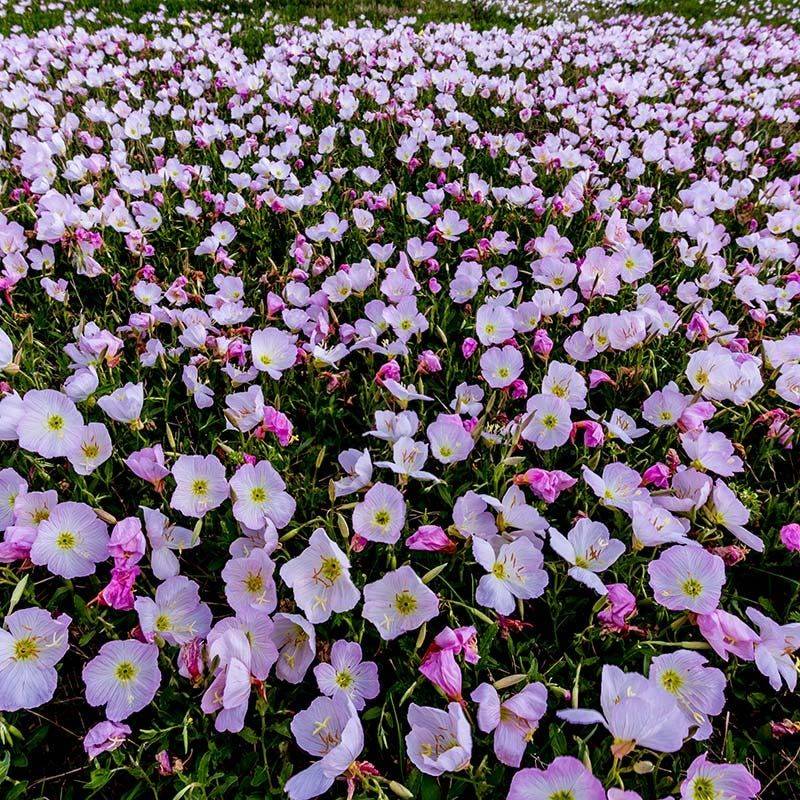
Speed is not something most people associate with wildflowers, but pink evening primrose moves fast. Once it settles into a spot it likes, it spreads through both underground rhizomes and seed dispersal, covering ground quickly and efficiently.
In the right conditions across Texas, a small patch can become a full ground cover in just one or two seasons.
Many gardeners actually love this quality. If you have a large area to fill, like a slope, a dry hillside, or a wide-open backyard, pink evening primrose can get the job done without you spending a fortune on plants or mulch.
It naturally knits together into a dense, weed-suppressing mat of green and pink. That said, its fast-spreading nature is also something to keep an eye on. In smaller garden spaces, it can crowd out other plants if left completely unchecked.
Some gardeners in Texas have found it creeping into flower beds or edging into lawn areas where they did not originally intend it to go.
The good news is that managing it is not hard. A simple garden edging barrier or occasional hand-pulling keeps it right where you want it.
Mowing after it finishes blooming also helps control its spread without causing any lasting damage to the plant.
Think of pink evening primrose like an enthusiastic helper. It works hard, fills space beautifully, and makes the landscape look full and lush.
You just want to give it a few gentle boundaries so it stays in its lane. With a little guidance, it is one of the best ground-cover options available for Texas gardens.
5. Pollinator Friendly Benefits For Texas Gardens
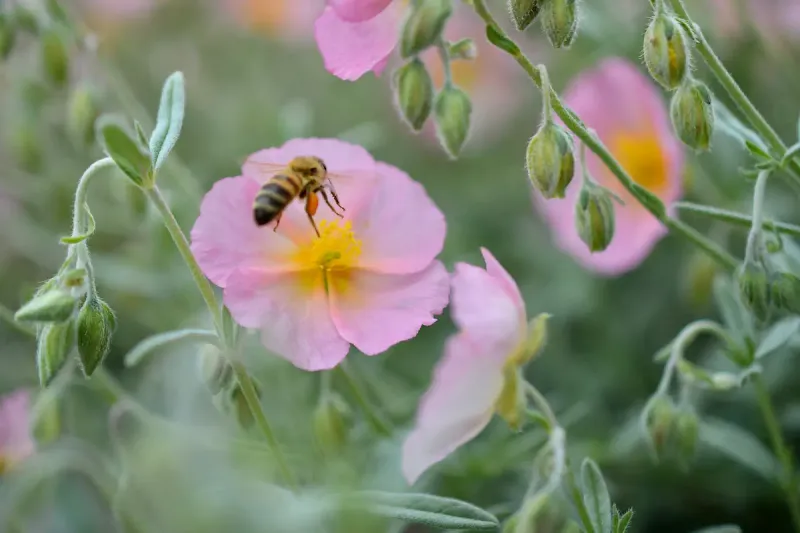
Walk past a patch of pink evening primrose on a warm Texas morning and you will almost certainly hear buzzing. Bees absolutely love this plant.
The wide, open cup-shaped blooms make it easy for bees to land and access the nectar, which is why they keep coming back again and again throughout the blooming season.
Honeybees and native bees are the most frequent visitors, but butterflies also show up regularly. The bright yellow centers act like little runway lights, guiding pollinators directly to the nectar source.
For Texas gardeners who want to support local wildlife, planting pink evening primrose is one of the easiest ways to do it.
Beyond bees and butterflies, hummingbirds have also been spotted visiting these blooms in parts of Texas.
The combination of nectar availability and the flower’s color and shape makes it attractive to a wide range of wildlife. A single patch can become a busy little ecosystem all on its own.
Supporting pollinators matters more than people sometimes realize. Bees pollinate a huge portion of the food we eat, and their populations have been under pressure in recent years.
Planting native flowers like pink evening primrose gives them a reliable food source right in your own backyard across Texas.
Another benefit is that pollinator-friendly gardens tend to look lively and full of movement. Watching bees and butterflies work their way through a field of pink blooms is genuinely enjoyable.
It turns your outdoor space into something that feels alive and connected to the natural world around it, which is a beautiful thing to have right outside your door in Texas.
6. Handles Texas Weather Swings With Ease
Texas weather is famously unpredictable. One week it is warm and sunny, and the next a cold front rolls through and drops temperatures by thirty degrees.
Then summer arrives and the heat becomes relentless. Most plants struggle to keep up with those kinds of swings, but pink evening primrose handles it all without missing a beat.
Its deep root system is a big part of why it survives so well. Those roots reach down into the soil and hold onto moisture even when the surface dries out completely.
During dry spells, which happen often across Texas, the plant simply slows down and waits for better conditions rather than giving up entirely.
Cold snaps are not much of a problem either. Pink evening primrose is a perennial in most parts of Texas, meaning it comes back on its own each year.
Even after a hard freeze, the roots stay alive underground and push up new growth once temperatures warm back up. Gardeners do not have to replant it every season.
This resilience is one of the main reasons Texas gardeners keep choosing it over and over. There is real peace of mind in planting something that you know will come back reliably. You do not have to worry about losing it to a heat wave or an unexpected cold night.
Pink evening primrose has essentially adapted itself to match the rhythm of the Texas climate over many generations.
It blooms when conditions are right, rests when they are not, and bounces back stronger the following season. That kind of toughness is exactly what makes it a true Texas favorite year after year.