Those Little Brown Cones Hanging On Illinois Evergreens Are Hiding Something Alive Inside
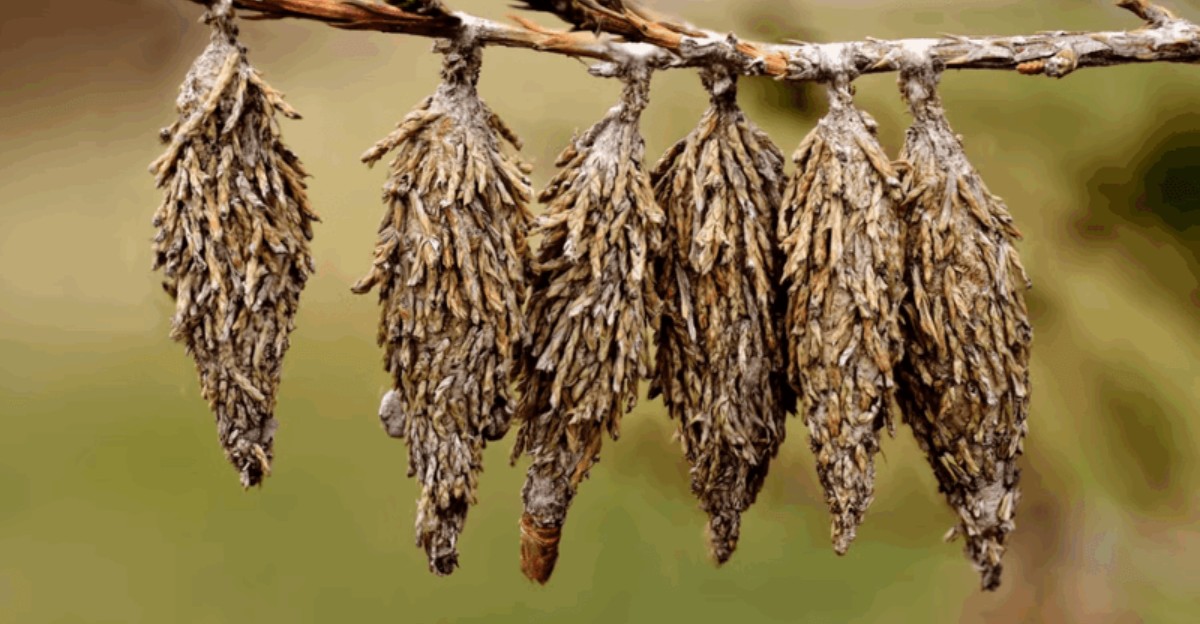
A single brown pouch on your arborvitae can hold up to 1,000 eggs. I learned that one winter while staring at what I assumed were tiny pinecones.
They dangle from the branch tips like ornaments nobody ordered. Each one is wrapped in silk and covered with bits of chewed needles, so it blends right in.
You might notice a few browning branches nearby and blame the cold. I did the same thing for two seasons in my Illinois yard before I finally pulled one off and cut it open.
The inside surprised me more than I expected. Something was waiting in there, tucked away and patient, ready for the warm days of late spring. Here in Illinois, that wait ends sooner than most homeowners realize.
Those “pinecones” are bagworm bags, and each one that holds eggs and stays hanging until June can release 500 to 1,000 hungry caterpillars onto your tree.
Those Silk Cones On Your Arborvitae Are Not Pinecones At All
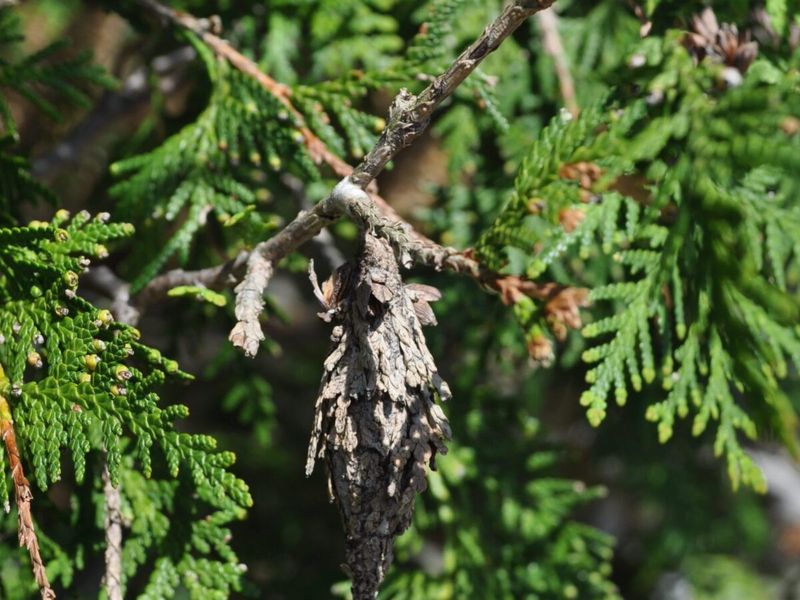
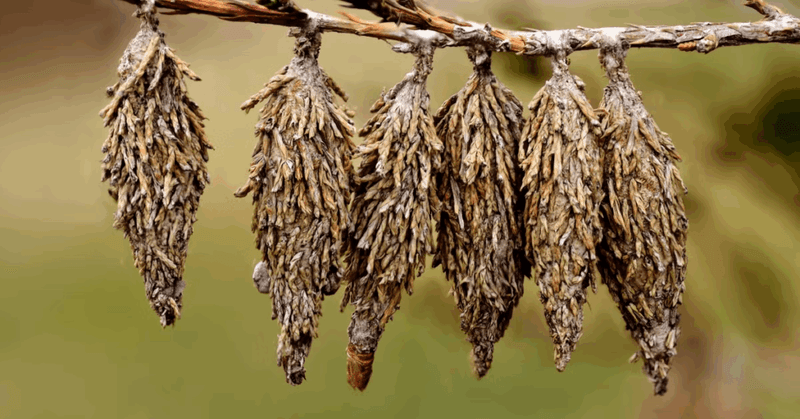
Give one of those brown cones a gentle squeeze and you will feel the difference right away. A real pinecone is hard and woody, while these feel tough but papery, almost like leathery cloth.
What you are holding is a bag built by the evergreen bagworm, a native moth caterpillar found across much of the eastern United States. The caterpillar spins the bag from strong silk, then glues on pieces of needles and leaves from the plant it is eating.
That clever disguise is why so many folks walk past them for years. Full-grown bags usually reach about 1.5 to 2.5 inches long. They hang from twigs by a thick silk band, often near the outer tips of branches.
You will spot them on arborvitae, junipers, spruce, pine, and red cedar most often. Here is a quick test I use. Real cones grow in a regular pattern and have overlapping scales, while bagworm bags look shaggy and messy, with bits of foliage stuck on at odd angles.
Some even hang upside down like tiny brown bells. Once you learn the shape, you start seeing them everywhere, from parking lot shrubs to cemetery hedges.
Hundreds Of Bagworm Eggs Are Wintering Inside Each Bag
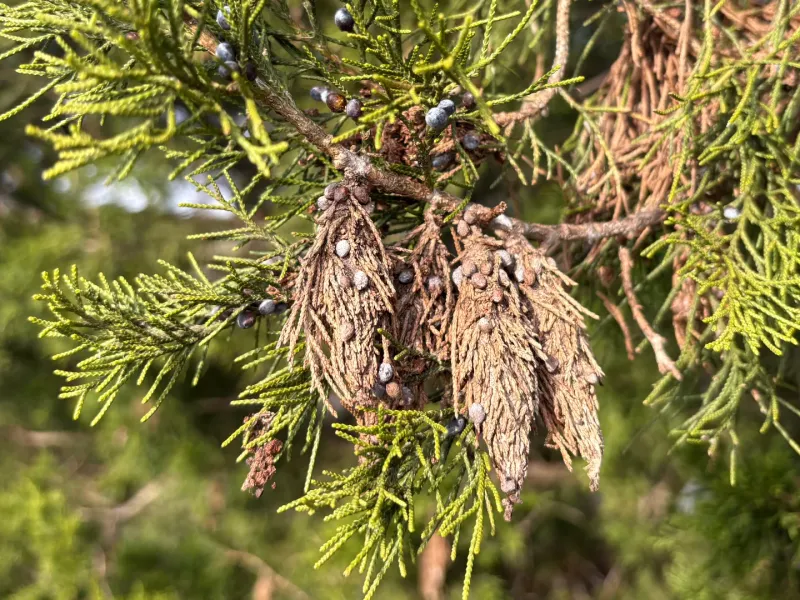
Cut a bag open with garden snips in January and you might find a soft, crumbly mass of tiny cream-colored eggs. University of Illinois Extension notes that a single bag can contain 500 to 1,000 of them.
Each autumn, the female bagworm moth finishes her life cycle in a surprising way. She has no wings, no working legs, and no real mouthparts, so she stays inside her bag the whole time.
A winged male flies to her, mating happens through the bag opening, and she lays her eggs right there before she shrivels away.
The empty female body and her bag become a cozy winter shelter. Those eggs ride out Illinois snow, sleet, and subzero wind chills tucked inside layers of silk.
Not every bag holds eggs, though. Male bags are left empty after the moth flies out, and they are usually a bit smaller.
Since you cannot tell them apart easily from the ground, it makes sense to treat every bag as a possible egg case.
Fun fact for curious kids: the scientific name, Thyridopteryx ephemeraeformis, includes a Latin word meaning ‘mayfly-shaped,’ a nod to how the winged adult males look.
Pulling Bagworm Bags Off By Hand Works Best This Winter
Grab a bucket, a pair of gloves, and some small snips. Winter is the easiest and cheapest time to control bagworms, and no spray is needed.
Since the eggs cannot hatch until late spring, every egg-filled bag you remove now means hundreds fewer hungry caterpillars later. On small shrubs, I can clear a whole hedge in an afternoon while listening to podcasts.
Watch that silk band. Bagworms wrap it tightly around the twig, and if it stays there it can girdle the branch over time and cause the tip to brown.
Snip or slice through the silk instead of yanking the bag off. Disposal matters just as much. Dropping bags on the ground or tossing them in compost lets eggs hatch right back onto your plants.
Crush them, soak them in soapy water for a few days, or seal them in a plastic bag for the trash.
Tall spruce and pine can be tricky. A sturdy step ladder and a pole pruner help, but please skip anything that feels unsafe. A certified arborist can reach high bags for you.
Tiny Bagworm Caterpillars Hatch And Float Away In Late Spring
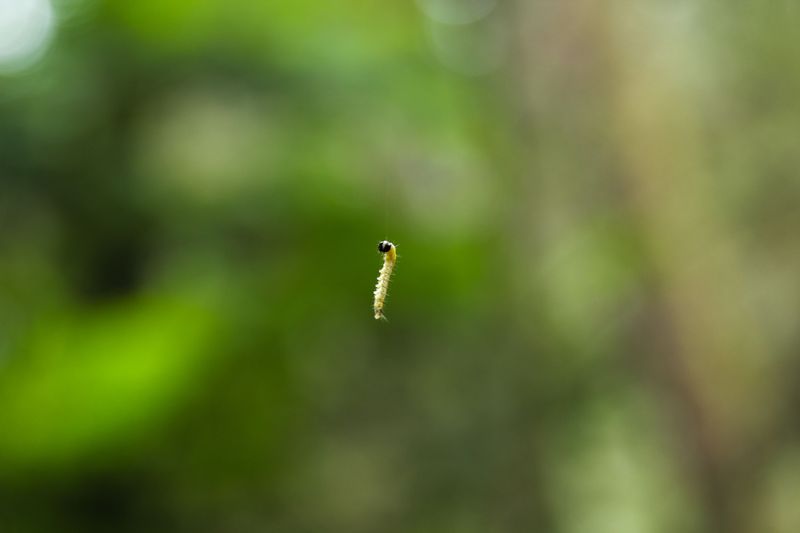
Late May through mid-June is hatching season across most of Illinois, with southern counties often a little earlier than the Chicago area. The newborn caterpillars are about the size of a pinhead.
They crawl out of the old bag and get to work fast. Within a day or so, each one starts building a tiny bag of its own, which looks like a small brown speck pointing upward on a needle. Many gardeners mistake them for dirt.
Some young caterpillars do something even wilder. They spin a long silk thread, let the breeze catch it, and drift to a new plant.
Scientists call this ballooning, and it explains how bagworms suddenly show up on a shrub that was clean last year.
Because adult females cannot fly, ballooning is the main way these insects spread. It also means a neighbor’s infested tree can send a fresh batch your way.
Mark your calendar for early June and look closely at branch tips. A hand lens or your phone camera on zoom can reveal those micro bags long before the damage shows.
Browning Juniper And Arborvitae Needles Can Signal Bagworm Feeding
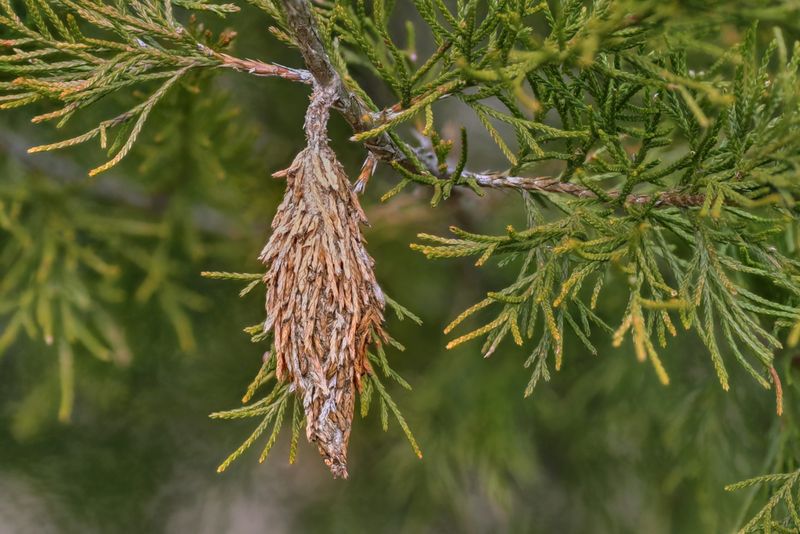
Summer is when the trouble becomes visible. Bagworm caterpillars feed from June into August, poking their heads and front legs out of their bags to chew on needles.
Deciduous trees like maples or honeylocust can usually push out new leaves after feeding. Evergreens are a different story.
Needles lost from arborvitae, juniper, and spruce often do not grow back on those bare sections, so damage tends to stick around.
Light feeding may just look like a thin spot. Heavy infestations can strip branches bare, leave them brown, and weaken a plant so badly that it declines over a season or two. Young or newly planted evergreens are especially at risk.
I check the sunny south side of my hedge first, since bagworms often build up there. Brown tips with bags dangling nearby are a strong clue.
Keep in mind that browning has other causes too. Winter burn, drought stress, spider mites, and needle diseases can look similar.
If you see browning but no bags, a sample sent to University of Illinois Extension can help sort out the real culprit.
Spray Timing For Bagworms Matters More Than The Product
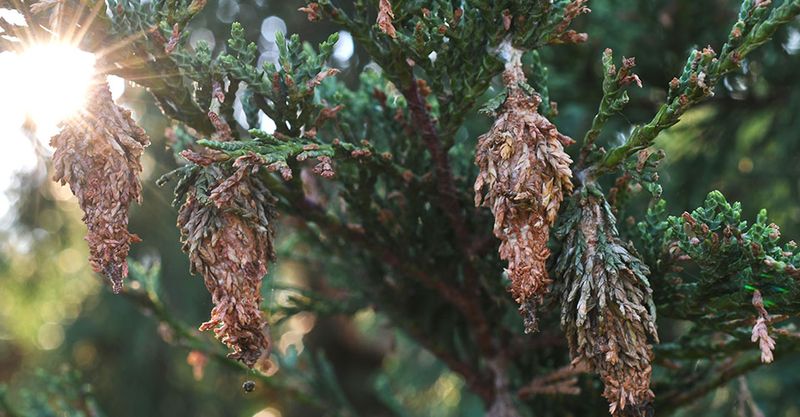
Missed the winter cleanup? No worries, you still have options, but the calendar matters a lot.
Treatments work best on young caterpillars, usually from early June through early July in Illinois. At that stage the bags are small, often less than half an inch, and the larvae are feeding hard. That makes them easy targets.
Many extension experts suggest starting with Bacillus thuringiensis, often sold as Bt. This natural bacterium affects caterpillars that eat treated foliage while being low risk for bees, birds, and people.
Spinosad is another option. Thorough coverage of the foliage is key since the larvae need to eat it.
Wait too long and things get harder. By August, older caterpillars seal their bags shut and attach them firmly to twigs to pupate. Sprays at that point do very little, and you are better off waiting for winter hand-picking.
Read every label carefully and follow the directions. For large trees or heavy infestations, a licensed tree care professional has the equipment to treat safely and reach the tops.
Birds And Tiny Wasps Love Snacking On Bagworm Caterpillars
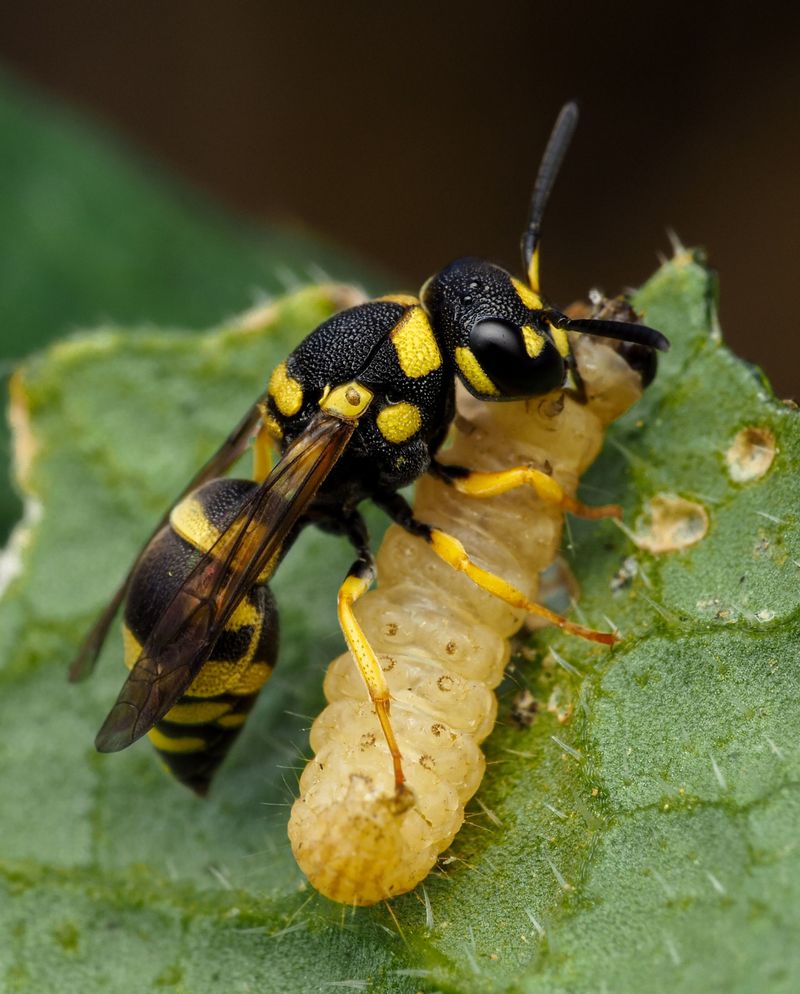
Nature has its own pest patrol, and it works for free. Sparrows, chickadees, and other songbirds will pick at bagworms, especially the young caterpillars in early summer.
Even more helpful are tiny parasitic wasps. Several native species lay their eggs inside bagworm larvae or pupae, and the young wasps feed on the host.
Researchers have found these parasites can noticeably reduce bagworm numbers in some years.
You can invite these helpers in with flowers. Small adult wasps need nectar and pollen, so blooms like native asters, goldenrods, black-eyed Susans, and mountain mint give them fuel.
I tuck a patch of asters near my junipers and enjoy the fall color as a bonus. Broad-spectrum insecticides can harm these beneficial insects. That is one more reason to lean on hand-picking and targeted products like Bt.
Natural enemies rarely clear a heavy infestation alone. Still, a garden full of birds and native flowers keeps the balance tipped in your favor over time.
A Yearly Bagworm Check Keeps Your Evergreen Hedge Healthy
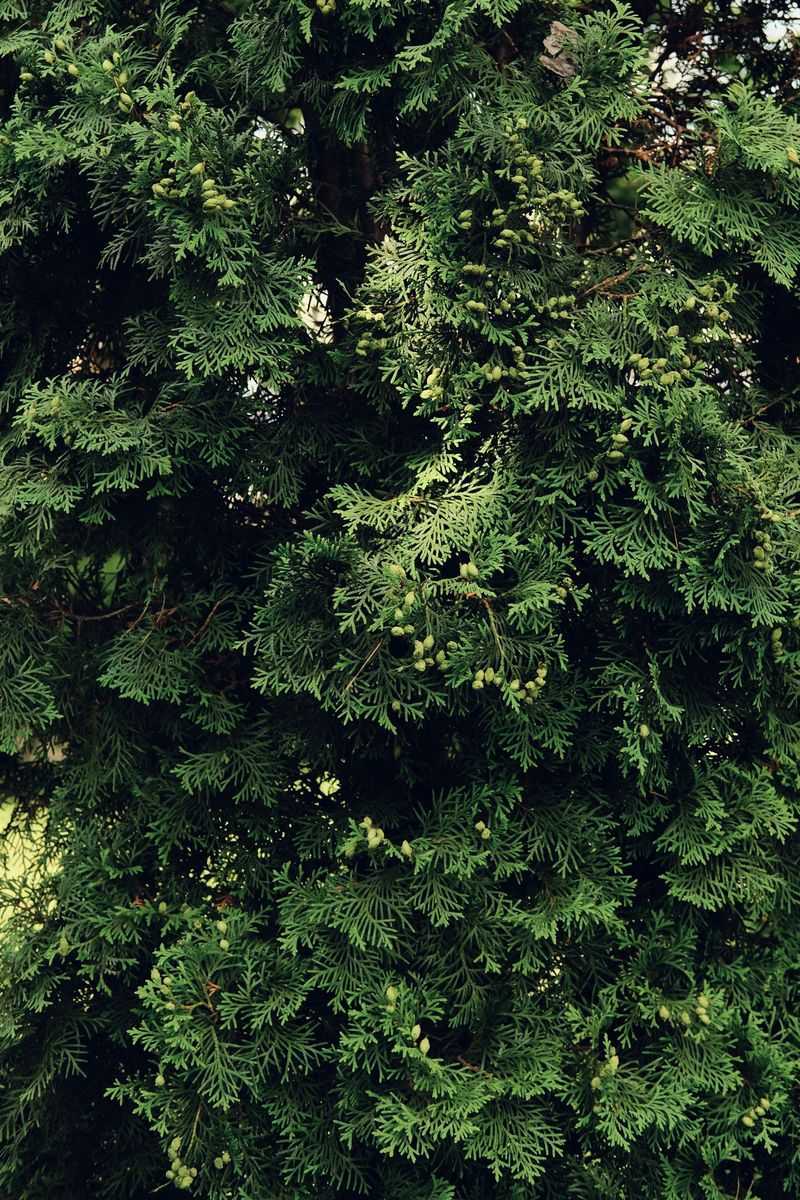
Think of bagworm patrol as a winter habit, like checking your gutters. A short walk around your evergreens each December through March can save a hedge you spent years growing.
Start with the plants bagworms like most. Arborvitae, juniper, red cedar, spruce, and pine deserve a close look, and do not skip lindens or honeylocust, which are also favorites in Illinois.
Bare winter branches make bags easy to see on deciduous trees too. Healthy plants bounce back better. Water evergreens deeply during summer and fall dry spells, add a few inches of mulch over the roots, and keep mulch away from the trunk.
Talk with neighbors about what you find. Because caterpillars balloon on the wind, a whole block that cleans up together sees fewer problems the next year. My favorite takeaway is simple.
Those little brown cones are a fascinating survival trick, but every egg-filled bag you snip this winter keeps hundreds of hungry mouths away from your greenery. A bucket, some snips, and a sunny afternoon make a real difference.