8 Holiday Plants That Are Safe For Pets In Virginia Homes
Poinsettias get blamed for holiday pet emergencies, yet the ASPCA rates them as only mildly irritating to cats and dogs. Lilies are the real troublemakers, since even a little pollen can cause serious kidney damage in curious cats.
Holly berries and mistletoe also land on the ASPCA warning list, which surprised me the first time I checked. Virginia woods are full of native holly, so plenty of us haul those glossy branches indoors every December.
I skipped the guesswork this year and compared each pick against the ASPCA plant database before buying anything. You build calmer holidays when a nosy cat sniffs your centerpiece and nobody needs an emergency vet call.
Several safe options bloom right on schedule, and one even folds its leaves upward every single night. Which of these festive surprises deserves a sunny spot on your Virginia windowsill before the guests arrive?
1. Christmas Cactus
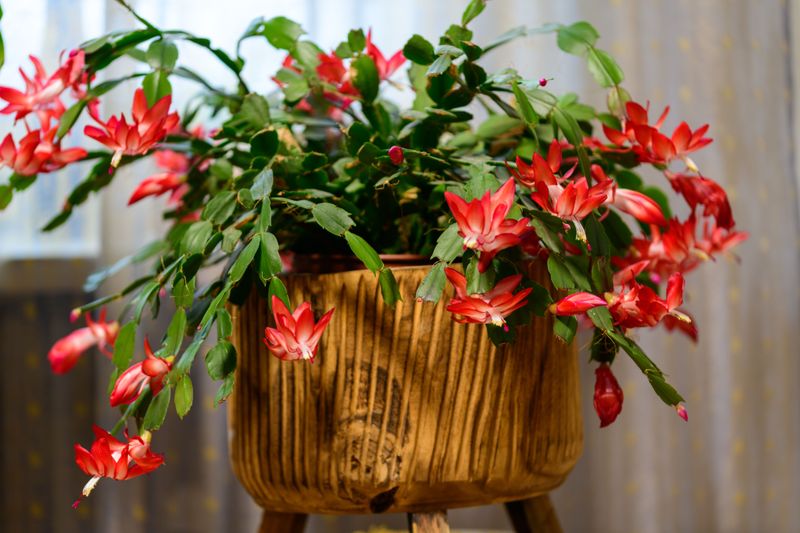
My grandmother’s Christmas cactus bloomed every December for decades, and those cuttings still flower in my kitchen today. Its smooth, flat stems look nothing like a desert cactus, because it grew up on mossy Brazilian tree branches.
The ASPCA lists Schlumbergera as nontoxic to dogs and cats, which makes it an easy holiday pick. A pet that chews a stem might get a mild upset stomach, but serious trouble is unlikely.
Flower buds form when nights grow long and cool, usually around fifty to fifty-five degrees Fahrenheit. An unheated sunroom or a chilly window in autumn often nudges stubborn plants into a full bud set.
Once buds appear, avoid moving the pot around, since sudden changes in light or warmth cause bud drop. I learned that lesson after relocating mine for a party and sweeping pink buds off the floor.
Bright, indirect light suits this plant best, while harsh afternoon sun can bleach the stems a reddish color. Water when the top inch of soil feels dry, and let extra water drain out freely.
Soggy roots cause more problems than anything else, so pick a pot with drainage holes and loose mix. A blend made for cactus or orchids, mixed with regular potting soil, keeps the roots happily breathing.
After blooming ends, give the plant a short rest with slightly less water for a few weeks. By spring you can pinch off a few stem segments and root them as gifts for friends.
2. Phalaenopsis Orchid
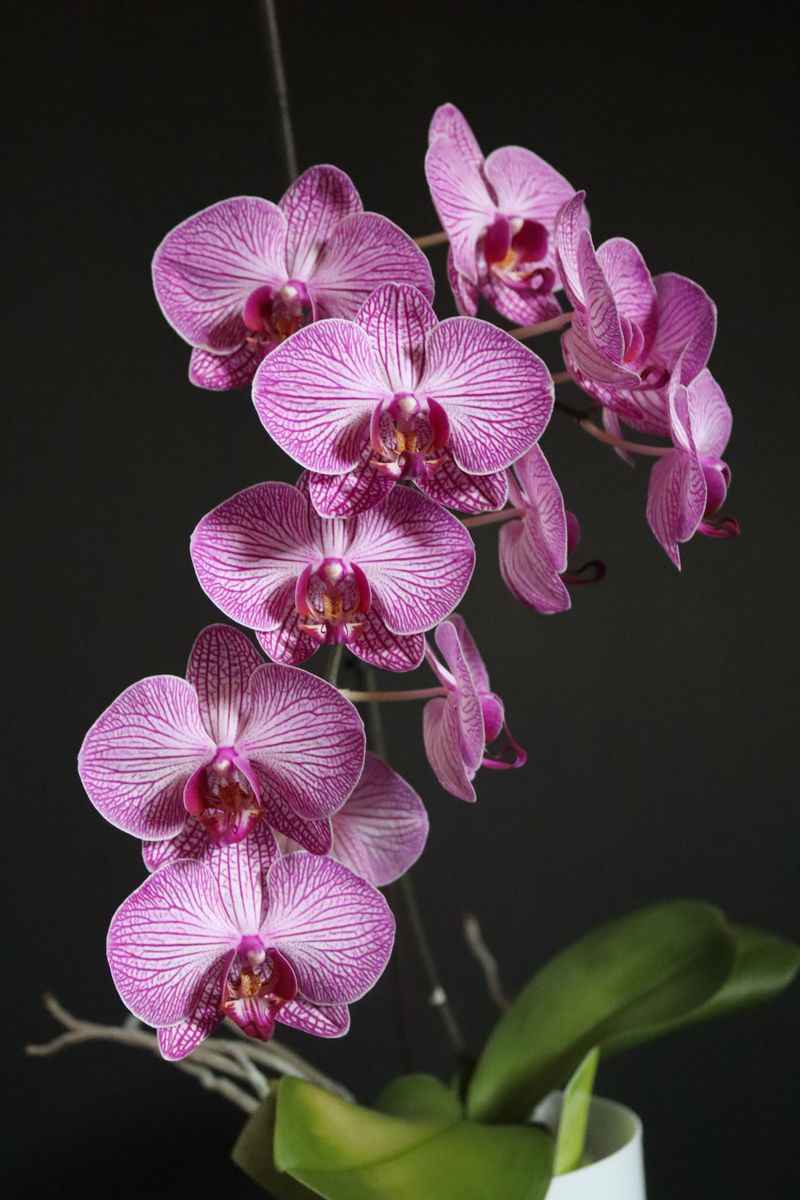
Few flowers stay open as long as a moth orchid, which can hold its blooms for two or three months. I bought one in early December once, and it was still flowering when tulips poked up in March.
Phalaenopsis orchids appear on the ASPCA list as nontoxic for both cats and dogs in the home. Curious kittens still love patting the dangling flowers, so a sturdy stake keeps the arching spike upright.
In the wild, these orchids cling to tree trunks across tropical Southeast Asia rather than growing in soil. That history explains why they prefer chunky bark mixes that let air reach the thick, silvery roots.
Most homes need a watering about once a week, though dry winter heat may speed things up a little. Check the roots first, since silvery color means thirsty and green means the plant still has enough moisture.
Pour water through the pot, let it drain fully, and keep the roots from sitting in a puddle. Avoid splashing the crown where leaves meet, because trapped water there can cause rot during cool weather.
An east window works beautifully, giving soft morning light without the scorching rays that burn broad leaves. Leaves that turn a darker green usually ask for more light, while yellow scorched patches suggest too much.
Getting a second bloom is easier than many people expect, once you understand what triggers a new spike. A few weeks of nights near sixty degrees in fall often convinces the plant to start another show.
3. African Violet
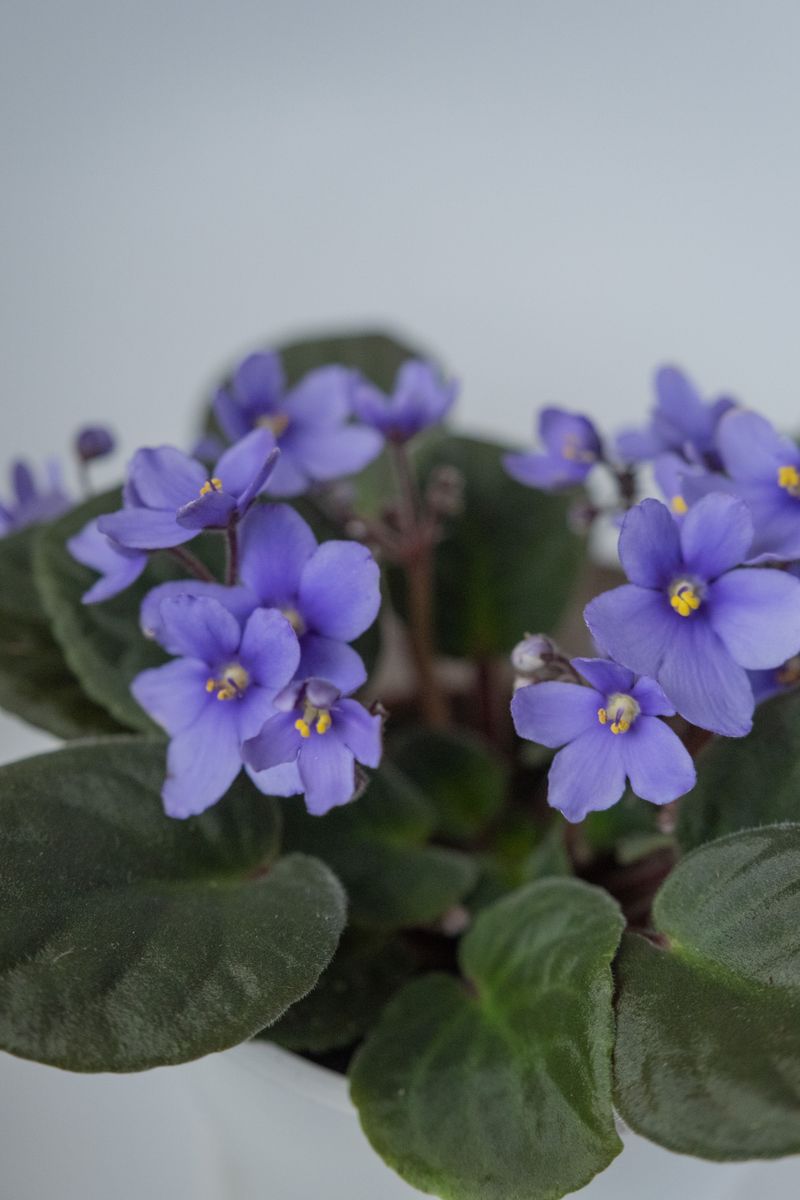
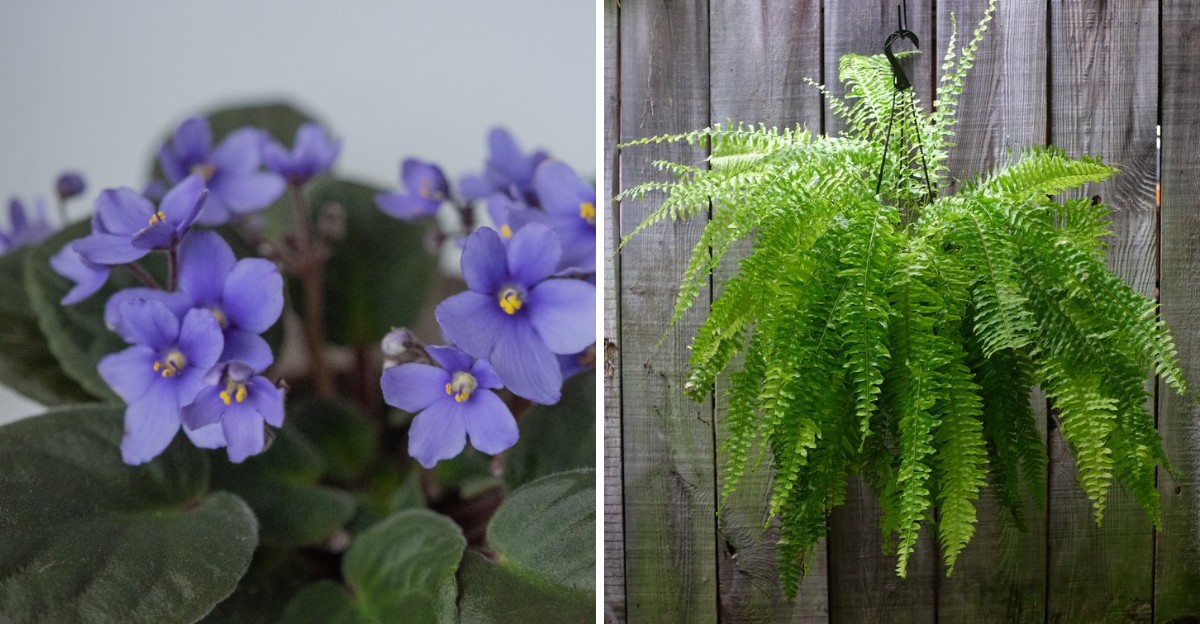
Fuzzy leaves feel like a puppy’s ear under your fingertip, and that softness is half the fun here. African violets can flower on and off through the year, so they brighten the holidays without special tricks.
A German colonial official named Baron Walter von Saint Paul sent seeds home from Tanzania back in 1892. Botanists later named the group Saintpaulia, and recent DNA research moved these little plants into the genus Streptocarpus.
Despite the name, they are not related to garden violets, which honestly makes trivia night much more fun. The ASPCA lists African violets as nontoxic to cats and dogs, so a curious sniff causes little worry.
Cold water is the main thing to avoid, since chilly drops leave pale rings on those hairy leaves. I keep a jug of room-temperature water nearby and pour it into a saucer under the pot.
After about thirty minutes, the soil soaks up what it needs, and you can dump the leftover water. Bottom watering also keeps the crown dry, which helps prevent rot in the center of the plant.
Bright, filtered light from an east or north window gives steady blooms without scorching the delicate leaves. During short winter days, a simple LED grow light running about twelve hours daily works small wonders.
These plants bloom best in snug pots, so resist the urge to move them into something much bigger. A shallow pot about one-third the width of the leaf spread usually keeps the cheerful flowers coming steadily.
4. Rosemary
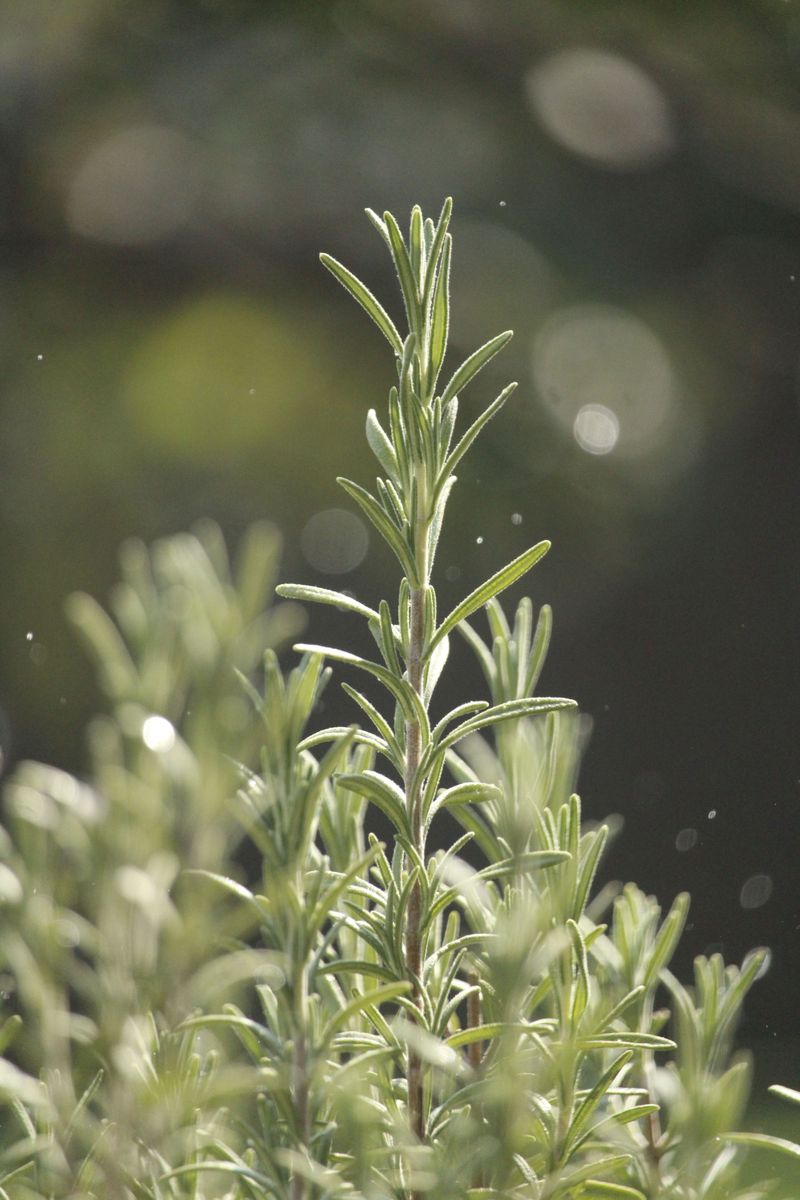
Brush past a rosemary topiary and the whole room smells like a holiday roast slowly cooking in the oven. Garden centers trim these herbs into tiny cone-shaped trees each winter, and they look adorable with a red bow.
Rosemary shows up on the ASPCA list as nontoxic to dogs and cats, which surprised plenty of friends. Botanists recently moved it into the sage genus, so you may see the name Salvia rosmarinus on tags.
Indoors, this Mediterranean herb wants the sunniest window you have, ideally with six or more hours of light. A south-facing window helps, and a grow light fills the gap during gray weeks in late winter.
Watering takes some balance, because soggy roots cause rot, while bone-dry soil makes needles turn brown quickly. I water once the top inch dries, then empty the saucer so nothing sits around the roots.
A cool room suits it better than a toasty spot near the furnace vent or a crackling fireplace. Gentle air movement from a small fan also helps prevent powdery mildew, a common indoor rosemary problem.
You can snip sprigs for roasted potatoes or holiday bread, and light trimming keeps the tree shape tidy. Just avoid cutting more than about one-third of the plant at once, or regrowth will slow down noticeably.
Many Virginia gardeners move their potted topiary outdoors in spring, especially in milder areas near the coast. Hardier types like Arp handle colder winters better, though mulch and a sheltered spot still help a lot.
5. Parlor Palm
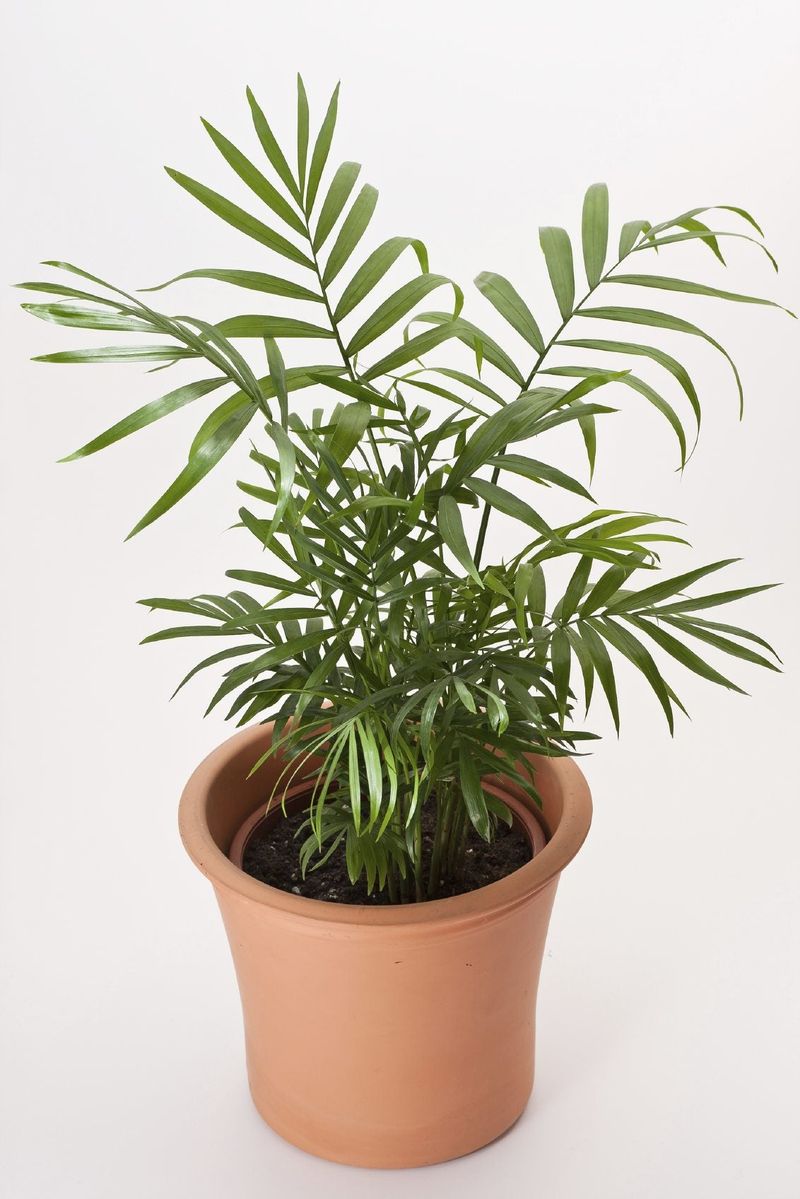
Victorian families loved this little palm because it shrugged off the dim, smoky light of gas-lit parlors. That same toughness makes the parlor palm a handy pick for shady corners that most holiday plants dislike.
Its botanical name is Chamaedorea elegans, and it grows wild in rainforest understories of Mexico and Guatemala. The ASPCA lists it as nontoxic to cats and dogs, sometimes under the older trade name Neanthe bella palm.
Indoors it grows slowly, usually reaching about three or four feet after several patient years in a pot. I tuck small fairy lights between the fronds in December, and it becomes a tiny tropical holiday tree.
Medium to bright indirect light keeps the fronds deep green, while direct afternoon sun can scorch leaf tips. A spot a few feet back from a window often hits the sweet spot without much fuss.
Water when the top inch or two of soil feels dry, then let the extra drain away. Brown tips often point to dry air or salty buildup, so occasional deep flushing with clean water helps.
Cats sometimes chew the feathery fronds just for fun, which leaves ragged edges but rarely causes real harm. Keeping a pot of cat grass nearby gives them a more tempting snack and protects your palm’s good looks.
Several seedlings are usually planted together in one pot, which gives that full, bushy look you see in stores. Repot only every couple of years, because these palms tolerate crowded roots better than most houseplants do.
6. Areca Palm
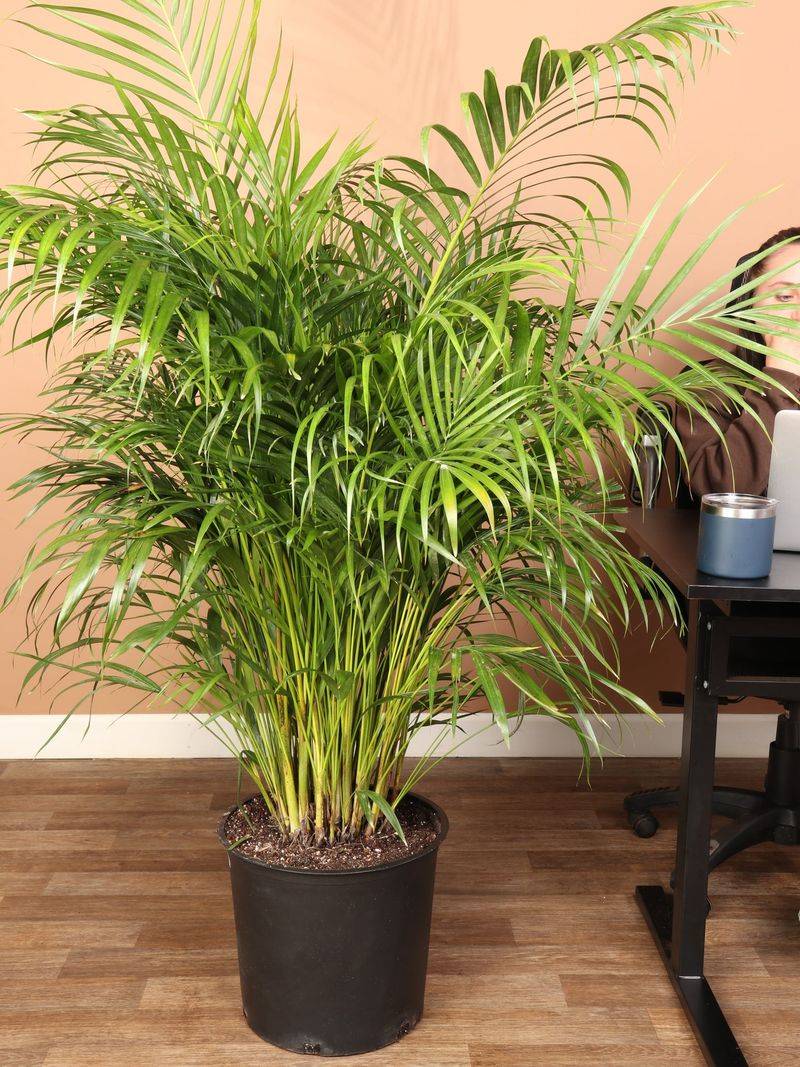
Arching fronds that curve like butterfly wings earned this palm its other nickname, the butterfly palm, years ago. One tall areca in a living room corner instantly shifts the mood from cold December to breezy island vacation.
Its scientific name is Dypsis lutescens, and it comes from Madagascar, where it grows in tight, clumping stands. The ASPCA lists it as nontoxic to dogs and cats, which matters with fronds this tempting to swat.
You may have heard it purifies indoor air, thanks to a famous NASA study from the late 1980s. Later research suggests houseplants barely change air quality in a real home, so enjoy it mainly for beauty.
Bright, indirect light keeps the fronds golden green, and a spot near a sunny window usually works well. Too much hot direct sun yellows the leaves, while deep shade makes growth slow and floppy over time.
I water mine when the top couple inches of soil dry out, which often means weekly in winter. Fluoride and salts in tap water can brown the tips, so rainwater or filtered water is a nice upgrade.
Dry indoor heat invites spider mites, so check the undersides of fronds for fine webbing every few weeks. A quick lukewarm shower in the tub rinses pests away and makes the whole plant look freshly polished.
Indoors this palm can reach six or seven feet, so give it room to stretch upward over the years. Pick a heavy pot too, since a playful dog bumping a top-heavy palm can send everything tumbling.
7. Prayer Plant
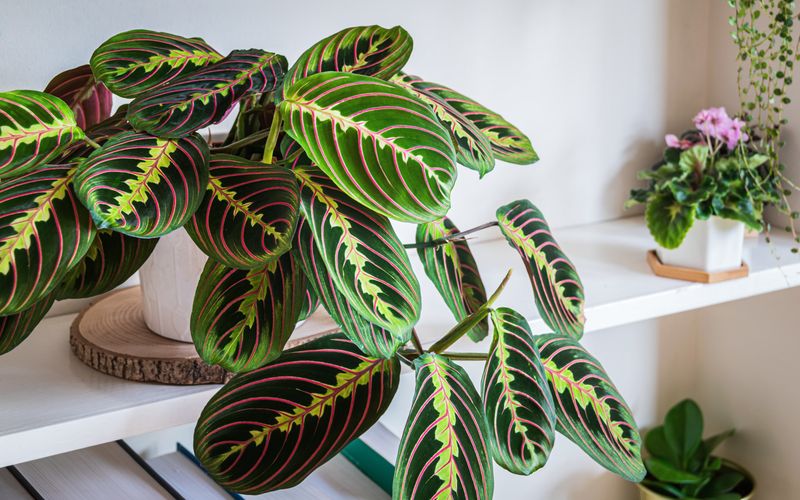
Every evening my prayer plant lifts its leaves upright, and the soft rustling sound genuinely startled me one night. Scientists call this movement nyctinasty, and it happens because a tiny joint at each leaf base changes shape.
That joint, called a pulvinus, shifts water between cells so the leaves fold up at night and lower by morning. Researchers still debate exactly why the plant does this, though saving moisture is one popular explanation.
Its botanical name is Maranta leuconeura, and it grows on the shady forest floor of eastern Brazil. The ASPCA lists it as nontoxic to cats and dogs, so a nibbling kitten mostly harms only the leaves.
Painted red veins and dark green blotches make the foliage look festive, even without a single flower. I like pairing it with a white pot and a few pinecones for a quick holiday table display.
Bright, indirect light keeps those patterns crisp, while direct sun fades colors and leaves crispy brown patches. Low light is tolerated for a while, though growth slows and the leaves may lose some of their markings.
Keep the soil evenly moist but not soggy, since this plant sulks quickly when it dries out fully. Filtered or rainwater helps too, because minerals in some tap water cause brown leaf edges over time.
Winter furnace heat dries the air, and prayer plants prefer humidity closer to fifty percent or a bit higher. A small humidifier nearby or a grouping of plants together helps the leaves stay smooth and unfurled.
8. Boston Fern
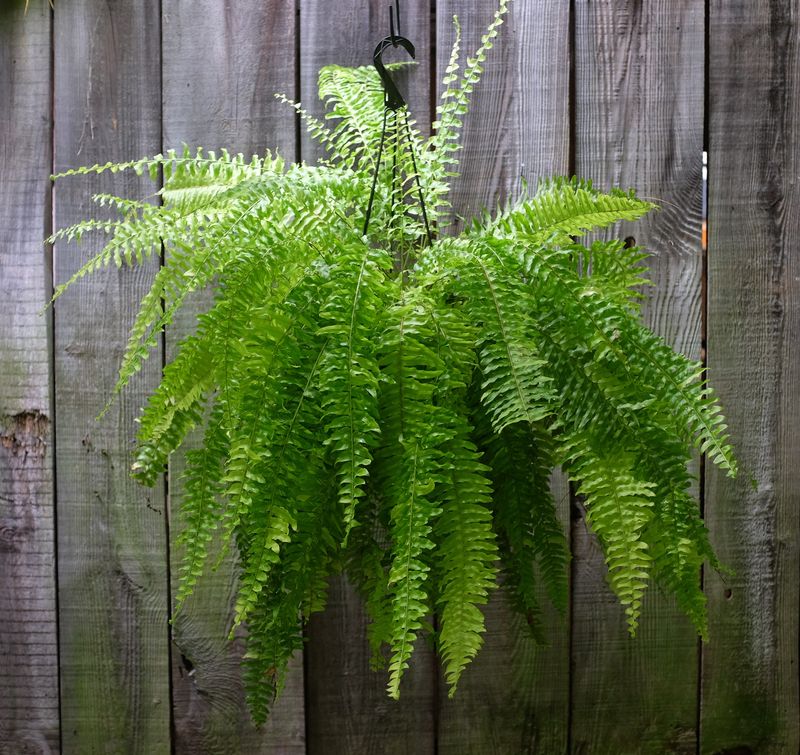
Back in 1894, a Massachusetts grower spotted an unusual sword fern in a shipment, and the Boston fern was born. Those lush, arching fronds have dangled from porches and parlors ever since, adding instant softness wherever they hang.
The plant is a variety of Nephrolepis exaltata, and the ASPCA lists it as nontoxic to cats and dogs. Watch out for asparagus fern, though, because that unrelated lookalike can irritate pets and lands on toxic lists.
Many Virginia porches hold hanging ferns all summer, and those baskets can come inside before the first frost. I hose mine off first and check for hitchhiking bugs, because nobody wants spiders joining the holiday party.
Indoors, bright indirect light near an east window helps the fronds stay full and keeps leaflets from dropping. Dim corners lead to thin growth, while direct afternoon sun turns the delicate leaflets crisp and pale.
Consistent moisture matters most, so water when the soil surface feels barely dry rather than waiting for wilting. Ferns that dry out fully shed a shower of tiny leaflets, and cats find that mess hilarious.
Low winter humidity is the biggest challenge, since furnace heat can drop indoor moisture levels below thirty percent. A room humidifier works better than misting, which only raises humidity for a few short minutes.
Pebble trays help a little, especially when several humidity-loving plants share the same bright corner of the room. Hang the basket where swiping paws cannot reach the fronds, and your fern will stay lush until spring.