Those Small Bumps On Your Indiana Orchid Leaves Need Attention Right Away
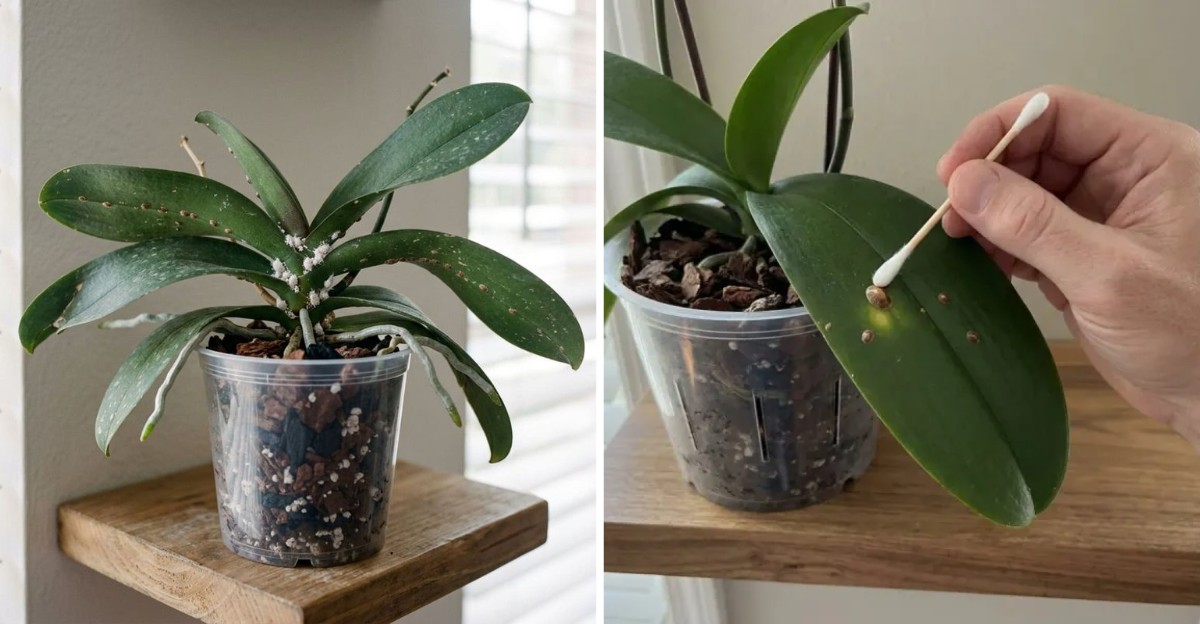
Those tiny tan bumps on your orchid leaves might be living insects with armor glued on their backs. Each one sits in place for weeks and quietly drinks sap from the plant like a tiny straw.
Scale insects are a common houseplant pest in Indiana, and orchids are among the plants they can infest. Females can lay many eggs under their shells so one bump rarely stays alone for long.
I first mistook them for natural leaf texture, and I felt a little silly later on. You need to look closely at any sticky shiny spots on nearby leaves or the windowsill below.
Many Indiana homes are closed up by October, and warm dry indoor air suits these pests just fine. So what exactly are those bumps, and how fast should you act once you spot one?
Your Orchid Bumps Are Likely Sap-Sucking Pests Under Shells
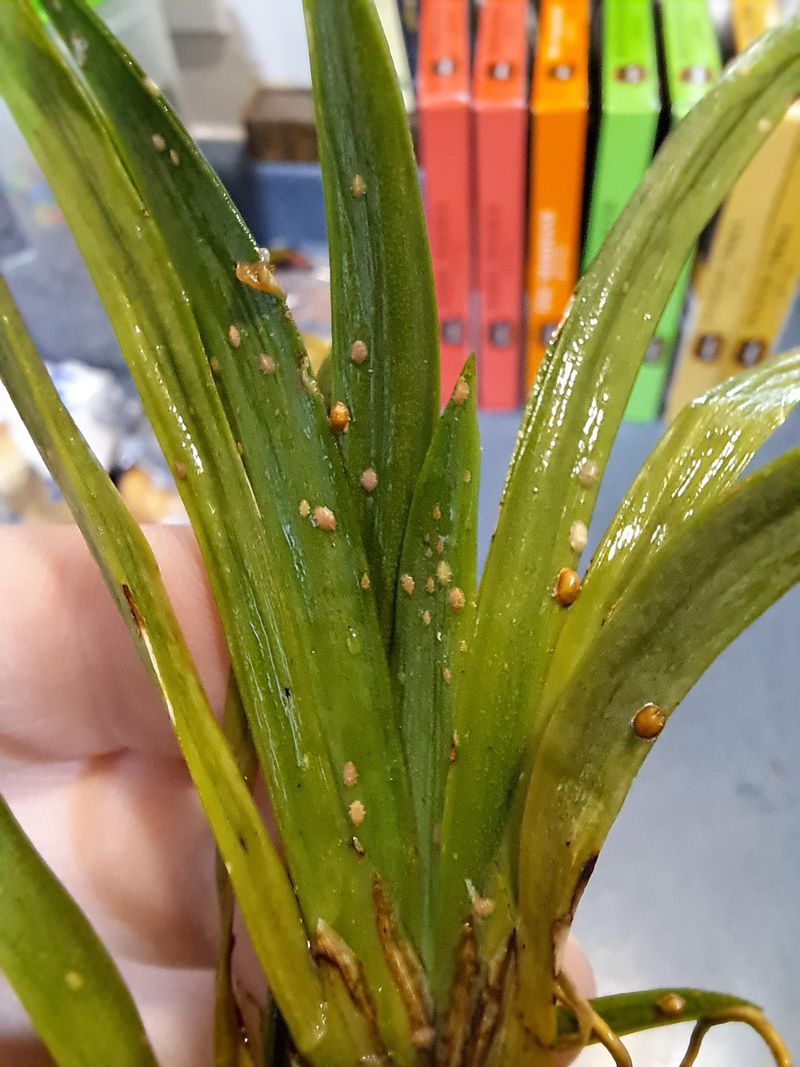
Scale insects are the most likely answer when firm bumps appear on orchid leaves and refuse to wipe away easily. Young crawlers wander for a short time, then settle down and build a waxy shield over their soft bodies.
Once settled, many species stay in one spot for the rest of their lives on that leaf. Their mouthparts work like thin needles, pulling sap from the plant tissue day after day without a break.
Orchids grow slowly, so they struggle to replace the energy and moisture these insects steadily take away. Over time, you may notice yellow patches, weak new leaves, or flower spikes that fail to open fully.
Many soft scale types also release sticky honeydew, which coats leaves with a shiny film you can feel. A dark sooty mold can grow on that sugar, blocking light the leaf needs for healthy growth.
Across Indiana, most orchids live indoors by October, and that cozy setting gives scale a steady home. Indoor temperatures stay mild through winter, so populations can keep building quietly through the darker months ahead.
I think of each bump as a tiny tenant who pays no rent and slowly drains the pantry. Catching them early makes a huge difference, because a few bumps are far easier to handle than hundreds.
Orchids such as Phalaenopsis and Cattleya can be affected by scale insects. Your orchid can recover, but it does need a careful plan starting this week.
You Can Tell Brown Bumps From White Cottony Clusters
Two different troublemakers often get lumped together, and telling them apart helps you choose the right fix. Brown, tan, or gray bumps that feel hard are usually armored or soft scale insects sitting tight.
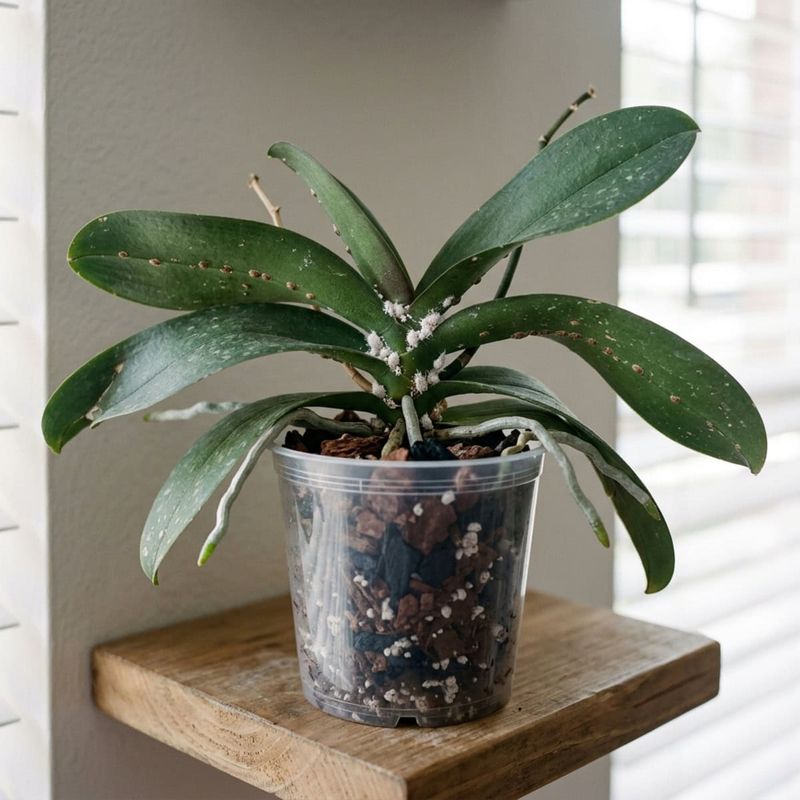
White fuzzy clusters tucked into leaf joints are more likely mealybugs, a close cousin with a cottony coat. Mealybugs can crawl slowly around the plant, while most adult scale insects stay fixed in one place.
Boisduval scale is a common orchid pest, and its females look like flat, round, whitish or tan disks. Its males gather in fluffy white patches, so they can fool you into thinking you have mealybugs.
Your Indiana Garden Changes Every Week. Your Plan Should Too.
Gardening in Indiana changes quickly throughout the season. Every Friday you’ll receive a simple weekly plan showing exactly what to plant, prune, fertilize, harvest, and protect so you never miss the right timing.
A simple trick is to press gently on a bump with a toothpick or your fingernail. Scale often pops off as a little shell, while mealybugs smear into a soft, slightly waxy mess instead.
Honestly, I find a cheap magnifying glass makes this job far more fun and much less frustrating. Under magnification, you can sometimes spot tiny legs on mealybugs, while scale shells look smooth and sealed.
Scale and mealybugs can show up on the same plant, especially in crowded indoor plant collections. Luckily, the control steps overlap quite a bit, so one careful routine can manage both kinds of trouble.
Snap a clear photo if you feel unsure, then share it with your county Purdue Extension office. Staff there can help identify the pest, which saves you from guessing and wasting time on wrong treatments.
Flip Every Leaf To Check The Undersides
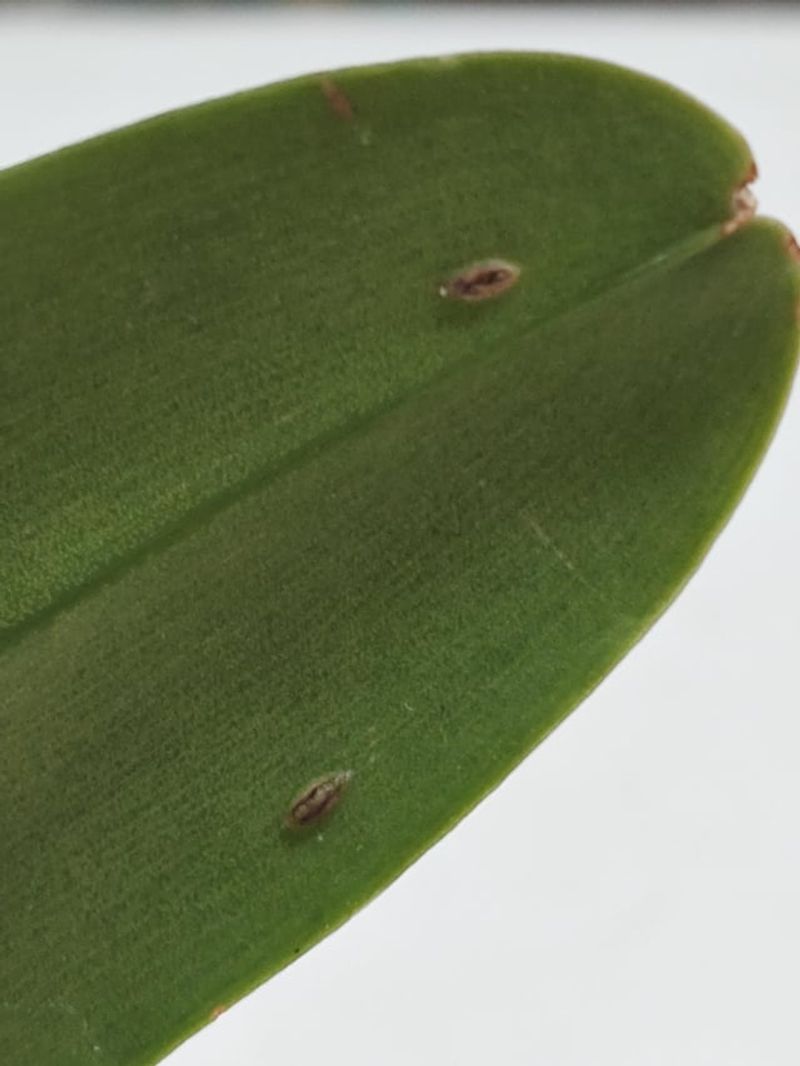
Scale insects love the shady side of the leaf, where they hide from light and from your eyes. Plenty of growers only glance at the tops, so infestations can grow large before anyone notices them.
Make leaf checks part of your weekly watering routine, since you are already handling the pot anyway. Tilt each leaf gently toward a bright window and look along the central vein from base to tip.
That midrib is a favorite parking spot, and scale often lines up there like tiny beads on a string. Also check where leaves meet the stem, plus the flower spike, roots, and any papery sheaths on pseudobulbs.
October light in Indiana fades early in the evening, so a small flashlight helps a lot during inspections. Shine it across the leaf at a low angle, and the raised bumps will cast tiny noticeable shadows.
I like running a damp white paper towel along the underside, because it shows sticky residue very clearly. Yellow or pale freckles on the top of a leaf can also hint at feeding happening right below.
Cattleya orchids deserve extra attention, since their papery sheaths give scale perfect hiding places near the rhizome. Peel back dry, loose sheaths carefully with clean fingers, and check underneath for clusters of tan shells.
Keep a simple notebook or phone note listing which plants had bumps and the date you spotted them. Those notes make it easier to track progress and decide whether your treatments are actually working well.
Your Other Plants Can Catch These Pests Fast
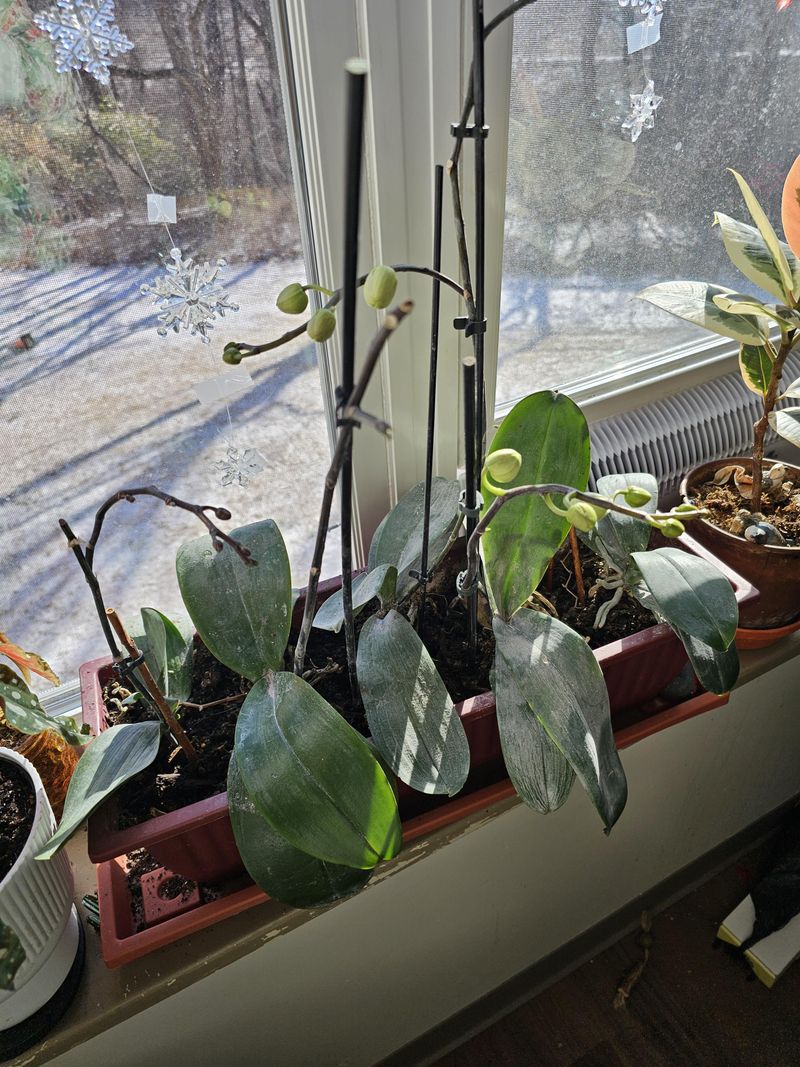
One orchid with scale can become the starting point for trouble across your whole windowsill collection this fall. Newly hatched crawlers are tiny and mobile, and they wander off to find fresh leaves nearby.
They can walk across touching leaves, hitch rides on your hands, or travel on shared tools and pots. Air currents from fans or heating vents may also carry some crawlers short distances inside your home.
Many Indiana gardeners bring tropical plants inside in October, and that shuffle often mixes pests with clean plants. A hibiscus or citrus that spent warmer months outdoors can carry scale straight to your orchid shelf.
Personally, I treat every incoming plant like a new student who needs a quick checkup before joining class. Keep new or recently moved plants apart from your orchids for at least three to four weeks.
If you find bumps on one orchid, move it to a separate room or a sunny spot alone. Then inspect every plant that shared its shelf, since early crawlers are often too small to notice.
Wipe down the shelf, saucers, and nearby window ledge with warm soapy water after moving the infested plant. Wash your hands and clean your pruning snips before touching any healthy orchids in the collection.
Spacing plants so leaves do not touch also slows the spread and lets fresh air move freely. A little extra elbow room on the shelf can save you weeks of cleanup later this winter.
A Cotton Swab Or Soft Brush Does The First Job
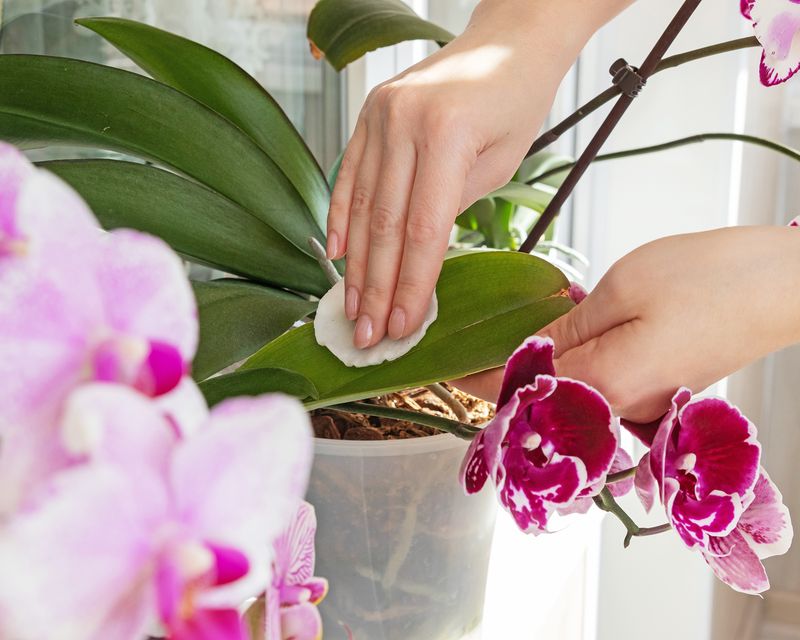
Sometimes the simplest tools work best, and a plain cotton swab can handle a light scale problem nicely. Physical removal is a common recommendation from extension services for small indoor infestations on houseplants.
Dip the swab in mild soapy water, then press and roll it over each bump with gentle pressure. Most shells lift away easily, leaving a small pale mark where the insect had been feeding before.
A soft toothbrush or makeup brush works well for textured spots, like pseudobulbs and the bases of leaves. Brush in short, light strokes, because orchid leaves can bruise or scratch if you scrub too hard.
I like working over a sheet of newspaper, since loose shells and crawlers can drop onto the table. Fold up the paper afterward and toss it outside in the trash, far from your other houseplants.
Use a fresh swab often, because a dirty one can smear eggs and young insects onto clean leaves. Work from the top of the plant downward, finishing with the undersides and the hidden leaf joints.
Hand removal takes patience, but cool October evenings in Indiana make a relaxing time for this quiet chore. Put on some music, grab good light, and treat it like a small weekly ritual for your plants.
Expect to repeat this process every few days, since hidden eggs and crawlers often appear after the first round. One cleaning rarely solves everything, but it lowers the numbers enough for follow-up sprays to work better.
Insecticidal Soap Works Best Over Several Weeks
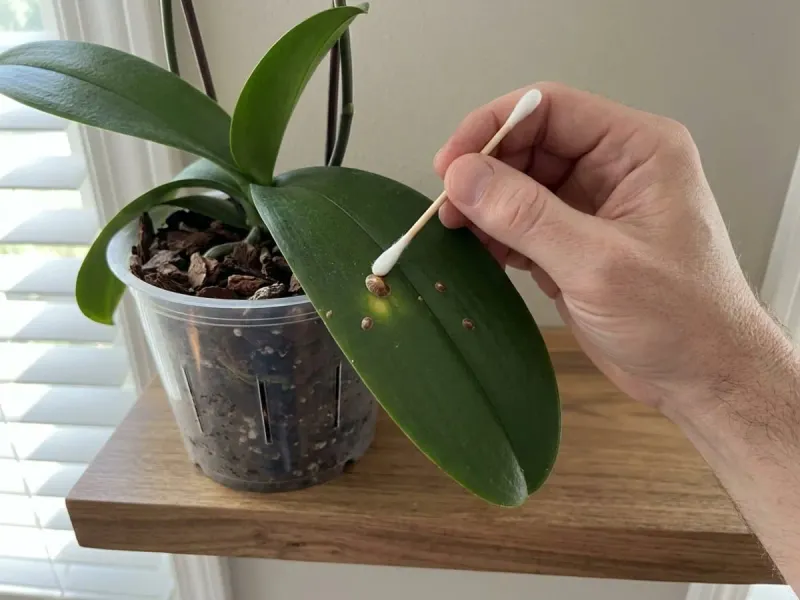
Patience pays off with insecticidal soap, which works by breaking down the soft bodies of insects on contact. The catch is that adult scale shells shield them, so the spray mainly reaches the young crawlers.
Crawlers keep hatching from eggs hidden under the mothers, so a single spray rarely catches every new wave. Most extension guides suggest repeating treatments every seven to ten days for several weeks in a row.
Choose a product labeled for indoor plants, and test it on one leaf before spraying the whole orchid. Wait a day or two, and check that spot for brown edges, spots, or any other leaf damage.
Spray until leaf surfaces look wet, and cover the undersides, stems, and leaf joints very thoroughly each time. Soap only works while it stays wet, so skip treating plants sitting in hot, direct afternoon sunshine.
Indiana homes in October often have softer window light, which makes it easier to treat without leaf burn. I prefer spraying in the morning, so leaves dry before evening and fungal problems stay less likely.
Horticultural oil is another option many experts mention, since it can smother scale under the shell as well. Read the label carefully, because some orchids react poorly to oils and stronger chemical sprays at higher rates.
Keep checking your plant for a month after the last bump disappears, since stragglers can easily return. With steady follow-up, your orchid can look cleaner and healthier by midwinter.