Indiana Homeowners Should Mow Fall Leaves Instead Of Raking Them
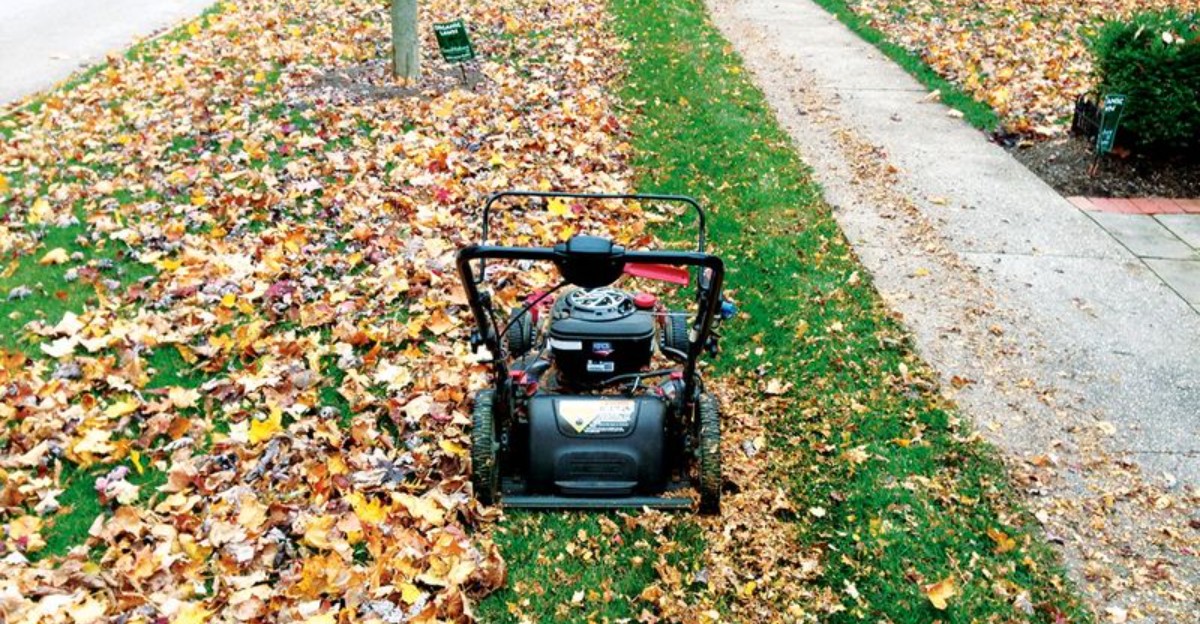
That pile of leaves on your Indiana lawn holds free plant food, yet many of us bag it. Fallen leaves carry nitrogen, carbon, and small amounts of other nutrients back toward the ground each autumn.
Purdue Extension experts encourage homeowners to return those leaves to the lawn instead of hauling them away. Michigan State turfgrass research also found fewer dandelions in lawns treated this way over several seasons.
Skipping the sore back and the long line of paper yard bags by the street is a big part of the appeal. You need only one common tool for this trick, and it probably sits in your garage right now.
Your old rake might finally get a long, well-earned rest this October across yards in Indiana. So which simple chore could save your weekends and feed your grass at the very same time?
Shredded Leaves Feed The Soil Over Winter
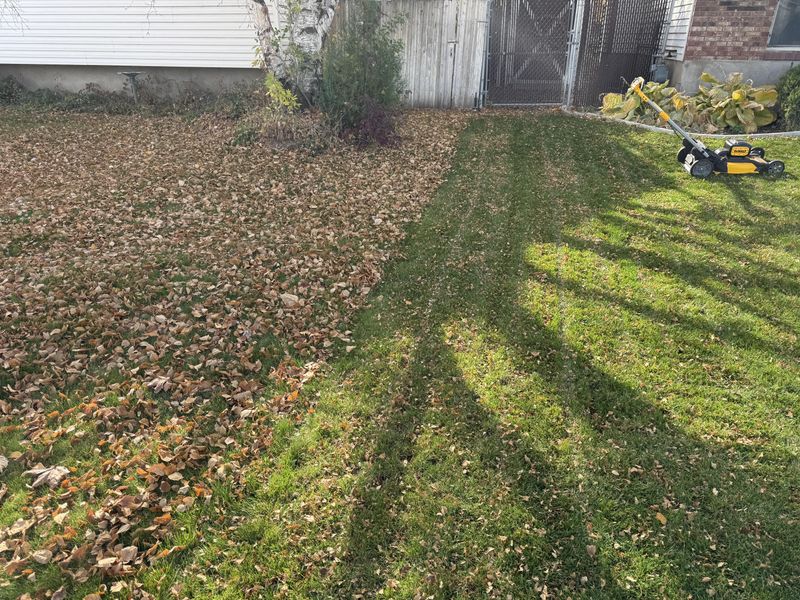
Every October, a mature maple can drop thousands of leaves, and each one holds nutrients worth keeping nearby. Shredding those leaves lets soil life go to work on them long before the first spring mowing in your yard.
Earthworms, fungi, and bacteria break down small leaf pieces much faster than whole leaves lying in thick mats. As they feed, they pull organic matter down into the root zone of your lawn grass.
Purdue Extension notes that chopped leaves add organic matter, which helps soil hold moisture and nutrients better. Heavy clay soils, common across much of Indiana, can slowly become looser and easier for roots to explore.
Leaves are not a full fertilizer, so they will not replace a fall feeding on hungry lawns. Still, they offer a gentle boost of carbon and minor nutrients that builds healthier soil year after year.
Research at Michigan State found no harm to turf from mulching leaf layers up to several inches deep over several years. Some homeowners worry about soil acidity, but oak leaves rarely change soil pH in any meaningful way.
Cold weather slows decay, yet the process keeps creeping along under snow and through mild winter days. By April, many finely chopped pieces have mostly vanished into the thatch layer and dark topsoil below.
I like thinking of this as a slow compost pile spread evenly across the whole yard. Your grass gets fed, your soil grows richer, and your weekly trash pickup crew gets a much lighter load.
A Single Mower Pass Turns Leaves Into Natural Mulch
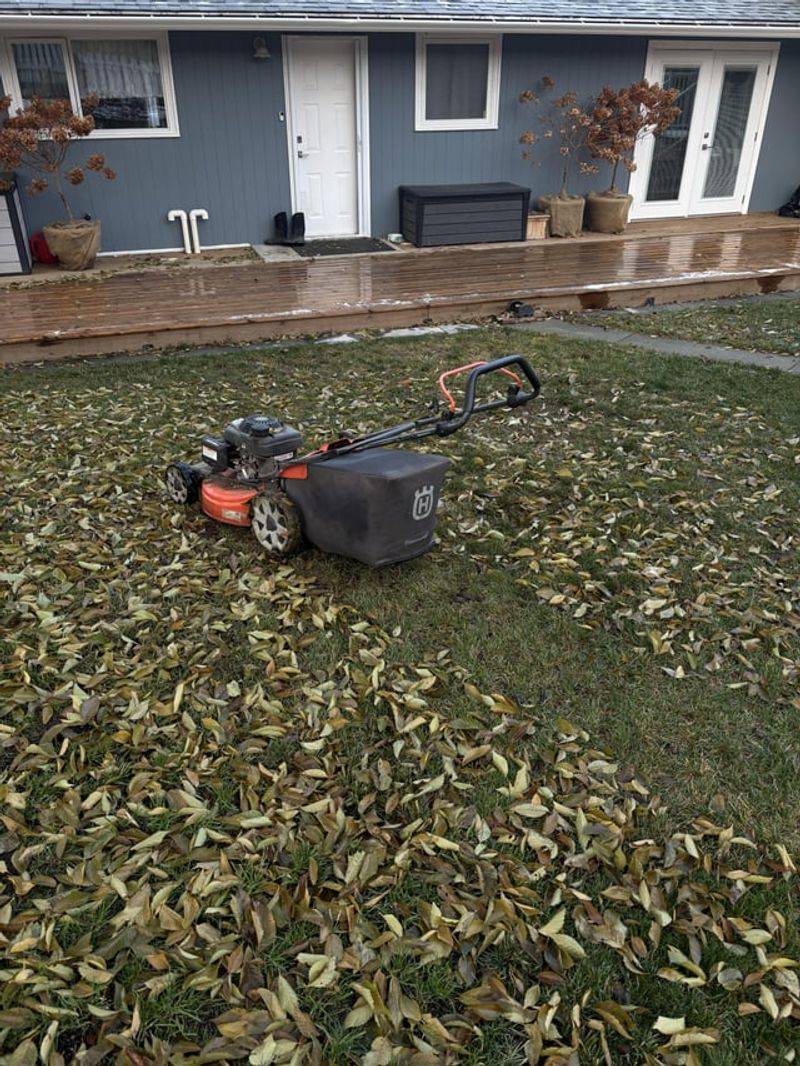
Run your mower over a light layer of dry leaves, and something satisfying happens within just a few seconds. Crunchy brown leaves turn into tiny flakes that drop down between the grass blades and nearly disappear.
Extension experts suggest chopping leaves until the pieces are roughly the size of a dime or smaller. At that size, the flakes settle into the lawn instead of sitting on top like a soggy blanket.
A good rule of thumb is simple to check from your porch after you finish each section. You should still see plenty of green grass peeking through the shredded leaf pieces across the yard.
Your Indiana Garden Changes Every Week. Your Plan Should Too.
Gardening in Indiana changes quickly throughout the season. Every Friday you’ll receive a simple weekly plan showing exactly what to plant, prune, fertilize, harvest, and protect so you never miss the right timing.
Dry leaves shred much better than wet ones, so pick a sunny afternoon after the morning dew lifts. Damp leaves tend to clump, stick under the deck, and leave messy streaks behind the mower wheels.
Set your mower at its usual fall height, which is often around three inches for Indiana lawns. Taller grass helps hide the leaf bits, and it protects the crowns of the plants heading into winter.
Personally, I find this faster than raking, even when the maples drop a fresh batch every few days. Mowing once a week through October usually keeps the leaf layer thin enough to handle with ease.
Side discharge mowers can work too, though you may need to circle back over scattered piles. Aim the discharge chute toward the center on each pass so the mower can chop them a second time.
Fewer Weeds Next Spring
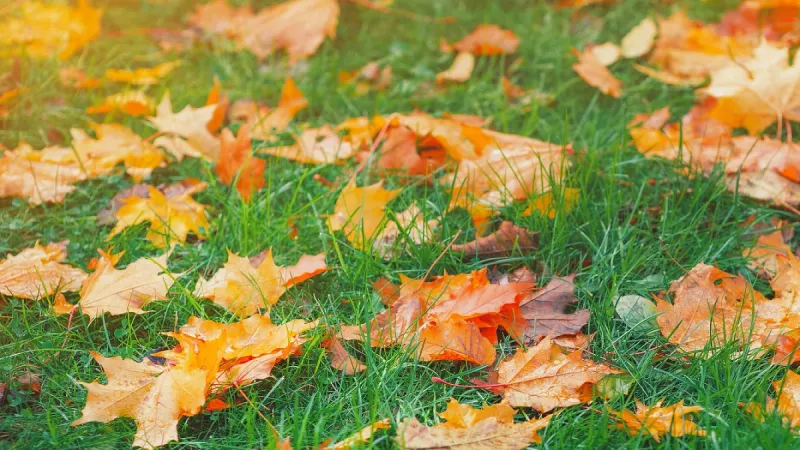
Dandelions seem to pop up overnight in April, but a fall habit might help keep them in check. Researchers at Michigan State University tested mulched leaves on turf plots over several years with surprising results.
Plots that received shredded maple leaves showed noticeably fewer dandelions each spring than plots where leaves were removed. Some reports from that work also noted lower crabgrass numbers, which caught the attention of many lawn lovers.
Scientists are still not certain about the exact reason behind the drop in weed numbers across those plots. One idea is that leaf bits cover bare soil gaps where weed seeds would otherwise sprout in spring.
Another theory points to natural compounds in maple leaves that may slow certain seeds from growing well. Results can vary with leaf type, soil, and weather, so treat this as a helpful bonus rather than magic.
Indiana lawns often deal with dandelions, clover, and creeping Charlie, so any extra help feels like a real win. A thick, healthy stand of grass remains a reliable natural way to limit most common yard weeds.
Chopped leaves support that thick turf by feeding the soil and keeping roots a bit more comfortable. Pair leaf mulching with proper mowing height and a fall feeding, and weeds will find fewer open places.
I believe this little perk makes the whole job feel even more worthwhile on a chilly afternoon. You might spend less time pulling weeds next spring, and your knees will probably thank you for it.
Thick Leaf Layers Can Block Light From Grass
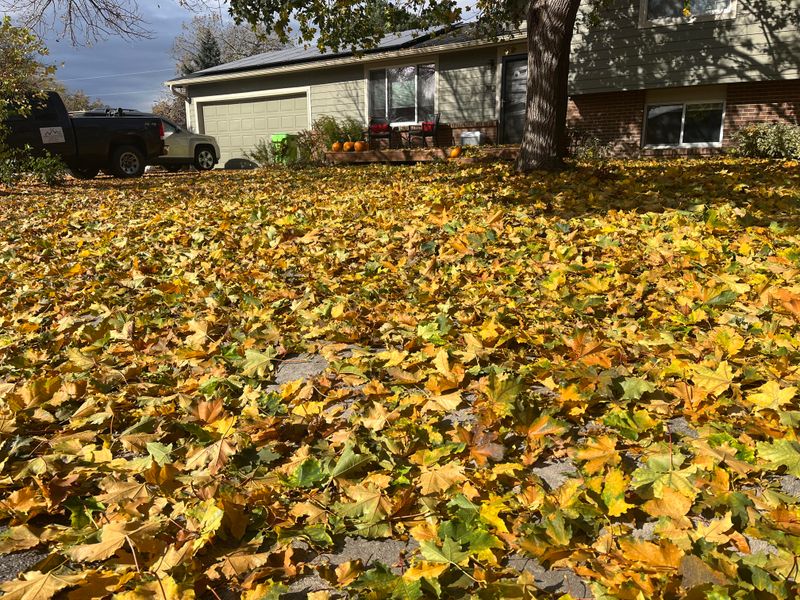
Leave a heavy mat of wet leaves on the lawn for weeks, and the grass underneath starts to struggle. Sunlight cannot reach the blades, and air movement near the soil drops to almost nothing under that soggy cover.
Purdue Extension warns that thick leaf layers left through winter can lead to thin, patchy turf by spring. Trapped moisture also raises the risk of snow mold, a fungal disease that leaves matted gray or pink circles.
That is the main reason raking became a fall ritual in so many Indiana neighborhoods long ago. Mowing solves the same problem by breaking that solid blanket into small pieces that let light through.
Timing matters a lot here, because a light layer is far easier to handle than a knee-deep pile. Try to mow before the leaves pile up more than a few inches deep across the yard.
If the leaf layer gets too thick, one mower pass may leave behind a chunky, matted mess. Make a second pass at a right angle, or bag part of the clippings for use somewhere else.
Watch the spots under big oaks and maples closely, since they often collect the heaviest leaf drops. Fence lines and corners trap blowing leaves too, so give those areas a quick check each week.
Honestly, I think of this as the one real rule for leaf mulching success in fall. Keep the layer thin, keep the grass visible, and your lawn should wake up green and happy in spring.
Mulching Blades Speed Up The Job
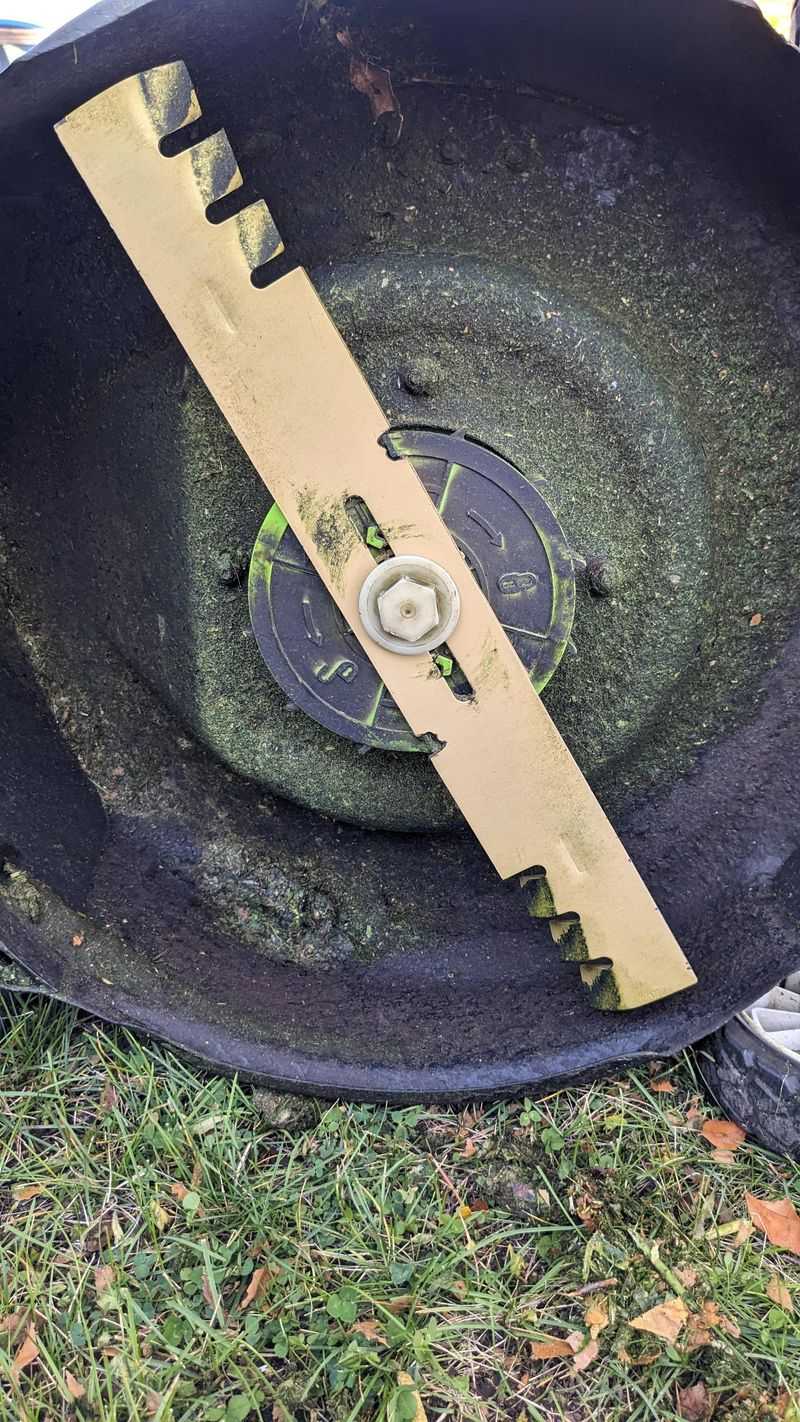
Standard mower blades do a decent job on leaves, but a mulching blade takes the work up a notch. Its curved edges and extra cutting surfaces keep leaf pieces circling under the deck for repeated chopping.
Each trip around the deck slices the leaves smaller, so the finished flakes slip easily down into the turf. Many mower brands sell mulching kits that include a blade and a plug for the discharge chute.
Check your owner manual first, since blades must match your exact mower model and deck size. A blade that fits poorly can vibrate, wear out quickly, and create an unsafe situation for you.
Sharpness matters just as much as blade style when you tackle a yard full of crunchy October leaves. Dull blades tear leaves and grass instead of cutting them, which leaves ragged tips and uneven shreds behind.
Many lawn care guides suggest sharpening blades a couple of times each season for cleaner cuts. Remove the spark plug wire before handling any blade, and wear sturdy gloves to protect your hands.
Personally, I noticed a big difference the first fall I switched to a mulching blade on my mower. The yard looked tidy after one pass, and I spent far less time circling back over stubborn piles.
Indiana homeowners with lots of trees may find the small cost pays off within a single season. A mulching blade is not required, yet it can turn a long Saturday chore into a quick afternoon task.
Extra Leaves Work Well In Compost Piles
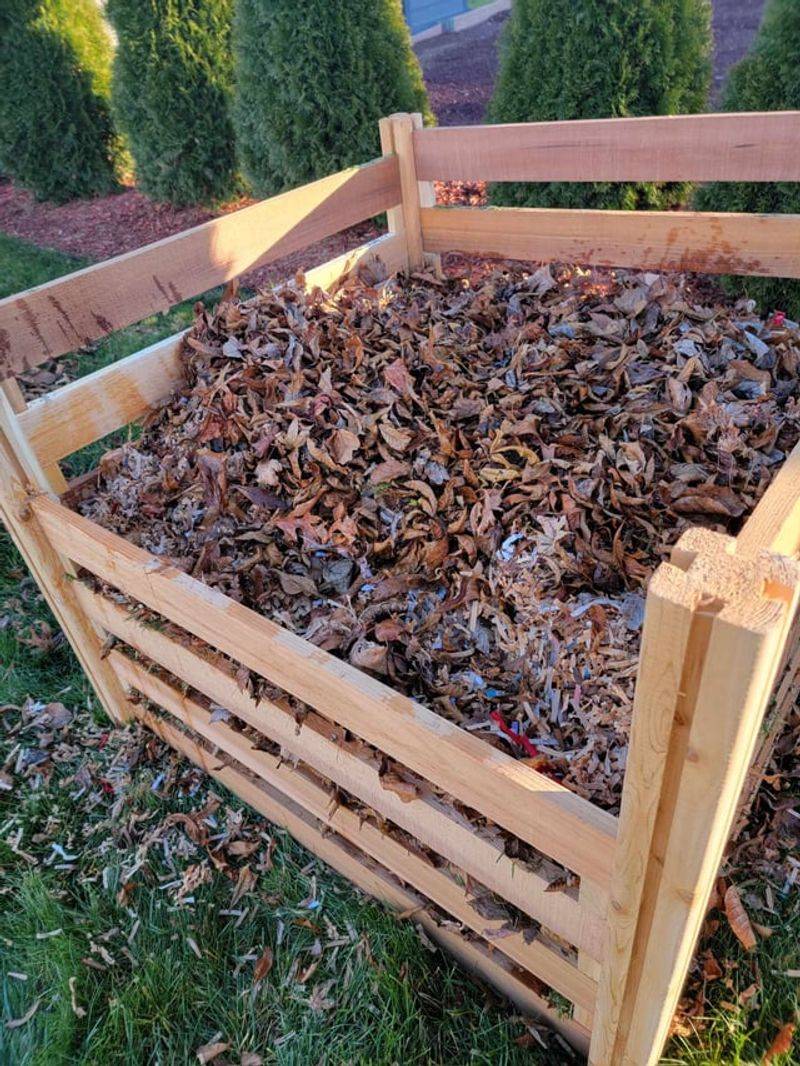
Some autumns bring more leaves than any lawn can comfortably absorb, especially under a row of giant silver maples. Those extras still have plenty of value, and a compost pile is the perfect place to put them.
Leaves count as brown material in compost, which means they supply carbon to balance out kitchen scraps. Green items like vegetable peels, coffee grounds, and grass clippings provide the nitrogen that powers the heating process.
Purdue Extension suggests shredding leaves before adding them, since whole leaves tend to mat down and break down slowly. Your mower with a bag attachment makes this step easy, collecting chopped leaves in one quick sweep.
A common guideline mixes roughly two or three parts brown material with one part green material by volume. Keep the pile about as damp as a wrung-out sponge, and turn it every few weeks for air.
Indiana winters slow composting down a lot, but the pile picks up speed again once warm weather returns. Some gardeners also stash bags of shredded leaves beside the bin to mix with green scraps all year.
Leftover chopped leaves also make a cozy mulch around perennials, shrubs, and vegetable beds before the ground freezes. A layer a few inches deep helps protect roots from the freeze and thaw cycles of late winter.
I can’t imagine sending such useful material off in plastic bags once you see what it becomes. By next fall, your pile may hold dark, crumbly compost that smells like a forest floor after rain.