Top Climber Plants That Cover Impossible Walls In Texas
Some parts of a yard seem determined to stay awkward. Maybe it is a tall blank wall, a hot fence line, or a rough surface that feels impossible to soften no matter what you plant nearby.
In Texas, those trouble spots can feel even more frustrating because strong sun, heat, and dry stretches make it harder for many plants to settle in and actually do the job. That is where climbing plants start to look like a very smart solution.
The right climbers can turn a harsh wall into something lush, colorful, and full of life. They add height without taking up much ground space, which makes them especially useful in smaller yards or narrow side areas.
Some bring flowers, some offer dense greenery, and some do both while handling Texas conditions better than you might expect.
For homeowners who want to hide an eyesore, cool down a bare surface, or simply make the yard feel more layered and inviting, these plants can completely change the mood of the space. A difficult wall does not have to stay the worst-looking part of your yard.
1. Crossvine
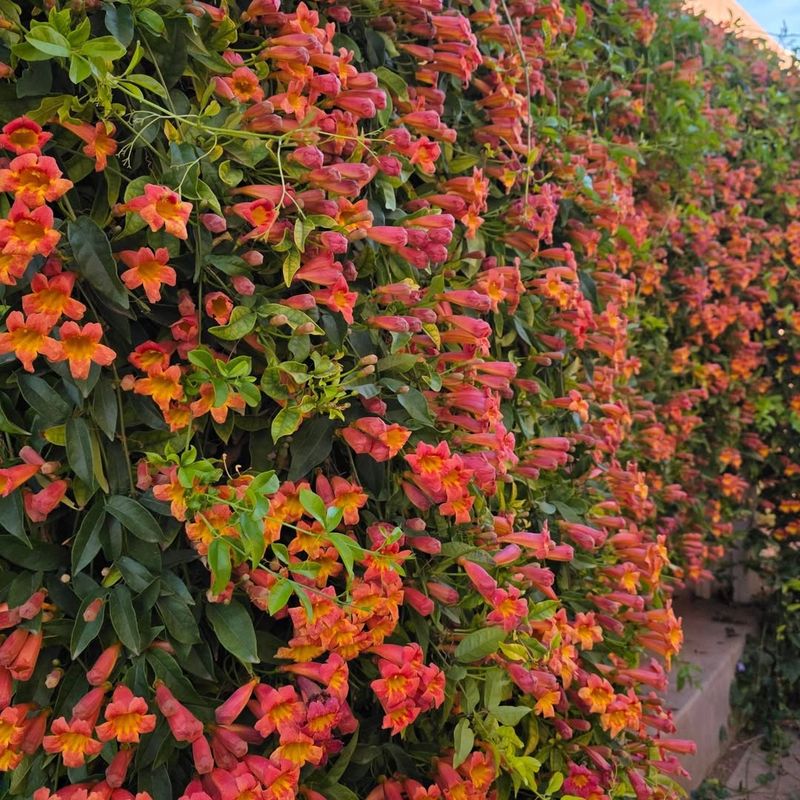
Few climbing plants can match the toughness and beauty of Crossvine. Native to Texas and the southeastern United States, this powerhouse vine can reach up to 50 feet in length.
It grabs onto walls, fences, and trellises using tiny tendrils with sticky pads, so you do not need to tie it up or guide it much at all.
One of the best things about Crossvine is its spring flower show. Bold orange-red, trumpet-shaped blooms burst open just as the weather starts warming up in Texas.
Hummingbirds absolutely love these flowers, so planting Crossvine is like hanging out a welcome sign for local wildlife.
Crossvine is semi-evergreen, meaning it holds onto most of its leaves even through mild Texas winters. In colder northern parts of the state, it may drop some leaves, but it bounces right back in spring.
This makes it a reliable option for year-round coverage on tough spots like bare walls and concrete fences.
Watering needs are low once the plant gets established. It handles drought conditions well, which is a huge bonus in Texas summers.
Full sun is ideal, but it can manage in partial shade too, giving you flexibility depending on your yard’s layout.
If you want a native Texas plant that works hard, looks spectacular, and asks for very little in return, Crossvine is one of the smartest choices you can make. Plant it once and enjoy years of colorful, lush wall coverage without much fuss.
2. Coral Honeysuckle
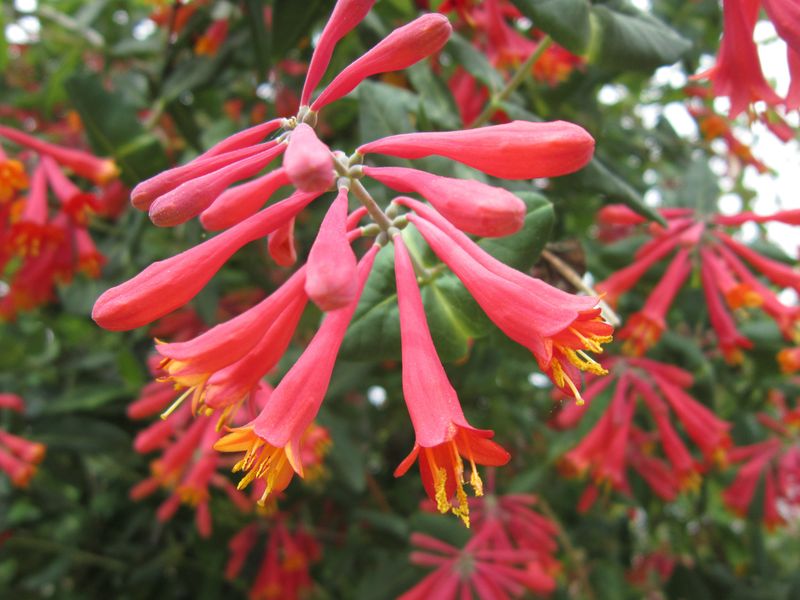
Coral Honeysuckle is one of those plants that makes your neighbors stop and stare. Unlike its invasive Japanese cousin, this native Texas vine plays nicely in the garden and will not take over your entire yard.
It climbs fences and walls steadily, creating a lush green curtain dotted with vivid red tubular flowers from spring all the way through fall.
Hummingbirds are wild about Coral Honeysuckle. The long tubular blooms are perfectly shaped for their slender bills, and you will often see them darting from flower to flower on warm Texas afternoons.
Butterflies visit too, making this vine a fantastic choice for anyone who wants to support local pollinators.
Growing Coral Honeysuckle in Texas is refreshingly straightforward. It handles full sun as well as partial shade, so it works in a variety of spots around your property.
Once established, it is quite drought tolerant, which means fewer trips to the garden hose during those scorching Texas summers.
This vine is also semi-evergreen in most parts of Texas. In South Texas and along the Gulf Coast, it may hold its leaves all year long.
Further north, it might go briefly dormant in winter, but it always returns strong when warmer weather arrives.
For gardeners in Texas who want reliable, well-behaved coverage with a stunning seasonal bloom, Coral Honeysuckle checks every box. It is a vine that earns its space on any wall or fence without demanding constant attention or special care from you.
3. Carolina Jessamine
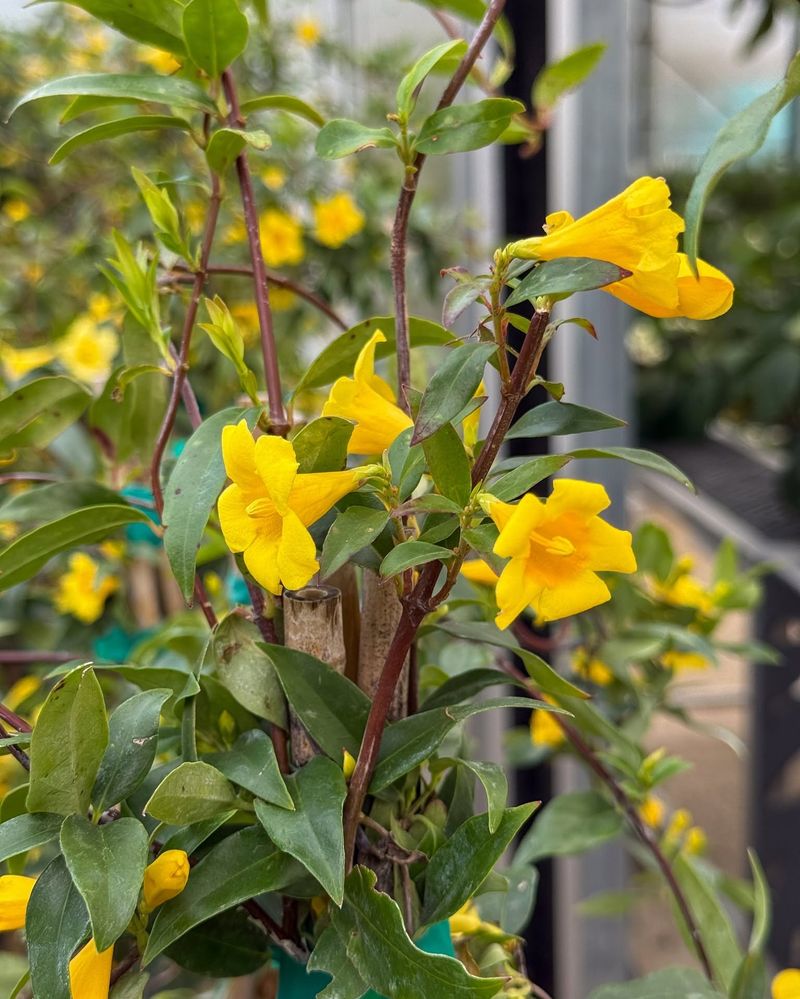
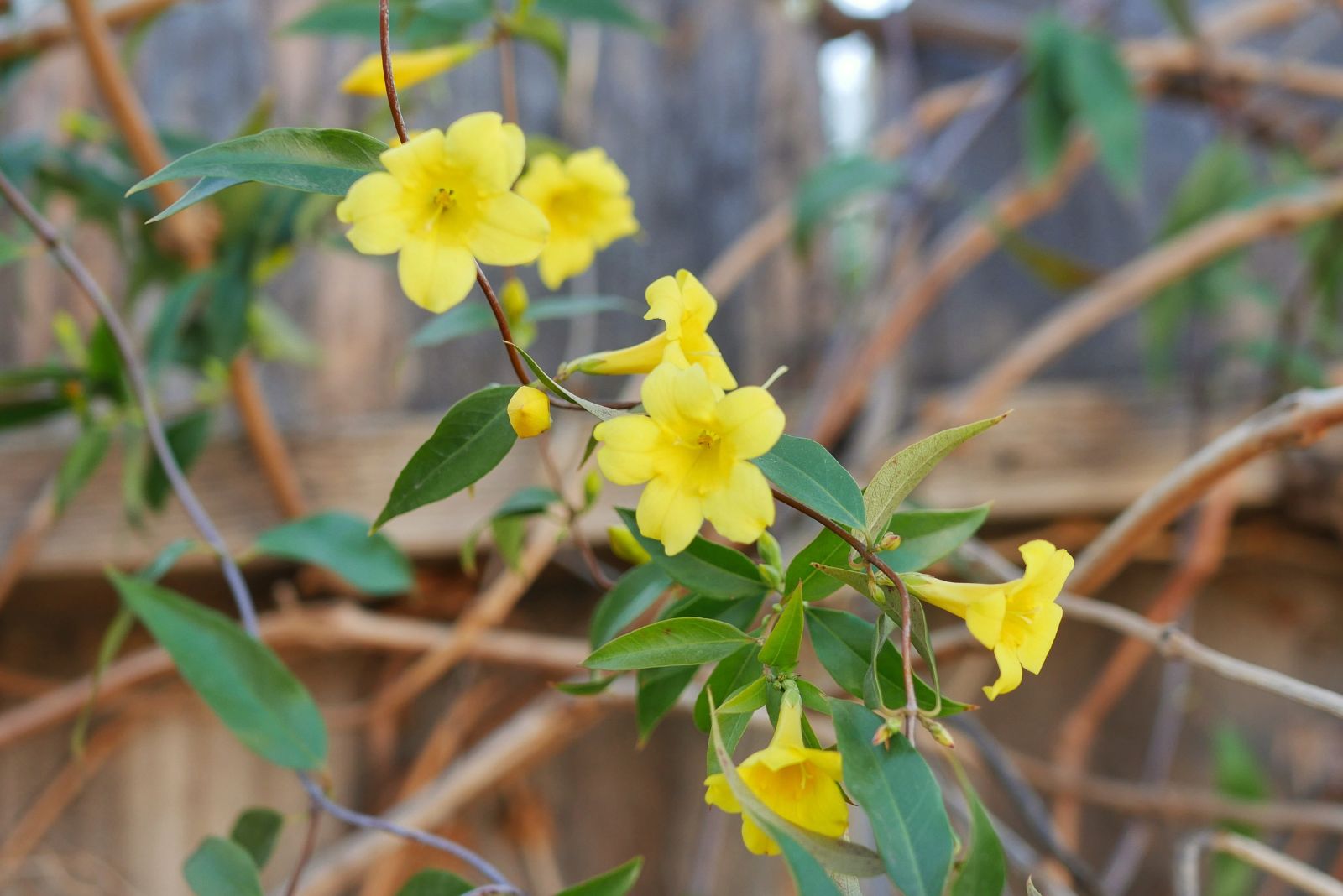
Walk past a Carolina Jessamine in bloom and the sweet fragrance will stop you in your tracks.
This fast-growing evergreen vine is one of the earliest bloomers in the Texas gardening calendar, often bursting into bright yellow flowers while the rest of the garden is still waking up from winter. That early color makes it a real standout.
Carolina Jessamine is a Texas native that adapts to a surprisingly wide range of conditions. It grows in both full sun and partial shade, handles clay soil, sandy soil, and everything in between.
Gardeners across Houston, Dallas, Austin, and beyond have found success with this vine on fences, walls, arbors, and trellises.
One thing to keep in mind is that all parts of this plant are toxic if eaten, so it is smart to plant it in areas where pets and small children are less likely to come into close contact with it.
That said, it is a completely safe and beautiful option for covering walls and structures out of reach.
Growth speed is another big selling point. Carolina Jessamine can climb quickly, filling in bare walls and unsightly fences in a single growing season under good conditions.
With minimal pruning after flowering, you can keep it looking neat and full without much effort.
For Texas gardeners who want fast-acting, fragrant wall coverage with gorgeous early spring blooms, Carolina Jessamine is hard to beat. Its evergreen foliage keeps things looking green and lush even when it is not in flower, giving you year-round curb appeal.
4. Virginia Creeper
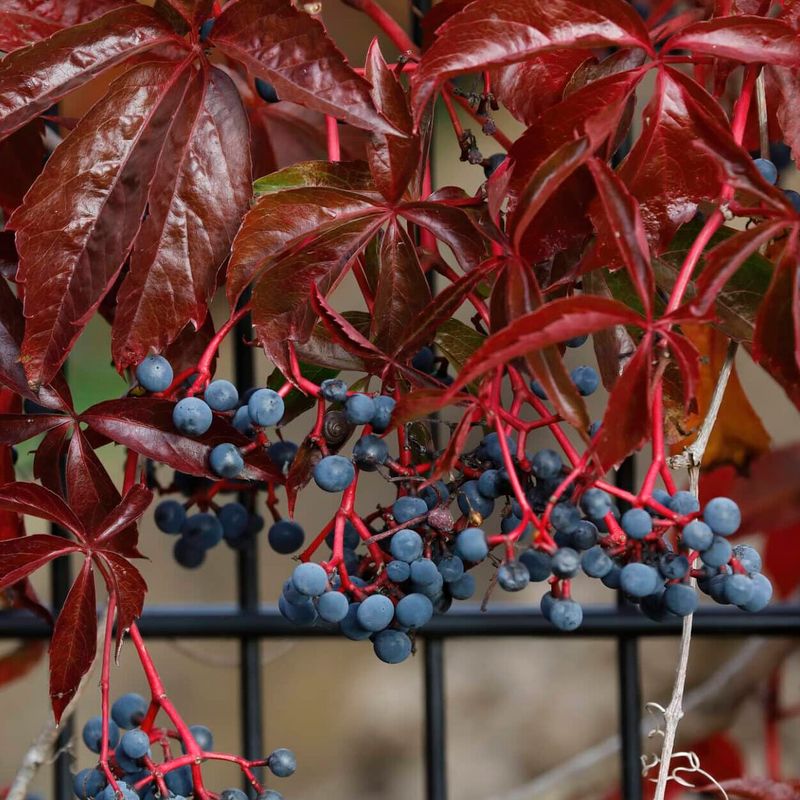
If you have a wall that seems impossible to cover, Virginia Creeper is probably your answer. This native vine is one of the most adaptable climbers in all of Texas.
Poor soil, heavy shade, blazing sun, drought, it handles all of it without missing a beat. Virginia Creeper attaches itself to surfaces using small adhesive pads at the end of its tendrils, meaning it clings tightly to brick, stone, and wood without any extra support.
During spring and summer, Virginia Creeper produces a thick blanket of rich green five-lobed leaves that create excellent shade and privacy. But the real magic happens in autumn, when those leaves shift to brilliant shades of red, orange, and crimson.
In Texas, this fall color show is one of the most dramatic you will find in any native plant. Birds love Virginia Creeper too. The small dark berries it produces in late summer and fall are a favorite snack for mockingbirds, robins, and other species common across Texas.
Planting this vine is a great way to invite more wildlife into your garden space. One thing worth knowing is that Virginia Creeper grows vigorously. In ideal conditions, it can easily reach 50 feet or more.
Regular trimming keeps it under control and looking its best without much trouble. For sheer coverage power and seasonal beauty in Texas, very few vines come close to what Virginia Creeper can deliver. It is a bold, dependable choice for gardeners who need results fast on large, bare walls.
5. Trumpet Vine
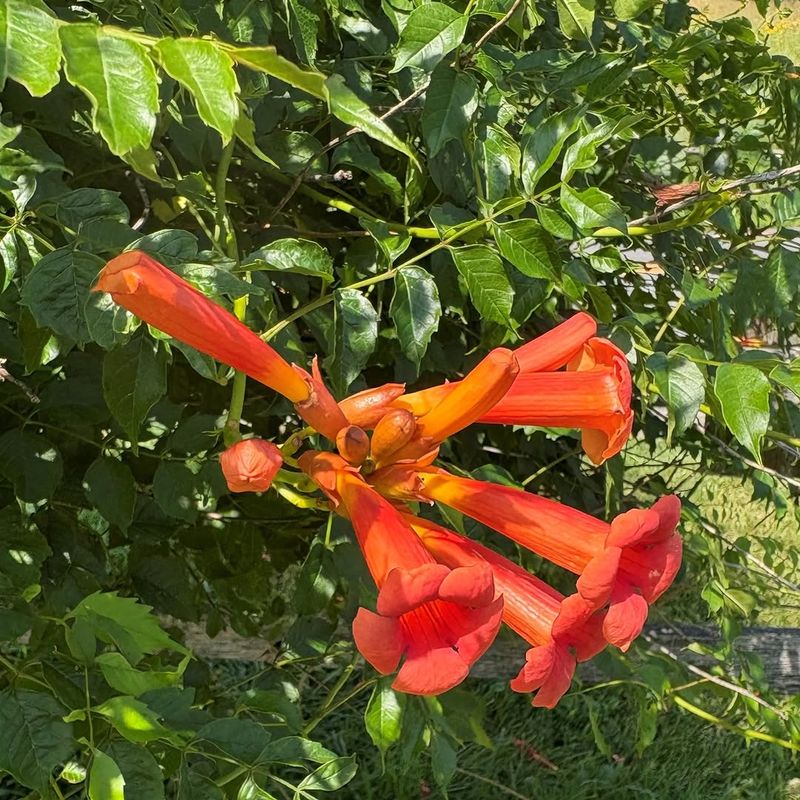
Trumpet Vine does not mess around. This is one of the fastest-growing climbing plants you will find anywhere in Texas, capable of putting on several feet of new growth in a single season.
Give it a wall, a fence, or a sturdy structure, and it will cover that surface with thick, lush foliage in record time. It is the vine you reach for when you need serious coverage fast.
The flowers are absolutely showstopping. Large, bold, orange or red trumpet-shaped blooms appear in summer and keep going strong through early fall.
Hummingbirds flock to them like they are the best restaurant in town. If attracting wildlife to your Texas garden is a goal, Trumpet Vine makes it effortless.
Here is the honest truth about Trumpet Vine: it is powerful and needs to be managed. Without occasional pruning, it can spread beyond where you want it and even send up shoots from the roots some distance away.
Trimming it back once or twice a year keeps it in check and actually encourages more flowering.
Drought tolerance is excellent once established, which makes Trumpet Vine a practical choice for hot, dry parts of Texas like West Texas and the Hill Country. It thrives in full sun and is not picky about soil quality at all.
For gardeners who want maximum impact with minimum fuss, Trumpet Vine delivers. Just give it room to grow, stay on top of occasional trimming, and it will reward you with a spectacular wall of color season after season.
6. Star Jasmine
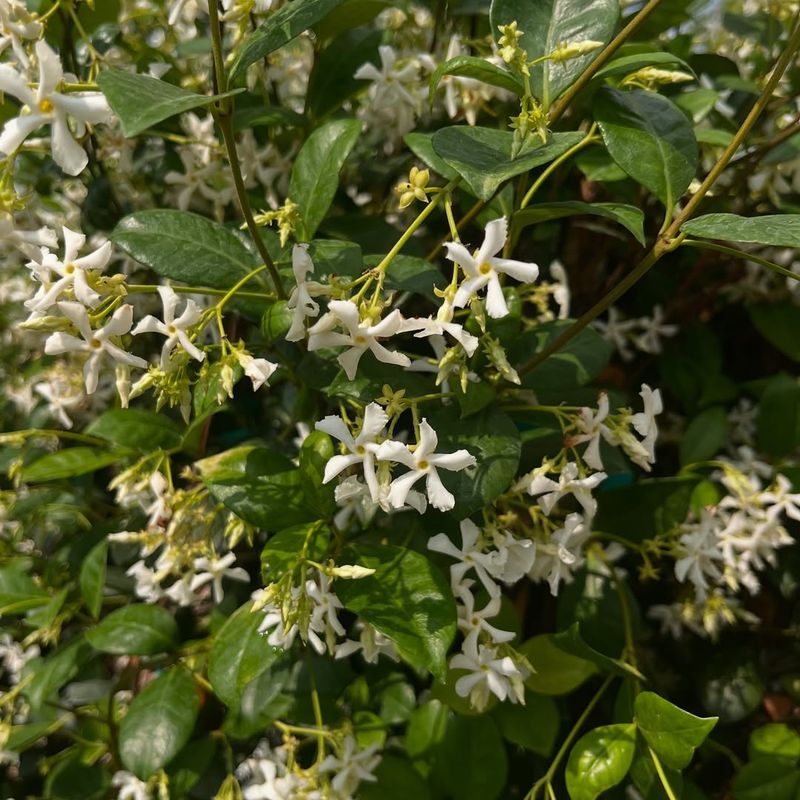
There is something almost magical about stepping into a Texas garden where Star Jasmine is in bloom. The fragrance is sweet, fresh, and unmistakable, filling the air on warm evenings in late spring and early summer.
Beyond the scent, this evergreen vine brings year-round visual appeal with its glossy, deep green leaves that stay on the plant through all four seasons.
Star Jasmine is a popular choice for walls, trellises, and courtyard fences across Texas, especially in cities like San Antonio, Houston, and Austin. It grows at a moderate pace, which means it fills in nicely without becoming overwhelming.
With a little guidance and some support, it creates a beautifully dense, lush wall covering that looks polished and intentional.
Once established, Star Jasmine handles Texas heat remarkably well. It prefers full sun to partial shade and becomes quite drought tolerant after its first year or two in the ground.
During the establishment phase, regular watering helps it develop a strong root system that will carry it through hot Texas summers.
Maintenance is pleasantly minimal. A light trim after the main flowering period keeps the plant tidy and can encourage a second flush of blooms later in the season.
Star Jasmine rarely has serious pest or disease problems, making it a low-stress option for busy gardeners.
If you want an elegant, fragrant, and reliable evergreen climber that performs season after season in Texas, Star Jasmine belongs at the top of your planting list. It is a vine that brings beauty, scent, and structure to any outdoor wall or space.
7. Bougainvillea
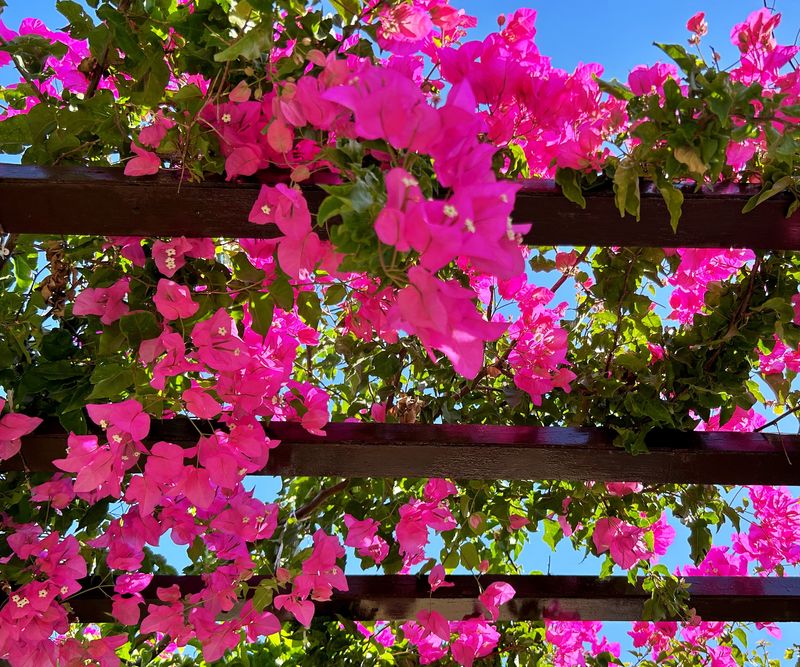
Bougainvillea is the vine that makes people stop their cars and take photos. The sheer explosion of color it produces, ranging from hot pink and magenta to orange, red, purple, and white, is unlike anything else in the Texas gardening world.
In warmer parts of the state like South Texas, the Rio Grande Valley, and the Gulf Coast, Bougainvillea thrives like it owns the place.
What most people mistake for flowers are actually colorful leaf-like structures called bracts. The actual flowers are tiny white clusters nestled inside those bracts.
This detail is a fun conversation starter for any garden visitor who has not grown Bougainvillea before.
Full sun is non-negotiable for this plant. The more direct sunlight it gets, the more spectacular the color display.
Bougainvillea actually blooms more intensely when it experiences mild drought stress, so holding back on watering during the growing season can produce an even better show. This makes it perfect for hot, dry Texas summers.
In Central and North Texas, Bougainvillea can be grown as a seasonal climber or in large containers that can be moved indoors during cold snaps. Planting it against a south-facing wall offers extra warmth and protection from occasional Texas cold fronts.
For gardeners in warmer Texas regions who want bold, eye-catching wall coverage that practically glows in the sun, Bougainvillea is an unbeatable option. It is dramatic, tough, and rewarding, a true showpiece vine that transforms any ordinary wall into a statement piece.