Top 13 Fast Growing Shrubs For Texas Yards
If your Texas yard feels a little empty or you’re hoping for quick results, fast-growing shrubs are the perfect solution.
These plants can transform a bare corner, create natural borders, or add instant texture to your landscape in a fraction of the time it takes slower-growing varieties.
In a state where heat and occasional droughts are part of everyday life, choosing the right shrubs can make all the difference.
Fast-growing shrubs not only fill space quickly, but many are also tough enough to handle Texas weather. They can provide privacy, attract pollinators, and even offer seasonal blooms or berries to brighten your yard.
With proper placement and care, they establish quickly, giving you a lush, thriving landscape without years of waiting.
Whether you’re designing a full yard makeover or just looking to fill gaps in your existing garden, these shrubs are an easy way to add beauty, structure, and life to your Texas outdoor spaces fast.
1. Texas Sage
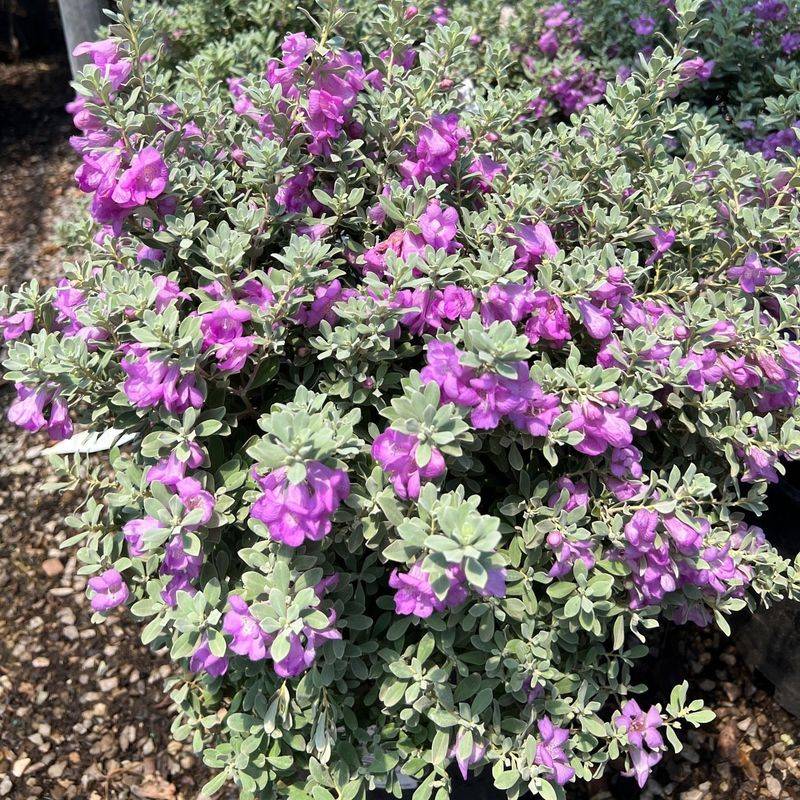
If you’ve spent time driving through neighborhoods or exploring gardens across the Lone Star State, you’ve likely noticed the striking silvery-purple shrubs that seem to pop up almost everywhere. This is Texas sage, a true native gem.
Known for its resilience and low-maintenance nature, Texas sage thrives in the harsh conditions that challenge many other plants.
Once established, it requires very little attention, making it perfect for gardeners who want a beautiful landscape without constant upkeep.
Its drought-tolerant nature means it can handle long stretches of dry weather, which is a major advantage in Texas’s often unforgiving climate.
Beyond its easy care, Texas sage offers seasonal beauty that keeps your yard vibrant. After the summer rains, it produces abundant lavender-colored blooms that not only add color and texture but also attract butterflies, hummingbirds, and other pollinators.
This natural charm makes it a favorite among gardeners who want both aesthetic appeal and ecological benefits. In terms of growth, Texas sage is impressively fast-growing, adding about three feet per year and eventually reaching heights of up to eight feet.
Its dense foliage also makes it an excellent choice for creating privacy screens, defining garden borders, or adding structure to mixed shrub beds.
For Texans seeking a hardy, fast-growing shrub that combines low maintenance with visual impact, Texas sage is a standout choice.
Its combination of silvery foliage, vibrant blooms, and resilience to drought ensures that your garden remains lively and colorful, even in the face of Texas’s intense sun and dry spells.
2. Wax Myrtle
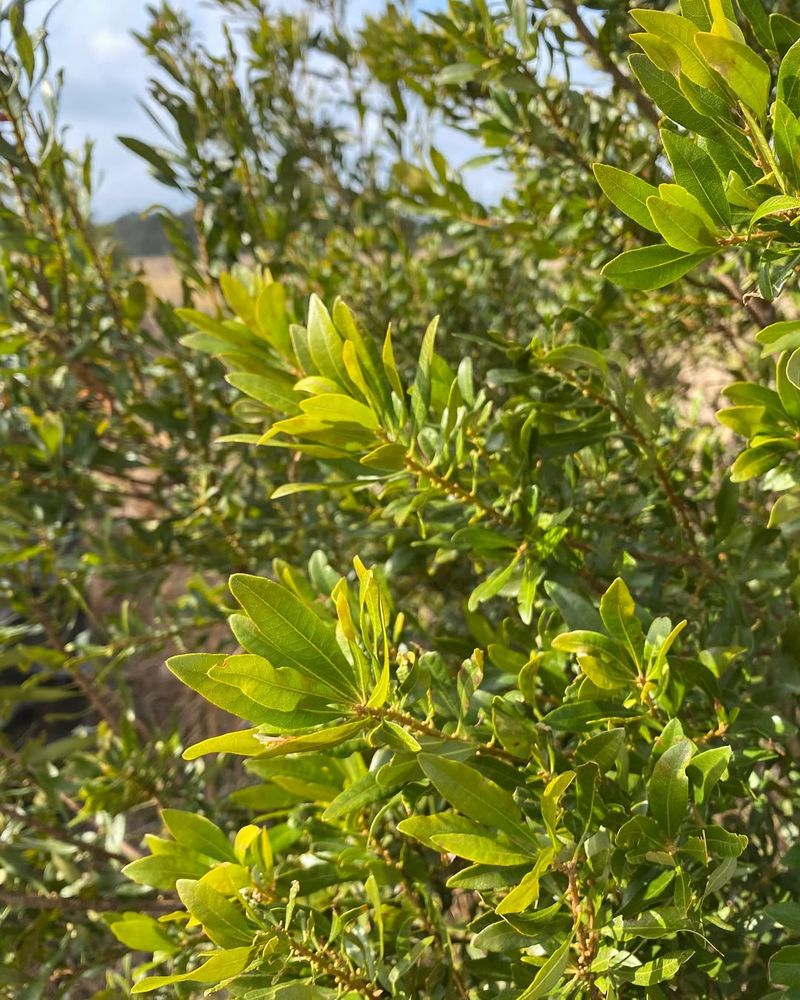
Looking for a fast-growing shrub that brings both beauty and practicality to your Texas garden? Wax Myrtle is a top contender.
This versatile native shrub is a favorite for landscapes across the state because it grows quickly, tolerates a range of soil conditions, and offers year-round appeal.
In just a few seasons, Wax Myrtle can grow several feet tall, making it an excellent choice for creating natural privacy screens, windbreaks, or even defining garden borders without waiting years for maturity.
Its dense, glossy green foliage not only looks lush and healthy but also provides shelter for birds and beneficial insects.
One of the standout features of Wax Myrtle is its adaptability. It thrives in full sun but can tolerate partial shade, and it handles Texas heat and occasional drought remarkably well once established.
In addition to its resilience, Wax Myrtle produces small, fragrant berries that attract songbirds, adding both life and motion to your yard. This makes it a valuable addition not just for its quick growth but also for its contribution to a thriving garden ecosystem.
Gardeners love Wax Myrtle for its low-maintenance requirements. It responds well to occasional pruning, allowing you to shape it to your landscape needs, and it rarely suffers from serious pests or diseases.
For Texans seeking a fast-growing, reliable shrub that adds greenery, habitat, and structure to their yard, Wax Myrtle checks every box, proving that native plants can be both beautiful and functional.
3. Oleander
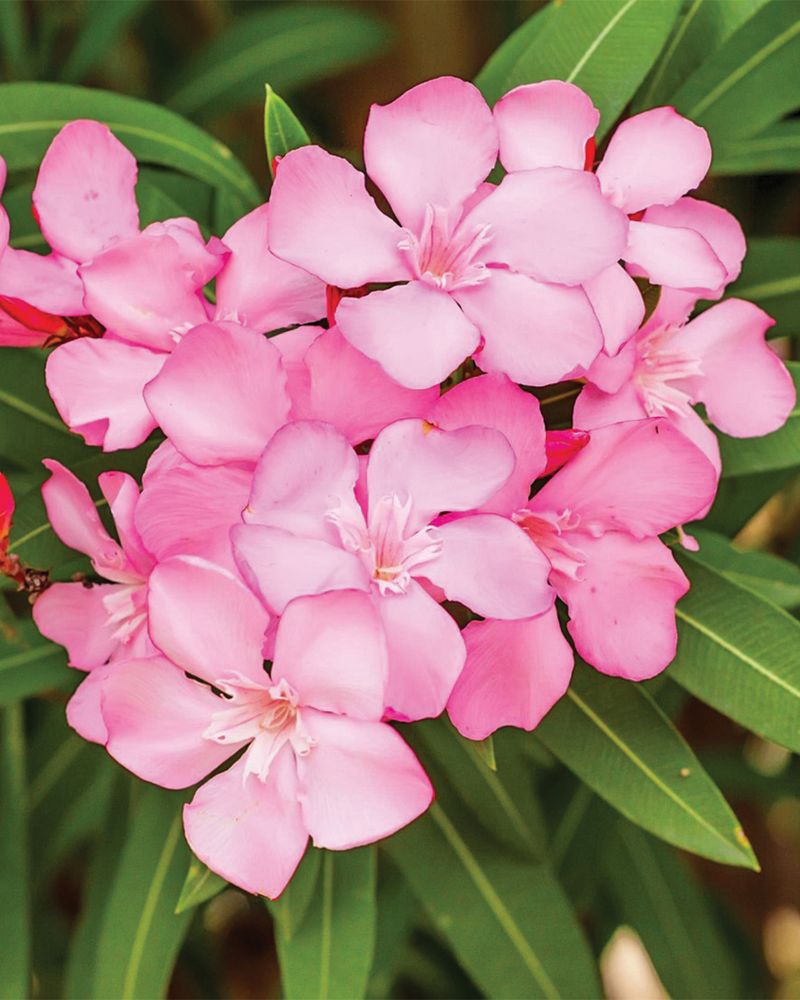
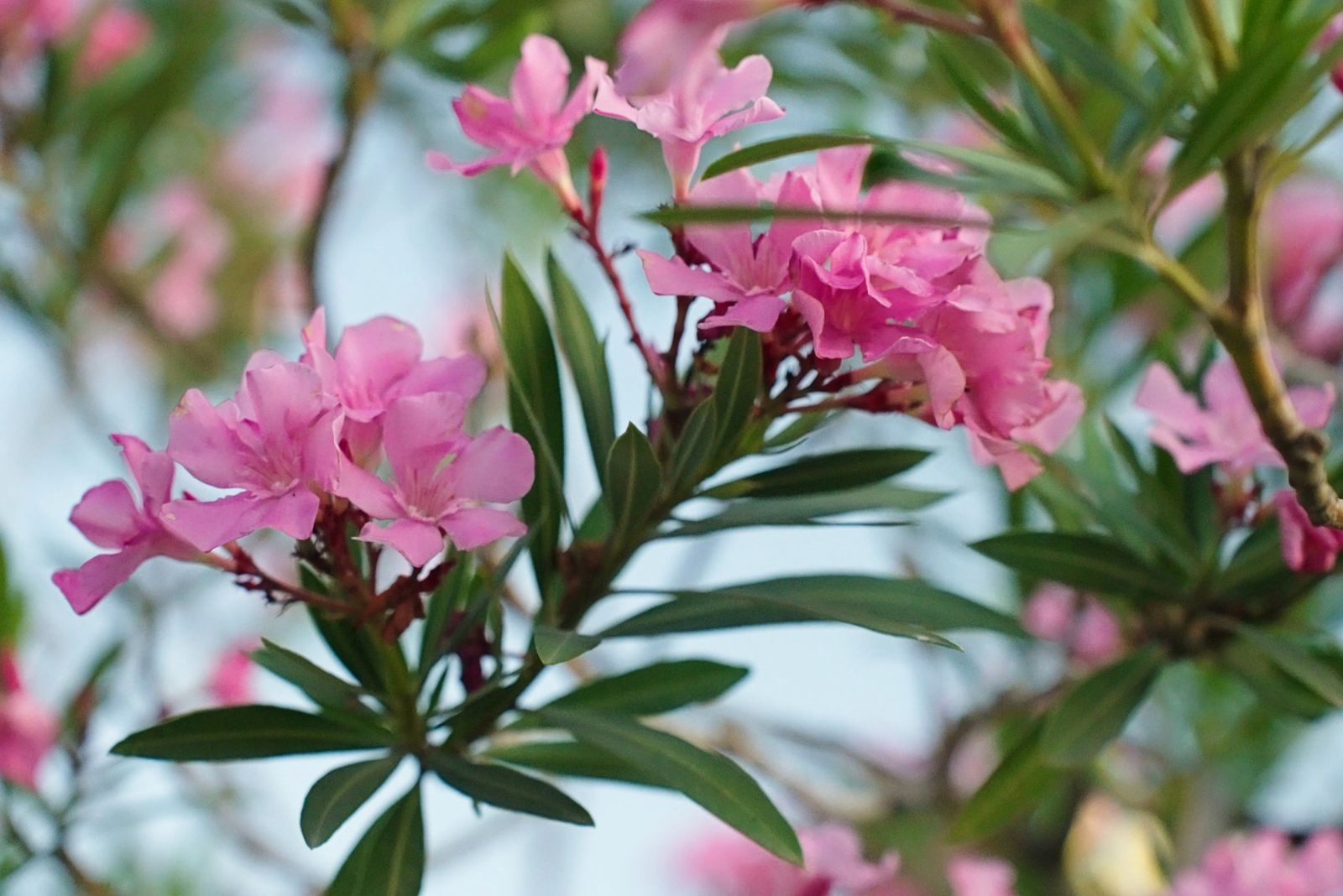
With their striking blooms in shades of pink, red, and pure white, these fast-growing shrubs capture attention from spring through summer.
Beyond their undeniable beauty, oleanders are remarkably resilient, capable of growing up to four feet in a single year while withstanding the harsh challenges of Texas gardens.
Heat, drought, and even poor soil conditions rarely slow them down, which is why you’ll often see them thriving along highways, coastal areas, and other locations where less hardy plants give up.
Oleanders aren’t just about rapid growth and gorgeous flowers – they’re a symbol of low-maintenance landscaping at its best.
Their dense, evergreen foliage provides privacy and structure, making them excellent choices for hedges or borders, while the blooms attract pollinators and add seasonal cheer.
However, gardeners should exercise caution: every part of the oleander plant contains toxins. This means it’s wise to plant them away from areas where children and pets play to ensure safety while still enjoying their ornamental value.
For Texans looking for a fast-growing, drought-tolerant shrub that combines vivid color, toughness, and versatility, oleander is hard to beat.
With minimal care and maximum visual impact, it brings energy and life to yards, roadsides, and coastal landscapes alike, proving that a resilient shrub can be both practical and breathtaking.
4. American Beautyberry
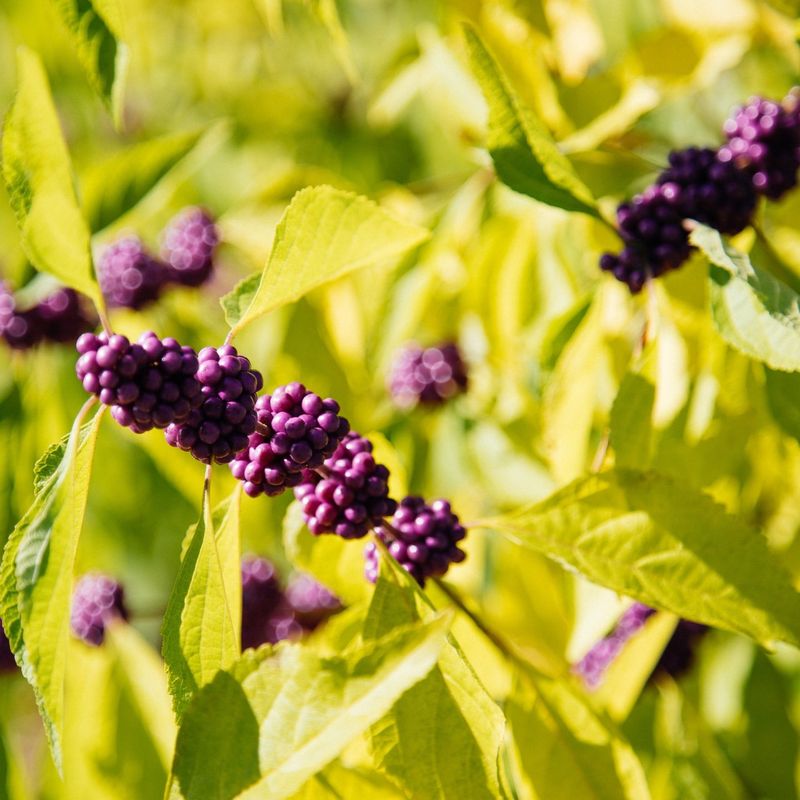
As the crisp days of fall arrive in Texas, one native shrub truly steals the spotlight: the American Beautyberry.
Its most eye-catching feature emerges when clusters of vivid purple berries suddenly appear along the branches, transforming even the simplest landscape into a jewel-toned spectacle.
Beyond its show-stopping appearance, this fast-growing shrub is a powerhouse for Texas gardens, often adding three to four feet of growth each year.
Its rapid growth allows it to fill bare spots quickly, providing both structure and color in areas that might otherwise feel empty or dull.
American Beautyberry isn’t just a feast for the eyes – it’s a magnet for wildlife. Birds, including cardinals, mockingbirds, and other songbirds, flock to the vibrant berries, which remain on the shrub well into winter.
During months when insects are scarce and other food sources have dwindled, these berries offer an essential lifeline for local wildlife.
This makes the beautyberry a perfect choice for Texans looking to create a garden that supports birds and other beneficial creatures while still delivering ornamental value.
In addition to attracting wildlife, American Beautyberry is relatively low-maintenance and adaptable to a variety of soil types and light conditions, making it ideal for gardens large or small.
By planting this native shrub, gardeners enjoy a dazzling fall display, support local ecosystems, and gain a fast-growing, hardy addition to their Texas landscape that adds color, life, and ecological benefits year after year.
5. Butterfly Bush
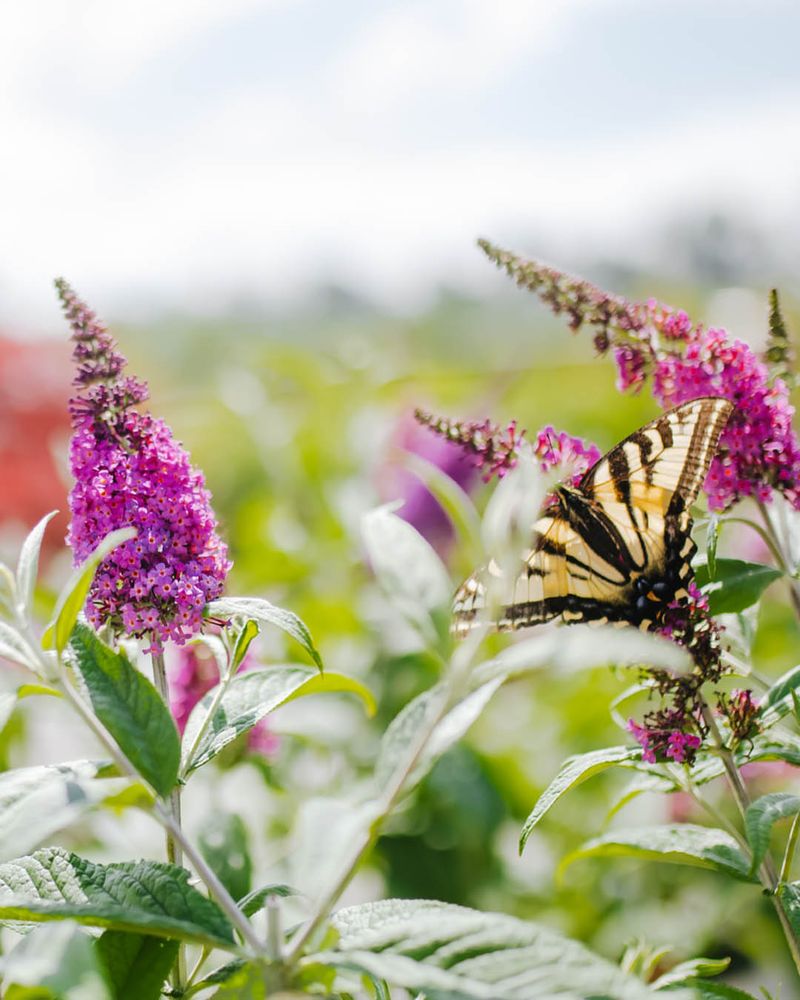
Picture your Texas garden alive with fluttering wings and buzzing activity, as dozens of butterflies and hummingbirds visit day after day. Tthis is the magic the Butterfly Bush brings.
Known for its dramatic growth and irresistible appeal to pollinators, this shrub can reach an impressive four to six feet in a single growing season, quickly transforming your landscape into a vibrant, lively oasis.
Its dense, arching branches provide both height and texture, making it a standout centerpiece or a lush backdrop for smaller plants.
One of the Butterfly Bush’s greatest charms is its prolific, fragrant blooms, which appear in shades of purple, pink, and white. These honey-scented flowers provide a constant supply of nectar from spring through fall, attracting butterflies, bees, and hummingbirds in abundance.
Texas gardeners often cut these shrubs back severely during winter, pruning them close to the ground to encourage stronger, fuller growth.
By the time summer arrives, the Butterfly Bush rebounds with a spectacular display of flowers, rewarding both the gardener and the pollinators with its resilience and beauty.
Beyond its role in attracting wildlife, the Butterfly Bush is remarkably low-maintenance and thrives in the full sun and heat that define many Texas gardens.
Its rapid growth and continuous blooms make it a favorite among gardeners who want an easy-to-care-for shrub that offers maximum visual impact while supporting local ecosystems.
With this shrub, your yard becomes a dynamic, colorful haven where nature and beauty flourish side by side.
6. Primrose Jasmine
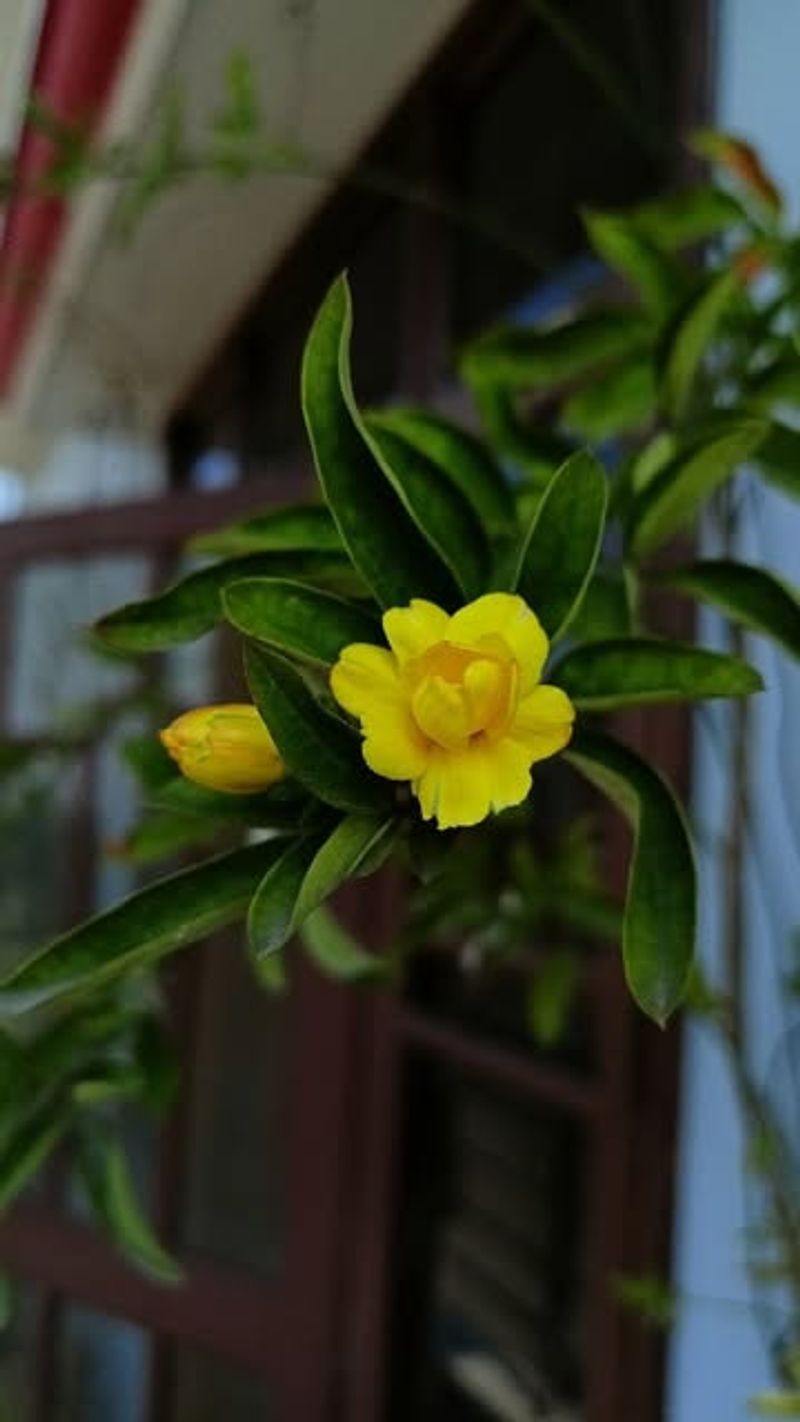
When spring arrives in Texas, few shrubs make as cheerful an entrance as Primrose Jasmine. Its cascading fountains of bright yellow flowers seem to announce the season, instantly bringing energy and warmth to gardens across the state.
This fast-growing shrub isn’t just a springtime wonder – it adds remarkable structure and movement to any landscape.
With growth rates of four to six feet per year, its arching branches can spill dramatically over walls, terraces, or slopes, creating a visually stunning effect that draws the eye from every angle.
Primrose Jasmine thrives throughout central Texas, impressing gardeners with its low-maintenance charm. Unlike true jasmines, it doesn’t rely on fragrance to captivate.
It focuses on showy, sunny flowers and dense, vibrant foliage that remains lush nearly year-round. Even during the hottest, driest months, this shrub maintains its green, glossy leaves, making it a reliable choice for gardeners dealing with Texas’s intense summer heat.
Its drought tolerance further adds to its appeal, allowing it to flourish with minimal watering once established.
Beyond aesthetics, Primrose Jasmine also provides versatility in the garden. Its vigorous growth and cascading form make it ideal for covering slopes, softening retaining walls, or adding bright accents to mixed shrub borders.
For Texas gardeners seeking a fast-growing, resilient, and visually dramatic shrub, Primrose Jasmine delivers all the benefits of native hardiness combined with bold, cheerful blooms, ensuring that your garden feels vibrant and full of life throughout the year.
7. Vitex
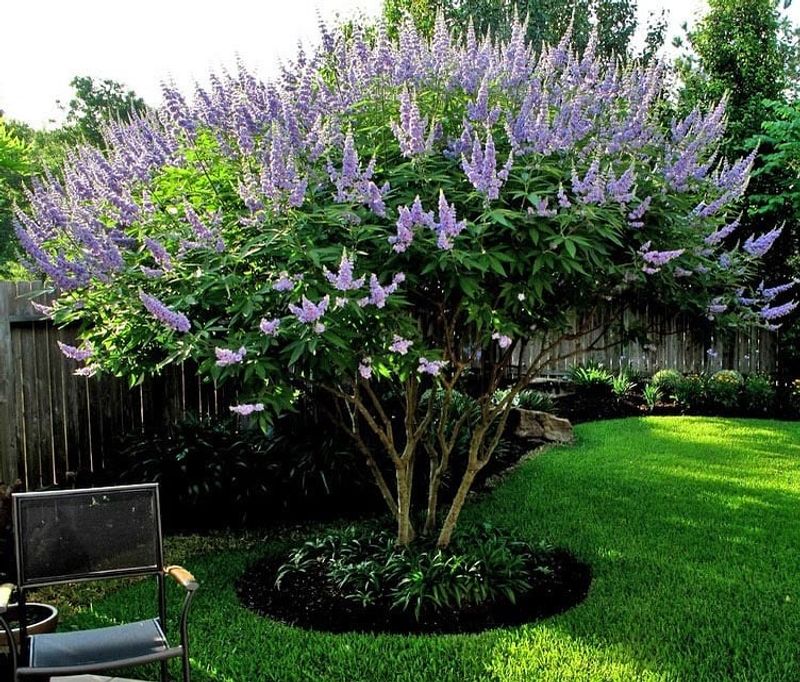
Step into a Texas garden in full summer bloom, and the striking purple spikes of Vitex are impossible to miss. Often called the chaste tree, this fast-growing shrub creates a lavender-like spectacle, sending tall, upright clusters of blooms skyward that instantly catch the eye.
With growth rates of four to seven feet per year, Vitex quickly establishes itself as a dramatic focal point in any landscape, adding height, color, and texture to otherwise ordinary garden spaces. Its stunning flowers don’t just impress gardeners.
They are a magnet for butterflies, bees, and other pollinators, turning your yard into a lively, buzzing oasis.
Vitex is particularly valued in Texas for its resilience. It thrives under the state’s intense summer heat, drought conditions, and poor soil, making it a practical choice for gardeners who want beauty without constant maintenance.
The aromatic gray-green foliage is another advantage, providing subtle color contrast while also deterring deer browsing – an important benefit in Hill Country and other regions where wildlife can be a challenge for gardeners.
This combination of rapid growth, striking blooms, and durability makes Vitex both visually impactful and ecologically beneficial.
Gardeners appreciate Vitex for its versatility and ease of care. Whether planted as a centerpiece, hedge, or specimen shrub, it brings dramatic flair and supports local pollinators, making it a valuable addition to any Texas landscape.
In short, Vitex is more than just a shrub, it’s a powerhouse of color, growth, and wildlife support that thrives in the Lone Star State’s challenging conditions.
8. Glossy Abelia
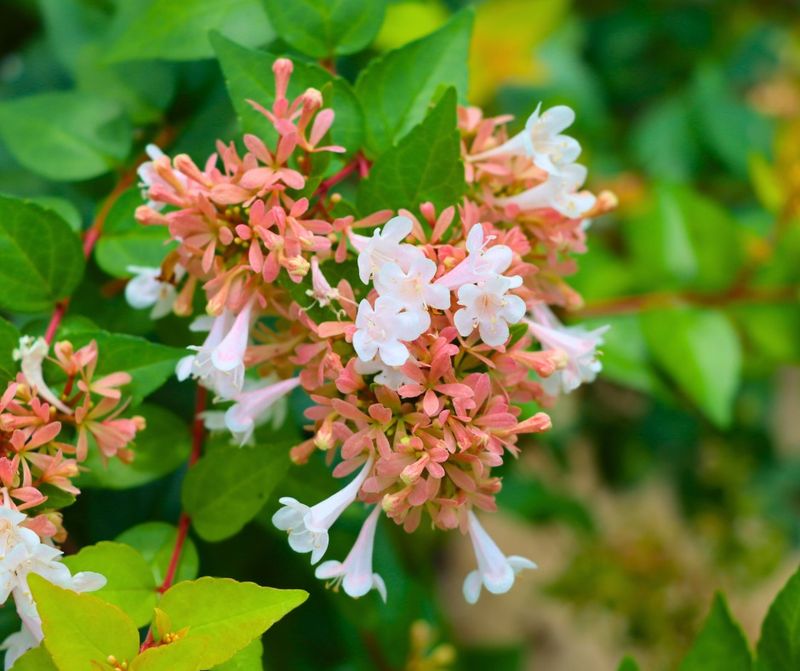
Few shrubs offer the combination of beauty, reliability, and fast growth quite like Glossy Abelia. From spring through fall, this versatile plant produces a steady stream of tiny pink-and-white flowers, creating a continuous source of nectar for butterflies, bees, and other pollinators.
Unlike seasonal bloomers that fade quickly, Glossy Abelia keeps Texas gardens alive and buzzing for months on end, making it a favorite among gardeners who want both aesthetic appeal and ecological benefits.
Its delicate blooms and arching growth habit add a graceful texture to borders, foundations, and mixed shrub beds, blending ornamental charm with practical landscaping.
In addition to its floral appeal, Glossy Abelia grows two to three feet per year, providing rapid coverage and structure for your garden.
Its semi-evergreen nature allows it to retain most of its leaves through mild East Texas winters, giving your landscape form and greenery even when deciduous shrubs have gone bare.
This makes it a reliable foundation plant, perfect for creating year-round interest along pathways, near patios, or as part of a layered planting design.
Glossy Abelia is also remarkably low-maintenance. It tolerates a variety of soil types, handles summer heat and drought once established, and responds well to light pruning to maintain its attractive shape.
For Texas gardeners seeking a fast-growing, pollinator-friendly shrub that combines seasonal color with year-round structure, Glossy Abelia delivers on every front.
Its combination of flowers, foliage, and adaptability makes it a true standout in East Texas landscapes, supporting both beauty and biodiversity.
9. Flame Acanthus
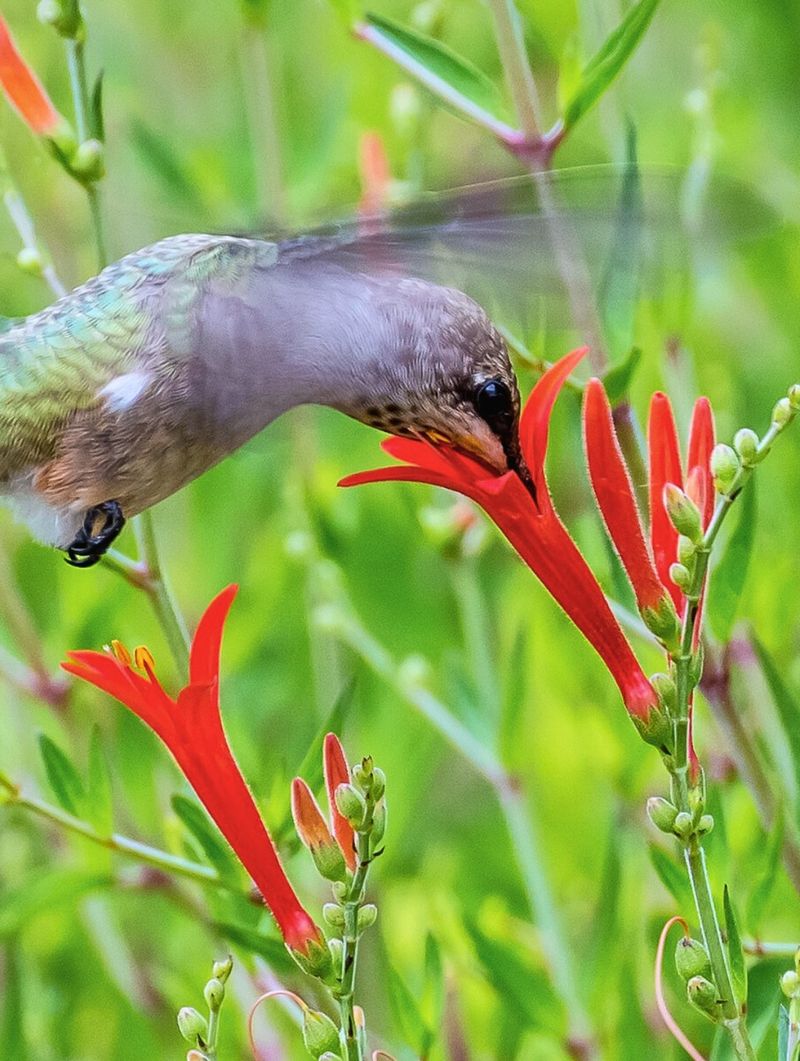
These vibrant shrubs don’t just bring color – they create a lively stage where hummingbirds dart, hover, and sometimes even compete for territory around the nectar-rich flowers.
With growth rates of two to three feet per year, Flame Acanthus establishes itself quickly, turning empty garden spaces into dynamic, pollinator-friendly focal points almost overnight.
Its upright, bushy form adds texture and interest to beds, borders, and mixed plantings, while the brilliant flowers act as a magnet for wildlife, drawing the eye and supporting biodiversity.
Native to Texas, Flame Acanthus thrives in the state’s challenging conditions. It is remarkably heat- and drought-tolerant, flourishing where many other shrubs struggle during the peak of summer.
One of its standout qualities is its bloom timing: the tubular, nectar-filled flowers appear most abundantly during the hottest months, when many other plants have slowed or stopped producing blooms.
This makes Flame Acanthus an invaluable source of food for hummingbirds, butterflies, and bees, helping sustain pollinators through the season’s harshest periods.
Gardeners also appreciate Flame Acanthus for its low-maintenance nature. Once established, it requires minimal watering and responds well to occasional pruning to shape the shrub or encourage fuller growth.
For Texans seeking a fast-growing, wildlife-friendly, and heat-resilient shrub, Flame Acanthus offers a brilliant combination of beauty, functionality, and ecological value, ensuring your garden remains vibrant even during the toughest months.
10. Red Yucca
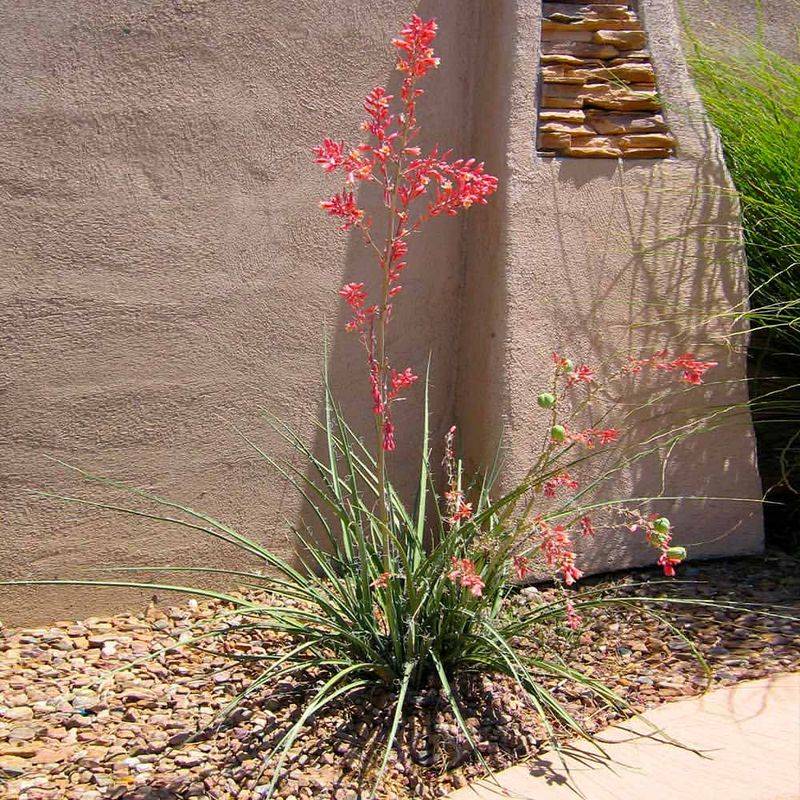
When you hear the name “Red Yucca,” you might expect a desert spiky plant, but this fast-growing Texas shrub surprises with its elegance and color. Though it isn’t a true yucca, it shares that plant’s legendary drought tolerance while adding vibrant beauty to arid landscapes.
Coral-pink flower stalks rise dramatically four to six feet above arching rosettes of green-gray foliage, creating a striking vertical accent that draws attention from near and far.
In a garden, Red Yucca’s bold form and colorful blooms instantly elevate both structure and visual interest, making it an ideal choice for borders, rock gardens, or as a standout specimen.
Red Yucca thrives in the harsh conditions of west Texas and other dry regions where many other plants falter. Its remarkable ability to withstand heat, drought, and poor soils makes it a low-maintenance option for gardeners who want impact without constant care.
The flowers appear in late spring and often continue blooming well into summer, providing a consistent source of nectar for hummingbirds even during the state’s hottest days.
This makes Red Yucca not only beautiful but also ecologically valuable, supporting local wildlife when other blooms may have already faded.
Gardeners appreciate Red Yucca for its combination of rapid growth, resilience, and showy flower spikes. The plant’s long-lasting blooms and arching foliage offer year-round structure, while its adaptability ensures it flourishes in tough Texas conditions.
For anyone seeking a fast-growing, colorful, and drought-tolerant shrub, Red Yucca brings vibrant energy, wildlife support, and effortless beauty to Lone Star landscapes.
11. Dwarf Crape Myrtle
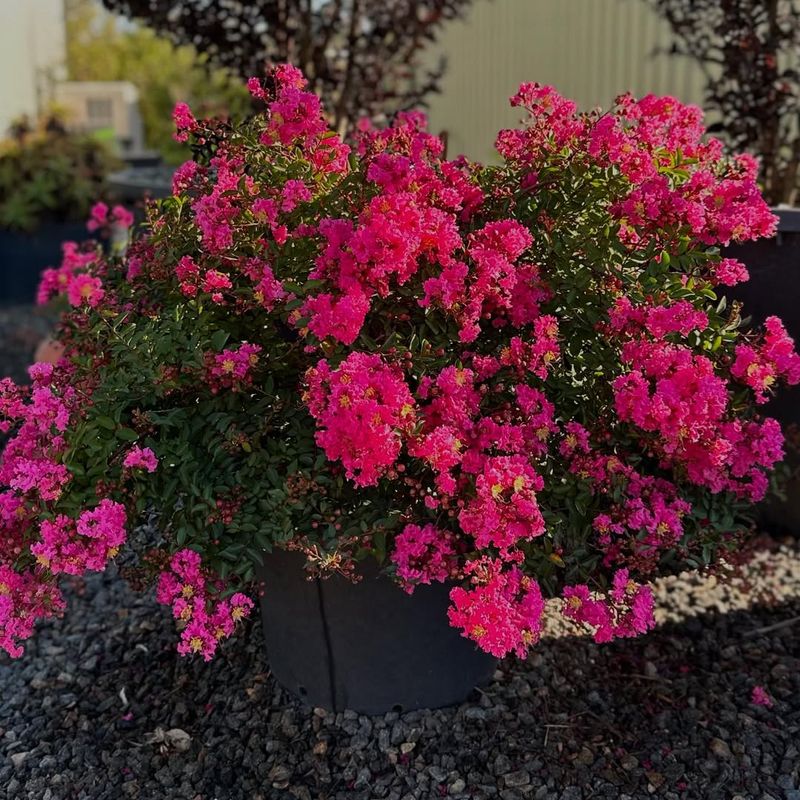
Few plants deliver the kind of vibrant, long-lasting color that Dwarf Crape Myrtles provide. These compact versions of the state’s beloved flowering tree burst into months of brilliant blooms, ranging from deep reds and purples to soft pinks and whites, making them a favorite among gardeners looking for both beauty and efficiency.
Growing one to three feet annually, Dwarf Crape Myrtles quickly reach their mature height of three to six feet, offering a fast-growing solution for adding color and structure to smaller yards, patios, or mixed shrub beds.
Dwarf Crape Myrtles shine in northern Texas landscapes, where the summer heat often stresses many other plants. Their resilient nature allows them to maintain vibrant blooms even during intense sun and dry periods, providing reliable summer color when other shrubs may fade.
Unlike their larger tree cousins, these dwarf varieties require little to no pruning to keep an attractive, balanced shape, making them ideal for gardeners who want high visual impact with minimal effort.
Their compact size also makes them perfect for modern landscapes, container gardens, and areas where space is limited but beauty is still a priority.
Beyond aesthetics, Dwarf Crape Myrtles are low-maintenance, drought-tolerant, and attract pollinators such as bees and butterflies. Their continuous summer blooms support local ecosystems while enhancing your yard’s appeal.
For Texans seeking a fast-growing, colorful, and manageable shrub, Dwarf Crape Myrtle combines the charm of crape myrtle trees with practicality, creating a stunning, enduring addition to any garden.
12. Mexican Bush Sage
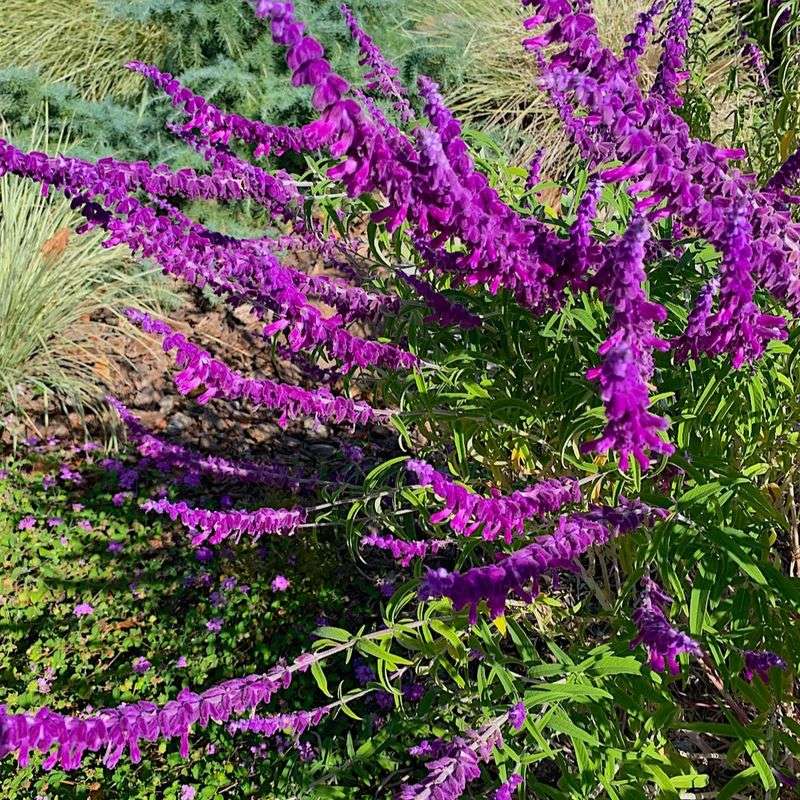
Texas gardeners often face the challenge of adding color to their landscapes when many plants have already finished blooming. Enter Mexican Bush Sage, a native shrub that provides a stunning fall display when it’s needed most.
Its velvety purple flower spikes rise above gray-green, aromatic foliage, creating a striking contrast that instantly livens up gardens across central and south Texas.
Growing two to three feet in a single season, this fast-growing sage quickly fills empty spaces, adding both structure and vibrant color just as the gardening season winds down.
Beyond its visual appeal, Mexican Bush Sage is a magnet for wildlife. Butterflies, bees, and hummingbirds flock to its fuzzy, nectar-rich blooms, creating a lively, pollinator-friendly haven that persists from September through the first frost.
In this way, it extends the period of ecological support in your garden, providing crucial food sources when other plants have faded.
Its gray-green foliage also remains attractive throughout the growing season, adding texture and contrast even when the flowers aren’t in full bloom.
This sage is remarkably resilient and low-maintenance, thriving in the intense summer heat, tolerating drought, and requiring minimal care once established.
For Texas gardeners who want fast-growing, colorful, and wildlife-supporting shrubs, Mexican Bush Sage offers a perfect combination of beauty, practicality, and ecological value.
Its late-season blooms ensure that your garden remains vibrant, lively, and full of pollinator activity right through the fall months.
13. Rose Of Sharon
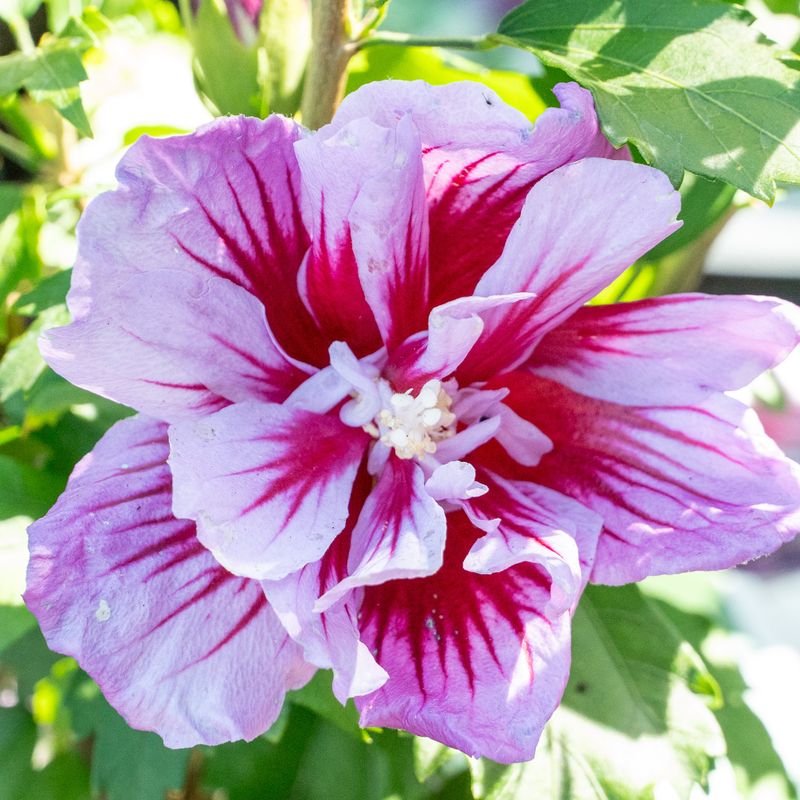
These fast-growing plants can add two to three feet of height annually, quickly transforming your landscape into a colorful focal point.
Their bold, hibiscus-like blooms appear from summer through fall, providing months of vibrant color when many other shrubs have already slowed down.
Whether used as a centerpiece or mixed into a shrub border, Rose of Sharon immediately adds both drama and elegance to Texas yards.
Gardeners across the Lone Star State particularly value Rose of Sharon for its ability to thrive during the hottest months, when extreme heat and drought can challenge less resilient plants.
Its upright growth habit makes it ideal for creating natural privacy screens or defining property lines, while the profusion of flowers continues to attract hummingbirds, butterflies, and other pollinators.
This combination of beauty, utility, and wildlife support makes it a versatile addition to any landscape.
Beyond its ornamental appeal, Rose of Sharon is surprisingly low-maintenance. Once established, it tolerates drought, poor soil, and full sun, making it a practical choice for busy gardeners or those in areas with challenging conditions.
For Texans seeking a fast-growing, colorful shrub that adds vertical interest, attracts wildlife, and blooms reliably through the heat of summer, Rose of Sharon delivers all the benefits of a tropical showpiece without the fuss.