Top Native Shrubs For Central Texas Landscapes
Central Texas landscapes have a look that is hard to fake. The mix of rocky soil, blazing sun, dry stretches, and sudden weather swings means the best yards are usually the ones that work with the region instead of against it.
That is exactly why native shrubs are such a smart choice. They already know how to handle the local conditions, so they tend to settle in with less stress and far less hand-holding than plants that were never meant to grow there in the first place.
They also do a lot more than just fill space. The right native shrubs can add structure, color, texture, and privacy while still feeling natural in a Central Texas setting.
Some put on a show with blooms, some attract birds and pollinators, and some stay strong when heat and drought start pushing everything else around.
For gardeners who want a landscape that looks good without becoming a constant project, shrubs like these can do a lot of the heavy lifting.
Once you start paying attention to the best native options, it gets a lot easier to build a yard that feels beautiful, practical, and truly suited to the place where it grows.
1. Agarita
Walk through any wild stretch of the Edwards Plateau and you are almost certain to spot agarita growing right out of the rocky ground. This tough, evergreen shrub has been thriving in Central Texas long before anyone started planting it on purpose.
It is native to the region and has earned a loyal following among gardeners who want beauty without babying.
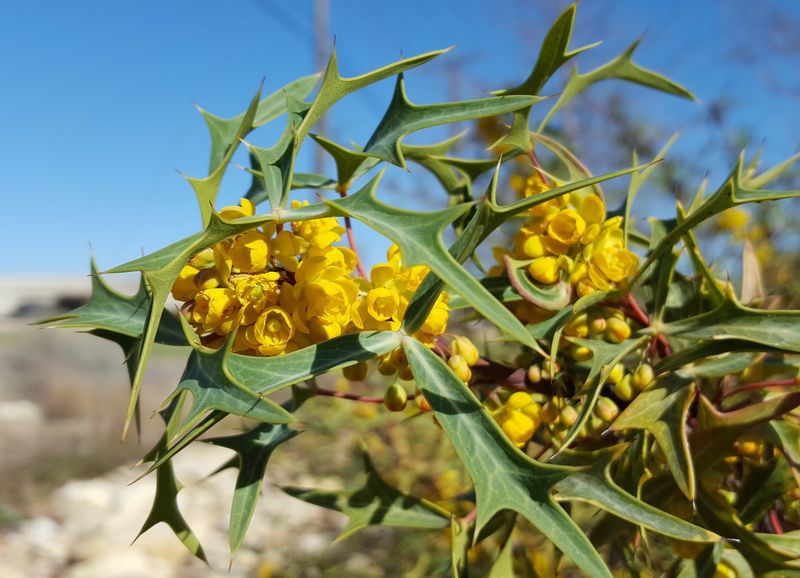
Agarita grows with stiff, spiny, holly-like leaves that stay green all year. In late winter and early spring, it bursts into clusters of small, bright yellow flowers that smell faintly sweet and draw in early pollinators.
Those blooms are one of the first nectar sources of the season, making this shrub a true friend to bees and butterflies when little else is blooming in Central Texas.
After the flowers fade, round red berries appear by early summer. Birds absolutely love them.
The dense, thorny branches also make excellent nesting cover, so agarita doubles as both a food source and a shelter for local wildlife. Mockingbirds, cedar waxwings, and other species are frequent visitors.
From a care standpoint, agarita is about as low-maintenance as it gets. It thrives in full sun and well-drained rocky or sandy soils.
Once established, it needs almost no supplemental watering, which is a big deal in a region where summer droughts are common. It rarely needs pruning and tends to stay compact on its own.
If you want a shrub that looks at home in a Central Texas yard, works hard for wildlife, and practically takes care of itself, agarita is a top-tier choice you will not regret planting.
2. Yaupon Holly
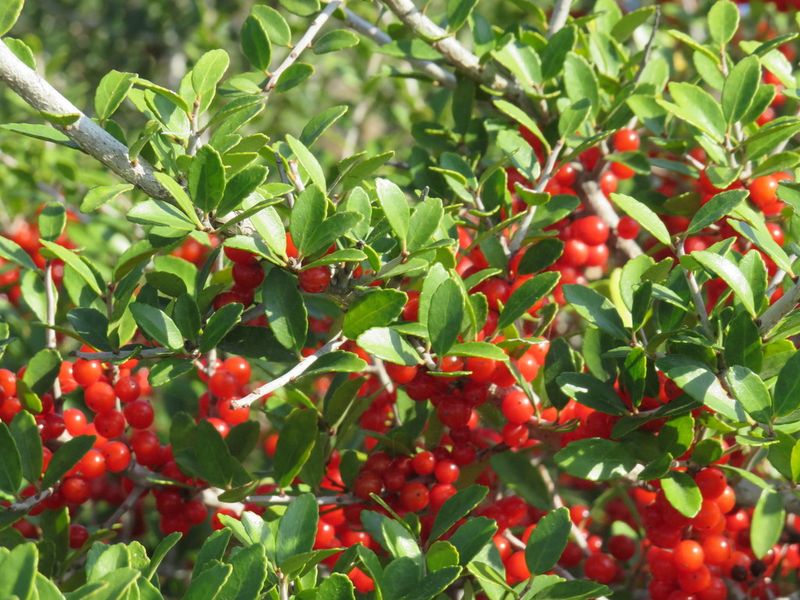
Few native shrubs can match yaupon holly when it comes to sheer dependability in the Central Texas landscape. Gardeners across the Austin area have relied on it for decades, and for good reason.
It handles heat, drought, poor soil, shade, and sun without missing a beat. Honestly, it might be one of the most forgiving plants you can put in the ground.
Yaupon holly is native to the Blackland Prairie region and thrives across a wide range of Central Texas conditions. It is evergreen, meaning those glossy, dark green leaves stay put all year long.
That makes it a fantastic choice for hedges, privacy screens, and foundation plantings where you need consistent coverage through every season.
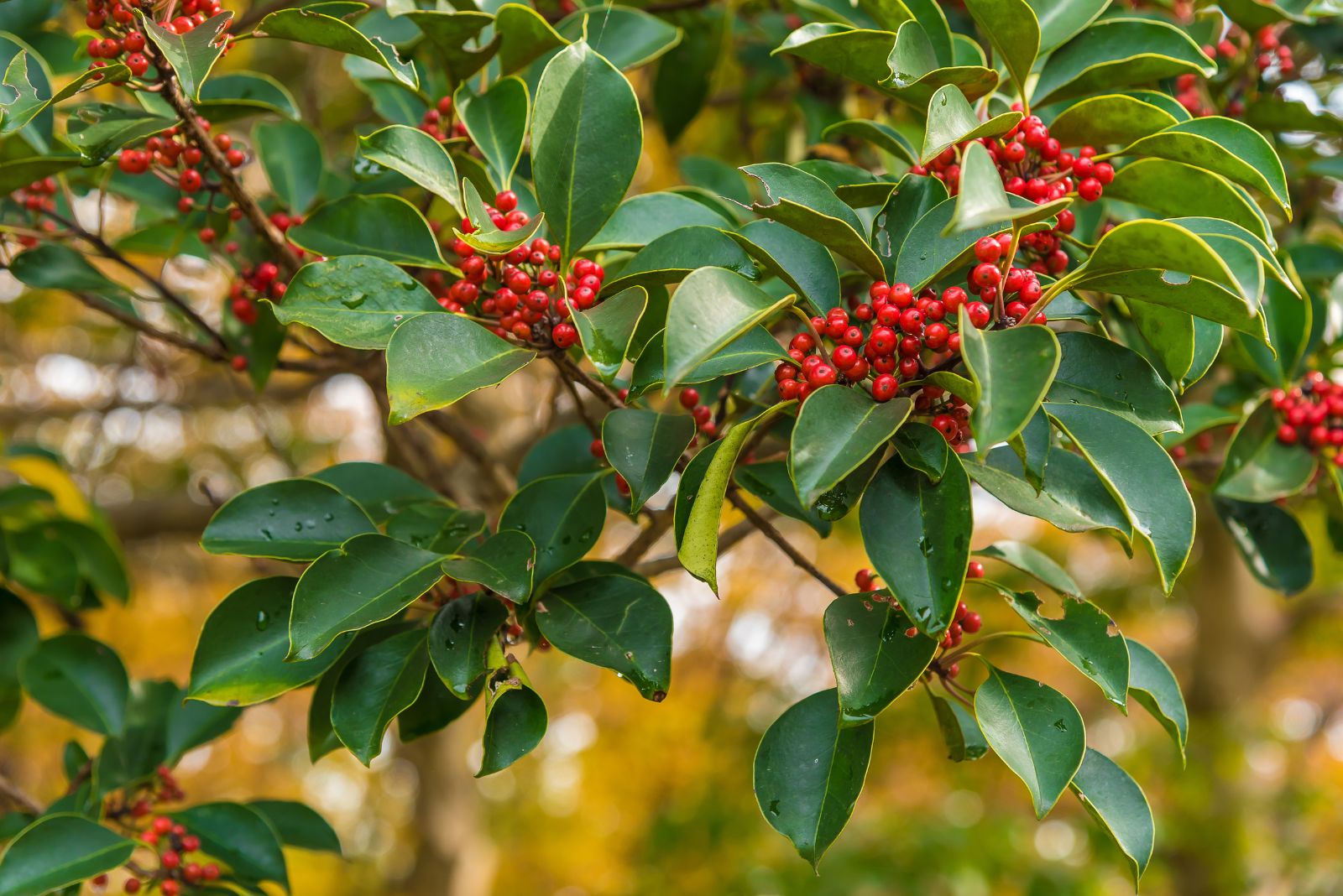
Come winter, the female plants light up with clusters of bright red berries that birds simply cannot resist. Cedar waxwings, robins, and bluebirds flock to yaupon holly when other food sources run thin.
Planting a few of these shrubs near a window gives you a front-row seat to some incredible winter wildlife watching right in your own yard.
One fun fact most people do not know: yaupon holly is the only plant native to North America that contains caffeine. Indigenous communities used its leaves to brew a tea for centuries.
You probably will not be brewing any yourself, but it is a pretty cool piece of plant history worth sharing.
For placement, yaupon holly does well in full sun or partial shade. It can be trimmed into formal shapes or left to grow naturally.
Either way, it adds real structure and year-round interest to any Central Texas landscape with very little effort on your part.
3. Possumhaw Holly
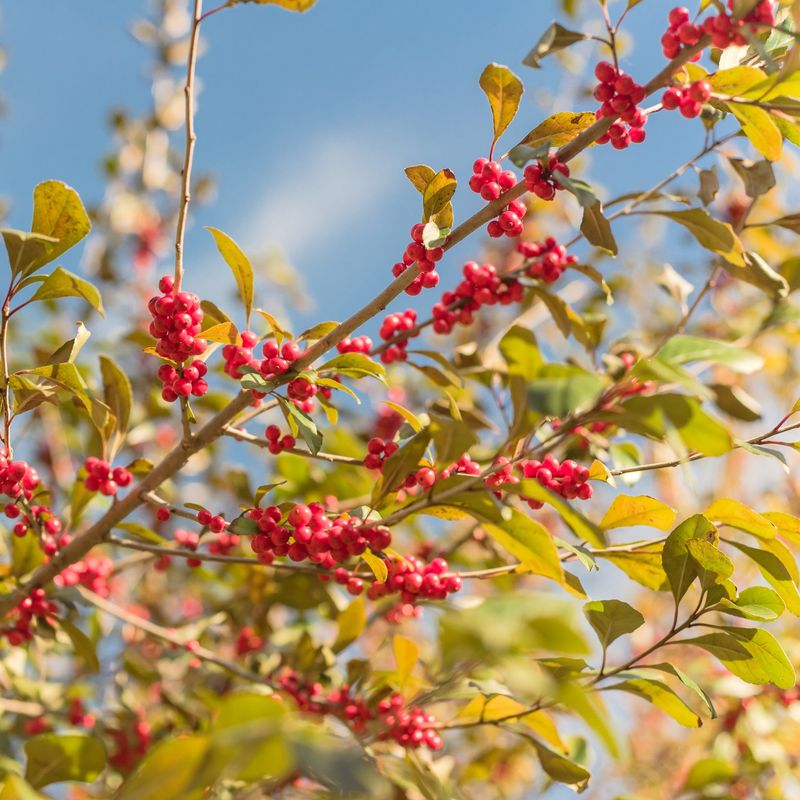
If you have ever driven through Central Texas in January and spotted a shrub absolutely loaded with bright red berries and no leaves at all, there is a good chance you were looking at possumhaw holly.
It puts on one of the most dramatic winter shows of any native plant in the region, and it does it completely on its own terms.
Possumhaw holly is native to both the Blackland Prairie and the Edwards Plateau, which means it is right at home across a wide swath of Central Texas. Unlike its evergreen cousin yaupon, possumhaw is deciduous.
It drops its leaves in fall, and that is actually what makes it so stunning. With the foliage gone, those vivid red or orange berries stand out against bare branches like tiny ornaments.
Birds go absolutely wild for those berries. Robins, cedar waxwings, and mockingbirds treat possumhaw like a winter buffet.
If you want to attract more birds to your Central Texas yard during the colder months, few plants will deliver results faster than this one.
Another big plus is its tolerance for poor drainage. Many plants in Central Texas struggle in spots where water tends to pool after heavy rains.
Possumhaw handles those wetter areas better than most native shrubs, which makes it useful in low spots or rain gardens where other plants might struggle.
It grows best in full sun to partial shade and can reach eight to fifteen feet tall at maturity, so give it some room to spread. With its bold winter berries, wildlife value, and adaptability to tricky soil conditions, possumhaw holly earns its spot in any Central Texas planting plan.
4. Flame Acanthus
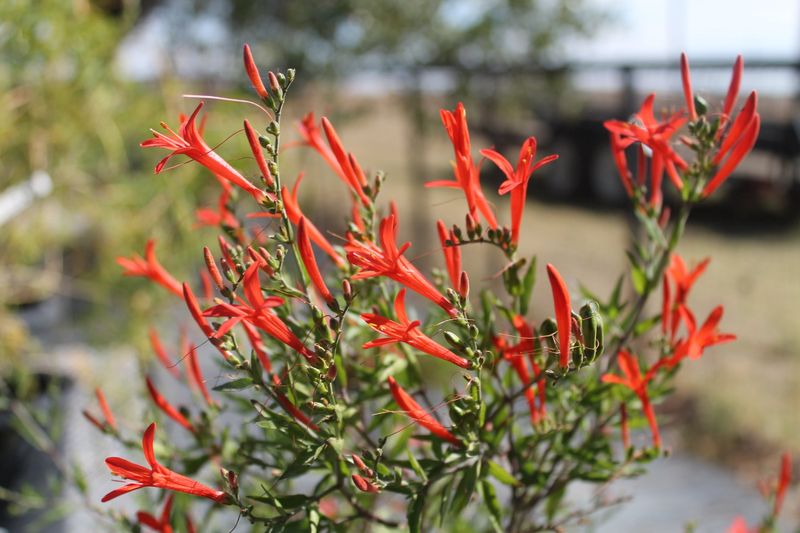
Picture a shrub that practically glows in the summer heat with fiery red-orange tubular flowers, and you have flame acanthus in a nutshell.
This native beauty is one of the most eye-catching plants you can grow in a Central Texas landscape, and it thrives in exactly the conditions that send other plants running for cover.
Native to the Edwards Plateau, flame acanthus is built for hot, dry, sunny spots. It has very low water needs once established, making it an excellent choice for water-wise gardening in Central Texas.
Rocky, well-drained soils suit it perfectly, and it handles the brutal summer heat with ease. While other plants wilt and fade, flame acanthus just keeps blooming.
The flowers are a magnet for hummingbirds. Ruby-throated and black-chinned hummingbirds zoom in from the moment the blooms open in summer, and they keep coming back right through fall.
Butterflies are regular visitors too, drawn in by the same bright, nectar-rich flowers. If you want to turn your yard into a pollinator hotspot, this shrub is one of the fastest ways to do it.
Flame acanthus typically grows three to five feet tall and wide, forming a rounded, bushy shape. It may freeze back to the ground during harsh Central Texas winters, but do not worry.
It comes back strong from the roots each spring, often with even more vigor than before. That resilience is part of what makes it such a reliable performer year after year.
Plant it in a sunny border, along a fence, or as part of a xeriscape design. However you use it, flame acanthus brings serious color and wildlife energy to any outdoor space.
5. Cenizo (Texas Sage)
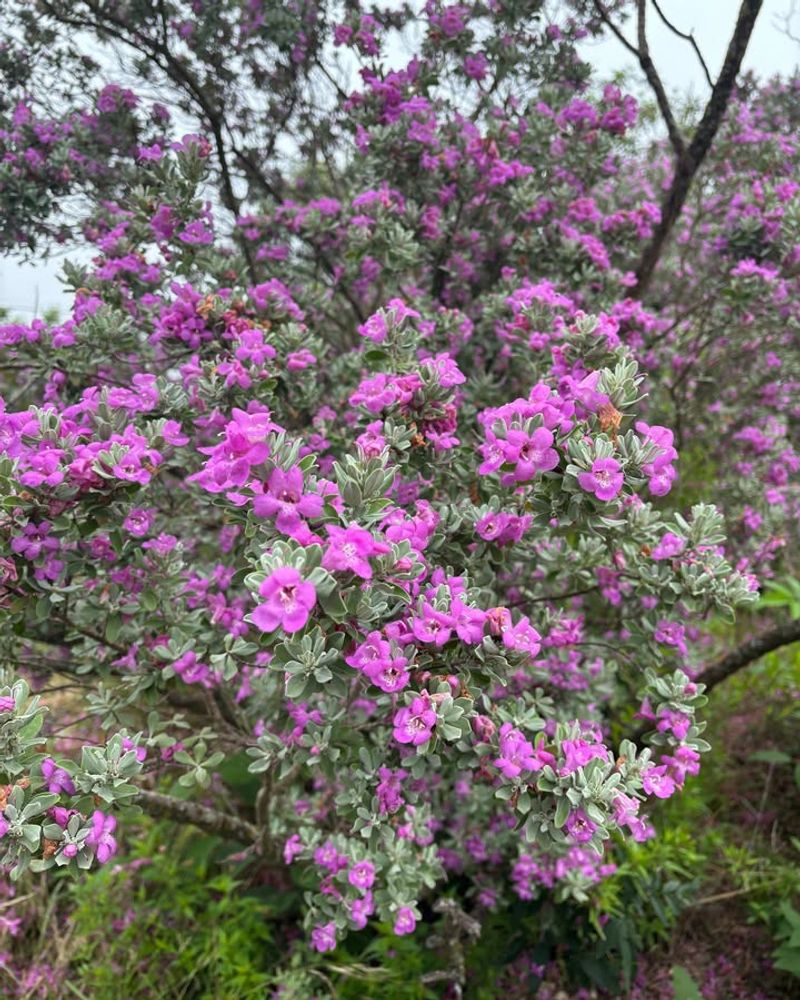
There is something almost magical about cenizo. On a hot, humid Central Texas day just before a rainstorm, this shrub suddenly bursts into a cloud of purple and lavender flowers as if it sensed the weather changing.
In fact, many locals call it the barometer bush because it tends to bloom right around the time rain is on the way.
Cenizo, also widely known as Texas sage, is a true Texas native shrub prized for its silvery-gray foliage and stunning seasonal blooms. The soft, woolly leaves give it a cool, frosted look that contrasts beautifully with the warm tones of a rocky Central Texas garden.
Even when it is not in flower, the foliage alone makes it a standout in the landscape. This shrub is made for full sun and excellent drainage. It absolutely does not like wet feet, so avoid low spots or areas where water tends to collect.
Plant it in a raised bed, along a sunny slope, or in a rock garden where the soil stays dry between rains. Central Texas limestone-based soils are actually ideal for it.
Water needs are low once established, which is a major advantage during the long, dry summers that Central Texas is known for.
Cenizo rarely needs fertilizing and does not require much pruning either. A light shaping once or twice a year is all it takes to keep it looking tidy and full.
Mature plants typically reach four to eight feet tall and wide, creating a soft, rounded form that works beautifully as a specimen plant or informal hedge. For a low-effort shrub with high visual impact, cenizo is hard to beat in any Central Texas yard.
6. Rusty Blackhaw Viburnum
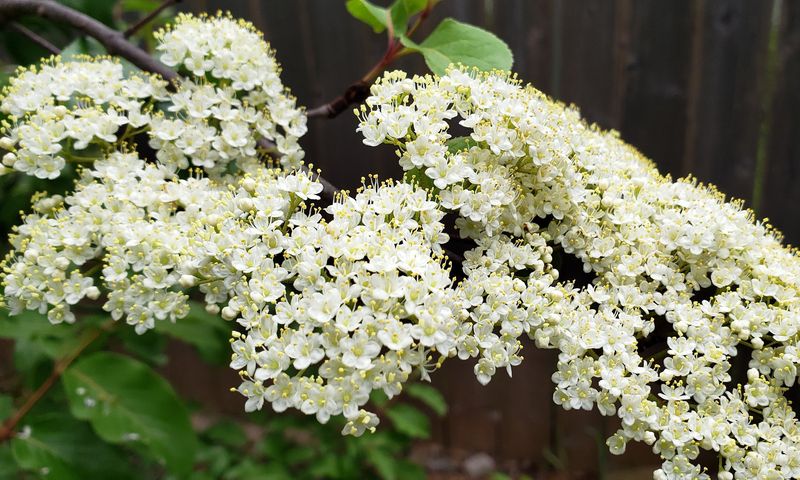
For gardeners who want a native shrub that truly does it all, rusty blackhaw viburnum is worth getting excited about.
Flat-topped clusters of creamy white flowers in spring, rich red and purple fall foliage, and dark blue-black berries that birds cannot get enough of. This shrub brings something special to the Central Texas landscape in nearly every season.
Rusty blackhaw viburnum is native to both the Blackland Prairie and the Edwards Plateau, so it is well-adapted to the varied soils found across Central Texas. It performs best in deeper, well-drained soils and can handle both full sun and partial shade.
That flexibility makes it useful in a variety of garden situations, from open sunny borders to the edge of a shaded woodland area.
The berries that appear in late summer and fall are a favorite food for many bird species. Thrushes, robins, and bluebirds are among the regular visitors that stop by to feed.
The dense branching structure also provides excellent nesting habitat, so this shrub supports local wildlife in multiple ways throughout the year. Fall color is another strong selling point.
The leaves turn shades of deep maroon, burgundy, and rusty orange before dropping, giving the plant a warm, glowing appearance that adds real seasonal drama to Central Texas gardens. It is one of the better native shrubs for fall color in the region.
Rusty blackhaw viburnum can grow anywhere from eight to fifteen feet tall, so it works well as a large specimen shrub, a small understory tree, or a naturalized screen.
If you have the space for it, this multi-season performer is one of the most rewarding native plants you can add to a Central Texas yard.