8 Trees That Turn Florida Cities Purple Every Spring
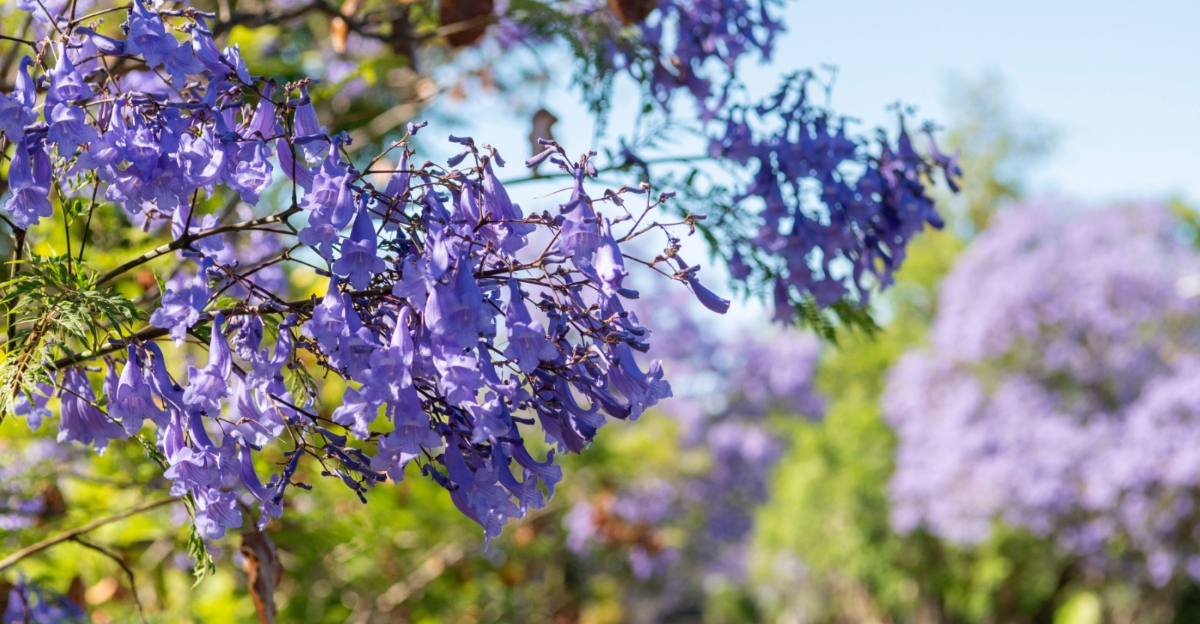
One week your street looks like any other, and the next, it’s washed in shades of purple. Across Florida, certain trees burst into bloom each spring, turning everyday neighborhoods into something that feels almost unreal.
It’s a moment many people notice on morning walks or from the car, yet few know which trees are responsible.
Florida’s warm climate and long growing season create ideal conditions for several purple-flowering trees to thrive.
Some bloom before their leaves appear, creating that striking color effect. Once you know what to look for, it becomes much easier to recognize these trees and even choose one to bring that same seasonal color into your own yard.
1. Jacaranda Fills Streets With Lavender Color In Spring
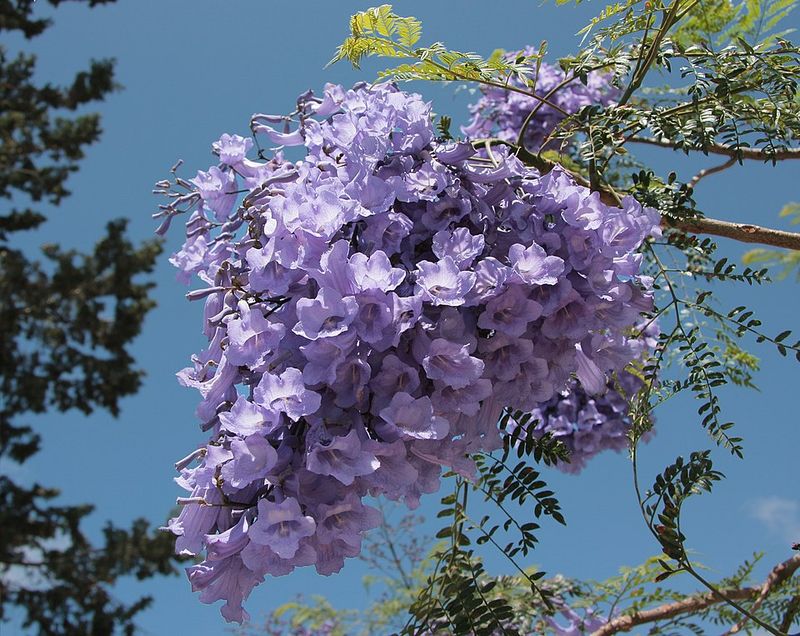
Few sights in Florida compare to a street fully canopied by blooming jacarandas in late spring.
The jacaranda (Jacaranda mimosifolia) is a large, semi-deciduous tree originally from South America that has become one of the most recognizable purple-flowering trees across South and Central Florida.
Its clusters of trumpet-shaped, blue-violet blooms typically appear between April and June, often before or alongside the new leaves, which creates that dramatic, all-purple canopy effect people photograph and share every year.
Jacarandas grow quickly and can reach up to 50 feet tall with a wide, spreading canopy. They perform best in full sun and well-drained soil, and they are most reliable in USDA zones 9b through 11, meaning South Florida is their sweet spot.
In Central Florida, a cold winter snap can limit blooming or cause some branch damage, though established trees usually recover well once warmer weather returns.
One fun fact: jacarandas bloom most impressively after a period of mild drought followed by warmth, which is why Florida’s dry spring season often triggers a spectacular show.
The fallen flowers create a soft purple carpet beneath the canopy, adding to the visual drama.
Cities like Miami, Fort Lauderdale, and Tampa have rows of jacarandas planted along boulevards, making spring drives through these neighborhoods genuinely breathtaking for residents and visitors alike.
2. Orchid Tree Adds Soft Purple Flowers To Tropical Yards
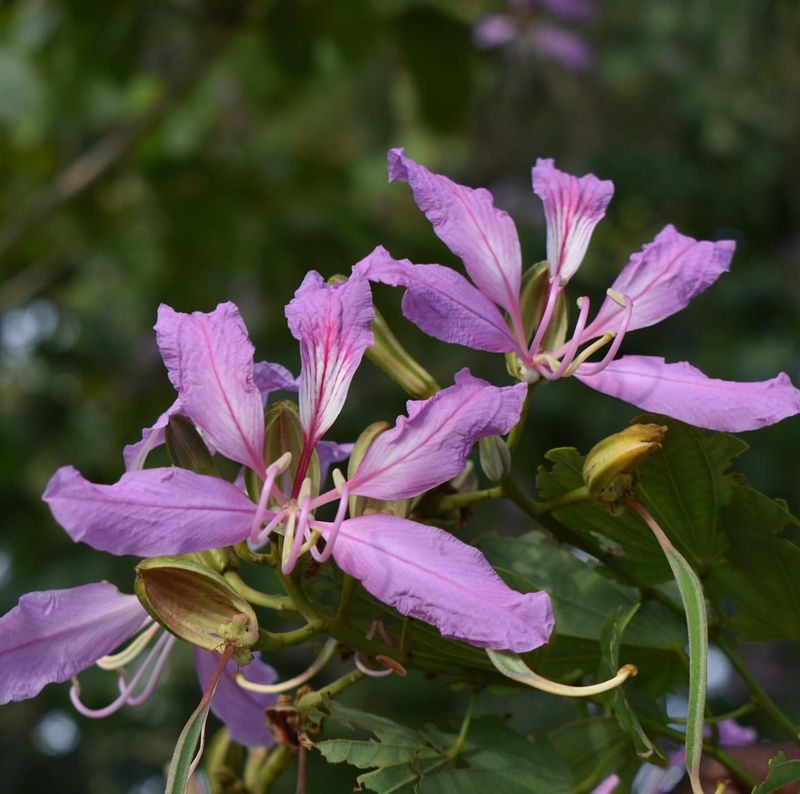
The orchid tree earns its name honestly. Bauhinia purpurea produces flowers so closely resembling orchid blooms that first-time viewers often do a double take.
Each flower has five slightly ruffled petals in shades ranging from soft lavender to deeper purple-pink, and the tree tends to produce them generously across its spreading canopy.
The fan-shaped, two-lobed leaves are also distinctive, making this tree easy to identify even when it is not in bloom.
In Florida, the orchid tree is nearly evergreen in South Florida’s warmest zones, shedding leaves only briefly before flowering. Bloom time typically falls between late fall and early spring, though individual trees can vary.
It grows 20 to 30 feet tall and thrives in full sun with well-drained soil. North and Central Florida gardeners can grow orchid trees, but they may experience some cold damage during hard freezes, and younger trees need protection during the first few winters.
Orchid trees are popular in Miami-Dade, Broward, and Palm Beach counties, where they line residential streets and grace the front yards of tropical-style homes.
They attract butterflies and hummingbirds during bloom, adding wildlife value alongside their ornamental appeal.
One thing to keep in mind: Bauhinia purpurea produces seed pods that can be messy, so planting away from pool areas or patios is worth considering.
For sheer flower beauty in a Florida yard, few trees match the soft, romantic quality of the orchid tree in full bloom.
3. Chaste Tree Brings Lavender Blooms In Warm Months
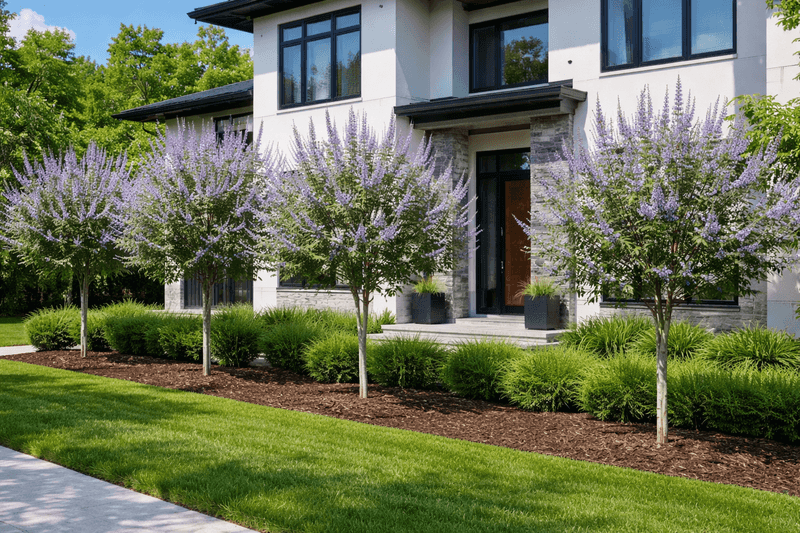
Bees and butterflies seem to find the chaste tree before most gardeners do.
Vitex agnus-castus, commonly called the chaste tree, produces upright spikes of lavender to soft purple flowers that rise above its gray-green, aromatic foliage in a way that creates a hazy purple effect across the whole plant when it peaks.
It is one of the more cold-hardy purple-blooming trees on this list, which makes it a great option for North and Central Florida gardeners who want reliable color without worrying too much about frost damage.
Chaste trees typically bloom from late spring through summer in Florida, and in warmer parts of the state they may rebloom if cut back after the first flush of flowers fades.
They grow 10 to 20 feet tall, though many gardeners keep them pruned to a more shrub-like shape.
Full sun and good drainage are the two most important conditions for strong blooming. In heavy clay or consistently wet soils, chaste trees tend to struggle.
The fragrance of both the flowers and the foliage is a bonus that many plant descriptions overlook.
The leaves have a pleasant, slightly herbal scent when brushed, and the blooms carry a light fragrance that adds to the sensory experience of standing near one in bloom.
For Florida homeowners in zones 7 through 10 looking for a lower-maintenance purple-flowering tree that supports pollinators, the chaste tree is a smart and rewarding choice worth planting.
4. Texas Mountain Laurel Shows Deep Purple Flowers With Fragrance
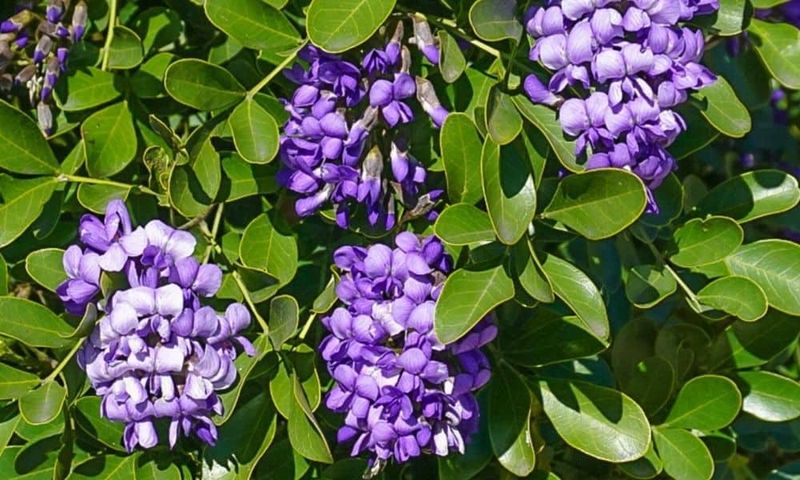
The scent hits you before you even see the tree. Texas mountain laurel (Sophora secundiflora) produces drooping clusters of deep purple flowers that carry a remarkably strong, sweet fragrance often compared to grape candy or grape soda.
It is one of the more unusual purple-flowering trees available to Florida gardeners because it is native to Texas and New Mexico but adapts well to North and Central Florida’s drier, well-drained landscapes.
Blooming typically occurs in late winter to early spring, making it one of the earlier purple bloomers in Florida’s seasonal calendar. The flowers hang in clusters that resemble wisteria, which often leads to confusion between the two plants.
Texas mountain laurel, however, is a tree or large shrub that grows slowly to 15 to 25 feet, while wisteria is a vine.
The glossy, dark green leaves remain on the plant year-round, giving it a tidy, refined appearance even outside of bloom season.
It is worth noting that all parts of Texas mountain laurel are toxic if eaten, so it is best planted away from areas where young children or pets spend time unsupervised.
In terms of care, it prefers alkaline to neutral, well-drained soils and full sun, and it is notably drought-tolerant once established.
Florida gardeners in zones 8 through 10 who want a fragrant, slow-growing, and visually dramatic purple-flowering tree will find Texas mountain laurel a genuinely rewarding long-term addition to their landscape.
5. Queen’s Wreath Cascades With Hanging Purple Blooms
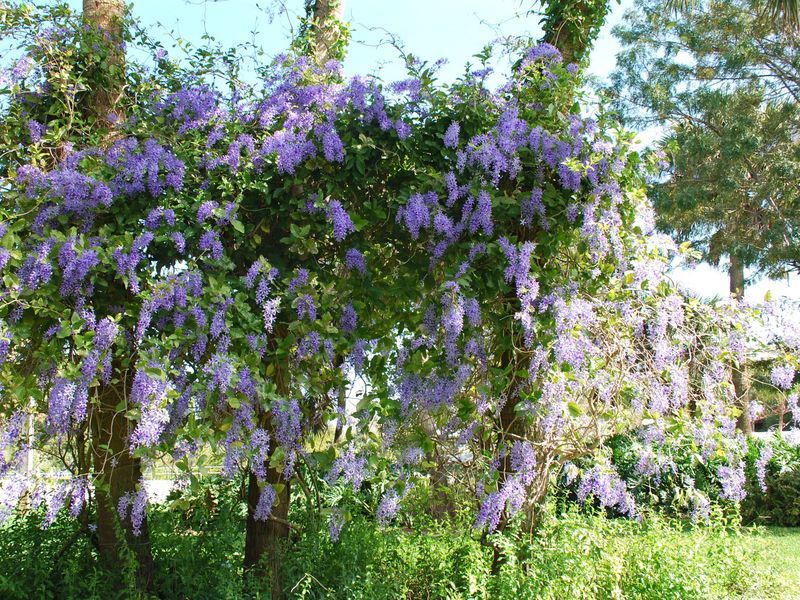
Queen’s wreath has a way of stopping garden visitors mid-sentence.
Petrea volubilis, sometimes called sandpaper vine or purple wreath, produces long, cascading chains of star-shaped flowers in two shades of purple simultaneously – a deeper violet petal surrounding a lighter lavender calyx.
When it blooms heavily, the effect looks like flowing purple waterfalls draped over whatever structure it has been trained to climb, whether that is a fence, trellis, arbor, or tree.
In Florida, queen’s wreath blooms most heavily in spring, though it may produce additional flushes of color through summer and into fall in South Florida’s warmth.
It is a tropical plant that performs best in USDA zones 9b through 11, meaning it is most at home in South Florida.
In Central Florida it can survive but may suffer leaf and stem damage during cold snaps, and in North Florida it is generally not a reliable outdoor plant without significant protection.
Queen’s wreath grows vigorously and can reach 30 to 40 feet if left unchecked on a supportive structure. Pruning after bloom cycles helps keep it manageable and encourages new flowering growth.
It prefers full sun and well-drained soil, and once established it is reasonably drought-tolerant.
For South Florida homeowners who want a show-stopping, large-scale purple display that turns heads every spring, queen’s wreath is one of the most dramatic and genuinely impressive options available in Florida’s tropical plant palette.
6. Lignum Vitae Produces Unique Blue-Purple Flowers In Coastal Areas
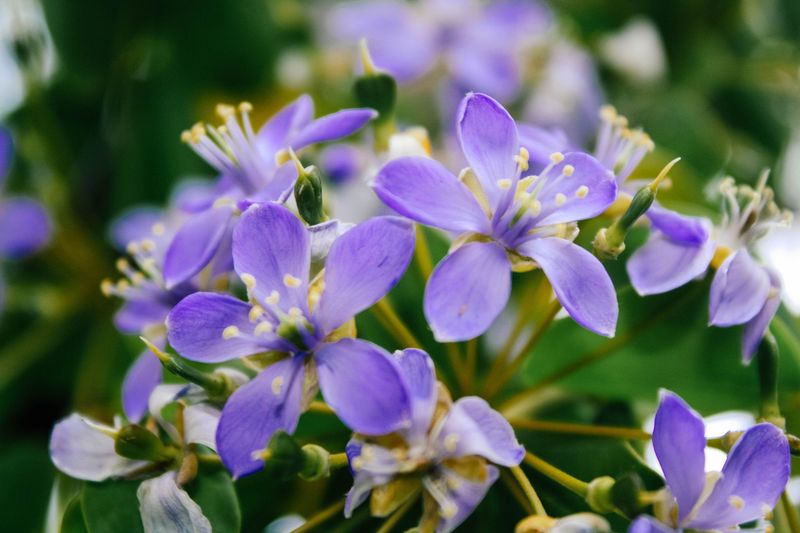
Lignum vitae holds a special place in Florida’s native plant story. Guaiacum sanctum is one of Florida’s few native trees with blue-purple flowers, and it is also one of the rarest, listed as an endangered species in the state.
Found naturally in the Florida Keys and a few coastal areas of South Florida, this small, slow-growing evergreen tree produces clusters of bright blue to violet flowers that contrast beautifully against its dense, glossy green foliage.
The name lignum vitae translates to “wood of life,” a nod to the tree’s historically dense, resin-rich wood that was once valued for its medicinal and industrial uses.
In bloom, lignum vitae creates a jewel-like display that feels almost out of place in its wild coastal habitat, which makes encountering one in a natural setting genuinely exciting.
It typically blooms in spring and sporadically through other seasons in South Florida.
The tree grows slowly to about 10 to 30 feet over many years, making it a long-term investment for any landscape where it is planted.
Because of its endangered status in the wild, lignum vitae is now cultivated by Florida nurseries and used in conservation-minded landscaping projects throughout South Florida.
It thrives in full sun, tolerates salt spray well, and prefers well-drained soils, making it an excellent choice for coastal Florida gardens.
Supporting this tree in cultivation helps maintain awareness of its presence and contributes to broader native plant conservation efforts across the region.
7. West Indian Jacaranda Adds Soft Purple Color In South Florida
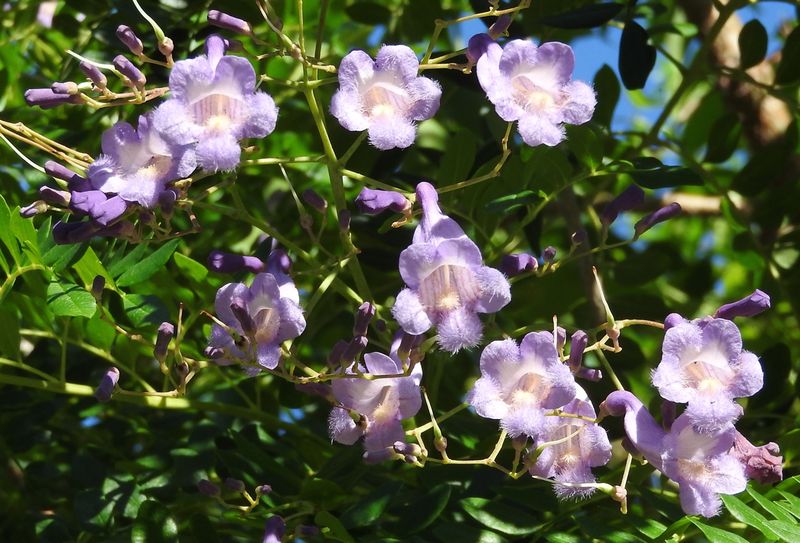
Not every purple-flowering tree in South Florida gets the same recognition as its more famous cousins, and the West Indian jacaranda is a prime example of an underappreciated gem.
Jacaranda caerulea, sometimes called the white cedar or West Indian jacaranda, is a native Caribbean species that grows naturally in parts of South Florida and the Florida Keys.
Unlike the more commonly planted Jacaranda mimosifolia, this species tends to be smaller and produces softer, lighter purple to lavender flower clusters that have a quiet, understated elegance.
West Indian jacaranda is a semi-deciduous to evergreen tree depending on conditions, growing 20 to 40 feet tall in South Florida’s warmest zones.
It blooms primarily in spring but can produce scattered flowers at other times of year in consistently warm locations.
The tree prefers full sun and well-drained soil, and it shows good tolerance for the salt air and sandy soils common in coastal South Florida landscapes.
One of the reasons this tree deserves more attention from Florida gardeners is its native status and its value to local wildlife.
The flowers attract pollinators, and the tree supports the broader ecosystem in ways that many non-native ornamentals simply cannot.
Nurseries specializing in Florida native and Caribbean plants are the most reliable sources for finding this species.
For South Florida homeowners who want purple blooms with a native ecological connection, West Indian jacaranda offers a meaningful and visually rewarding landscape choice worth seeking out.