8 Tropical-Looking Plants That Thrive In Texas Gardens
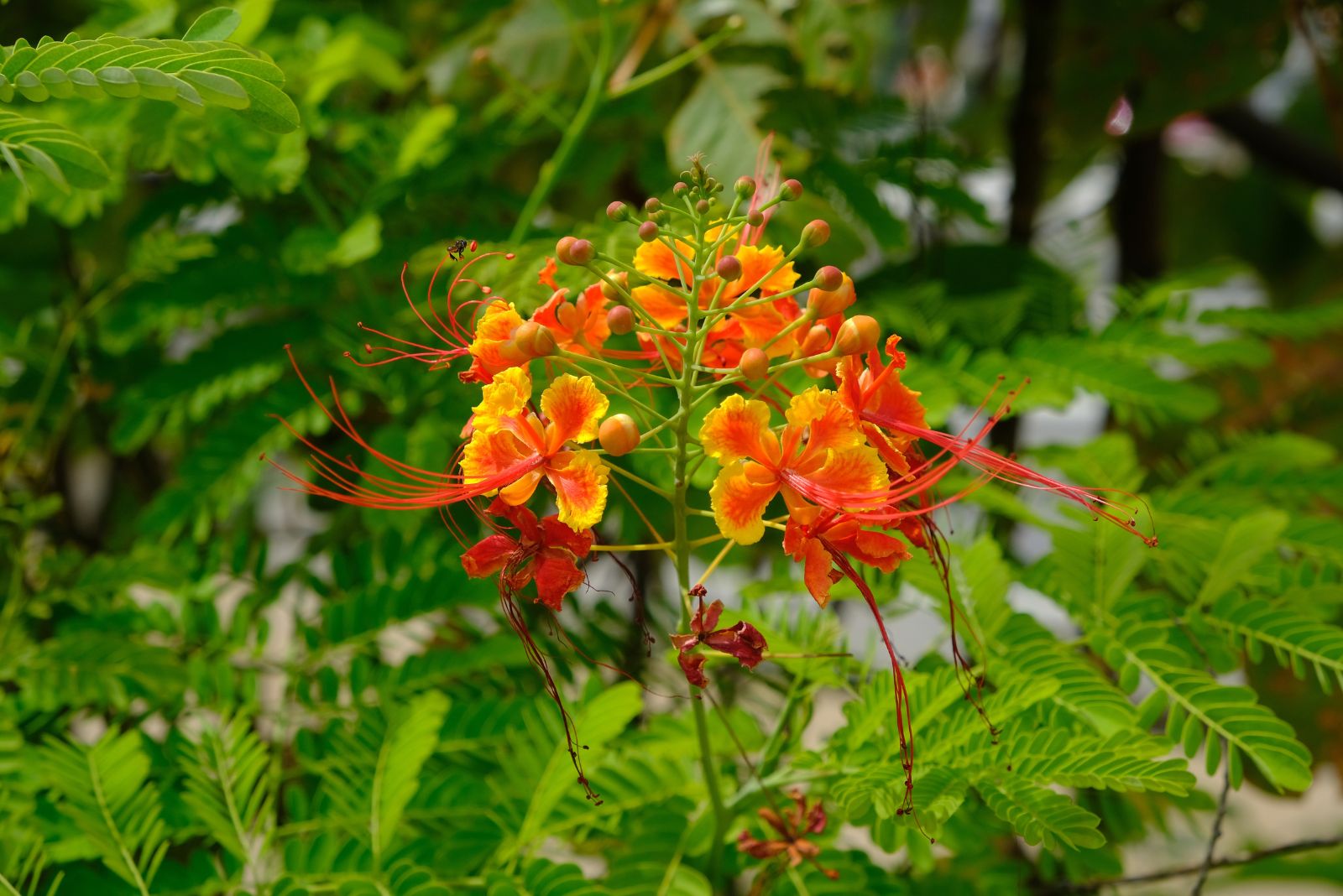
Texas gardens are full of possibilities, and for gardeners who love bold, vibrant landscapes, tropical-looking plants are a perfect choice.
Even though they give the impression of faraway jungles or sunny beaches, many of these plants thrive in Texas heat, strong sun, and varying soil conditions.
They bring lush foliage, dramatic leaves, and colorful blooms that instantly transform a yard into a lively, exotic escape.
These plants add height, texture, and color without demanding constant attention. Many attract pollinators, hummingbirds, and butterflies, creating movement and life throughout the garden.
With proper placement, water, and soil preparation, these tropical-looking plants handle Texas summers with ease, returning each year or flourishing through the season.
Incorporating these dramatic plants lets homeowners create a bold, unique landscape that stands out. A garden full of tropical flair brings energy, color, and an inviting atmosphere to any Texas outdoor space.
1. Esperanza
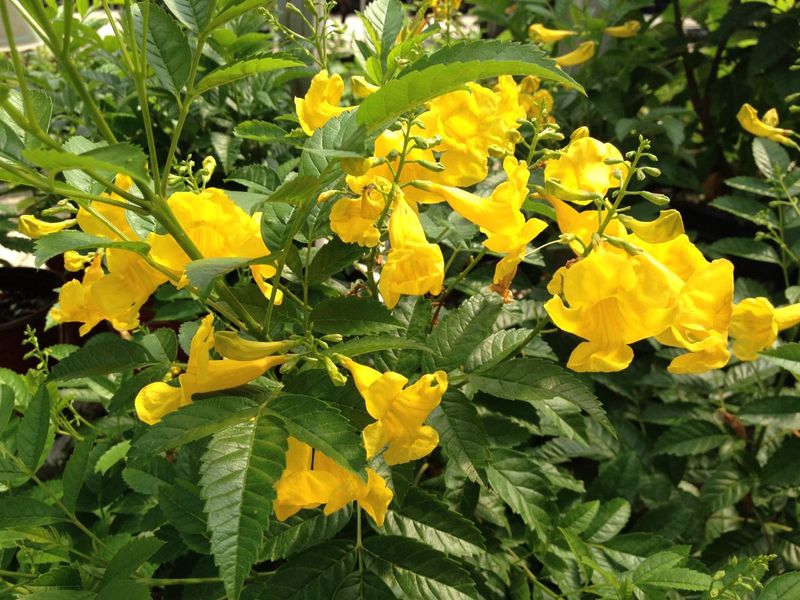
Picture a shrub so bright it practically glows in the Texas sun. That is exactly what Esperanza, also called Yellow Bells, brings to your yard.
Those bold, trumpet-shaped yellow flowers are impossible to miss, and they keep coming back from late spring all the way through fall.
Esperanza is a superstar in Texas gardens because it absolutely loves the heat. Full sun? No problem. Dry spells? It handles them like a champ once it gets established.
This plant is native to the southwestern United States and Mexico, so it already knows how to survive Texas summers without much extra help from you.
Planting it along a fence, near a patio, or as a garden border gives your space that instant tropical pop of color.
It can grow into a large, rounded shrub, sometimes reaching six feet tall or more in warmer parts of Texas. In South and Central Texas, it often stays evergreen year-round.
Gardeners in North Texas may see it cut back by frost, but it almost always bounces back strong when spring returns. A little mulch around the base helps protect the roots during colder months.
The bright yellow blooms also attract butterflies and hummingbirds, making your Texas garden even more lively and full of energy all season long.
2. Pride Of Barbados
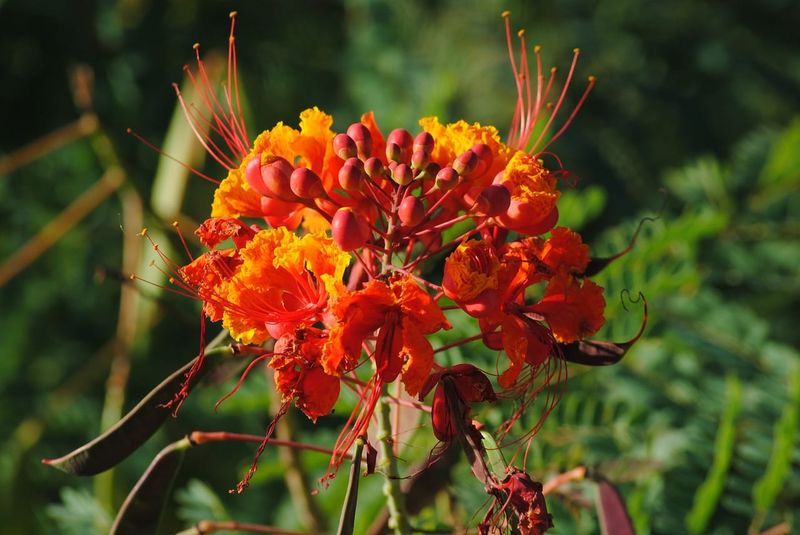
If your garden needs a showstopper, Pride of Barbados is ready for the job. This plant looks like it belongs on a tropical island, with its feathery, delicate foliage and blazing orange-red flowers that seem to catch fire in the sunlight.
It is one of the most eye-catching plants you can grow in South and Central Texas. Heat and drought do not slow this plant down one bit.
Once established, Pride of Barbados can handle long dry stretches with ease, making it a smart choice for Texas gardeners who want beauty without constant watering. It thrives in full sun and actually performs better the hotter it gets.
Fun fact: despite its name suggesting it comes from Barbados, this plant is believed to have originated in tropical America and the Caribbean. It has been used in gardens across warm climates for centuries because of its stunning flowers and tough personality.
In South Texas, it often stays as a woody shrub year-round. In areas that get frost, it may lose its top growth during winter but will push back up from the roots when warm weather returns.
Cutting it back after a freeze actually encourages bushier, more vigorous regrowth. Plant it where it gets maximum sun exposure, and it will reward your Texas garden with months of brilliant tropical color.
3. Turk’s Cap
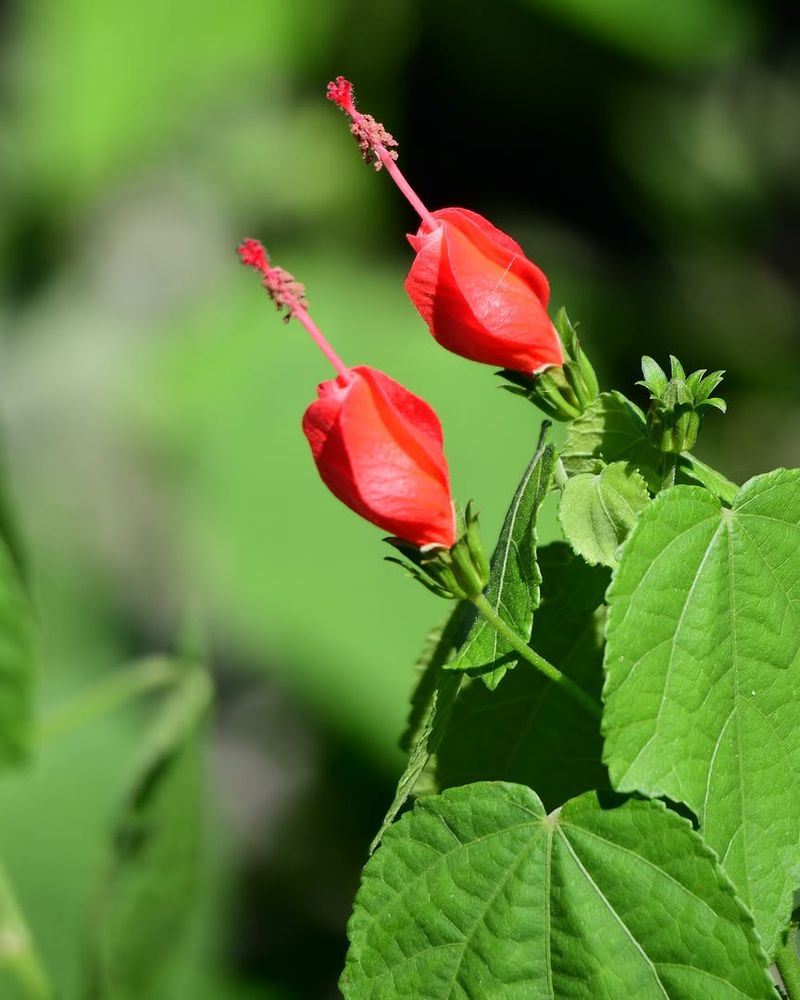
Not every plant can handle shade and Texas heat at the same time, but Turk’s Cap does both without breaking a sweat.
Those twisted, never-fully-open red blooms look like tiny hibiscus flowers wearing little red hats, which is exactly how the plant got its quirky name. It is charming, tough, and undeniably tropical looking.
What makes Turk’s Cap extra special is that it is actually native to Texas. That means it evolved right here and already knows how to handle everything the state throws at it, from summer heat waves to occasional dry spells.
Native plants also tend to need less fertilizer and less water, which is great news for busy gardeners.
Hummingbirds absolutely love this plant. The tubular red flowers are perfectly shaped for them, and planting Turk’s Cap near a porch or window means you get a front-row seat to their visits. Butterflies are fans too, adding even more life to your garden.
Turk’s Cap grows well in East Texas, Central Texas, and South Texas, especially in spots that get afternoon shade. It can reach four to nine feet tall depending on conditions, creating a lush, full look that adds real structure to a garden bed.
In warmer parts of Texas, it stays green most of the year, giving you that tropical feel without tropical maintenance headaches.
4. Canna Lily
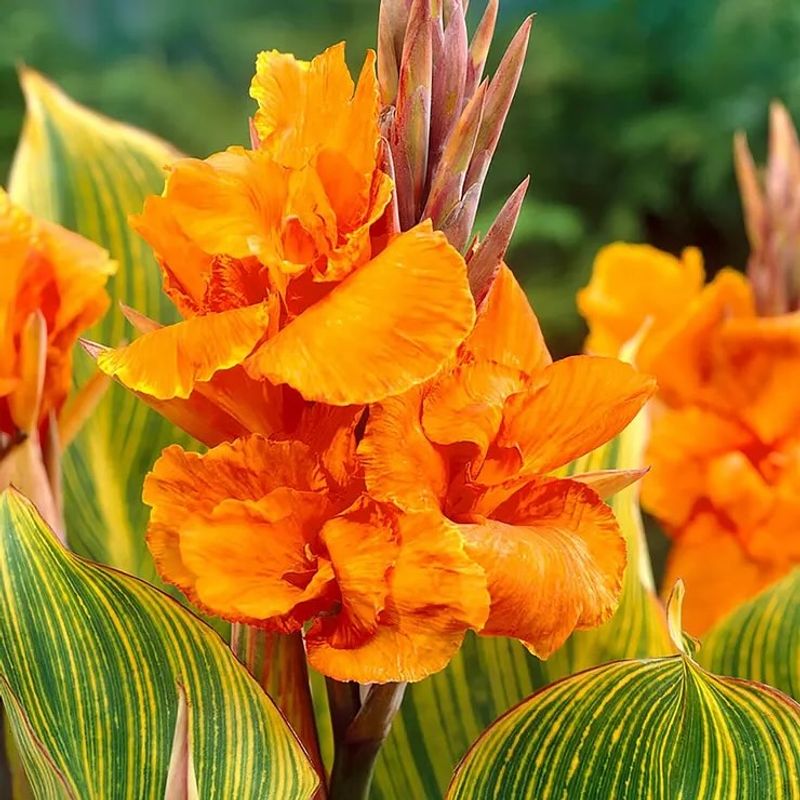
Walk past a garden full of Canna Lilies and you will immediately feel like you stepped somewhere tropical.
Those massive, paddle-shaped leaves in shades of green, bronze, and burgundy fan out dramatically, while bold flowers in red, orange, and yellow shoot up above the foliage like colorful torches. Few plants make a bigger visual impact in a Texas garden.
Canna Lilies are moisture lovers, which might sound tricky in Texas, but they are also surprisingly heat tolerant.
Plant them near a downspout, in a low spot in your yard, or in a container that you can water regularly, and they will absolutely flourish. Full sun is their sweet spot, and the more light they get, the more they bloom.
In South and Central Texas, Cannas often come back year after year from their underground rhizomes without any extra effort.
In North Texas, a thick layer of mulch over the roots in late fall helps them survive cooler winters and return strong the following spring. Dividing the clumps every few years keeps them blooming at their best.
Gardeners across Texas use Canna Lilies as dramatic backdrops in garden beds or as bold container plants on patios and decks. They grow fast, sometimes reaching six feet tall in a single season.
If you want that lush, layered tropical garden look in Texas, Cannas are one of the easiest and most rewarding ways to get there.
5. Elephant Ear
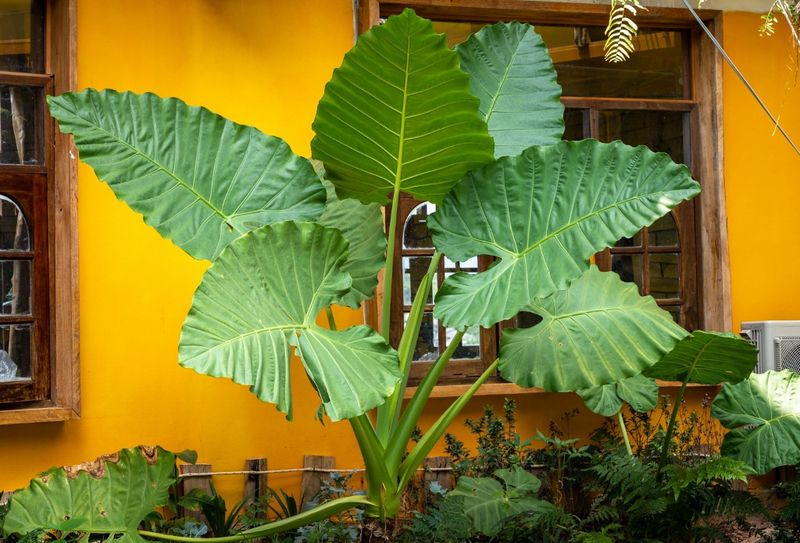
There is something almost prehistoric about Elephant Ears. Those enormous, heart-shaped leaves can grow to be three feet wide or more, making them one of the most dramatic plants you can add to a Texas garden.
One glance and everyone knows you mean business when it comes to tropical style.
Elephant Ears love the warm, humid conditions found along the Gulf Coast and in East Texas. If you are gardening in Houston, Beaumont, or other humid parts of the state, these plants will feel right at home.
They prefer part shade with consistent moisture, making them ideal for spots near ponds, garden water features, or areas that stay a little damp.
Colocasia varieties tend to prefer wet, boggy conditions, while Alocasia types like slightly better drainage. Both create that lush, jungle-like atmosphere that makes a Texas garden feel like a tropical retreat.
Mixing different leaf colors, from solid green to deep purple or variegated patterns, adds even more visual interest.
In the warmest parts of Texas, Elephant Ears can stay in the ground year-round. In cooler areas, you can dig up the bulbs before frost and store them indoors until spring.
Container growing is another great option, allowing you to bring them inside during colder months. Either way, few plants deliver as much dramatic tropical flair per square foot as the mighty Elephant Ear in a Texas garden.
6. Texas Star Hibiscus
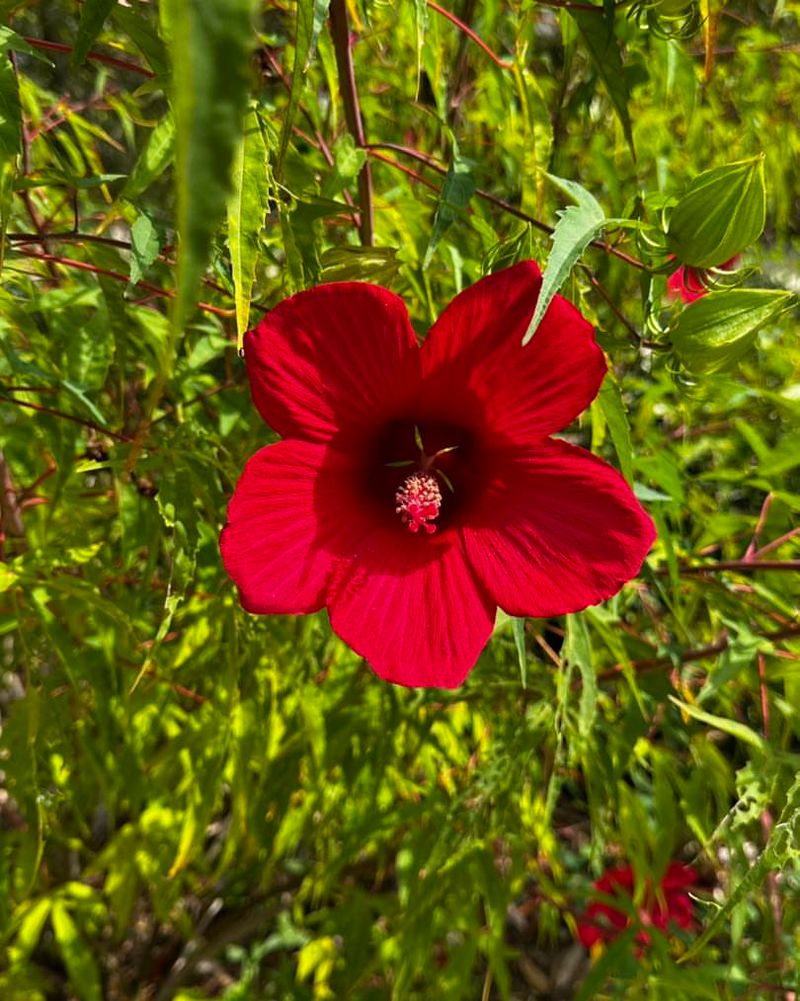
Bold, brilliant, and built for Texas, the Texas Star Hibiscus is one of those plants that stops people in their tracks.
The blooms are enormous, sometimes reaching six inches across, with five perfectly shaped petals that form a striking star pattern in the most vivid shade of red you can imagine. It is pure drama in plant form.
Native to the southeastern United States, this hibiscus thrives in the heat and humidity that much of Texas delivers in spades.
It loves moist soil, making it an excellent choice for low-lying garden spots, rain gardens, or areas near water features. East Texas and Gulf Coast gardeners will find it especially easy to grow.
Pollinators go absolutely wild for Texas Star Hibiscus. Hummingbirds, bees, and butterflies visit the flowers constantly throughout the blooming season, which runs from early summer into fall.
Planting it near a seating area means you get to enjoy all that buzzing, fluttering activity up close.
This hibiscus can grow surprisingly tall, sometimes reaching eight feet or more in a single growing season. The deeply cut, almost palm-like leaves add extra tropical texture even when the plant is not in bloom.
In most parts of Texas, it will come back reliably from its roots each spring. Pair it with other bold-leaved plants like Elephant Ears or Cannas for a layered, lush tropical garden scene that feels truly spectacular.
7. Windmill Palm
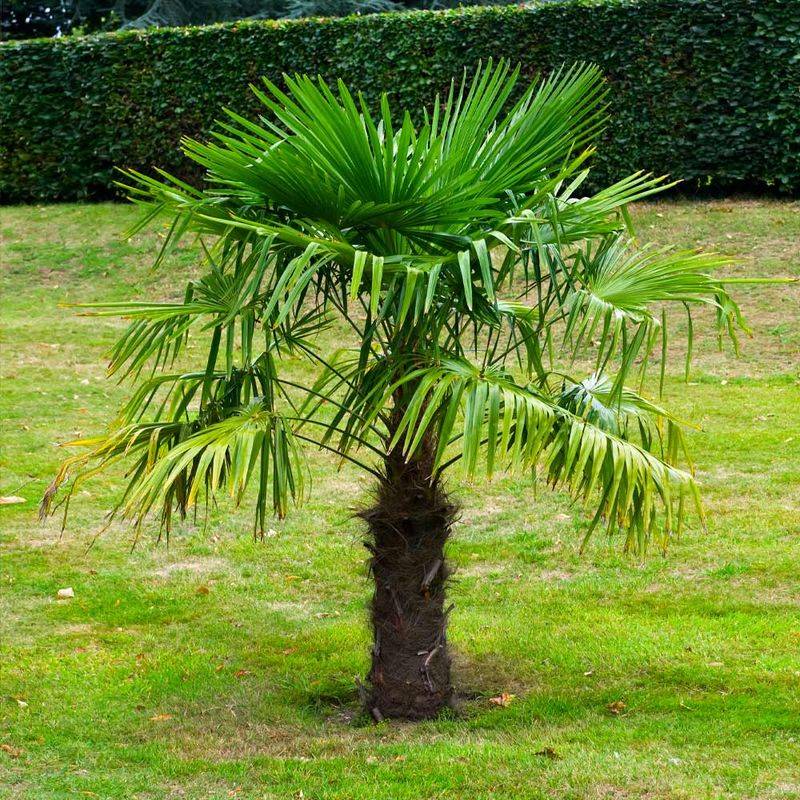
Nothing says tropical quite like a palm tree swaying in the breeze. The Windmill Palm is one of the best-kept secrets in Texas gardening because it looks completely tropical while being cold-hardy enough to survive winters that would finish off most other palms.
It is a plant that quietly overdelivers every single season. Unlike many palms that struggle in North and Central Texas, the Windmill Palm can handle temperatures well below freezing, sometimes surviving down to single digits with proper protection.
That makes it a realistic option for gardeners in Dallas, Fort Worth, and other parts of North Texas who dream of that palm tree look in their yard.
The fan-shaped fronds spread out in a graceful circle at the top of a slender, fiber-covered trunk, creating an instantly recognizable silhouette.
It grows slowly, which actually works in your favor since you can plant it in a spot without worrying about it outgrowing the space too quickly. A mature Windmill Palm becomes a true focal point in any Texas landscape.
Plant it in a sunny spot with good drainage and shelter from harsh north winds to give it the best chance of thriving. Mulching around the base helps protect the roots during cold snaps.
Pair it with colorful flowering plants or bold-leafed tropicals like Elephant Ears to create a layered, resort-style garden that makes every corner of your Texas yard feel like a warm getaway.
8. Gulf Coast Muhly
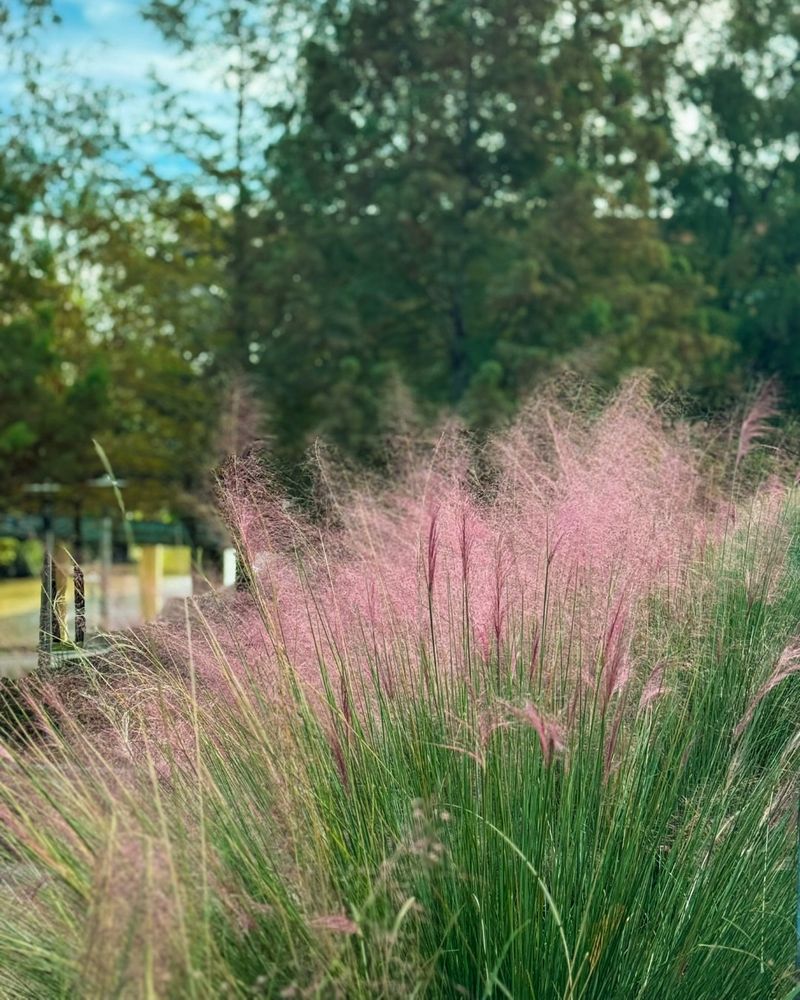
Every great tropical-style garden needs something that moves, and Gulf Coast Muhly delivers that effortlessly.
Every fall, this native ornamental grass erupts into a cloud of soft, airy pink and purple plumes that seem to float above the foliage like a rosy mist. It is genuinely one of the most magical sights in a Texas garden.
What really earns Gulf Coast Muhly a spot on this list is how beautifully it contrasts with bold tropical-looking plants.
Pair those feathery pink plumes next to the massive leaves of an Elephant Ear or the fiery blooms of Pride of Barbados, and the combination becomes something truly striking. It adds lightness and movement to plantings that might otherwise feel too heavy or dense.
As a Texas native, this grass is incredibly well adapted to the state’s climate. It handles drought with ease, requires almost no fertilizer, and thrives in full sun across a wide range of soil types.
Once established, it is about as low-maintenance as a plant can get, which is always a welcome quality in a busy Texas garden.
Gulf Coast Muhly looks great planted in sweeping masses along driveways, walkways, or garden borders. It stays attractive through winter before being cut back in late winter or early spring to make room for fresh new growth.
If you want soft texture and natural beauty to complement your tropical garden vision in Texas, this grass is an outstanding choice that never disappoints.