What Bronze Leaves On North Carolina Blueberry Bushes Are Telling You In Late Summer
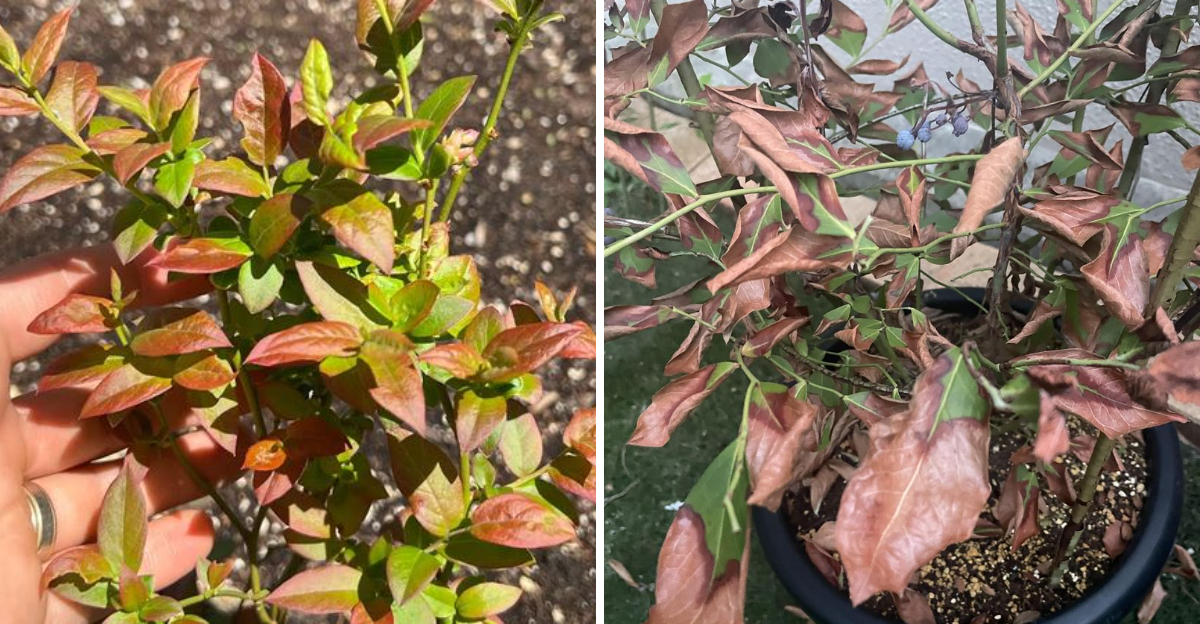
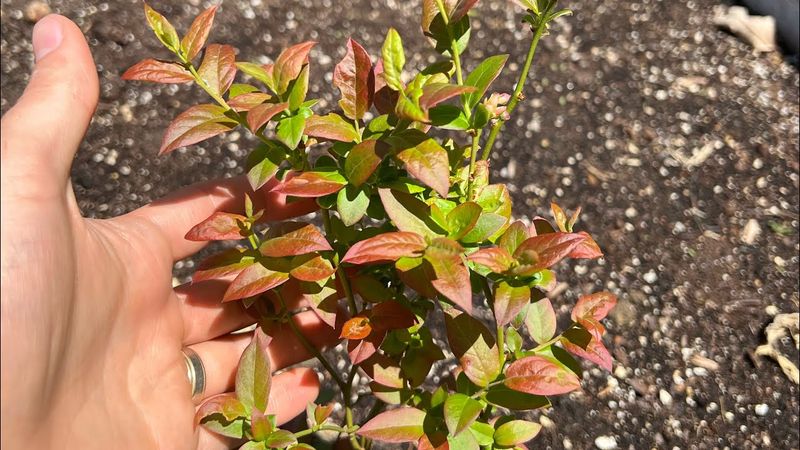
Bronze colored leaves on blueberry bushes often catch North Carolina gardeners off guard, but this change is usually a normal late summer response rather than a warning sign.
As blueberries prepare for the cooler months ahead, their leaves shift color as chlorophyll production slows down.
Heat and dry conditions can intensify this bronzing, especially in plants that received less water during peak summer stretches.
Nutrient deficiencies, particularly a lack of magnesium, can also cause similar discoloration, though it often appears more patchy than uniform.
Checking whether new growth still looks healthy and green helps confirm the bronzing is just seasonal.
Consistent watering through late summer supports better color retention on older leaves. Mulching around the base helps regulate soil temperature and moisture levels.
In most cases, this color shift simply signals the plant settling into its natural seasonal rhythm.
1. The Bush May Be Developing Normal Fall Color
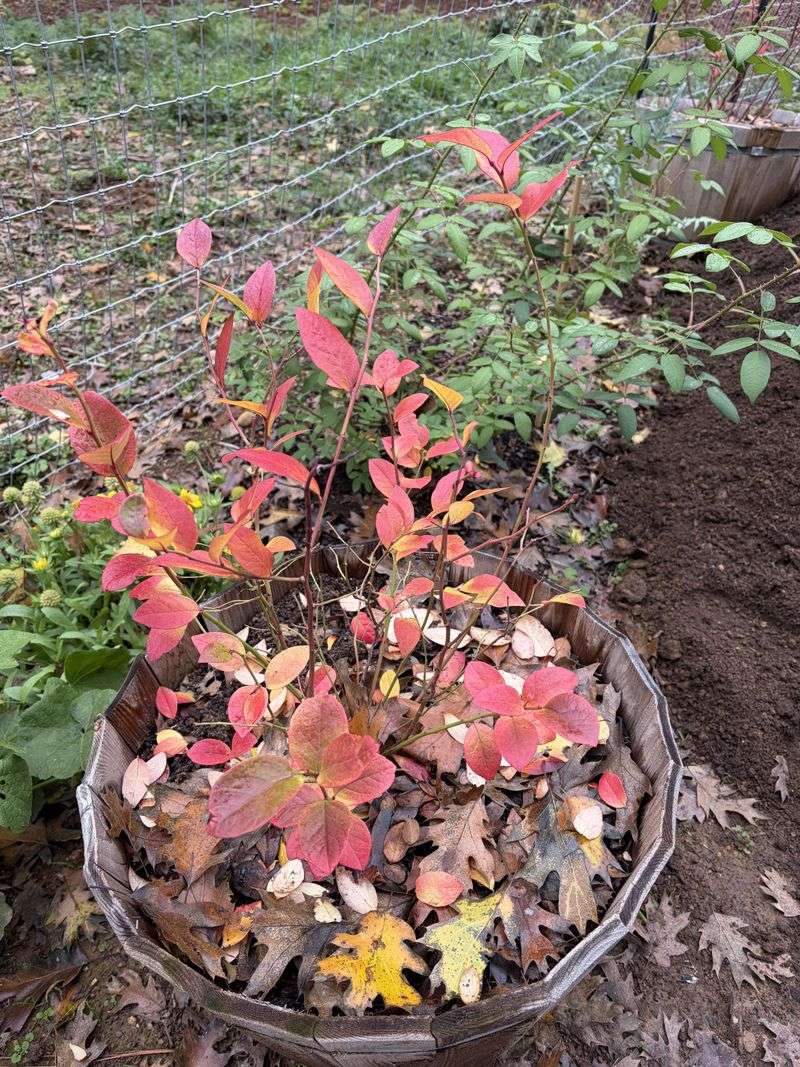
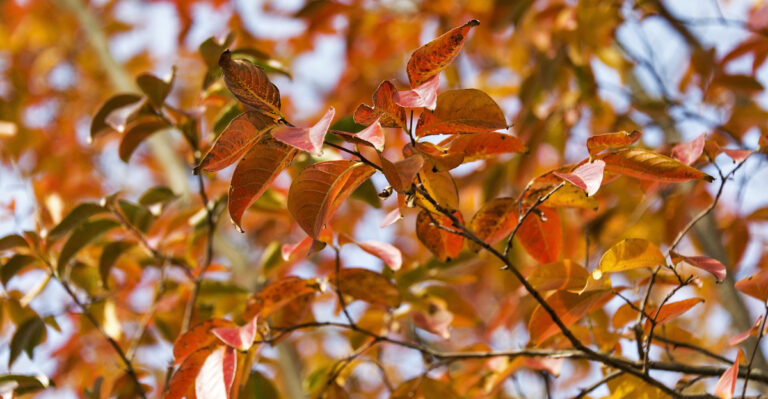
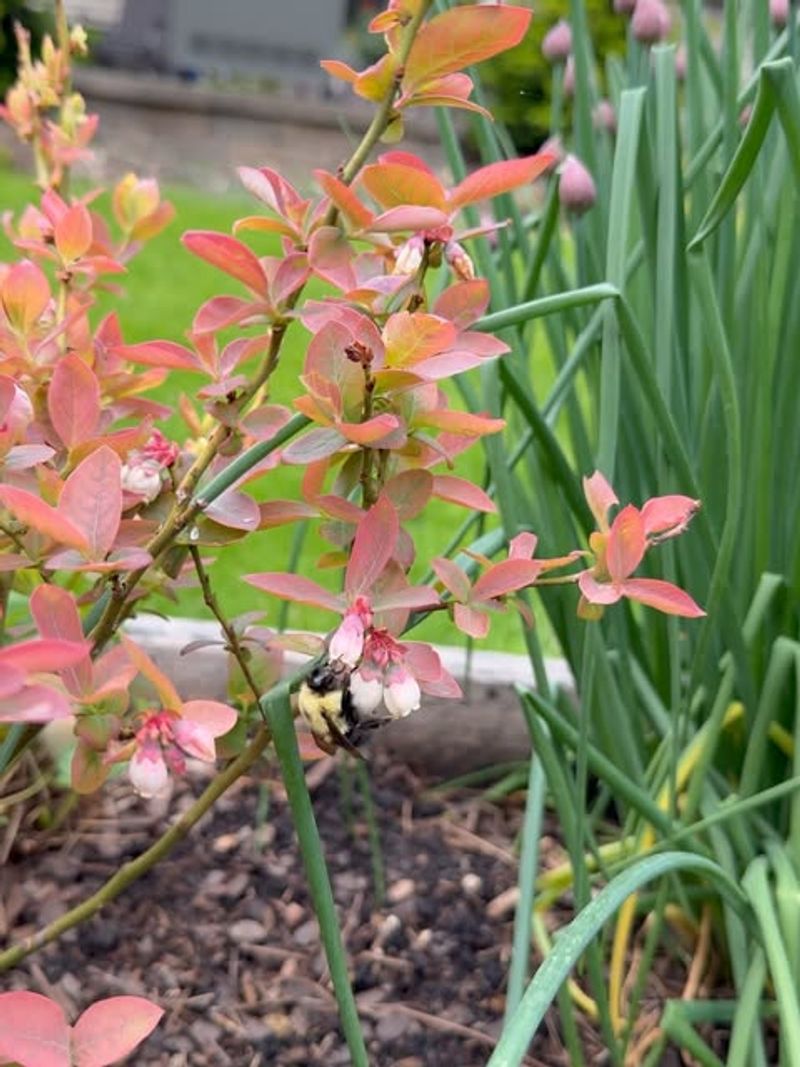
Something pretty is happening when your blueberry bush starts showing bronze, orange, or red leaves toward the end of summer.
North Carolina blueberry bushes are deciduous, which means they drop their foliage each year as part of a completely natural cycle.
That seasonal color change is nothing to panic about, and in many cases, it is actually a sign that your bush is healthy and following its natural rhythm.
Seasonal color usually appears gradually, spreading across older leaves first while the younger growth near the branch tips stays green a little longer.
The stems should still feel firm, the overall shape of the bush should look full, and you should not notice any unusual wilting or spots accompanying the color shift.
If everything else looks normal, the bronze tones are most likely just the plant preparing for its dormant season.
Keep in mind that timing can vary quite a bit depending on the cultivar you are growing, where you live in North Carolina, and what the summer weather has been like.
A hot, dry stretch can push color changes earlier than expected. Rabbiteye varieties, for example, tend to color up differently than southern highbush types.
If the bronzing appeared gradually and the bush otherwise looks strong, seasonal color is a very reasonable explanation.
Sudden bronzing in midsummer, or bronzing that comes along with wilting, dark spots, or rapid leaf drop, is worth investigating more closely. A plant that colors naturally in late August or September is doing exactly what it should.
2. Heat And Dry Soil Are Stressing The Shallow Roots
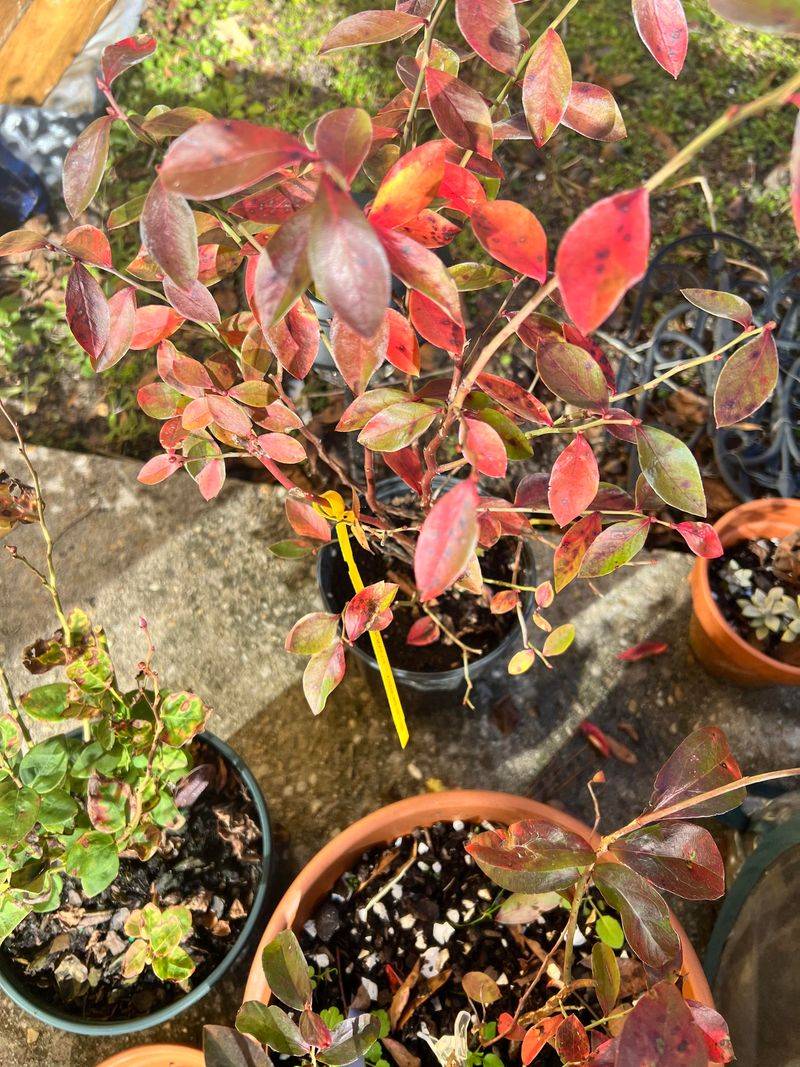
North Carolina summers can be relentless, and blueberry bushes feel every bit of that heat.
Unlike many garden shrubs, blueberries have extremely shallow root systems that sit just a few inches below the soil surface.
When the ground dries out during a prolonged hot stretch, those roots lose access to moisture very quickly, and the leaves start showing it through bronzing, brown margins, and scorched-looking tips.
One mistake many gardeners make is checking the soil surface and assuming everything is fine because the top looks okay. The real story is happening a few inches down, inside the root zone.
Your North Carolina Garden Changes Every Week. Your Plan Should Too.
Gardening in North Carolina changes quickly throughout the season. Every Friday you’ll receive a simple weekly plan showing exactly what to plant, prune, fertilize, harvest, and protect so you never miss the right timing.
Push a finger or a small trowel into the soil beneath your mulch layer to check actual moisture levels before deciding whether to water. If that zone feels dry and crumbly, your bush is already working hard to cope.
Deep, infrequent watering works much better for blueberries than quick, shallow sprinkles. Watering slowly and thoroughly encourages roots to access moisture from a wider area.
Keeping a four to six inch layer of pine bark or wood chip mulch over the root zone helps the soil hold onto moisture much longer between watering sessions.
Nearby weeds are also worth pulling, since they compete directly for the same limited water supply.
Brown leaf tips, curling margins, and some premature leaf drop are all signs that moisture stress is the likely cause.
Catching it early and adjusting your watering routine can help the bush recover and stay productive through the rest of the season.
3. Saturated Soil Is Limiting Root Function
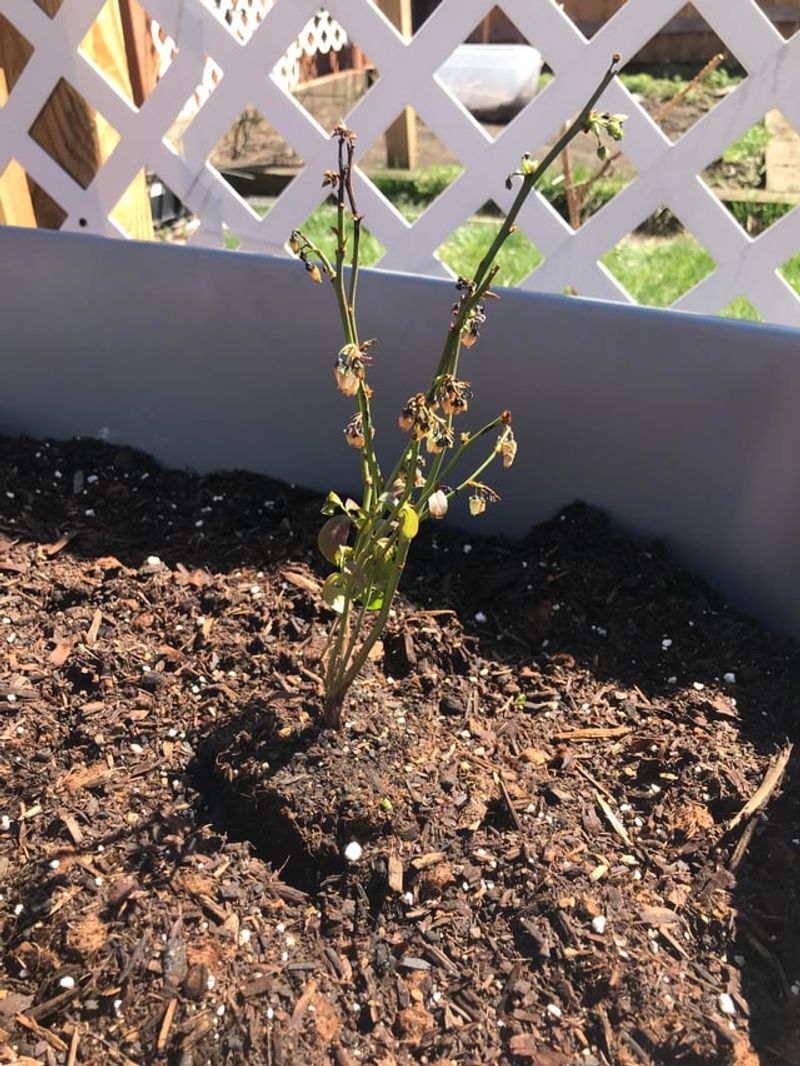
Too much water can cause just as many problems as too little, and this surprises a lot of gardeners.
When North Carolina thunderstorms roll through repeatedly over a few weeks, the soil around a blueberry bush can stay saturated for days at a time.
Clay-heavy soil, low planting spots, blocked container drainage holes, and irrigation systems set to run too frequently all make this problem worse. Roots need oxygen just as much as they need water.
When the soil stays waterlogged, oxygen gets pushed out of the pore spaces and roots begin to struggle.
That reduced root function shows up in the foliage as drooping, weak new growth, and leaves that turn pale yellow or bronze even though the soil looks wet.
It can be confusing because the plant looks thirsty despite having plenty of water nearby.
Watch for soil that remains soggy three or four days after a rain event, persistent drooping that does not recover overnight, and a general lack of vigor in new growth.
Those signs together point strongly toward drainage as the problem rather than drought. Adjusting how often your irrigation runs is usually the first and easiest fix to try.
Avoid digging aggressively around the root zone when the soil is wet, since blueberry roots are fragile and easy to damage.
If drainage is a structural problem related to clay soil or a low planting spot, consider raised bed options or adding organic matter to improve soil structure gradually over time.
Patience and steady adjustments work better than quick fixes here.
4. Soil Acidity May Be Outside The Blueberry Range
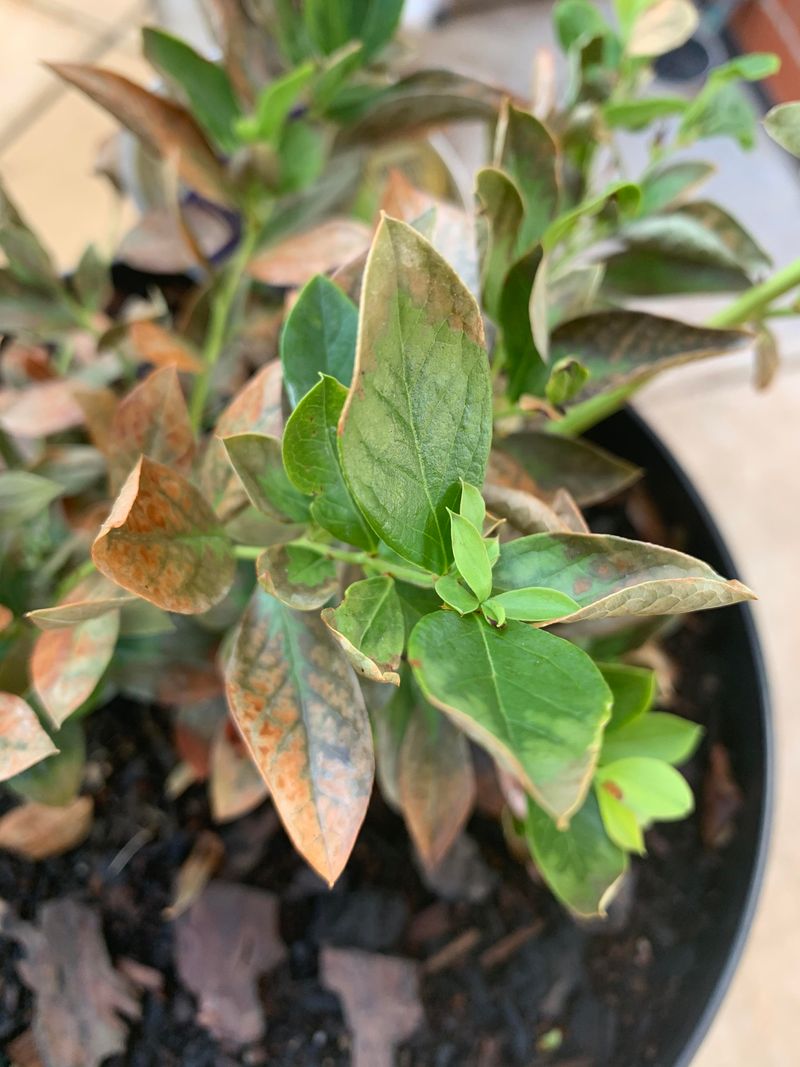
Blueberries are famously picky about soil acidity, and for good reason.
Most common garden plants grow fine in soil with a pH between 6.0 and 7.0, but blueberries need conditions that are far more acidic.
NC State University recommends maintaining a soil pH of approximately 5.0 to 5.5 for healthy blueberry production.
Outside that range, the bush may struggle even if the surrounding soil looks rich and well-amended. Here is where things get interesting.
When soil pH climbs too high, nutrients like iron, manganese, and magnesium can become chemically unavailable to the plant even if those nutrients are physically present in the ground.
The roots simply cannot absorb them in a less acidic environment. That nutrient lockout often shows up as pale, discolored, or bronze foliage that can look similar to several other problems.
Bronze leaves alone cannot confirm that pH is the issue. Wilting, drought stress, overwatering, and disease can all produce similar visual symptoms.
Guessing and applying sulfur or other soil amendments without testing first can make things worse, not better.
Soil conditions in North Carolina vary widely from one county to the next, and what works in one yard may not apply to yours.
Sending a soil sample to the NC Department of Agriculture and Consumer Services laboratory is the most reliable way to know exactly where your pH stands.
The test is affordable, results come with specific recommendations, and it removes the guesswork entirely.
Starting with accurate data makes every other step much more effective.
5. Nutrient Availability May Be Affecting Leaf Color
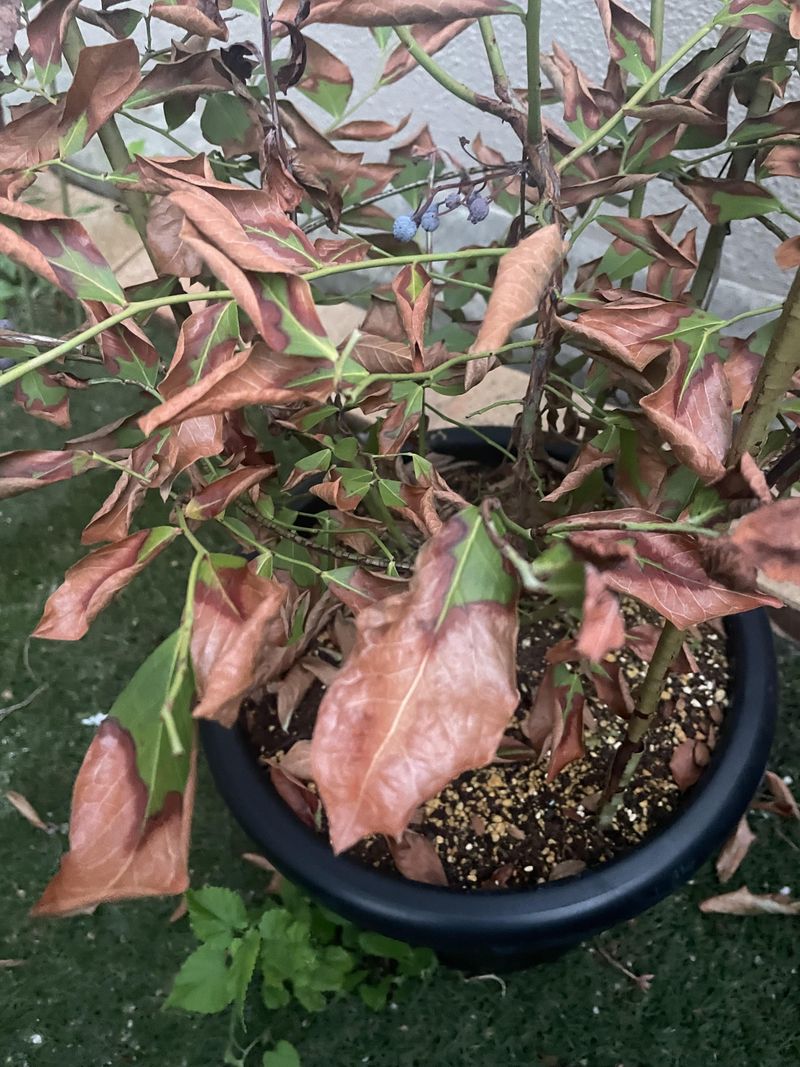
Leaf color is one of the ways a blueberry bush communicates that something is off with its nutrition.
Shortages or imbalances in nutrients like nitrogen, magnesium, iron, or potassium can all produce changes in foliage color, though they do not all look exactly the same.
Leaves may turn pale green, yellow, reddish, purple, or bronze depending on which nutrient is involved and how severe the shortage has become. One useful clue is where the discoloration shows up first.
Symptoms that start on the oldest, lowest leaves and move upward often point toward mobile nutrients like nitrogen or magnesium, which the plant moves from old tissue to support new growth.
Symptoms appearing first on young leaves or showing up between the leaf veins while the veins themselves stay green suggest issues with nutrients the plant cannot move as easily, such as iron or manganese.
Heavy summer rainfall in North Carolina can leach nutrients out of the root zone faster than the plant can absorb them. Soil that is too alkaline locks nutrients away chemically.
Root damage from waterlogging or other causes reduces the plant’s ability to take up nutrients even when they are available.
Fertilizer applied at the wrong time or in the wrong form can also throw off the balance. Matching a fertilizer to a visual symptom without testing first is risky. A soil test paired with a tissue analysis gives a much clearer picture.
A North Carolina Cooperative Extension agent can help interpret results and suggest a correction plan that actually fits your specific situation rather than a general guess.
6. Excess Fertilizer May Have Stressed The Roots
More fertilizer does not always mean a healthier plant, and blueberry bushes are a perfect example of why.
Applying too much fertilizer, or placing a concentrated amount too close to the base of the bush, raises the level of soluble salts in the soil around the roots.
Those elevated salts interfere with the roots ability to absorb water normally, essentially creating a drought-like stress inside the plant even when the soil has plenty of moisture.
Fertilizer burn often shows up as browning along the leaf tips and margins first, followed by broader bronzing across the leaf surface.
You might also notice wilting that does not improve after watering, reduced new growth, and an overall loss of vigor.
If these symptoms appeared shortly after a fertilizer application, that timing is a strong clue pointing toward excess fertilizer as the cause. Adding more fertilizer to try and fix the problem will only make things worse.
Watering the root zone thoroughly over several days can help flush excess salts deeper into the soil and away from the root zone.
Avoid applying any additional fertilizer until the plant shows clear signs of recovery and the season is appropriate for feeding.
Reviewing the product label rate for blueberries specifically is important, since general garden fertilizers are often formulated for plants that tolerate much higher application rates.
Keeping fertilizer granules at least six inches away from the main stem reduces concentrated exposure.
If symptoms are severe or confusing, reaching out to a North Carolina Extension professional gives you accurate guidance based on your specific situation rather than trial and error.
7. Late Season Leaf Disease May Be Spreading
Not all bronze coloring on blueberry leaves is uniform, and that difference matters a lot.
Leaf diseases tend to create irregular patterns of discoloration rather than the even seasonal color that develops naturally as fall approaches.
Small reddish or brown flecks, expanding circular lesions, yellow halos around spots, and patches that look water-soaked before turning brown are all signs that something other than normal autumn color is at work.
North Carolina’s warm, humid summers create conditions that many fungal and bacterial leaf pathogens love.
Extended periods of leaf wetness from overnight humidity, frequent rain, or overhead irrigation give spores the moisture they need to germinate and spread.
Canopies that are dense and poorly ventilated hold that moisture longer, making the problem easier to develop and harder to control once it gets established.
Watering at the soil level rather than overhead helps keep foliage drier. Pruning to open up the center of the bush improves airflow and reduces how long leaves stay wet after rain.
Cleaning up fallen foliage from beneath the bush removes a source of spores that could reinfect the plant the following season. These cultural practices reduce disease pressure without requiring any chemical input.
Substantial late summer leaf loss caused by disease is worth taking seriously because blueberry bushes set their flower buds for next year’s crop during this same period.
Significant early defoliation can reduce bud formation and affect your harvest the following season.
Getting a professional identification of the specific pathogen from the NC State Plant Disease and Insect Clinic before applying any treatment is always the smarter first step.
8. One Bronzed Branch May Point To Stem Blight
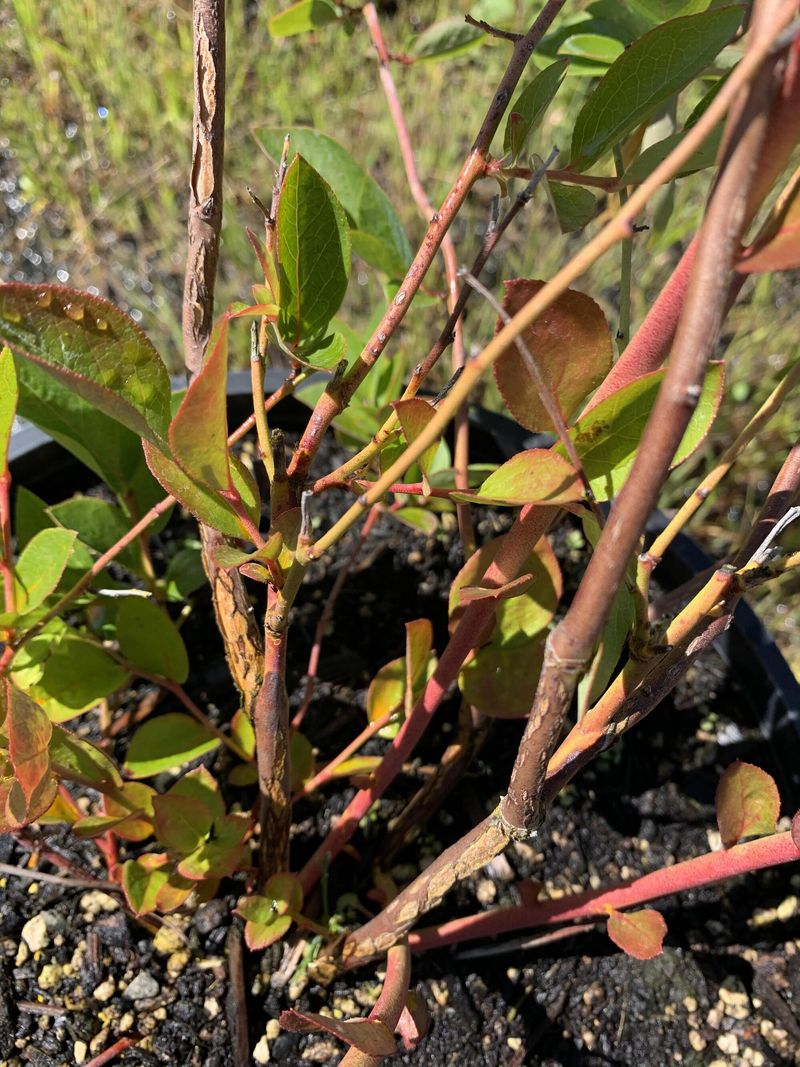
When only one cane on an otherwise healthy-looking blueberry bush suddenly turns bronze or brown and its leaves begin to wilt rapidly, that pattern deserves immediate attention.
Uniform bronzing across the whole plant is one thing, but a single branch flagging while everything else stays green is a very specific symptom that often points toward a vascular or stem problem rather than a soil or environmental cause.
Stem blight is a fungal disease that affects blueberries in North Carolina and enters the plant through wounds, pruning cuts, or natural openings in the stem tissue.
It tends to become visible during summer months and can move through a cane quickly once it gets established.
Looking inside the affected stem by making a careful cut can reveal light brown discoloration in the wood tissue, which is a helpful clue that distinguishes it from simple drought wilting or cold injury.
Rapid yellowing of attached leaves, wilting that progresses down the cane from the tip toward the base, and foliage that stays attached even after it turns brown are all details worth noting when you inspect the affected branch.
Leaf color alone is not enough to make a confident diagnosis, and misidentifying the problem can lead to the wrong response.
Affected stems are generally removed well below the visibly discolored wood to reduce the chance of leaving infected tissue behind.
Cleaning pruning tools between cuts helps prevent spreading the pathogen to healthy wood.
Confirmation through your county Cooperative Extension office or the NC State Plant Disease and Insect Clinic gives you a reliable diagnosis before you take action on a plant you have invested time and care into growing.