What Florida Christmas Cactus Needs In March To Wake Up (And Have Twice The Flowers Next Season)
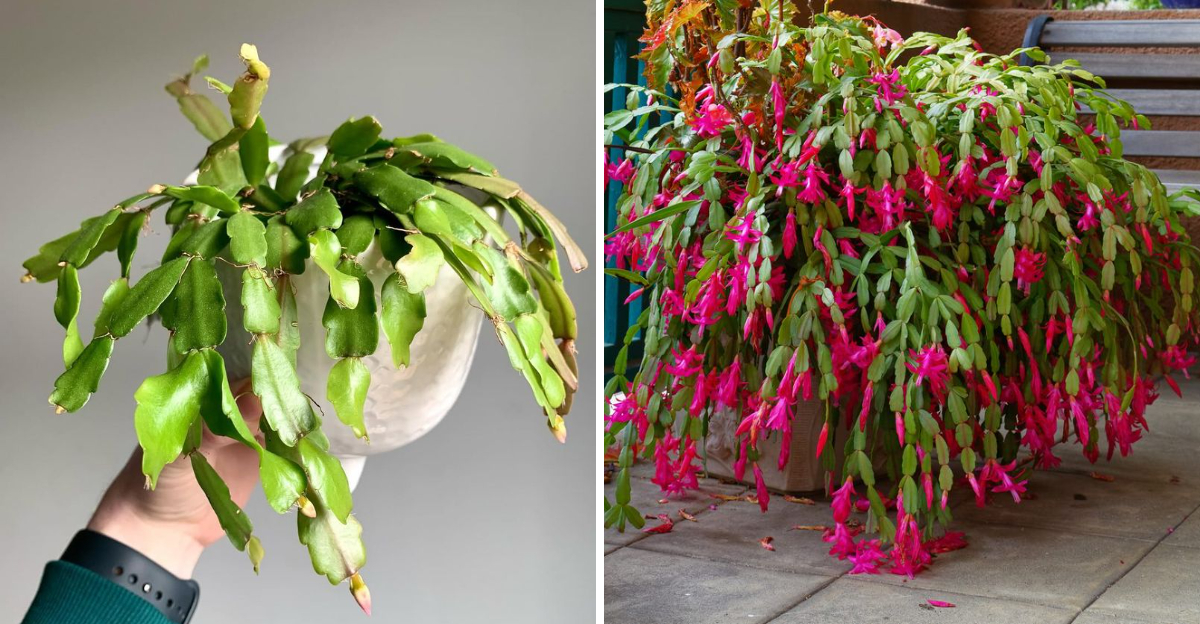
Florida Christmas Cactus are sneaky little showstoppers. While winter fades, they sit quietly, almost napping, hiding their potential under glossy green leaves.
But March is when they start whispering, hinting at the flowers they’ll gift next holiday season. With the right care now, these low-maintenance plants can reward you with twice the blooms, brighter colors, and a show that will make anyone stop and stare.
This is the month that decides whether your Christmas Cactus will stretch, grow strong, and flood your home with flowers – or just quietly survive until next year.
A few simple tweaks in light, water, and nutrients now, and your plant will be ready to explode in beauty when everyone else is scrambling for decorations.
1. Move Your Christmas Cactus Into Brighter Indirect Light
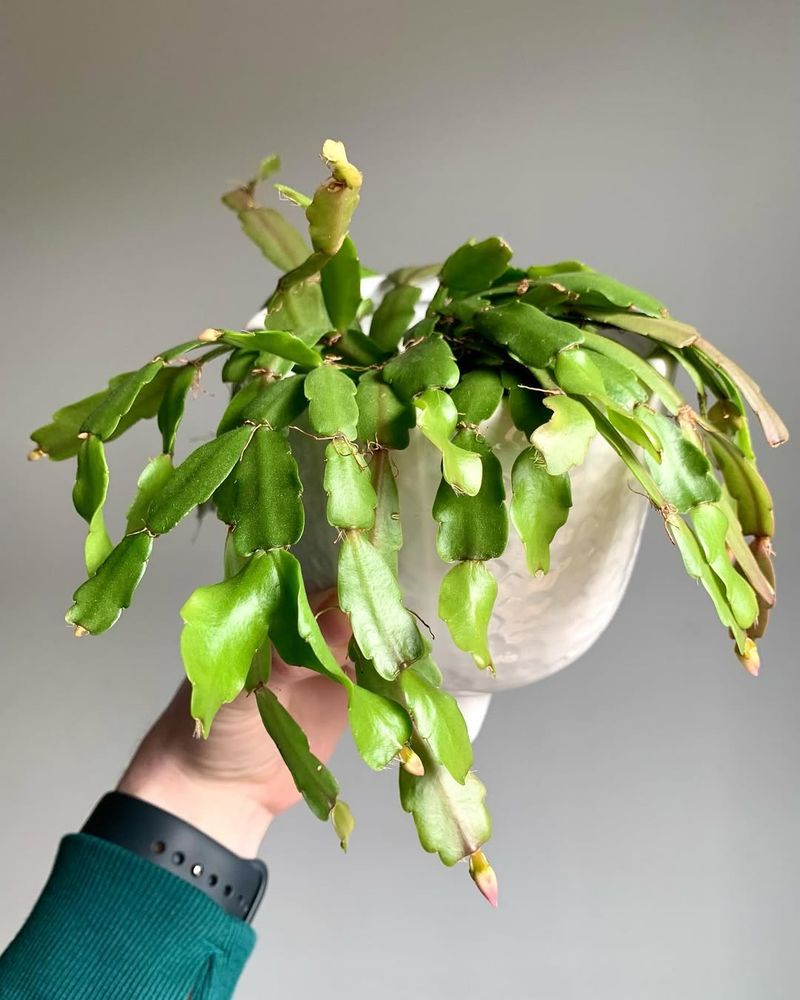
March brings noticeably longer days across Florida, and your Christmas cactus is paying close attention. As daylight hours increase, the plant begins shifting out of its post-bloom rest phase and starts pushing energy toward new stem growth.
Positioning it correctly now gives that fresh growth the fuel it needs.
Bright, indirect light is the sweet spot for Schlumbergera. An east-facing or north-facing window works beautifully, offering gentle morning light without the intensity that can bleach or scorch the flat, leaf-like stem segments.
Direct afternoon sun streaming through a south or west window is too harsh and can stress the plant rather than support it.
Sheer curtains are a simple fix if your best available window gets strong direct sun. They soften the light just enough to keep things comfortable.
In Florida, indoor light can shift dramatically as the sun angle changes from winter to spring, so it is worth taking a fresh look at where your plant is sitting. Even moving it a foot or two closer to a window can make a meaningful difference.
Brighter indirect light now means stronger, healthier stems forming throughout spring, and more stem segments means more potential spots for flower buds to develop later in the year.
2. Start A Gentle Spring Watering Routine
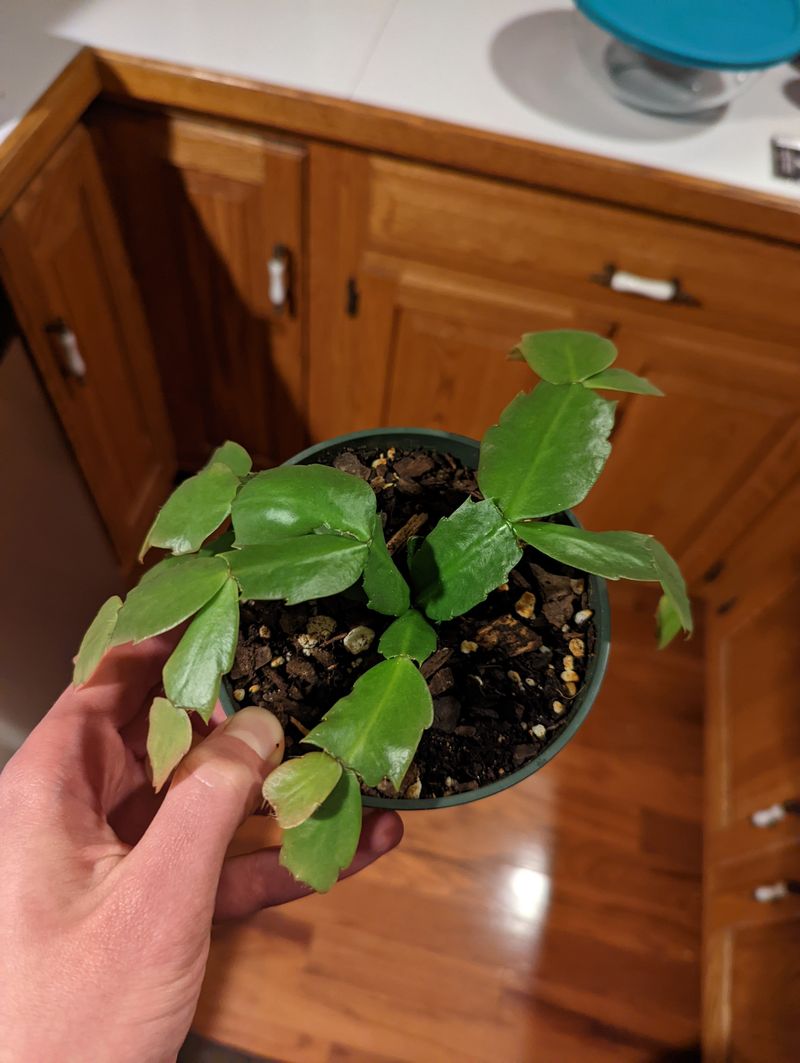
After months of minimal watering during the bloom and rest periods, your Christmas cactus is ready for a slightly more consistent moisture schedule. As new growth appears in March, the plant’s water needs gradually increase, but the key word here is gradually.
Jumping straight into frequent watering is one of the most common mistakes holiday cactus owners make.
A reliable method is to check the top two inches of soil before reaching for the watering can. If that top layer still feels damp, wait a few more days.
When it feels dry to the touch, water thoroughly until moisture drains freely from the bottom of the pot. Always empty the saucer afterward so roots are never sitting in standing water.
Root rot is a real concern for Schlumbergera, especially in Florida where indoor humidity can already keep soil from drying out as quickly as it might in drier climates. Using a pot with drainage holes is non-negotiable.
Terracotta pots can also help by pulling excess moisture away from the soil. Keeping your watering consistent but measured through spring gives the root system a healthy environment to support all the new stem growth that is starting to emerge right now.
3. Feed Lightly To Support New Growth
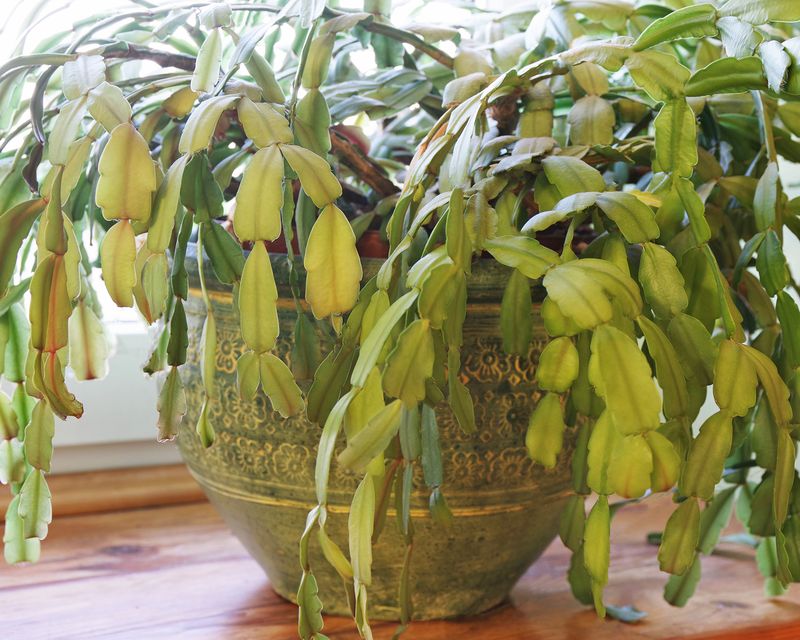
Once you spot fresh green growth emerging from the stem tips, that is your cue to start feeding. A balanced, water-soluble houseplant fertilizer works well for Schlumbergera during the spring growth phase.
Look for something with equal or near-equal numbers on the label, such as a 10-10-10 or 20-20-20 formulation, diluted to half the recommended strength.
Feeding lightly is the right approach in early spring. The plant is just waking up, and flooding it with nutrients before its system is fully active can cause more harm than good.
A half-strength dose applied once every two to four weeks through spring and into early summer is a reasonable schedule that most horticultural extension programs recommend for holiday cacti.
Phosphorus plays a particularly helpful role for flowering plants, so some gardeners switch to a bloom-boosting fertilizer with a higher middle number as summer approaches. This encourages the plant to develop strong stems that are well-equipped to form flower buds later in the season.
Avoid fertilizing during blooming or when the plant is in full rest. Getting the timing right in spring sets up a nutritional foundation that pays off in a big way when November and December arrive and your Florida home fills up with color.
4. Repot Or Refresh Soil Before Active Growth Begins
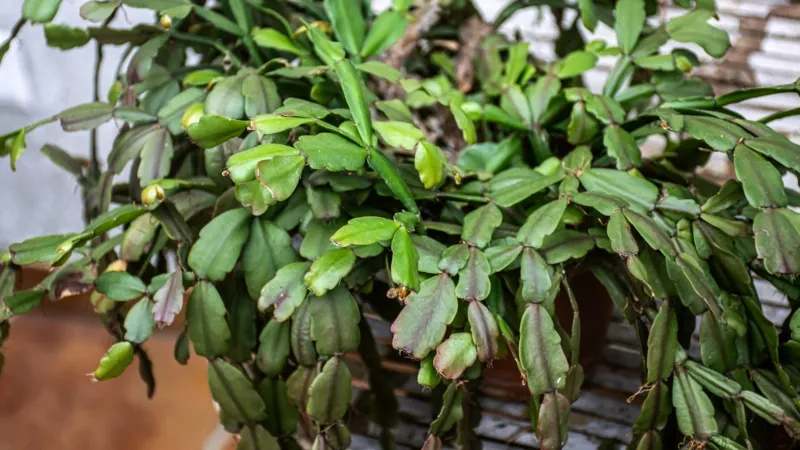
Early spring is one of the best windows to check whether your Christmas cactus has outgrown its current home. Roots peeking out of drainage holes or circling visibly around the root ball are clear signs the plant needs more space.
Repotting now, before the main surge of spring growth kicks in, gives the plant time to settle before it starts working hard.
Choose a new pot that is only one size larger than the current one. Going too big encourages excess soil to hold onto moisture longer than needed, which increases the risk of root problems.
A well-draining cactus or succulent potting mix is ideal. You can also blend standard potting soil with perlite at roughly a 50-50 ratio to improve drainage and aeration around the roots.
If the plant is not root-bound but the soil looks exhausted or compacted, refreshing just the top layer of potting mix can make a real difference without the stress of a full repot. Simply remove the top inch or two of old soil and replace it with fresh mix.
Florida’s warm indoor temperatures year-round mean Christmas cactus roots stay active longer than in cooler climates, so keeping the soil healthy and well-structured is an ongoing priority that pays dividends during bloom season.
5. Pinch Back Stems To Encourage Bushier Plants
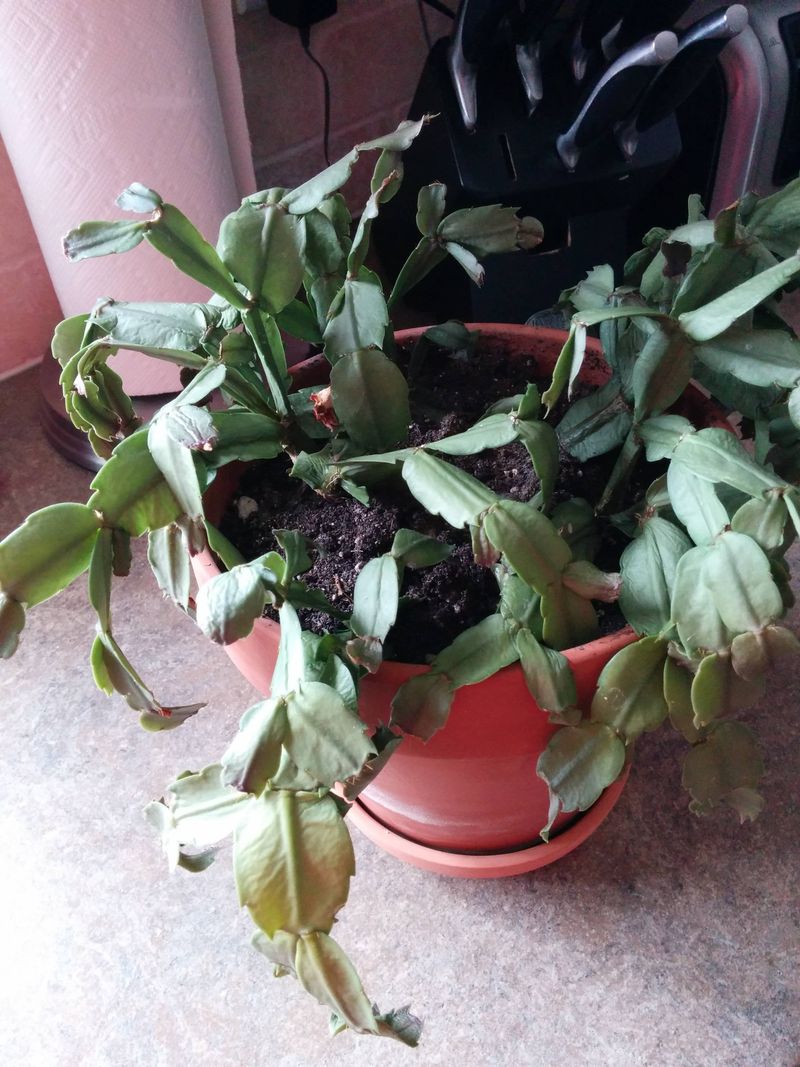
Here is a trick that experienced Christmas cactus growers swear by: a little pinching in spring can mean double the flower buds come winter. Schlumbergera produces blooms at the tips of its stem segments, so the more branching points the plant develops, the more potential bloom sites it carries into the holiday season.
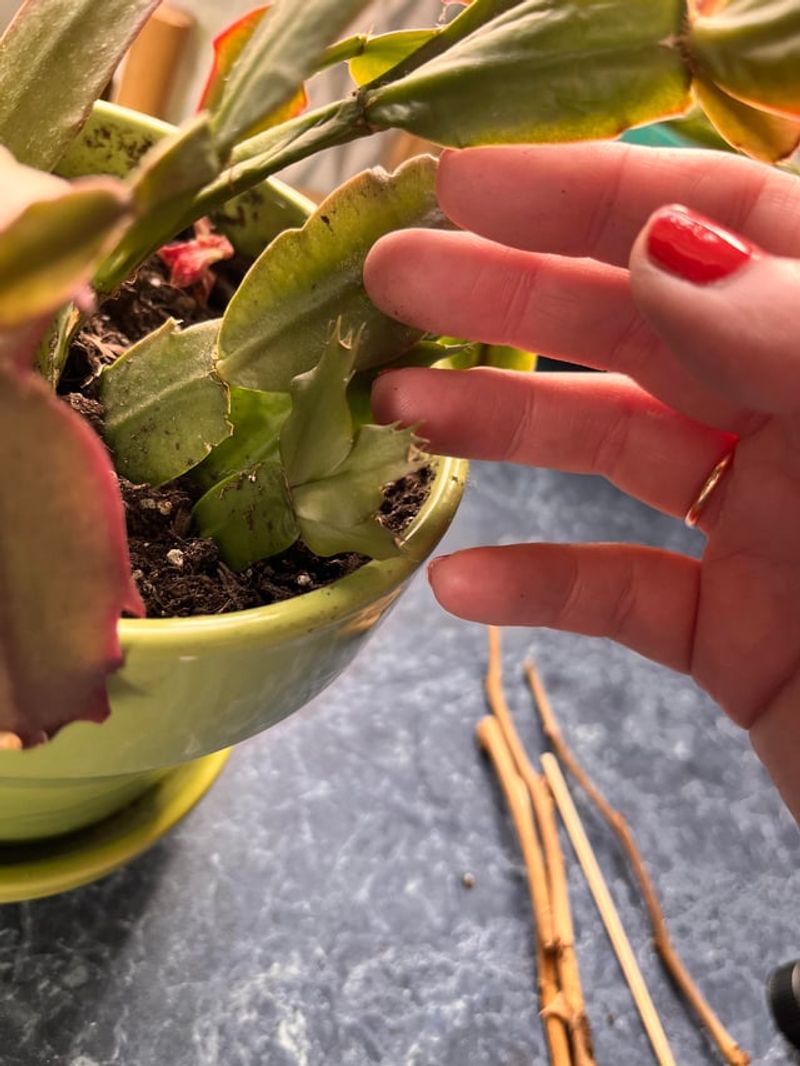
Pinching is simple. Just use clean fingers or small scissors to remove one or two segments from the tip of a stem, snapping or cutting just above a joint.
Doing this in March or early April, while the plant is entering active growth, encourages it to send out new shoots from that pinch point rather than continuing to grow in a single long direction. The result over the following months is a fuller, bushier plant with far more stem tips.
Save those pinched segments. Schlumbergera cuttings root easily in a lightly moist potting mix, making them perfect for starting new plants or sharing with neighbors.
Let the cut end dry for a day before placing it in soil. In Florida’s warm spring climate, cuttings often root within a few weeks.
Pinching takes less than ten minutes but delivers one of the most noticeable improvements in bloom count you can achieve through any single spring care step.
6. Give Your Plant The Humidity It Loves
Schlumbergera is not a true desert cactus. Its wild roots trace back to the tropical rainforests of southeastern Brazil, where it grows as an epiphyte clinging to tree branches in humid, shaded canopy environments.
Understanding that background explains a lot about what this plant actually wants indoors.
Florida naturally offers more ambient humidity than most of the country, which is genuinely helpful for holiday cactus owners here. However, air conditioning running through spring and summer can strip moisture from indoor air surprisingly fast.
A humidity level of around 50 to 60 percent is considered ideal for healthy Schlumbergera growth, according to plant care resources that align with tropical houseplant guidance.
A few easy strategies can maintain that moisture level indoors. Placing the pot on a shallow tray filled with pebbles and water creates a small zone of evaporating humidity right around the plant without letting the roots sit in standing water.
Grouping houseplants together also naturally raises local humidity as they transpire. A small humidifier nearby works well too if your indoor air tends to run dry.
Consistent humidity through spring supports softer, more supple stem segments and helps the plant build the cellular strength it needs to carry a heavy load of flowers later in the year.
7. Check For Early Pest Activity
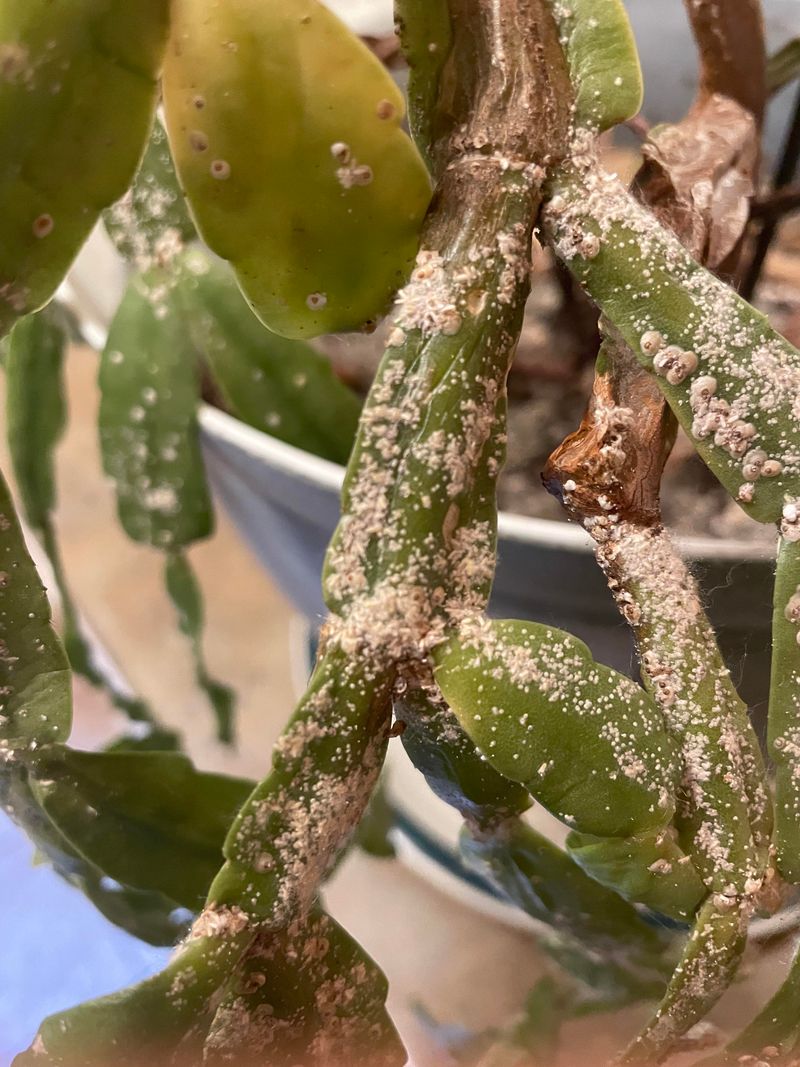
Spring is when houseplant pests tend to become more active, and your Christmas cactus is not immune. As the plant starts pushing out tender new growth in March, it becomes a more attractive target for common indoor pests.
Catching any early signs of trouble now prevents a small problem from becoming a much bigger one by summer.
Fungus gnats are a frequent nuisance, especially if soil has been kept too moist over winter. Their larvae live in the top layer of potting mix and can damage roots.
Letting the soil dry out more between waterings is often enough to discourage them. Mealybugs show up as small white cottony clusters, usually tucked into stem joints.
A cotton swab dipped in rubbing alcohol handles isolated spots effectively.
Spider mites are trickier to spot because they are tiny, but their fine webbing between stem segments gives them away. A strong stream of water to rinse the plant, followed by an application of insecticidal soap, is a practical first response.
In Florida’s warm indoor climate, pests can cycle through generations quickly, so checking your Christmas cactus every week or two during spring keeps you ahead of any outbreak. Healthy, well-cared-for plants are also naturally more resistant to pest pressure than stressed ones.
8. Set The Stage For Heavier Holiday Blooms
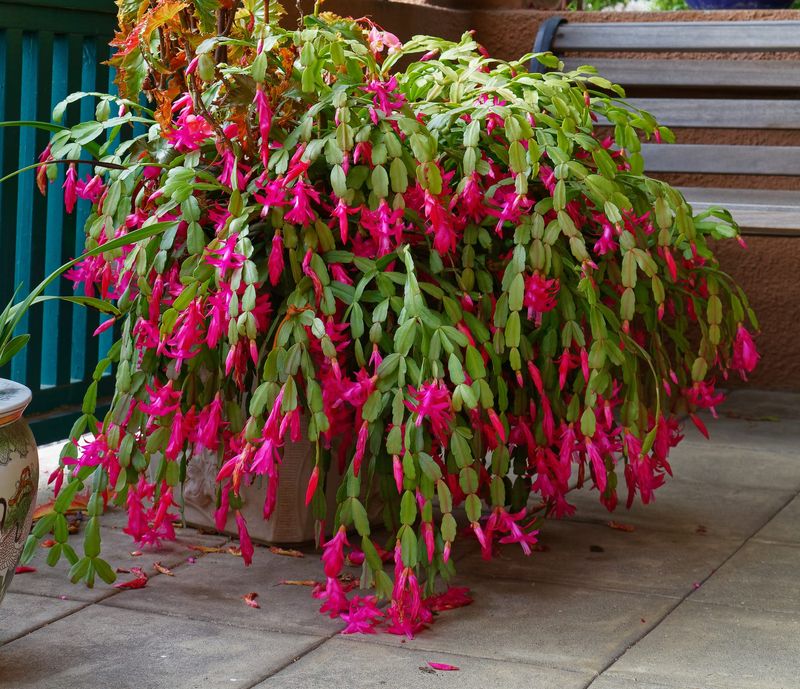
Every small care decision you make in March quietly builds toward one spectacular payoff: a Christmas cactus absolutely loaded with color come November and December. The connection between spring care and holiday blooms is direct.
Stronger stems developed in spring carry more flower buds. Better root health means more efficient nutrient uptake when bud development begins in fall.
Schlumbergera sets its flower buds in response to two environmental triggers: cooler temperatures and longer nights. In Florida, the natural cooling that arrives in October and November provides exactly the right cue.
But the plant needs to be in excellent physical condition by then to respond well to those signals. A plant that spent spring and summer struggling with poor soil, inconsistent watering, or pest damage simply will not have the reserves to produce an impressive bloom display.
Think of the work you put in during March as an investment with a delayed but very visible return. Keep up the light fertilizing through summer, maintain good humidity, and give the plant steady indirect light until early fall.
Then, as temperatures drop and nights lengthen, step back and let nature take over. Florida gardeners who follow through on spring care consistently report richer, fuller bloom seasons year after year, with plants that seem to outdo themselves every single December.