What Georgia Homeowners Learn After Dealing With Armadillos For The First Time
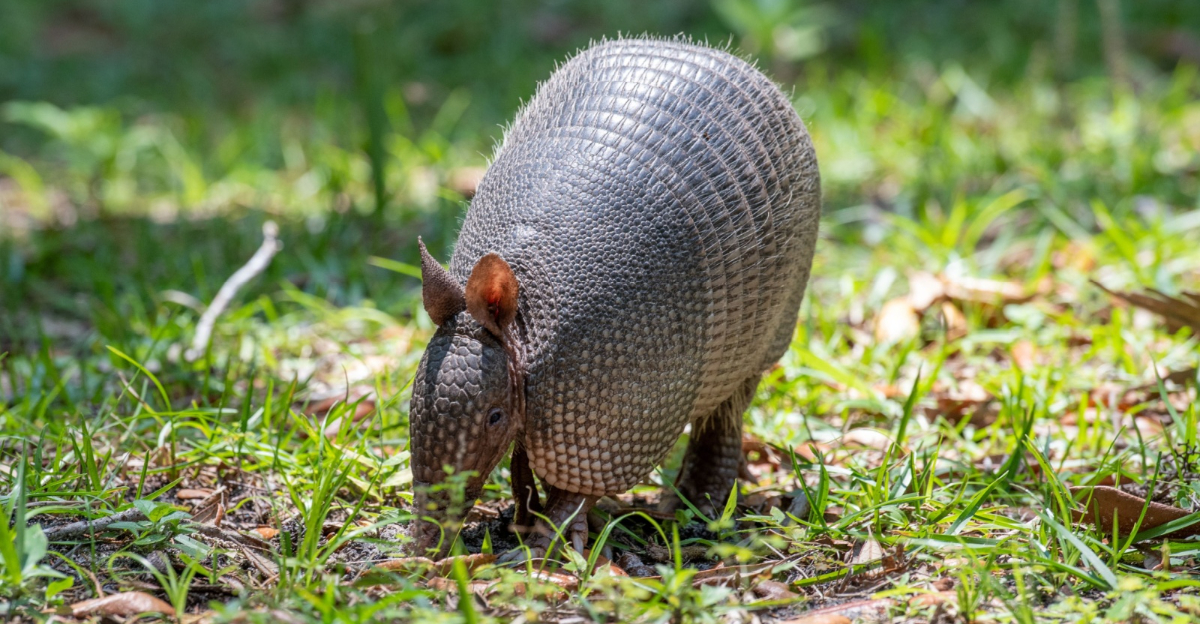
Armadillos don’t announce themselves before moving into a Georgia yard, and that element of surprise is part of what makes the whole situation so frustrating.
One evening everything looks great and the next morning the lawn is full of shallow holes, mulch is scattered everywhere, and something has clearly been rooting through the vegetable garden while everyone was asleep.
Georgia’s warm climate, rain-softened soil, and wooded lot edges create conditions armadillos find hard to resist, and they are remarkably thorough once they settle into a routine.
Most homeowners quickly discover that repellents are less reliable than advertised, that knowing what you’re dealing with matters before taking any action, and that burrows near a foundation are worth paying closer attention to than they might initially seem.
1. Those Small Holes Often Mean Foraging
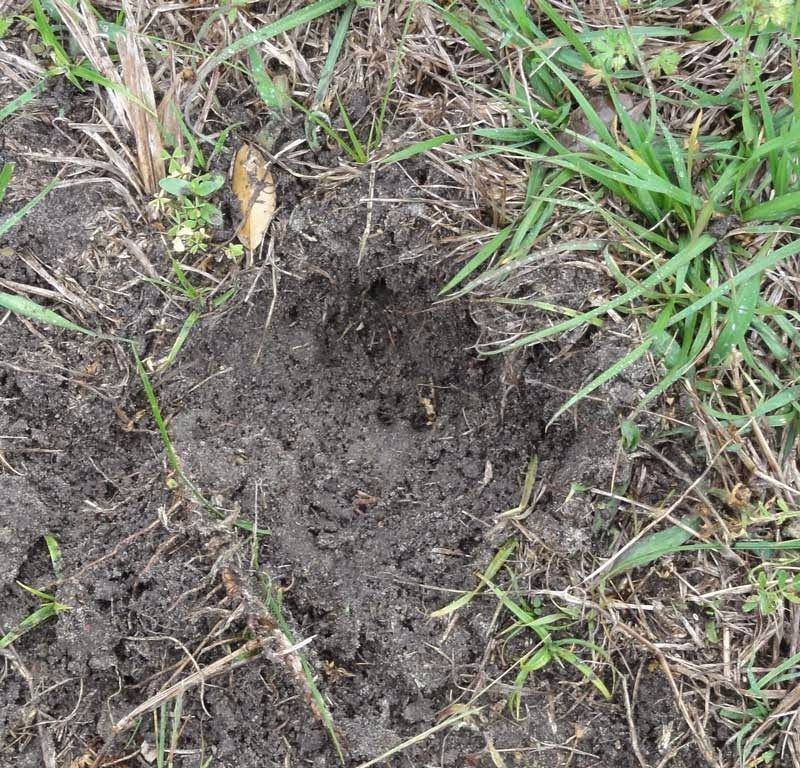
Fresh holes scattered across a lawn can be one of the most confusing sights a Georgia homeowner encounters on an early morning walk outside.
The holes are usually small, roughly three to five inches wide, and they tend to appear in clusters rather than in a neat line.
Mulch beds, flower borders, and soft garden soil are especially common targets.
Armadillos dig these shallow spots while searching for food just below the surface. Their diet includes beetles, grubs, earthworms, larvae, and other invertebrates that live in the top few inches of soil.
The animal uses its strong front claws and sensitive nose to locate prey, then quickly digs down to grab it.
Many Georgia homeowners assume the holes mean a large underground tunnel is nearby, but that is not usually the case. Foraging holes are typically shallow and spread out across the yard rather than concentrated in one spot.
A burrow entrance looks different – it tends to be deeper, wider, and located near a log, brush pile, or foundation edge.
Noticing where the holes are clustered can help narrow down what is attracting the animal. Lawns with heavy grub populations, recently watered garden beds, or soft soil after Georgia rain tend to see more activity.
Addressing the underlying insect population in the soil may reduce how often the yard gets visited over time.
2. The Damage Usually Happens At Night
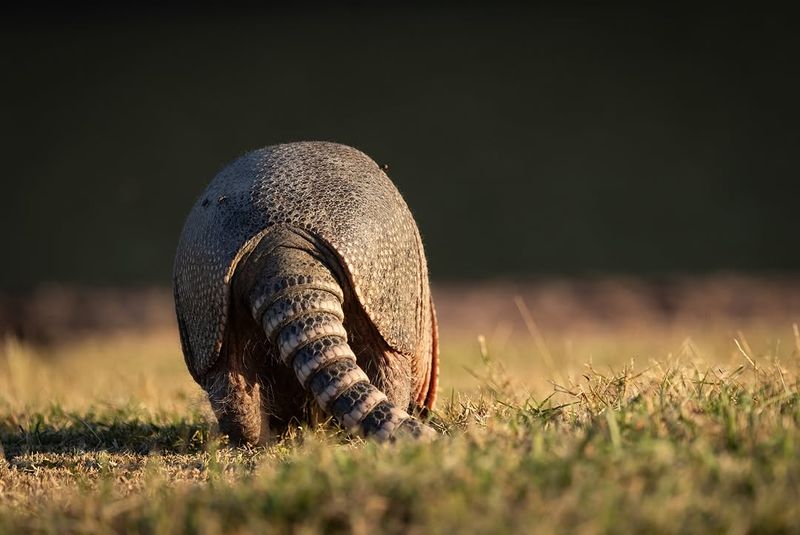
Most Georgia homeowners never actually see the animal responsible for the mess in their yard. The holes appear overnight, the mulch gets tossed aside while everyone is asleep, and the vegetable garden looks disturbed by morning.
That timing is not a coincidence – armadillos are primarily nocturnal, meaning they do most of their foraging after dark.
During the hottest parts of Georgia summers, armadillos may shift some of their activity to cooler early morning or late evening hours. But in most cases, the damage shows up overnight, which makes it easy to mistake for the work of another animal entirely.
Raccoons, opossums, and moles can all leave somewhat similar signs, so identifying the culprit correctly matters before taking any control steps.
Setting up a motion-activated camera near disturbed areas is one of the most practical ways Georgia homeowners have confirmed armadillo activity on their property.
Your Georgia Garden Changes Every Week. Your Plan Should Too.
Gardening in Georgia changes quickly throughout the season. Every Friday you’ll receive a simple weekly plan showing exactly what to plant, prune, fertilize, harvest, and protect so you never miss the right timing.
The footage makes identification straightforward and removes any guessing about which animal is responsible.
Footprints in soft soil after rain can also help, since armadillo tracks show four toes on the front feet and five on the back, with claw marks clearly visible.
Understanding the nocturnal habits of armadillos also helps homeowners plan their response more effectively.
Traps set in the evening near active areas tend to be more productive than those left out during the middle of the day when armadillo movement is less likely.
3. A Wet Lawn Can Become More Attractive
Rainfall changes everything in a Georgia yard when armadillos are nearby. After a good soaking rain, the soil softens considerably, and the insects, earthworms, and larvae living just below the surface become much easier for an armadillo to detect and reach.
Homeowners who had no armadillo activity for weeks sometimes notice fresh holes appearing within a day or two of heavy rain.
Georgia’s warm, humid summers create frequent cycles of rain followed by soft ground, which can make lawns and garden beds particularly vulnerable during those stretches.
Flower beds with loose, well-amended soil and vegetable gardens with regularly watered raised rows tend to attract foraging activity more than dry, compacted areas.
Mulched beds hold moisture longer, which can make them appealing long after the rain has passed.
Overwatering a lawn during dry spells can have a similar effect. When homeowners keep their irrigation running heavily, the consistently moist soil can draw armadillos in even when surrounding areas have dried out.
Adjusting the watering schedule during periods of known armadillo activity may help reduce the appeal of the yard.
Soil moisture also affects how visible the damage looks. Wet soil holds the shape of a foraging hole much more clearly than dry, crumbly ground, so homeowners may notice the signs more easily after rain.
Paying attention to when new holes appear in relation to rainfall can help confirm that an armadillo – rather than another animal – is responsible for the disturbance.
4. Burrows Near Structures Need Attention
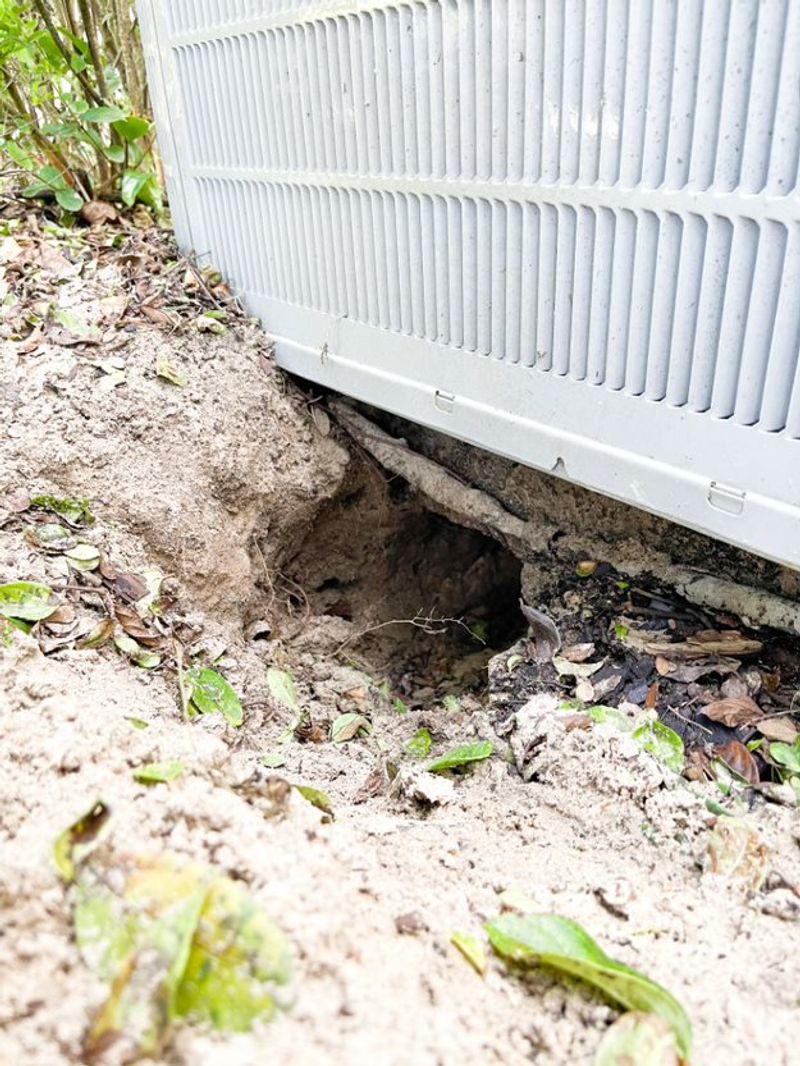
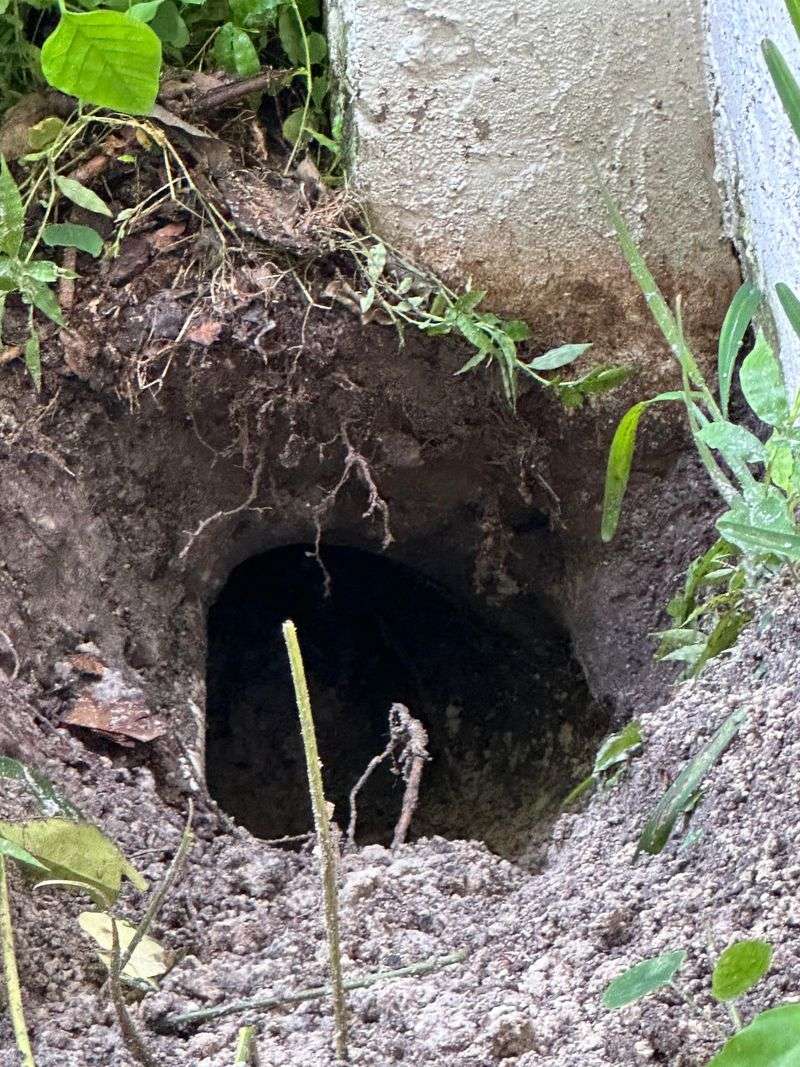
Finding a wide, deep hole near the edge of a home’s foundation is a very different situation from spotting scattered foraging holes across the lawn.
Burrow entrances tend to be larger – often five to eight inches wide – and are frequently located near something that offers overhead cover, such as a porch, deck, concrete slab, woodpile, or dense shrub line along a Georgia home’s perimeter.
Armadillos use burrows for shelter and rest. A single armadillo may maintain several burrows within its range, and those burrows can extend several feet underground.
When a burrow runs beneath a foundation, patio slab, or sidewalk, the soil disturbance over time can contribute to settling, cracking, or erosion around the structure.
This is not an immediate emergency in most cases, but it is something that warrants a closer look rather than being ignored.
Georgia homeowners with wooded lot edges, crawl spaces, or older foundations tend to encounter this situation more often.
The combination of loose soil, nearby cover, and easy access to foraging areas makes residential edges appealing spots for armadillos to establish a burrow.
Checking along fence lines, under decks, and around utility entries is a reasonable step after noticing foraging activity nearby.
Sealing off potential entry points under structures, after confirming the burrow is not occupied, can help prevent the space from being reused.
A wildlife professional can assess whether a burrow poses any structural concern and recommend the appropriate next step for the specific situation.
5. Repellents Are Not A Reliable Fix
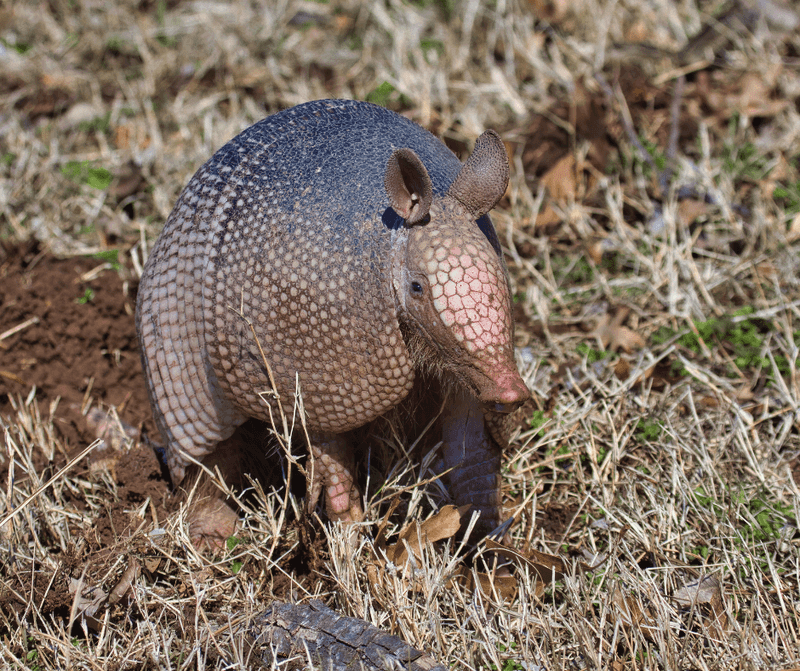
One of the first things many Georgia homeowners try after discovering armadillo damage is a repellent product from the garden center. It seems like a straightforward solution – apply something that smells or tastes unpleasant, and the animal moves on.
In practice, repellents have shown very limited effectiveness against armadillos, and most homeowners who try them find the holes keep appearing anyway.
Armadillos rely heavily on their sense of smell to locate food, but that same strong nose does not seem to be reliably deterred by the products commonly sold for this purpose.
Castor oil-based granules, predator urine sprays, and various commercial repellents are frequently purchased with hope but rarely deliver consistent results.
Rain, sprinkler systems, and Georgia’s humid conditions also wash repellents away quickly, meaning frequent reapplication would be needed even if they worked.
Home remedies such as cayenne pepper, mothballs, and vinegar have circulated online as armadillo deterrents, but there is little credible evidence supporting their use.
Some of these substances can also be harmful to plants, pets, or soil health, adding another reason to approach them with caution.
Understanding why repellents fall short helps Georgia homeowners avoid wasting time and money on products that are unlikely to solve the problem.
Shifting focus toward trapping or habitat modification tends to produce more consistent results, especially when armadillo activity has been ongoing for more than a few days and damage is spreading across the yard.
6. Trapping Is Often The Main Control Tool
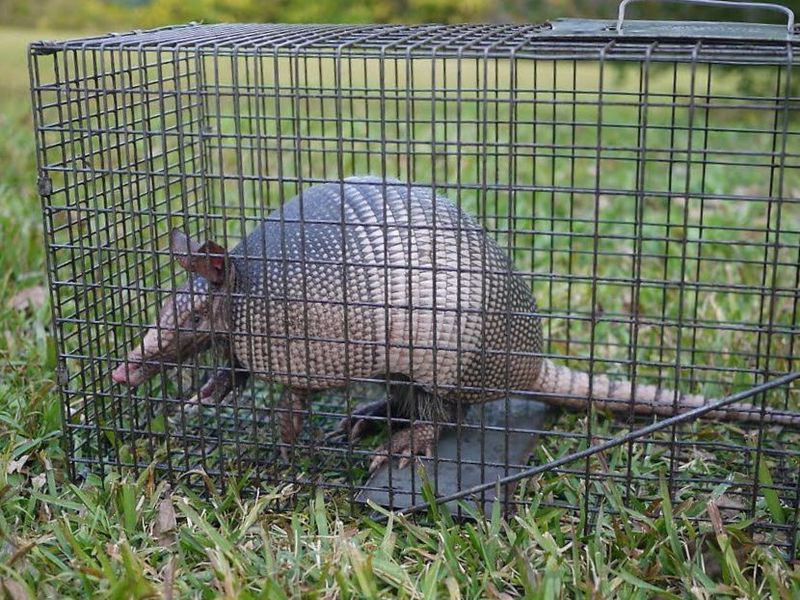
When armadillo activity continues despite other efforts, trapping is generally the most practical and effective control option available to Georgia homeowners.
Live cage traps – typically around ten to twelve inches wide and at least thirty inches long – are the standard tool used for this purpose.
Placement matters more than bait in most cases, since armadillos rely on scent trails and movement patterns rather than being drawn to a specific food reward.
Setting the trap along a fence line, near a burrow entrance, or along a path the armadillo appears to be using regularly tends to produce better results than placing it in the middle of an open lawn.
Boards or logs positioned on either side of the trap entrance can help guide the animal inside by creating a natural-feeling corridor.
Some homeowners have success with leaves, soil, or no bait at all.
Georgia residents should check local and state wildlife regulations before trapping. Rules about trapping, relocating, or handling armadillos can vary, and it is worth confirming what is legally permitted in a given area before setting a trap.
Checking the trap at least once each morning is important so that any captured animal is not left in the heat of a Georgia summer day for an extended period.
Trapping works best when combined with habitat modification.
Removing brush piles, reducing moisture in the soil, and sealing off access under structures can make the yard less welcoming after the armadillo has been removed, lowering the chance of a new one moving in soon after.
7. Correct Identification Saves Time
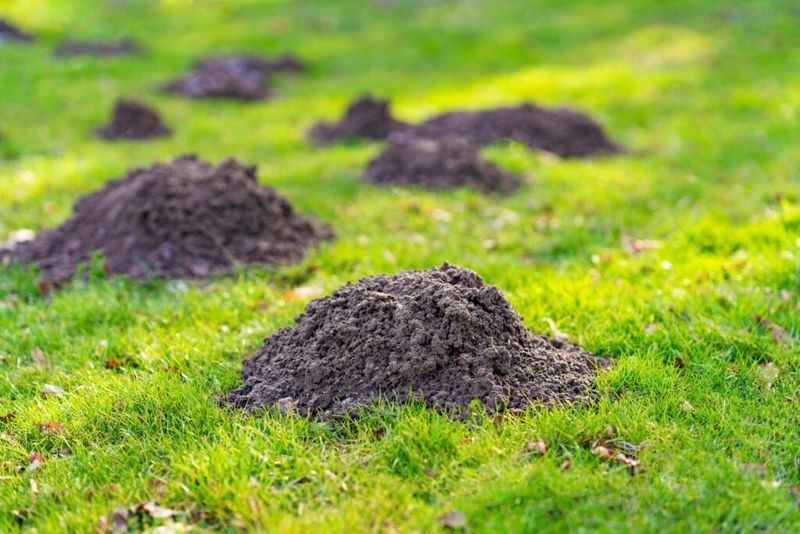
Spending time and money on armadillo control only to find out that moles, voles, or raccoons were responsible for the damage is a frustrating experience that happens more often than most Georgia homeowners expect.
Several animals leave signs that look similar at first glance, especially in soft soil or mulch beds after rain.
Getting the identification right before taking action prevents wasted effort and keeps the response focused on the actual problem.
Armadillo foraging holes are typically round, three to five inches across, and shallow – usually just a few inches deep. Mole activity, by contrast, tends to produce raised ridges or surface tunnels rather than open holes.
Raccoon damage often looks like sections of sod that have been rolled back or torn up in larger patches. Voles create small runway paths through grass rather than distinct digging spots.
Footprints left in soft Georgia soil after rain can be one of the clearest ways to confirm an armadillo. The front feet leave four-toed prints and the back feet show five toes, with visible claw impressions.
The animal’s armored shell and low, waddling movement are also distinctive if captured on a motion camera overnight.
Taking a photo of the damage and the tracks before disturbing the area is a helpful habit.
Extension offices and wildlife professionals can often identify the culprit from a clear photo, saving homeowners the guesswork and helping them choose a response that actually matches the animal causing the problem in their Georgia yard.
8. Professional Help May Be Worth It Near Homes
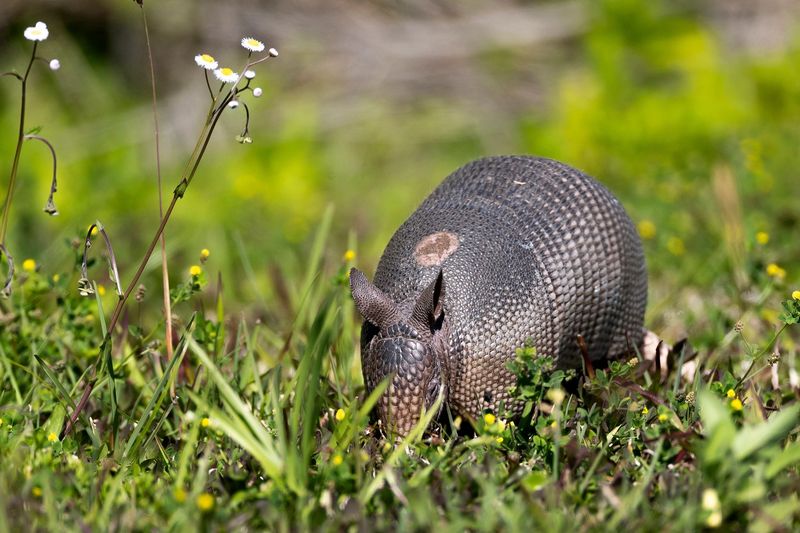
Scattered foraging holes across a wide open lawn are one thing, but burrows located under a porch, alongside a foundation, or beneath a concrete slab in a Georgia yard are a situation where professional help often makes sense.
A nuisance wildlife control operator with experience in armadillo removal can assess the extent of the activity, confirm whether burrows are active, and recommend a removal approach suited to the specific property layout.
Georgia has licensed wildlife control operators who are familiar with local regulations, safe handling procedures, and the most effective trap placement strategies for armadillos in residential settings.
Hiring a professional does not mean the problem is beyond a homeowner’s ability to handle – it simply means having someone with the right tools and knowledge address a situation where the stakes are a bit higher, such as when structural concerns are involved.
Professional operators can also identify conditions on the property that are making it attractive to armadillos in the first place.
Recommendations about drainage, soil moisture, brush removal, and access points under structures can help reduce the likelihood of future activity after the current animal has been removed.
That kind of site-specific advice is difficult to replicate with a general online search.
For Georgia homeowners dealing with repeated armadillo intrusions or burrows close to the home’s perimeter, reaching out to a local wildlife professional is a reasonable next step.
It can often resolve the situation more quickly and cost-effectively than working through multiple DIY approaches over several weeks.