What It Means When California Citrus Leaves Start Curling In Early Fall
A warm September morning, and something’s off with your lemon tree.
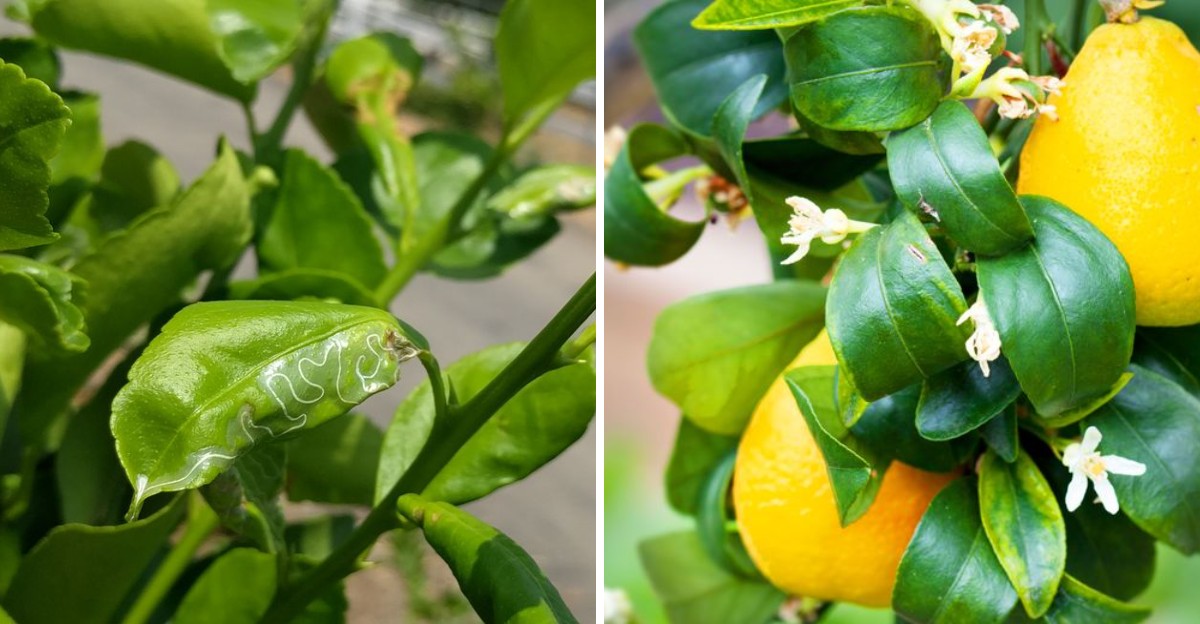
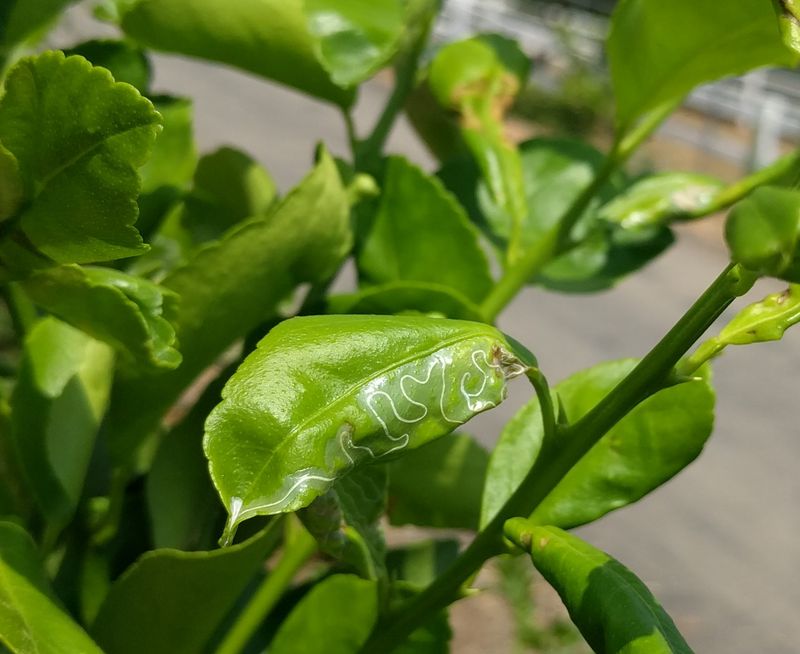
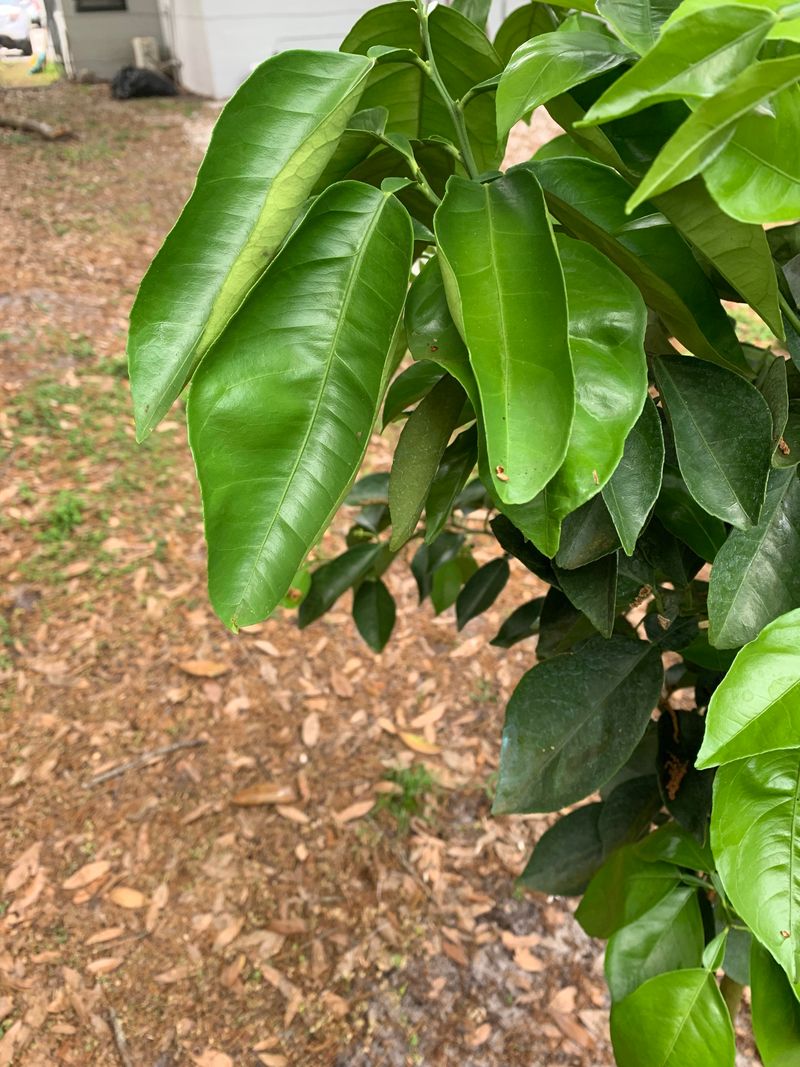
The newest leaves have twisted into strange cups and curls. Lean in closer, and thin, shiny, silvery lines snake across them like tiny pencil marks nobody drew.
It looks alarming.
Here’s what almost nobody realizes, though. Curled citrus leaves are one of the most common sights in California backyards as fall arrives, and the cause splits into two very different culprits depending on what you actually see up close.
One leaves behind a tunnel. The other leaves behind a sticky residue and a trail of ants. Telling them apart takes about ten seconds once you know what to look for.
Curious what’s actually living inside those twisted leaves right now? The answer starts with a moth barely a quarter inch wide.
1. Citrus Leafminer Is The Usual Culprit
Meet one of the smallest troublemakers in your yard. The citrus leafminer is a tiny moth, only about a quarter inch across with its wings spread, and most people never notice the adult at all. It flies mostly at dusk and at night, laying single eggs on soft, freshly opened leaves.
The moth reached California around 2000, first showing up in Imperial County, and it has since spread through much of the state. UC IPM now describes it as a common pest of backyard lemons, oranges, limes, grapefruit, and mandarins. If you grow citrus, your tree has probably met this insect already.
Fall matters because leafminer numbers build all summer and tend to peak from late summer into autumn. At the same time, many citrus trees push out a fresh round of leaves, called a flush, giving the moths plenty of tender targets. That timing explains why the problem seems to appear out of nowhere in September.
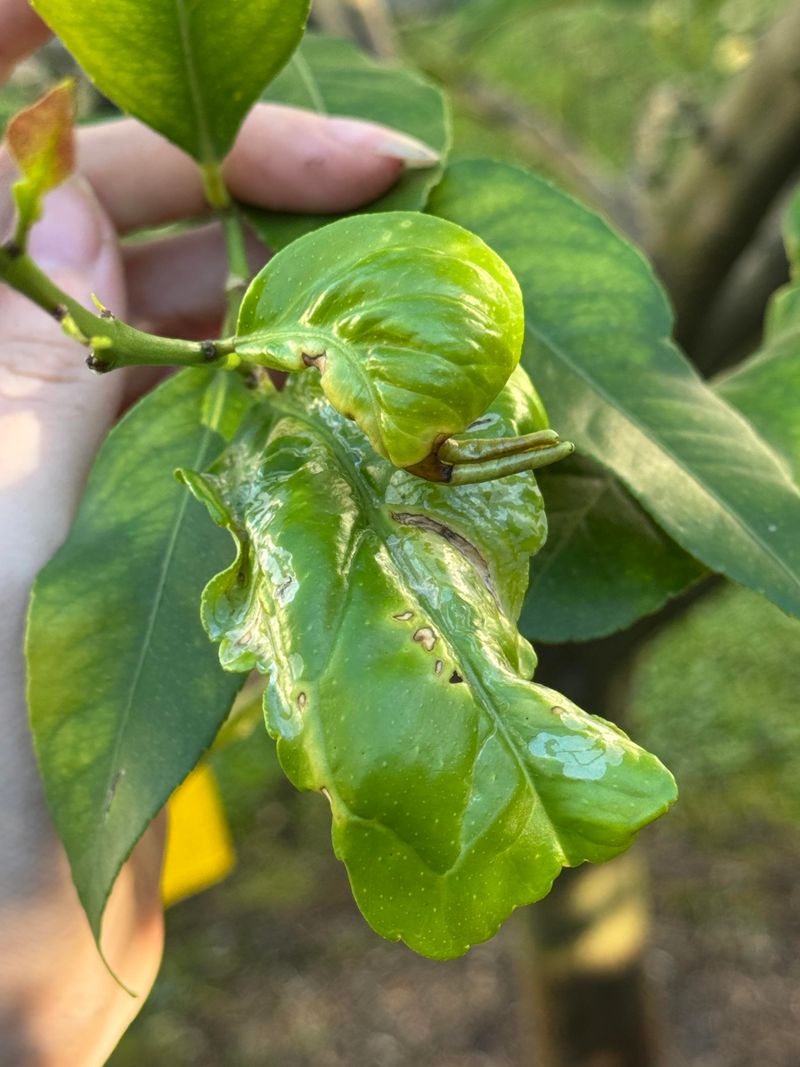
Once the eggs hatch, the tiny larvae chew their way inside the leaf and begin feeding. As they eat, the leaf grows unevenly, causing it to twist, cup, or curl. Near the end of its growth, the larva often rolls the leaf edge over itself, forming a cozy chamber where it changes into a pupa.
So when you spot crumpled new leaves in September or October, put leafminer at the top of your suspect list. Checking for its signature marks will confirm the diagnosis in seconds.
2. Silvery Trails Reveal Larvae At Work
Grab a leaf, tilt it toward the sunlight, and watch it shimmer.
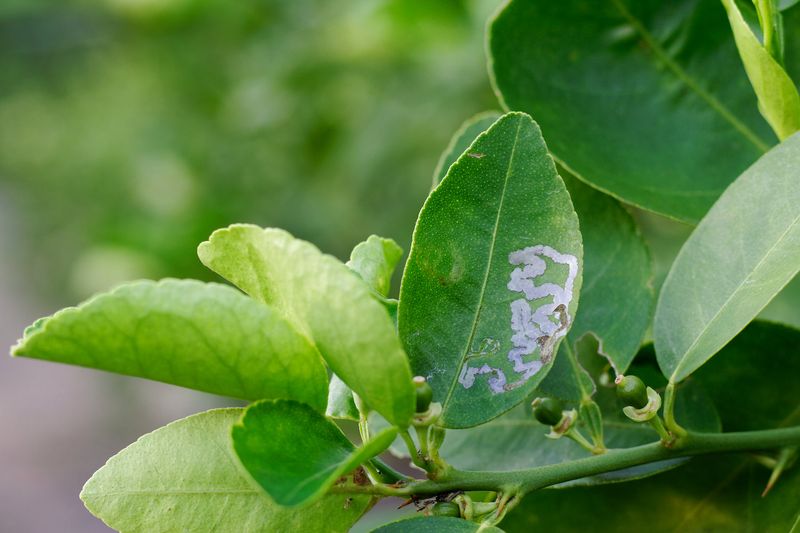
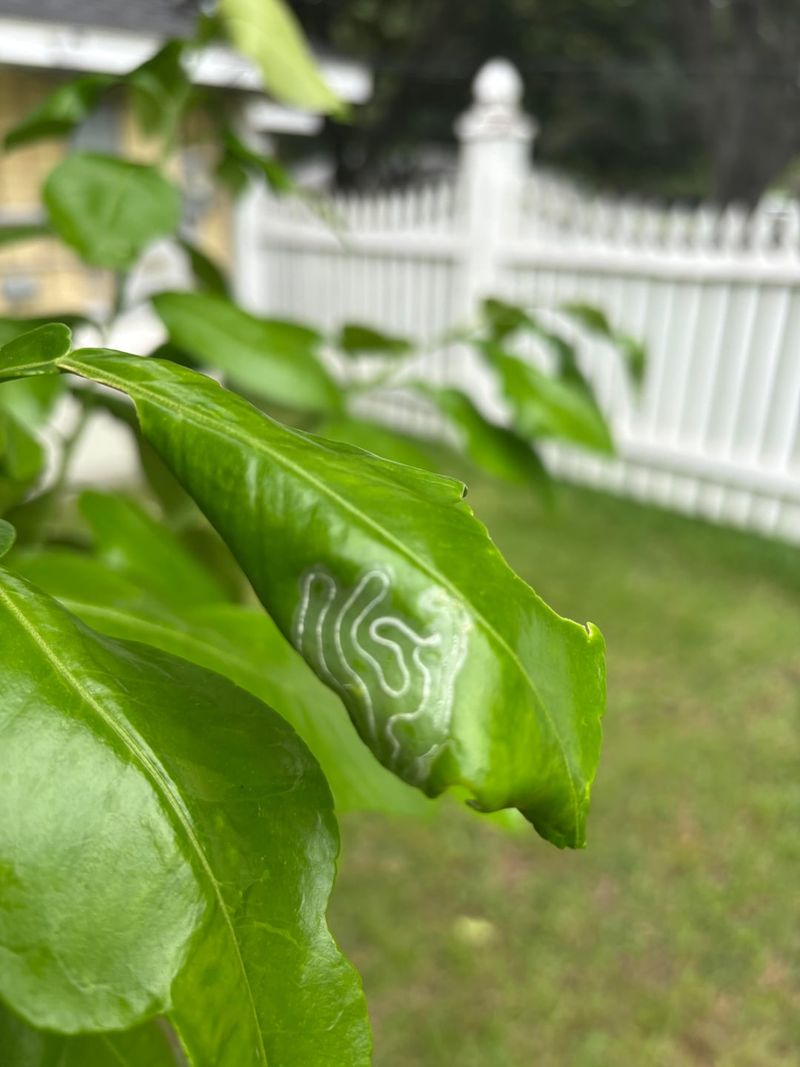
Those glossy, winding lines are the calling card of the citrus leafminer. They look almost like someone doodled on the leaf with a silver gel pen.
Each trail is actually a tunnel, called a mine.
The larva lives just beneath the thin outer skin of the leaf, eating the cells as it crawls forward. Because it removes the tissue under the surface, the top layer separates and catches the light, creating that shiny, snakelike path.
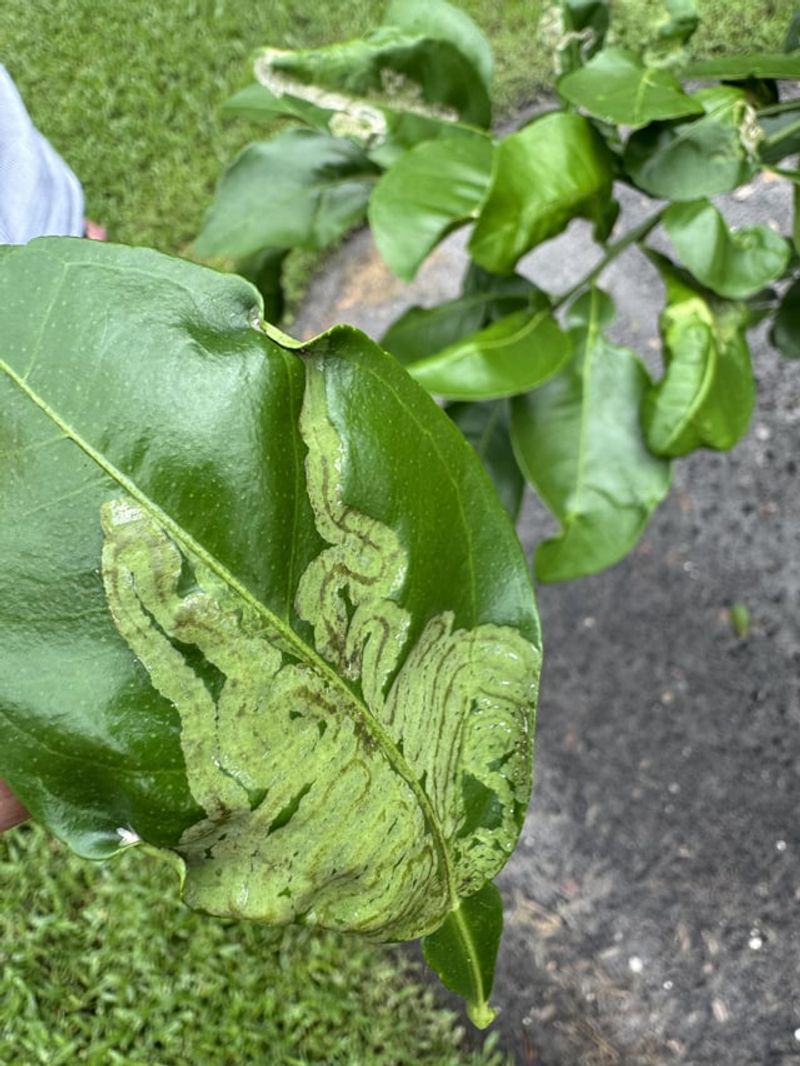
Look closely and you’ll usually see a thin dark line running down the middle of the tunnel.
Your California Garden Changes Every Week. Your Plan Should Too.
Gardening in California changes quickly throughout the season. Every Friday you’ll receive a simple weekly plan showing exactly what to plant, prune, fertilize, harvest, and protect so you never miss the right timing.
That line is frass, which is a polite word for insect droppings. This center line is a helpful clue for identifying leafminer damage.
Mines most often appear on the underside of the leaf, though heavy infestations can cover both sides.
A single leaf may hold one mine or several, twisting around like a little maze. If you find a small, pale, nearly see-through larva at the end of a fresh trail, you’ve caught one in the act.
Old mines stay visible long after the larva leaves, so empty tunnels are nothing to panic about.
They simply show where feeding happened weeks ago. The key rule is easy to remember: silvery tunnels mean leafminer, while curling without tunnels points to a different cause worth checking.
3. Aphids Can Cause Similar Curling
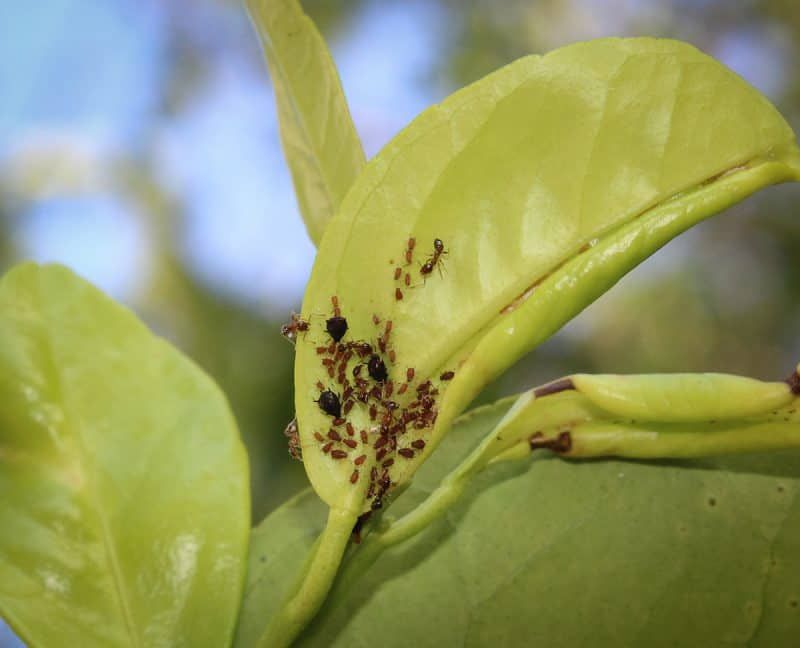
Not every curled leaf has a tunnel story to tell. Sometimes the culprit is sitting right out in the open, clustered in tiny green, black, or brownish groups on the tips of new shoots. Those soft-bodied bugs are aphids, and they are the second big suspect when citrus leaves start to pucker.
Aphids feed very differently than leafminers. Instead of chewing inside the leaf, they poke a needle-like mouthpart into it and suck out sap. Feeding on young, expanding leaves makes them curl, crinkle, and cup, but you will never find silvery trails.
According to UC IPM, common species on California citrus include the green citrus aphid and the melon aphid. They multiply quickly, especially during flushes of new growth in spring and again in fall. A small colony can turn into a crowded one in just a week or two.
Watch for a sticky, shiny coating on leaves below the colony, which is honeydew that aphids leave behind. Over time, a black, sooty mold can grow on that sugary film. Ants marching up the trunk are another giveaway, since they collect honeydew and even guard aphids from predators.
Luckily, aphids have plenty of natural enemies, including lady beetles, lacewing larvae, and tiny parasitic wasps. A strong spray of water from the hose knocks many of them off. Keeping ants off the trunk also lets those helpful predators do their job.
4. New Growth Faces The Heaviest Damage
A brand-new citrus leaf is soft and easy to bite, like a freshly baked cookie. A mature leaf is more like a cracker that’s been sitting out for a week.
Pests know the difference, and they head straight for the softest option.
Leafminer moths lay eggs almost only on young, tender leaves, usually ones smaller than about an inch long.
Once leaves harden and toughen, they’re rarely attacked. Aphids also prefer this soft tissue because the sap flows easily and the surface is thin enough to pierce.
Timing plays a big role too.
California citrus trees often produce several flushes a year, with a major one in spring and smaller ones in summer and fall. The fall flush lines up with high leafminer numbers, which is why the newest leaves on branch tips often look the worst.
A practical tip can make a real difference here.
Avoid heavy pruning or big doses of nitrogen fertilizer in late summer, since both can trigger a burst of fresh leaves right when pests are most active. Timing fertilizer and pruning so most growth happens when leafminer numbers are low helps considerably.
Meanwhile, older leaves deeper inside the canopy usually stay flat and green.
Those mature leaves keep making food for your tree, even while the tips look a little rough.
5. Established Trees Usually Tolerate It Fine
Here’s some good news that should help you breathe easier.
A healthy citrus tree that’s been in the ground for several years carries a huge supply of mature leaves. Losing a handful of curled leaves at the branch tips barely makes a dent in its ability to make energy.
Leafminer damage generally does not harm the growth or fruit production of established trees.
The pest does not feed on the fruit, so your oranges and lemons stay perfectly fine to eat. Mined leaves also stay on the tree and keep doing some photosynthesis, even if they look beat up.
Young trees are a different story.
A small tree planted within the last couple of years has fewer leaves to spare, so heavy damage to every flush can slow its growth. If your tree is still little, watch it more closely and protect new growth when possible.
For grown trees, focus on basic care instead of worry.
Water deeply and on a regular schedule, keep mulch a few inches away from the trunk, and fertilize at the right times of year. A tree with steady water and good nutrition bounces back from pest damage much faster than a stressed one.
Aphid damage works in a similar way.
Healthy trees usually shrug it off, especially once lady beetles and other beneficial insects move in and start eating the colonies.
6. Treatment Rarely Justifies The Cosmetic Damage
Reaching for a spray bottle feels like the natural response when leaves look sick.
Yet holding off on insecticides for leafminer on mature trees is generally the smarter move. The damage is mostly about looks, not health, so spraying often costs more than it saves.
Timing makes treatment tricky anyway.
The larvae live protected inside the leaf, where most contact sprays cannot reach them. To make any difference, products must go on as leaves are just opening, and they need repeating with every new flush.
Chemicals can also backfire.
Broad-spectrum insecticides eliminate the tiny parasitic wasps and other helpers that naturally feed on leafminer larvae. Once those allies disappear, pests like aphids, scale, and mites can surge.
Another warning worth remembering is to leave damaged leaves on the tree.
Pulling off curled leaves removes useful leaf area and can push the tree to grow even more tender leaves that leafminers love. Pruning out damage simply does not help.
When protection does make sense, such as on a young tree, gentler options like horticultural oil or spinosad applied to new flush work well. Always read and follow the label exactly.
For aphids, a hose blast or insecticidal soap usually does the trick.
Here’s a fun fact worth knowing. Several kinds of tiny native parasitic wasps and other natural enemies in California attack leafminer larvae right inside their tunnels. Letting those helpers stay on the job is often the smartest move you can make.
7. Most Curling Resolves On Its Own
Picture your tree in December.
The weather has cooled, the days are shorter, and the rush of new growth has slowed way down. Leafminer activity drops as temperatures fall, and leaves that open in cooler months usually grow in clean and flat.
Curled leaves from the fall flush will not uncurl, but they’ll harden and stay on the tree.
As winter turns to spring, fresh growth fills in around them, and the damaged tips become far less noticeable. Since leafminer numbers are typically low in spring, that big spring flush often comes in looking great.
Aphids follow a similar pattern.
Their colonies often shrink once new growth hardens and predators catch up. Without soft leaves to feed on, they have little reason to stick around.
For now, a simple plan works well.
Check a few new shoots each week, look for silvery tunnels or clusters of aphids, and make a note of what you find. Keep caring for your tree as usual, and save stronger action for young trees or unusual damage.
If curling shows up in winter along with yellowing or dropping leaves and no sign of either pest, consider other causes like water stress, cold damage, or root trouble.
8. A Few Tunnels Are Not Worth Losing Sleep Over
After working through everything above, it helps to zoom back out and remember the bigger picture here.
A citrus tree covered in silvery tunnels or a few clusters of aphids looks worse than it actually is, especially to a gardener seeing this for the first time.
The instinct to fix, spray, or prune away every affected leaf is understandable, but it usually does more harm than good on an established tree that’s otherwise healthy.
Comparing notes with neighbors can help put things in perspective too. Nearly every backyard citrus tree in California deals with leafminer or aphids at some point each year, often every single fall without exception.
A tree that looks a little rough on the branch tips in September is not a tree in trouble. It’s simply a tree going through a completely normal seasonal cycle that’s been playing out in California yards for over two decades now.
Keeping a mental note of what’s normal for your specific tree, rather than comparing it to some imagined perfect specimen, makes the whole situation far less stressful to watch unfold.
If anything changes drastically, sudden yellowing across the whole canopy, leaves dropping rather than just curling, or damage spreading to fruit itself, that’s the moment worth a closer look or a call to a local extension office.
Short of that, the best response most years is simply patience. Let natural predators do their job, let the tree push through its fall flush, and let winter’s cooler temperatures slow everything down on their own schedule.
By next spring, the curled leaves from this fall will have hardened, faded into the background, and been replaced by a fresh, clean flush that most people never even connect back to September’s worry in the first place.