What It Means When Mourning Doves Start Nesting In Your California Yard
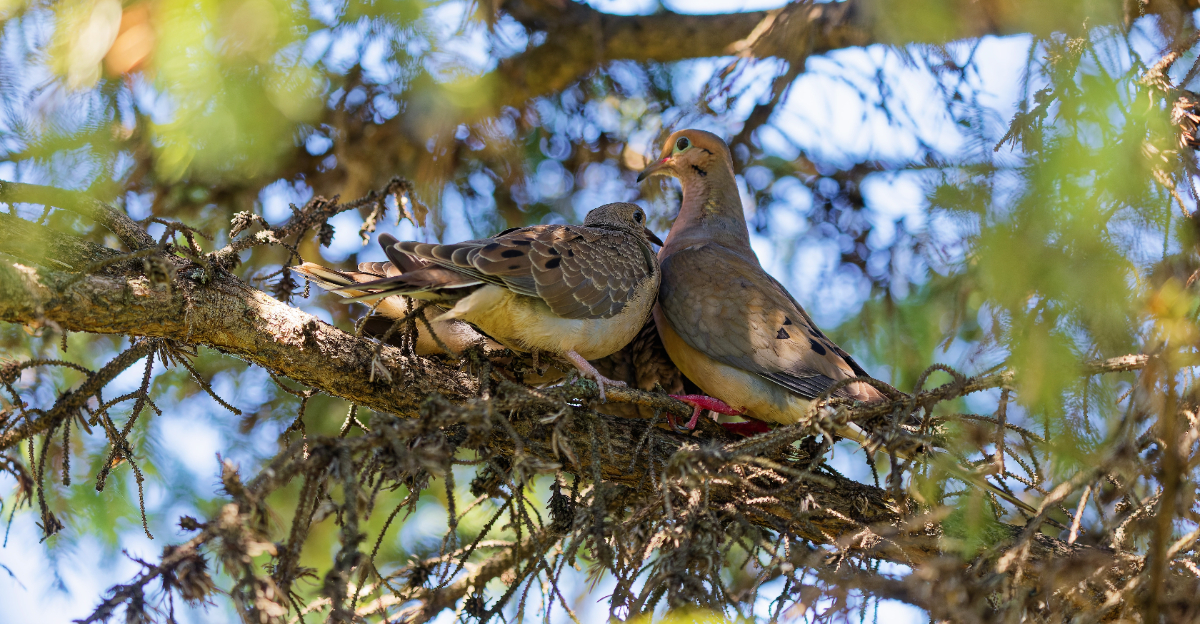
A flimsy nest, two soft gray birds, and one very invested pair of parents can change how you look at your yard.
When mourning doves settle into a California garden, it often feels sweet, quiet, and a little symbolic.
They are not flashy visitors, but their timing can make homeowners wonder why they chose that spot.
Is it a sign of peace, a random nesting choice, or proof your yard has exactly what they need?
The answer has a bit of backyard meaning and a bit of bird behavior. Before you get too close or try to “help,” it is worth knowing what their nesting really means.
Your yard may be hosting a gentle little drama, and the smartest move may be giving it room to unfold.
1. A Dove Nest Means Your Yard Feels Safe
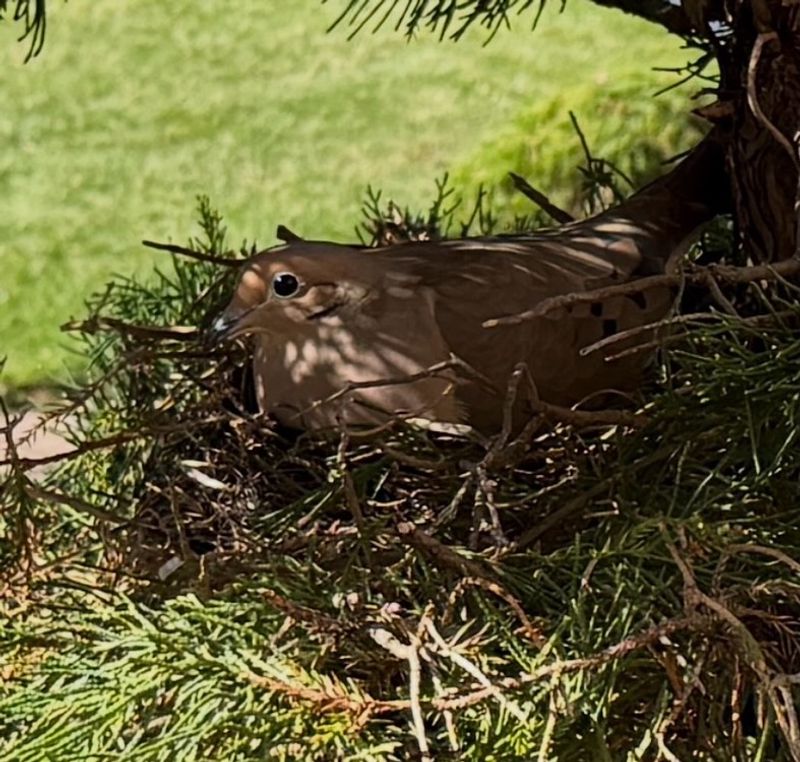
Something special happens when mourning doves pick your California yard over all the others on the block. It means your outdoor space gives off a calm, welcoming energy that these birds can sense.
Mourning doves are naturally cautious creatures. They avoid noisy, chaotic areas and tend to gravitate toward places that feel quiet and undisturbed.
Your yard being chosen is basically a compliment from nature. It tells you that there is enough cover, enough quiet, and enough safety for a bird family to feel comfortable raising their young there.
That is not something every yard can offer, which makes it worth appreciating.
Think about what makes your space feel peaceful. Maybe you have tall shrubs, a shady tree, or a fence that blocks wind and foot traffic.
These small features add up and create the kind of environment doves seek out. They are not looking for perfection.
They just want calm.
Mourning doves also have excellent instincts. If they sense frequent disturbances like loud pets, heavy foot traffic, or constant noise, they will move on.
The fact that they stayed means your yard passed their test. Keeping things low-key near the nesting area will encourage them to return season after season, turning your yard into a regular dove-friendly stop.
2. Flimsy Nests Are Normal For Doves
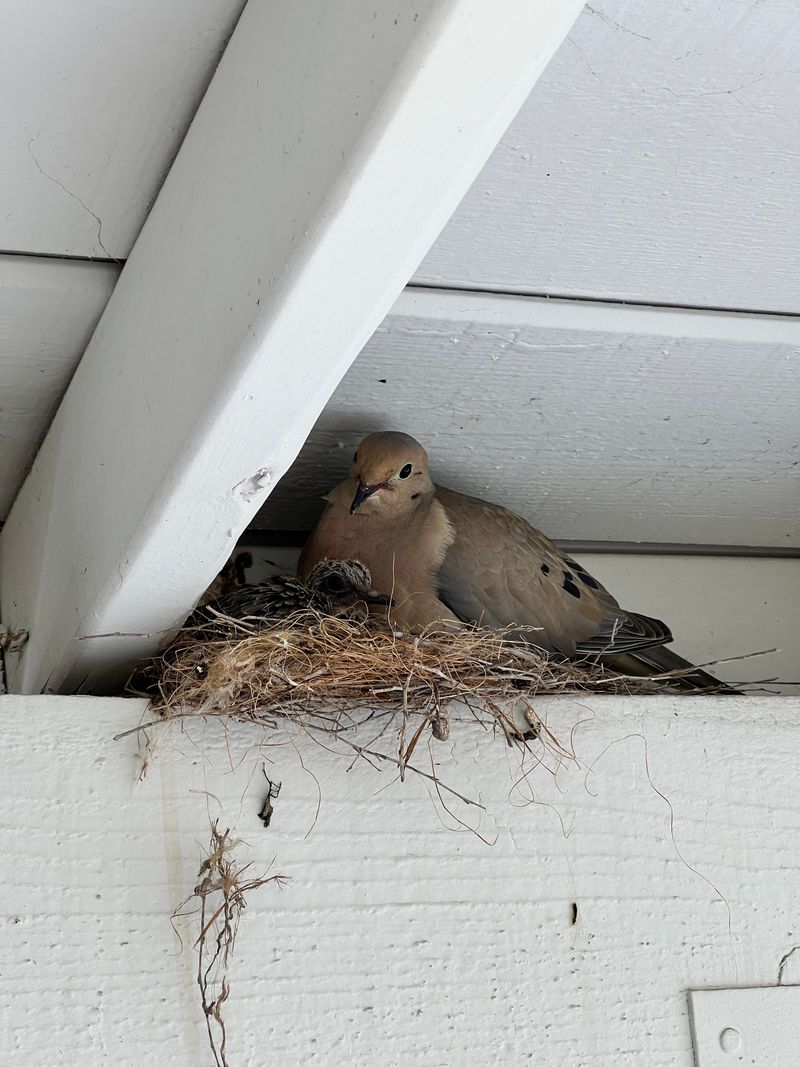
First-time dove watchers are often shocked by how basic the nest looks. It is a loose pile of thin twigs, barely held together, with no soft lining or careful weaving.
You might wonder how it stays in one piece at all. But that rough little platform has worked for mourning doves for thousands of years, so it clearly does the job.
Unlike robins or orioles, mourning doves do not build elaborate nests. The male gathers twigs and brings them to the female, who arranges them into a shallow cup shape.
The whole process can take less than a day. Speed matters more to doves than craftsmanship.
The nests are so thin that you can sometimes see the eggs through the bottom when you look up from below. That might seem alarming, but it is completely normal dove behavior.
The eggs and chicks are kept warm by the parents sitting on top of them, not by the insulation of the nest itself.
Your California Garden Changes Every Week. Your Plan Should Too.
Gardening in California changes quickly throughout the season. Every Friday you’ll receive a simple weekly plan showing exactly what to plant, prune, fertilize, harvest, and protect so you never miss the right timing.
Because the nests are fragile, wind and rain can occasionally knock them down. If you find a fallen nest with live chicks inside, you can gently place them back in the original spot or in a small container secured nearby.
The parents will usually return and continue caring for their young. Doves are more resilient than their delicate nests suggest.
3. They Choose Quiet, Sheltered Spots
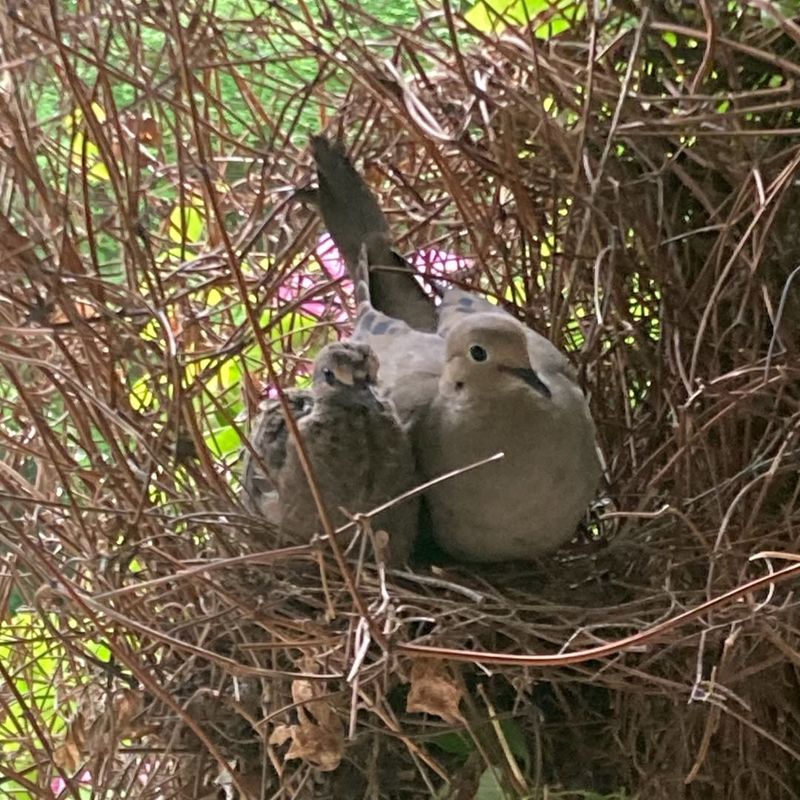
Mourning doves are not random about where they build. They scout their surroundings carefully before committing to a nesting location.
Common spots include tree branches, hanging planters, window ledges, fence rails, and even the tops of outdoor light fixtures. What all these spots have in common is shelter from wind, rain, and direct sun.
In California, where summer temperatures can climb fast, shade matters a lot. A nest baked in full afternoon sun puts eggs and chicks at serious risk.
Doves seem to understand this and often choose spots with at least partial shade during the hottest parts of the day. Northern California regions may offer cooler conditions, but doves there still look for wind protection.
You might be surprised by some of their choices. A potted plant on a porch or a wreath hanging on a door can become a nesting site overnight.
Doves are adaptable and not shy about using human-made structures when natural spots are limited.
If you want to encourage nesting in a specific part of your yard, try placing a flat nesting platform in a sheltered tree or shrub. Keep it away from high-traffic areas.
A quiet corner with some overhead cover is ideal. Doves will notice the spot and may decide it is exactly what they were looking for.
4. Both Parents Help Raise The Young
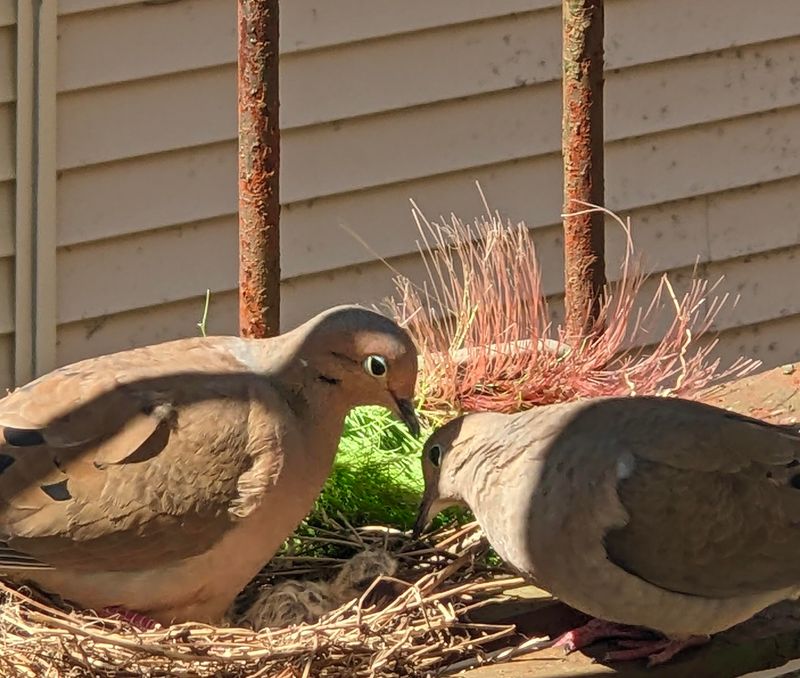
One of the most touching things about mourning doves is how committed both parents are to raising their young. Unlike some bird species where one parent does most of the work, dove pairs split the duties pretty evenly.
The male usually sits on the nest during the day, and the female takes over at night. It is a steady, reliable routine.
They take turns keeping the eggs warm for about two weeks before hatching. Once the chicks arrive, both parents continue sharing duties.
They feed the babies a special liquid called crop milk, which is produced in their digestive system. No other food is needed at first.
This crop milk is rich in nutrients and helps the chicks grow fast.
Baby doves grow at a surprising speed. Within two weeks, they go from tiny hatchlings to birds almost ready to leave the nest.
The parents stay attentive the whole time, rarely leaving the nest unguarded for long. If you watch closely, you will notice the handoffs between the parents happening quietly and smoothly throughout the day.
Seeing both parents working together is a good reminder that these birds form real pair bonds. Mourning doves often mate for multiple seasons, sometimes for life.
That loyalty and cooperation is part of what makes them such a beloved backyard bird across California and beyond.
5. Don’t Move An Active Nest
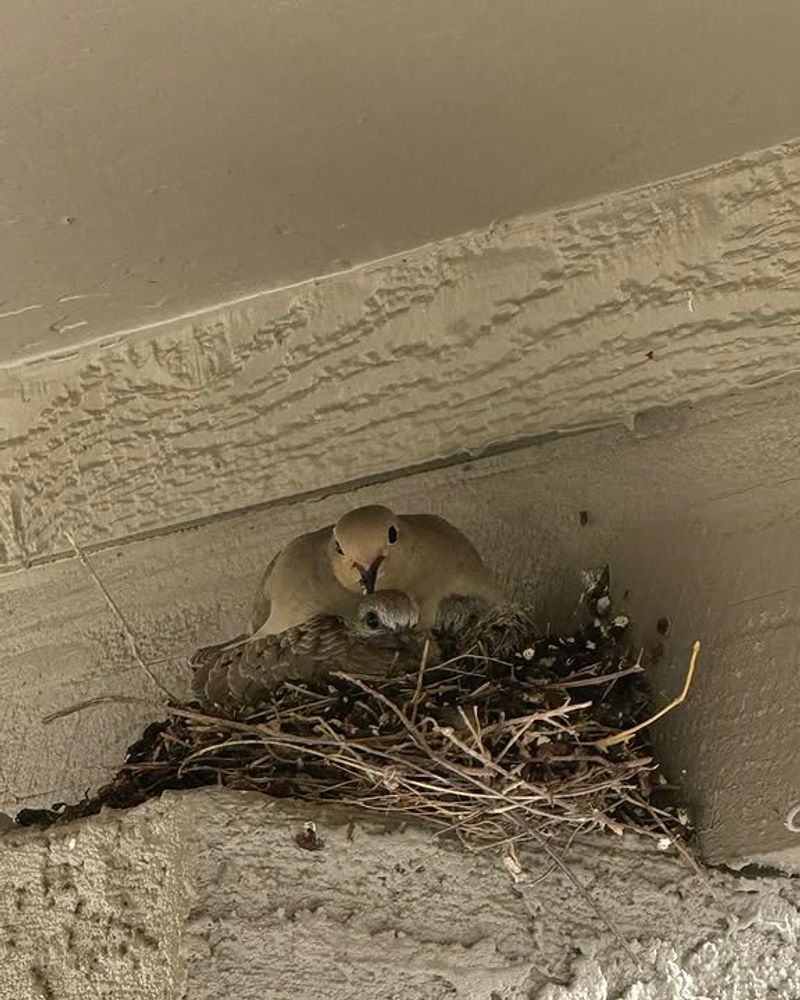
Finding a dove nest in an inconvenient spot can feel like a problem. Maybe it is in a planter you use every day, or on a ledge near your back door.
The temptation to relocate it is understandable, but moving an active nest is almost always a bad idea. In fact, it is illegal under the Migratory Bird Treaty Act to disturb an active nest without a permit.
Beyond the legal side, moving a nest can cause the parents to abandon it entirely. Doves are sensitive to changes in their nesting environment.
Even a small shift in location can confuse or frighten them enough to leave. That puts the eggs or chicks at serious risk of not surviving.
The good news is that dove nesting cycles are short. From the time eggs are laid to when the chicks leave the nest is usually only about four weeks total.
That is not a long time to work around an inconvenient spot. Most people find that once they accept the wait, it goes by quickly.
During that time, try to limit activity near the nest as much as possible. Avoid loud noises, sudden movements, or letting pets near the area.
Give the parents space to do their job. Once the chicks have flown off on their own, you can safely clean up the old nest and reclaim your space.
6. Skip Pruning Near The Nest For Now
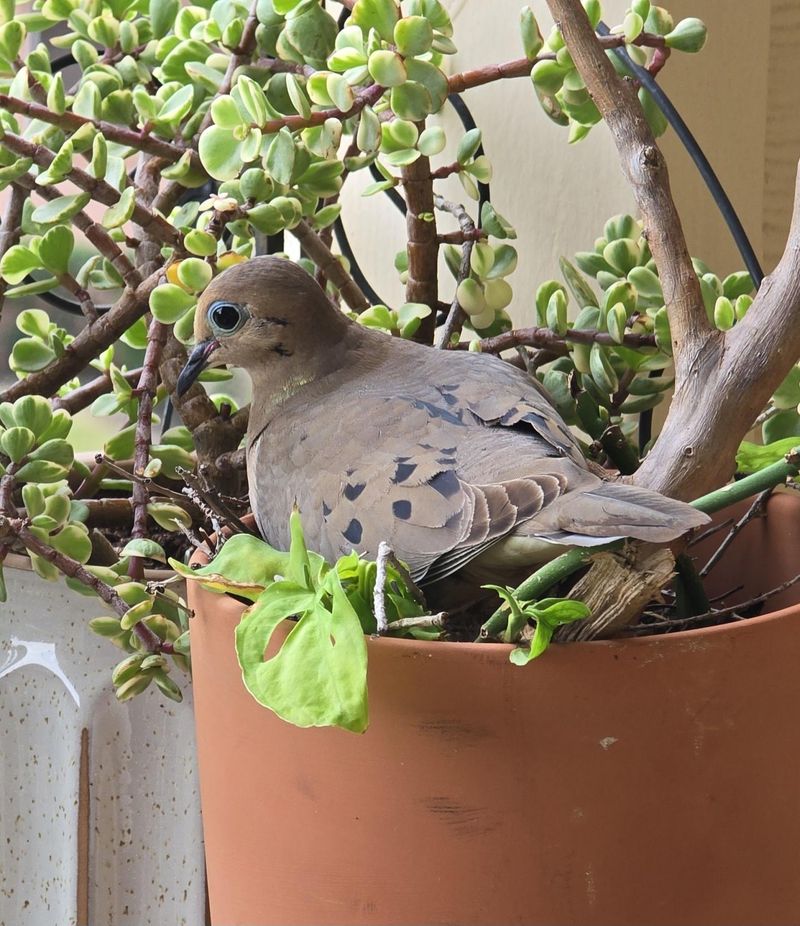
Garden chores and bird nests do not always get along. If you discover a mourning dove nest in a shrub or tree you were planning to trim, it is best to put those pruning shears away for a few weeks.
Cutting branches near an active nest creates noise, vibration, and sudden changes to the surrounding cover. All of that can stress the nesting birds and may cause them to abandon the nest.
Pruning near a nest also removes the very shelter the doves chose in the first place. If you trim away the branches around them, you expose the nest to wind, sun, and predators.
What felt like a safe spot suddenly becomes vulnerable. That is not fair to the birds that trusted your yard enough to set up home there.
A short pause in your garden routine is a small price to pay. Mark your calendar for about four to five weeks after you first spot the nest.
By then, the chicks should be long gone and you can get back to your regular schedule. Your plants will be just fine waiting a little longer.
While you wait, use the time to enjoy the show. Watch how the parents behave, listen for the soft cooing, and look for the moment the chicks start poking their heads up.
It is a rare and rewarding front-row seat to something most people never get to witness up close.
7. Cats Make Nesting Much Riskier
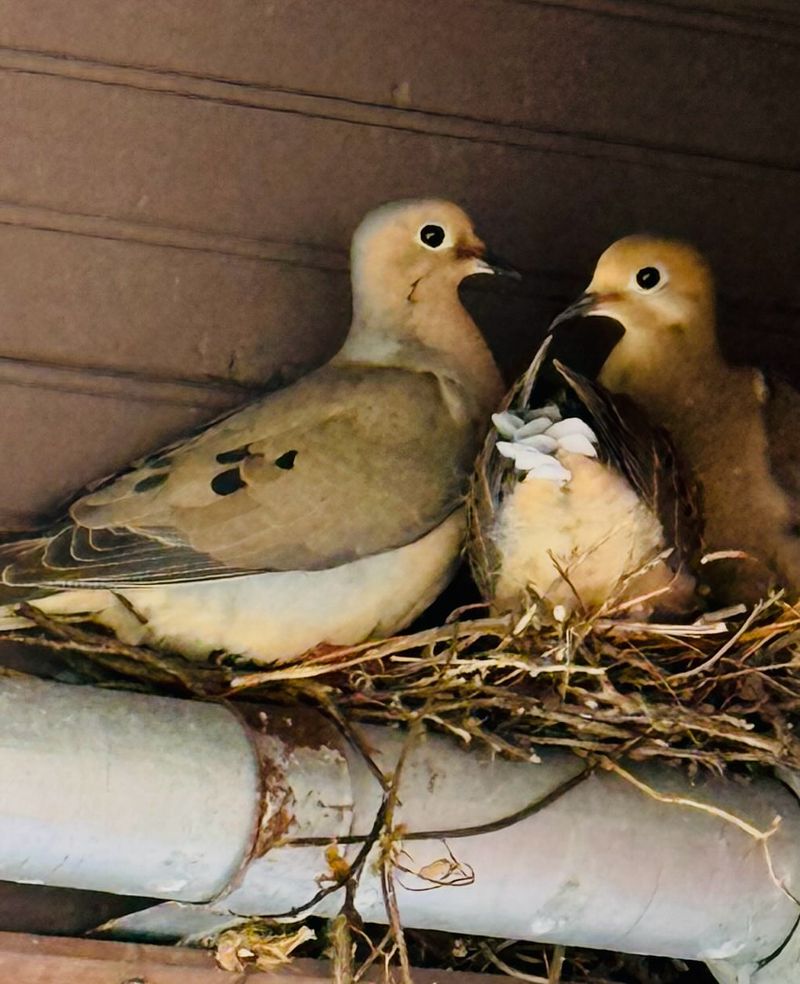
Outdoor cats are one of the biggest threats to nesting birds across California. Even a well-fed, friendly house cat has strong hunting instincts.
A dove nest low in a shrub or on a porch ledge is an easy target for a curious or predatory cat. Both adult birds and helpless chicks are at risk when cats roam freely near a nesting site.
If you have cats, keeping them indoors during nesting season is the most effective thing you can do.
This protects the doves and also keeps your cats safer, since outdoor cats face their own risks from traffic, other animals, and disease. It is a win for everyone involved.
Neighbor cats can be harder to control. If you notice a cat regularly visiting your yard and there is an active nest nearby, try placing motion-activated sprinklers or safe deterrents around the nesting area.
Avoid anything that could harm the cat. The goal is just to discourage visits, not to cause harm.
You can also encourage doves to nest higher off the ground by placing flat nesting platforms in trees or tall shrubs. The higher the nest, the harder it is for a cat to reach.
Even a few extra feet of height can make a significant difference in how safe the nest is throughout the entire nesting cycle.
8. Birdseed Can Keep Doves Nearby
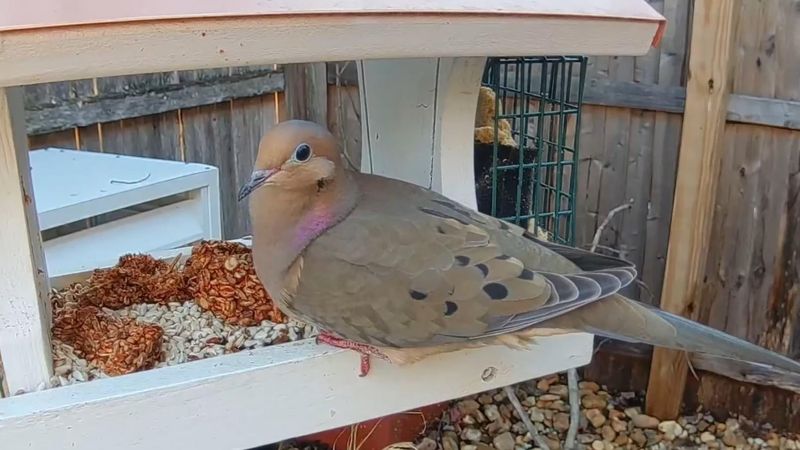
Mourning doves are ground feeders by nature. They do not perch on hanging tube feeders the way smaller birds do.
Instead, they prefer to walk along the ground and pick up seeds that have fallen or been scattered at a low level. Knowing this makes it easy to set up a feeding station they will actually use.
Millet is one of their favorite foods. Safflower seeds and cracked corn are also popular choices.
You can scatter these directly on a flat surface, a low tray feeder, or even just on the ground near a sheltered area. Doves will find it quickly once they know it is there.
Having a reliable food source close to your yard gives doves a strong reason to stay. It also increases the chance they will return to nest in future seasons.
Once a pair finds a yard that offers both food and safety, they tend to come back year after year. That kind of loyalty is one of the things that makes dove-watching so satisfying.
Keep the feeding area clean to prevent mold and bacteria from building up in spilled or wet seed. Rake up old seed every few days and refresh with a new supply.
A clean feeding spot is healthier for the birds and less likely to attract unwanted pests like rodents. A little upkeep goes a long way.
9. Shallow Water Helps In Hot Weather
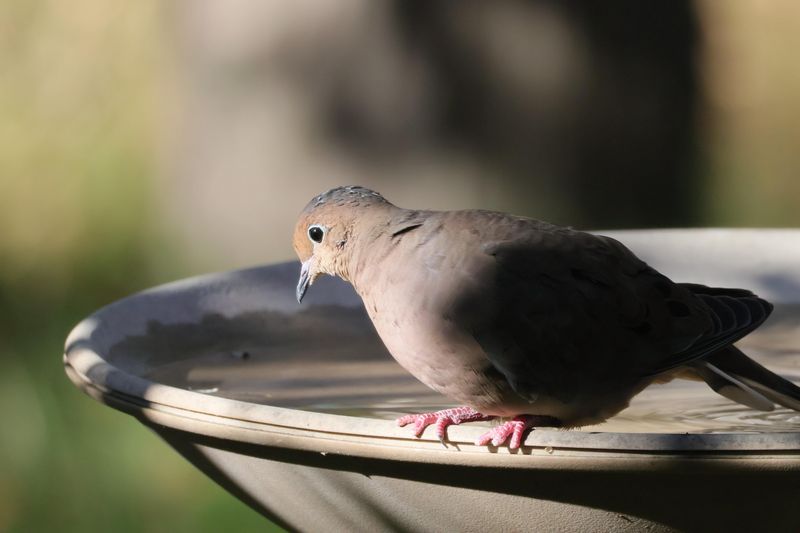
Water is just as important as food when it comes to keeping mourning doves healthy and happy in your yard.
During the hot, dry months that much of California experiences, finding clean drinking water can be a real challenge for wildlife.
A birdbath or shallow dish can make a meaningful difference for the birds in your neighborhood.
Mourning doves prefer shallow water, no more than an inch or two deep. Deep birdbaths can be awkward or even unsafe for them.
A wide, shallow dish or a traditional birdbath with a gentle slope works perfectly. Place it in a spot with some shade during the afternoon so the water stays cooler and does not evaporate too fast.
Change the water every couple of days to keep it fresh and free of algae. Stagnant water can breed mosquitoes and make birds sick, so regular refreshing is important.
In the warmer inland valleys and southern parts of California, you may need to top it off daily during peak summer heat.
Adding a small dripper or fountain attachment creates moving water, which birds find even more attractive.
The sound of dripping water carries through the yard and acts like a signal to birds passing overhead.
It is a simple upgrade that can bring more doves and other bird species to your yard throughout the year, not just during nesting season.