What It Means When Roadrunners Keep Visiting Your Arizona Yard
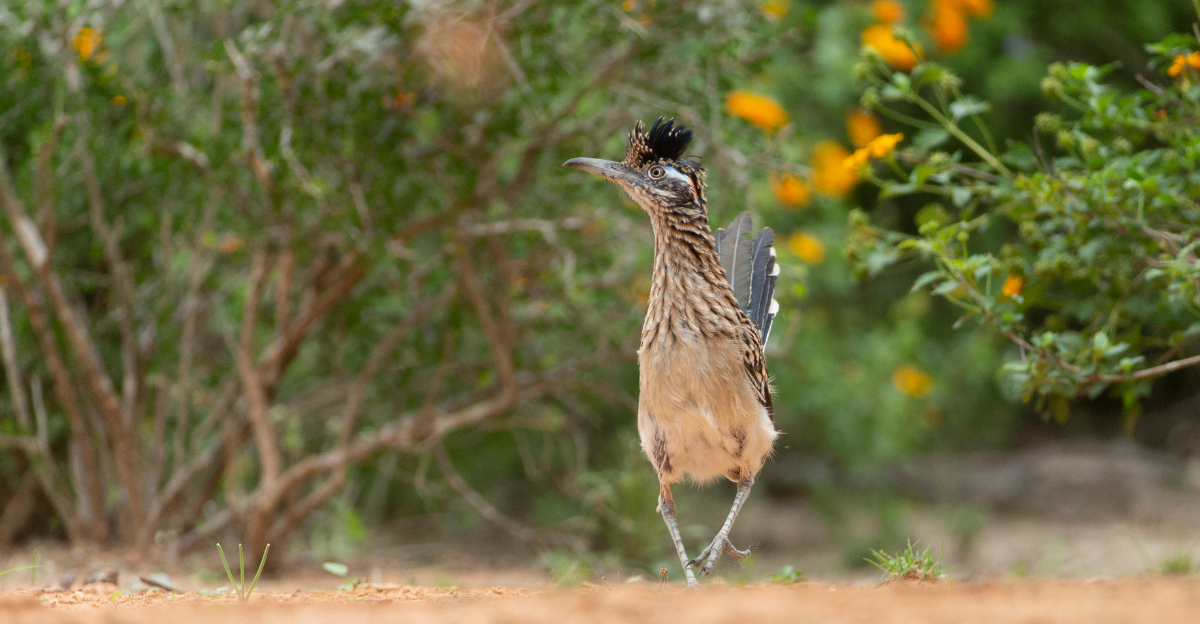
Roadrunners never seem to stay in one place for long.
Then one starts showing up so often that you cannot help wondering what brought it there.
Watching the same bird return again and again is hard to ignore. After a while, it stops feeling like a random visit.
Food, shelter, and a safe place to hunt can all shape where these birds spend their time. Small changes around a yard often matter more than people realize.
Homeowners in Arizona notice these repeat visits most often during the hottest months. A familiar yard can become part of a roadrunner’s regular routine.
Pay attention before brushing those visits aside. They may be telling you more about your yard than you think.
A roadrunner that keeps coming back is usually there for a reason. Knowing what attracts it can completely change the way you see those daily visits.
1. Your Yard Offers A Reliable Source Of Food
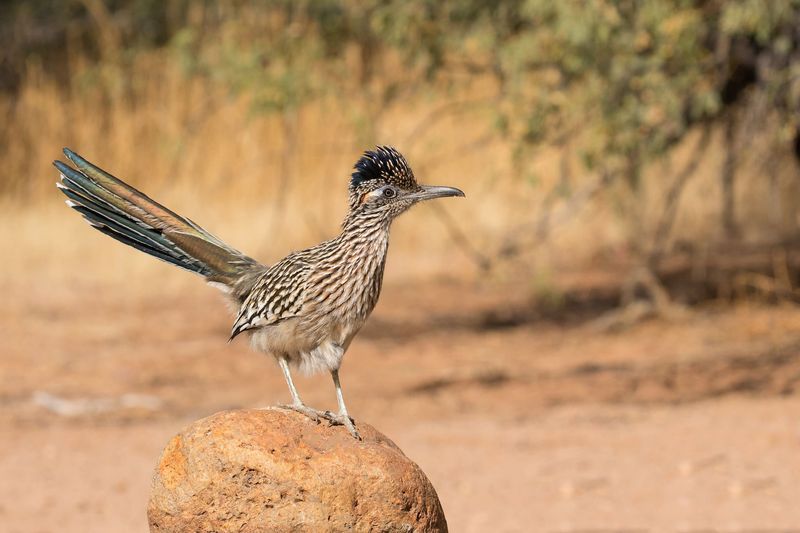
Roadrunners are serious hunters. Lizards, small snakes, large insects, scorpions, and even mice are all fair targets for these fast-moving birds.
If your yard has any of these creatures moving around, a roadrunner will notice. Yards with native plants tend to attract more insects, which in turn attract lizards.
Roadrunners follow that food chain straight to your door.
Rock piles, wood stacks, and dry garden beds create perfect hiding spots for prey. A roadrunner learns quickly which yards offer the best hunting ground.
Once it finds a reliable spot, it will return on a regular basis.
Avoiding pesticides in your yard can actually help keep roadrunners coming back. Heavy chemical use reduces the insect and lizard populations that roadrunners depend on.
Yards with a natural, less manicured feel tend to support more wildlife activity overall.
Roadrunners can cover a wide area each day while searching for food. But they tend to revisit spots where past hunts were successful.
Your yard may have become one of their go-to stops on a regular daily route.
Keeping your yard free of excess clutter while still maintaining some natural ground cover strikes a good balance.
2. Fresh Water Draws Them In During Hot Weather
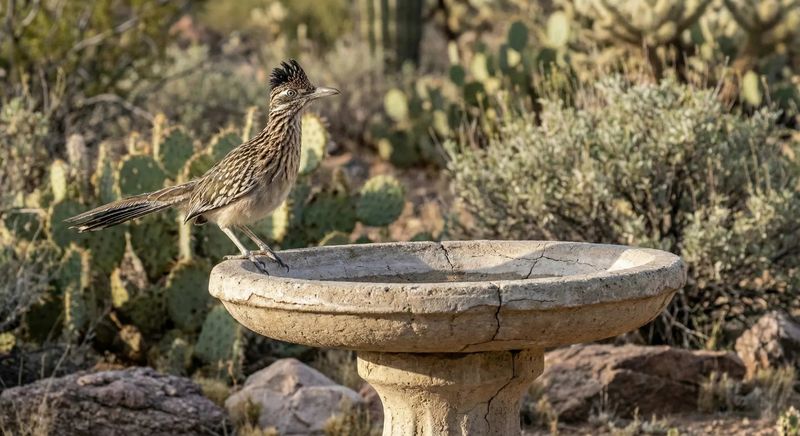
Water is hard to find in the desert, especially during summer. Temperatures in many parts of Arizona regularly climb past 110 degrees Fahrenheit, and natural water sources can be scarce or completely dry.
Roadrunners need water just like every other living creature. If you have a birdbath, a shallow dish, or even a slow drip from a hose, a roadrunner may have already spotted it.
Birds are surprisingly good at locating water sources in dry environments.
Shallow water works better than deep containers. Roadrunners prefer to wade in slightly rather than perch at the edge.
A dish no deeper than two inches placed near ground level tends to attract them more reliably.
Keeping the water fresh matters a lot. Stagnant water in the heat can become a breeding spot for mosquitoes and may carry bacteria.
Changing it every day or two keeps it appealing and safe for wildlife.
Your Arizona Garden Changes Every Week. Your Plan Should Too.
Gardening in Arizona changes quickly throughout the season. Every Friday you’ll receive a simple weekly plan showing exactly what to plant, prune, fertilize, harvest, and protect so you never miss the right timing.
Placing the water source near open ground, rather than tucked behind dense shrubs, helps roadrunners feel comfortable approaching. They like to see their surroundings clearly before moving in close.
A consistent water source can turn occasional visits into a regular habit.
3. Thick Desert Plants Provide Safe Shelter
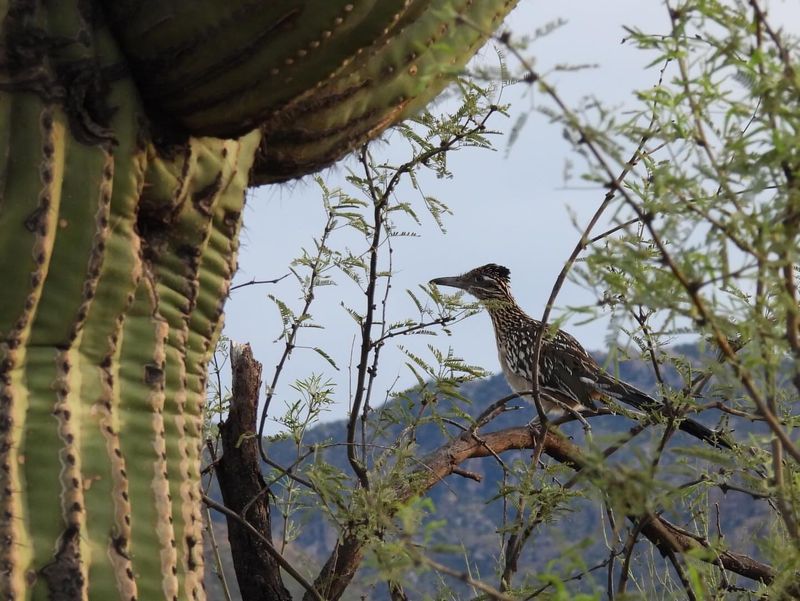
Not every yard looks the same in the desert Southwest. Some are mostly gravel with a few decorative rocks.
Others are packed with native shrubs, cacti, and low-growing plants that create real structure.
Roadrunners gravitate toward yards with dense, layered plant cover. Thick cholla patches, large prickly pear clusters, and overgrown desert shrubs offer shade, cover from predators, and potential nesting spots all in one place.
Coyotes, hawks, and ravens are among the natural threats roadrunners face. Dense, spiky plants offer protection that open yards simply cannot provide.
A roadrunner will often retreat into thick vegetation when it senses danger nearby.
Native plants like brittlebush, desert willow, and creosote also support insects, which feeds back into the food supply. A yard full of native plant life is essentially a full-service habitat for a roadrunner.
Planting in clusters rather than spreading plants far apart creates better cover. Grouping low shrubs together forms the kind of dense pockets roadrunners prefer for resting and hiding between hunting runs.
Trimming plants back too aggressively can reduce the appeal of your yard. Roadrunners need structure and depth in their environment.
4. Open Ground Makes Hunting Easier
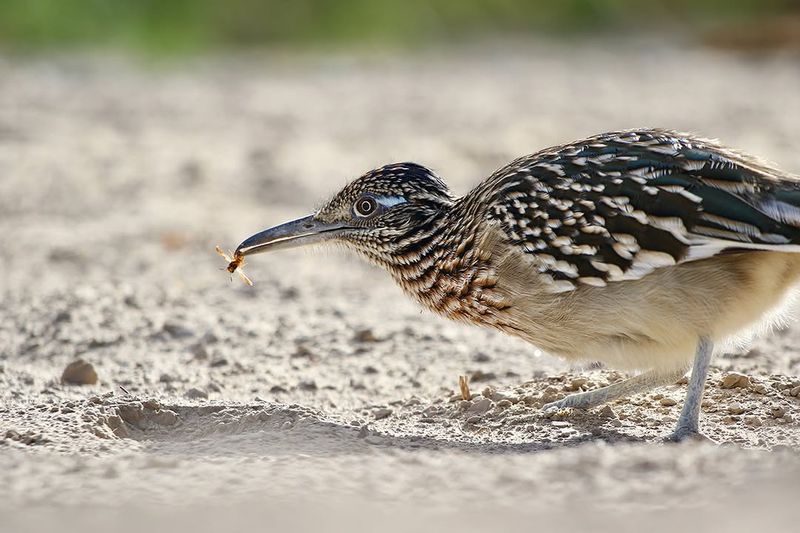
Speed is a roadrunner’s biggest advantage as a hunter. These birds can run at speeds around 15 to 20 miles per hour in short bursts.
Open ground gives them the room they need to use that speed effectively.
Yards with wide gravel patches, open desert soil, or clear pathways between plants create ideal hunting lanes. A roadrunner can spot prey from a distance, sprint toward it, and strike before the target has much chance to react.
Cluttered or heavily planted yards can actually slow a roadrunner down. Too many obstacles make it harder to chase prey and increase the risk of injury during a sprint.
Open space is a practical necessity, not just a preference.
Gravel yards common in desert landscaping tend to work well for roadrunners. The light-colored surface makes small prey more visible, and the firm ground supports fast movement without the slipping that can happen on loose sand.
Roadrunners often follow the same paths repeatedly through a yard. You might notice worn-looking lines across your gravel where one regularly trots through.
That pattern shows the bird has mapped out its hunting route with real intention.
Balancing open ground with some plant cover gives roadrunners the best of both worlds.
5. Young Birds May Follow Their Parents Into Yards
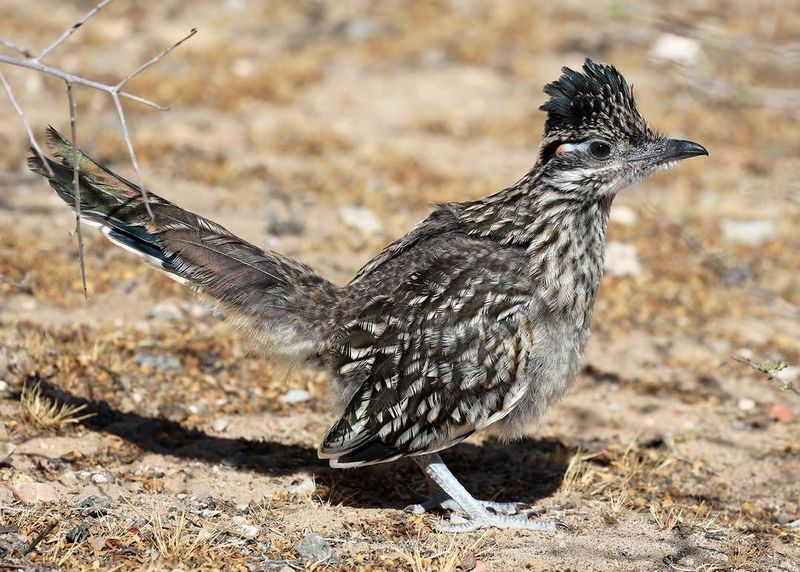
Roadrunners raise their young in the spring and early summer. Once the chicks are old enough to leave the nest, the parents do not simply send them off on their own right away.
Adult roadrunners teach their young how to hunt by example. Juveniles follow the parents closely as they move through familiar territory.
If a parent has been visiting your yard regularly, there is a real chance the young birds will show up too.
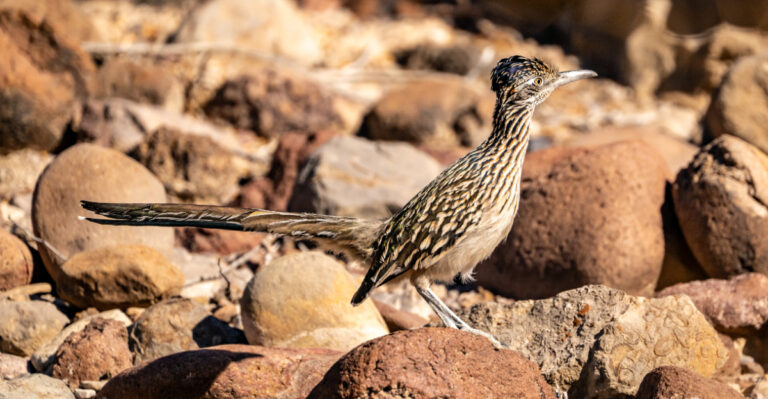
Juvenile roadrunners look similar to adults but are slightly smaller and may appear a bit scruffier. Their tail feathers are shorter and their plumage is less defined.
Spotting multiple roadrunners together in your yard is often a sign that a family group is passing through.
Watching the interaction between parent and juvenile birds can be fascinating. Young birds sometimes beg for food from the parent even after they are capable of hunting on their own.
That behavior can continue for several weeks after leaving the nest.
Family groups tend to cover a shared territory. Your yard may sit within the home range that a pair of adults has used for one or more nesting seasons.
Repeated visits from young birds often reflect how well-established that territory is.
6. Shade Becomes More Valuable During Extreme Heat
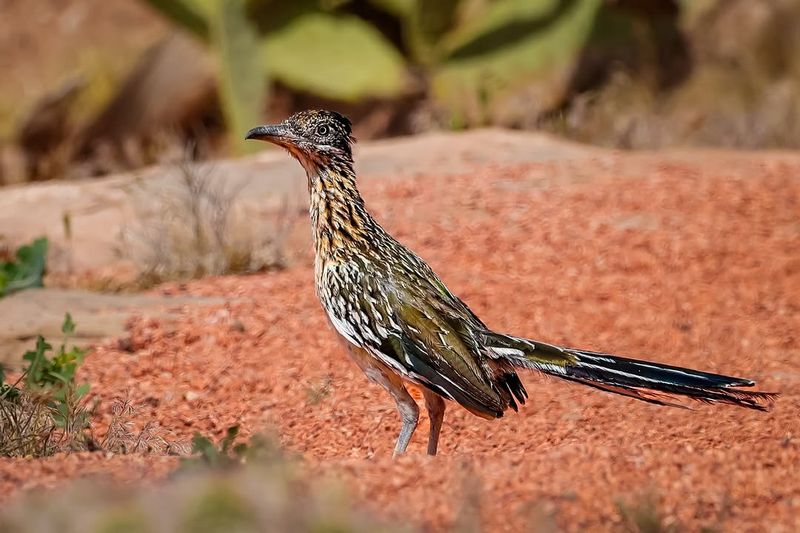
Extreme heat changes how desert wildlife behaves. When ground temperatures soar well above 100 degrees Fahrenheit, even heat-adapted animals need to find relief.
Roadrunners are no exception. During the hottest parts of the day, they seek shade to regulate their body temperature.
Yards with large shade trees, covered patios, or tall cacti that cast wide shadows can become important resting spots.
Saguaro cacti, mesquite trees, and palo verde trees all provide meaningful shade in a desert yard. A roadrunner may park itself in the shadow of a large saguaro for an hour or more during peak afternoon heat.
Roadrunners also have an interesting way of warming up in the morning. They expose a patch of dark skin on their back to direct sunlight, which helps absorb heat after cool desert nights.
Your yard may be part of their morning warming routine as well.
A yard that offers both sun exposure in the morning and shade in the afternoon provides a roadrunner with a comfortable full-day environment. That kind of yard is likely to see visits at multiple points throughout the day.
Adding shade structures or planting fast-growing native trees can increase your yard’s value to local wildlife over time.
7. Nearby Nesting Areas Can Bring Repeated Visits
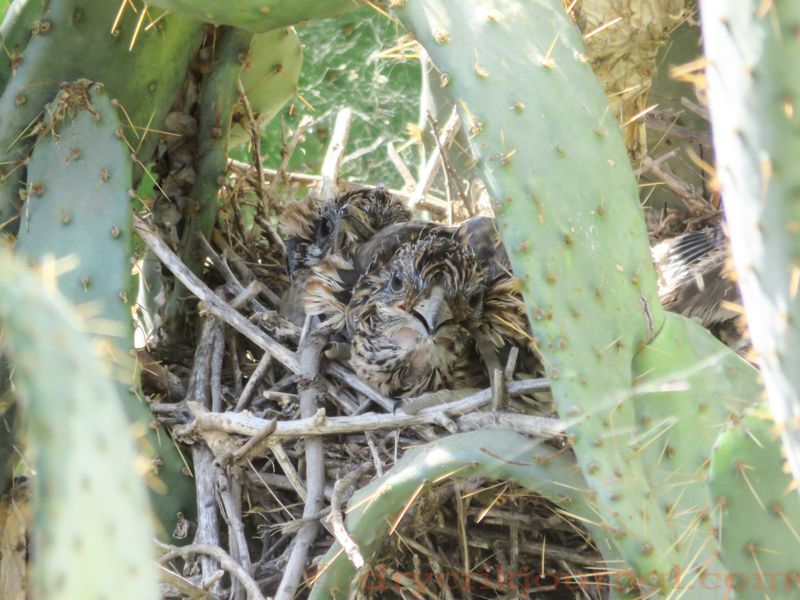
Roadrunners build their nests relatively low to the ground. They prefer dense, thorny shrubs or cacti that offer protection from above and from the sides.
Cholla cactus is a particularly common nesting site.
If your yard or the area immediately surrounding it has the right plant structure, a pair of roadrunners may have nested closer than you realize. A nesting pair will visit nearby areas repeatedly while collecting food for their young.
Nesting season in the desert Southwest typically runs from late winter through early summer. During that period, parent birds may make dozens of food-gathering trips each day.
A yard within their hunting range will see heavy traffic during those weeks.
Roadrunners tend to reuse or return to nesting territories in subsequent years. A pair that nested successfully near your yard once may return to the same general area the following season.
That kind of loyalty to a location explains why some homeowners see roadrunners in their yard year after year.
Avoiding major disturbances near dense shrubs during nesting season helps protect active nests. Loud noises, heavy foot traffic, or aggressive trimming near potential nest sites can cause adults to abandon a nest.
Keeping your yard stable and relatively undisturbed during spring gives nesting roadrunners a better chance of success.