What It Really Means When Chickadees Flock To Your Ohio Feeder
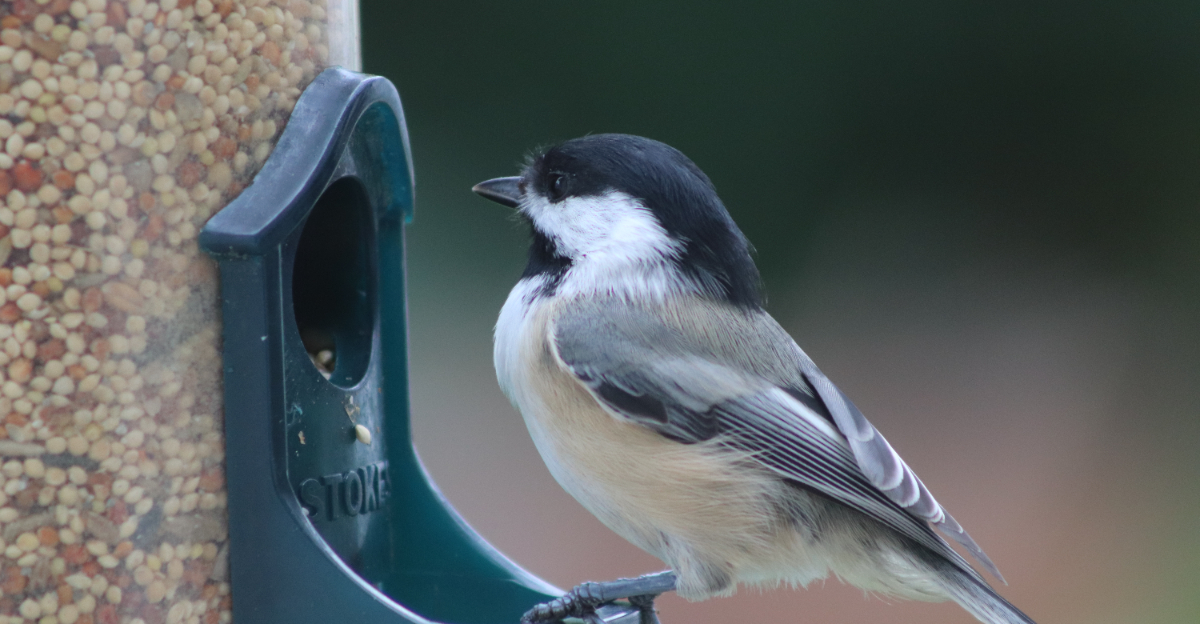
A sudden crowd of chickadees at your feeder isn’t random timing. Something specific triggered that shift, and it says more about the season ahead than most Ohio homeowners realize.
These small birds stay active in Ohio year-round, but a noticeable jump in feeder visits usually points to one of a few very specific causes. Weather plays a role.
So does a behavior chickadees rely on heavily this time of year, one most people watching their feeder have never heard of. Numbers alone tell part of the story too.
A flock that seems bigger than usual might include more than just the resident pair you’re used to seeing. That crowded feeder is chickadees sending a signal, whether anyone’s reading it or not.
1. A Busy Feeder Means Food Is Scarce
Sudden feeder rushes can feel dramatic, but they rarely tell one simple story. The heading above is a catchy starting point, not a complete explanation.
Winter is genuinely hard on small birds. A chickadee weighs barely as much as a handful of paperclips, and its body must work continuously through short daylight hours just to stay warm and energized.
Ohio State University Extension has noted that winter food availability is a serious concern for resident songbirds. Chickadees may spend nearly every usable daylight hour foraging, moving from spot to spot in search of enough calories to carry them through the night.
A dependable feeder fits naturally into that routine.
Feeder traffic often increases after weather events like ice storms or heavy snowfall that can temporarily cover natural food sources. But increased visits do not automatically signal that natural food has completely run out.
A feeder may simply be a reliable stop on an established foraging route.
A sudden wave of chickadees is also more likely to represent a traveling winter flock passing through your yard than dozens of unrelated birds all discovering your feeder at the same moment.
Reading feeder activity realistically means holding several possible explanations at once rather than reaching for the most dramatic one first.
2. Winter Flocks Bring Safety In Numbers
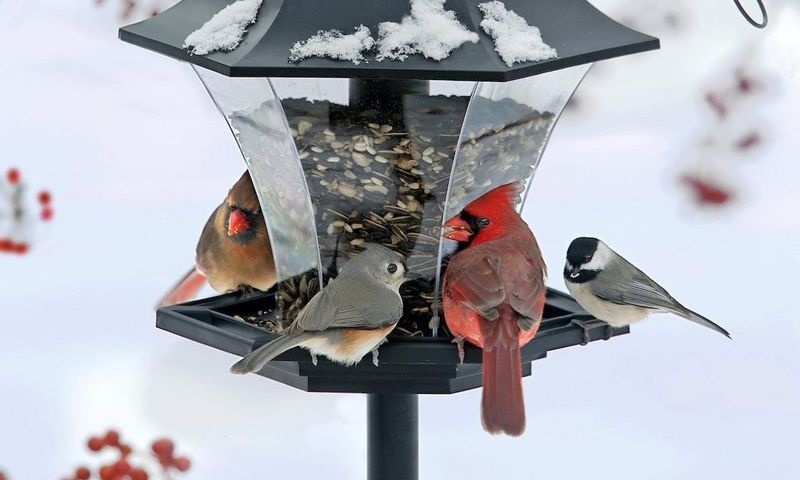
Picture four or five small birds arriving at your feeder within seconds of each other, then departing just as quickly. That coordinated wave is often a winter flock moving through your yard as a group rather than individuals arriving by coincidence.
Ohio State University Extension has described how Carolina Chickadees commonly form winter flocks, and those groups serve several practical purposes.
Foraging with others can increase the chance that at least one bird spots a food source. More eyes scanning the surroundings also means a greater chance that an approaching threat gets noticed before it gets too close.
Calls shared within the group can carry information about both food and potential danger, helping the whole flock adjust quickly.
Flock membership during winter does not mean every bird is deliberately cooperating the way teammates on a sports team might. Individual birds still compete for seeds and position.
But the general structure of a winter group provides practical advantages that a lone bird foraging through bare woods simply does not have.
Your Ohio Garden Changes Every Week. Your Plan Should Too.
Gardening in Ohio changes quickly throughout the season. Every Friday you’ll receive a simple weekly plan showing exactly what to plant, prune, fertilize, harvest, and protect so you never miss the right timing.
Social behavior in winter can look quite different from what these birds do in spring. Breeding pairs and territorial behavior take over come warmer months.
For now, the flock is the unit that matters most, and your feeder may be one stop on a daily loop the group has been following for weeks.
3. Chickadees Rarely Travel Alone
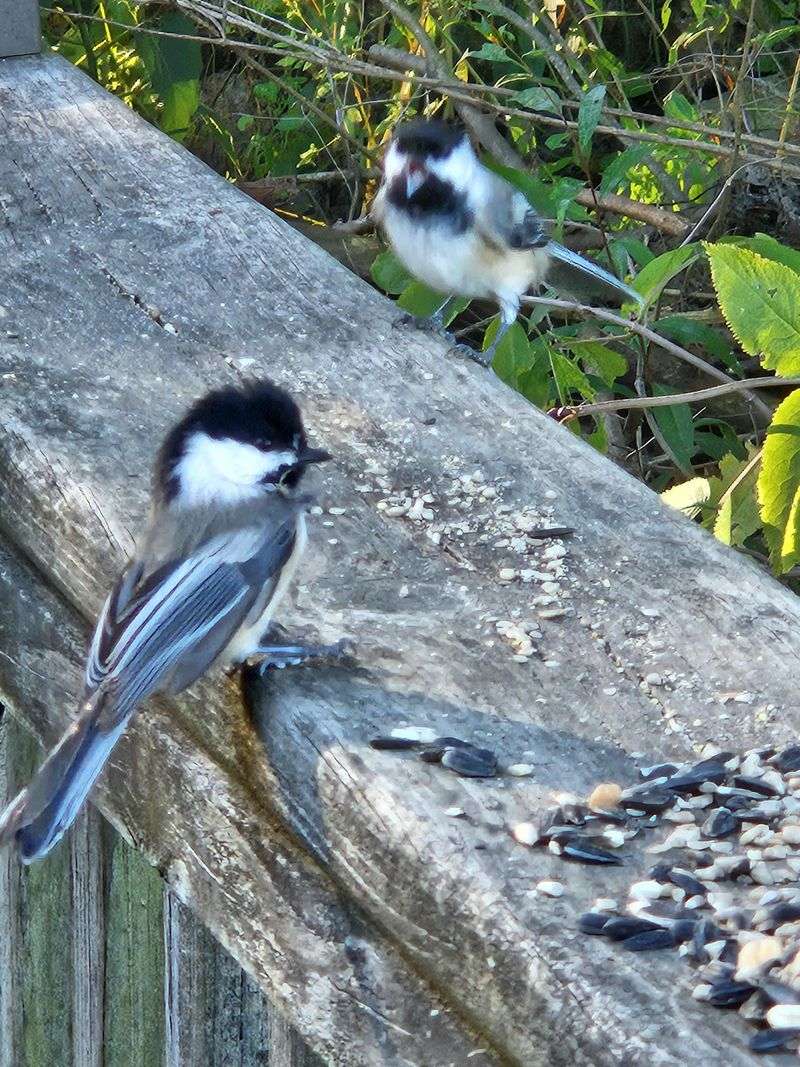
Scan the shrubs and branches near your feeder the next time chickadees arrive. There is a good chance another species is moving through with them.
Ohio State University Extension has described mixed-species associations involving chickadees during winter. These groups can include Tufted Titmice, White-breasted Nuthatches, Ruby-crowned Kinglets, and small woodpeckers.
These mixed winter groups form loosely and vary depending on local habitat, which species are present in the area, and the time of season.
Not every chickadee flock arrives with the same companions, and not every bird visible at the feeder at the same moment belongs to one organized group.
Still, a chickadee arrival is often worth treating as a signal to look around more carefully.
Cornell Lab of Ornithology also documents associations between chickadees and other small songbirds during the non-breeding season. Chickadees can function as anchor species in these loose groups.
Their calls carry information that other birds appear to recognize and respond to.
For backyard birdwatchers, this habit turns a chickadee visit into something bigger. A few small birds landing on the feeder may be the visible edge of a larger wave moving through your yard.
Watching beyond the feeder itself, toward nearby branches and hedgerows, often reveals species that might otherwise pass unnoticed through a winter afternoon.
4. That Quick Seed Grab Has A Purpose
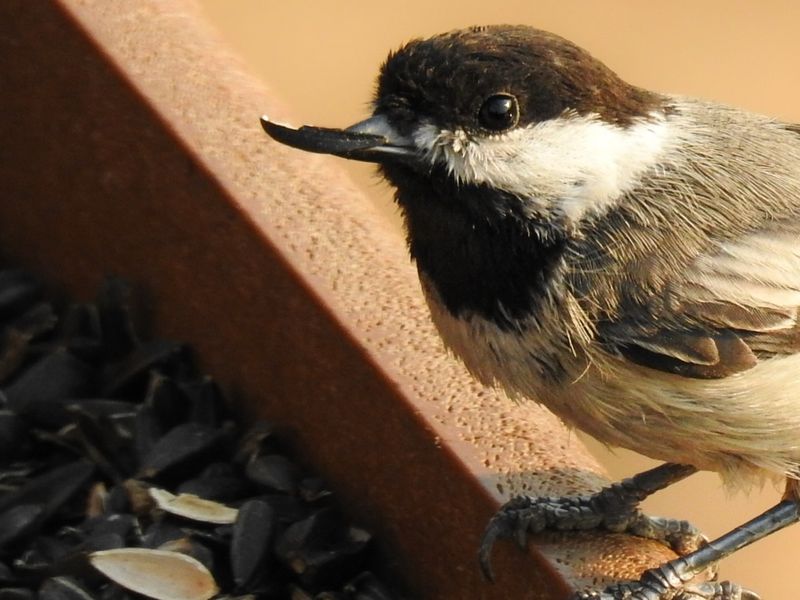
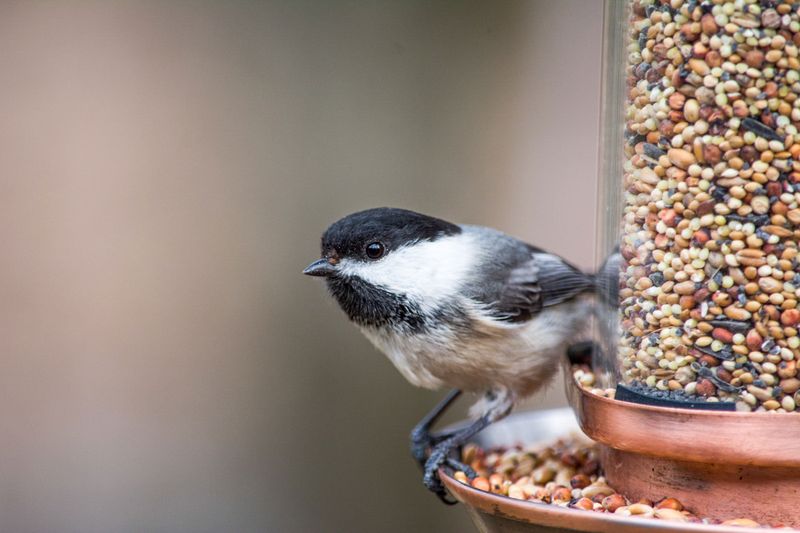
Watch a chickadee at the feeder long enough and a pattern becomes clear. The bird lands, scans the available seeds, picks one up, and leaves.
It rarely stays to eat right there. That grab-and-go routine is well documented by Cornell Lab of Ornithology and Cornell Bird Academy, and it makes good sense once you understand the mechanics involved.
A chickadee’s bill is small and pointed, well suited for probing and picking but not built for cracking open a tough sunflower shell while balancing on a crowded feeder.
Instead, the bird carries the seed to a nearby perch, pins it against the branch with its feet, and works through the shell from there.
That process takes focus and a stable surface.
Leaving the feeder also removes the bird from the competition and noise of other visitors jostling for position. A quiet branch a few feet away offers a better environment for handling food without interruption.
Watching where a bird goes after it leaves can tell you something about what happens next. Some individuals fly only a short distance and begin working the seed immediately on a visible perch.
Others disappear into dense cover. That difference matters, because not every departing bird is doing the same thing.
The next section explains the distinction that separates a quick meal from something with a longer purpose.
5. Hidden Seeds Become A Winter Backup
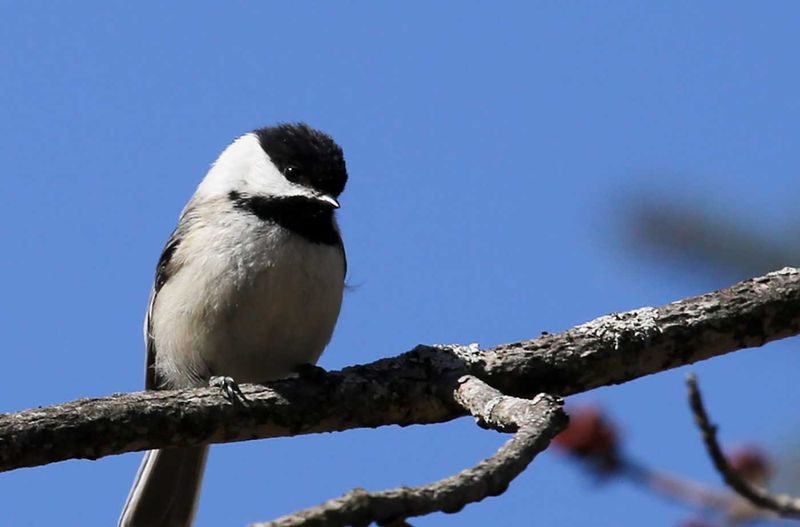
A seed carried away from the feeder does not always get eaten right away. Some of those departing birds are storing food for later, hiding individual seeds in separate locations they can return to when foraging becomes harder.
This behavior is called caching, and it has been documented extensively in Black-capped Chickadees by Cornell Lab of Ornithology.
Ohio State University’s Museum of Biological Diversity has specifically described chickadees taking sunflower seeds from feeders and caching them.
Suitable hiding spots can include natural crevices in bark, gaps under loose lichen, and other small concealed spaces.
Each seed is stored separately rather than gathered in one location.
Black-capped Chickadees have an impressive ability to remember where they have stored food, and Cornell research has documented the spatial memory involved.
That capacity allows individual birds to retrieve scattered caches across a large area, sometimes days after the food was hidden.
Carolina Chickadees also cache food, though Cornell’s most detailed caching documentation focuses on Black-capped Chickadees.
The distinction between eating elsewhere and caching is worth keeping in mind while watching your feeder. A bird that lands on a branch and immediately begins working a seed is eating it then and there.
A bird that tucks something into bark and flies off without pausing to feed is building a reserve. Both behaviors start with the same quick grab from the feeder, but they serve very different purposes.
6. Their Calls Can Signal Nearby Danger
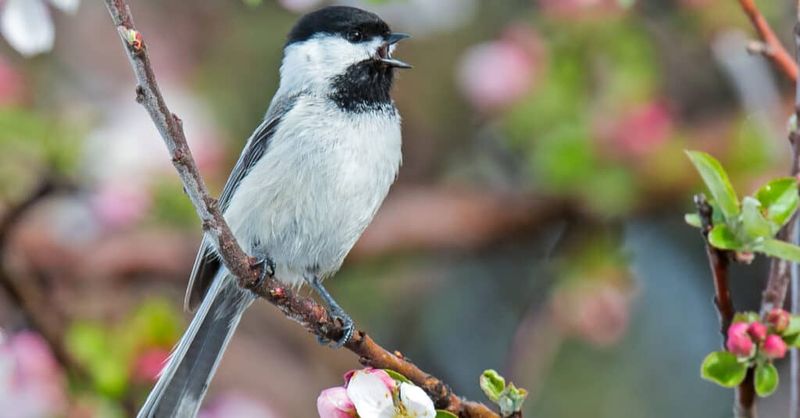
That familiar chick-a-dee call is one of the most recognizable sounds in a backyard, but the call carries more information than most people realize.
Ohio State University Extension has noted that the number of dee notes at the end of the call can reflect the level of perceived threat.
More dee notes can indicate a higher level of alertness or a more pressing concern in the bird’s immediate environment.
Cornell Lab of Ornithology has also documented the complexity of chickadee alarm communication. Other birds in a mixed winter flock may recognize and respond to chickadee alarm calls.
They can react even when they have not directly spotted the source of concern. That shared alertness is part of what makes mixed flocks function effectively.
Counting dee notes does not give a person the ability to identify an exact predator or translate the call into a precise message. Context matters far more than a simple note count.
Watch what the birds around the caller are doing. If nearby individuals become still, shift their position, or direct their gaze toward a specific area, something has caught their attention.
Routine vocal activity at the feeder sounds casual and continuous. An alarm sequence tends to be sharper and more insistent, and the behavioral change in surrounding birds often happens quickly.
Learning to notice that shift turns an ordinary backyard soundtrack into something genuinely informative about what is moving through your yard.
7. Ohio Hosts Two Chickadee Lookalikes
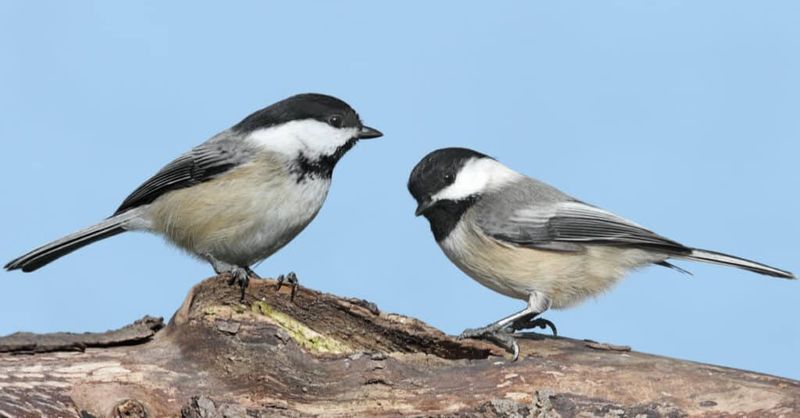
Most backyard birdwatchers assume every small black-capped bird at the feeder is the same species. Many are surprised to learn that two distinct chickadee species live within the state.
Ohio State University’s Museum of Biological Diversity documents two chickadee species in the state. They are the Carolina Chickadee (Poecile carolinensis) and Black-capped Chickadee (Poecile atricapillus).
Carolina Chickadees are more widespread across much of Ohio. Black-capped Chickadees tend to occur farther north, including around Cleveland.
That boundary is not a clean fixed line. The two species’ ranges approach one another, and hybridization can occur where they meet.
Cornell Lab of Ornithology also documents hybridization between these two species, which can further complicate identification in those overlap zones.
Useful identification clues include white edging on the wing feathers and the shape of the black bib. Buffy flank coloration and differences in song pattern can also help.
Black-capped Chickadees tend to show more white in the wings and a slightly less sharply defined bib edge compared to Carolina Chickadees.
Plumage alone does not always produce a confident identification, especially in overlap areas or with worn feathers. Song and geographic location together with careful plumage observation give the best chance of a correct call.
If you live in northern Ohio, the bird at your feeder may not be the species you have always assumed it was.
8. Sunflower Seeds Keep Them Coming Back
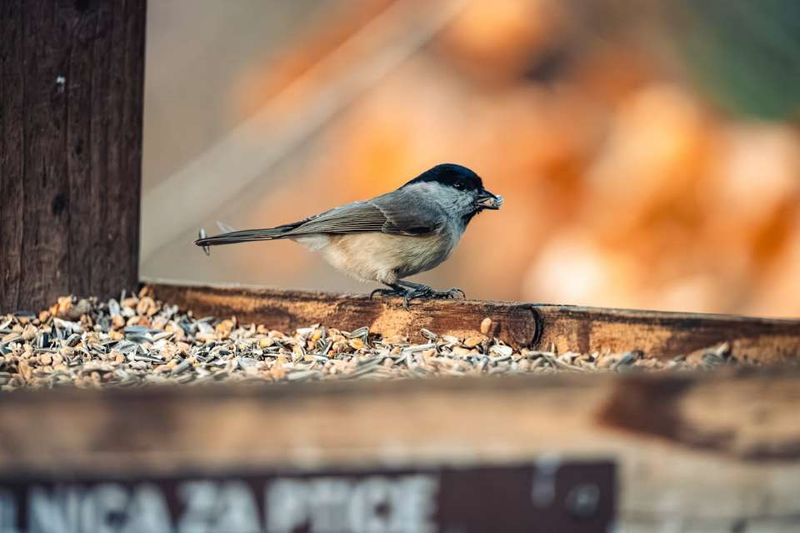
Watching a chickadee grab, carry, open, and even cache seeds raises a natural question. What type of seed prompted all that activity in the first place?
Cornell Lab of Ornithology lists sunflower seeds among the foods commonly taken by Black-capped Chickadees. Carolina Chickadees also visit feeders for sunflower seeds, peanut pieces, and suet.
Ohio State University’s Museum of Biological Diversity has documented chickadees taking and caching sunflower seeds from feeders. That observation reinforces the connection between sunflower seeds and caching behavior.
Black oil sunflower seeds are widely available and have thinner shells than striped varieties. They also provide a useful energy return for small birds during winter..
Offering sunflower seeds does not guarantee repeated chickadee visits. Local habitat plays a major role.
Nearby trees, shrubs, natural food sources, and the presence of cover all influence which birds move through a yard and how often.
A feeder sitting in an exposed location with no surrounding vegetation may attract fewer visitors than one positioned near protective branches.
Feeder cleanliness also matters. Authoritative bird-feeding guidance consistently recommends cleaning feeders regularly to prevent mold and disease.
A well-maintained feeder with quality seed in a sheltered spot gives you a good chance to observe the full sequence. You may see the landing, seed selection, departure, and even a seed cached in nearby bark.