What It Really Means When Fall Monarchs Keep Drifting Past Your North Carolina Yard Without Stopping

You are standing on your back porch on a crisp October afternoon, coffee going cold, watching an orange-and-black monarch butterfly float right over your garden and keep going without even slowing down. That moment can feel like a verdict, like the yard failed some invisible test. But a passing monarch is not a report card, and understanding what is actually happening during fall migration can change how you think about your yard and what you plant in it. North Carolina sits right in the middle of a remarkable annual journey, and your yard may already be more useful than a single flyby suggests.
A Passing Monarch Is Not a Yard Verdict
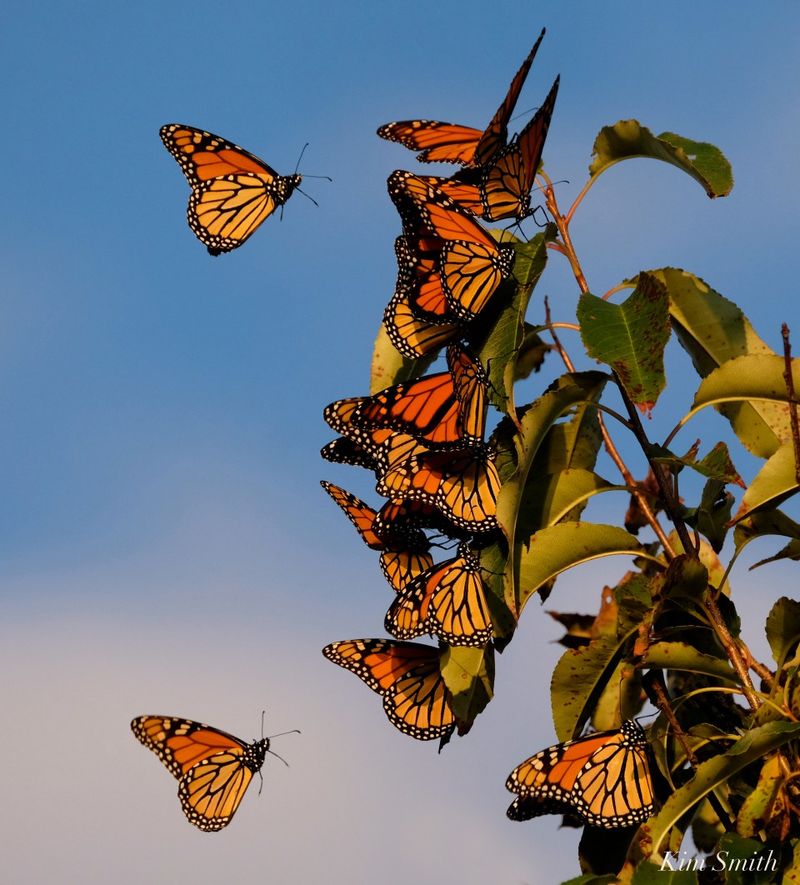
Watch a monarch glide over your flower bed without landing and the natural instinct is to ask what the yard is missing. That instinct is understandable, but it leads to the wrong question. Not stopping and not finding the yard useful are two separate observations, and only one of them is actually visible from your porch.
Monarch migration is shaped by a long list of conditions that have nothing to do with what is blooming in your beds. Wind speed and direction, air temperature, cloud cover, available light, the butterfly’s own energy reserves, and the broader landscape it has been crossing all influence whether a migrating monarch descends. Research on monarch stopover behavior has found that environmental conditions play a major role in whether butterflies land at all, meaning a monarch may pass over a yard full of blooming goldenrod simply because it is traveling under favorable conditions and sees no reason to stop yet.
The honest yard-signal question is narrower. If fall after fall brings no monarch activity despite flowers blooming and pesticides staying off the shelf, that pattern can prompt a thoughtful habitat check. It cannot prove that the yard drove monarchs away or that one missing plant is the culprit.
Monarch Joint Venture guidance frames habitat improvement as one useful contribution to a much larger migration landscape, not a guaranteed fix for butterfly traffic.So the goal here is not to diagnose a yard from a single flyby. The goal is to inspect what the yard actually offers, match plants to the site, and reduce pesticide exposure, knowing that a useful yard and a visited yard are not always the same thing.
Fall Monarchs Are Usually Still Traveling

Late-fall monarchs spotted crossing North Carolina yards are generally southbound migrants. NC State Extension’s field guide to common insects of wildflower plantings notes that monarchs seen in late fall are most likely migrants heading south toward overwintering sites in central Mexico. That journey covers hundreds of miles, and the butterflies crossing your yard are somewhere in the middle of it.
Here is where the weather piece gets genuinely interesting. Monarchs are not simply drifting on the breeze. They respond to temperature, wind direction, cloud cover, and the angle of available light. Stopover studies at Peninsula Point, Michigan found that wind, temperature, and cloud cover all influenced how often monarchs stopped to feed, meaning a butterfly traveling on a clear, calm, warm October morning may simply keep flying because conditions favor distance over rest.
Your North Carolina Garden Changes Every Week. Your Plan Should Too.
Gardening in North Carolina changes quickly throughout the season. Every Friday you’ll receive a simple weekly plan showing exactly what to plant, prune, fertilize, harvest, and protect so you never miss the right timing.
Rain changes the picture fast. Cold fronts can ground monarchs for a day or more, which is why some yards suddenly host a cluster of orange wings after a storm passes through the Piedmont or along the Coastal Plain. That is not magic. That is weather holding them in place until flying makes sense again.
A single missed landing also says very little about the yard or the migration. Monarch numbers and flight timing vary from year to year depending on conditions across the entire route, from the breeding grounds well north of North Carolina all the way to the mountain forests of central Mexico. One quiet afternoon in October is not a data point worth building conclusions from.
Fall Adults Need Nectar; Caterpillars Need Milkweed

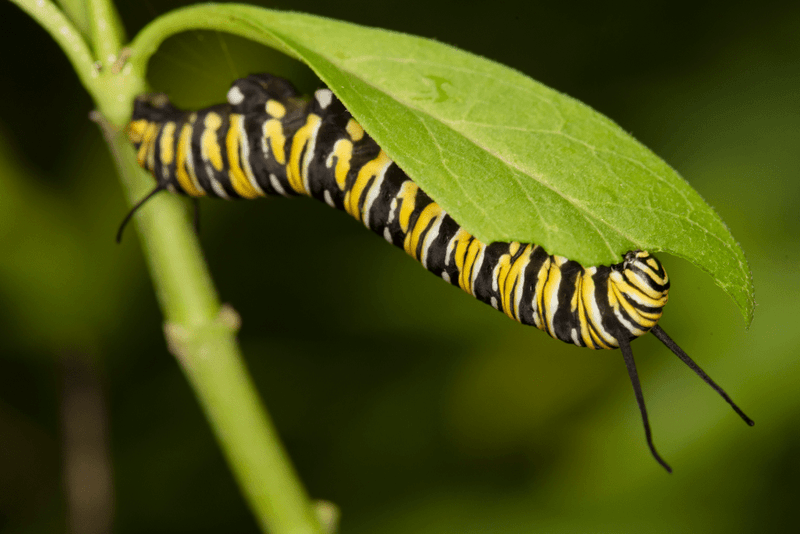
Many gardeners plant milkweed and then wait for monarchs, assuming the host plant is the main draw during fall. The timing does not quite work that way. Monarch Joint Venture explains that migrating adults are primarily looking for nectar to fuel southbound travel and build up the fat reserves they will need to survive winter in Mexico. Milkweed is the required food for monarch caterpillars during breeding generations, not for the adults passing through your yard in October.
That distinction matters for how you plan a fall garden. A yard with several kinds of late-blooming native flowers can genuinely help a migrating adult refuel, even if there is not a single milkweed plant in sight. On the other hand, milkweed alone does not cover the fall picture. Adults need calories from nectar, and milkweed flowers can contribute to that, but a bed of milkweed with nothing else blooming leaves a gap when adults most need fuel.
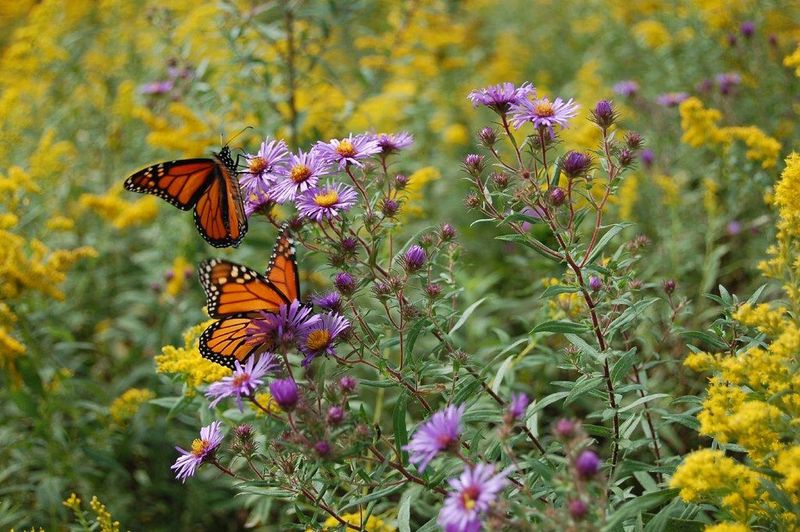
The stronger approach is a mix. Monarch Joint Venture recommends combining milkweed with diverse nectar plants rather than treating any single species as a complete solution. The Xerces Society’s monarch nectar plant guides and the Southeast monarch nectar plant guide list goldenrods, asters, Joe Pye weed, blazing star, and ironweed alongside milkweed as part of a complete planting, precisely because overlapping bloom periods keep nectar available from late summer through the migration window.
No single plant guarantees a monarch visit. The goal is to keep something blooming across a long enough window that a passing adult has a reason to stop when it does come down.
Inspect What Your Yard Offers

Repeated quiet falls are a reasonable prompt to walk the yard with fresh eyes, not as a failure investigation but as a habitat inventory. The question to ask is not “why did monarchs skip me” but rather “what does this yard actually offer a migrating butterfly that decides to come down.”
Start with bloom. Check whether anything is flowering from late August through October, because that is the window when fall migrants are most likely to move through North Carolina. Monarch Joint Venture’s habitat guidance emphasizes that nectar availability across overlapping bloom periods matters more than any single plant choice. If the yard goes quiet after summer annuals fade, there is a real gap worth filling.
Next, look at light. Many sun-loving nectar plants perform best with roughly 6 or more hours of direct light daily, but that is a useful target, not a universal rule. Swamp milkweed, for example, tolerates partial shade, so a yard with mixed light still has options. NC State Extension’s native plants guide recommends matching each plant to the site’s actual light, drainage, and soil conditions rather than forcing sun-lovers into shadier spots and wondering why they struggle.
Check drainage and soil texture too. Piedmont red clay holds moisture differently than the sandy soil common across the Coastal Plain or the rocky slopes in the mountains. NC State’s swamp milkweed profile notes it prefers more moisture and can handle clay, while butterfly weed needs well-drained ground and suffers in wet spots. Choosing the wrong plant for the actual site is one of the most common reasons a planting underperforms.
Finally, honestly assess pesticide use. If flowering beds or nearby lawn areas are treated routinely, that exposure can reduce the habitat value of even a well-planted yard, and that topic deserves its own look.
Choose Milkweed for the Site You Actually Have

Not all milkweeds are interchangeable, and the wrong choice for your site will underperform or spread in ways you did not plan for. Matching the plant to the ground you actually have is the move that saves frustration later.
Swamp milkweed (Asclepias incarnata) is a strong candidate for yards with clay soil that stays reasonably moist, including many Piedmont sites and low spots near the coast. NC State lists it for full sun to partial shade with a mature width of about 2 to 3 feet, making it manageable in a mixed border. Its pink flower clusters bloom in midsummer and can provide both caterpillar food and adult nectar earlier in the season.
Common milkweed (Asclepias syriaca) is better suited to naturalized areas or meadows than to tidy garden beds. NC State describes it as a spreading, rangy plant that can occupy substantial space, sometimes spreading well beyond its original footprint through underground rhizomes. Mountain and Piedmont gardeners with open, sunny ground and room to let it roam will find it more rewarding than someone trying to keep a formal border in check.
Butterfly weed (Asclepias tuberosa) wants dry to medium, well-drained soil and full sun. It is a natural fit for Sandhills sandy ground, sunny Piedmont slopes, and exposed mountain sites where drainage is reliable. Its bright orange flowers are showy from early to midsummer, and it stays compact enough for a smaller yard.
Beyond milkweed, the Xerces Southeast monarch nectar plant guide recommends Joe Pye weed (Eutrochium fistulosum), native asters, goldenrods, blazing star, and ironweed as part of a broader fall-blooming plant community. None of these are guaranteed monarch attractants, but together they extend the nectar window through October when migrants are most likely moving through.
Whatever you plant, space based on mature size rather than the nursery pot. NC State Extension’s native plants chapter recommends watering new perennials regularly during their first several weeks until roots establish, because even drought-tolerant natives can struggle in their first summer on Piedmont clay or Coastal Plain sand. Give them that early support and most will take care of themselves after the first full growing season.
Pesticides Can Turn a Good Bed Risky
A yard with the right plants and the wrong spray schedule can still be a hard place for monarchs to use. Pesticide exposure is one of the most consequential maintenance decisions a gardener makes, and it often happens reflexively rather than deliberately.
Monarch Joint Venture’s pesticide guidance is direct: insecticides applied in yards, through mosquito-control programs, and in nursery settings can harm monarch adults and larvae. The harm does not require a direct spray. Systemic products taken up through plant tissue, residues on flowers, and drift from nearby treatments can all affect butterflies that visit treated areas.
One specific mistake worth naming: Monarch Joint Venture advises against spraying aphids on milkweed because any treatment that kills the aphids can also kill monarch caterpillars and other beneficial insects present at the same time. Aphids on milkweed are genuinely common and genuinely annoying, but the recommended response is observation and patience rather than a spray bottle.
Mosquito treatments applied near flowering beds carry a similar risk. Monarch Joint Venture’s mosquito-control guidance notes that broad-spectrum products used in and around yards can harm monarchs and other pollinators even when applied according to label directions.
If pesticide drift from neighboring properties or nearby applications is a concern, Monarch Joint Venture cites a USDA Natural Resources Conservation Service recommendation for a roughly 125-foot pesticide-free buffer beside monarch and pollinator habitat. That is habitat-protection guidance drawn from NRCS conservation practice standards, not a law or required setback for homeowners, but it gives a sense of the distance that can matter when drift is a factor.
The practical takeaway is simple: keep insecticide use out of beds where monarchs might feed, rest, or lay eggs, and choose observation over routine spraying when insects appear on milkweed or nearby flowers.
Build Useful Habitat Without Expecting a Guarantee
Your yard is one patch in a very large landscape, and that is actually a freeing way to think about it. A backyard that offers late-season nectar, native milkweed for breeding generations, lower pesticide exposure, and a range of bloom times contributes something real to the migration corridor, even if no monarch ever lands where you can see it from the kitchen window.
One plant worth approaching carefully is tropical milkweed (Asclepias curassavica). NC State Extension notes that it can bloom out of sync with migration and is not specifically recommended for attracting monarchs in North Carolina. In areas where winters stay mild enough that the plant does not freeze back, it may behave differently from native milkweeds that die back naturally and reset the seasonal cue monarchs rely on. Native species matched to your site are a more reliable starting point.
One quiet fall also cannot tell you much about population trends. Monarchs face multiple documented and investigated pressures whose importance varies by life stage, region, and portion of the range, from overwintering habitat conditions to weather events across the breeding grounds. A USGS study on monarch decline reached the specific and limited conclusion that habitat loss in the migration zone did not explain the population decline researchers were investigating, which is a reminder that the pressures on monarchs are genuinely complex and no single backyard can be held responsible for or credited with reversing them.
Monarch Joint Venture’s habitat guidance frames the individual yard as one useful piece of a larger network of habitat across the migration route. That framing is the right one. Observe across more than one day before drawing conclusions, extend late-season bloom as far into October as your site allows, match plants to the actual light and drainage you have, and keep pesticides out of beds where monarchs might stop. A yard built on those habits is doing its part, and sometimes the most useful habitat is the kind that works quietly without anyone watching.