What It Really Means When Scale Shows Up On Your Oregon Camellias
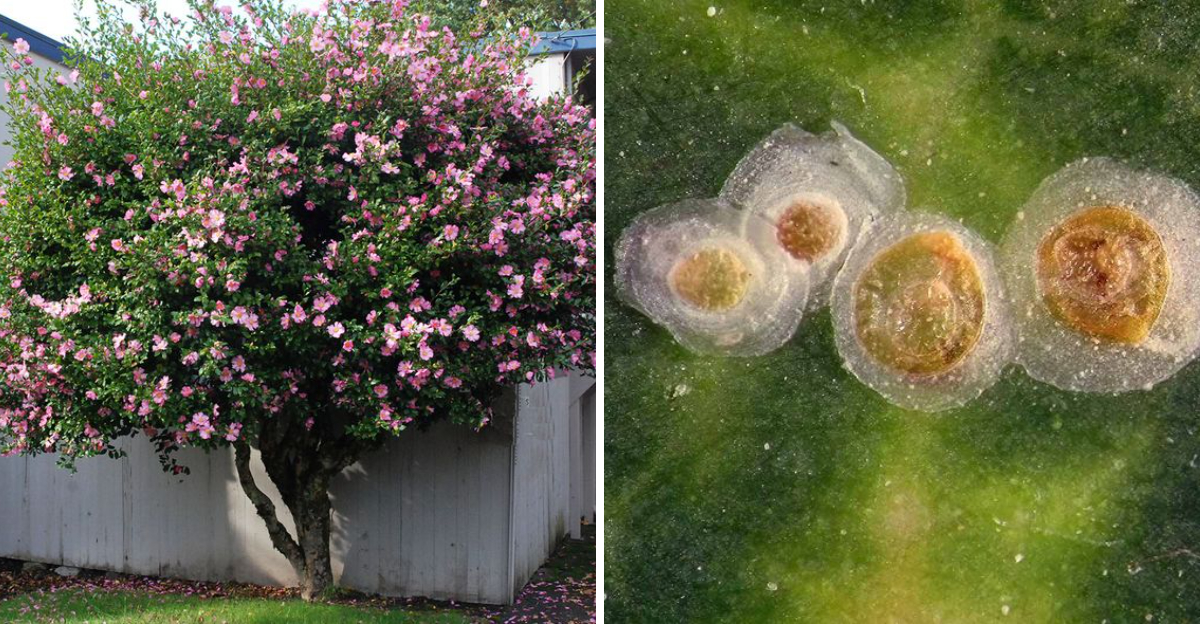
Discovering something unexpected on your camellia is one of those garden moments that ranges from mildly puzzling to genuinely alarming depending on what you are looking at.
Sticky leaves, a dark coating spreading across the foliage, tiny bumps along the stems, white cottony material tucked into leaf undersides.
None of it looks particularly good, and the instinct to panic is understandable. The reassuring news is that scale on camellias is often more manageable than it appears at first glance, especially when you catch it before a full infestation takes hold.
Scale is not one single pest either, and Oregon camellias can host more than one type, each with its own look and behavior.
Before reaching for anything, understanding exactly what you are dealing with is genuinely the most useful thing you can do for your plant.
1. The Exact Scale Species Matters
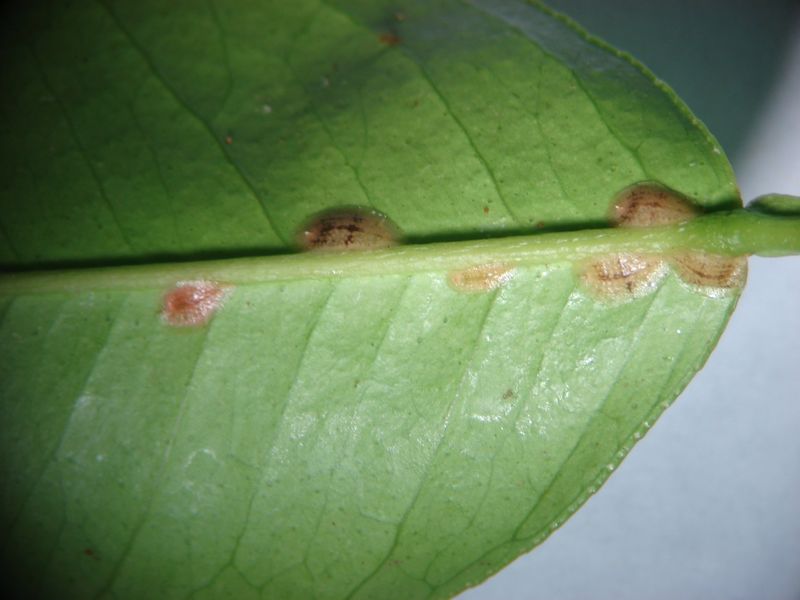
Not every bump or crust on a camellia leaf belongs to the same pest, and that distinction matters more than many gardeners realize.
Two scale species documented on camellias in the Pacific Northwest are cottony camellia scale, known scientifically as Pulvinaria floccifera, and brown soft scale, known as Coccus hesperidum.
These two insects look different from each other, follow different life cycles, and may require different timing when management becomes necessary. Getting that identification right from the start can save a lot of guesswork down the line.
Cottony camellia scale females produce a distinctive white, fluffy egg mass that makes them relatively easy to recognize once you know what to look for.
Brown soft scale, by contrast, appears as a flattened, brownish, oval bump that blends more easily into bark or leaf tissue.
Telling one from the other at a quick glance is not always straightforward, and some infestations may involve more than one species on the same shrub.
Accurate identification helps Oregon gardeners make smarter decisions about timing and approach. Treating for the wrong life stage or misidentifying the pest can lead to unnecessary effort or ineffective results.
If you are unsure what you are looking at, a local OSU Extension office can often help with identification.
Taking a close photograph or bringing a sample of affected leaves is a practical first step before deciding what, if anything, needs to be done.
2. Sticky Leaves Often Point To Honeydew
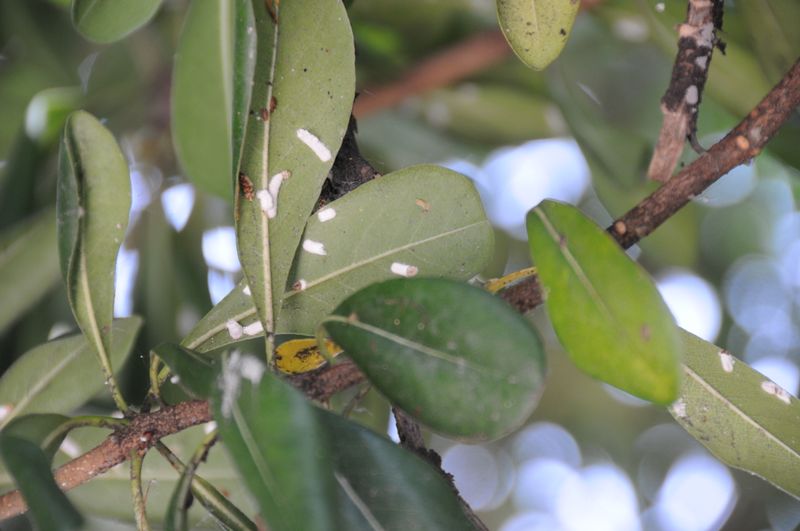
Running your hand along a camellia stem and feeling an unexpected stickiness is one of those small moments that tells you something is going on beneath the surface.
That tacky residue is typically honeydew, a sugary liquid that soft-bodied scale insects excrete while feeding on plant sap.
Both cottony camellia scale and brown soft scale are soft scales commonly found on Oregon camellias, and both can produce honeydew as part of their feeding activity.
Honeydew can accumulate on leaves, stems, and even on surfaces directly below the shrub, such as a patio, walkway, or nearby groundcover. The stickiness is often one of the first signs Oregon homeowners notice, sometimes before they spot the insects themselves.
Your Oregon Garden Changes Every Week. Your Plan Should Too.
Gardening in Oregon changes quickly throughout the season. Every Friday you’ll receive a simple weekly plan showing exactly what to plant, prune, fertilize, harvest, and protect so you never miss the right timing.
Once you feel or see that residue, it is worth flipping a few leaves over to look for scale insects along the undersides or along the main veins.
Sticky foliage is a useful clue, but it is not enough on its own to confirm which scale species is responsible or how serious the infestation may be.
Other insects, including aphids and whiteflies, also produce honeydew, so sticky leaves should prompt a closer inspection rather than an immediate conclusion.
Checking the undersides of several leaves across different parts of the shrub gives you a more complete picture of what is actually happening and where the feeding is concentrated.
3. Black Sooty Mold Is A Secondary Clue
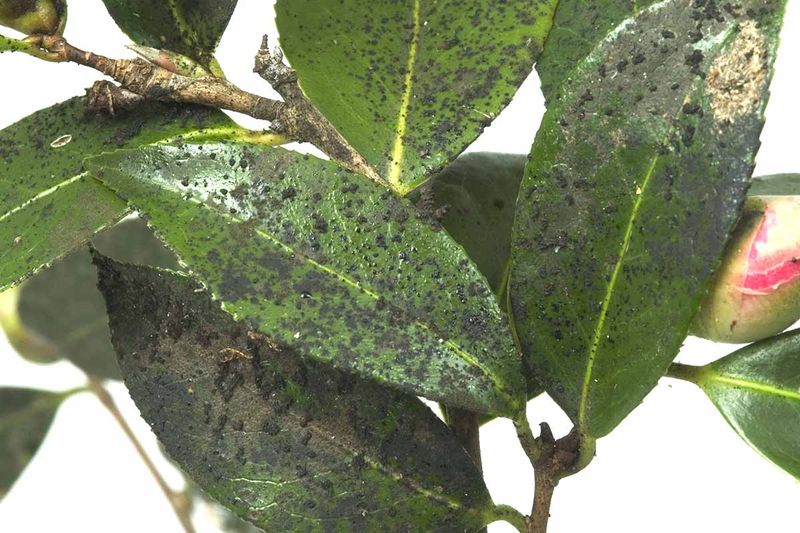
A dark, powdery or velvety coating on camellia leaves can look alarming at first glance, especially when it covers a significant portion of the foliage. That black layer is sooty mold, a fungal growth that feeds on honeydew rather than on the plant tissue itself.
Because scale insects produce honeydew while feeding, a noticeable buildup of sooty mold on Oregon camellias can be a secondary signal that scale activity has been underway for some time.
Oregon homeowners sometimes notice the dark coating before they ever spot the insects responsible for it.
The mold tends to grow on any surface where honeydew has settled, which can include leaves above the feeding site, stems, and objects beneath the shrub.
Wiping a small area of the coating with a damp cloth will often reveal the greener leaf surface underneath, which helps confirm that the mold is sitting on top of the leaf rather than growing within it.
Heavy sooty mold coverage can reduce the amount of light reaching the leaf surface, but it is worth keeping this in perspective. A camellia with a moderate coating of sooty mold and a small scale population is not necessarily in serious decline.
The more useful question is how widespread the mold is, whether honeydew production is ongoing, and whether the scale population is large enough to warrant closer attention or management steps beyond simple monitoring.
4. White Cottony Masses Help Identify The Pest
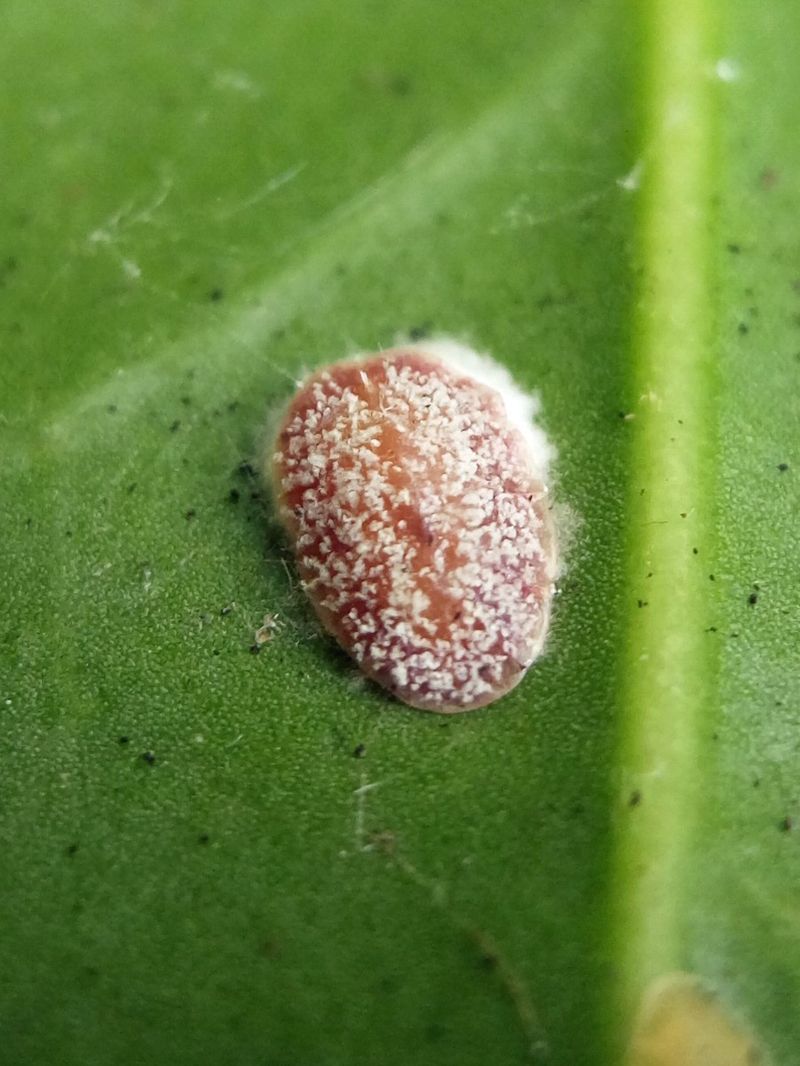
Spotting white, fluffy material tucked along the undersides of camellia leaves can feel puzzling if you have never seen it before.
Those cottony structures are egg masses produced by female cottony camellia scale, and they are one of the more recognizable signs that this particular pest is present.
Each mass is created by the female as she deposits her eggs, and the white, waxy material that surrounds the eggs gives it that distinctive cottony appearance.
The egg masses are usually found on the undersides of leaves, often along the midrib or larger veins where the insects tend to settle. They can vary in size, but even a moderate infestation can produce enough cottony material to be visible during a routine inspection.
Seeing these masses is genuinely helpful for identification because brown soft scale does not produce the same type of conspicuous white structure, making the cottony appearance a fairly reliable distinguishing feature between the two species.
Timing matters when you find these masses. By the time the egg masses are fully formed and visible, the females have already been feeding for a while and are in a late stage of their life cycle.
The eggs inside will eventually hatch into crawlers, which are the mobile, newly hatched stage.
Recognizing the egg masses early gives Oregon gardeners a heads-up that crawlers may be emerging soon, which is relevant information if management is being considered.
5. Yellowing Leaves Can Signal Heavier Feeding
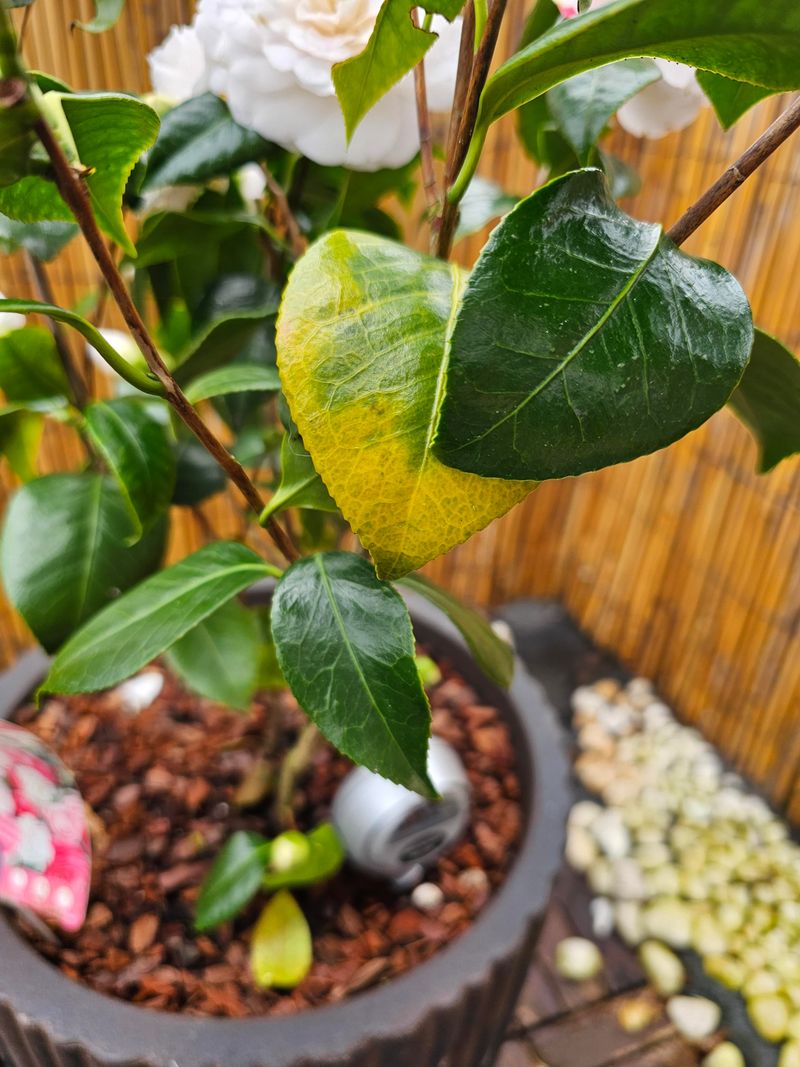
Pale or yellowish camellia foliage catches the eye quickly, and when scale insects are already known to be present, it is natural to connect the two.
Heavier scale feeding can contribute to reduced plant vigor, and foliage that looks washed out or less vibrant than usual may be a sign that a larger population has been feeding for a sustained period.
That said, yellowing leaves on a camellia have a long list of possible explanations beyond scale.
Nutrient deficiencies, overwatering, underwatering, soil pH issues, and even normal seasonal leaf drop can all produce similar-looking discoloration. This means that yellow leaves alone should not be treated as solid proof of a significant scale problem.
The most useful approach is to combine what you see in the foliage with what you find during a hands-on inspection of the leaves, stems, and bark.
If yellowing foliage appears alongside visible scale insects, sticky honeydew residue, or sooty mold on the same shrub, those combined signs carry more weight than any single symptom on its own.
A camellia showing scattered yellow leaves but otherwise looking healthy and producing new growth may simply need a closer look rather than immediate intervention.
Oregon gardeners who take the time to inspect carefully before drawing conclusions tend to make better decisions about whether and how to respond to what they find.
6. Low Numbers May Cause Little Harm
Finding scale on a camellia does not automatically mean the shrub is in serious trouble.
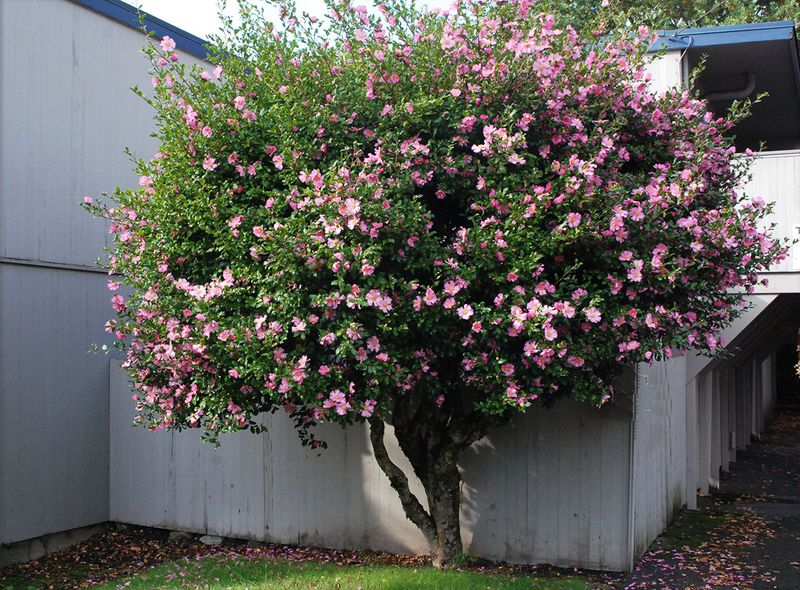
Current Pacific Northwest guidance acknowledges that low populations of cottony camellia scale can persist on Oregon camellias for extended periods without causing significant harm to an otherwise healthy shrub.
A few insects scattered across a large, vigorous plant is a very different situation from a dense infestation covering multiple branches.
Natural enemies play a role in keeping scale populations in check in some situations. Parasitic wasps and certain predatory insects have been documented as natural controls for scale in Oregon landscapes.
These beneficial organisms are more likely to be present and effective in gardens where broad-spectrum pesticide use is limited, so avoiding unnecessary treatments can actually support the natural balance that helps keep scale populations from building up.
Before deciding on any management response, it helps to honestly assess the size of the infestation and the overall condition of the camellia. Is the shrub producing healthy new growth?
Are the affected areas limited to one or two branches? Is honeydew or sooty mold minimal?
If the answers suggest a relatively healthy plant with a modest scale presence, a watchful approach may be entirely appropriate.
Jumping straight to treatment for a handful of insects can disrupt beneficial insects and is often unnecessary when the camellia itself appears to be coping well.
7. Leaf Undersides Reveal What Is Happening
Glancing at the top surface of camellia leaves gives you only part of the picture.
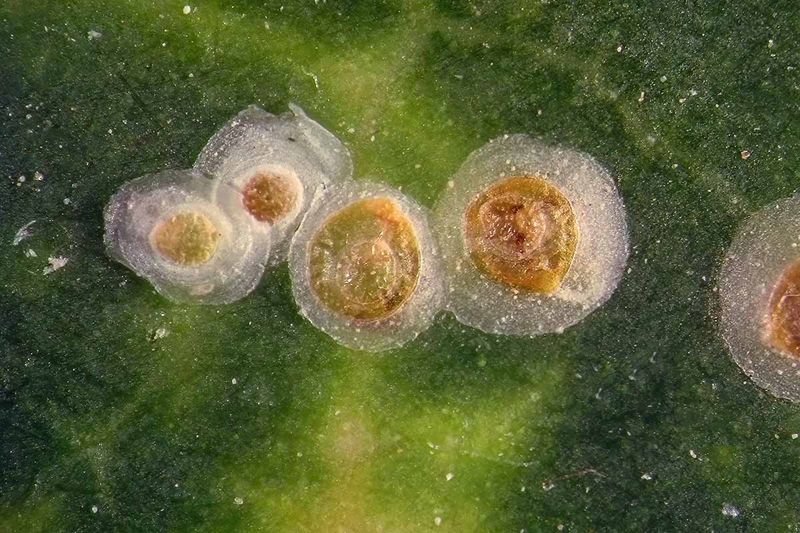
Many scale insects, including cottony camellia scale and immature brown soft scale, tend to settle on the undersides of leaves, particularly along the midrib and larger veins where they can feed more easily.
If you only look at what is visible from above, a moderate infestation can go unnoticed for quite a while.
Getting into the habit of flipping leaves over during routine garden checks makes a real difference in catching scale activity early.
The undersides of leaves may show the actual insects, the white cottony egg masses associated with cottony camellia scale, or the flatter, brownish profiles of brown soft scale at various life stages.
Honeydew droplets on the leaf surface below an infested area can also be spotted more easily once you know to look for them.
Infestations are often patchy, meaning one section of the shrub may show obvious signs while nearby branches appear relatively unaffected.
Checking several branches in different parts of the camellia, including lower interior branches that are sometimes overlooked, gives a more accurate picture of how widespread the population actually is.
A thorough inspection across multiple areas of the shrub helps Oregon gardeners assess whether scale is concentrated in one spot or has spread more broadly through the plant.
8. Crawler Timing Makes A Big Difference
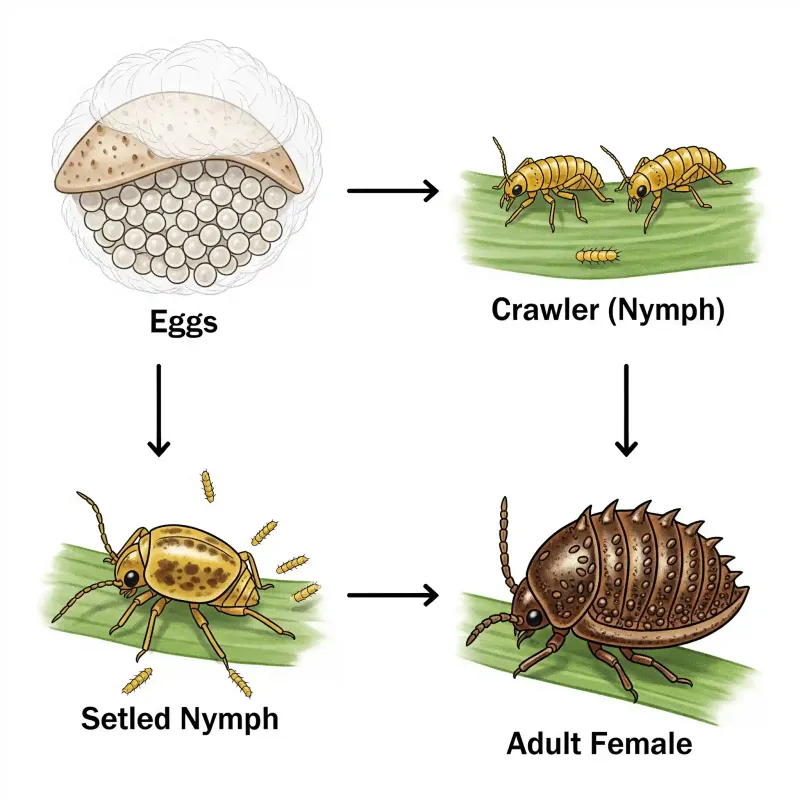
Newly hatched scale insects, called crawlers, represent the stage of the life cycle when these pests are most exposed and mobile.
Crawlers have not yet settled and formed a protective covering, which makes this window especially relevant when management is being considered.
Once crawlers settle and begin feeding in earnest, they become harder to reach with many contact-based treatments.
Cottony camellia scale generally completes one generation per year in the Pacific Northwest.
Crawlers from this species tend to emerge in late spring to early summer, though the exact timing can shift depending on local temperatures and conditions.
Oregon has a wide range of climates, from the mild, wet west side of the Cascades to the drier, more variable east side, so crawler emergence in one part of the state may not match the timing seen elsewhere.
Brown soft scale can have a different reproductive pattern and may produce more than one generation under favorable conditions. Monitoring for crawler activity, rather than relying on a fixed calendar date, is a more reliable approach in Oregon gardens.
Sticky tape wrapped around a branch can help detect when crawlers are moving.
Checking plants regularly during late spring and early summer gives you the most useful information about what life stage is present and whether the timing is right for any management steps you may be considering.