What It Really Means When Tarantula Hawks Show Up In Your California Yard This Fall
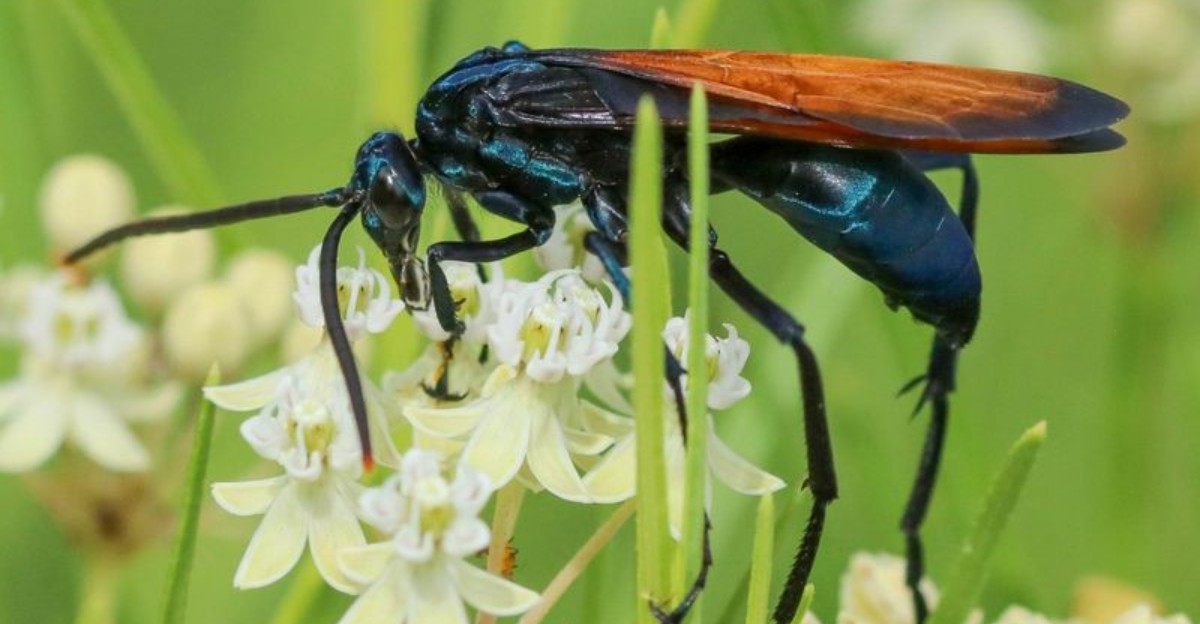
Metallic blue body. Bright orange wings. A slow, low flight across the yard like it owns the place.
It looks a bit like a superhero costume that took flight.
Many California homeowners first spot this striking visitor in fall and freeze in place. It is big. It is bold. And it seems to be searching for something very specific.
So should you run for the door, or grab a chair and watch?
The answer might surprise you. That flash of orange is tied to a yearly event that plays out quietly across hillsides, trails, and even backyards.
Most people have no idea it happens at all.
Some details sound a little wild. Others sound fascinating. One or two may completely change how you feel about big insects.
Once you know the backstory, that nervous jump could turn into a front-row seat to one of nature’s strangest seasonal shows.
Curious what brings this bold flyer to your yard? Keep a little distance and stay calm. The show is about to begin.
Their Arrival Tracks Tarantula Mating Season
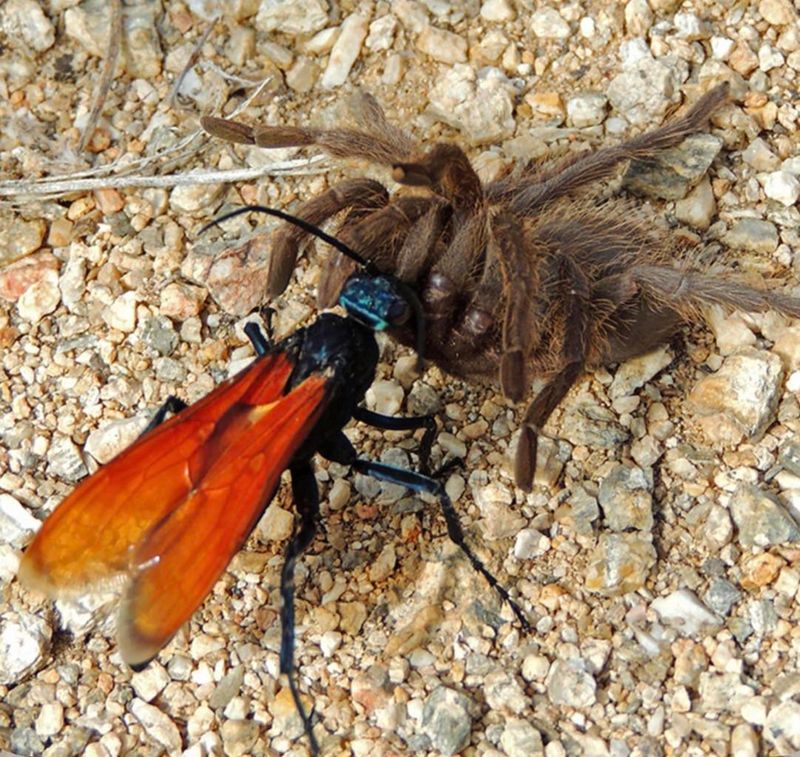
Nature runs on a tight schedule, and tarantula hawks follow theirs closely. In California, these wasps are most active from roughly July through October.
That window lines up almost perfectly with the season when tarantulas seek mates.
Late summer and fall is when tarantulas become easy to spot, and the wasps show up right on cue. This connection is well documented, not a guess or an old tale.
The reason is simple. Female tarantula hawks need tarantulas to raise their young.
Spiders that are out and on the move make much easier targets. So the wasps stay busiest when their prey is most visible.
This works like a farmers market that opens only a few months each year. Everyone who needs something from that market shows up during those weeks.
For tarantula hawks, fall in California is market season.
Now watch how they fly, because their flight pattern tells a story. Look for wasps that cruise low and slow over open ground, trails, or dry patches of the yard.
That searching style is a big clue. They scan the ground, often following scent and movement, on the lookout for a spider.
Here comes a fun bit of trivia for your next dinner. The tarantula hawk is the official state insect of New Mexico.
That shows how famous these wasps are across the Southwest. A visit to your yard makes you part of a much bigger seasonal story.
Not bad for a regular fall afternoon.
Male Tarantulas Are Wandering Nearby Right Now
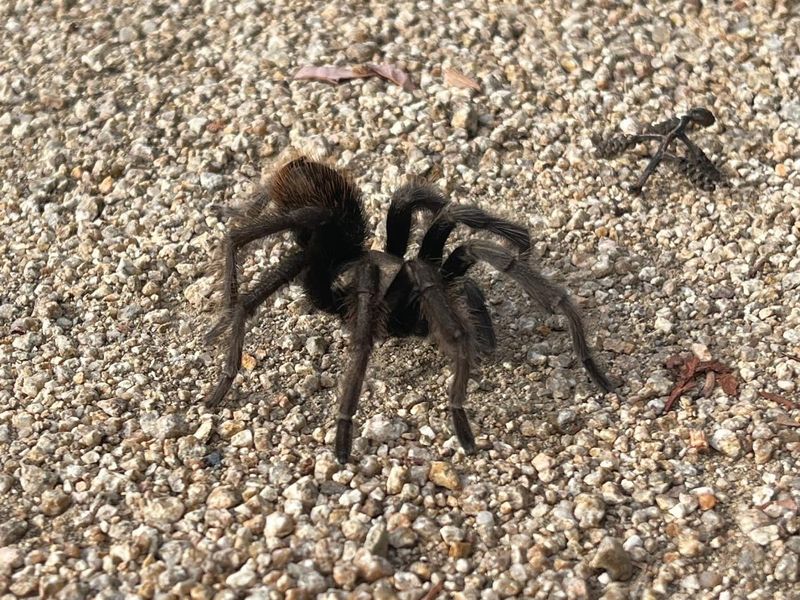
A hairy, fist-sized spider strolls across a country road at sunset like it has somewhere important to be.
That is a mature male tarantula on a mission to find a mate.
For most of their lives, tarantulas stay tucked inside underground burrows. Females spend nearly their whole lives close to home.
Males, though, finally leave once they reach adulthood. That milestone can take around 7 to 10 years.
When fall arrives, these grown males wander across hillsides, trails, driveways, and even backyards. They follow scent trails left by females near their burrows.
Your California Garden Changes Every Week. Your Plan Should Too.
Gardening in California changes quickly throughout the season. Every Friday you’ll receive a simple weekly plan showing exactly what to plant, prune, fertilize, harvest, and protect so you never miss the right timing.
All that travel makes the spiders much easier to find. A tarantula out in the open is exactly what a female tarantula hawk searches for.
So a wasp in the yard often means tarantulas are on the move somewhere nearby.
Now take a calm breath, because these spiders are far gentler than they look. California tarantulas are slow, calm, and not considered dangerous to people.
Their bite is often compared to a bee sting, and they rarely bite at all.
A tarantula in the yard deserves a simple response: let it continue on its way. Keep pets away from it, and leave it on the ground.
Stressed tarantulas can flick tiny, irritating hairs.
Quiet observation gives you a rare look at an animal on the most important trip of its life. It is basically a very slow, very hairy road trip, and you have front-row seats.
Only Females Carry A Sting At All
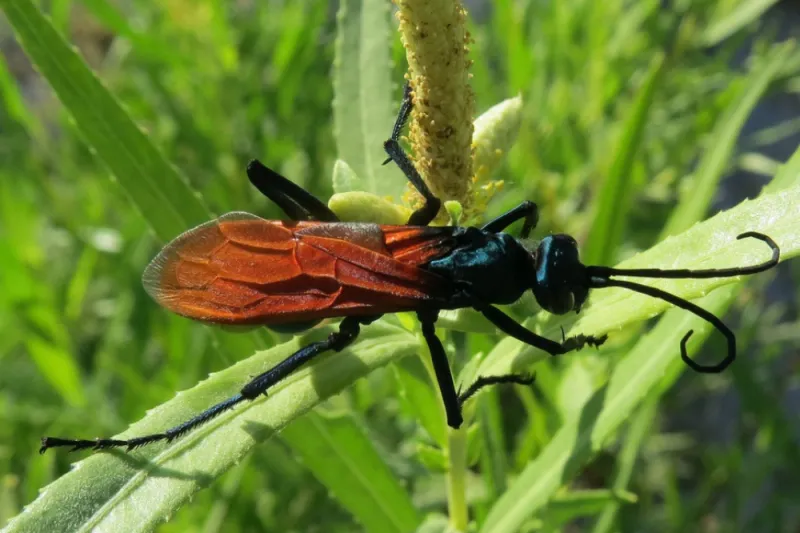
This fact changes how you see these wasps. About half the tarantula hawks in your yard cannot sting you at all.
Only the females carry a stinger.
The reason sits in their anatomy. A wasp stinger is actually a changed version of an egg-laying tube called an ovipositor.
Males do not lay eggs, so they do not grow that tube. No tube means no stinger.
Males spend their time sipping nectar and looking for mates. Some perch on tall plants or hilltops and defend a small area while they wait for females to fly by.
Scientists have a name for this: hilltop behavior. It can make males look bold, even though they are harmless.
Males and females can be tricky to tell apart. In many species, females have antennae that curl, while males have straighter ones.
Still, the smart move is to treat every tarantula hawk as a possible stinger. A wrong guess would hurt.
Now share this with any kids who fear wasps, because it can flip the script fast. The big wasp near the porch might be a male with zero ability to hurt anyone.
Even females use their stingers only to hunt spiders or defend themselves when grabbed.
Fear turns into curiosity, and curiosity makes a great teacher. Suddenly that flashy insect becomes a puzzle to solve instead of a monster to escape.
Honestly, it might be the least scary superhero in town.
That Sting Ranks Among The Most Painful
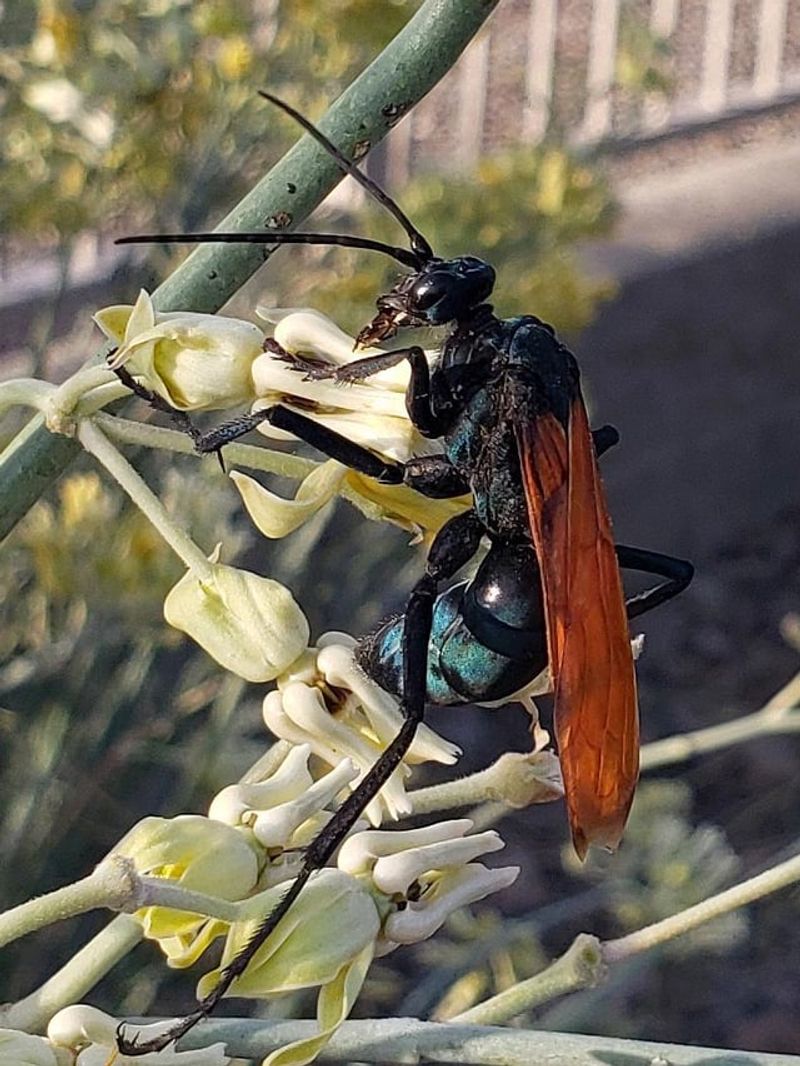
One curious entomologist famously let dozens of insects sting him so he could rank their pain. The tarantula hawk landed near the very top of his scale.
He described the sting as sudden, electric, and so intense that other thoughts disappeared.
Only a few insects score that high, including the famous bullet ant of South America.
Experts often suggest a surprising response to a sting: lie down and wait it out. A frantic run in that much pain could lead to a fall or other injury.
The good news comes next. The worst pain usually fades within about three to five minutes.
For most healthy people, the sting is not considered medically dangerous. Anyone with a known allergy to insect stings should seek medical help right away.
Now for some helpful perspective, because the odds are strongly in your favor. A tarantula hawk sting is very rare.
It almost always happens when someone grabs, steps on, or traps one. The venom is built to stop tarantulas, not to chase people.
Wear shoes when you walk through dry grass in fall. Keep bare hands away from these wasps.
Teach kids to look but not touch. Pets deserve the same caution, so call them away from any big orange-winged visitor.
With those simple habits, the chance of a firsthand sting stays extremely low. That scale is one leaderboard nobody needs to join.
Adults Actually Feed On Nectar Not Spiders
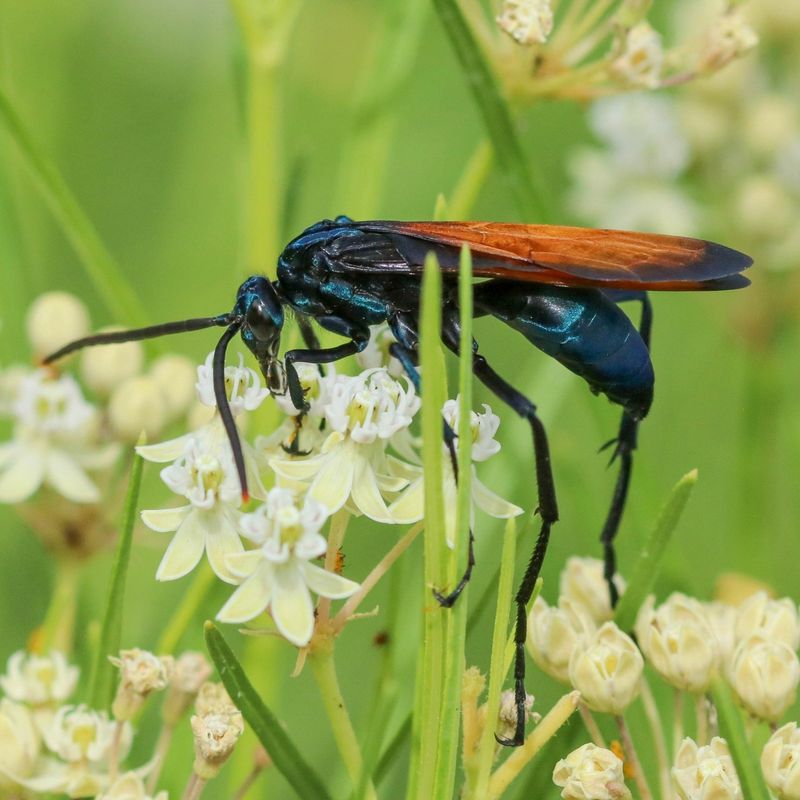
Despite that fierce name, a tarantula hawk behaves much like a butterfly for most of the day. Both males and females sip sweet nectar from flowers for energy.
They do not eat tarantulas at all.
Milkweed ranks among their favorite stops, along with other blooms in open, sunny spots. A patch of flowers on a warm afternoon can draw several at once.
So the spiders play a different role. Only females hunt tarantulas, and only to feed their young.
A female stings a spider, which paralyzes it. Then she drags it to a burrow, sometimes a long haul for an insect her size.
Inside, she lays a single egg on the spider and seals the burrow. The larva hatches and feeds on the spider.
It grows, forms a cocoon, and eventually emerges as an adult wasp ready to visit flowers of its own.
It sounds a little creepy, but it is an amazing survival plan. Each spider supports exactly one young wasp. The mother herself takes zero bites.
Now for a fun garden project, because these wasps have excellent taste in flowers. Plant native California milkweed in a sunny corner of the yard.
Tarantula hawks may show up along with monarch butterflies and bees.
Your garden turns into a colorful, buzzy snack bar all season long. Just make sure everyone sticks to the nectar menu.
They Generally Avoid Confrontation With People
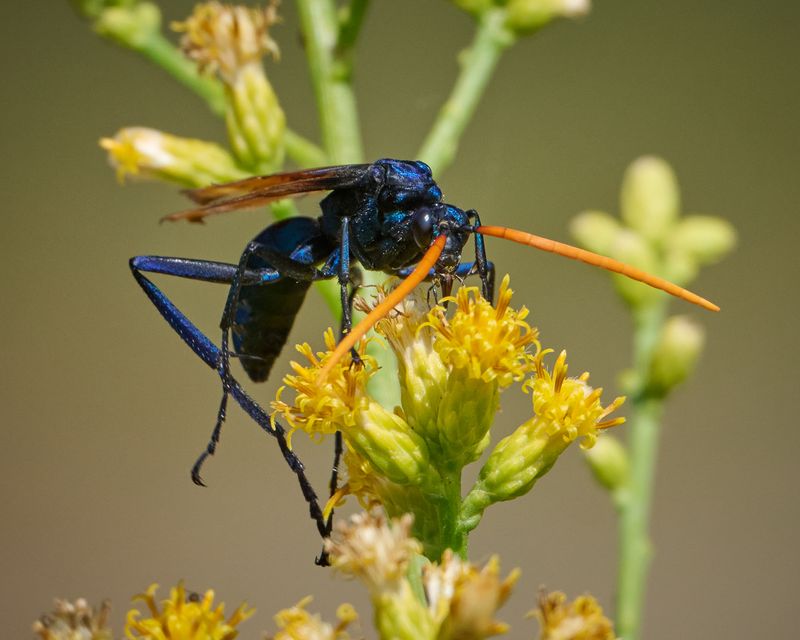
A tarantula hawk has better things to do than bother you. It stays busy with flowers, mates, or a spider hunt.
People are just large obstacles in its path.
Wildlife experts describe these wasps as calm and non-aggressive toward humans. Unlike yellowjackets, they do not guard big nests or swarm passersby.
Each female works alone, so no angry colony waits to defend a home.
That bright orange and blue look works as a warning sign. Scientists call it warning coloration, and it tells predators to stay back.
The message is so clear that few animals try to eat them. As a result, the wasps rarely need to fight.
Most trouble starts only when a person or pet gets too close. A bare foot on one, a swat, or an attempt to catch it can trigger a defensive sting.
Leave it alone, and it will usually leave you alone too.
Now keep an eye on curious pets, because paws and wasps make a poor mix. A dog or cat that bats at a tarantula hawk could get a painful surprise.
A calm call to bring your pet back is the easiest fix.
A wasp that drifts near your face calls for stillness. Stay put or slowly step aside, since flailing arms only make it feel trapped.
Give it a moment, and it will almost always drift off to finish its errand. It clearly has a busier schedule than most of us.
Give Them Space And Enjoy The Rare Sighting
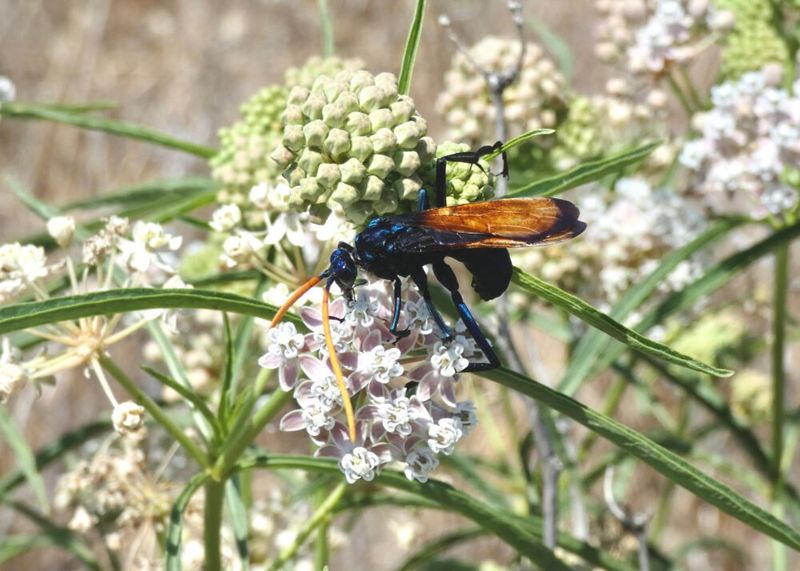
Some people wait years to spot a tarantula hawk in the wild. You got one in your own backyard for free.
That deserves a little celebration. Few backyard visitors come with this much flair.
Grab a chair, keep about six feet of space, and simply watch. Notice how the wasp flicks its orange wings or taps the ground with its antennae as it searches.
A phone camera with zoom captures great photos without a close approach.
Leave the bug spray on the shelf. Tarantula hawks help pollinate flowers and play a part in a healthy local ecosystem.
Their presence also signals that native tarantulas live nearby, which is good news for the area.
Now turn the moment into a family project, because it makes a fantastic memory. Keep a simple nature journal with the date, time, weather, and what the wasp was up to.
Over a few years, you might notice how closely their visits match each fall.
This is a well-understood seasonal event, not a mystery or a warning. The wasps arrive, do their jobs, and move on as cooler weather settles in.
By late fall, they fade from view until next year.
Your yard just hosted one of nature’s flashiest guests. Most people pay for a nature documentary, and you got the live version for free, popcorn optional.