What Ohio Plants With Yellow Leaves Are Trying To Tell You
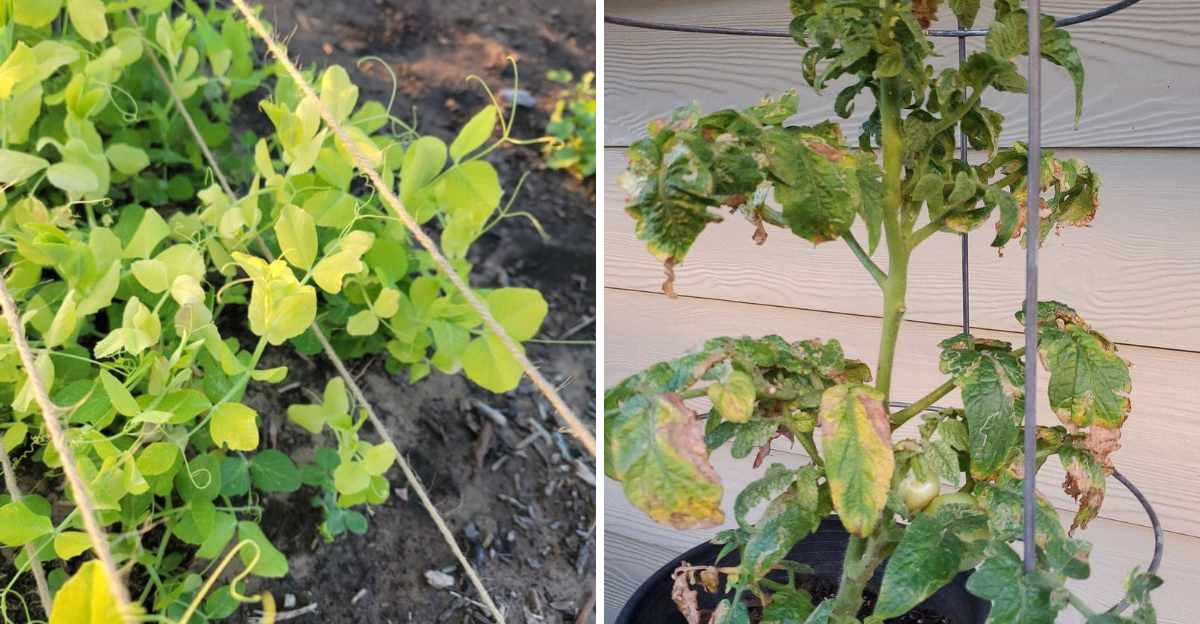
Ohio yellow leaves are not always asking for fertilizer.
Sometimes they are tattling on wet roots. Sometimes they are pointing toward hungry soil, compacted clay, cold stress, pest trouble, or a nutrient that cannot reach the leaf even though it is sitting right there in the ground.
Helpful? Yes. Dramatic? Also yes.
After a rainy stretch, it is easy to see pale tomato leaves or washed-out shrub growth and reach for the nearest bag of plant food. But yellowing is a pattern, not a single diagnosis.
Older leaves fading first tell one story. New growth with green veins tells another. Yellow edges, blotchy patches, and leaves that drop after soggy weather all point in different directions.
So what are your Ohio plants really trying to say?
Start by reading the leaf before treating the soil. The right clue can save money, protect roots, and keep one panicked fertilizer move from becoming the next garden problem.
1. Lower Leaves Point To Nitrogen
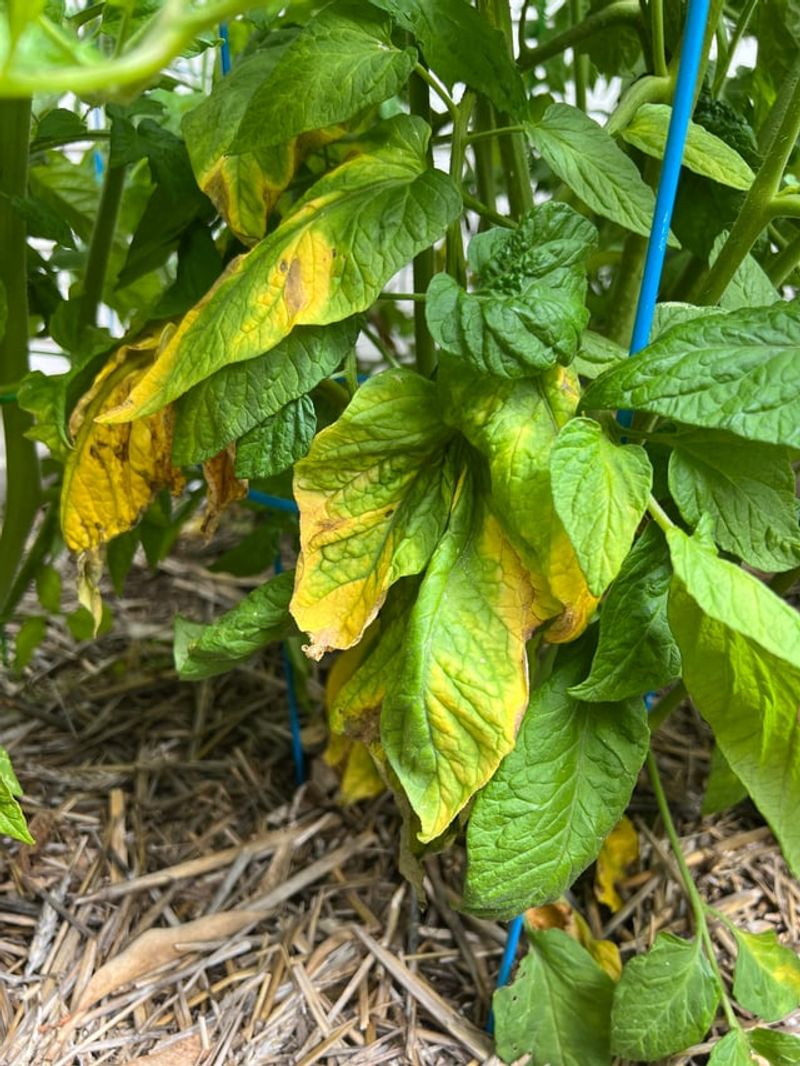
A pale tomato leaf hanging near the bottom of the plant is one of the most recognizable signs in the garden.
When older, lower leaves start turning a solid, uniform yellow while the top of the plant stays green, nitrogen is almost always the first suspect.
Nitrogen is what plant scientists call a mobile nutrient, meaning the plant can move it from old tissue to new growth when supplies run low.
Ohio State University Extension notes that nitrogen deficiency symptoms show up on older leaves first for exactly this reason.
The plant is not failing. It is making a smart trade, pulling resources away from leaves it considers less important and sending them upward to support new growth.
Wet spring weather in Ohio makes this pattern even more common.
Heavy rain leaches nitrogen out of the upper soil layers faster than roots can grab it.
Clay soils, which cover much of central and western Ohio, tend to hold water and reduce the oxygen that soil bacteria need to release nitrogen from organic matter.
Before you grab a bag of fertilizer, look closely at where the yellowing starts.
Is it truly the lower, older leaves? Is the color a fairly even yellow across the whole leaf, not just the edges or the veins?
If yes, a light application of a balanced or nitrogen-focused fertilizer may help.
A soil test first will confirm whether nitrogen is actually low or something else is going on.
2. Green Veins Signal Chlorosis
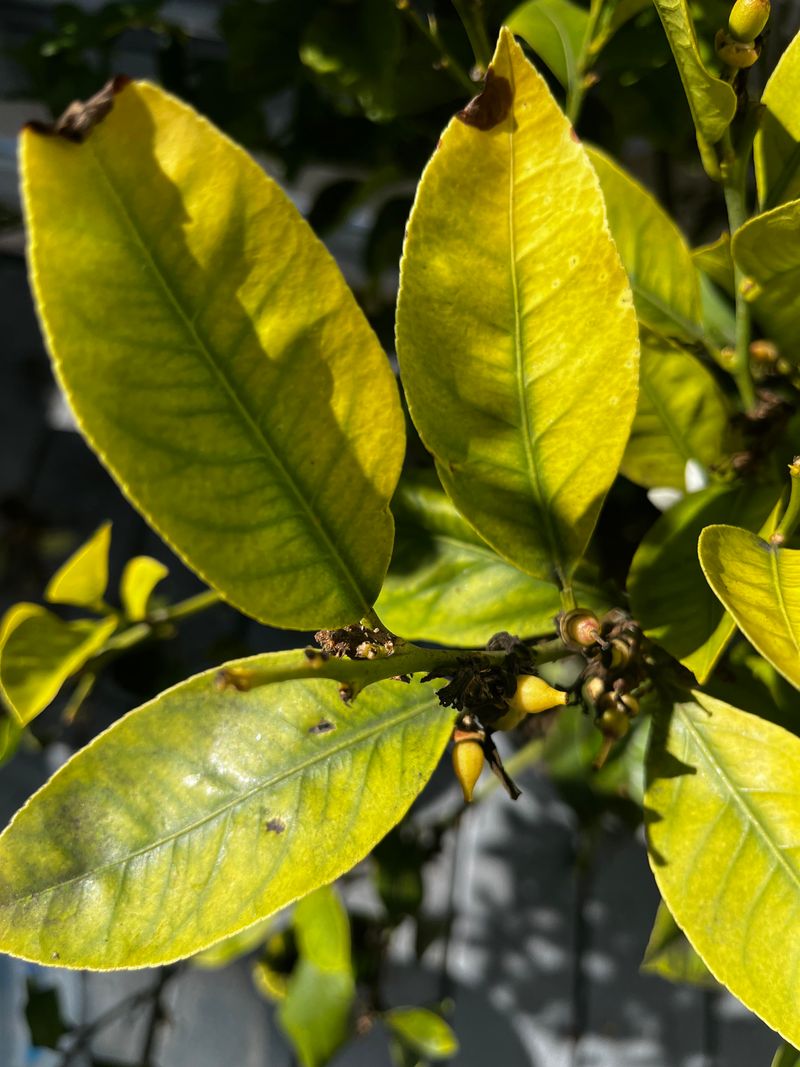
Holding a leaf up to the light and seeing a yellow background with a crisp green road map of veins running through it is a very specific clue.
That pattern has a name: interveinal chlorosis.
It points directly at a mineral the plant cannot get enough of, most often iron or manganese.
Here is the twist: Ohio soil usually has plenty of iron in it.
The problem is not that iron is missing. The problem is that the soil pH is too high, making iron chemically unavailable to roots.
Ohio State University Extension points out that many Ohio soils naturally trend alkaline, especially in areas with limestone-heavy geology. Shrubs like azaleas, blueberries, and pin oaks are especially sensitive to this.
Your Ohio Garden Changes Every Week. Your Plan Should Too.
Gardening in Ohio changes quickly throughout the season. Every Friday you’ll receive a simple weekly plan showing exactly what to plant, prune, fertilize, harvest, and protect so you never miss the right timing.
The green veins stay green because chlorophyll production happens in specific cells tied to the vein structure.
When iron is limited, the tissue between the veins loses its color first. It is a very specific clue, not random yellowing.
Gardeners sometimes try to fix this by adding more fertilizer, but that rarely helps.
What the plant actually needs is a lower soil pH, which allows iron to become available again.
Sulfur amendments or acidifying fertilizers can help over time. In the short term, chelated iron applied as a foliar spray or soil drench can give struggling plants a faster boost.
A soil test that includes pH is essential before doing anything else.
3. Wet Soil Can Lock Up Iron
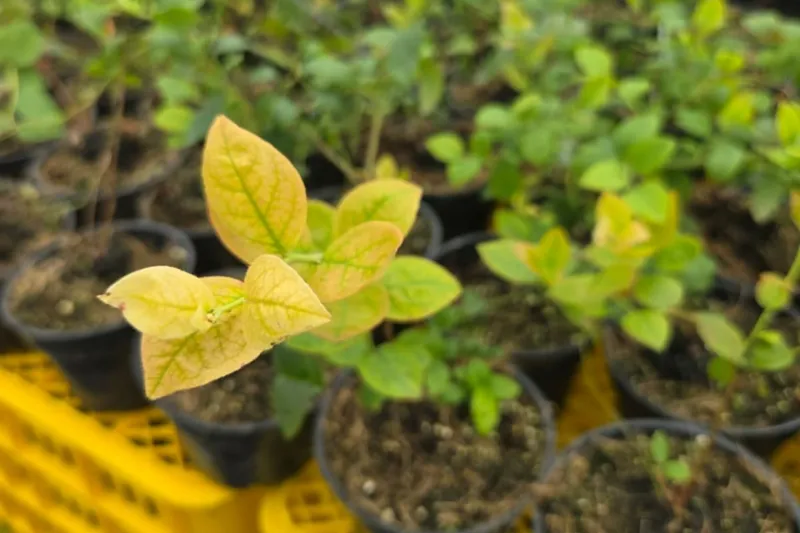
A soggy garden bed after a week of Ohio spring rain looks harmless from a distance.
Up close, though, the roots underneath are struggling in ways that show up as yellow leaves above ground.
Waterlogged soil pushes out the oxygen that roots need to function. Without oxygen, roots slow down dramatically and lose their ability to absorb nutrients, including iron.
Ohio State University Extension highlights poor drainage as one of the leading causes of iron chlorosis in Ohio landscapes.
The irony is that the same wet conditions that seem like they should help a plant actually cut off its access to key minerals.
Roots sitting in saturated soil for even a few days can begin to show stress symptoms within a week or two.
Ohio clay soil is especially prone to this problem.
Clay particles pack tightly together and do not drain quickly. A plant growing in heavy clay after a rainy stretch may show iron chlorosis symptoms even if the soil pH is perfectly fine, simply because the roots cannot breathe well enough to do their job.
The fix here is not iron supplements or fertilizer. It is drainage.
Raised beds, amended soil with compost, or strategic placement away from low spots can make a real difference.
If a plant yellows every spring but recovers by summer, poor drainage during wet periods is very likely the cause.
Watch the pattern over multiple seasons before spending money on products that will not solve the real problem.
4. Leaf Edges Hint At Potassium
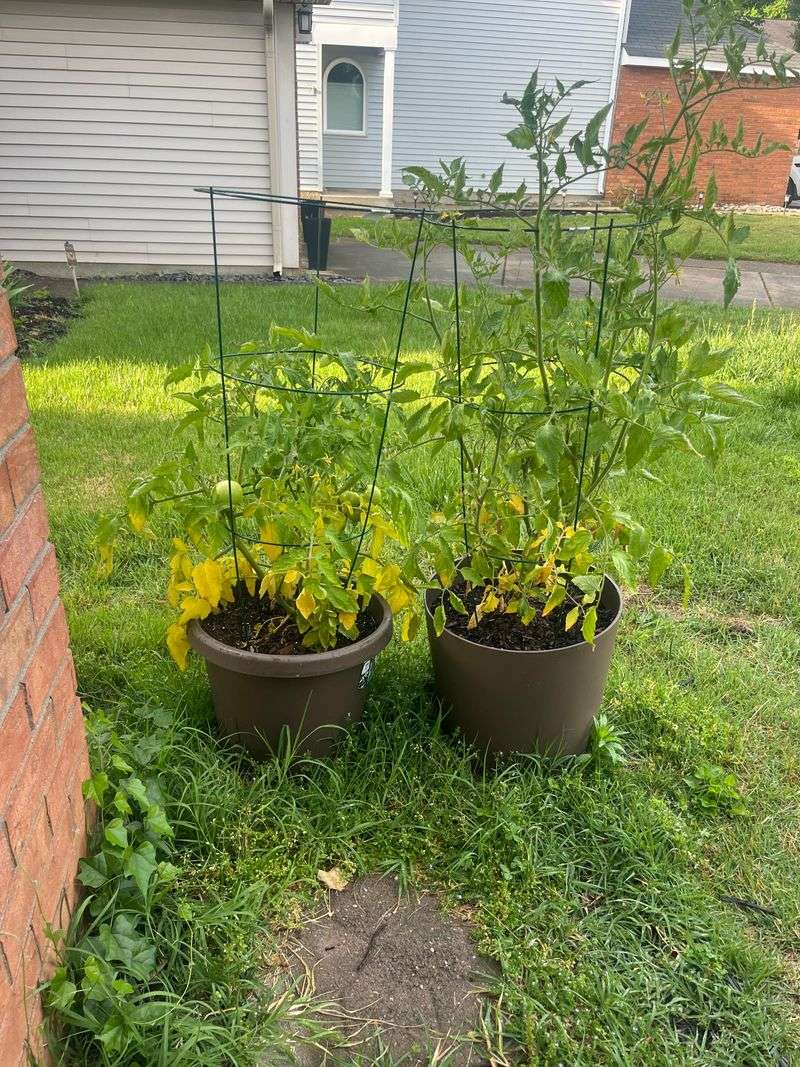
A tomato leaf where the edges look scorched or yellow while the middle stays green is showing a very specific pattern.
Edge symptoms matter because they narrow down the list of possible causes.
Potassium deficiency in plants tends to show up first along the margins of older leaves, not in the center and not in young growth at the top of the plant.
Potassium is another mobile nutrient, so like nitrogen, the plant will pull it from older tissue first when supplies get tight.
The difference is in the pattern.
Nitrogen deficiency creates a more uniform, all-over yellowing of older leaves. Potassium deficiency tends to create that burned or yellowed edge look while the interior of the leaf remains relatively normal for a while.
Ohio soils vary widely in potassium levels.
Sandy soils in parts of eastern Ohio drain quickly and may be naturally low in potassium. Heavy clay soils can hold potassium but may still have trouble releasing it to roots under stressful conditions.
Drought stress can mimic potassium deficiency symptoms, so it is worth ruling out moisture problems first.
OSU Extension recommends a soil test to confirm potassium levels before adding any amendments.
Adding too much potassium can interfere with magnesium and calcium uptake, creating new problems.
The edge pattern is a helpful clue, but it is still just a clue. Confirm it before you act.
5. New Growth Shows Sulfur Trouble
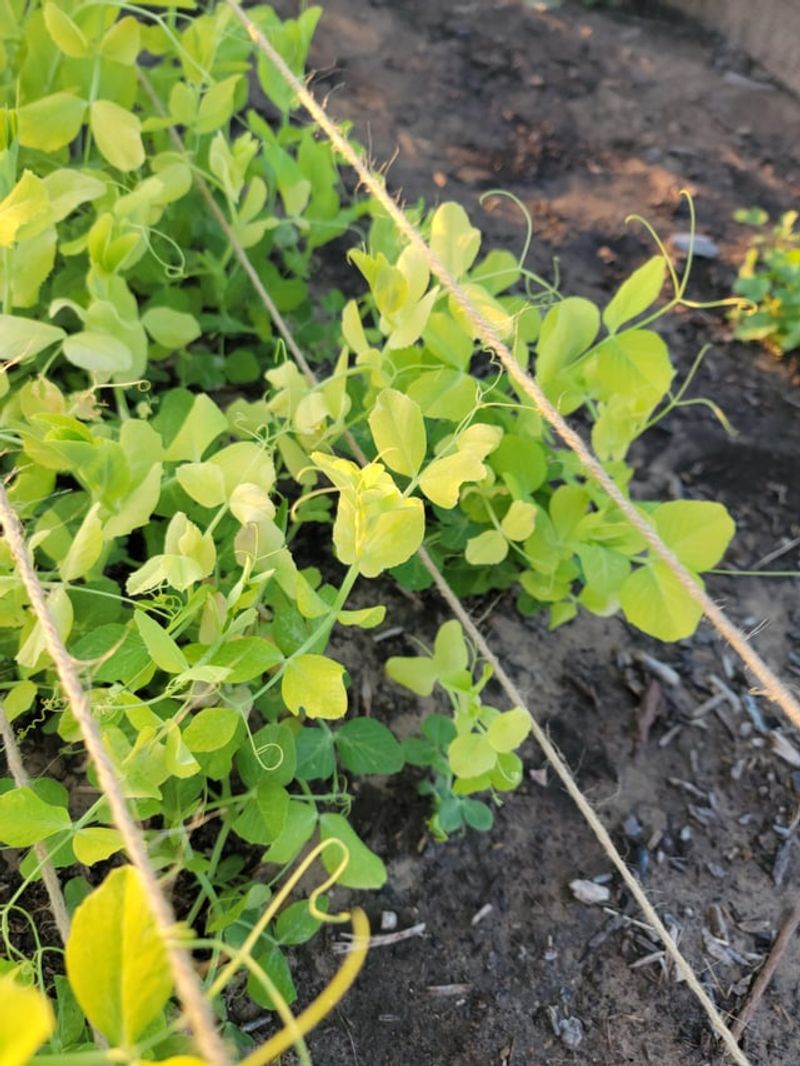
Most nutrient problems show up on the older, lower leaves first. Sulfur deficiency flips that script entirely.
When a plant runs low on sulfur, the new growth at the top of the plant turns pale yellow while the older leaves at the bottom stay green.
That upside-down pattern is one of the most useful clues a plant can give you.
Sulfur is not a mobile nutrient.
Plants cannot pull it from old tissue and send it to new growth the way they can with nitrogen or potassium.
So when sulfur is in short supply, the youngest, newest leaves suffer first because they cannot borrow from anywhere else.
Spotting pale, almost white-yellow leaves at the tips and growing points while the base of the plant looks healthy is a strong indicator that sulfur may be involved.
Ohio soils have become more sulfur-limited over the past few decades.
Cleaner air regulations have reduced the atmospheric sulfur that used to settle into soils from industrial emissions.
That sounds like good news for air quality, and it is, but it also means some Ohio gardens that once received enough sulfur passively may now need it added.
Organic matter in soil helps release sulfur over time, so gardens with good compost levels often do not show this problem.
If your compost additions are low and your new leaves keep coming in pale, a soil test that includes sulfur levels is the right next move before adding any amendments.
6. Compacted Roots Can Fake Hunger
A plant shows all the signs of nutrient deficiency, but adding fertilizer does nothing. The leaves stay yellow. The plant keeps struggling.
What is happening is that the roots cannot access the nutrients already in the soil because the soil is too compacted to let air, water, or roots move through it properly.
Compaction is common in Ohio yards, especially in areas with heavy clay soil, high foot traffic, or spots near driveways and construction zones.
When soil particles are pressed tightly together, pore space disappears. Roots need those pores to grow, breathe, and absorb water and nutrients.
Without adequate pore space, even a nutrient-rich soil becomes essentially useless to a struggling plant.
Ohio State University Extension notes that compaction is one of the most underdiagnosed causes of plant stress in urban and suburban landscapes.
A simple screwdriver test can give you a clue: if you cannot push a screwdriver six inches into the soil with moderate hand pressure, compaction is likely a problem in that spot.
Fertilizer will not fix compacted soil.
Aerating the area, adding organic matter, reducing foot traffic, and mulching around root zones are the real solutions.
Mulch especially helps by insulating soil, reducing surface compaction, and feeding soil biology over time.
If a plant keeps looking hungry despite feeding, check the soil structure before adding more products.
7. Drift Damage Leaves Odd Clues
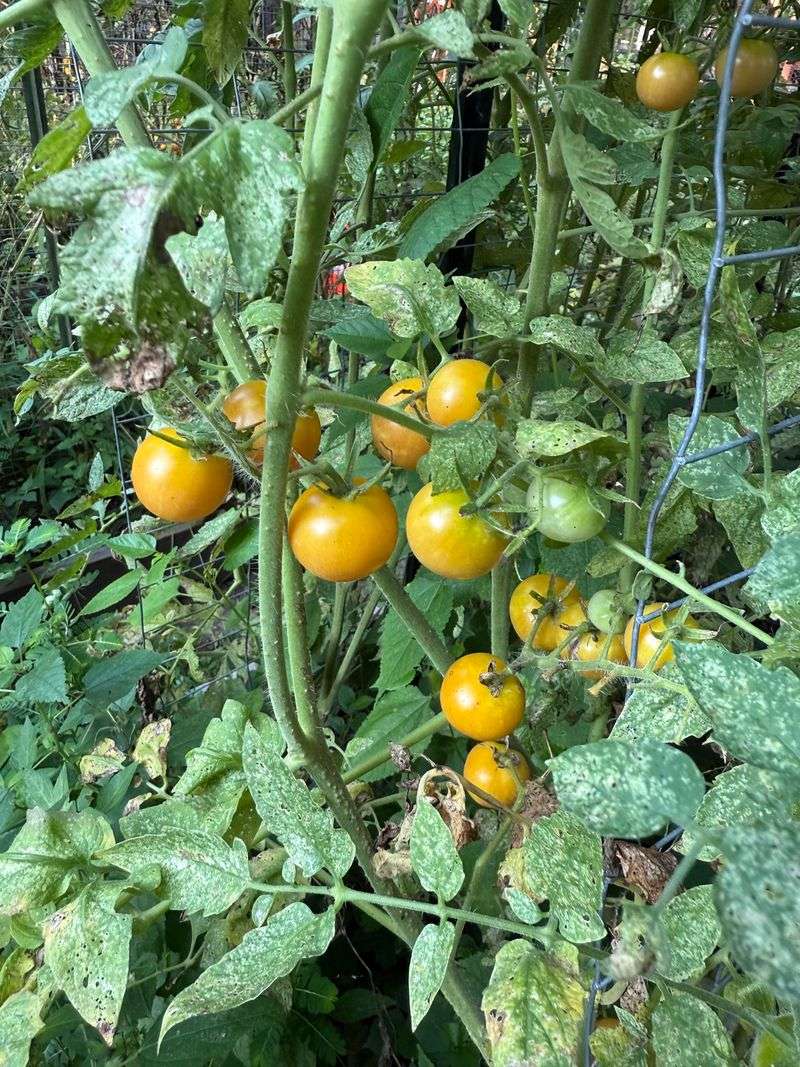
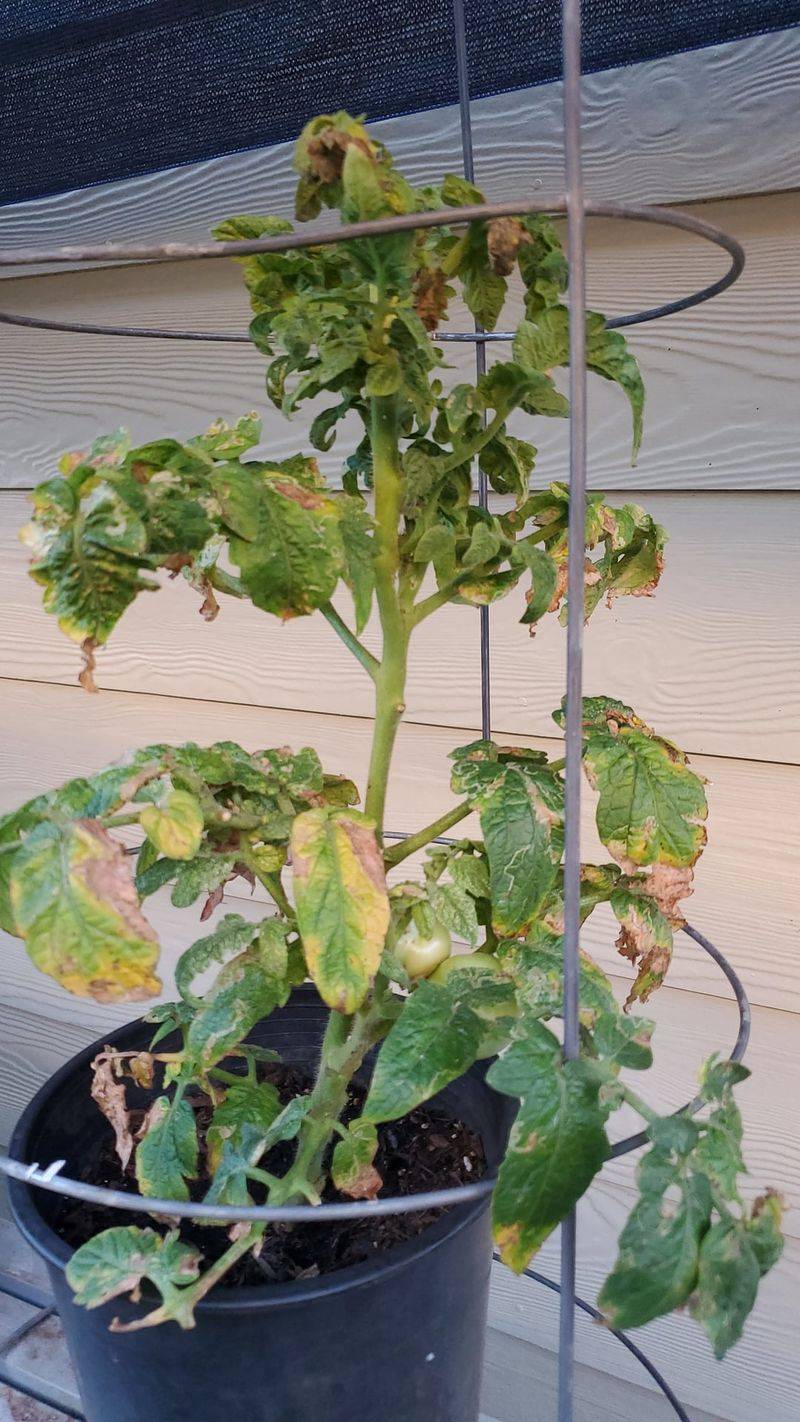
Twisted new growth. Leaves that cup downward or curl in strange ways. Yellow patches that do not follow any of the usual patterns for nutrient deficiency.
When the yellowing in your garden looks genuinely weird and nothing else explains it, herbicide drift is worth considering.
It is more common in Ohio than many gardeners realize.
Herbicide drift happens when spray applied to a lawn, farm field, or neighboring property moves through the air and lands on plants it was never meant to reach.
Broadleaf herbicides, which are commonly used in Ohio to manage lawn weeds, can cause significant damage to vegetable gardens, flower beds, and ornamental shrubs if they drift even short distances during application.
The clues from drift damage are different from nutrient problems.
Instead of a clean, predictable yellowing pattern on older or newer leaves, drift often creates distorted growth, puckered or elongated leaves, and irregular yellowing that may appear on one side of the plant or only on plants near a property line.
Tomatoes are especially sensitive and can show dramatic curling and twisting even from very low exposure levels.
Ohio State University Extension recommends documenting symptoms with photos, noting wind direction on the day symptoms appeared, and contacting your local OSU Extension office if you suspect drift damage.
There is no fertilizer or soil amendment that will fix herbicide injury.
Affected plants may recover slowly on their own, or they may not. Patience and observation are the only real tools here.
8. Soil Tests Settle The Guessing
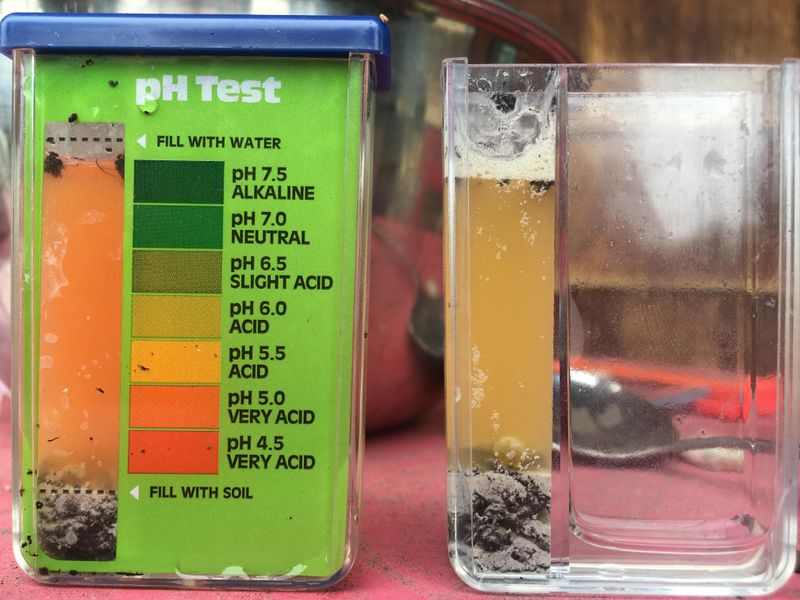
A gardener holding a fertilizer bag, staring at yellow leaves, and trying to decide what to pour on the problem is in one of the most common and most expensive situations in Ohio gardening.
Guessing at nutrients costs money, can make symptoms worse, and sometimes harms the plant further.
A soil test removes the guessing entirely. A basic test covers pH, phosphorus, potassium, and organic matter. Additional tests can check for micronutrients like iron, manganese, and sulfur.
The results come with specific recommendations for your soil type and the plants you are growing. That is a far better starting point than grabbing the first bag on the store shelf.
Soil pH alone explains a huge percentage of yellow leaf problems in Ohio.
A pH that is too high makes iron, manganese, and other micronutrients chemically unavailable even when they are present in the soil.
A pH that is too low can cause different problems, including toxicity from aluminum and manganese.
Collect samples from several spots across the garden bed, mix them together, and send in about one cup of soil.
Test in fall or early spring before the growing season begins for the best timing.
Once you have real data about your soil, every decision you make about fertilizer, lime, sulfur, or compost becomes smarter and more targeted.
Yellow leaves asked the question. The soil test gives you the answer.