Why Hydrangeas Suddenly Stop Producing Flowers In Your Georgia Garden
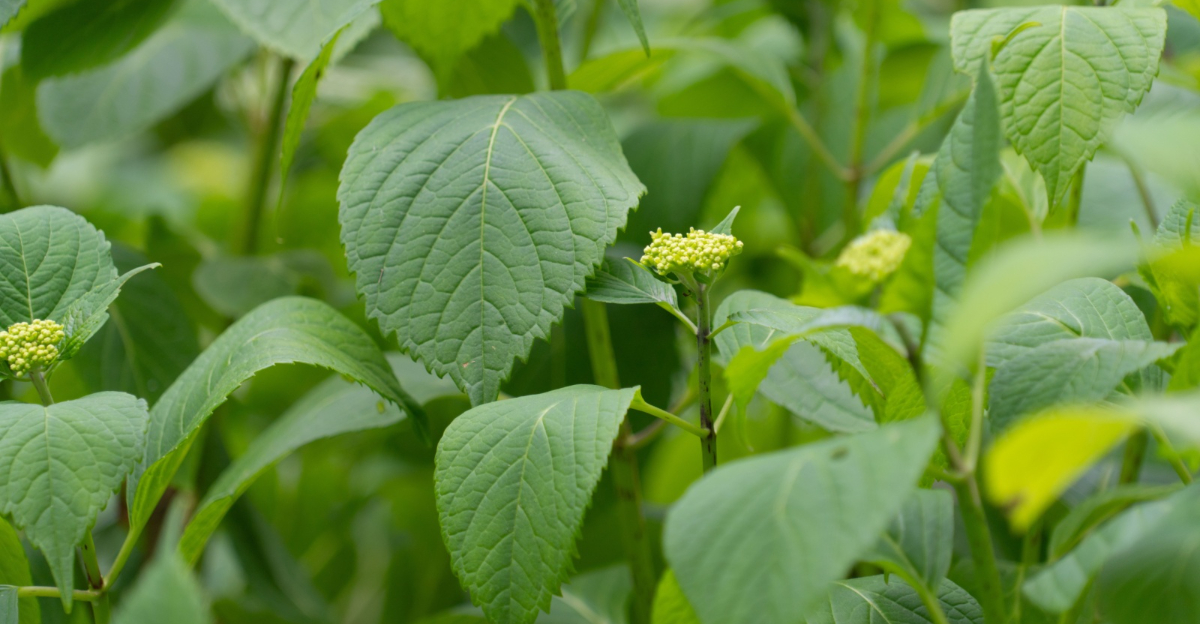
Walking out to a hydrangea that is absolutely thriving in every way except the one that actually matters is a special kind of garden frustration. The foliage is lush, the plant looks healthy and well established, and there is not a single bloom anywhere on it.
If that sounds familiar, you are in very good company because it happens in Georgia gardens every single year and for a surprisingly wide range of reasons.
Pruning at the wrong time is one of the most common culprits, but late frost damage, too much afternoon sun, deep shade, moisture stress, competing tree roots, and even an overly generous fertilizer habit can all produce the same disappointing result.
The good news is that most of these problems are fixable once you know what’s actually going on, and it starts with understanding which type of hydrangea you are growing in the first place.
1. Pruning At The Wrong Time
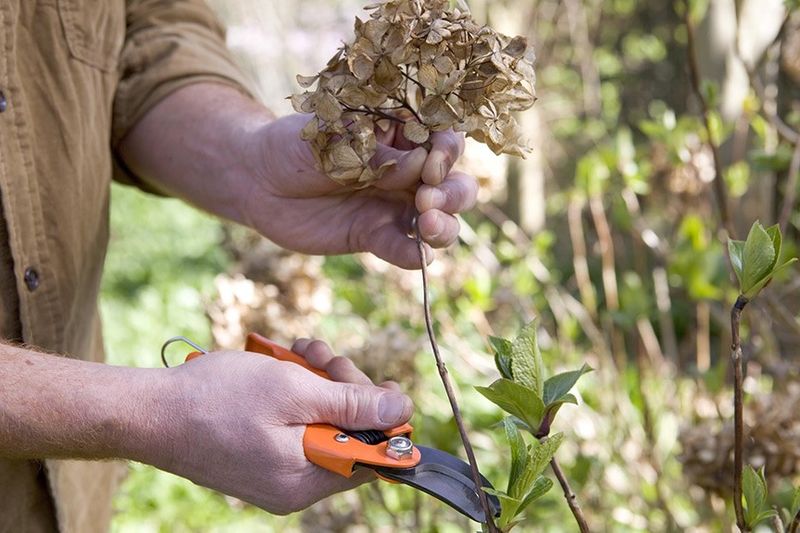
A pair of pruning shears used at the wrong moment can quietly take away an entire season of blooms without the gardener ever realizing what happened.
Hydrangeas that bloom on old wood, meaning the stems they grew the previous season, set their flower buds in late summer and fall.
If those stems get cut back in late summer, fall, or even early spring, the buds go with them.
In Georgia, many homeowners prune hydrangeas during a general fall garden cleanup or in early spring when everything else gets trimmed.
That timing feels logical, but for old-wood bloomers like bigleaf and oakleaf hydrangeas, it removes exactly what the plant needs to produce flowers.
The shrub then grows plenty of healthy new stems but has no buds left to open.
Panicle and smooth hydrangeas follow a different schedule because they bloom on new wood grown in the current season. Those can be pruned in late winter without affecting blooms.
Knowing which type you have is the first step toward getting the timing right and finally seeing flowers in your Georgia yard again.
2. Not Knowing Which Hydrangea You Have
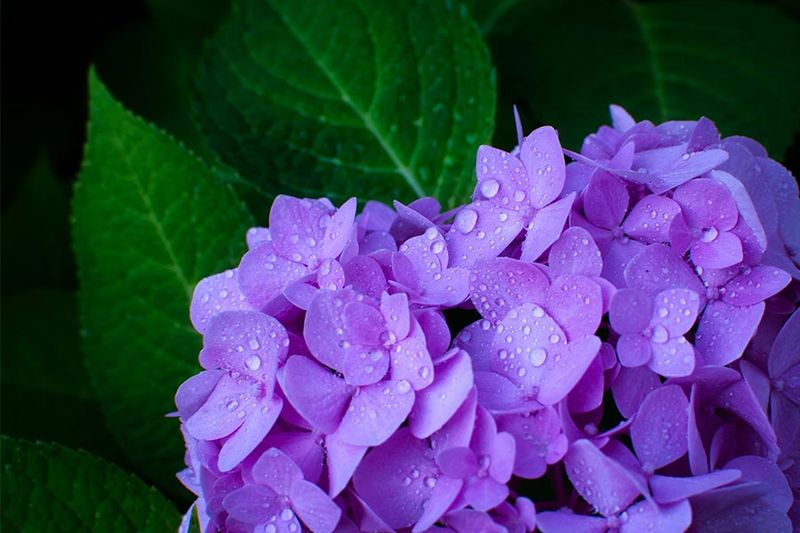
Buying a hydrangea at a garden center and planting it without knowing its exact type is one of the most common reasons Georgia gardeners end up confused about why it will not bloom.
Each hydrangea species has its own bloom wood preference, pruning schedule, sun tolerance, and moisture needs.
Treating them all the same leads to problems.
Bigleaf hydrangeas, sometimes sold simply as mopheads or lacecaps, are among the most popular in Georgia landscapes. They bloom on old wood in most cases, which means pruning habits and frost timing matter enormously.
Oakleaf hydrangeas, a southeastern native, also bloom on old wood and handle Georgia summers reasonably well once established. Panicle hydrangeas bloom on new wood and tolerate more sun and heat.
Smooth hydrangeas like Annabelle also bloom on new wood and are quite forgiving about pruning.
If a plant tag was lost or the hydrangea came from a neighbor’s yard, look at the leaf shape, flower form, and stem color to help identify it. Getting the identification right makes every other care decision much easier and puts you on the right path toward consistent blooms.
Your Georgia Garden Changes Every Week. Your Plan Should Too.
Gardening in Georgia changes quickly throughout the season. Every Friday you’ll receive a simple weekly plan showing exactly what to plant, prune, fertilize, harvest, and protect so you never miss the right timing.
3. Late Pruning On Bigleaf Or Oakleaf Hydrangeas
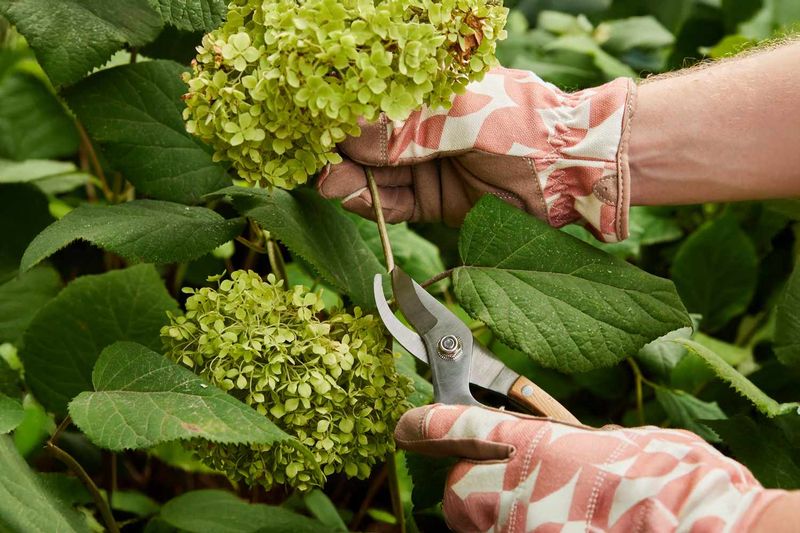
Walking past a bigleaf hydrangea in June that has nothing but leaves is a particularly discouraging experience for Georgia gardeners who have been waiting patiently since spring. Late pruning is one of the leading causes of this exact situation.
Bigleaf hydrangeas begin forming their flower buds on old stems shortly after they finish blooming, usually in mid to late summer.
When those stems are cut back in fall or early spring, the plant responds by pushing out vigorous new leafy growth, but no flowers follow because the buds were removed along with the stems.
Oakleaf hydrangeas behave similarly since they also rely on old wood for their blooms.
Both species can go an entire season without a single flower after an ill-timed pruning session.
The recommended approach for these two types in Georgia is to prune only immediately after they finish blooming, which gives the plant the remainder of summer to set new buds on the fresh stems before the growing season ends.
Light shaping is generally safer than heavy cutting.
Removing only damaged or crossing stems during the growing season, rather than doing a full cutback, helps protect next year’s bloom potential.
4. Winter Or Late Frost Bud Injury
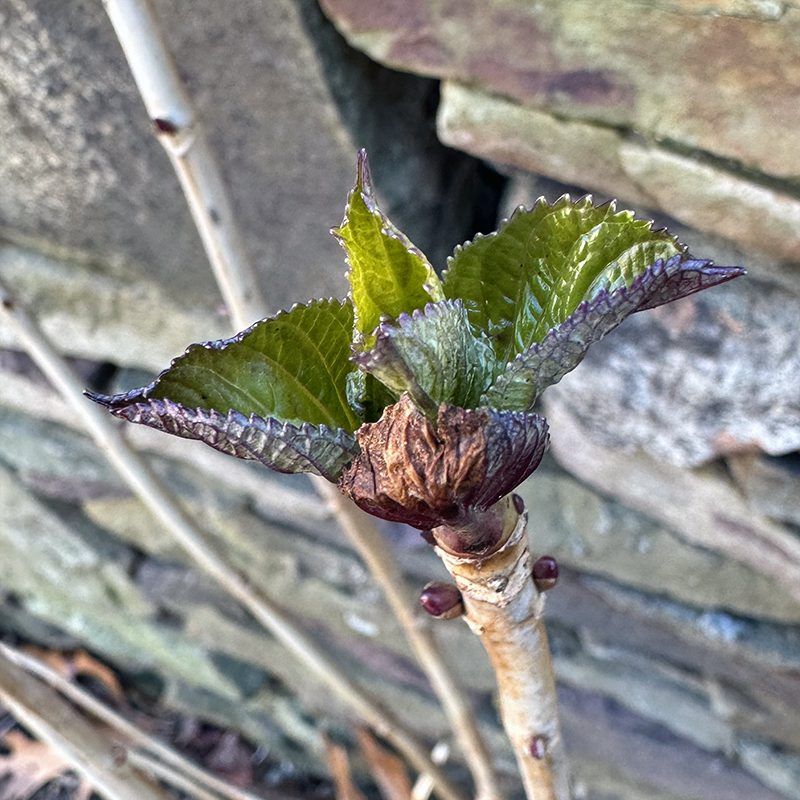
Georgia winters can feel mild for weeks and then deliver a sharp late frost that catches gardeners completely off guard.
For bigleaf and oakleaf hydrangeas that carry their flower buds through winter on old stems, that late cold snap can damage or destroy the buds before they ever get a chance to open in spring.
The frustrating part is that the rest of the plant often looks fine. New leaves push out from the base and along the stems, the shrub fills in beautifully, and it appears completely healthy.
But the buds that were sitting at the stem tips, already formed and waiting for warmer weather, were injured by the cold and will not open. The plant puts energy into leafy recovery instead of flowers.
In Georgia, late freezes in March or early April are not unusual, especially in the northern part of the state. Gardeners in those areas often see this problem more frequently than those in coastal regions.
Covering plants with a frost cloth during predicted cold nights can offer some protection.
Choosing newer reblooming bigleaf varieties, which can develop buds on both old and new wood, gives the plant a better chance of recovering and producing some flowers even after bud injury.
5. Too Much Afternoon Sun
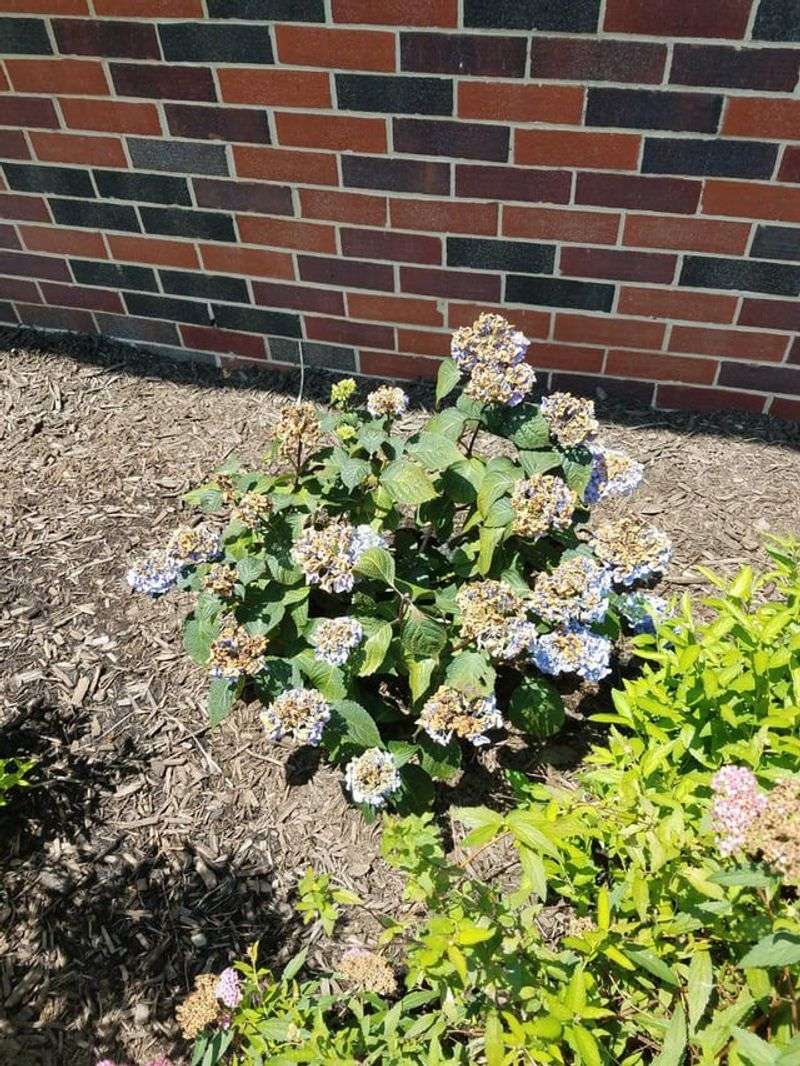
Georgia summers are intense, and the afternoon sun in July and August can be punishing even for plants that prefer some direct light.
Hydrangeas, especially bigleaf varieties, are sensitive to heat stress, and too much afternoon exposure can interfere with their ability to set and hold flower buds.
A hydrangea planted on the west or southwest side of a home may receive several hours of harsh late-day sun that raises the soil temperature, stresses the roots, and causes the plant to focus energy on survival rather than blooming.
Leaves may look bleached or scorched at the edges, and the plant may wilt by mid-afternoon even when the soil has adequate moisture.
Over time, repeated heat stress can reduce flowering significantly.
Most hydrangeas in Georgia perform better with morning sun and afternoon shade, which allows them to receive enough light for healthy growth without the damaging heat of the late-day hours.
Relocating a struggling plant to a spot with eastern or northern exposure, or adding a shade structure, can make a meaningful difference.
Even panicle hydrangeas, which handle more sun than other types, tend to appreciate some relief from the most intense afternoon heat in Georgia’s hotter inland regions.
6. Too Much Shade For The Type
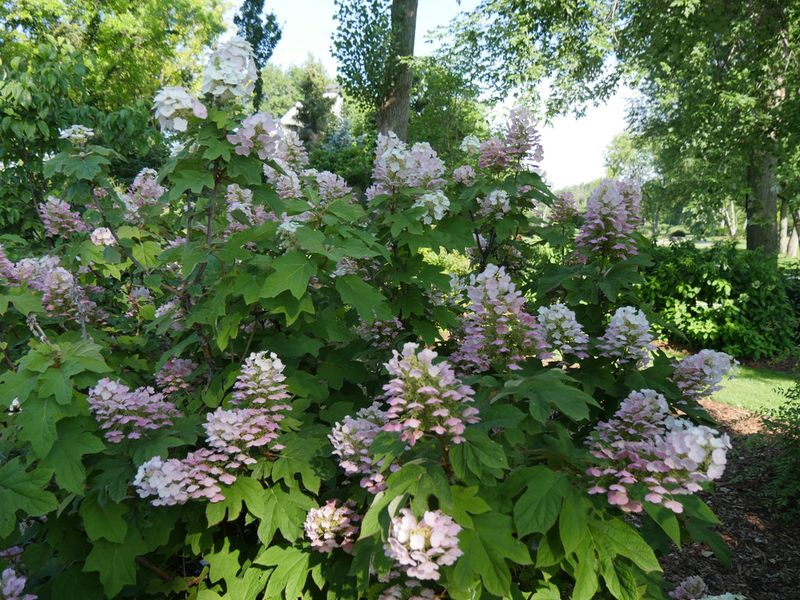
Shaded foundation beds and woodland borders are popular spots for hydrangeas in Georgia, and while many types do appreciate some shade, too much of it can shut down flowering almost completely.
Panicle hydrangeas are a good example of a type that genuinely needs several hours of direct sun to bloom well.
Planted in deep shade, they produce heavy green growth but very few or no flowers.
Even bigleaf hydrangeas, which are more shade-tolerant than panicle types, need a few hours of morning sun to trigger reliable blooming. A spot that receives only filtered light under a dense tree canopy may not provide enough energy for bud development.
The plant looks lush because it has plenty of moisture and cool temperatures, but flowering requires light energy that simply is not available in that location.
Smooth hydrangeas like Annabelle are among the most shade-tolerant options and can still produce flowers with less direct sun than other types.
If a hydrangea in a shaded Georgia garden is consistently leafy but never blooms, it may be worth considering whether the spot offers enough light for that particular species.
Sometimes thinning nearby tree branches or relocating the shrub to a brighter area solves the problem without any other changes.
7. Moisture Stress During Hot Weather
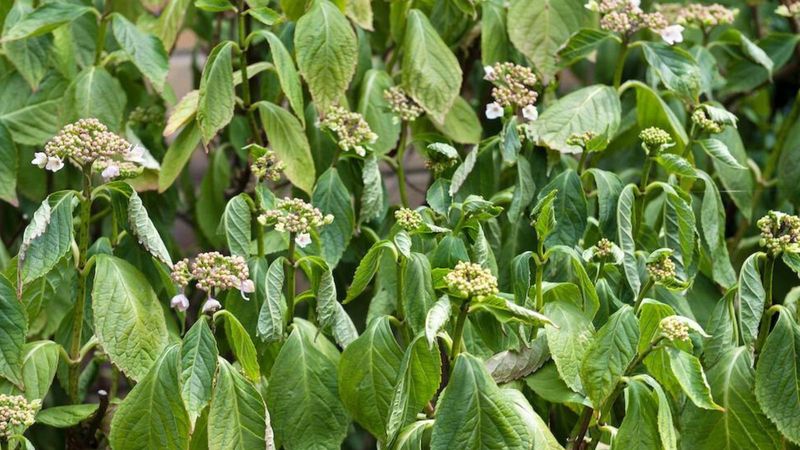
Hydrangeas have a reputation for being thirsty plants, and that reputation is well earned.
In Georgia’s hot summers, moisture stress is one of the quieter reasons a hydrangea may fail to produce flowers, especially when the problem builds up over time rather than appearing all at once.
When a plant is consistently short on water during the critical late summer period when bigleaf hydrangeas are setting their buds for next year, the stress can prevent bud formation or cause formed buds to abort before they develop fully.
The plant prioritizes basic survival functions over reproduction.
Gardeners may not notice the damage until the following spring when the expected flowers never appear.
Georgia’s clay-heavy soils in many areas can make moisture management tricky. Clay holds water but can also become compacted and poorly drained, which stresses roots differently than sandy soil that dries out too fast.
Adding organic matter to the planting bed, mulching around the base of the shrub to retain soil moisture, and watering deeply during dry spells in late summer can all support better bud development.
Drip irrigation or soaker hoses are particularly useful for keeping hydrangea root zones consistently moist without wetting the foliage.
8. Too Much Nitrogen Fertilizer
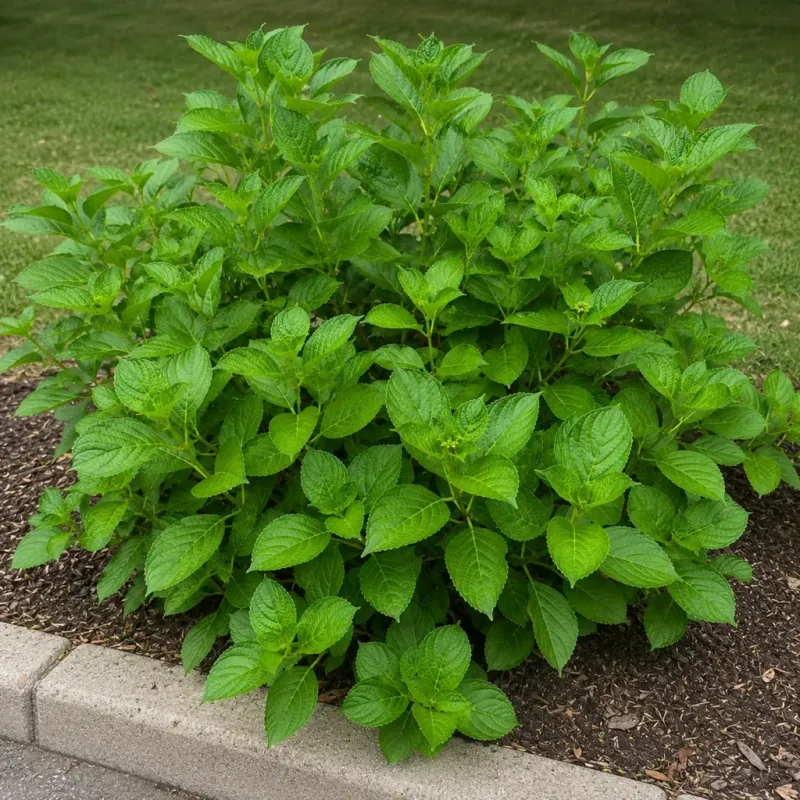
Lush, oversized leaves and absolutely no flowers are a telltale sign that a hydrangea may be receiving too much nitrogen.
Nitrogen is the nutrient that drives leafy, green growth, and when it is available in excess, plants often channel their energy into producing foliage at the expense of flowers.
In Georgia gardens, this problem sometimes happens when hydrangeas are planted near lawns that receive regular high-nitrogen fertilizer applications.
Fertilizer applied to grass can migrate into nearby shrub root zones, feeding the hydrangea more nitrogen than it needs.
Well-meaning gardeners who apply lawn fertilizer generously around foundation beds can unintentionally create the same effect.
Hydrangeas generally respond better to fertilizers that are lower in nitrogen and slightly higher in phosphorus, which supports root development and flower production.
A balanced slow-release fertilizer applied in early spring, before new growth begins, is often sufficient.
Applying fertilizer late in the growing season can also push tender new growth that gets damaged by early cold snaps, which then reduces next year’s bloom potential.
Pulling back on nitrogen and giving the plant a season to rebalance often results in noticeably improved flowering without any other changes to the care routine.
9. Planting Near Competing Tree Roots
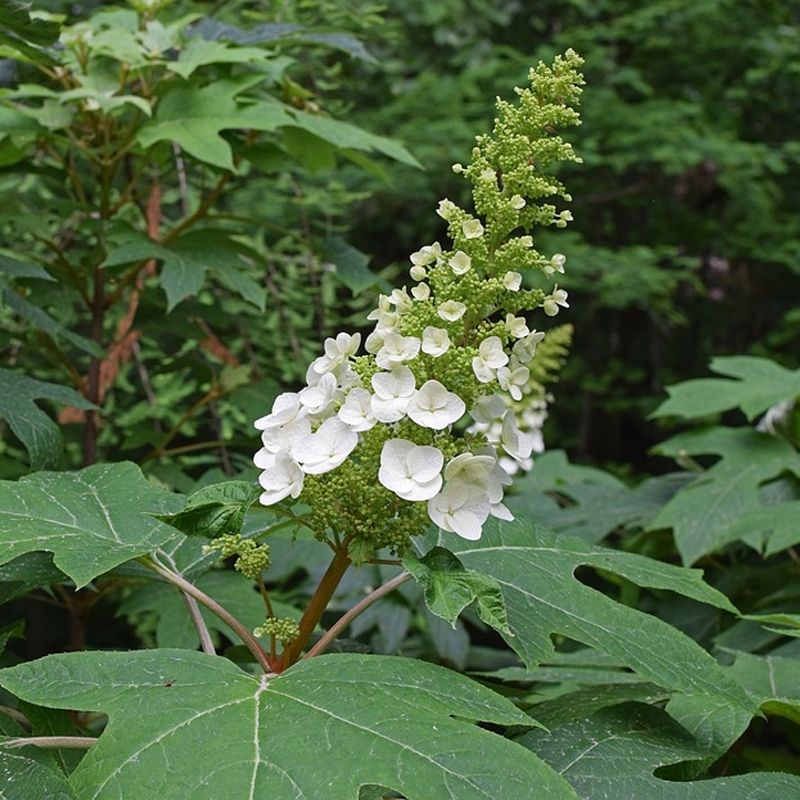
Sliding a hydrangea into the ground beneath a large oak, maple, or pine tree might seem like a smart use of shaded space, but mature tree roots are remarkably competitive.
They spread far beyond the tree’s canopy, drawing moisture and nutrients from the surrounding soil at a scale that can easily overwhelm a nearby shrub.
A hydrangea growing in the root zone of a large tree may look acceptable in spring when soil moisture is higher, but by midsummer the competition becomes much more visible.
The shrub may wilt quickly between waterings, show smaller leaves than expected, and produce little to no flowering.
The tree roots essentially intercept water and nutrients before the hydrangea roots can access them.
In Georgia, where summer heat and periodic drought are common, this competition can be especially hard on hydrangeas trying to develop flower buds in late summer.
Raised beds with defined edges, heavy mulching, and frequent supplemental watering can help, but they do not fully eliminate the competition.
Moving the hydrangea to a location with less root competition is often the most practical long-term solution.
Choosing a spot at least several feet away from the drip line of large trees gives the shrub a much better chance of accessing the resources it needs to bloom consistently.
10. Expecting Rebloom From A Non-Reblooming Variety
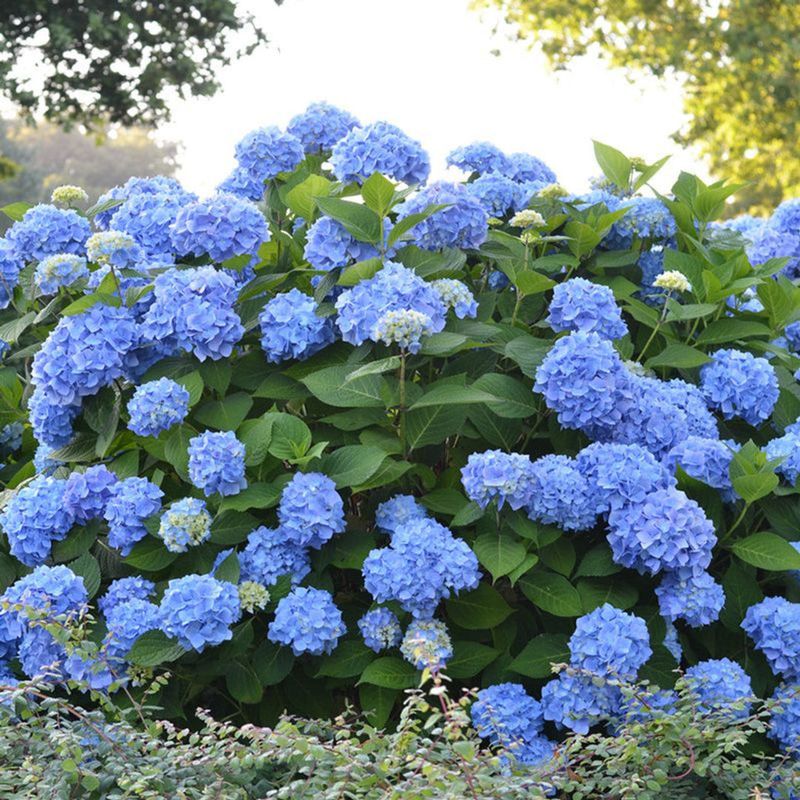
Some hydrangea varieties are bred to bloom more than once in a season, producing a flush of flowers in spring and then again later in summer. Others bloom only once and then spend the rest of the season building energy for the following year.
Expecting a non-reblooming variety to produce a second round of flowers is a setup for disappointment.
Many classic bigleaf hydrangea varieties sold in Georgia garden centers are single-bloomers that flower once on old wood and then stop.
Gardeners who see neighbors with reblooming varieties producing flowers from June through September may assume their own plant is underperforming when it is actually behaving exactly as it should.
The confusion often leads to unnecessary interventions like extra pruning or fertilizing, which can make the following season worse.
Newer reblooming varieties such as those in the Endless Summer or Let’s Dance series are specifically bred to produce buds on both old and new wood, which gives them a better chance of recovering from frost damage or late pruning and still delivering some blooms.
If consistent, long-lasting flowering through summer is the goal, selecting a reblooming variety suited to Georgia’s climate is a practical and rewarding starting point for the next planting season.