What Oregon Gardeners Should Do To Marigolds When They Stop Blooming In Summer
Marigolds have a reputation for being practically unstoppable, which is exactly what makes it so puzzling when they suddenly stop blooming in the middle of summer.
One week the plants are covered in cheerful orange and yellow flowers and the next they look like they quietly decided to take a break without telling anyone.
Oregon summers throw a surprisingly varied mix of conditions at garden plants depending on where you live, and marigolds feel those differences more than most people expect.
Faded blooms left on the plant, inconsistent moisture, poor drainage, too much shade, or an overly generous hand with fertilizer can all quietly put the brakes on flower production.
Deadheading is almost always the right first move, but it is worth taking a broader look at growing conditions before assuming that one change will fix everything.
1. Deadhead Spent Flowers Before Seeds Develop
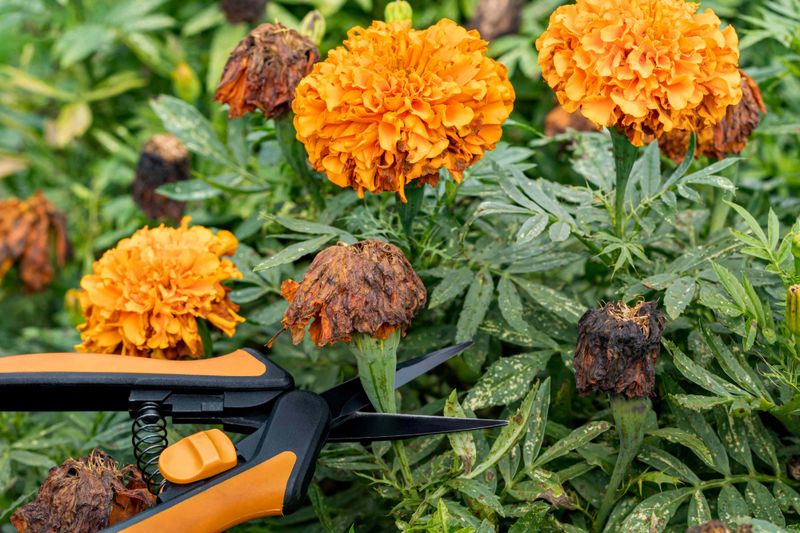
Faded flower heads on a marigold are doing more than just looking tired. Once a bloom begins to wither, the plant shifts its energy toward forming seeds inside that spent flower.
Removing the faded head before seeds mature may encourage the plant to continue producing new blooms rather than winding down for the season.
To deadhead a marigold, pinch or snip the spent flower head just above a healthy leaf or a branching point on the stem. Clean hands or a small pair of pruning snips both work well for this task.
Try to remove the entire head including the base of the flower, called the receptacle, rather than just pulling off the petals.
Deadheading redirects the plant away from continued seed development, but it may not restore flowering on its own when heat, poor light, moisture stress, root problems, or declining plant health are also involved.
Oregon summers can bring stretches of intense warmth that affect plant performance regardless of how consistently spent flowers are removed.
Inspect the entire plant while you are deadheading rather than pulling off flowers without checking other conditions. Look at the leaves, stems, and soil around the base.
Not every marigold requires constant deadheading to survive and grow, but it is a practical way to support continued flowering and keep plantings looking tidy throughout the Oregon growing season.
2. Remove Rotting Blooms And Fallen Debris
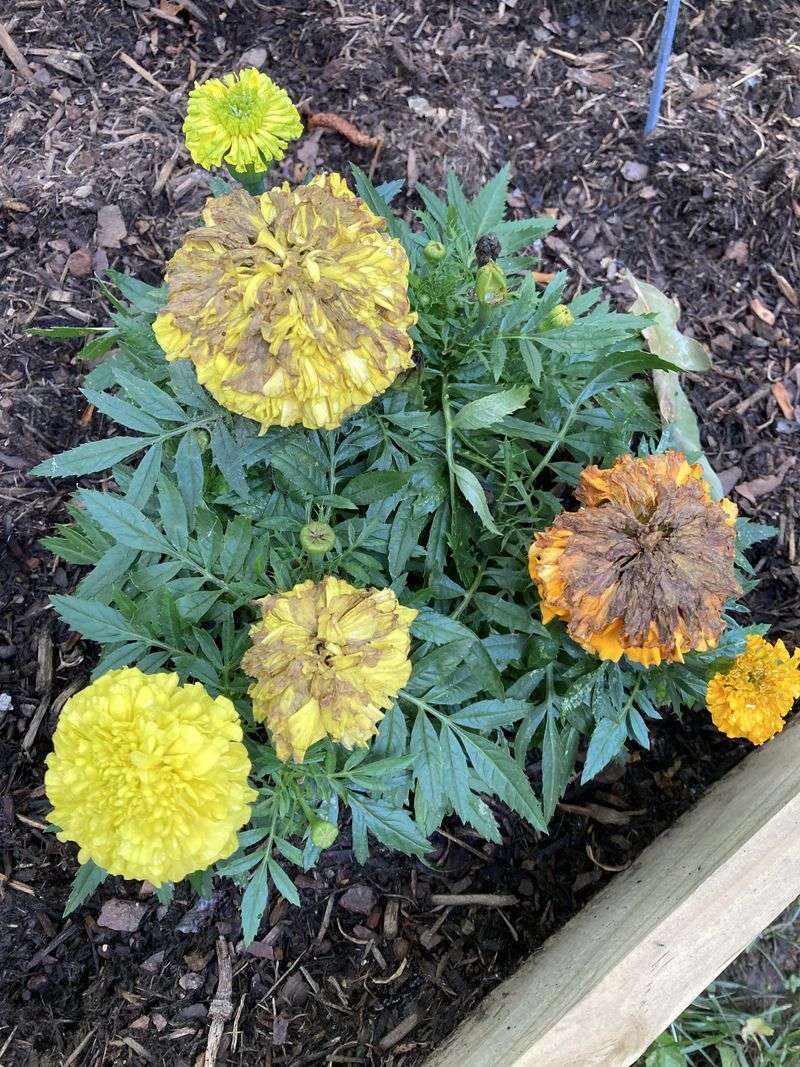
Spent marigold flowers that are left on the plant or allowed to fall to the ground can hold moisture and begin to soften and deteriorate, especially when irrigation, rainfall, or summer humidity keeps plant material consistently wet.
This is something Oregon coast gardeners may notice more often than those gardening in the drier parts of central or eastern Oregon.
Soft, discolored, or decaying flower heads are worth removing when you spot them. Collecting fallen petals and damaged leaves around the base of the plant can also be helpful.
This kind of basic sanitation reduces the amount of damp, deteriorating material sitting near the plant and makes it easier to notice pests or early symptoms of a problem before they spread.
Use clean hands or pruning tools when removing deteriorating material. There is no need to aggressively strip away healthy leaves or stems simply to make the planting look tidy.
Your Oregon Garden Changes Every Week. Your Plan Should Too.
Gardening in Oregon changes quickly throughout the season. Every Friday you’ll receive a simple weekly plan showing exactly what to plant, prune, fertilize, harvest, and protect so you never miss the right timing.
The goal is to clear away material that has already broken down, not to remove anything that looks less than perfect.
Ordinary garden debris does not automatically cause disease in marigolds. However, keeping the area around your plants reasonably clear is a straightforward habit that supports overall plant health.
Gardeners growing marigolds in raised beds, containers, or window boxes may find this step especially easy to manage given the limited space involved.
3. Confirm The Plants Receive Full Sun
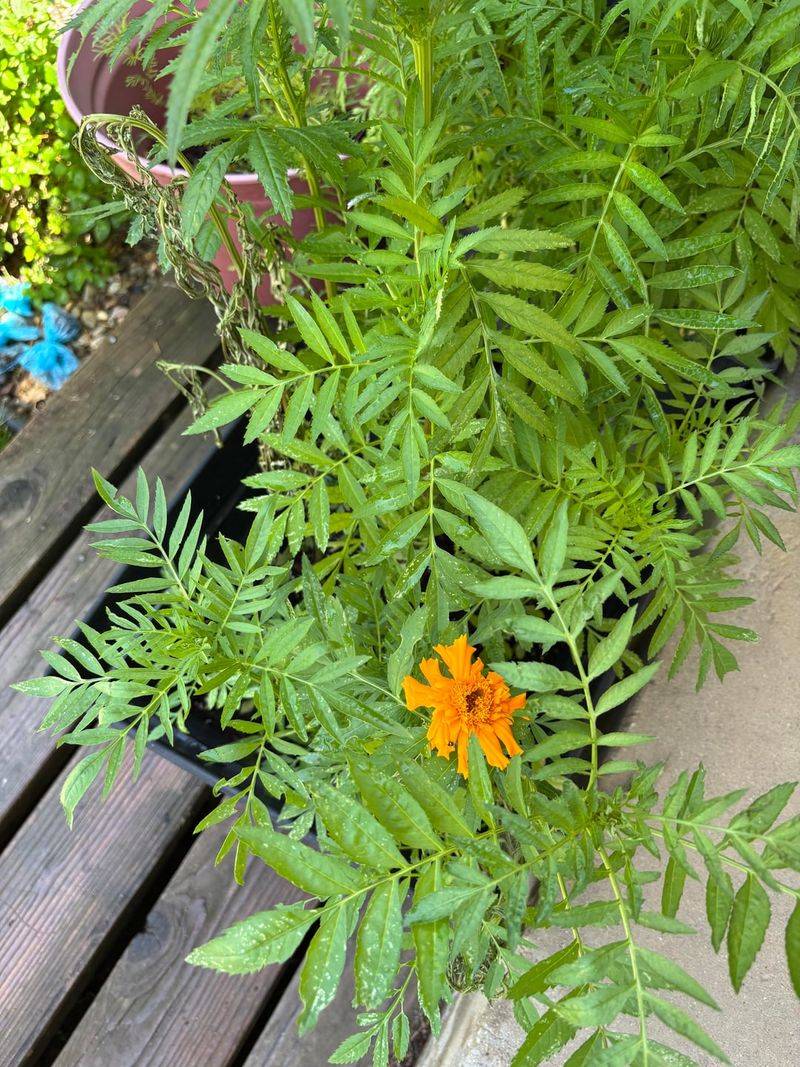
Marigolds generally flower most heavily when they receive full sun, meaning roughly six or more hours of direct sunlight each day.
Earlier in the season, a planting spot may have received plenty of light, but as summer progresses, nearby shrubs, maturing vegetable plants, fences, buildings, or seasonal shifts in the sun’s angle can reduce the amount of direct light reaching the flowers.
Walk through your garden at different times of day rather than judging sunlight from a single quick look. A spot that appears bright in the morning may sit in shade by early afternoon, or the reverse may be true depending on your yard’s layout.
Oregon gardeners growing marigolds near tall crops like tomatoes, corn, or pole beans may find that those plants cast more shade as the season moves forward.
Some afternoon shade may reduce stress during intense heat in particularly warm Oregon locations, such as parts of southern Oregon or the inland Willamette Valley. However, too much shade can encourage stretched, sparse growth and fewer flowers overall.
The balance between light and heat varies by region, cultivar, and whether plants are growing in containers or in the ground.
Moving a container into a brighter spot may help over time, but do not expect an immediate flush of new blooms. The plant needs time to respond, and sunlight is just one factor among several that may be affecting flowering during an Oregon summer.
4. Check Soil Moisture Before Watering
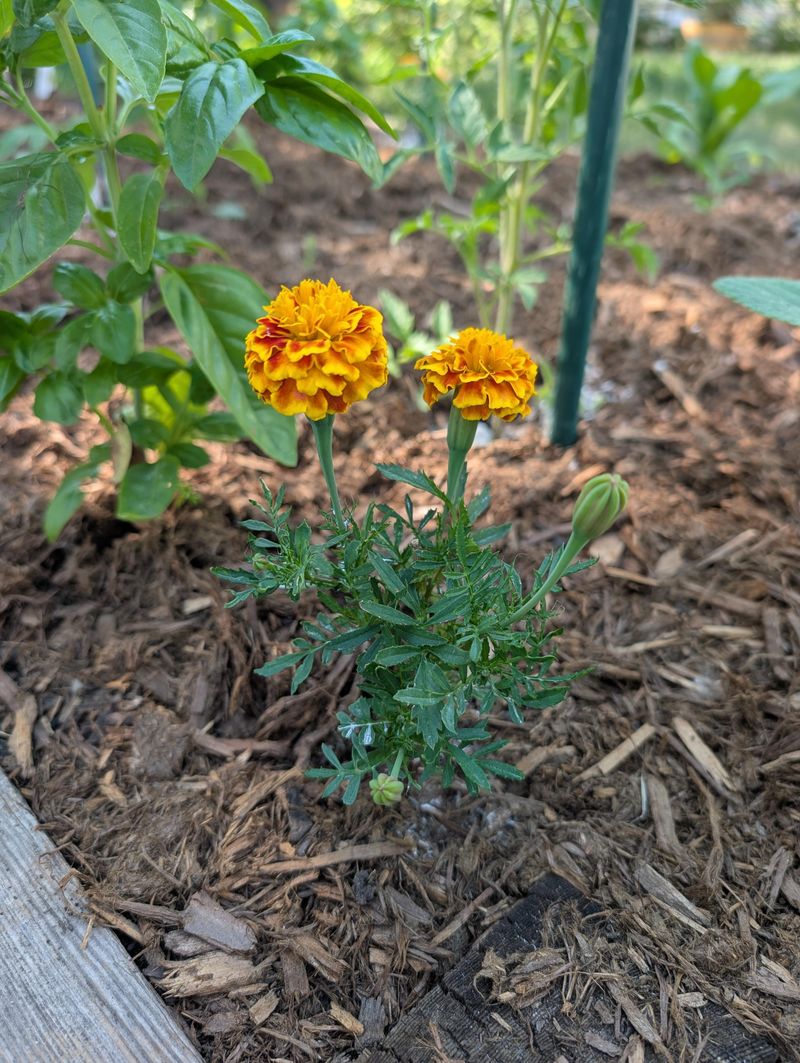
Looking at the surface of a garden bed or container does not always tell you how much moisture remains around the roots.
Soil can appear dry on top while still holding adequate moisture a few inches down, or it can look acceptable while the deeper root zone is quite dry.
Feeling the soil below the surface gives a much clearer picture before you reach for the hose.
For containers, checking approximately the upper one to two inches of potting mix can help indicate whether watering may be needed. For garden beds, pressing a finger or a small tool a few inches into the soil works well.
Garden soil, potting mix, container size, temperature, wind, mulch, and plant size all affect how quickly moisture is used, so conditions can vary considerably across different parts of an Oregon garden.
Watering marigolds on a fixed daily schedule regardless of actual soil conditions is not necessary and may cause problems. Both dry soil and continuously wet soil can stress plants and interfere with flowering.
A marigold sitting in soil that stays too wet for too long may show wilting or other signs of stress even though the ground is not dry.
Check the soil rather than relying on the calendar or the appearance of the surface. This simple habit helps avoid both underwatering and overwatering, two conditions that can affect marigold performance during Oregon’s often dry and warm summer months.
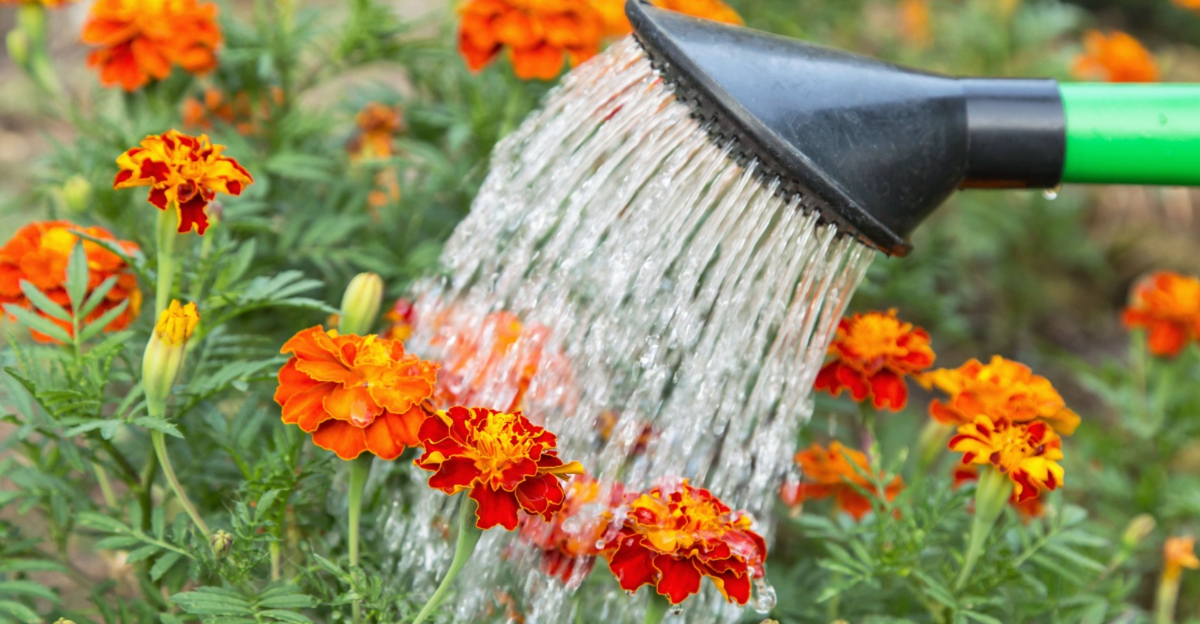
5. Water Thoroughly And Let Excess Moisture Drain
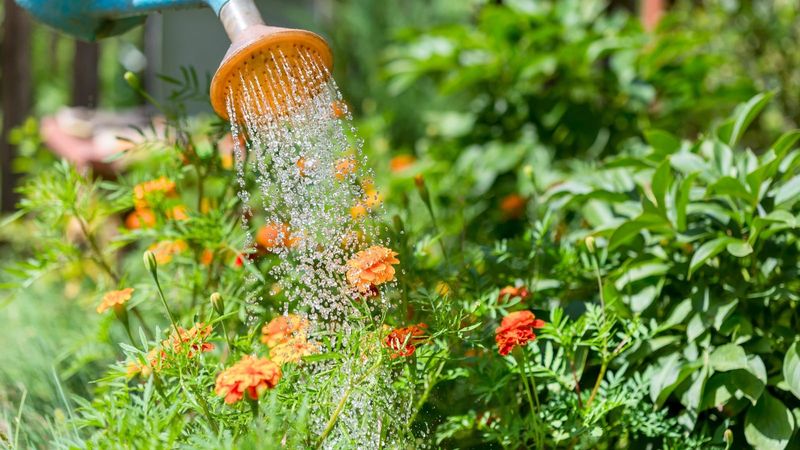
When marigolds do need water, moistening only the top layer of soil may not reach the root zone where the plant actually draws up moisture.
Watering thoroughly means applying enough so that moisture moves down through the soil and reaches the roots, rather than just dampening the surface and evaporating quickly in the summer heat.
For containers, water should move through the potting mix and excess moisture should be able to leave through unobstructed drainage holes at the bottom. Sitting water trapped beneath a container or in a saucer can keep roots wetter than marigolds prefer.
Checking that drainage holes are clear and that water is actually moving through is a worthwhile step, especially for marigolds growing in window boxes or decorative pots.
Thorough watering does not mean keeping the soil saturated at all times. After a good watering session, allow conditions to move back toward an appropriate level of dryness before watering again.
This cycle of watering and partial drying suits marigolds better than soil that stays consistently wet or bone dry.
When practical, direct water near the soil surface rather than repeatedly soaking the flowers and foliage. The amount of water needed varies with plant size, soil type, weather, container material, drainage, and location across Oregon.
Gardeners in the dry heat of central or eastern Oregon may find their marigolds need more frequent attention than those growing along the cooler, moister coast.
6. Correct Poor Drainage In Beds And Containers
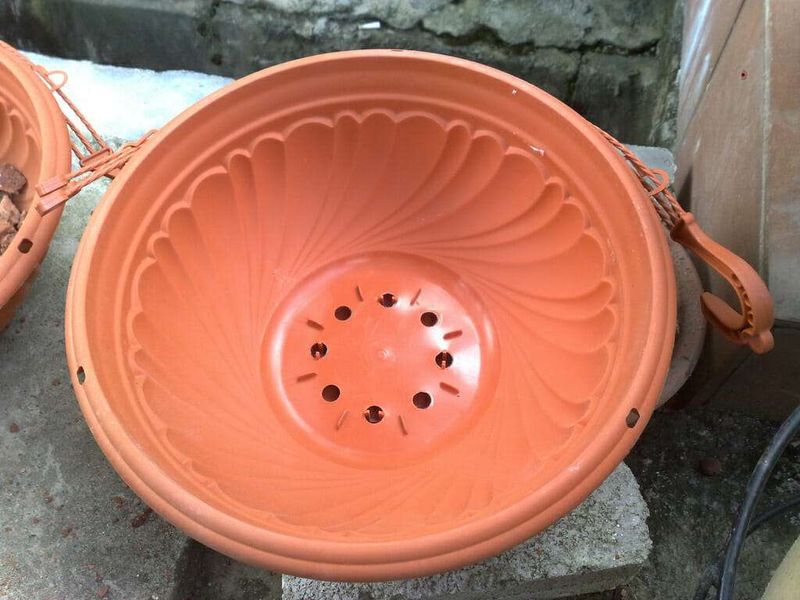
Standing water around the base of a marigold is a sign worth taking seriously.
Compacted soil, low planting areas, blocked container holes, saucers filled with water, or dense potting mix can all leave roots wetter than marigolds prefer, and roots sitting in consistently wet conditions may struggle to support healthy flowering.
Before assuming a wilting or poorly blooming plant simply needs more water, check whether water actually drains after irrigation. Press your finger into the soil or gently check around the roots if the plant is in a container.
A plant that wilts despite wet soil may be dealing with a root issue related to excess moisture rather than drought.
Practical responses include clearing blocked drainage holes, emptying standing water from saucers promptly after watering or rain, and moving containers out of persistently wet locations when possible.
For garden beds, avoid planting marigolds in low spots where water tends to collect after summer irrigation or an unexpected Oregon rain event.
Avoid disturbing established roots aggressively during hot weather, as stressed plants may respond poorly to significant root disturbance in summer heat. Adding a small amount of sand to heavy clay soil does not reliably correct drainage on its own.
If a container plant faces an urgent drainage problem and repotting seems necessary, handle the roots carefully and give the plant a shaded, calm recovery period before returning it to full sun conditions.
7. Stop Additional Fertilizer If Growth Is Excessively Leafy
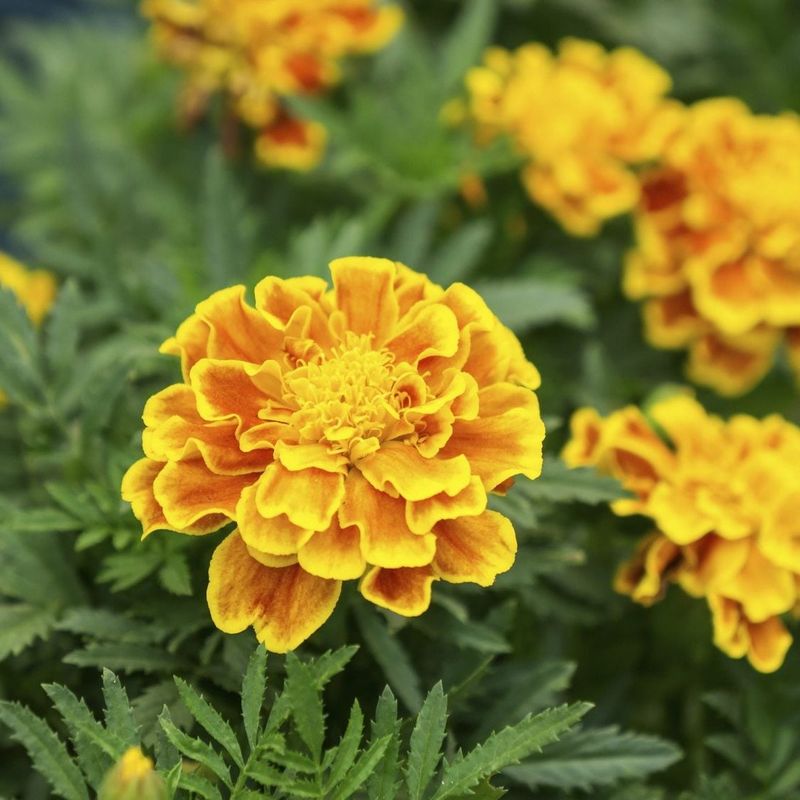
Unusually lush, dark green foliage combined with very few flowers can sometimes follow recent fertilizer applications, particularly products that are high in nitrogen.
Nitrogen supports leafy, vegetative growth, and when plants receive more than they need at a given time, some of that energy may go into producing abundant leaves rather than flowers.
If your marigolds are putting out vigorous new leaves but not many blooms, and you have recently applied fertilizer, pausing additional feeding is a reasonable response. Review what has already been applied and how recently before deciding whether more is needed.
Marigolds growing in reasonably fertile garden soil or fresh potting mix may not need supplemental fertilizer at all during the summer season.
Limited flowering is not always a sign of too much nitrogen. Heat, shade, moisture stress, cultivar traits, plant age, and seed production can all reduce bloom counts regardless of what has been applied to the soil.
Avoid jumping to the conclusion that green, leafy plants are always over-fertilized without considering other possible factors.
Phosphorus is sometimes suggested as a bloom-supporting nutrient, but adding it without understanding the soil or container context and without credible guidance may not help and could complicate nutrient balance over time.
If you are unsure about nutrient needs, pausing all supplemental feeding and focusing on moisture, sunlight, and drainage is a straightforward place to start for Oregon gardeners managing marigolds mid-season.
8. Trim Leggy Growth After Extreme Heat Passes
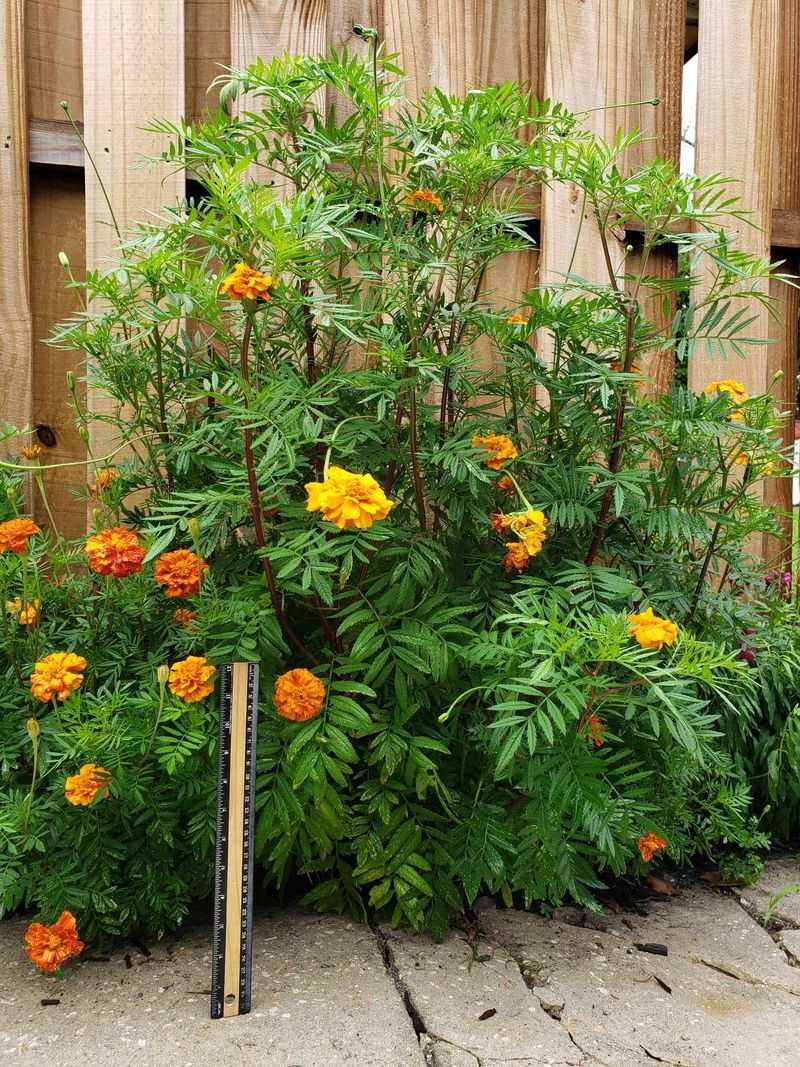
Stretched, sparse stems with wide gaps between leaves and few flowers are a common sight on marigolds that have been growing through a long stretch of summer heat or reduced light.
This kind of leggy growth can make plants look uneven and may reduce the number of flowering tips available on each plant.
Light trimming can help shape stretched plants and encourage branching from healthy nodes lower on the stem. Use clean pruning shears or scissors and remove a modest portion of leggy growth, cutting just above a healthy leaf or branching point.
Trimming is most appropriate after the most intense heat has eased rather than during an extreme heat spell, when stressed plants may respond poorly to losing a significant amount of foliage.
Trimming is not the first response when the only issue is a few faded flowers. Deadheading and checking sunlight, moisture, drainage, and fertilizer should come before reaching for the pruners.
Each plant is different, and there is no single height that every marigold should be cut to. Work with the natural shape of the plant rather than following a rigid formula.
Expect a brief pause in flowering while new shoots develop after trimming.
Some marigolds will branch out and produce fresh blooms in the weeks that follow, while others may remain modest producers depending on cultivar, plant age, and remaining seasonal conditions.
Oregon summers vary widely by region, and how a plant responds to trimming depends in part on what conditions follow the cut.