What The Florida Freeze Did To Avocado Trees And How To Help Them Recover
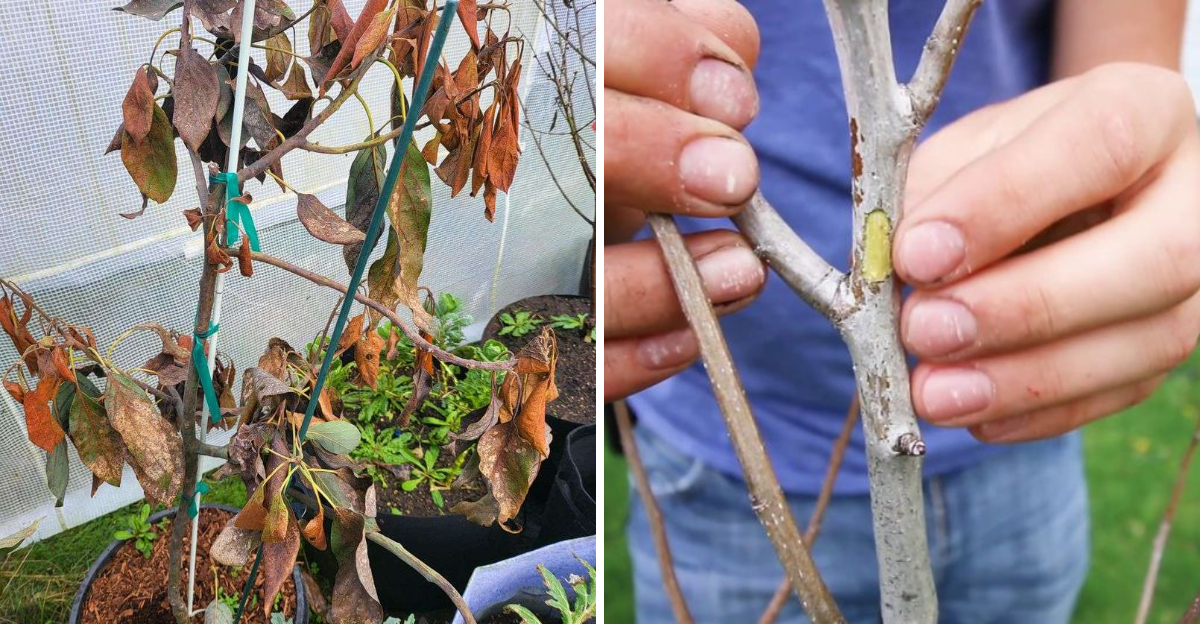
One hard freeze can change everything for an avocado tree in Florida.
Leaves blacken overnight. Branch tips droop. Fruit turns soft and falls before it ripens.
What stood healthy and glossy days ago suddenly looks burned and defeated. Cold snaps in Florida move fast and hit harder than many growers expect.
Avocado trees, built for warmth and steady conditions, struggle when temperatures plunge below their comfort zone. Damage does not always stop at the leaves.
Cambium tissue, young branches, and even the trunk can suffer in silence long before symptoms fully appear. The good news lies in resilience.
Many avocado trees recover with the right timing and care. The key comes down to patience, smart pruning, and soil support that strengthens roots rather than forcing weak top growth.
Understanding what the freeze actually damaged determines the next move and shapes how quickly your tree returns to health.
1. Leaf Burn Is Common And Often Temporary
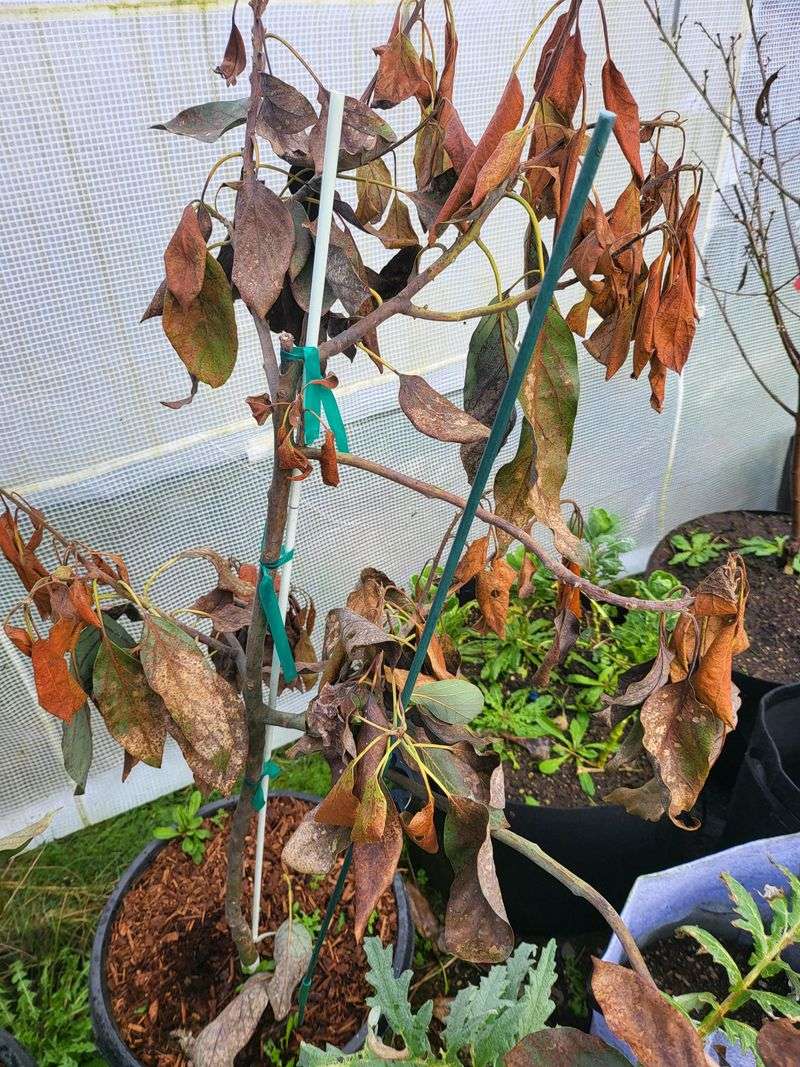
Freezing temperatures cause water inside leaf cells to crystallize, which ruptures cell walls and leads to visible browning. This discoloration usually appears within a day or two after the cold event.
Leaves may look scorched, wilted, or completely dried out depending on how long temperatures stayed below freezing.
What you see on the surface does not always reflect the overall health of the tree. Many avocado trees with completely brown canopies still have healthy wood and root systems underneath.
The cambium layer and buds often survive even when foliage does not.
University of Florida IFAS Extension recommends waiting several weeks before making any decisions based on leaf appearance alone. New growth will emerge from undamaged buds as temperatures warm and daylight increases.
South Florida trees typically show regrowth faster than those in Central or North Florida due to warmer spring conditions.
Resist the urge to remove damaged leaves immediately. They still provide some protection to the branches and trunk.
As new shoots develop, the tree will naturally shed the damaged foliage on its own timeline.
2. Young Trees Take The Biggest Hit
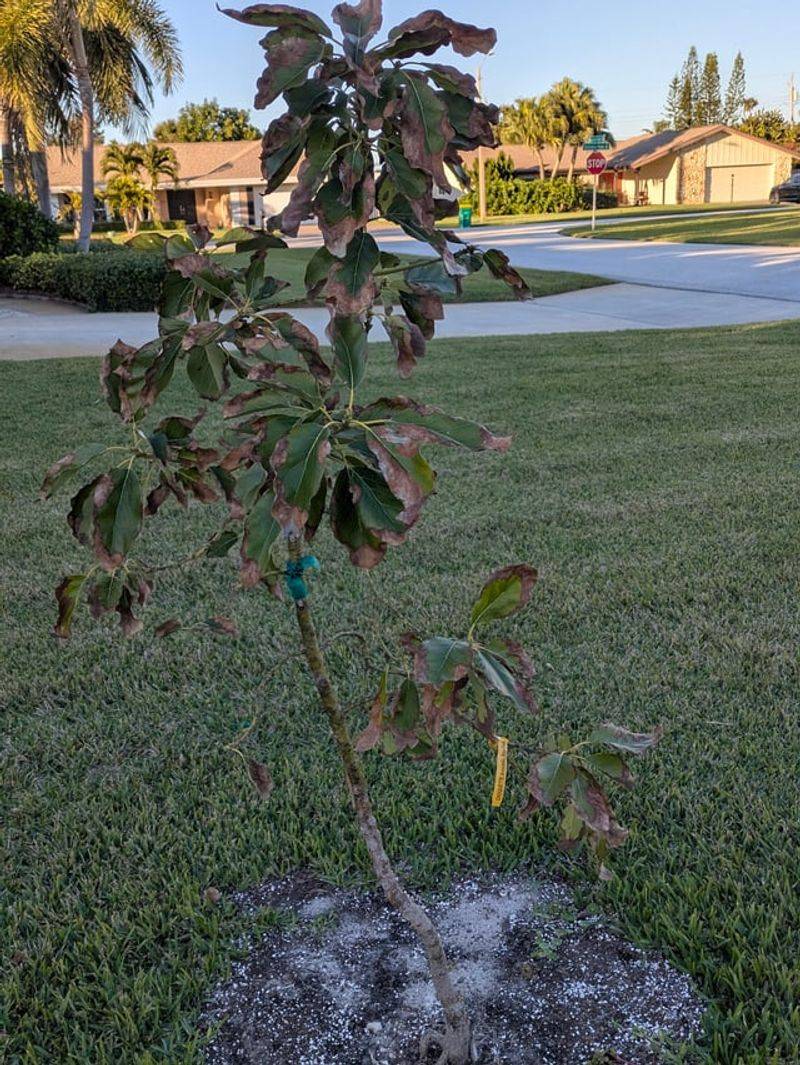
Newly planted avocado trees have thinner bark and smaller root systems, which makes them far more vulnerable during freeze events. Their trunks lack the insulating layers that mature trees develop over years of growth.
Without a full canopy to trap warmer air near the ground, young trees experience more extreme temperature swings.
Homeowners in Central and North Florida should expect more severe damage on trees planted within the past two to three years. Even a brief dip into the upper twenties can cause significant bark splitting and cambium injury on young specimens.
Mature trees in the same location may show only minor leaf burn.
IFAS guidance emphasizes protecting young avocado trees before freeze events with trunk wraps, blankets, or temporary structures. After the freeze, inspect the lower trunk carefully for cracks or soft spots.
These trees may need extra irrigation support and shade protection as they recover.
Recovery timelines are longer for young trees because they have fewer energy reserves stored in their wood and roots. Be prepared to wait an entire growing season before seeing substantial new growth.
Some young trees may require replacement if the main trunk sustained severe damage.
3. Fruit Drop Happens Fast After Cold Stress
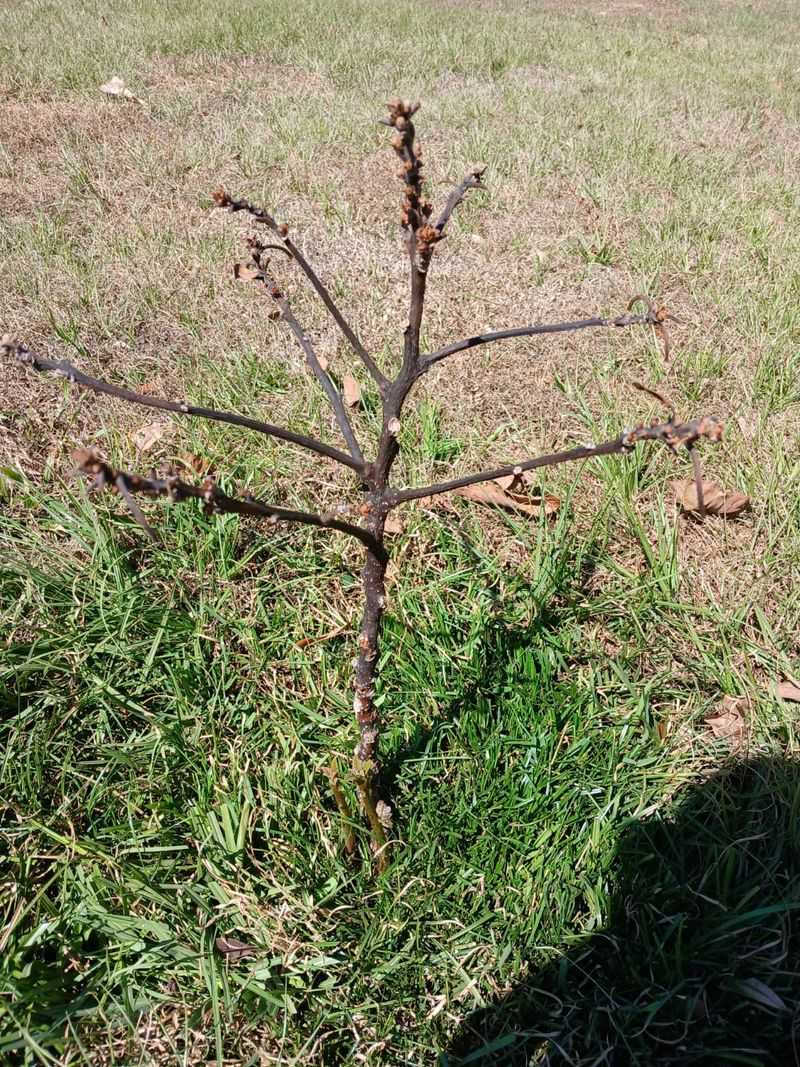
Avocado trees respond to cold stress by shedding fruit to conserve energy for survival. This protective mechanism redirects resources away from reproduction and toward maintaining essential tissue.
Fruit drop usually begins within a few days of the freeze and can continue for up to two weeks afterward.
Immature fruit is more likely to drop than mature fruit close to harvest size. The tree prioritizes saving its structural integrity over completing fruit development.
You may notice fruit with dark spots or soft areas hitting the ground first, followed by apparently healthy specimens.
Florida growers should not interpret fruit drop as a sign the tree is failing. It represents a normal stress response that actually helps the tree survive.
According to University of Florida research, trees that drop fruit after freezes often recover faster than those that attempt to hold onto a full crop load.
Collect dropped fruit promptly to reduce pest attraction and disease pressure around the tree base. Do not attempt to save partially damaged fruit for eating, as freeze-damaged avocados develop off flavors and poor texture.
Focus instead on supporting the tree through proper watering and monitoring for new vegetative growth in the coming months.
4. Bark Damage Can Show Up Later
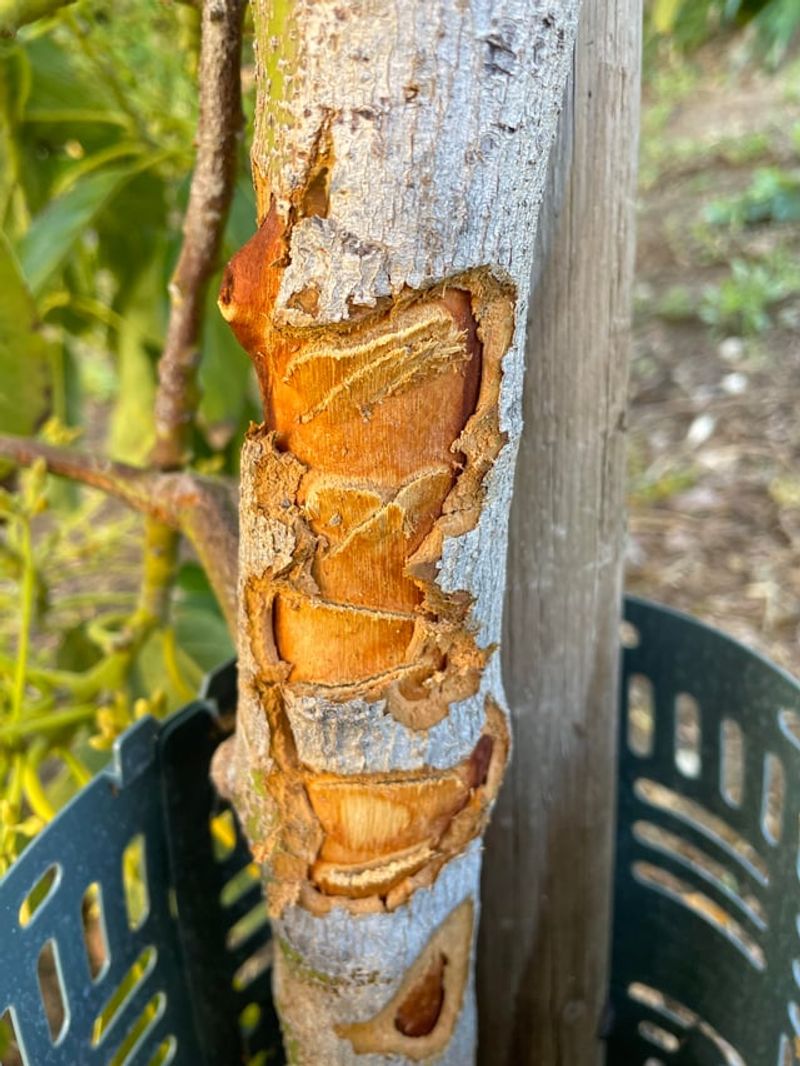
Trunk and branch bark may look fine immediately after a freeze but develop cracks or peeling several weeks later. This delayed symptom occurs because the cambium layer underneath can sustain damage that takes time to become visible.
As temperatures warm and sap flow resumes, weakened areas separate from healthy wood.
Vertical splits along the trunk are particularly common on the south and west sides where sun exposure increases after leaf loss. Without the canopy providing shade, direct sunlight heats the bark during the day while nights remain cool.
This temperature fluctuation causes expansion and contraction that worsens existing freeze damage.
IFAS recommendations include applying white latex paint diluted with water to exposed trunks to reduce sunscald risk. Check your tree weekly for four to six weeks after the freeze event.
Look for areas where bark feels loose, shows discoloration, or has visible separation from the wood beneath.
Small cracks may heal on their own as the tree compartmentalizes damage. Large splits that expose significant amounts of wood indicate more serious injury.
Document the location and size of any bark damage to track progression and help determine if the tree can recover successfully over the growing season.
5. Check The Cambium Before You Cut Anything
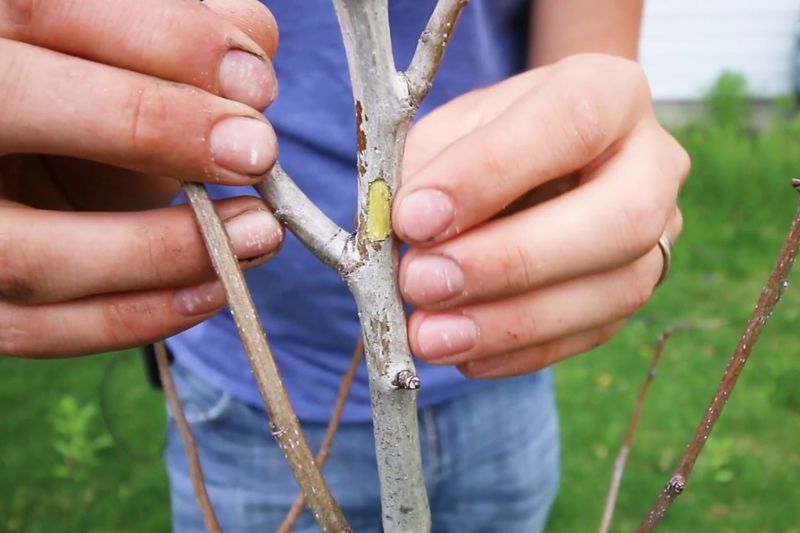
Before removing any branches or making pruning cuts, you need to assess whether the wood underneath is still alive. The cambium is a thin layer of actively growing cells just beneath the bark.
Healthy cambium appears green or cream colored and feels slightly moist when exposed.
Use a clean knife or thumbnail to gently scrape away a small section of outer bark on branches at different heights. Start near the top of the canopy and work downward.
If you see brown, dry, or gray tissue instead of green, that portion of the branch has sustained fatal damage.
University of Florida experts recommend checking multiple locations because damage is rarely uniform throughout the tree. A branch may have healthy cambium near the trunk but damaged tissue toward the tips.
Mark the lowest point where you find green cambium with colored tape or ribbon.
This assessment takes patience and should be repeated every few weeks as conditions change. Cambium that looks marginal immediately after a freeze may recover or decline depending on weather and tree vigor.
Accurate cambium checks prevent premature removal of wood that could still produce new shoots and help the tree rebuild its canopy over time.
6. Wait To Prune Until New Growth Starts
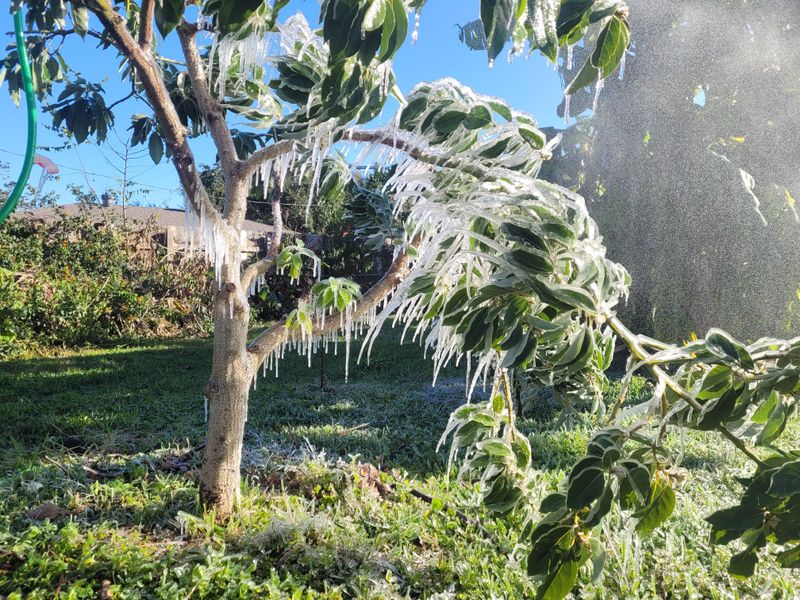
Pruning too early removes wood that might still have viable buds capable of producing new growth. Florida avocado trees often surprise homeowners by pushing out shoots from seemingly damaged branches weeks or even months after a freeze.
Cutting back too soon eliminates these recovery opportunities and can actually slow the healing process.
IFAS guidance recommends waiting until you see clear patterns of new growth before making any significant pruning decisions. In South Florida, this typically occurs six to eight weeks after the freeze event.
Central and North Florida trees may take ten to twelve weeks depending on spring temperatures.
When new shoots begin emerging, you can identify which branches are truly unrecoverable. Prune back to just above the highest point of active growth, making clean cuts that do not leave long stubs.
Remove only wood that shows no signs of life after adequate waiting time.
Avoid heavy pruning that removes more than one third of the canopy at once, even on severely damaged trees. Gradual pruning over multiple sessions reduces stress and allows the tree to adjust its energy allocation.
Keep cuts clean and avoid applying wound dressings, which can trap moisture and encourage decay in Florida’s humid climate.
7. Watering And Mulch Support Recovery
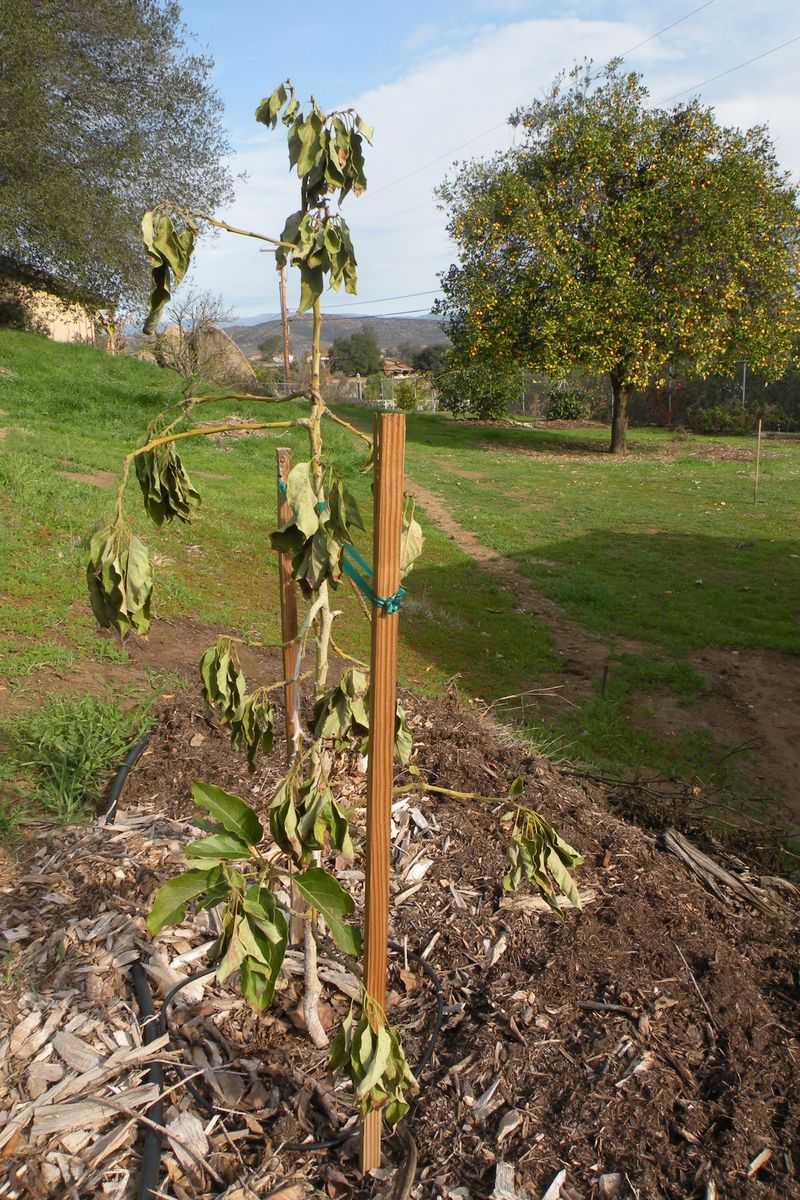
Proper moisture management helps freeze-damaged avocado trees rebuild their root and canopy systems. Trees with reduced leaf area transpire less water, so irrigation needs change temporarily after cold events.
University of Florida research shows that consistent but not excessive moisture supports recovery better than alternating wet and dry periods.
Check soil moisture four to six inches deep near the drip line before irrigating. The soil should feel slightly moist but not saturated.
During recovery, water deeply once or twice per week rather than frequent shallow watering, adjusting for rainfall and seasonal changes.
Apply a three to four inch layer of organic mulch in a circle extending to the drip line but kept six inches away from the trunk. Wood chips, pine bark, or shredded leaves all work well in Florida conditions.
Mulch moderates soil temperature, retains moisture, and reduces weed competition while the tree focuses energy on regrowth.
Avoid fertilizing immediately after a freeze. Wait until you see six to eight inches of new vegetative growth before applying nutrients.
IFAS recommendations suggest using a balanced fertilizer formulated for avocados at half the normal rate initially, then gradually returning to regular feeding schedules as the canopy rebuilds over the growing season.
8. When To Replace A Tree And Start Over
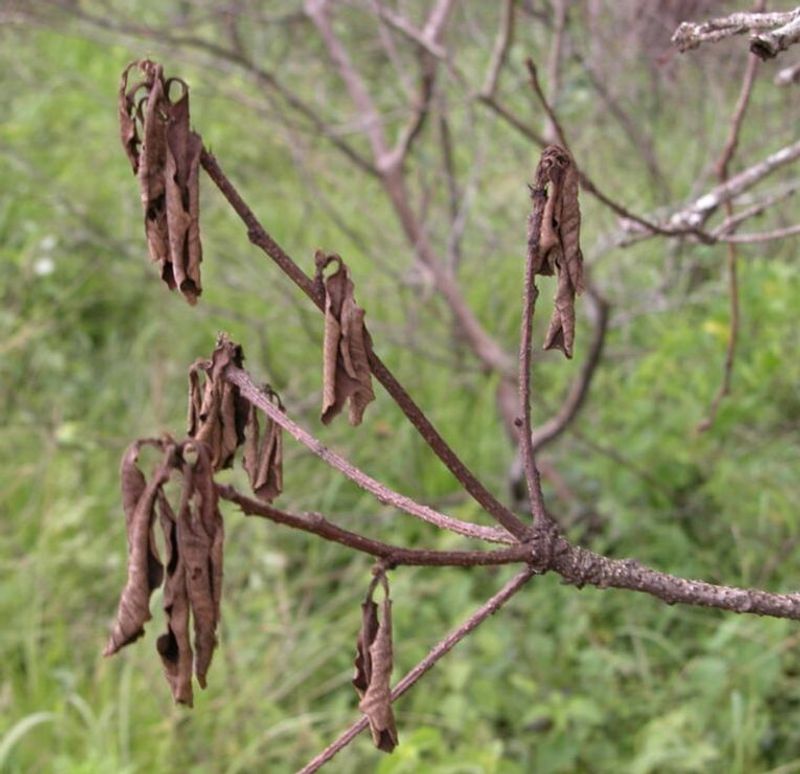
Some freeze damage is too extensive for practical recovery, especially when the main trunk sustains severe injury below the graft union. Trees with complete cambium loss around the entire trunk circumference cannot transport water and nutrients, which makes survival impossible.
Large structural cracks that compromise trunk stability also indicate replacement may be the better choice.
Give your tree at least one full growing season before making a final decision. Many Florida homeowners have been surprised by recovery from trees that looked hopeless in February but produced new growth by June.
However, if you see no new shoots by late spring or early summer, the tree likely will not recover.
Young trees under three years old with major trunk damage are usually better replaced than nursed through a long recovery period. The time investment to rehabilitate a severely damaged young tree often exceeds the time needed to establish a new healthy specimen.
Mature trees with extensive root systems and partial canopy survival are generally worth the recovery effort.
Consult with a University of Florida Extension agent if you are uncertain about replacement decisions. They can assess damage severity and help you weigh recovery potential against the benefits of starting fresh with a new tree better suited to your location’s freeze risk.