The 8 Best Native Ohio Climbers For A Backyard Trellis
Your bare trellis is wasted space, and Ohio’s own native vines can turn it into a wildlife magnet without a single trip to buy invasive imports. Most garden centers push the same tired lineup: English ivy, wisteria, exotic clematis.
Pretty, sure. But these plants offer almost nothing to local birds, bees, or butterflies.
Some even escape gardens and choke out entire forests. Ohio’s native climbers work differently.
They evolved alongside local pollinators for thousands of years, so hummingbirds know exactly where to find their nectar and native bees recognize the bloom shapes on sight. Many produce berries that feed songbirds straight through fall migration.
Give one of these vines a trellis, a fence, or an old mailbox post, and it repays you with dense privacy, dramatic flowers, and a steady stream of visitors your neighbor’s boring hedge will never attract. Eight climbers stand above the rest.
Your empty trellis just found its purpose.
1. Coral Honeysuckle Brings Hummingbirds Right To The Trellis
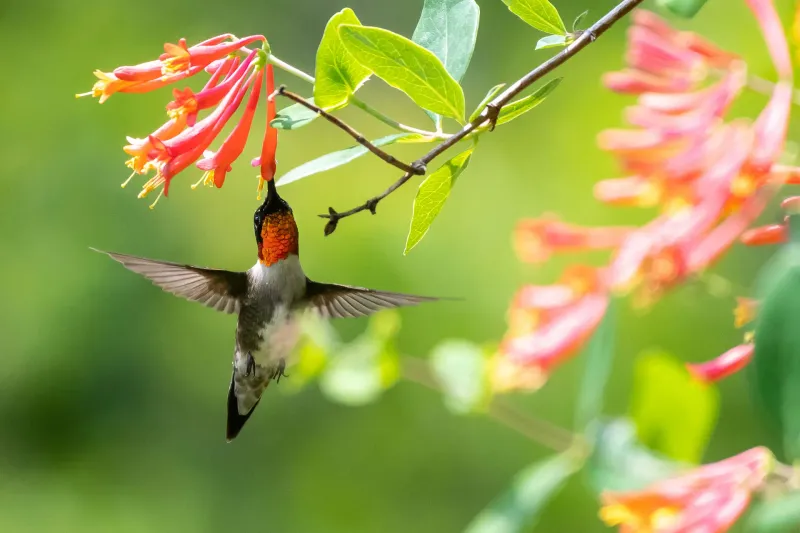
Few flowering vines earn their place on a backyard trellis as clearly as Lonicera sempervirens, the coral honeysuckle. Its tubular flowers range from scarlet to reddish orange, and ruby-throated hummingbirds are well-documented visitors to those blooms.
Planting it near a trellis where hummingbirds can be seen is a reasonable goal, though no visit is ever guaranteed.
The vine climbs by twining its stems around a support. Mature plants can reach around 10 to 20 feet, so a sturdy trellis or fence works better than a small wire accent.
It handles full sun well, and flowering tends to be stronger with more light, though it can tolerate partial shade. Unlike Lonicera japonica, the invasive Japanese honeysuckle, this species behaves far more predictably in a garden setting.
It does not spread aggressively through the landscape.
Ohio gardeners often find it easier to manage than many other woody vines on this list. Pruning after the main flush of bloom can help keep the plant tidy and encourage fresh growth.
It is a woody perennial, so the framework returns each year. Coral honeysuckle blooms from spring into summer, with some rebloom possible.
Birds may also use the small red berries that follow the flowers.
2. Virgins Bower Covers Summer Growth With White Flowers
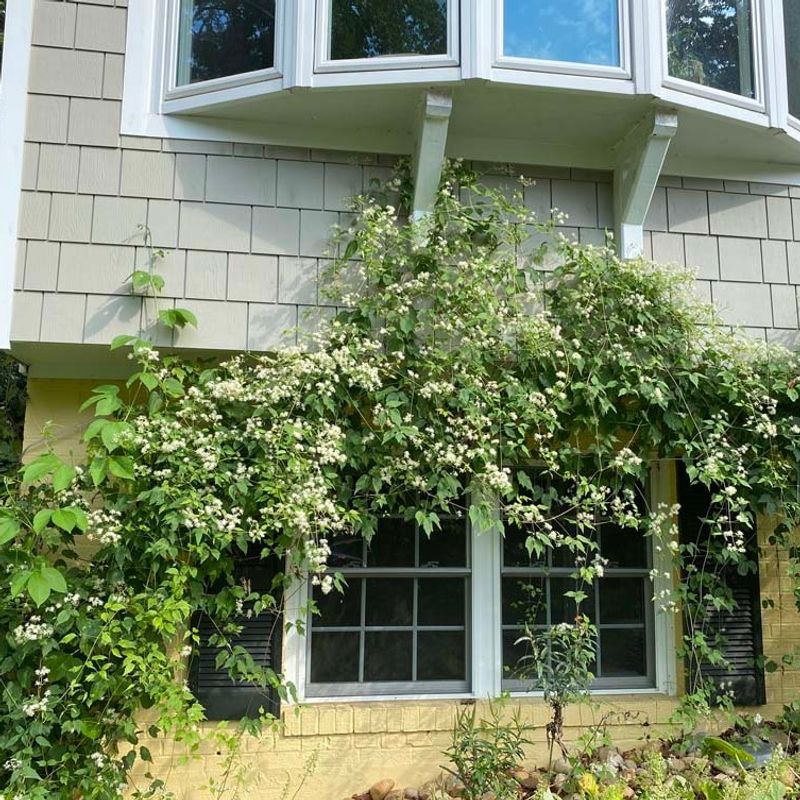
Clouds of small white flowers appearing across a fence or trellis in late summer are a reliable sign that Virgin’s bower is doing what it does best.
Clematis virginiana blooms from roughly midsummer into early fall, producing dense clusters of creamy white blossoms that are attractive to several pollinating insects.
The fluffy seed heads that follow can persist into autumn and add their own quiet interest.
The vine climbs by wrapping its leaf stalks around supports rather than by twining its main stem. Thinner trellis elements, wire, or fence rails give those leaf structures something easy to grip.
A dedicated trellis or sturdy fence is a better placement than beside a valued shrub, because this species can grow quickly and scramble over neighboring plants. Extension guidance notes that it can overwhelm smaller landscape shrubs when given the chance.
Your Ohio Garden Changes Every Week. Your Plan Should Too.
Gardening in Ohio changes quickly throughout the season. Every Friday you’ll receive a simple weekly plan showing exactly what to plant, prune, fertilize, harvest, and protect so you never miss the right timing.
Virgin’s bower is a perennial that can reach 12 feet or more in a single season under good conditions. It can also self-seed, and in some settings that seeding can produce more plants than expected.
Cutting it back after bloom or in late winter can help keep it within the space the trellis provides. It tolerates significant shade, which makes it one of the more flexible options for shadier backyard spots.
3. American Wisteria Gives A Strong Trellis A Native Show
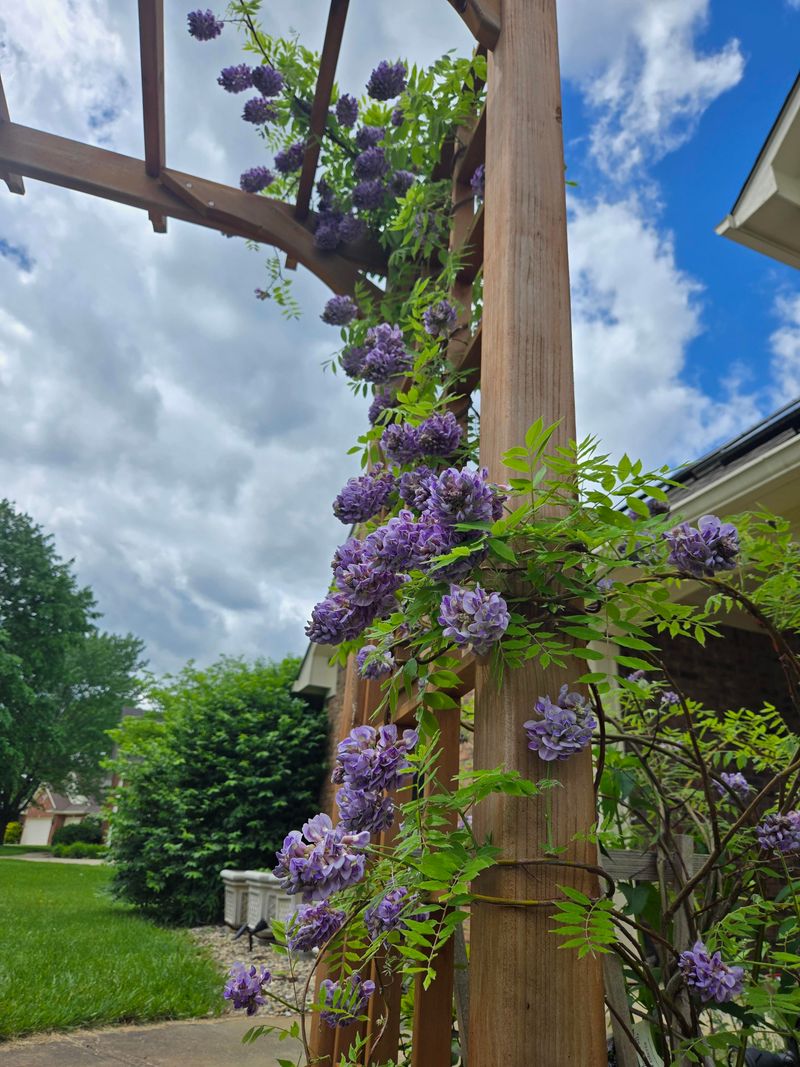
Gardeners sometimes picture a delicate vine when they hear wisteria, but Wisteria frutescens is not a small plant. This is a large, woody perennial that can reach 25 to 40 feet at maturity.
The structure holding it must be genuinely strong. Flimsy plastic lattice or a lightweight decorative arch is not an appropriate match for a mature specimen.
A heavy arbor, a reinforced pergola, or a sturdy fence post system gives it the support it actually needs.
American wisteria is less aggressive than Chinese wisteria (Wisteria sinensis) or Japanese wisteria (Wisteria floribunda), but less aggressive does not mean low effort.
It can grow rapidly, and regular pruning may be needed to keep it from extending beyond its intended space.
Flower clusters are typically lavender to violet-purple and appear in shorter, rounder clusters than those of Asian species. Flowering can depend on plant maturity, light levels, and pruning history, so patience is often part of the process.
The species is native to parts of the eastern United States, and Ohio falls within its regional range. Gardeners who want the drama of wisteria blooms on a large structure can find this a rewarding option.
Those with a modest backyard trellis should consider a smaller vine from this list instead.
4. American Groundnut Twines Through Moist Garden Corners
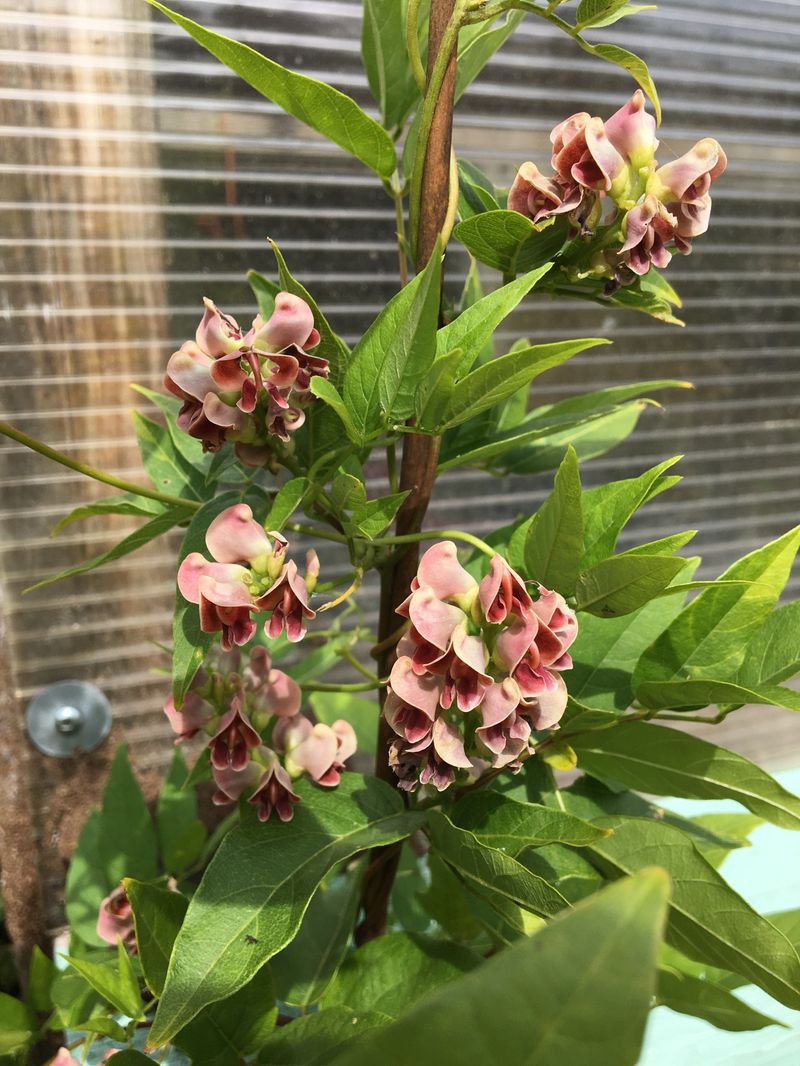
Damp corners of a backyard often go unplanted because most ornamental vines prefer well-drained soil. Apios americana, the American groundnut, fills that niche.
It is a perennial herbaceous vine that favors moist conditions, including streambanks, wet thickets, and low-lying areas that stay consistently damp through the growing season.
The vine is not an aquatic plant and does not want standing water, but average dry garden soil is not its best environment.
It climbs by twining and can reach roughly 8 to 15 feet under favorable conditions. The flowers are small and clustered, with colors ranging through brownish, reddish, or burgundy tones.
They are not showy from a distance but reward a closer look. The plant has a documented history of food use by Indigenous peoples, though this article focuses on its value as a trellis vine rather than as a food source.
The more important garden consideration is its spreading habit. American groundnut can form colonies through underground structures, and some Extension guidance describes it as potentially weedy in certain conditions.
A trellis in a moist area with room to expand is a better fit than a tight formal border. Gardeners willing to monitor its spread can enjoy its unusual flowers and its value to pollinators without much difficulty.
5. Northern Leatherflower Brings Bell Shaped Blooms To A Small Trellis
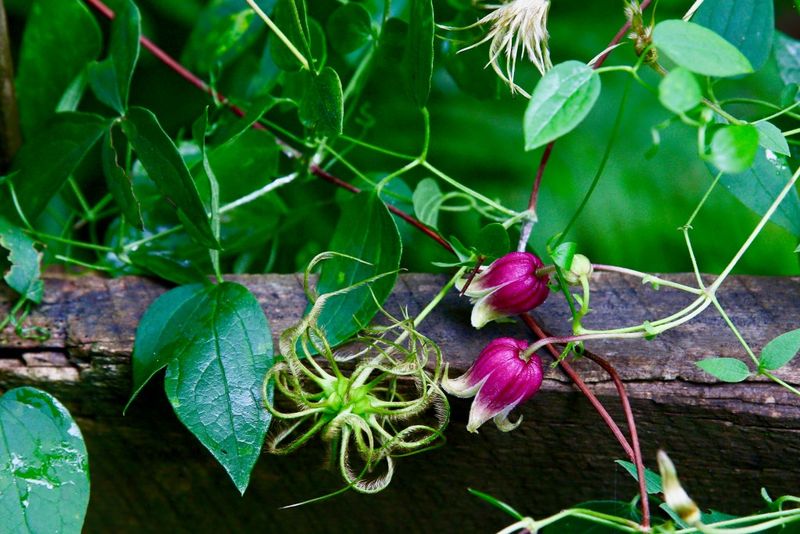
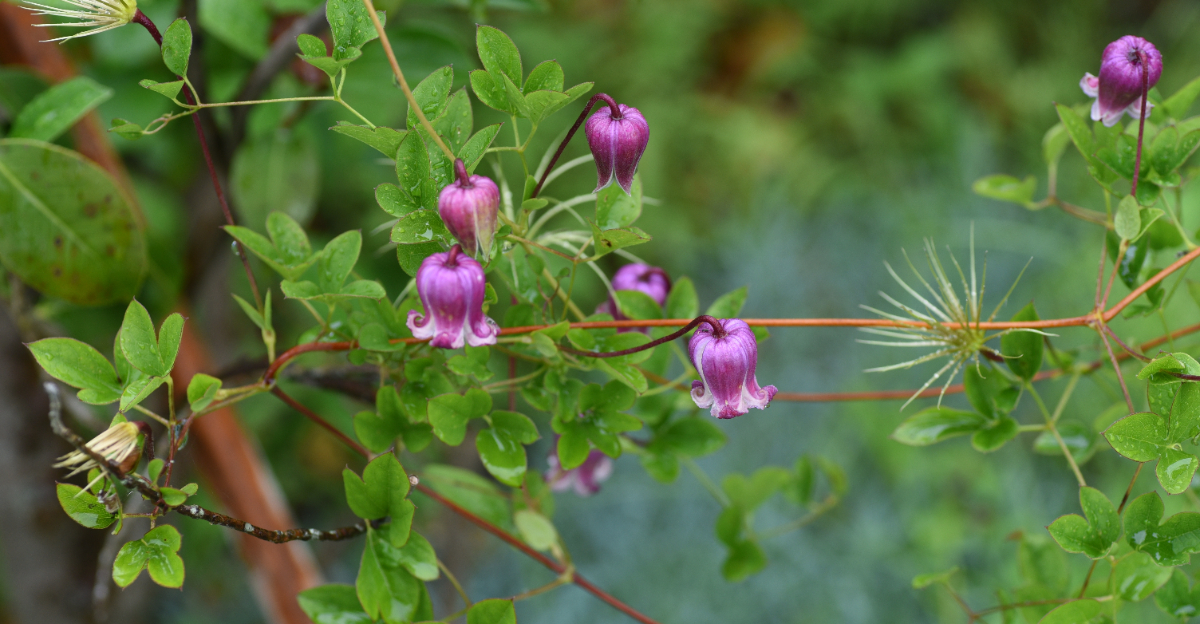
Among the Clematis species native to this region, Clematis viorna stands out for its unusual flowers and its more modest scale.
The blooms are urn-shaped or bell-shaped, nodding downward from the stem tips, and their color falls in the range of muted reddish-purple, dull rose, or lavender-tinged tones.
They are quieter than a showy hybrid Clematis, but distinctly interesting up close. Bloom time runs roughly from late spring through midsummer in much of its range.
The vine climbs by using its leaf stalks to grip a support, similar to other Clematis species. Slender trellis elements and wire give those leaf structures an easier grip than wide boards.
Mature vines are generally described in the range of 6 to 12 feet, which makes this a realistic choice for a modest backyard trellis rather than a large structure.
Ohio gardeners looking for a Clematis-type vine at a manageable scale often find this species worth seeking out at native plant nurseries.
Hummingbirds and certain bees have been noted visiting the flowers, though specific visitation rates vary by location and season. The feathery seed heads that follow bloom add late-season interest.
This is not the same species as Clematis virginiana, and the two should not be confused. Viorna stays smaller and does not carry the same rapid-growth concerns.
6. Wild Cucumber Gives You Fast Cover For One Season
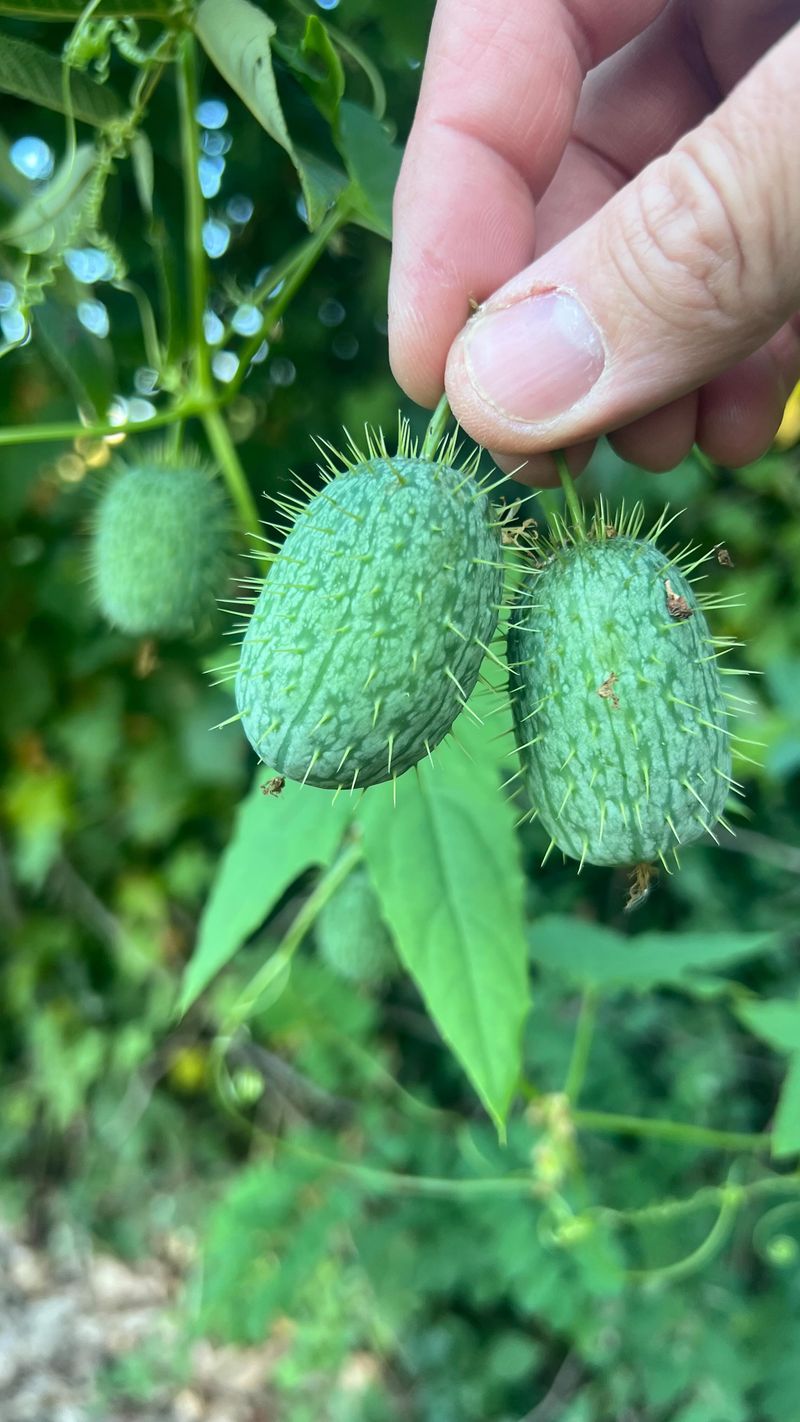
Speed is the defining trait of Echinocystis lobata. Unlike every other plant on this list, wild cucumber is a true annual.
It sprouts from seed, climbs, flowers, sets fruit, and completes its above-ground life cycle within a single growing season. The same root system does not return the following spring.
New plants can grow from seeds that drop in autumn, but that is a new generation, not a returning vine.
The plant climbs using tendrils, which reach out and coil around whatever is nearby. It can cover a trellis quickly, but it will also reach toward adjacent shrubs, fences, or other plants if given the chance.
University botanical sources note that it can smother nearby vegetation during a single season. Placing it beside small shrubs or young perennials without room to maneuver is not advisable.
The flowers are small and pale, almost white, and appear in clusters along the stem. The fruit is inflated and covered in soft spines, which gives the plant a distinctive look in late summer.
It is not related to the garden vegetable cucumber (Cucumis sativus), and the fruit is not edible. Because it is annual, removing spent vines at season end is straightforward.
That cleanup reduces next-year seeding, though it does not eliminate volunteer plants entirely. Fast seasonal coverage is where this vine genuinely excels.
7. Limber Honeysuckle Gives Part Shade A Native Climber
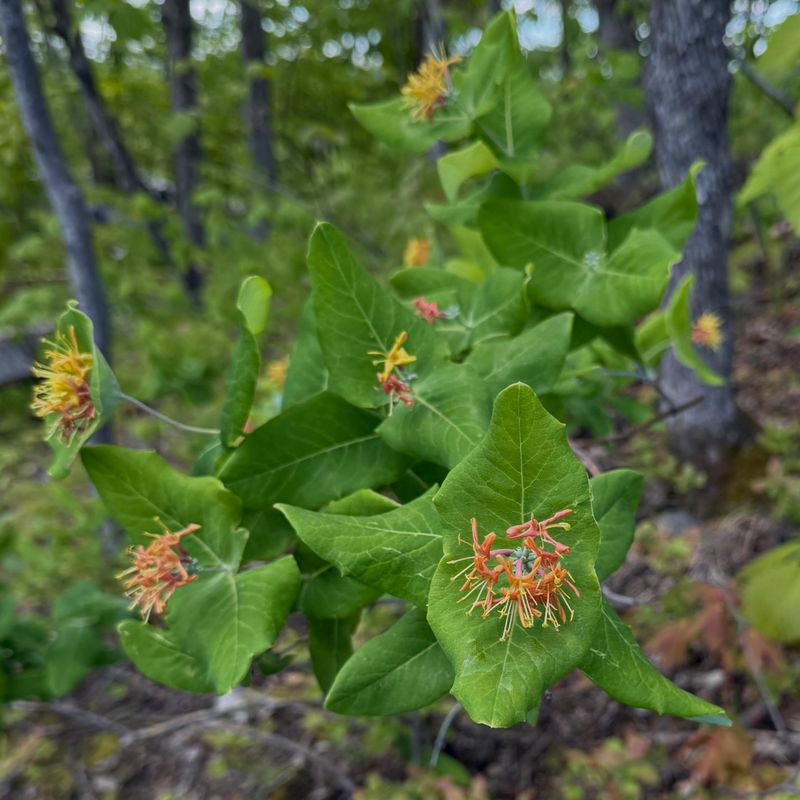
Not every backyard trellis sits in full sun. Lonicera dioica, the limber honeysuckle, is one of the few woody native climbers that performs reasonably well in partial shade.
Extension sources generally describe it as a low climber, with mature vines reaching somewhere in the range of 3 to 10 feet depending on conditions.
That smaller stature makes it a proportionate fit for a modest trellis or a fence section that does not need to be covered wall to wall.
The flowers can display combinations of red, orange, and yellow, sometimes with purplish tones on the outside of the tube.
They are smaller and less showy than coral honeysuckle blooms, but hummingbirds may visit them, and birds have been documented using the fruit.
Flower production may be stronger with more light, so a spot that gets morning sun often produces better results than deep afternoon shade.
Ohio has a native population of this species, and it offers a useful alternative for gardeners who want a native honeysuckle without reaching for the invasive Lonicera japonica. The two species are not interchangeable.
Limber honeysuckle climbs with a twining or arching habit and does not share the aggressive spreading behavior of Japanese honeysuckle. It is a woody perennial that benefits from occasional pruning to maintain a tidy shape on the trellis.
8. Yellow Passionflower Adds Delicate Growth Without A Massive Vine
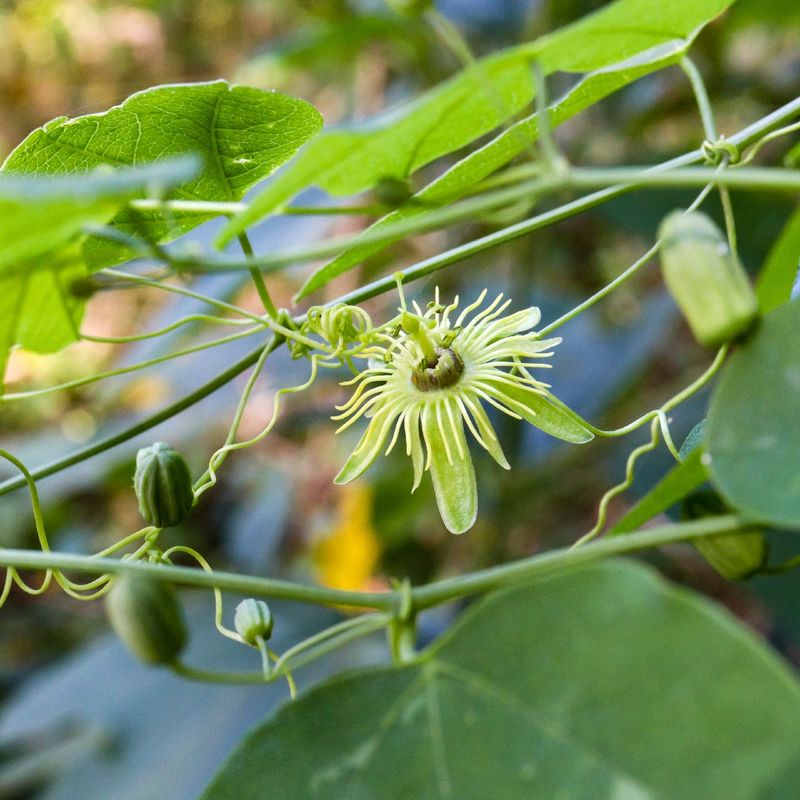
Fine stems and small, intricately shaped flowers are what set Passiflora lutea apart from the heavier vines on this list.
The flowers are pale greenish-yellow, sometimes described as yellow-green or off-white, and they are much smaller than the tropical passionflowers seen in garden centers.
The above-ground plant has a lighter, more delicate presence than American wisteria or even Virgin’s bower.
It is an herbaceous perennial, meaning the top growth retreats in winter and new stems emerge in spring. The vine can work on a modest trellis, a fence, or among a naturalistic planting with other low-growing plants.
It accepts both full sun and partial shade, though light preferences can vary by site. Soil with reasonable moisture and good drainage suits it well.
The underground story is different from the above-ground appearance. Passiflora lutea spreads through rhizomes, and Ohio Extension sources note that it can move beyond the original planting over time.
A smaller above-ground vine does not mean a plant that stays in one place forever. Gardeners who choose it for a tidy formal border should be aware of that tendency.
Birds and small mammals have been documented using the dark berries, though the fruit is not recommended for human consumption. Monitoring below-ground spread is a practical part of growing this species well.