When A Praying Mantis Appears In Your Georgia Garden, It’s No Coincidence (Here’s What It Means)
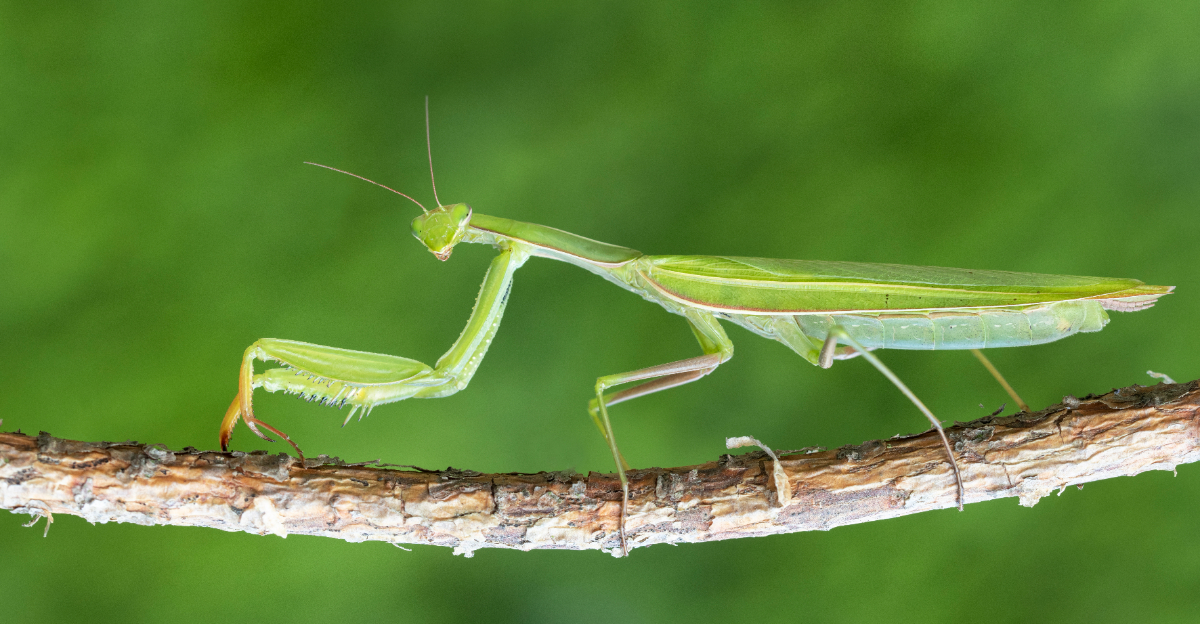
A praying mantis can make an entire garden feel different the moment it shows up. Most people freeze for a second after spotting one because they blend in so well that they almost seem to appear out of nowhere.
Some gardeners in Georgia only see one for a few minutes before it disappears again.
Others suddenly start noticing them resting near flowers, hiding around tomato cages, or showing up in the same part of the yard over and over again.
That is usually when curiosity kicks in. A lot of people start wondering why mantises seem drawn to certain gardens while completely ignoring others nearby.
1. Your Garden Likely Has Plenty Of Insects Nearby
A praying mantis does not wander into just any yard. When one shows up in your Georgia garden, it is almost always because the food supply is strong.
Mantises feed on live insects, including beetles, grasshoppers, flies, and moths, so a yard buzzing with bug activity is exactly the kind of place they seek out.
Georgia summers are long and warm, which means insect populations tend to stay active well into fall. Flower beds, vegetable patches, and herb gardens all attract a wide variety of bugs.
A mantis picks up on that activity quickly and moves in to take advantage of the steady supply.
Gardeners in Georgia often notice mantises near tomato plants, sunflowers, or dense shrubs, and that is no accident. Those plants tend to attract aphids, caterpillars, and other soft-bodied insects that make easy targets.
A mantis sitting still on a stem is not resting; it is actively hunting.
Having a mantis around is generally a sign that your garden supports a healthy, living ecosystem. Insect diversity, even when it includes pests, creates the conditions that draw in natural hunters like the mantis.
Rather than seeing pest insects as a problem, a mantis sees them as an opportunity.
2. Mantises Usually Stay Where Food Is Easy To Find
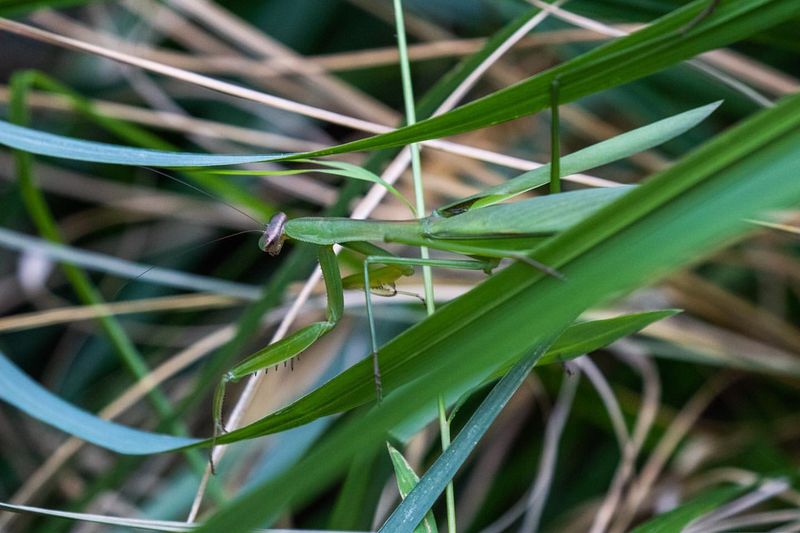
Patience is one of the praying mantis’s greatest strengths. Unlike many predators that chase down prey, a mantis relies on stillness and camouflage to catch its meals.
Once it finds a reliable hunting spot, it rarely moves far, which is why you might notice the same mantis in the same corner of your Georgia garden for days at a time.
Mantises are ambush hunters. They position themselves along plant stems, near flower heads, or on broad leaves where insects are likely to land or crawl past.
When prey gets close enough, the mantis strikes with remarkable speed. Because of this strategy, location matters enormously to them.
Georgia gardens with a mix of flowering plants, edible crops, and native shrubs tend to offer the most reliable hunting grounds.
Pollinators like bees and butterflies visit these plants regularly, and while mantises do occasionally catch pollinators, their preferred targets are usually smaller, softer insects that are easier to handle.
A mantis that keeps returning to the same area is telling you something useful. It means that particular spot consistently delivers food.
Your Georgia Garden Changes Every Week. Your Plan Should Too.
Gardening in Georgia changes quickly throughout the season. Every Friday you’ll receive a simple weekly plan showing exactly what to plant, prune, fertilize, harvest, and protect so you never miss the right timing.
Watching where a mantis spends most of its time can actually help you identify which plants in your garden are attracting the most insect traffic.
3. Warm Weather Helps Mantises Stay Active Longer
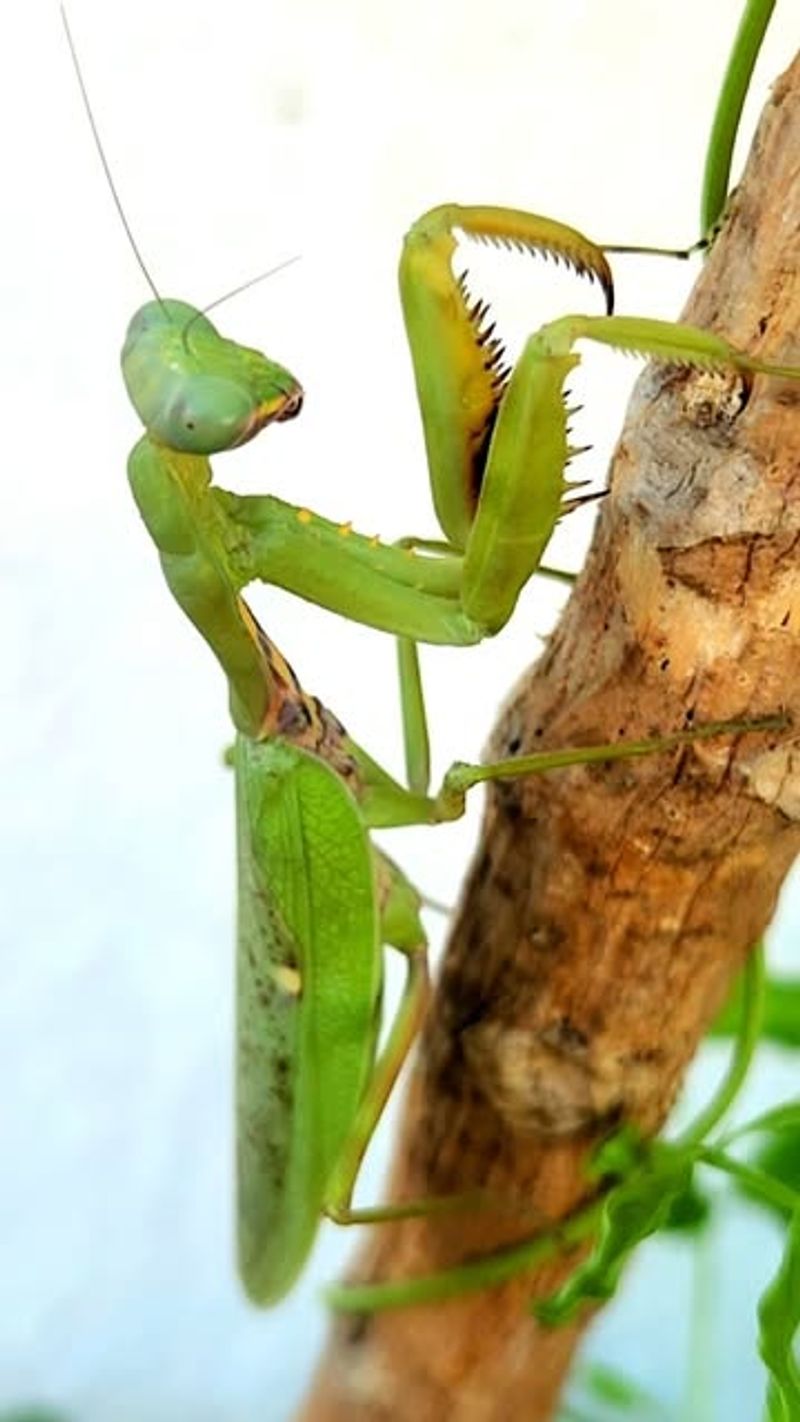
Georgia’s climate is one of the main reasons mantises thrive so well in the state. With warm temperatures stretching from spring through early fall, mantises have a much longer active window compared to insects living in cooler northern states.
More warmth means more time spent hunting, growing, and reproducing.
Mantises are cold-blooded, which means their body temperature and energy levels are directly tied to the air around them. On warm Georgia afternoons, they move quickly and hunt aggressively.
On cooler mornings or overcast days, they slow down considerably. Late summer and early fall tend to be the most active periods for adult mantises in Georgia.
Seeing a mantis in your garden during August or September is especially common across the state. By that point, most mantises have reached full adult size after spending months growing from tiny nymphs.
Adults are more visible and more mobile, which is why late-season sightings feel more frequent even though mantises may have been present for months.
Georgia’s humidity also plays a role. Moist, warm air supports the broader insect community that mantises depend on for food.
Gardens that retain some moisture through mulching or regular watering tend to support more insect life, which indirectly keeps mantises active and well-fed through the season.
4. An Egg Case May Have Hatched Somewhere Nearby
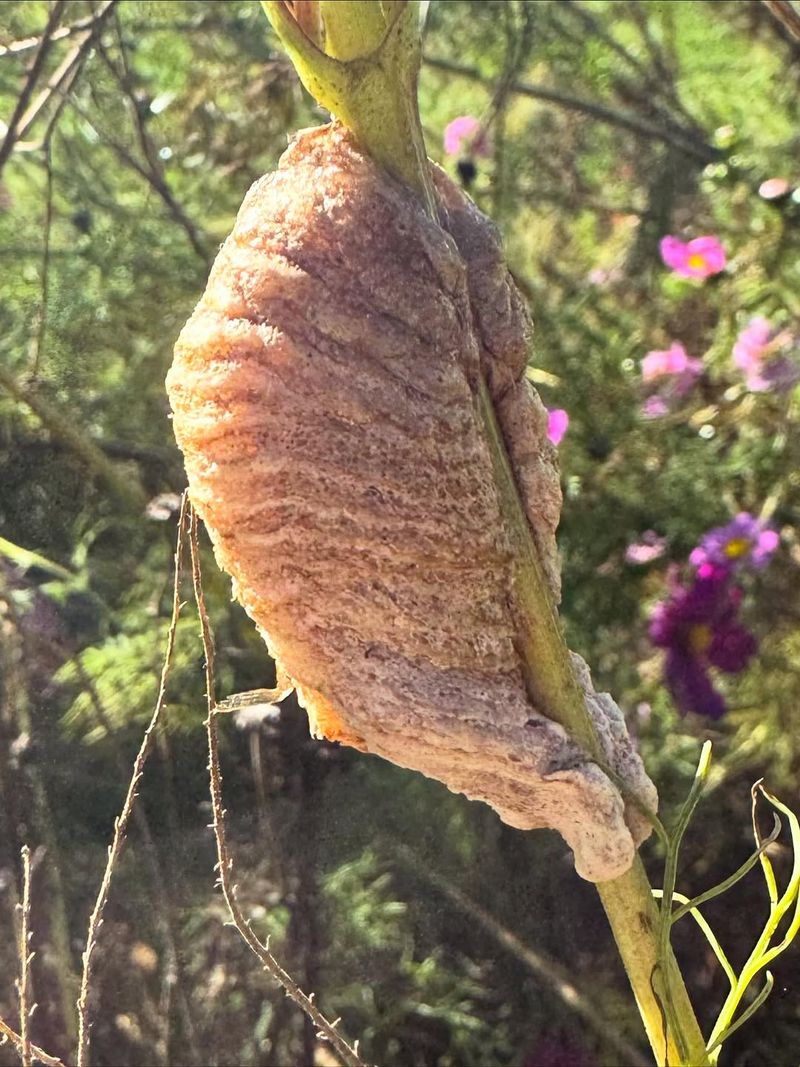
Finding a single mantis in your Georgia garden might actually mean dozens more are nearby. Female mantises lay their eggs in a foamy, hardened case called an ootheca, which can contain anywhere from 50 to 200 eggs.
Once that case hatches in spring or early summer, a wave of tiny mantis nymphs spreads out across the surrounding area.
Oothecae are often attached to dry plant stems, wooden fence posts, or shrub branches. They are tan and papery-looking, roughly the size of a large grape.
Many Georgia gardeners walk right past them without realizing what they are. If you start looking carefully at your garden structures and dried plant material in late fall or winter, you may spot several of them.
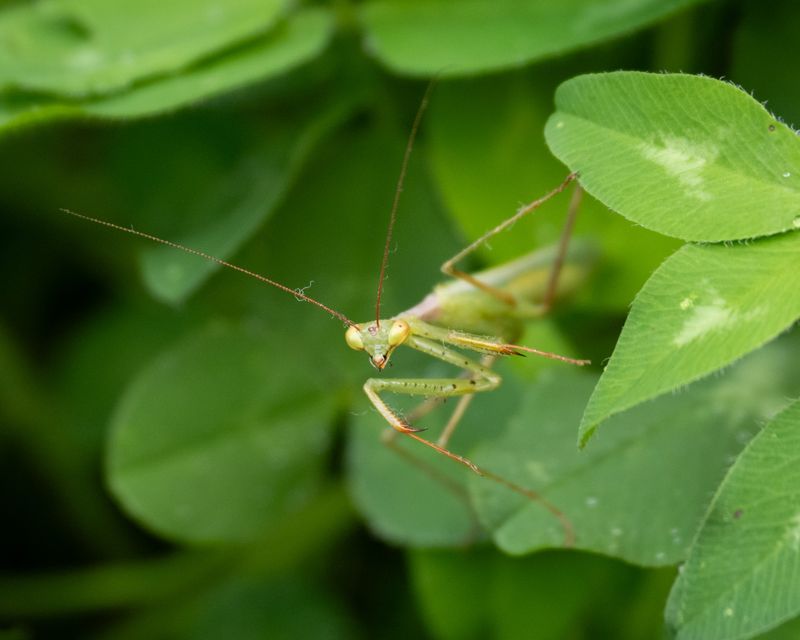
When spring arrives and temperatures warm up consistently, the nymphs emerge and immediately begin hunting small insects. At this stage, they are tiny, translucent versions of the adults, and they are extremely easy to overlook.
Over the following months, they molt multiple times and grow steadily larger.
Spotting a mantis in your Georgia garden in early summer often means an egg case hatched nearby, possibly right in your own yard or just over the fence from a neighbor.
The nymphs do not travel far from the hatch site in their early weeks, so proximity to a hatch location is a strong clue.
Leaving dried plant stems standing through winter instead of cutting everything back in fall gives oothecae a better chance of surviving to hatch successfully the following season, which benefits your garden naturally over time.
5. Dense Plants Give Mantises Better Cover
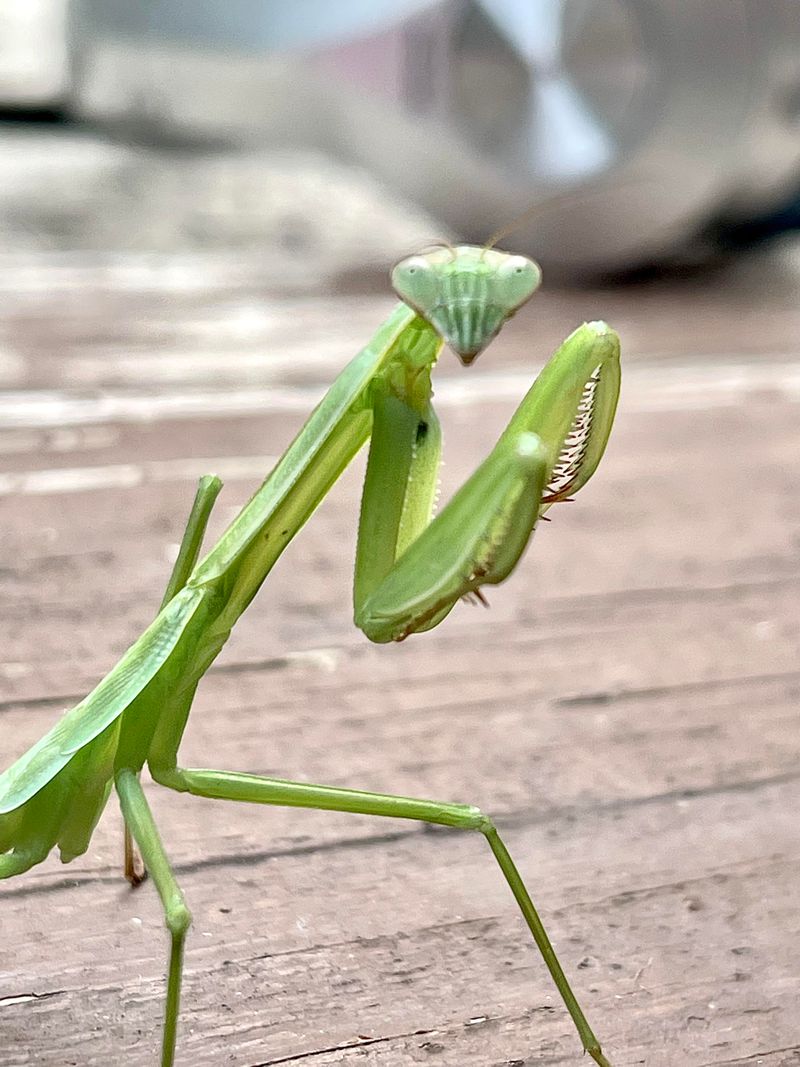
Thick plant growth is prime real estate for a praying mantis. Gardens with dense foliage, layered plantings, and plenty of stems and leaves give mantises the cover they need to hunt effectively without being spotted by birds or other predators.
A sparse, open garden offers very little protection, so mantises tend to avoid those spaces.
Across Georgia, gardeners who grow tall perennials, native grasses, or sprawling vegetable plants often report more mantis sightings than those with minimalist landscaping.
Plants like coneflowers, black-eyed Susans, basil, and okra create the kind of layered, textured environment that mantises find ideal for both hunting and hiding.
Dense plantings also concentrate insect activity. When lots of different plants grow close together, they attract a wider variety of pollinators, herbivores, and decomposers.
More insect diversity means more consistent prey options for a mantis, which makes dense garden beds far more attractive than open lawn areas.
A mantis perched inside a cluster of stems is nearly invisible to passing prey. Its elongated body and green or brown coloring allow it to blend seamlessly with surrounding plant material.
Prey insects often walk directly into striking range without detecting any danger at all, which makes dense cover an essential part of a mantis’s hunting strategy.
6. Layered Gardens Usually Support More Predator Activity

Not all gardens are built the same way, and mantises notice the difference. A layered garden, one that includes ground cover, mid-height plants, and taller shrubs or trees, creates multiple zones of insect activity.
Each layer attracts different types of bugs, and that variety is exactly what supports a wider range of predators, including the praying mantis.
Georgia native plants play a big role in building this kind of layered structure naturally.
Plants like beautyberry, spiderwort, and native asters grow at different heights and bloom at different times, which keeps insect activity going through multiple seasons.
When prey insects are present across different plant levels, mantises have more options and more reasons to stick around.
Predator diversity in a garden is generally a sign of ecological balance. When you see mantises, spiders, and beneficial wasps all coexisting in the same space, it usually means no single pest species is dominating the environment.
A layered garden helps maintain that balance by supporting the food web from the ground up.
Mantises tend to patrol the middle layers of a garden most actively, moving between flowering plants and leafy shrubs where insect traffic is highest.
Ground-level hunters and canopy birds cover the other zones, which means a well-layered Georgia garden can support predator activity at nearly every height.
7. Heavy Chemical Sprays Often Keep Mantises Away
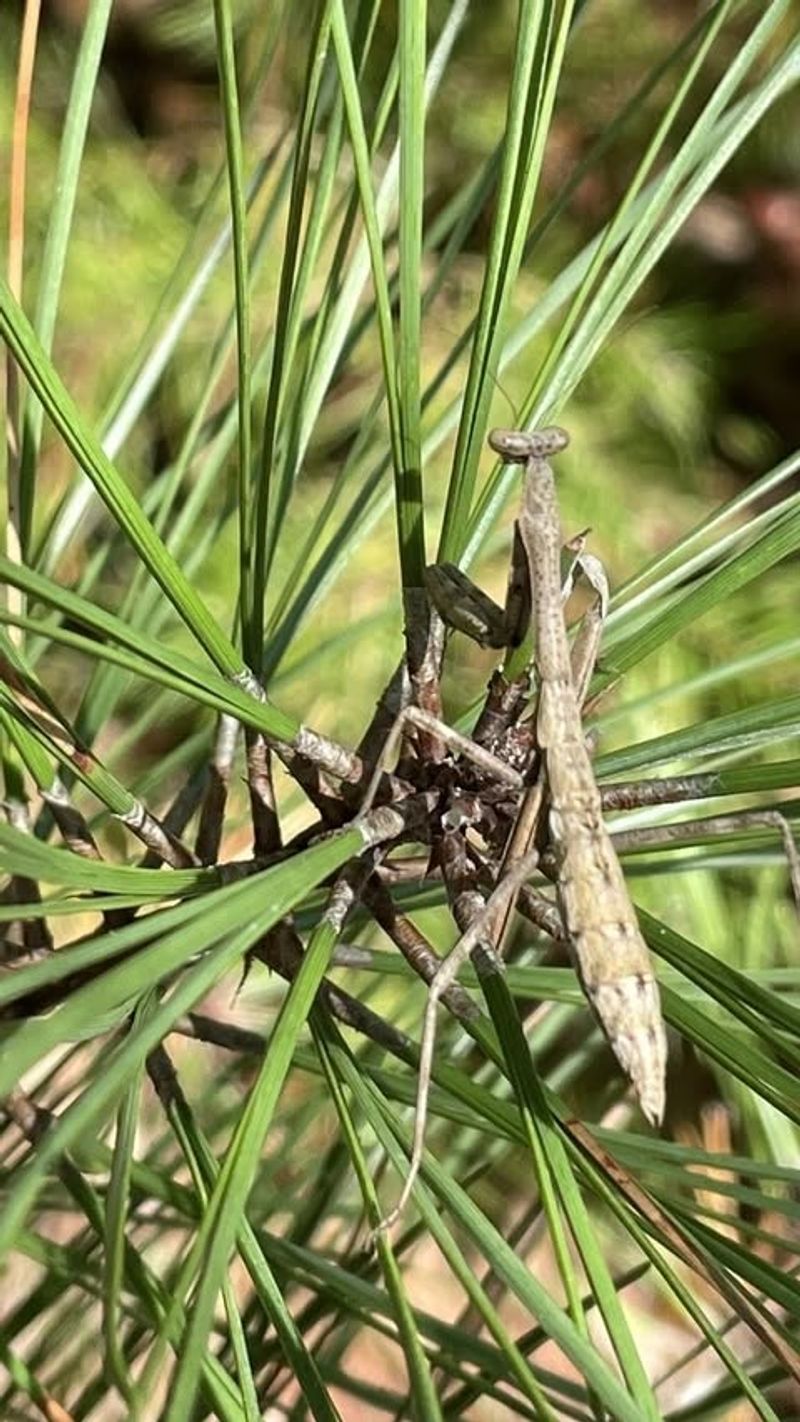
A mantis-free garden is sometimes a warning sign, not a point of pride.
When broad-spectrum pesticides are applied regularly, they do not just reduce pest populations; they also wipe out the insects that beneficial predators like mantises depend on for food.
Without a reliable prey base, mantises have no reason to stay.
Georgia gardeners who rely heavily on chemical sprays often report fewer beneficial insects overall, not just fewer pests.
Pesticides applied to flowers, shrubs, and vegetable beds can affect insects that are not the intended targets, including the prey species that mantises hunt.
Over time, repeated spraying can make a garden functionally inhospitable to natural predators.
Mantises are not directly poisoned by most common garden sprays in the same way that smaller insects are, but the indirect effect is significant. Remove the food source, and the predator moves on.
A yard with almost no insect activity, because of heavy chemical use, offers a mantis nothing worth staying for.
Reducing or eliminating broad-spectrum sprays is one of the most practical steps Georgia gardeners can take to encourage mantis visits.
Switching to targeted treatments when pest pressure is genuinely high, rather than spraying on a regular schedule, gives beneficial insects a better chance of building stable populations in your yard.