Keep Your Shady Georgia Garden Weed-Free All Year Long With This Stunning Plant
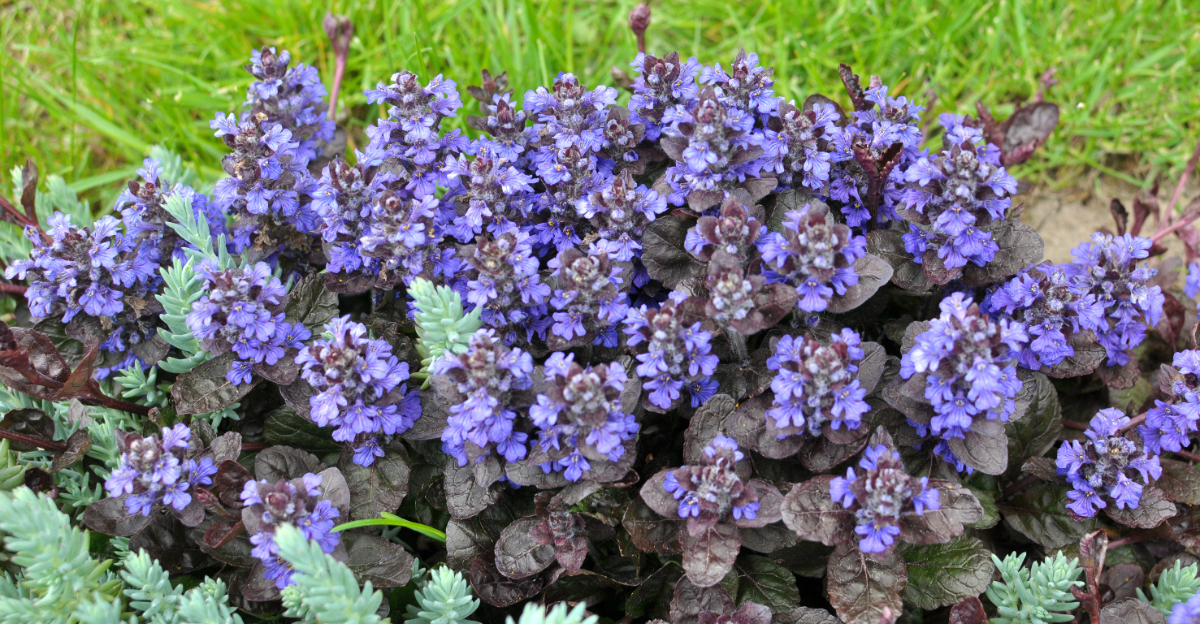
Shady garden areas usually start out looking peaceful and low maintenance. Then weeds slowly creep between plants, spread under shrubs, and take over bare spots faster than expected once warm weather settles in.
Grass struggles in those darker corners, and constant pulling quickly turns frustrating during humid summer weeks. Empty soil rarely stays empty for long, especially in places that hold moisture after rain.
One beautiful plant solves several of those problems at the same time.
It spreads thick enough to crowd out unwanted growth while still adding color and texture that makes shaded spaces feel full instead of neglected.
Georgia gardens with heavy shade often become much easier to manage once this plant settles in properly. The change becomes noticeable far sooner than most yards owners expect.
1. Ajuga Spreads Faster In Moist Well-Drained Soil
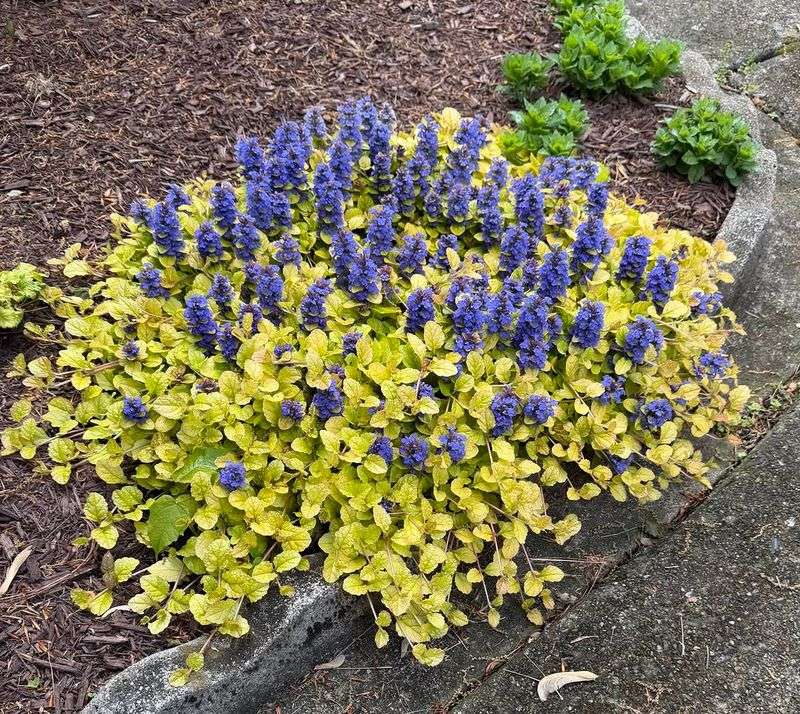
Soil quality changes everything with ajuga. Rich, moist soil that drains well pushes this plant to spread two to three times faster than compacted or dry ground.
If your shaded bed has heavy clay, loosening it with compost before planting makes a real difference.
Ajuga spreads through runners called stolons. These horizontal stems creep outward from the mother plant, root into nearby soil, and produce new rosettes.
Good soil moisture keeps those stolons flexible and encourages fast rooting.
Sandy soil dries out too quickly for ajuga to spread well. Adding organic matter like aged compost helps sandy ground hold moisture longer without staying waterlogged.
That balance is what ajuga needs most.
Aim for soil that feels damp an inch below the surface but never soggy. Consistent moisture during the first growing season helps new runners establish strong roots before summer heat sets in.
Raised beds with amended soil work especially well. Ajuga planted in a raised bed with good drainage and regular moisture can fill a four-foot-wide space within a single growing season.
That kind of coverage leaves almost no room for weeds to take hold.
2. Morning Sun Leads To More Colorful Spring Blooms
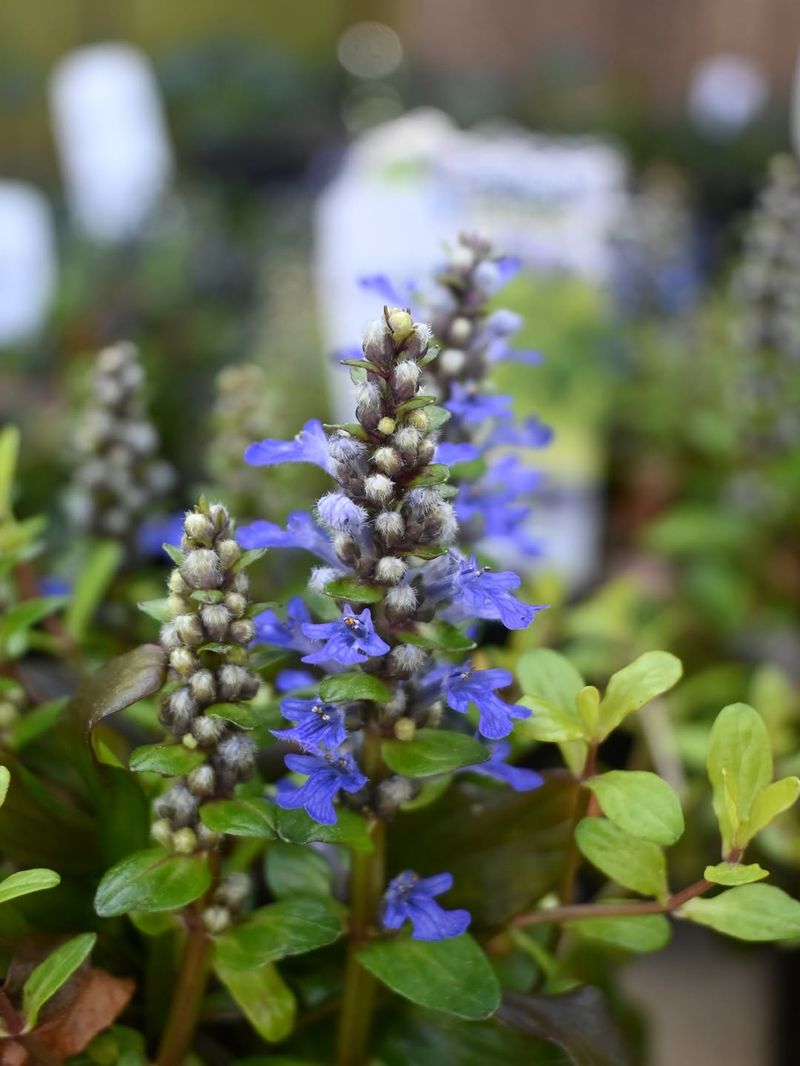
Most gardeners plant ajuga purely for weed control, then get surprised by the spring flowers. Those spikes of purple, blue, or pink blooms can be stunning, especially when a full mat erupts in color all at once.
Light exposure plays a big role in how vivid those blooms get. Plants receiving gentle morning sun and afternoon shade tend to produce taller, more colorful flower spikes than plants growing in deep, all-day shade.
Morning light is softer and less intense than afternoon sun. It gives ajuga enough energy to fuel strong bloom production without stressing the foliage.
Afternoon shade protects the leaves from scorching during the hottest part of the day.
Positioning ajuga along the eastern edge of a tree canopy or fence line often hits that sweet spot naturally. A few hours of direct morning light followed by filtered or full shade works well across most of the Southeast.
Foliage color also improves with some light exposure. Bronze and burgundy varieties like ‘Catlin’s Giant’ and ‘Black Scallop’ develop deeper, richer tones when they receive a bit of morning sun compared to plants grown in heavy shade.
Your Georgia Garden Changes Every Week. Your Plan Should Too.
Gardening in Georgia changes quickly throughout the season. Every Friday you’ll receive a simple weekly plan showing exactly what to plant, prune, fertilize, harvest, and protect so you never miss the right timing.
3. Crowded Patches Need Thinning Once Plants Start Touching
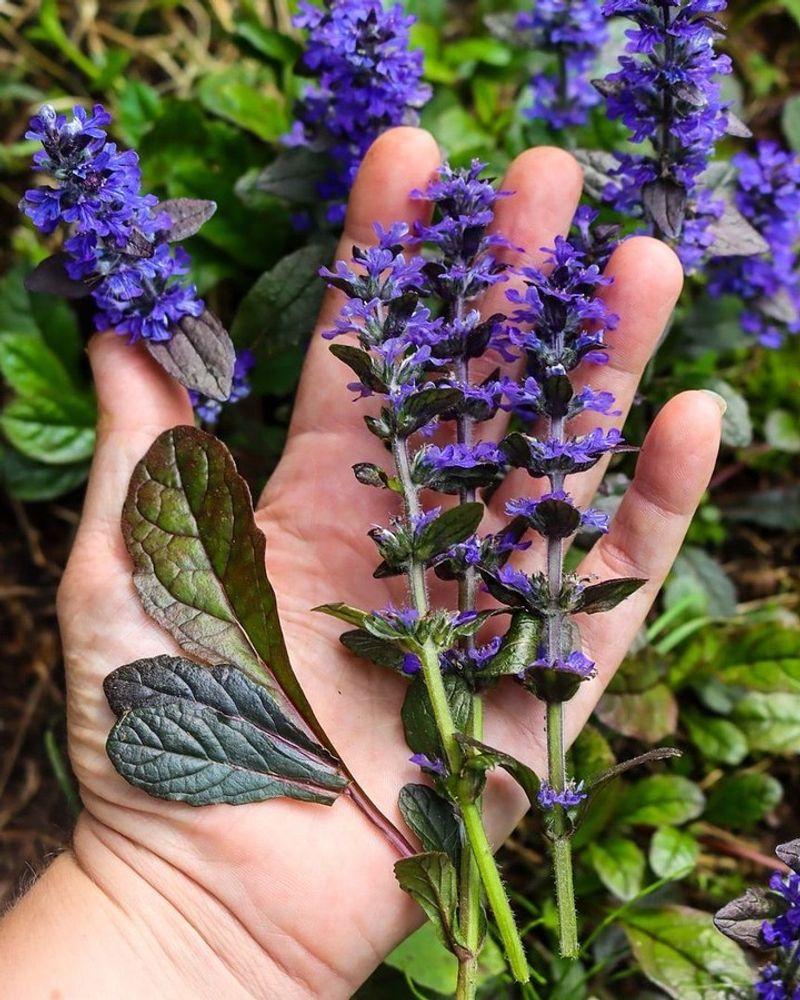
Ajuga spreads fast, which is exactly what makes it great for weed control. But when plants start touching and overlapping heavily, problems follow.
Dense, overcrowded patches hold moisture against the crowns and restrict airflow.
Thinning keeps the mat healthy. Once ajuga plants begin pressing tightly against each other, it is time to pull up some of the runners and create small gaps between clusters.
This does not take long and makes a big difference.
A hand trowel or garden fork works well for this job. Slide it under a cluster of runners, lift gently, and pull the excess plants free.
Roots are shallow, so this is easier than it sounds.
Thinned sections can be replanted in bare spots nearby or shared with neighbors. Ajuga transplants easily, especially in spring or early fall when temperatures are mild and soil moisture is consistent.
Thinning also refreshes the mat. Older center growth can become woody and sparse over time.
Removing it encourages new, vigorous growth to fill back in with denser, healthier foliage that covers the ground more effectively.
Plan to thin established ajuga beds every two to three years. Beds left untouched for too long develop patchy centers surrounded by aggressive outer runners.
4. Mulch Around New Plants Slows Weed Growth Early On
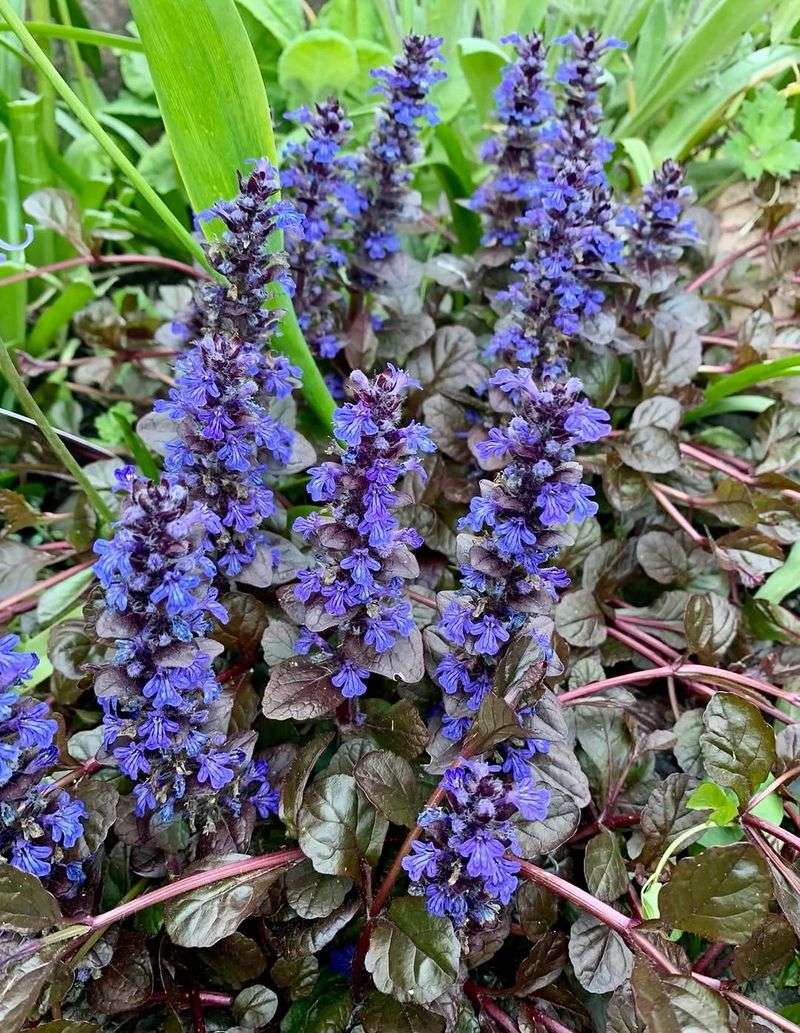
Newly planted ajuga has not filled in yet, and that open soil between transplants is an open invitation for weeds. Mulch fills that gap while the ajuga gets established and starts spreading on its own.
Apply two to three inches of mulch between new transplants right after planting. Shredded hardwood or pine bark both work well.
Avoid piling mulch directly against the crowns of the plants, which can cause rot at the base.
Mulch does several things at once. It blocks sunlight from reaching weed seeds in the soil, holds moisture around the new ajuga roots, and moderates soil temperature during hot spells and cold snaps.
In Georgia’s warm climate, weed pressure starts early in spring and does not let up until late fall. Mulch gives newly planted ajuga a fighting chance before its foliage is dense enough to do the shading work itself.
Organic mulch breaks down over time and adds nutrients to the soil. Replenishing it annually keeps the layer effective.
As ajuga fills in and spreads, the need for mulch decreases because the plant itself takes over the weed-blocking job.
5. Soggy Conditions Often Lead To Crown Rot Problems
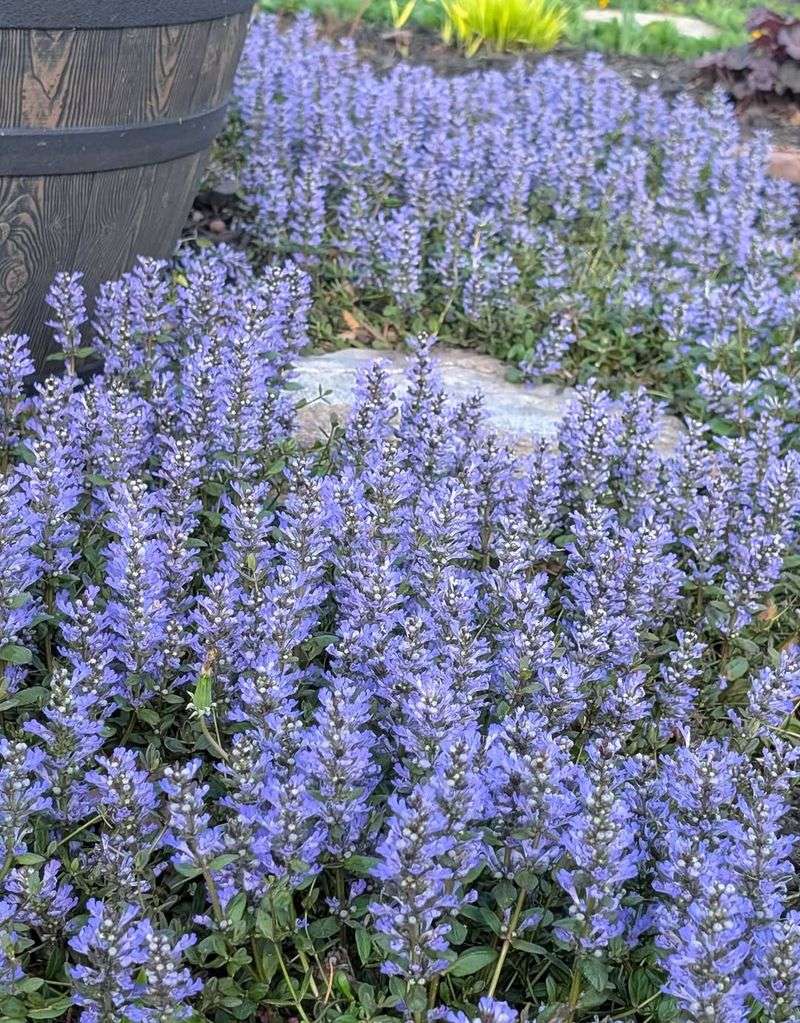
Standing water is ajuga’s worst enemy. This plant loves moisture but cannot tolerate soil that stays saturated for extended periods.
Wet conditions around the crown lead to fungal rot that spreads fast through a mat.
Crown rot shows up as yellowing or collapsing rosettes, often starting in the center of a dense patch. If you pull an affected plant, the base will look dark and mushy rather than firm and white.
Act quickly when you spot this.
Remove affected plants immediately and improve drainage in that area before replanting. Adding coarse sand or grit to the planting hole improves drainage in spots where water tends to collect.
Do not skip this step.
Raised planting areas help a lot in low spots. Even mounding the soil two to three inches above the surrounding grade gives ajuga enough elevation to avoid prolonged saturation during heavy rain events.
Poor air circulation makes crown rot worse. In spots where humidity stays high and airflow is limited, thinning the mat regularly reduces the risk.
Spacing plants slightly farther apart allows the crowns to dry faster after rain.
Fungal issues spread more aggressively during warm, wet stretches, which are common across the Southeast from late spring through early fall.
6. Spring Planting Gives Young Transplants A Better Start
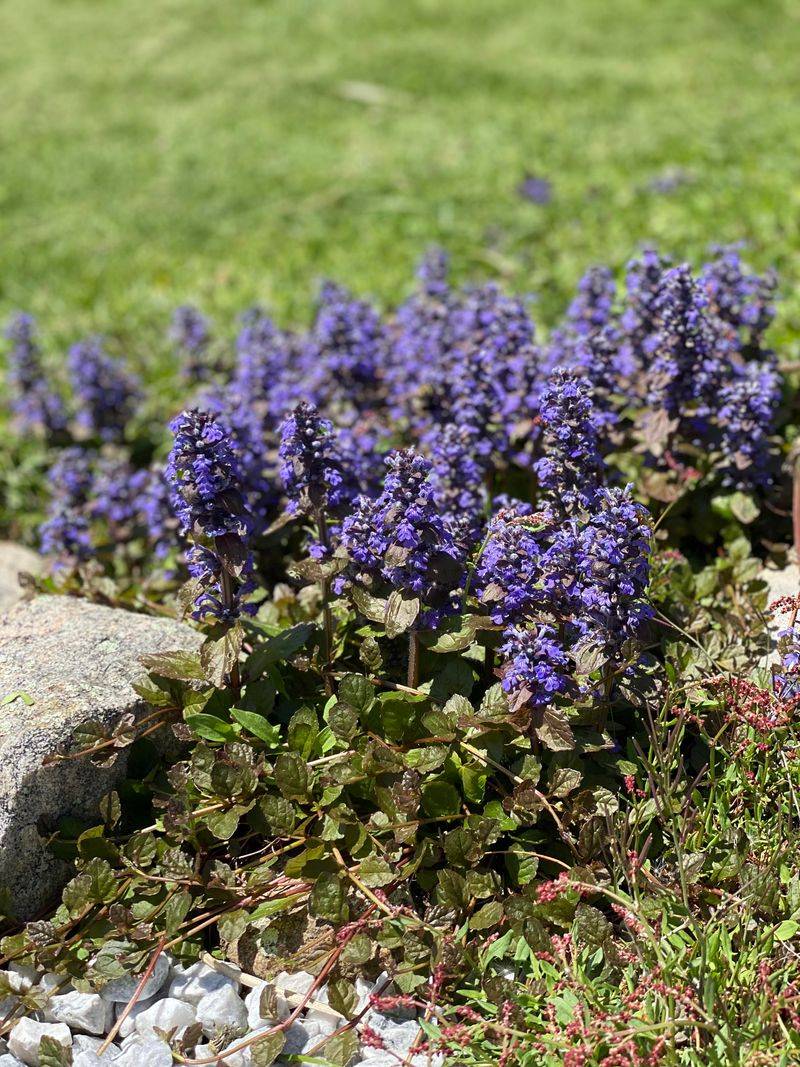
Timing matters when you put ajuga in the ground. Spring planting, right after the last frost, gives transplants weeks of mild weather to establish roots before summer heat arrives.
That head start makes a noticeable difference by midsummer.
Cool spring temperatures reduce transplant stress. Soil is warming up, moisture levels are naturally higher from spring rains, and the plant focuses energy on root development rather than surviving heat.
It is the easiest time of year to get ajuga settled in.
Aim to plant in early to mid-spring when overnight temperatures stay consistently above 40 degrees Fahrenheit. At that point, ajuga roots grow actively and runners begin spreading within a few weeks of transplanting.
Spacing transplants eight to twelve inches apart gives each plant room to send out runners without immediately competing with neighbors. Closer spacing fills in faster but requires earlier thinning.
Wider spacing takes longer to fill but stays manageable longer.
Water new transplants deeply right after planting. Soak the soil thoroughly, then let it dry slightly before watering again.
This encourages roots to grow downward in search of moisture rather than staying shallow near the surface.
Fall is a secondary planting window that also works well in the Southeast.
7. Humid Weather Makes Good Air Circulation More Important
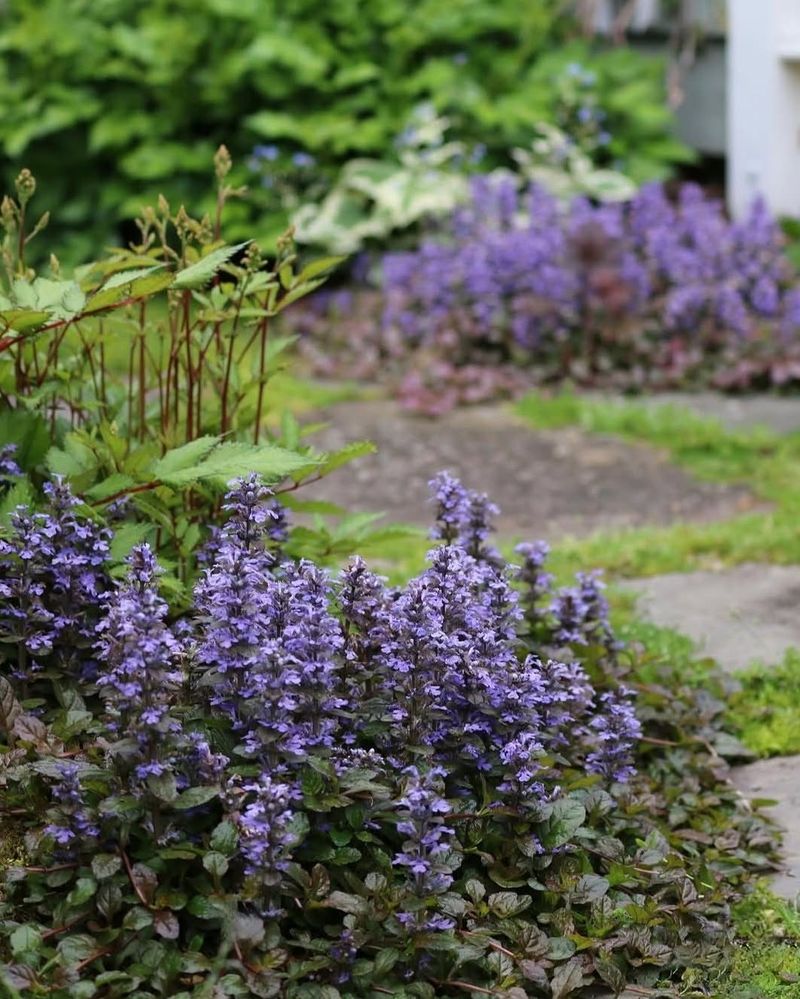
Humidity is just part of gardening life across the Southeast. Summers are long, sticky, and wet.
Ajuga handles humidity reasonably well, but thick, overcrowded mats trap moisture at soil level and create ideal conditions for fungal problems.
Air circulation is the fix. When plants are spaced properly and the mat is thinned regularly, air moves freely between the rosettes.
Crowns dry faster after rain, reducing the damp conditions that fungal pathogens need to spread.
Avoid planting ajuga directly against walls, fences, or dense shrubs where airflow is naturally restricted. Even a few inches of open space between ajuga and a solid structure allows better air movement across the mat.
Overhead canopy density affects airflow too. Very dense tree canopies reduce air movement at ground level.
If ajuga sits under a thick canopy with little breeze reaching it, thinning the mat more frequently helps compensate for the reduced natural airflow.
Mulch choice also matters in humid climates. Fine-textured mulches like sawdust compact quickly and hold excess moisture.
Coarser materials like shredded hardwood or pine bark allow better airflow at the soil surface and dry faster between rain events.