When Georgia Gardeners Should Plant Gardenias For The Best Start
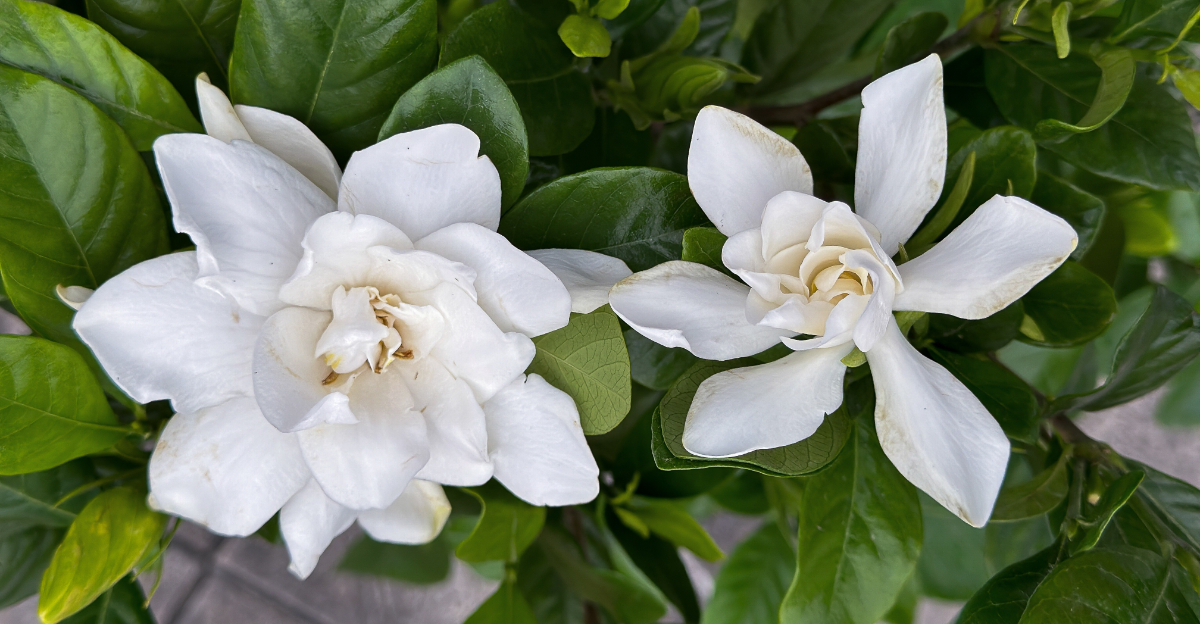
Gardenias can become spectacular landscape shrubs, but getting them into the ground at the wrong time makes establishment harder than necessary. Timing matters because new roots need favorable conditions before the plant faces seasonal stress.
That is why the planting window deserves attention before you bring another gardenia home. Georgia’s climate gives gardeners more than one opportunity, but some periods offer an easier transition.
Your goal is to give the shrub enough time to settle into its new location. When temperatures cooperate, roots can begin establishing without battling the harshest weather.
That early progress can influence how smoothly the plant handles the months ahead.
Do not choose a planting date simply because the garden center has fresh stock.
Pick the right window, and your gardenia can begin with a stronger foundation.
1. Why Early Fall Beats The Summer Scramble
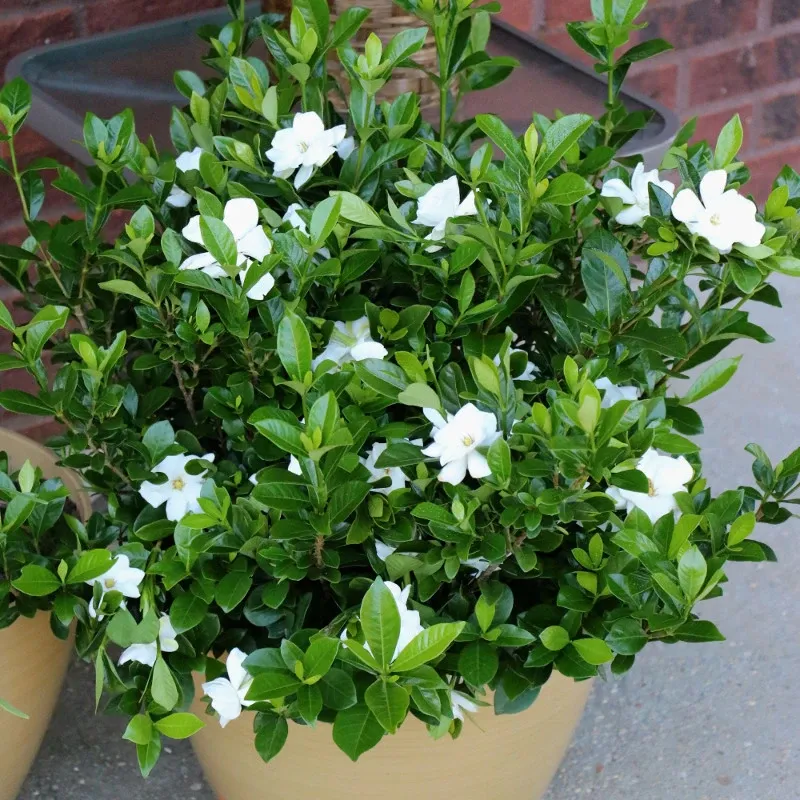
Ask a longtime Georgia gardener when to set out a new shrub, and plenty will point at the cooling weeks after Labor Day.
Air temperatures ease off, but the soil holds onto summer warmth for weeks.
Warm soil plus milder days lets roots spread without the plant fighting brutal heat above ground.
Gardenias root fairly close to the surface, so they appreciate any chance to settle in before stress arrives.
Fall rain and shorter days also mean less moisture loss from the leaves. That balance usually translates into less wilting and fewer sulky, yellow leaves during the first month.
Summer planting can work, though it asks a lot from you and the hose.
July transplants often spend their energy just staying hydrated rather than building new roots.
Early fall shifts that math in your favor.
Aim for a stretch when nights feel comfortable and the ground has not yet cooled off.
In much of Georgia, that window opens somewhere in September and can stretch into October or later. Watch your local forecast rather than a fixed date on the calendar.
One more perk worth mentioning is nursery selection.
Garden centers often mark down shrubs in fall, and a healthy discounted gardenia planted at the right moment can catch up quickly by spring. Check the root ball for firm, pale roots before you buy.
Skip anything with roots circling tightly in a hard knot.
2. What Makes September Work In North Georgia
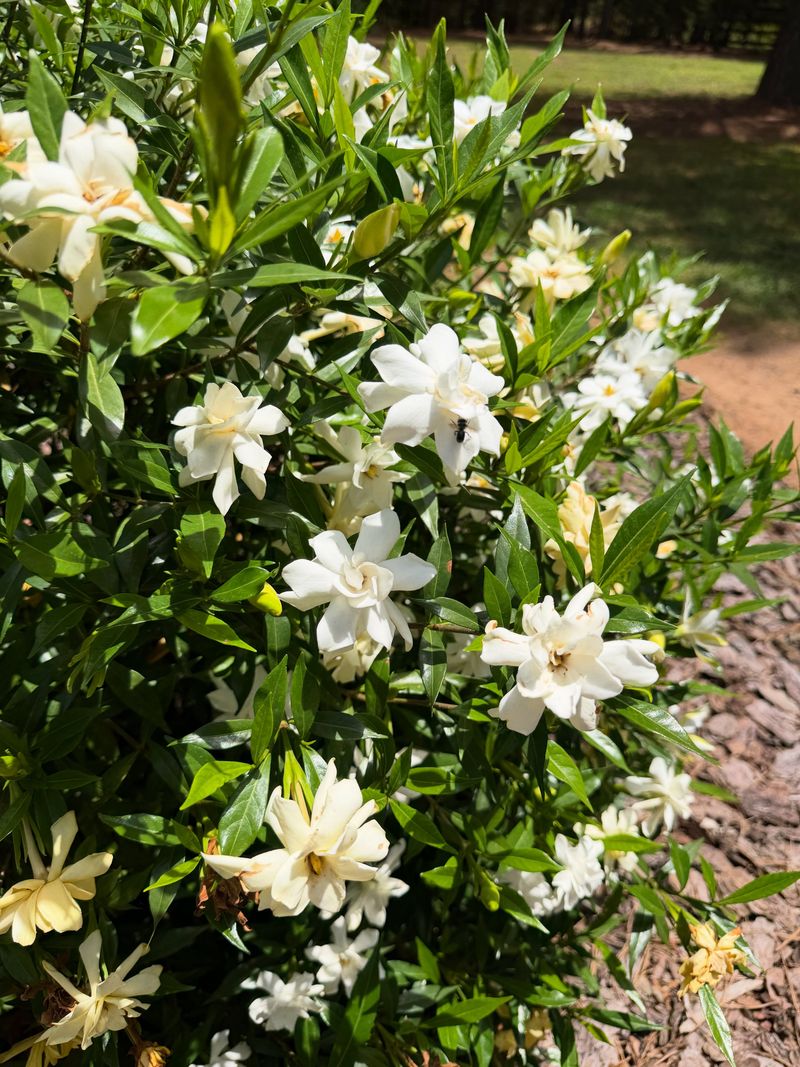
Up in the foothills and mountains, autumn arrives with a hurry that Atlanta gardeners barely notice. Frost can show up in October at higher elevations, which shortens the runway for a brand new shrub.
Planting in early fall gives roots several weeks of warm soil before the ground chills down.
Mid September through early October tends to be a comfortable stretch for much of north Georgia. Push the job into late November and the plant may simply sit still until spring.
Cultivar choice matters just as much as timing here.
Selections such as Frostproof, Chuck Hayes, and Kleims Hardy handle cold better than older tender types. Northern counties sit mostly in zone 7, with colder pockets closer to zone 6b in the mountains.
Your Georgia Garden Changes Every Week. Your Plan Should Too.
Gardening in Georgia changes quickly throughout the season. Every Friday you’ll receive a simple weekly plan showing exactly what to plant, prune, fertilize, harvest, and protect so you never miss the right timing.
Tuck the shrub near a south or east facing wall for a little extra warmth.
Avoid low spots where cold air settles on clear nights. Hold off on fertilizer with fall plantings in this part of the state.
Feeding late can push soft new growth that cold weather may damage.
Two or three inches of pine straw over the root zone helps steady soil temperature. Keep that mulch pulled back an inch or so from the trunk.
Water deeply before a hard freeze arrives, since hydrated roots cope better with cold.
A young plant may also appreciate a frost cloth during its first winter. Drape it loosely and remove it once temperatures climb again.
3. Middle Georgia’s Roomy Fall Planting Window
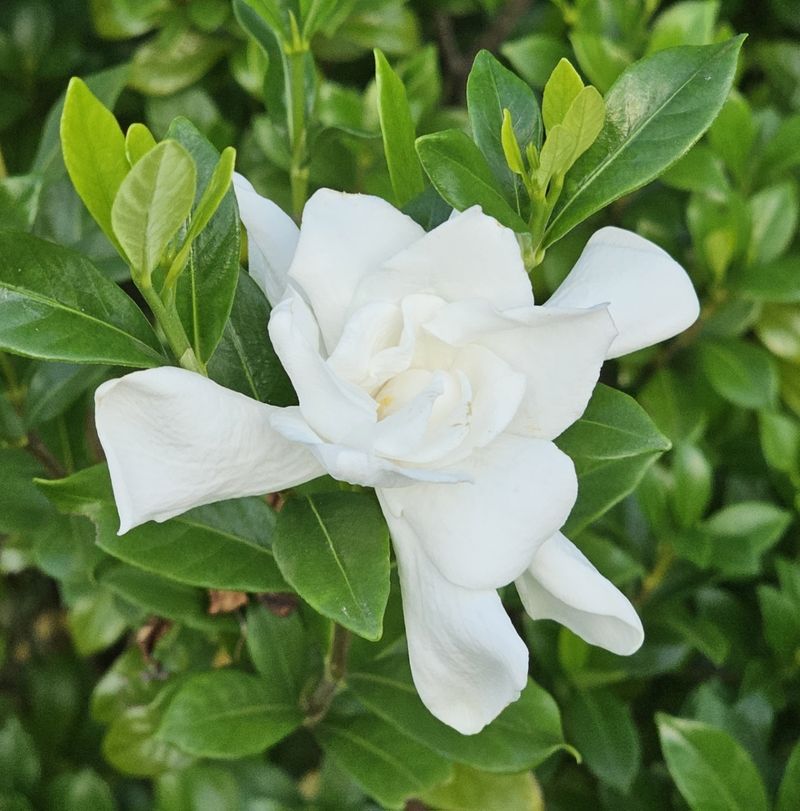
Macon, Columbus, and Augusta sit in a friendlier zone for this fragrant shrub, generally around zone 8. First frost often waits until early or mid November, which stretches the planting season nicely.
September plantings settle in fast while the soil still feels like summer.
October works well too, and many gardeners keep planting into November without trouble. Even a mild winter stretch can be fine for a container grown plant, as long as the ground is not frozen or soggy.
Clay is the usual challenge across the Piedmont.
Heavy red clay holds water, and gardenia roots resent standing moisture. Set the top of the root ball an inch or two above the surrounding grade.
Widen the hole two to three times the width of the root ball so roots can spread sideways.
Loosen matted roots with your fingers before backfilling. Mixing a bit of compost into the backfill can help, though the surrounding soil still matters most.
Long term, an annual topdressing of compost does more good than one rich hole.
Summer heat in this belt is no joke, so fall gives roots a head start before that test. By June, a September planted shrub usually has a wider root system than a spring purchase.
Morning sun with afternoon shade suits most middle Georgia yards.
Blooms tend to hold up longer when the hottest hours arrive with some shade.
4. Down South, The Calendar Loosens Up
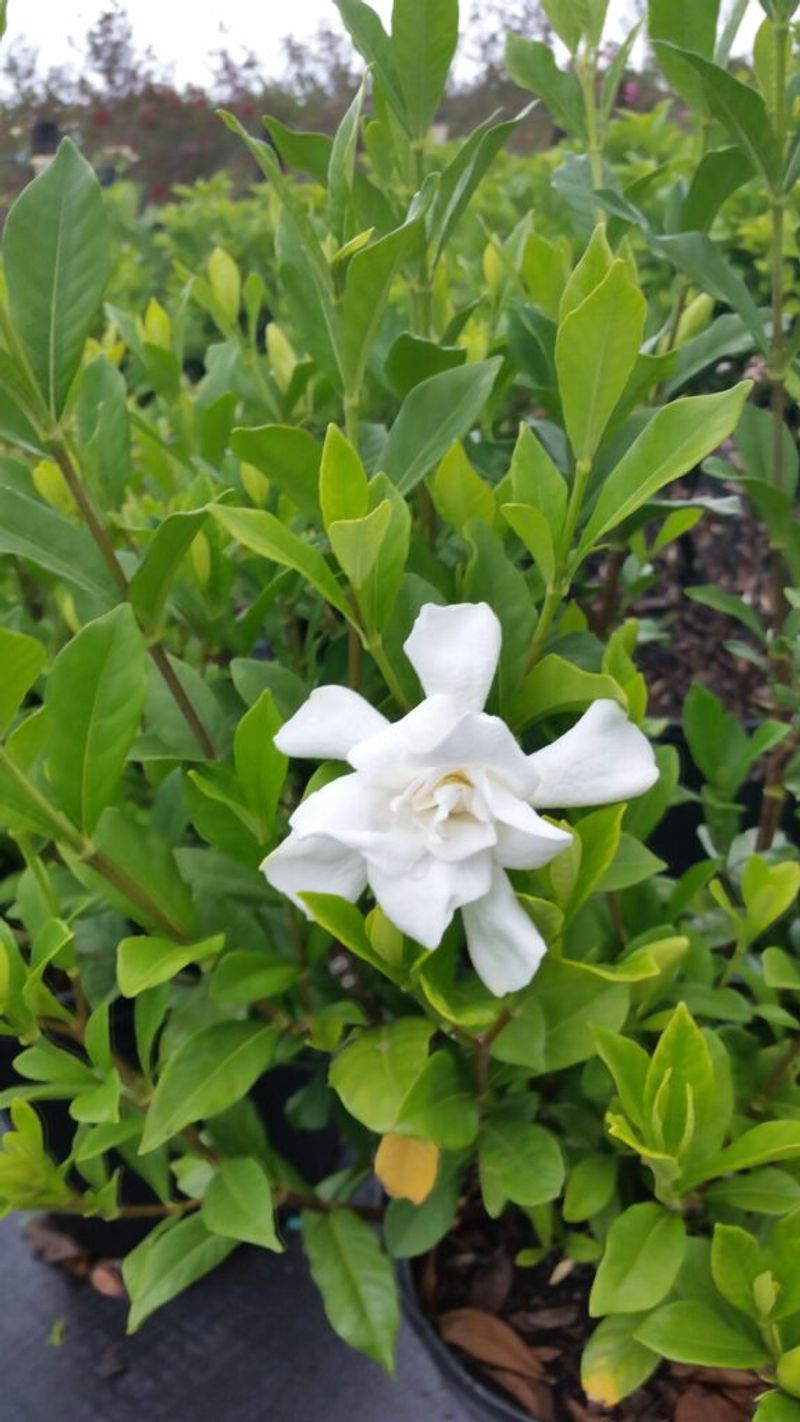
Below the fall line, gardenias behave almost like locals, blooming with abandon in humid coastal air. Winters stay mild in zones 8b and 9a, so the planting window widens considerably.
Fall through late winter all work, with October and November feeling especially comfortable for new shrubs.
September can still be warm and sticky down here, so shade the plant during its first week if the sun turns fierce. Sandy soils drain quickly and hold fewer nutrients than clay.
Blend compost or aged bark into the planting area to improve moisture holding ability.
Water more often but with a lighter hand, since sand does not stay damp for long. Mulch earns its keep in the coastal plain.
Pine straw or pine bark cools the root zone and slows evaporation through long, bright afternoons.
Salt spray near the coast can scorch foliage, so a sheltered spot behind a fence or hedge helps. Whiteflies and scale show up in warm regions, and cooler planting seasons give shrubs time to toughen up first.
Check leaf undersides now and then during the first year.
Sooty mold on the foliage usually points to insects feeding above. Freezes still happen in south Georgia, just less often.
A young plant set out in December may need a light cover during an unusual cold snap.
Otherwise, the mild season lets roots inch along quietly until spring growth begins.
5. Spring Planting When Autumn Slips Past You
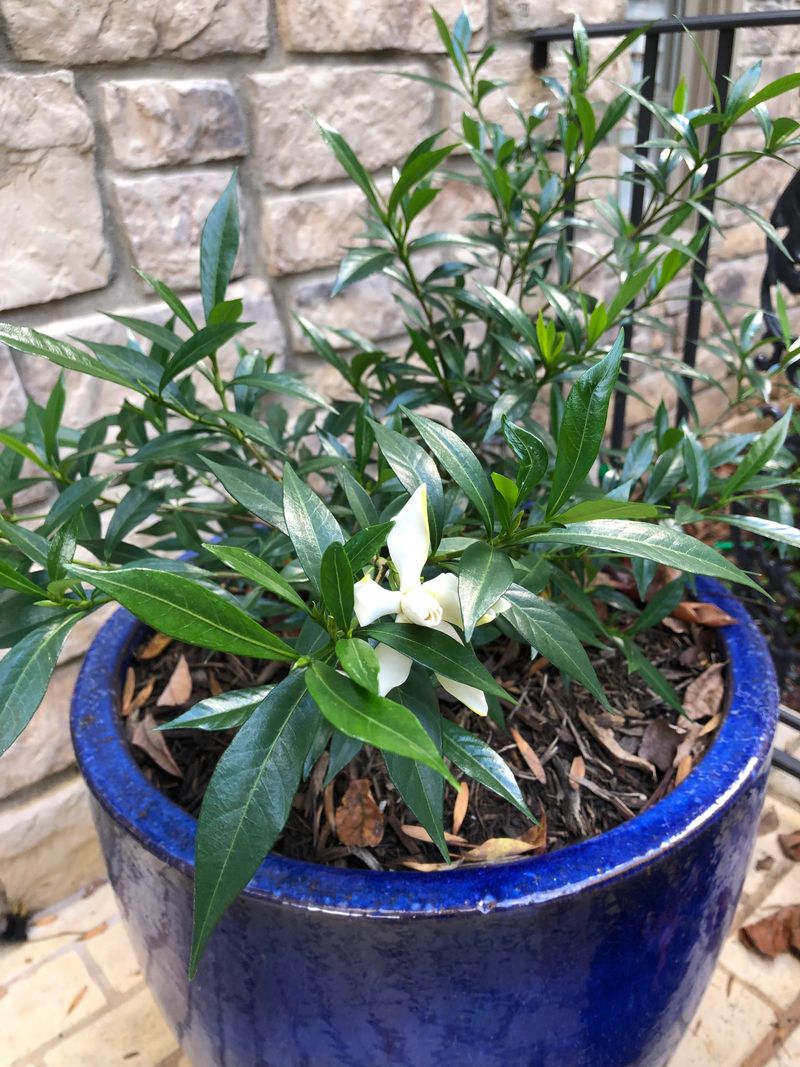
Life gets busy, and sometimes fall disappears before the shovel ever leaves the shed. Spring remains a reasonable second choice across the state.
Wait until the danger of hard frost has passed in your area, then plant while temperatures are still moderate.
March into April fits much of Georgia, with northern counties running a couple of weeks behind the coast. The goal is giving roots a few settled weeks before July arrives.
Spring plantings simply ask for more attention through their first summer.
Check soil moisture with your finger a couple of inches down instead of guessing. Water deeply when that layer feels dry rather than sprinkling a little every day.
Buds may drop on a stressed new plant, which frustrates gardeners hoping for that first burst of perfume.
Uneven watering, sudden heat, or a root ball that dried out at the nursery can each trigger it. Flowering often improves the following year once roots have spread.
Buying a plant already in bloom is tempting and perfectly fine.
Just remember that flowering takes energy the shrub could be spending underground. Some gardeners pinch off a few blooms on a newly planted shrub to ease that load.
Late spring into summer is the toughest option in Georgia.
If a July purchase follows you home, choose a spot with afternoon shade and stay watchful with the watering can. Growing it in a container for a while is another sensible option.
6. Sun, Shade, And Soil Checks Before You Dig
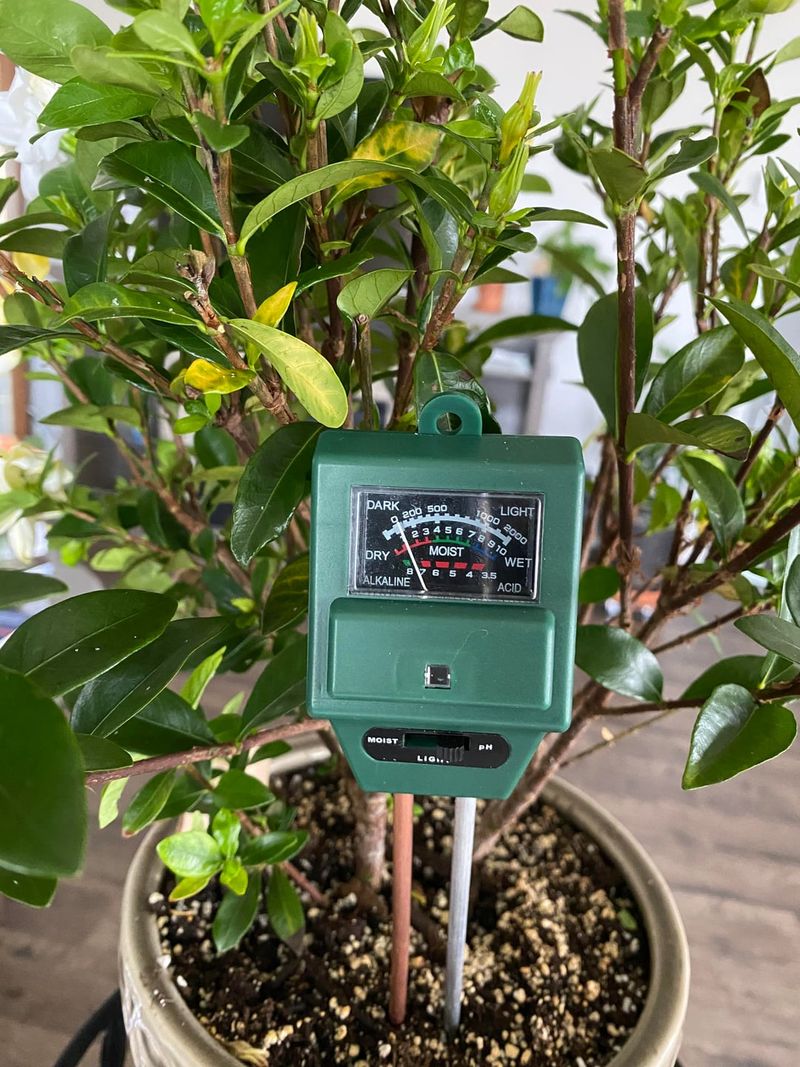
Picking the right spot does more for a gardenia than any product on a store shelf. Around six hours of sun keeps flowering strong, though Georgia afternoons can be harsh on the blossoms.
Morning sun paired with light afternoon shade is a comfortable compromise in most yards.
Deep shade usually leads to lanky stems and stingy blooming. Soil chemistry matters more than many folks expect.
Gardenias prefer acidic ground, roughly in the 5.0 to 6.5 pH range.
Above that range, leaves may turn pale between the veins as iron becomes harder to absorb. A soil test through your county Extension office removes the guesswork for a few dollars.
Drainage deserves a quick check as well.
Fill your planting hole with water and see how long it takes to drain away. Water sitting for many hours signals a spot better suited to a raised bed or a low berm.
Keep the shrub away from thirsty tree roots and hot pavement that bounces heat back.
Soil near new construction sometimes runs alkaline from concrete debris, which gardenias dislike. Think about fragrance placement too.
A gardenia near a porch, walkway, or bedroom window pays you back on warm May evenings.
Give it elbow room based on the mature size listed on the tag. Dwarf types stay around two to three feet, while larger selections can reach six feet or more.
Crowded shrubs trap humid air and invite leaf trouble.
7. First Year Watering And Winter Care That Pay Off
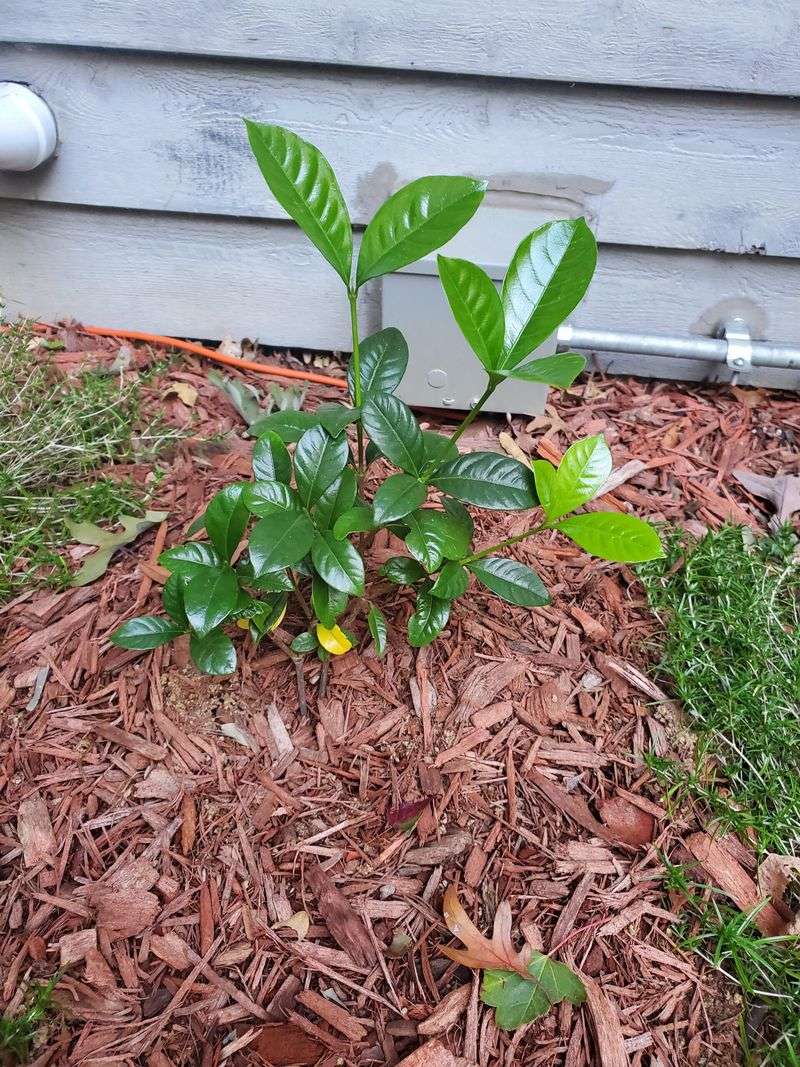
Getting a gardenia in the ground is the easy half of the job. The first twelve months decide whether it becomes a landmark shrub or a lingering project.
Water new plantings regularly, soaking the root ball rather than only the surrounding soil.
Container mix dries faster than garden soil, so aim the water right over that original root area. Frequency depends on rainfall, sun exposure, and your soil type.
Poke a finger through the mulch and into the soil before reaching for the hose.
Fall plantings still need water through dry autumn spells and even during mild winter stretches. Evergreen leaves keep losing moisture on sunny winter days.
Mulch stays useful year round.
Two to three inches of pine straw or bark moderates temperature and holds moisture, though piling it against the stem invites rot. Hold off on fertilizer until spring growth begins.
An acid loving plant food applied after the last frost suits gardenias better than a late season feeding.
Save pruning for shortly after the main flush of summer bloom. Cutting in fall removes buds already forming for next year.
Cold protection helps young shrubs in the northern half of the state.
A frost blanket draped over the plant on the coldest nights, plus a slightly thicker mulch layer, goes a long way. Yellow leaves in late winter are not automatically bad news.
Older foliage naturally drops as fresh growth pushes out in spring.