Why A Gopher Tortoise Might Suddenly Wander Into Your Georgia Yard
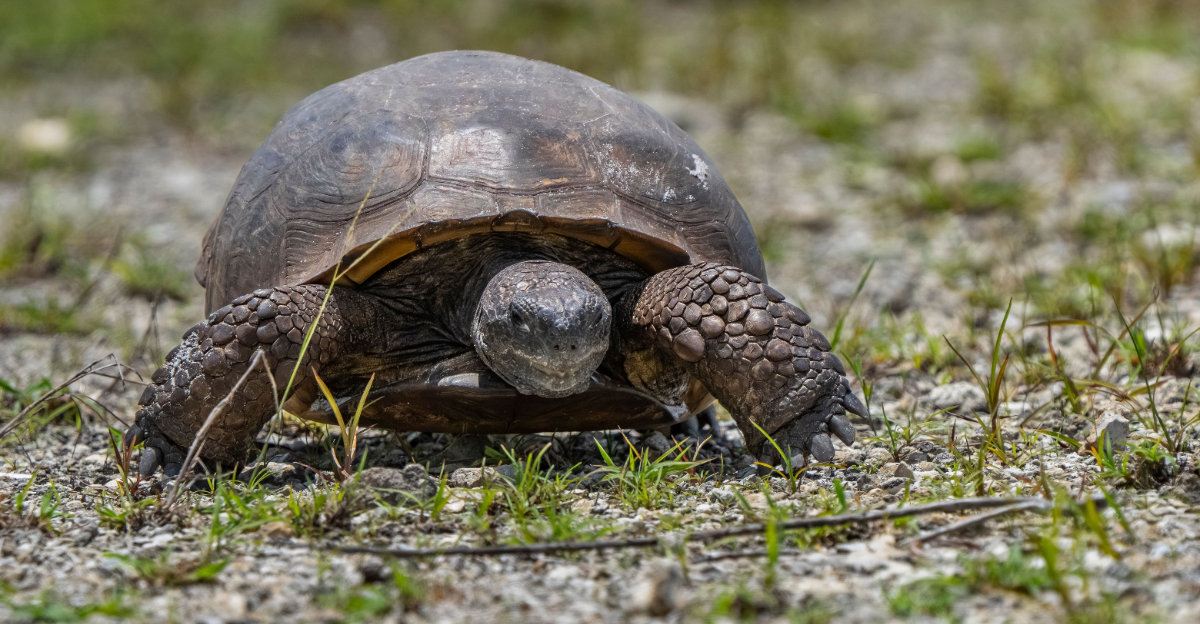
Seeing a gopher tortoise making its way through your yard can stop you in your tracks. If you have never spotted one there before, the sudden visit naturally raises questions.
Do not assume it simply took a wrong turn. Gopher tortoises move through their surroundings for several reasons, and your property may have caught its attention along the way.
Sometimes, even small details around a yard can matter to a wandering tortoise. What looks ordinary to you may serve a purpose for this reptile.
Remember that gopher tortoises are protected in Georgia, so give any visitor space. Avoid picking it up or trying to move it elsewhere.
Instead, watch quietly and carefully notice what it does next.
Its brief appearance may reveal more than you would expect at first glance.
1. Nearby Habitat Could Explain The Unexpected Visit
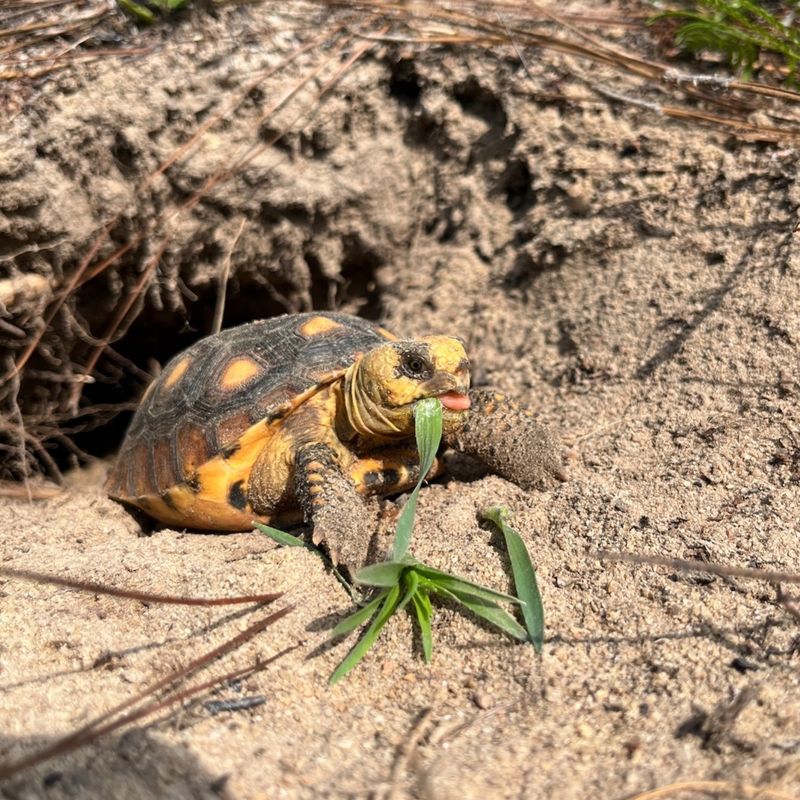
Gopher tortoises do not just appear out of nowhere. If one shows up in your yard, there is a good chance it came from a natural area nearby.
Sandy scrublands, open pine forests, and dry grasslands are classic gopher tortoise territory. Many Georgia neighborhoods were built right next to or on top of these habitats.
Tortoises that were already living in the area sometimes end up crossing into yards as land around them gets cleared or developed.
Tortoises have large home ranges. A single tortoise may roam across several acres as it forages and searches for mates or better ground.
Fences, roads, and new construction can push a tortoise in unexpected directions. Your yard might simply be in the path it has always traveled, even before your house was there.
Look around your neighborhood for open sandy patches, old fields, or undeveloped lots. Those areas are likely where your visitor came from.
Tortoises tend to stay within a general territory, so a nearby natural area is often the simplest explanation for why one showed up at your door.
2. Late Summer Can Bring More Movement Through The Area
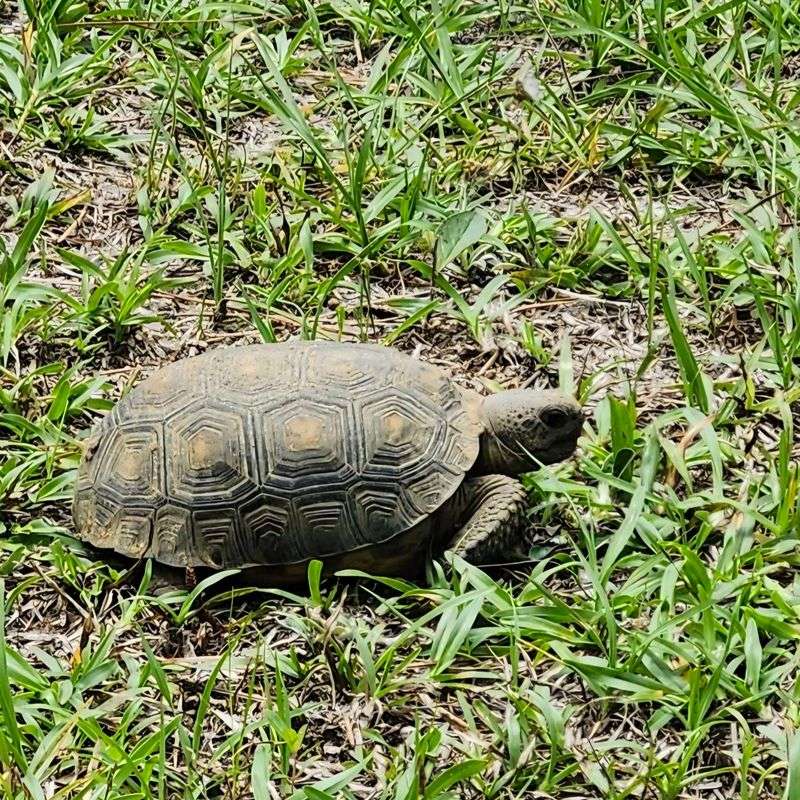
Late summer is one of the most active times of year for gopher tortoises. Warmer temperatures push them to move more, forage widely, and sometimes travel farther than usual.
Between July and September, tortoises are often seen crossing yards, driveways, and even roads. Mating activity tends to increase during warmer months, which means males may wander beyond their usual range looking for females.
That extra movement makes sightings in unexpected places much more common.
Drought conditions in late summer can also play a role. When plants dry out in one area, a tortoise may travel to find fresh vegetation somewhere else.
Your yard, with its watered lawn or garden, might look like a better food source than the dry ground nearby.
Tortoises are cold-blooded, so they rely on outside warmth to stay active. Late summer gives them the energy to move more freely compared to cooler months.
If you spot one during this time of year, do not be alarmed. Seasonal movement is completely normal behavior.
Just give your visitor space, watch where you step, and let it move through at its own pace without interference.
Your Georgia Garden Changes Every Week. Your Plan Should Too.
Gardening in Georgia changes quickly throughout the season. Every Friday you’ll receive a simple weekly plan showing exactly what to plant, prune, fertilize, harvest, and protect so you never miss the right timing.
3. Your Yard May Offer Plants A Tortoise Can Eat
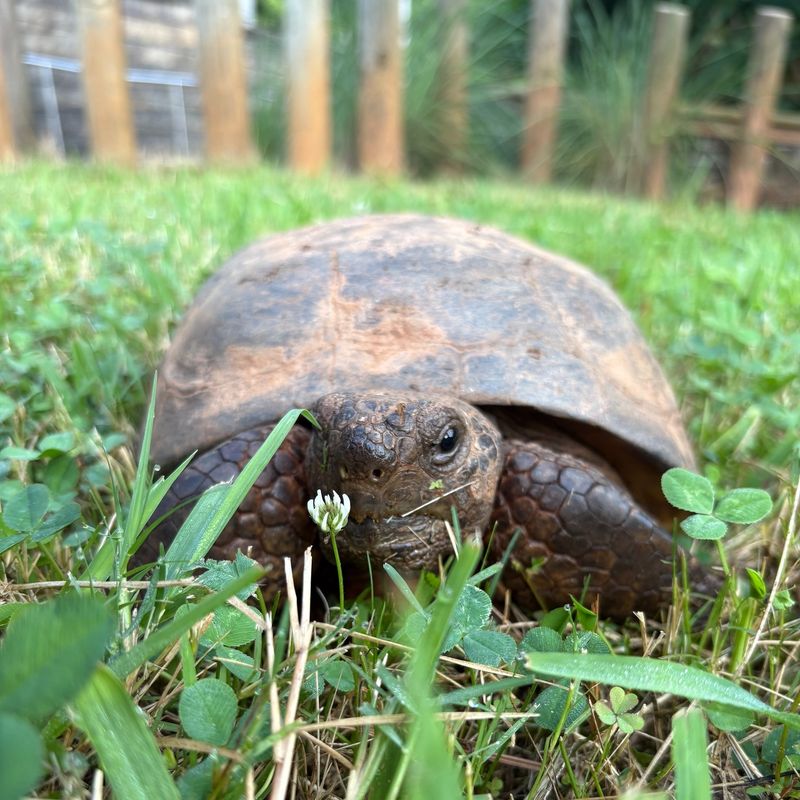
Food is a powerful motivator for any animal, and gopher tortoises are no exception. If your yard has the right plants, a tortoise might wander in specifically to graze.
Gopher tortoises eat a wide variety of low-growing plants. Grasses, clover, dandelions, and broadleaf weeds are all fair game.
If your lawn has a mix of these plants, it could look like a buffet to a passing tortoise.
Gardens with leafy greens, herbs, or flowering plants may also attract attention. Tortoises are not picky eaters.
They graze opportunistically on whatever is available and safe to eat.
Yards that skip heavy pesticide use tend to have more natural plant variety, which may be more appealing to foraging tortoises. Heavily treated lawns with only one type of grass may offer less of interest.
Fruit that has fallen from trees can also draw a tortoise in. Berries, figs, and soft fruits left on the ground are easy food sources that a slow-moving tortoise can reach without much effort.
Your landscaping choices, even unintentionally, may be part of why your yard got a visit. Tortoises follow food, and if your yard has it, they will find it.
4. Sandy Ground Could Provide A Place For Burrowing
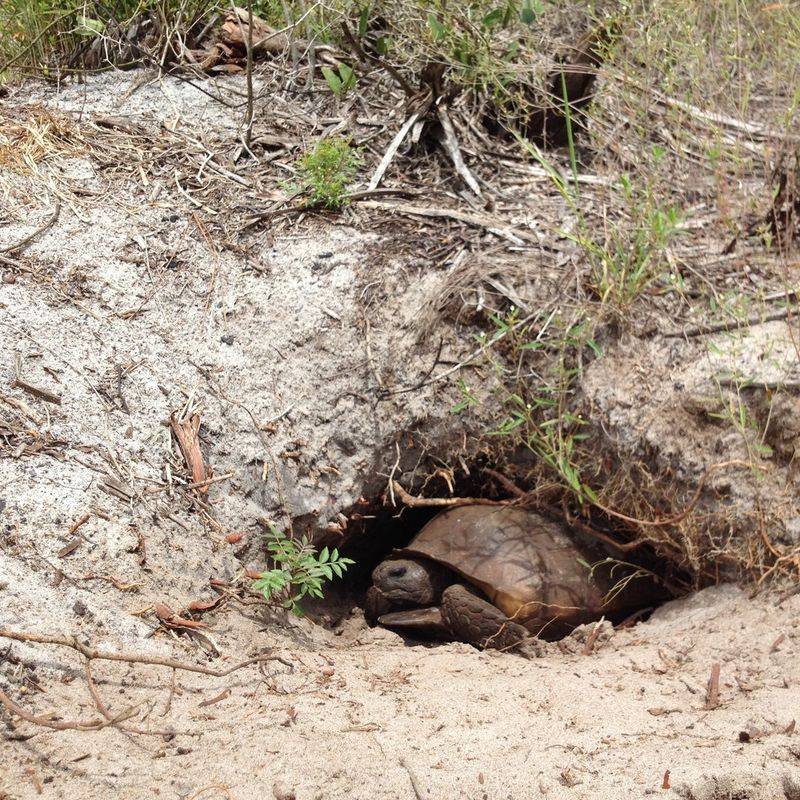
Gopher tortoises are famous for their burrowing. Finding the right soil is one of the biggest factors that drives where they settle and where they travel.
Sandy, well-drained soil is what a gopher tortoise needs to build a burrow. Clay-heavy or constantly wet ground makes digging much harder.
If your yard has loose, dry, sandy soil, a tortoise might find it very appealing as a potential burrow site.
Burrows can run several feet deep and wide. They serve as shelter from extreme heat, cold snaps, and potential threats.
A tortoise will sometimes test out multiple spots before committing to one location.
In Georgia, naturally sandy soils are common in many parts of the state, especially in the coastal plain region. Yards in these areas are more likely to attract a tortoise looking for a good place to dig.
If you notice a tortoise lingering near a slope, embankment, or patch of bare sandy ground, it may be scouting that spot. That behavior is completely natural and not a sign that something is wrong.
Avoid disturbing any soil a tortoise seems interested in. Disrupting a potential burrow site can stress the animal and push it into less safe areas nearby.
5. A Tortoise May Stay Longer Than You Expect
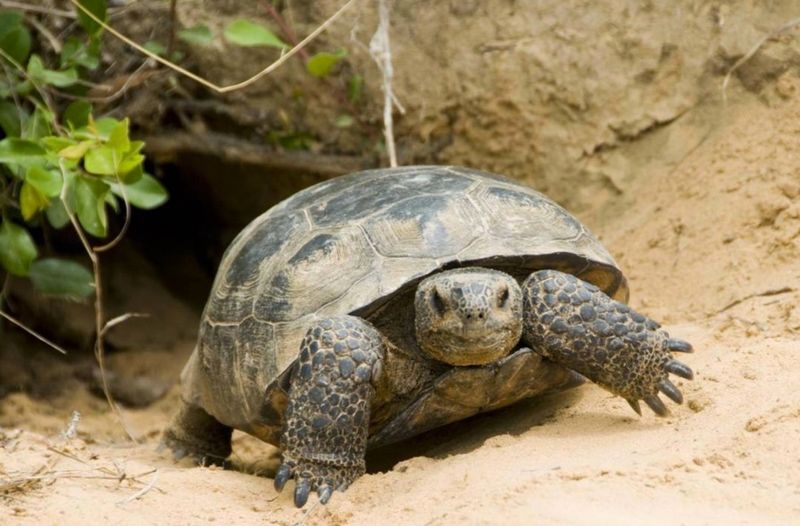
Gopher tortoises move slowly, and they tend to rest often. If one finds your yard comfortable, it might hang around for several days or even longer.
Tortoises do not feel urgency the way people do. When they find food, shade, or suitable soil, they may settle in for a while.
Seeing the same tortoise in your yard multiple days in a row is not unusual at all.
Shaded spots under shrubs or along fence lines can attract a resting tortoise. These animals need to regulate their body temperature, so they alternate between sunny patches and cooler shaded areas throughout the day.
A tortoise that seems still or inactive is not necessarily in distress. Resting for hours is completely normal behavior.
Gopher tortoises are not fast-paced animals by nature, so long pauses are part of how they live.
Try not to relocate or move the tortoise out of impatience. Moving it to a different location can disorient the animal and separate it from its home range.
If it is not in immediate danger from traffic or pets, letting it move on its own is the better choice.
Most visits eventually end on their own. Give it time, and your visitor will likely wander off when it is ready.
6. Keep Pets Away And Give Your Visitor Space
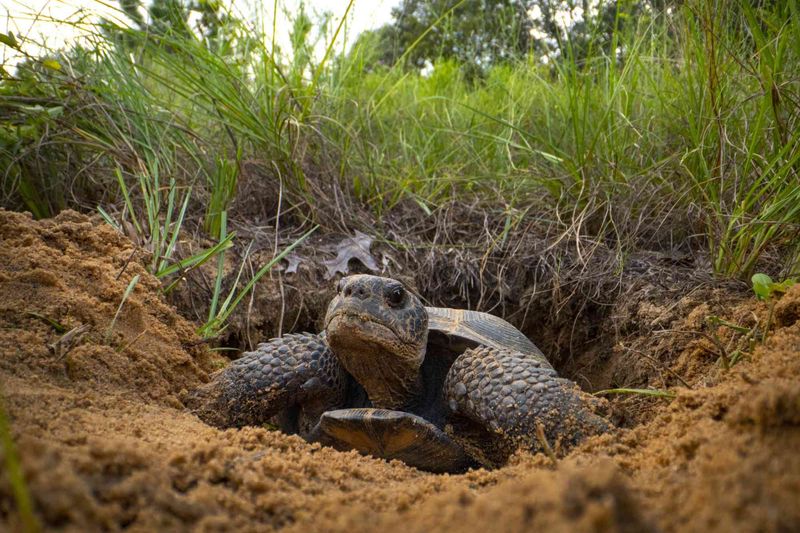
Pets and gopher tortoises do not mix well. Dogs especially can seriously injure a tortoise, even when just playing or out of curiosity.
A tortoise shell looks tough, but it is not indestructible. A dog bite or rough handling can crack the shell and cause serious harm to the animal.
Even a dog that seems gentle can cause damage quickly without meaning to.
Cats are less of a physical threat to adult tortoises but can still stress them out. A tortoise that feels threatened may withdraw into its shell for hours, which disrupts its normal feeding and movement patterns.
Keep dogs indoors or on a leash whenever a tortoise is in your yard. Do not let children chase or pick up the animal either.
Gopher tortoises are a protected species in Georgia, and handling them without authorization is not permitted under state wildlife regulations.
Giving the tortoise space is the most helpful thing you can do. Observe from a comfortable distance if you want to watch.
Avoid loud noises, sudden movements, or crowding around the animal.
A calm, undisturbed tortoise is a happy one. Keeping pets away and giving it room to move is simple, effective, and the right thing to do for a protected wild animal passing through.
7. A Burrow Should Be Left Completely Undisturbed
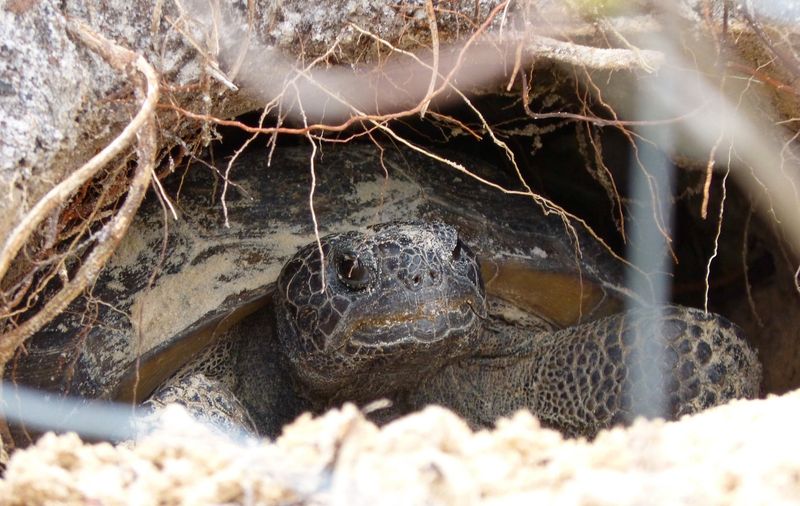
Spotting a burrow in your yard is a significant find. Gopher tortoises can spend years returning to the same burrow, and that structure matters far beyond just one tortoise.
Over 350 other species have been documented using gopher tortoise burrows in the southeastern United States. Frogs, snakes, rabbits, foxes, and many insects rely on these tunnels for shelter.
Filling or collapsing a burrow can affect a whole network of wildlife.
Gopher tortoises are a protected species. Disturbing, filling, or blocking a burrow without a permit is illegal under Georgia wildlife law.
Even if the burrow looks inactive, a tortoise may still be using it regularly.
Burrows that appear inactive are sometimes just temporarily unoccupied. Tortoises can have multiple burrows within their home range and rotate between them over days or weeks.
Mark the area around the burrow so family members and lawn care workers know to avoid it. Keep mowers and equipment away from the entrance.
Avoid dumping soil, mulch, or debris near the opening.
Protecting a burrow on your property is a genuine contribution to local wildlife conservation. Tortoises are slow to reproduce, so every individual and every active burrow matters for keeping populations stable over time.