Why Are Georgia Lawns Covered In Brown Circles This Cool, Wet Fall?
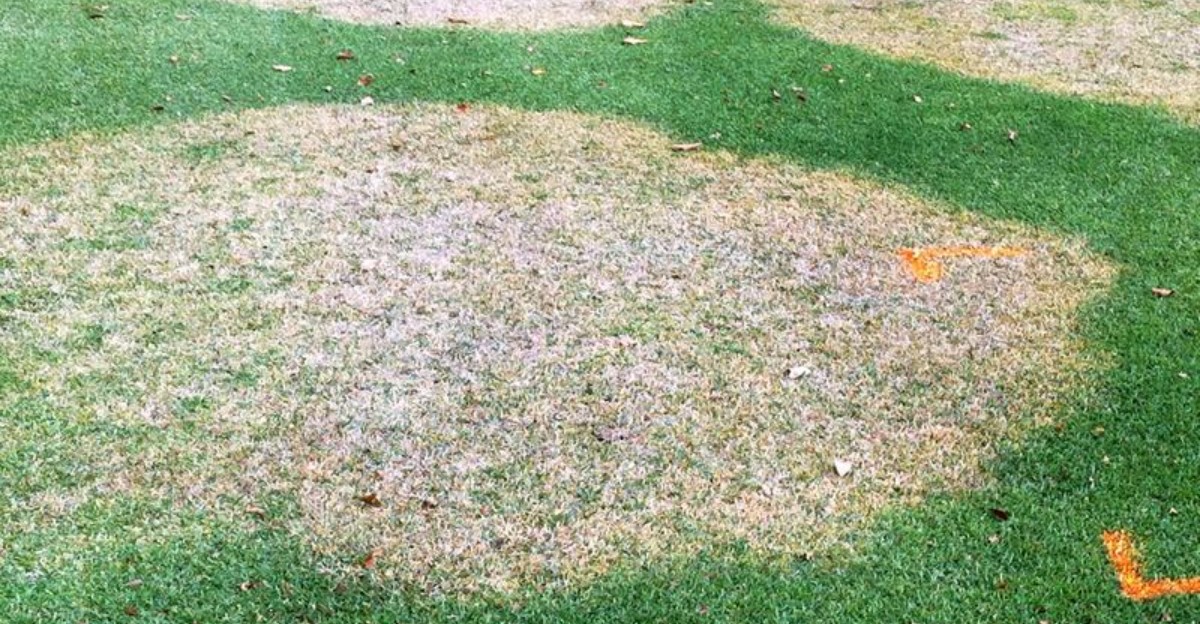
One patch of trouble in your yard can stretch wider than a two-car garage. Some of these rings grow to 26 feet across, and many return to the exact same spot year after year.
I noticed the first one after a week of foggy mornings and drizzly afternoons. The grass at the edge glowed orange, almost like a sunset painted on the ground.
My first guess was grubs, then the dog, then a gas leak.
Across Georgia, plenty of homeowners are spotting the same odd shapes right now. The timing feels suspicious, since the heat finally broke and the rain finally came.
You would expect a lawn to look happier, not worse.
What turns relief from summer into a lawn full of rings? The answer hides at the soil line, right where the grass blade meets the crown.
1. Those Orange-Edged Rings In Warm-Season Grass Have A Hidden Source
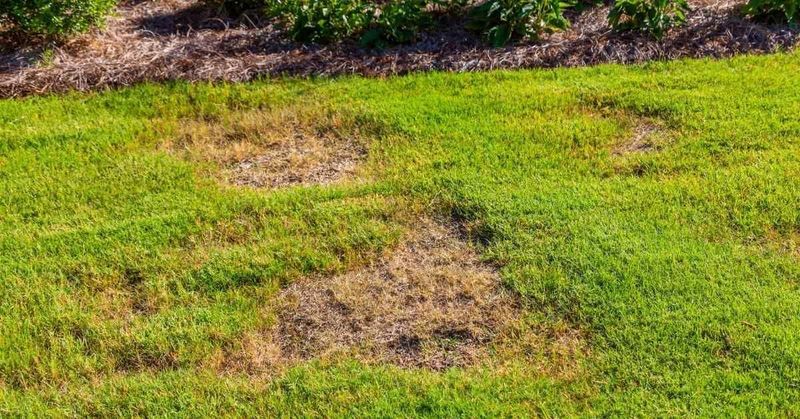
Walk your yard on a damp October morning and you may notice something odd. The brown area is not random, and it has a clear border that glows yellow or orange.
That colorful edge is a big clue. It marks the spot where a soil fungus is actively spreading outward into healthy grass.
The center often looks tan, thin, or matted down.
University of Georgia turf experts see this pattern every fall in zoysiagrass, centipedegrass, St. Augustinegrass, and bermudagrass. These warm-season grasses are slowing down for winter, so they cannot fight back as well as they do in July.
The patches can be small at first, maybe a few feet wide. Over weeks they can stretch from 3 feet up to about 26 feet across.
Sometimes the middle recovers a bit, leaving a ring or a horseshoe shape instead of a solid circle.
Here is something many folks miss. Insects and dog spots rarely make such neat, expanding circles with bright margins.
A fungus does, because it grows outward in every direction from where it started.
So before you buy grub control or blame the neighbor’s pup, take a closer look at that edge. It is telling you exactly where the trouble lives.
2. Large Patch Fungus Loves Soil Temperatures Sliding Below 70
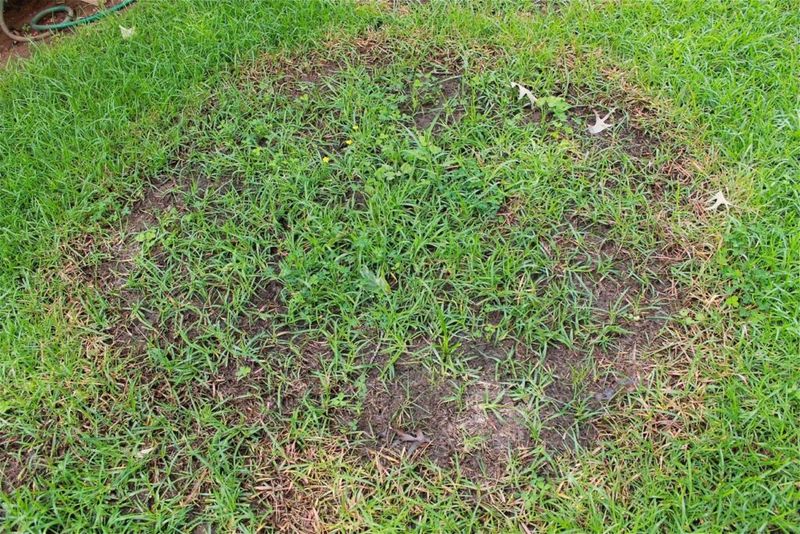
Meet the culprit by its proper name, large patch disease. It is caused by a soilborne fungus called Rhizoctonia solani, and it is the most common reason for big brown circles in warm-season lawns this time of year.
Temperature is the trigger. Infection kicks in when the thatch layer sits between about 50 and 70 degrees and stays wet for 48 hours or more.
A cool, rainy fall delivers that combo almost perfectly.
Heavy dew adds fuel. When droplets cling to blades until mid-morning, the fungus gets extra hours to work.
The first steady rains after a dry late summer often start the whole cycle.
The fungus attacks the leaf sheaths right near the soil line. It leaves water-soaked, reddish-brown or black lesions there.
The blade above then browns from the tip down toward the base.
Fun fact: the same fungus can wake up again in spring as grass greens up. That is why many lawns show patches in both seasons.
Knowing the name matters. It helps you pick the right fix instead of guessing, and it keeps you from wasting money on products made for bugs or weeds.
3. A Gentle Tug On A Grass Blade Can Confirm The Problem
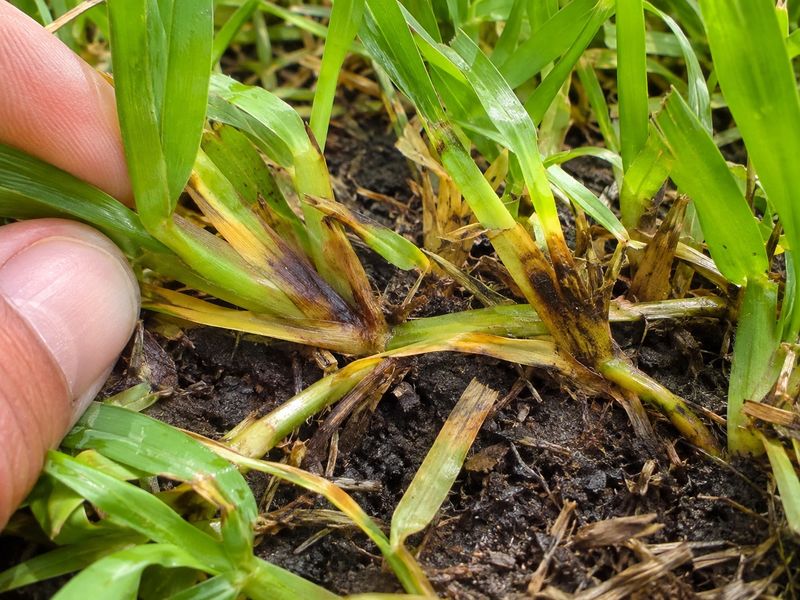
My favorite test takes about five seconds. Kneel at the yellow edge of a patch and gently pull on a single grass blade.
With large patch, the blade often slides right out of the crown with almost no effort. Look at the bottom end.
You will likely see a dark, rotted, slimy-looking section instead of firm white or green tissue.
That rot is the fungus at work. Healthy blades hold tight and snap higher up rather than releasing cleanly.
Georgia gardeners can look for a few other signs, too. The outer ring tends to look brighter yellow or orange than the center.
Roots usually stay mostly intact, since this disease focuses on the sheaths.
Compare that with grub damage. Grub-damaged turf peels back like a loose rug, and you will find C-shaped white larvae in the soil.
If you still feel unsure, your county UGA Extension office can help. Many offices accept turf samples and can send them to the plant disease lab for a clear diagnosis.
A quick check like this saves money and stress. You will know whether to treat for fungus or keep looking for another cause.
4. Evening Sprinklers Keep Lawn Blades Wet Far Too Long

Honestly, the sprinkler timer is one of the easiest things to fix. Many systems still run on summer settings, and that extra water feeds fungus in fall.
Watering at night is the biggest offender. Blades stay damp until morning, and that long wet stretch is exactly what large patch needs.
Shift watering to early morning, ideally finished before 10 a.m. The sun and breeze then dry the leaves during the day.
Also think about how much you water. When the sky is already doing the job, turn the system off or use a rain sensor.
Deep, infrequent watering beats short daily cycles.
Drainage plays a role as well. Low spots, compacted soil, and areas near downspouts hold water much longer.
Those soggy zones often show the first patches.
Shade and still air make things worse. Thinning low branches or dense shrubs lets sunlight and wind reach the grass so it dries faster.
Walk your yard after a rain and note where puddles linger. That simple map often lines up surprisingly well with where the brown circles appear.
5. Skip That Late Fall Nitrogen Fertilizer On Brown Patches
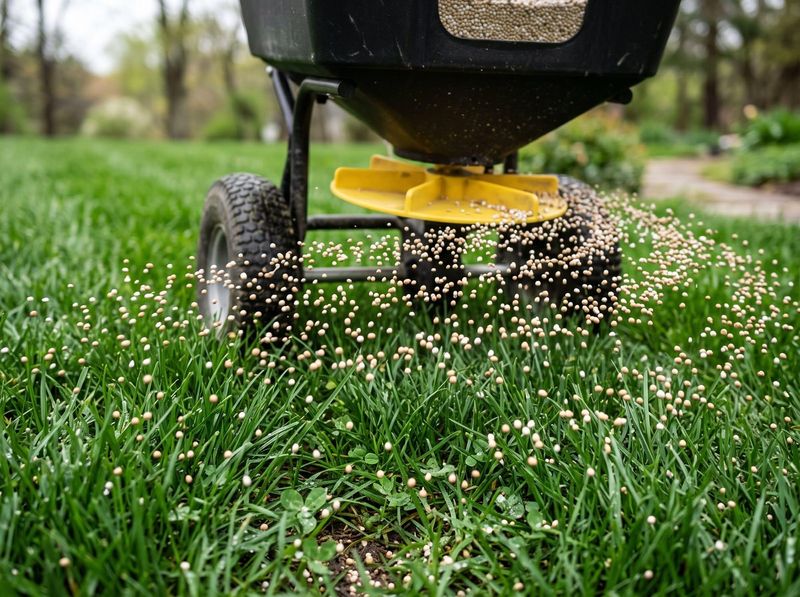
It feels natural to feed a struggling lawn. Yet with large patch, a dose of high-nitrogen fertilizer in fall can make the circles grow faster.
Nitrogen pushes soft, tender leaf growth. Those thin-walled cells are easy for the fungus to break into.
UGA guidance recommends avoiding nitrogen on warm-season grass while the disease is active, especially in late fall and early spring. Save feeding for when the lawn is fully green and growing in late spring and summer.
A soil test is your best guide. Your local Extension office offers affordable testing, and results show exactly what your lawn needs.
Many turf pros suggest low to moderate nitrogen, moderate phosphorus, and moderate to high potassium. Potassium helps grass handle stress and cooler weather.
One twist is worth knowing. Dollar spot, another fall disease, actually shows up more on lawns low in nitrogen.
Balance matters, and that is why testing beats guessing.
For now, put the spreader away. Georgia lawns will thank you next season with steadier, tougher growth.
6. Tiny Silver Dollar Spots Point To A Different Lawn Disease
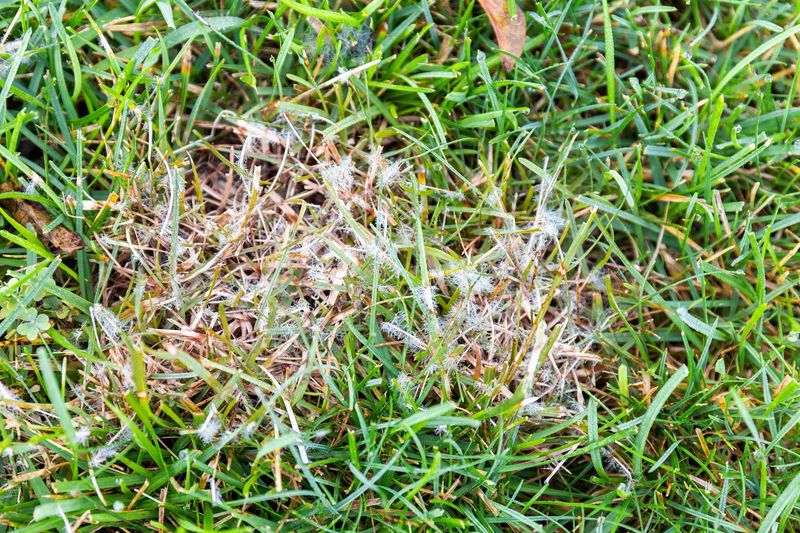
Not every circle is a giant one. If you see lots of small, round, straw-colored spots about the size of a coin, you may be dealing with dollar spot instead.
These patches usually range from under half an inch to about four inches across. On close inspection, individual blades show tan lesions with reddish-brown borders, a bit like an hourglass.
Early morning offers a neat surprise. On dewy days you might spot fine white threads, almost like cobwebs, stretched across the grass.
That fluff is fungal growth, and it fades once things dry.
Dollar spot loves temperatures from about 60 to 75 degrees with long periods of leaf wetness. That makes spring and fall prime time here.
It affects bermudagrass, zoysiagrass, and even tall fescue lawns in north Georgia. Drought stress, scalping, thick thatch, and low nitrogen all raise the risk.
Cultural care often handles it well. Water in the morning, keep mower blades sharp, knock dew off with a hose or a broom, and keep fertility balanced.
Telling the two diseases apart helps you choose the right next step.
7. Raking Leaves And Coring Thatch Help Your Turf Breathe
Fallen leaves look charming for about a week. After that, heavy piles trap moisture, block light, and give fungus a cozy hideout on top of your grass.
Rake or mulch leaves regularly so they do not mat down. A mower with a mulching blade works well for light layers.
Thatch is the next thing to check. Cut a small wedge of turf and measure the spongy layer between green blades and soil.
If it runs thicker than about one inch, it is holding too much water.
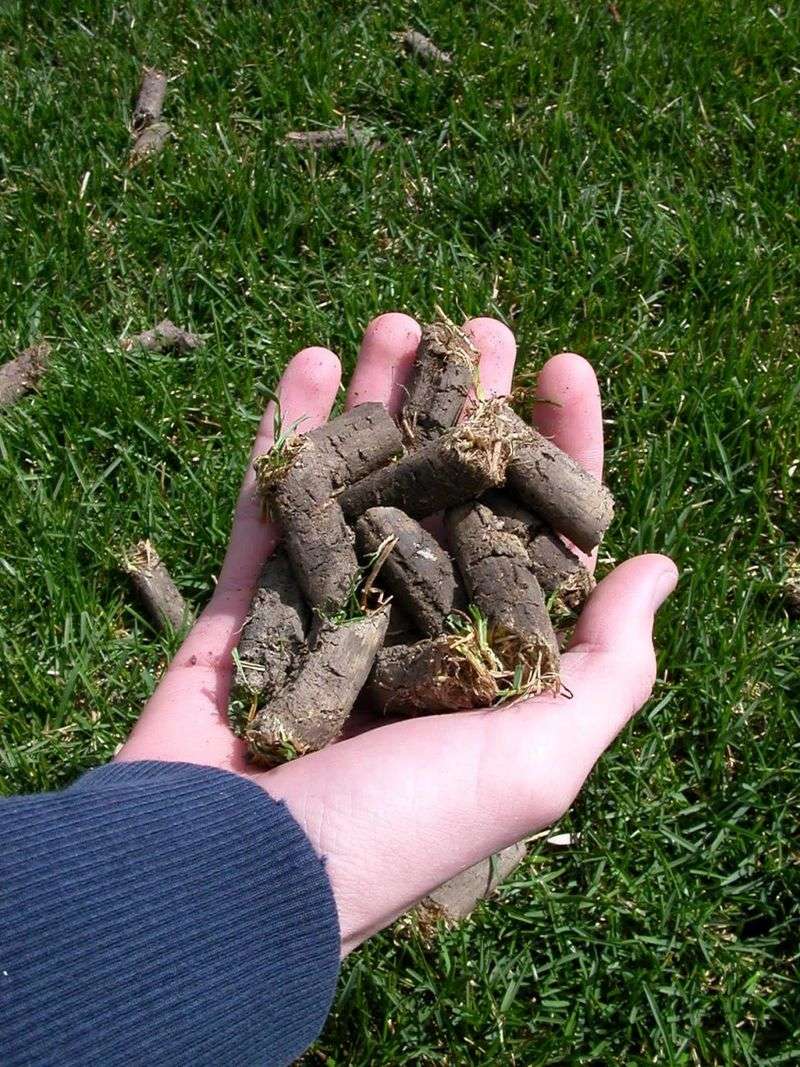
Core aeration pulls out small plugs of soil. It relieves compaction, improves drainage, and helps break down thatch over time.
Plan it for late spring or early summer, when warm-season grass recovers quickly.
Mowing habits matter, too. Keep the right height for your grass type and raise the deck slightly as days cool.
Mow only when the lawn is dry.
Clean your mower after cutting through infected areas. Bagging clippings from patches can also limit spread to healthy spots.
Small chores like these add up to a lawn that resists disease naturally.
8. Mark Those Circles Now To Plan Next Fall Fungicide Timing
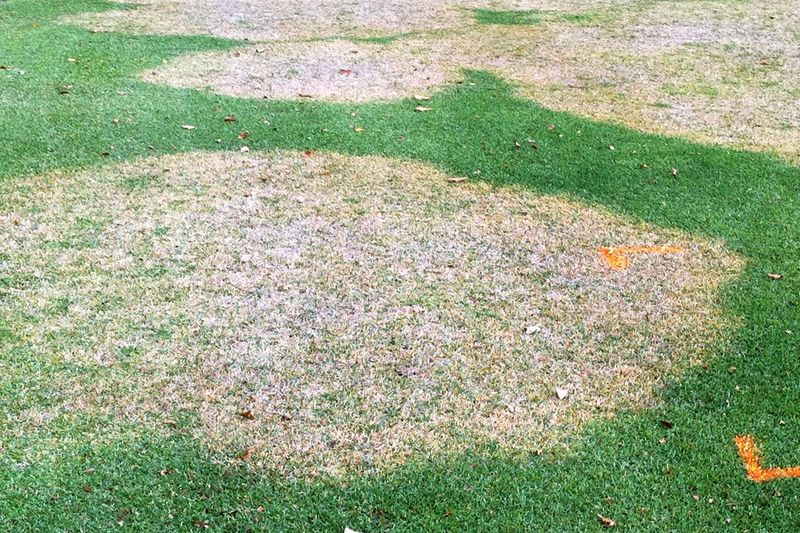
Grab a few lawn flags before winter hides the evidence. Marking where patches showed up this year gives you a valuable map for next season.
Large patch tends to return to the same spots and grow a little wider each year. Knowing where it lives lets you focus your efforts.
Fungicides work best as prevention, not rescue. Experts suggest applying when thatch temperatures fall below about 70 degrees in early fall, before symptoms appear.
Products with azoxystrobin or propiconazole are common choices.
Rotate between different active ingredients over time. That helps keep the fungus from building resistance.
Read every label carefully and follow the rates exactly.
Keep expectations realistic for this year. Warm-season grass grows slowly in cool weather, so damaged areas usually stay brown until spring green-up fills them back in.
Patience pays off. Fix drainage, adjust watering, skip late nitrogen, and keep leaves cleared.
I’ve noticed that the flags are oddly satisfying. They turn a frustrating mystery into a simple plan, and Georgia gardeners will be ready before the first ring appears next fall.