Why Creeping Buttercup Takes Over Wet Oregon Lawns So Fast
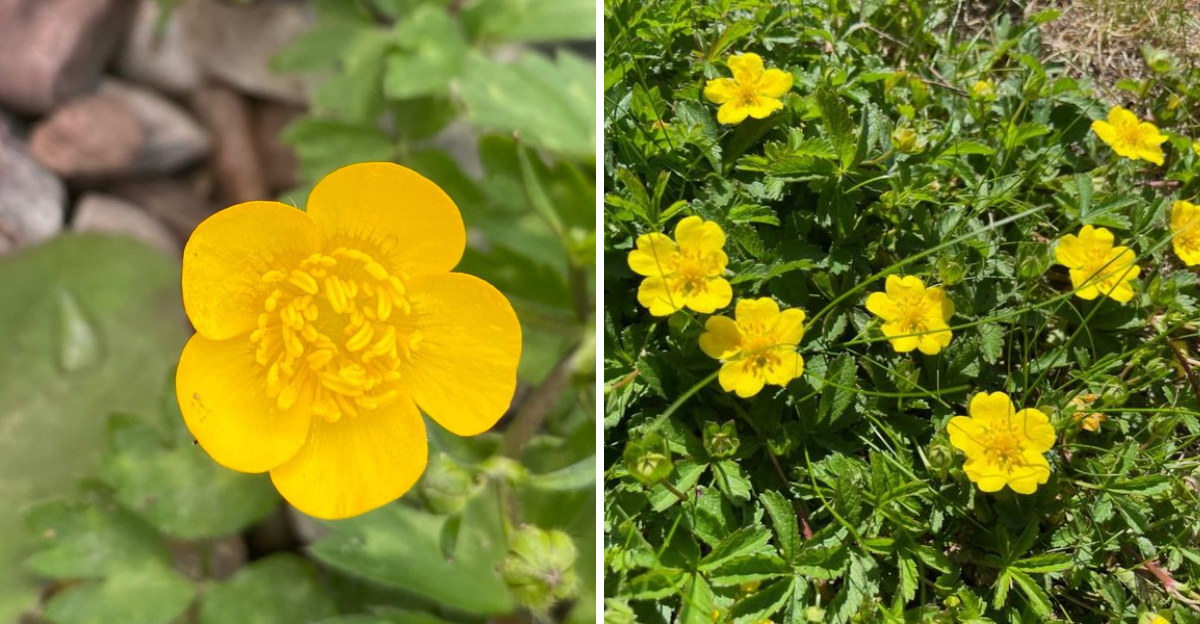
A yellow flower can make a wet Oregon lawn look cheerful for about five seconds.
Then you notice the runners.
One patch has reached under the grass. Another has appeared beside the path. After the next rainy stretch, those glossy blooms seem to occupy twice as much ground.
That speed is not your imagination.
Creeping buttercup, Ranunculus repens, is a perennial weed that favors wet soil and spreads through both seed and tough stems that root as they cross the ground.
It is especially widespread west of the Cascades, where cool, damp conditions can give it an easy advantage over thin turf.
So why does one small patch become a carpet so quickly?
The answer starts below your shoes.
Poor drainage, compacted soil, open turf, and leftover stem fragments all help the plant hold territory. A quick flower trim barely changes the equation.
Read the lawn instead.
Once you know what buttercup exploits, the yellow takeover becomes less mysterious. The lawn starts to show exactly where your turf needs help.
1. Let Wet Soil Give Buttercup The Advantage
The lowest corner of the yard often tells you why the yellow patch appeared first.
Creeping buttercup prefers wet soil and forms thick carpets where drainage stays poor. Compaction also favors the problem because healthy turf has a harder time holding dense cover under those conditions.
Walk the lawn a day after a solid rain.
Press a shoe into the problem area and compare it with healthier turf nearby. Soft, saturated ground, puddles, or soil that stays slick long after the rest of the yard drains all point toward a site problem, not merely a weed problem.
Give that wet patch extra attention.
Grass needs air in the root zone as well as water. Persistent saturation can weaken turf and leave more open space. Buttercup takes advantage of those gaps and adds runners across the surface.
Do not start with a spray bottle and ignore the puddle.
Check downspouts, low grades, compacted paths, and sprinkler zones that add water to already damp ground. Improving drainage and avoiding compaction are two of the main lawn-control measures recommended for this weed.
This weed loves a lawn with plumbing problems.
Fix the wet welcome mat first, and every later control step has a much better chance to hold.
2. Watch Creeping Stems Root As They Travel
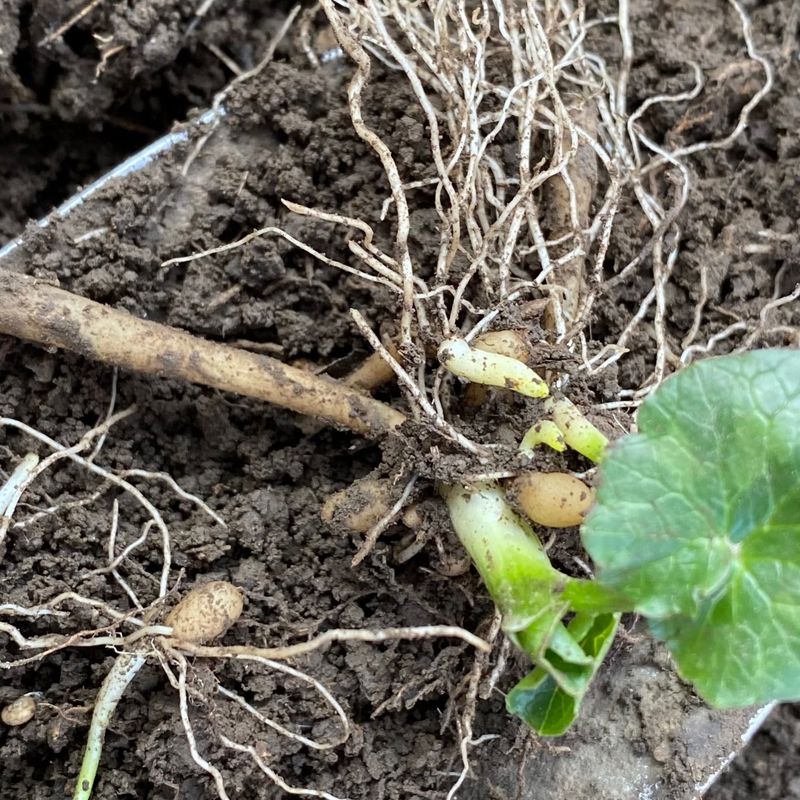
A patch does not need dozens of new seedlings to move several feet across the lawn.
Creeping buttercup sends tough horizontal stems across the soil surface. Those stems can take root where they touch suitable ground, which lets one established plant create new anchored points beyond the original clump.
Moist soil makes that strategy especially effective.
Trace one runner with your fingers from the center of a patch toward clean grass. You may find several rooted sections along the same stem, each ready to support leaves of its own.
That is why a quick tug at the yellow flowers rarely solves much.
The visible bloom is only the flag above a network that can extend through the turf. Broken stem and root pieces can also produce regrowth, so rough removal may leave enough material behind for another round.
Your Oregon Garden Changes Every Week. Your Plan Should Too.
Gardening in Oregon changes quickly throughout the season. Every Friday you’ll receive a simple weekly plan showing exactly what to plant, prune, fertilize, harvest, and protect so you never miss the right timing.
Work from the outside edge toward the center.
Lift each runner, loosen rooted nodes with a hand tool, and collect every fragment you can find. A small patch deserves this slow treatment before it becomes a mat.
Check that same edge again later.
New leaves at the border reveal where a fragment or hidden rooted section survived.
Buttercup does not charge across the yard in one dramatic leap.
It advances one rooted stop at a time, which is exactly why early edge patrol works so well.
3. Expect Dense Mats To Crowd Thin Turf

Thin turf gives the weed room, but a dense buttercup mat can make that thinness worse.
The plant forms low stands of stems and broad leaves that crowd nearby herbaceous plants. Left alone, established patches can create dense mats that dominate the space around them.
Look closely at the boundary between healthy turf and the yellow carpet.
The grass usually becomes sparse before it disappears from view. Buttercup runners thread through those weak areas, then leaves overlap above the soil and occupy more of the available space.
Your best defense is not an ultra-short cut.
Regular lawn care that keeps turf dense can reduce open ground where broadleaf weeds gain a foothold.
Western Oregon perennial ryegrass generally suits about a two-inch cut, while fine fescues commonly suit roughly 2½ to 3 inches and tall fescue prefers about 3 to 4 inches.
Set the mower high enough to protect the weak patch.
Cut too much leaf at once and turf loses vigor and density. The one-third rule helps grass retain enough leaf area for recovery.
Then reseed bare places after weed removal.
A vacant patch is not neutral territory for long.
Buttercup loves an empty seat, so make healthy grass claim it before another runner arrives.
4. Fix Drainage Before Fighting The Weed
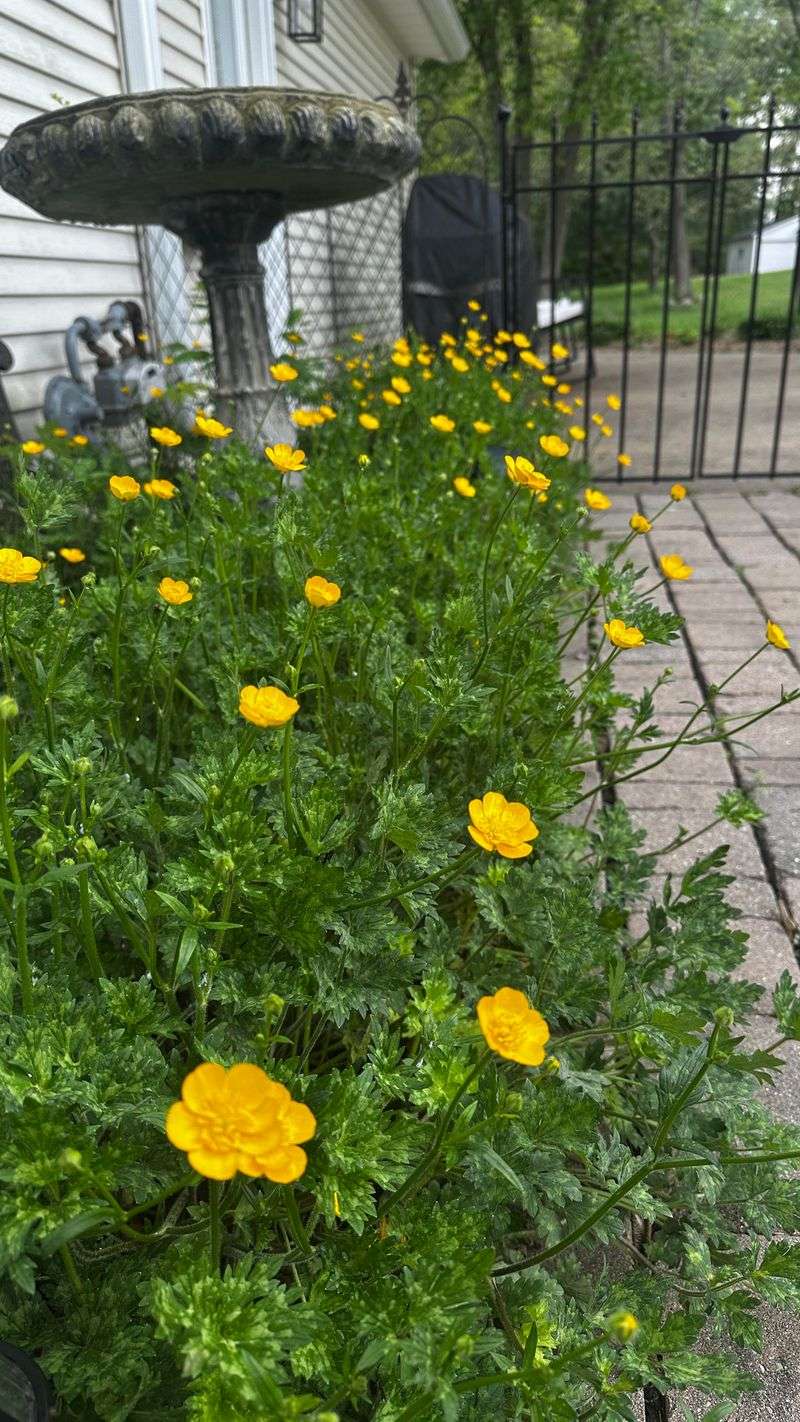
The yellow flowers are easy to see. The slope of the yard deserves more attention.
Start at the source of excess water before you spend hours on weed removal. A downspout aimed toward the lawn, a sunken patch, compacted soil, or an irrigation zone with poor calibration can keep one area wet enough for buttercup to prosper.
Correct the simplest cause first.
Redirect roof water away from the turf. Reduce irrigation where rainfall already supplies enough moisture. Regrade a small depression when practical so water no longer settles there after every storm.
Compaction needs a different fix.
Core aeration can help high-traffic lawn areas where compacted soil limits movement of air and water toward grass roots.
Wait until the soil can support the equipment without turning into mud.
Do not aerate simply because buttercup exists.
Use a shovel or soil probe to compare the problem spot with healthy lawn nearby. The treatment should match the actual condition underfoot.
Large drainage failures may need professional grade correction or drainage work rather than another weekend lawn trick.
Improved drainage and less compaction are central parts of long-term creeping buttercup control in turf.
Give the site a fair test after the correction.
Watch the next rain and note how long water remains.
Buttercup is excellent at pointing out a wet weakness.
Treat the yellow patch as a map pin, then solve the water problem under it.
5. Strengthen Grass In Bare Lawn Patches
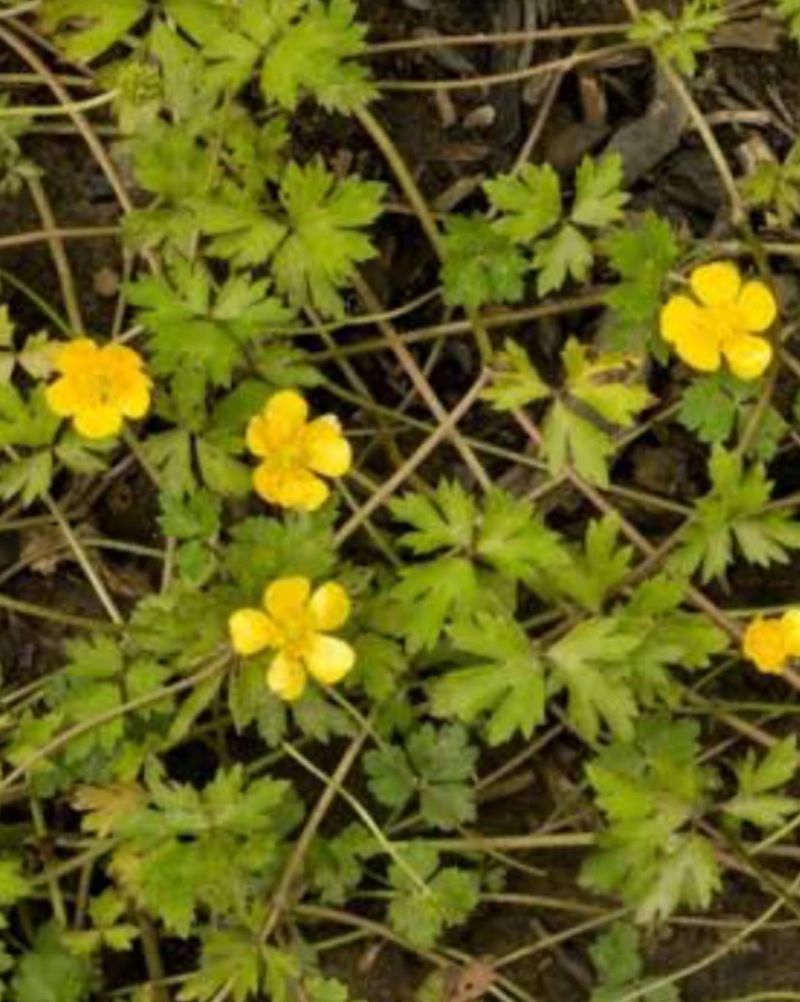
Freshly cleared soil can become a second invitation unless grass returns quickly.
After you remove a small buttercup patch, rake the surface lightly and reseed bare or thin lawn areas. Dense turf shades open soil and makes it harder for broadleaf weeds to establish another foothold.
Choose grass for the site, not for the bag design.
West of the Cascades, a perennial ryegrass and fine fescue mix can suit many lawns. Fine fescue handles some shade, but persistently wet, shady sites can still bring disease trouble.
Central and eastern Oregon often favor a Kentucky bluegrass and perennial ryegrass mix instead.
Match the seed to your part of Oregon and the actual light level.
Give new grass good seed-to-soil contact and steady moisture until roots establish. Keep foot traffic away from the repair so seedlings get a fair start.
A tiny new grass plant cannot compete well with boots, pets, compacted soil, and a buttercup runner that comes back all at once.
Fertilizer can support turf where nutrients are needed, but use a lawn plan rather than guesswork. Regular cuts, suitable fertility, and proper irrigation all help maintain lawn density.
The weed patch was the symptom.
A thick lawn is part of the long repair because buttercup has a much harder time where healthy grass already occupies the ground.
6. Pull Small Clumps Before They Expand
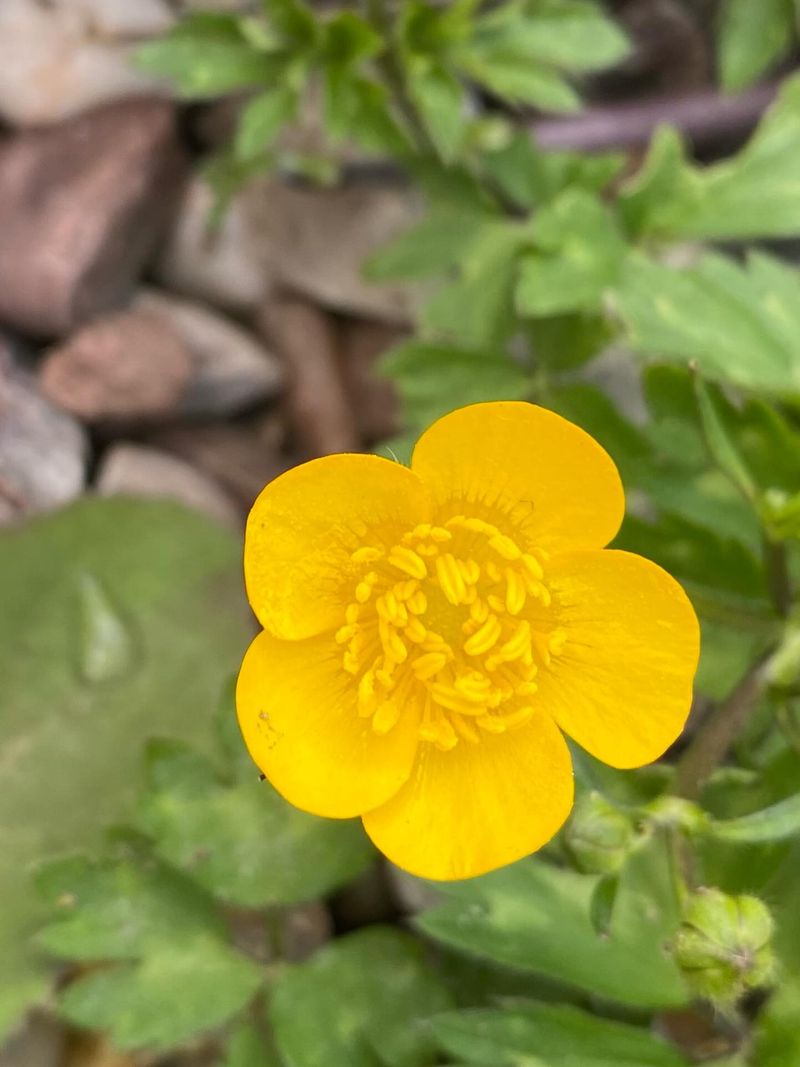
Small patches give you the easiest chance to remove buttercup without a major lawn renovation.
Wait for moist soil, then bring a hand fork or narrow trowel. Creeping buttercup has shallow roots, so careful hand work can lift plants and runners with much less disturbance than a deep dig.
Start beyond the visible leaves.
Follow each stem toward its rooted points and loosen those sections before you pull. Collect roots, stems, and fragments rather than toss them onto the lawn beside you.
Use a bucket as you work.
The plant can regrow from broken stem and root pieces, and a home compost pile is a poor destination for that material. Roots and stems should go into green waste or another disposal route recommended locally rather than stay on the property compost pile.
Keep the hole modest.
Large areas of churned soil create fresh bare ground. Regrade the spot after removal and reseed the lawn where grass belongs.
Then put the site on your return route.
Established buttercup can require several years of follow-up, and a small leaf rosette later may mark a fragment you missed today.
Do not treat regrowth as proof that hand removal failed.
It means the plant left a piece behind.
The first pull removes the crowd. Repeat visits handle the stragglers before they rebuild the yellow carpet.
7. Keep New Runners Out Of Clean Areas
A clean patch can acquire buttercup without a runner ever reaching across the entire lawn.
The weed spreads through seed and vegetative pieces, and fragments can hitch a ride in soil stuck to tools, boots, or equipment. That makes cleanup part of control, especially after work inside a dense patch.
Knock soil from the shovel before you move elsewhere.
Brush clumps from boots and hand tools, then collect loose stems rather than leave them on a path or lawn edge. Soil and seed should be removed from footwear and equipment after work inside a buttercup infestation.
Pay attention to wheelbarrow tires too.
One muddy trip from a buttercup patch to a freshly prepared bed can move more than soil. Keep contaminated debris contained until it reaches green waste.
Mower spread deserves a more careful claim.
The stronger documented concern is equipment that carries soil, seed, or viable fragments from an infested area into clean ground. Clean visible debris instead of treating every mower pass as an automatic new colony.
Walk the patch edge every few weeks.
Remove fresh runners before they develop several rooted points and look for small rosettes beyond the old boundary. Buttercup can regrow from cut stems, stem fragments, and roots.
Buttercup is good at travel without luggage.
Your tools do not need to provide free transportation on top of that.
8. Treat Active Growth Only When Needed

A large established carpet may need more than a hand fork, but herbicide still belongs late in the decision process.
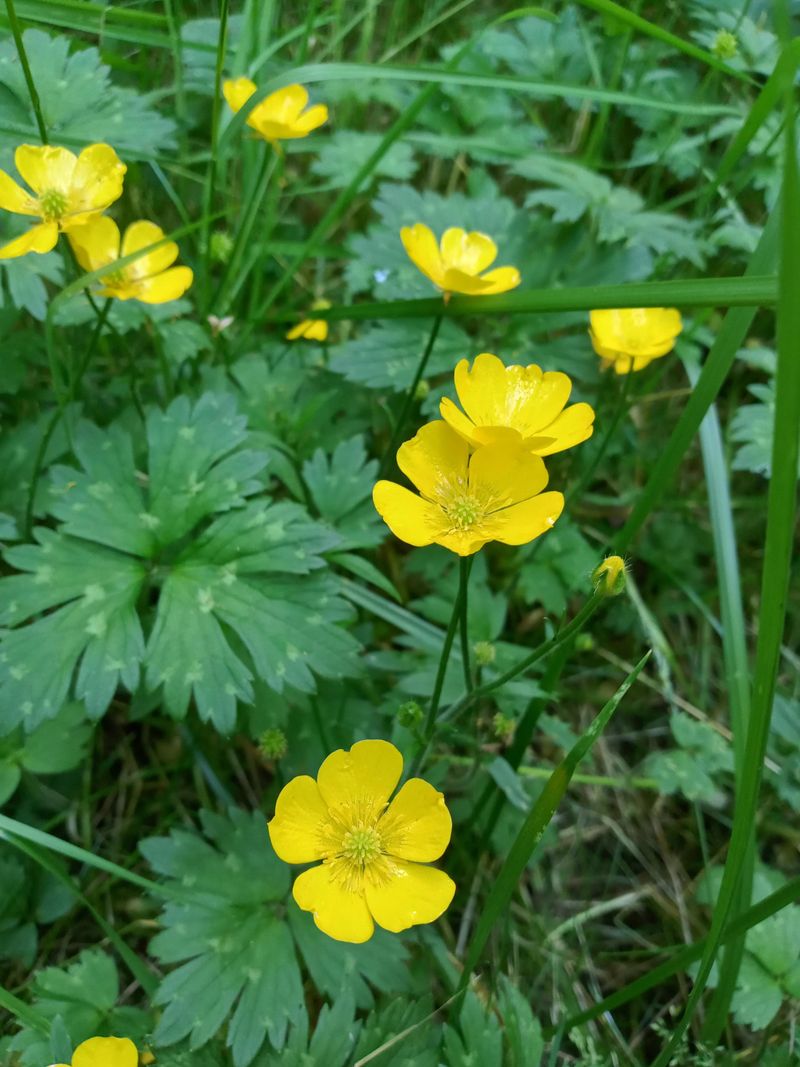
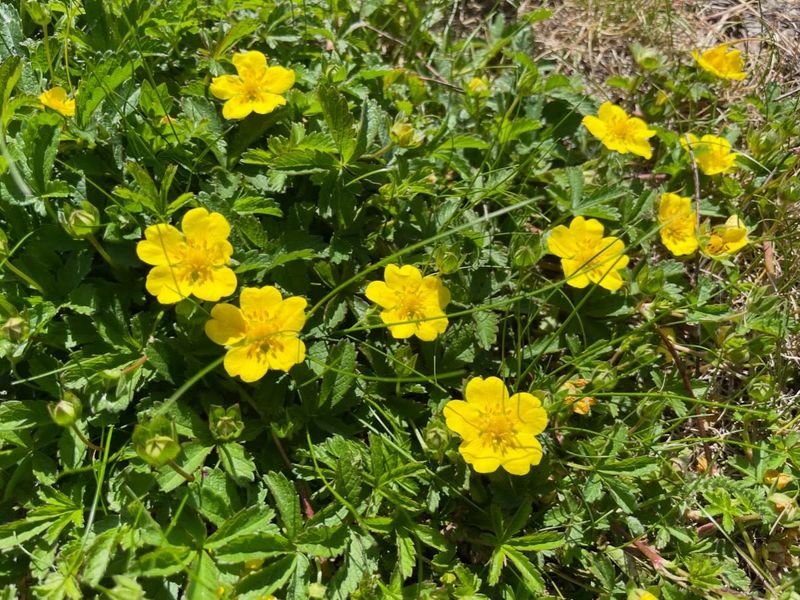
First confirm the plant. Creeping buttercup has dark green leaves with three deeply lobed, toothed segments and glossy yellow flowers. It also sends stems across the ground that take root.
Then decide how much lawn actually needs treatment.
Spot treatment can make more sense than a broadcast application where only scattered plants remain.
Home-use products with active ingredients such as 2,4-D, dicamba, sulfentrazone, quinclorac, or iron HEDTA are among options listed for creeping buttercup control in Oregon, but the product label decides turf compatibility, rate, timing, and precautions.
Treat plants while they are active from spring through fall.
Avoid treatment on drought-stressed buttercup, and check temperature limits carefully. Some 2,4-D ester formulations can create vapor on hot days and damage nearby plants.
Protect pollinators around yellow flowers too.
Treatment before bloom can reduce exposure. Where flowers are already open, follow the label and use extra care around bee activity.
Expect follow-up rather than one perfect application.
Established patches can require several years of checks and repeat control.
Herbicide can tackle part of the problem.
Better drainage, dense turf, and patient follow-up keep the lawn from becoming another yellow welcome sign.