Why Ground Skinks Keep Showing Up In North Carolina Mulch Beds
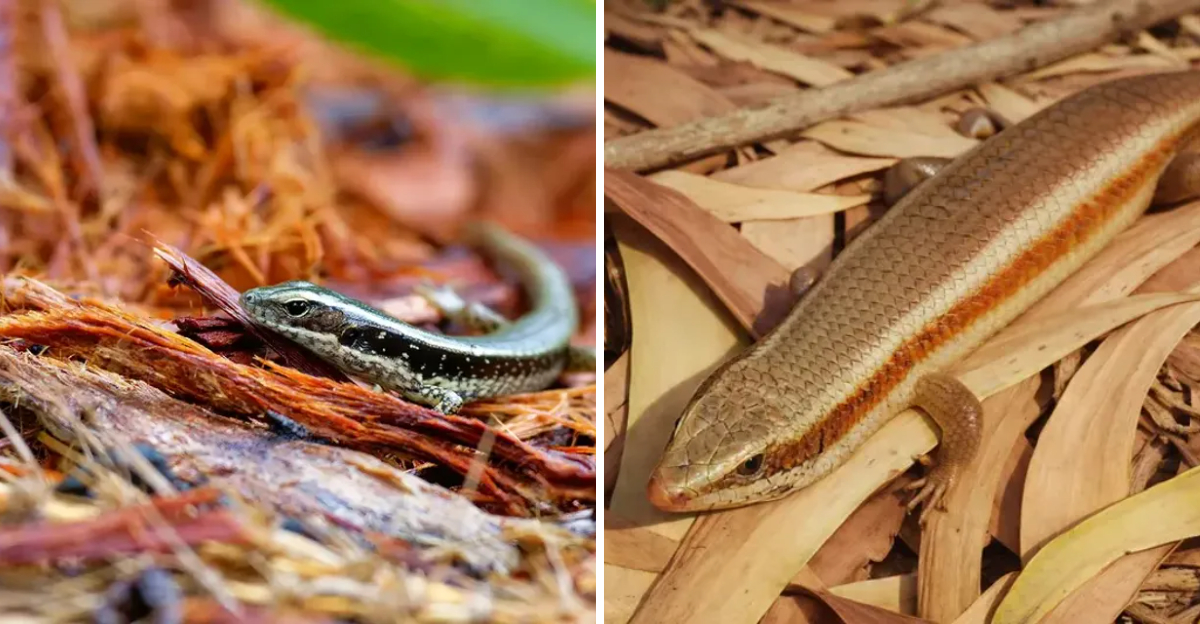
North Carolina mulch beds have tiny dragons with excellent timing.
You pull a weed, move a leaf, or step near the border, and a shiny brown streak shoots under the wood chips like it had somewhere important to be.
That little flash is probably a ground skink.
It may look surprising at first, but it is usually good news. Ground skinks like places with cover, moisture, insects, and loose material where they can hide quickly. A healthy mulch bed gives them all of that in one cozy little package.
They are harmless, fast, and much more interested in tiny bugs than in bothering anyone.
So why do ground skinks keep showing up in North Carolina garden beds?
Start with what your mulch is providing. Shelter, food, cool hiding spots, and a safe hunting zone all matter. Those little lizards are not a warning sign.
They are proof that your garden edge has become lively enough for nature to move in.
1. Mulch Feels Like Forest Floor
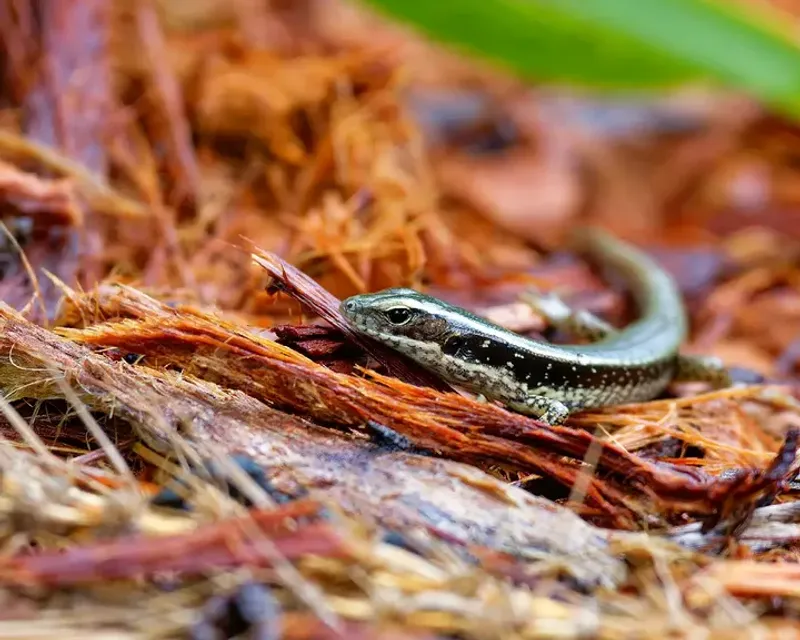
A flicker of movement catches your eye near the flower bed, and just like that, a tiny lizard vanishes under the mulch.
Ground skinks are not choosing your garden by accident.
Mulch beds, especially those made from shredded hardwood or pine bark, do an impressive job of mimicking the natural forest floor habitat these lizards evolved to love.
In the wild, ground skinks spend their lives crawling through layers of fallen leaves, rotting wood, and loose organic debris on the woodland floor.
That environment gives them cover from birds, a runway for chasing small bugs, and a soft surface for burrowing just slightly below the surface when they need a break from the world.
Your mulch bed checks every single one of those boxes.
Shredded bark and wood chips create a loose, layered texture that is easy for a skink to push through. The material holds just enough moisture to stay soft and workable.
It also traps the earthy smell of decomposing organic matter, which is essentially a dinner bell for the insects ground skinks chase.
North Carolina has a wide range of woodland edge environments, and suburban yards with mulched garden borders sit right on that edge.
When you lay down a fresh bed of mulch, you are basically rolling out a welcome mat. Ground skinks recognize the habitat cues almost instantly, which is why they seem to appear out of nowhere right after you mulch.
2. Moist Cover Keeps Them Comfortable
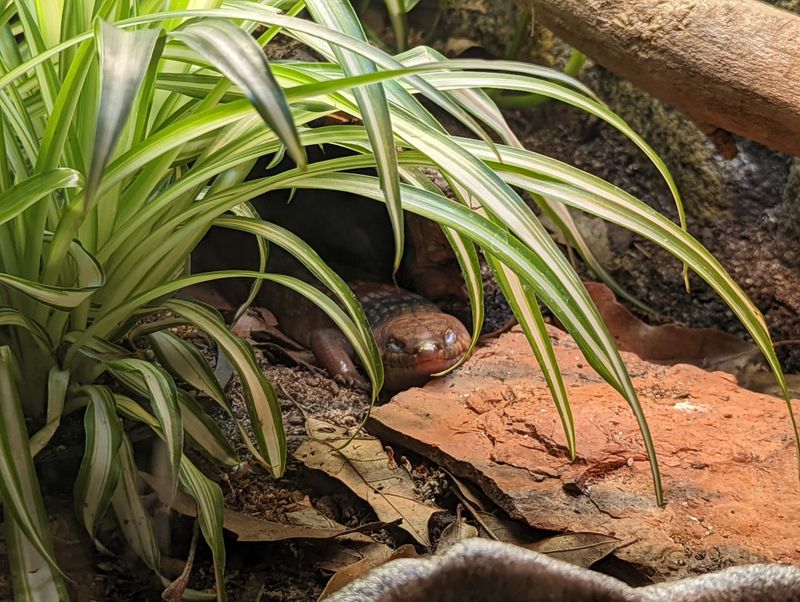
Damp mulch on a warm June morning is basically a five-star resort for a ground skink.
These lizards are small enough that losing body moisture is a real challenge, and a dry, exposed environment can stress them out quickly.
That is why the humidity trapped under a thick layer of mulch is such a big draw.
Ground skinks absorb moisture from their surroundings much the way a sponge does.
Staying in a cool, moist microhabitat under mulch helps them regulate their body condition without having to seek out open water.
Shaded garden beds that get watered regularly are especially attractive because the mulch holds that moisture for hours after irrigation.
Your North Carolina Garden Changes Every Week. Your Plan Should Too.
Gardening in North Carolina changes quickly throughout the season. Every Friday you’ll receive a simple weekly plan showing exactly what to plant, prune, fertilize, harvest, and protect so you never miss the right timing.
A thick mulch layer keeps the soil underneath noticeably cooler and wetter than exposed ground nearby.
Skinks tuck themselves just at the interface between the mulch layer and the soil surface, where conditions are ideal.
Homeowners who water their beds in the morning often notice more skink activity afterward.
The moisture encourages insects to become active, and active insects mean hunting skinks.
If you have a drip irrigation system or hand-water your beds regularly, you are unintentionally creating exactly the kind of humid refuge a ground skink looks for every single day.
3. Tiny Insects Keep Them Hunting
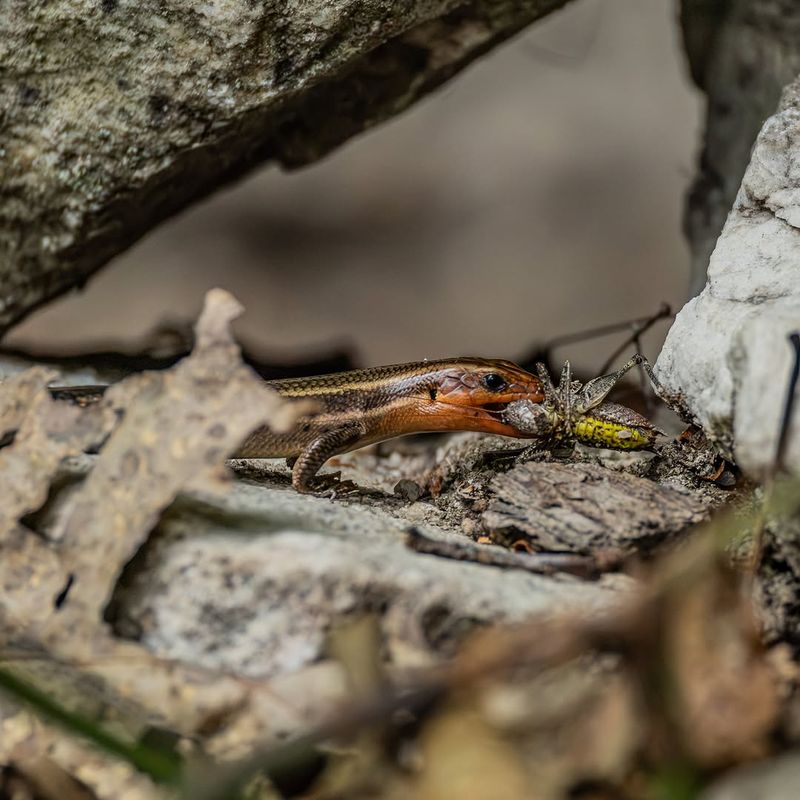
Pull back a handful of mulch in any North Carolina garden bed and you will probably find a whole little world underneath.
Springtails bounce across the soil surface. Beetle larvae curl in the damp wood fibers. Ants move in organized lines through the debris.
For a ground skink, that is not just interesting. That is lunch.
Ground skinks are active hunters that eat a wide variety of small invertebrates.
Spiders, small beetles, fly larvae, cricket nymphs, and soft-bodied insects are all on the menu. Because they are only about three to four inches long from nose to tail tip, they do not need large prey.
The tiny insect community thriving inside your mulch bed provides exactly the right meal size.
Mulch beds are insect-rich environments because decaying organic matter feeds fungus, fungus feeds tiny bugs, and tiny bugs feed everything above them on the food chain.
When you add mulch to your garden, you are not just helping your plants retain water. You are building a small but productive ecosystem from the ground up.
Ground skinks hunt by feel and sight, darting quickly through loose material and snapping up anything small enough to catch.
Their slender bodies and short legs are perfectly shaped for pushing through tight spaces in mulch. Gardeners who have watched one hunt describe it as almost like watching a tiny, determined athlete weaving through an obstacle course.
Honestly, it is pretty entertaining once you know what you are seeing.
4. Leaf Litter Gives Them Shelter
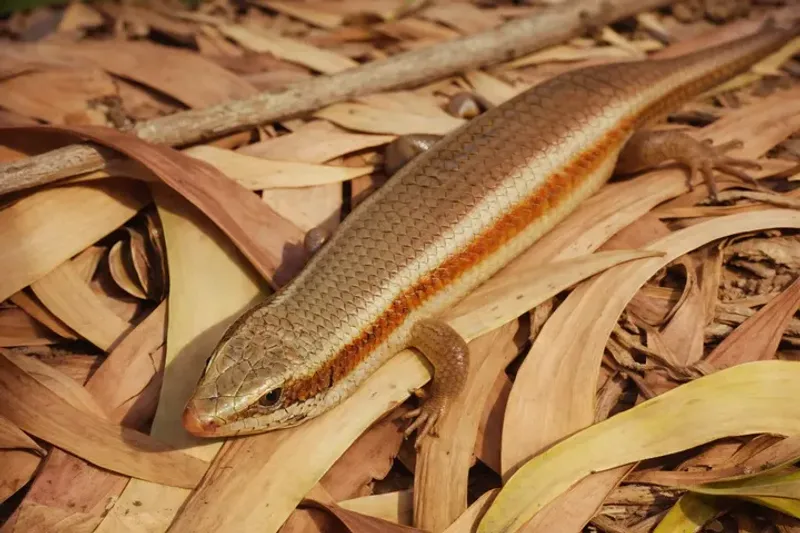
Leaf litter mixed into a mulch bed is like a bonus apartment for a ground skink.
When autumn leaves settle between wood chips or when homeowners add shredded leaves as a top dressing, the result is a layered, loose habitat that a skink can move through in every direction without ever being exposed to the open sky.
Exposure is a serious concern for ground skinks.
Hawks, domestic cats, larger snakes, and even some bold birds will eat them if given the chance. A deep layer of leaf litter gives a skink the ability to vanish in a fraction of a second.
That survival skill is one reason they thrive in suburban yards that have dense, well-maintained garden beds with good leaf coverage.
Leaves also hold heat differently than wood chips.
On a cool morning, a sun-warmed pile of leaves at the edge of a mulch bed can be several degrees warmer than the surrounding soil.
Ground skinks are ectotherms, meaning they rely on outside temperatures to warm their bodies. A sunny patch of leaf litter at the edge of a shaded bed offers the perfect temperature gradient for a skink to work with.
North Carolina gardeners who rake leaves into their beds rather than bagging them are doing something genuinely helpful for local wildlife.
Leaving a light layer of leaf debris through winter gives ground skinks and many other small animals a place to shelter during cold snaps. It is a small choice with a surprisingly big payoff for the backyard ecosystem.
5. Decaying Wood Adds Safe Hiding
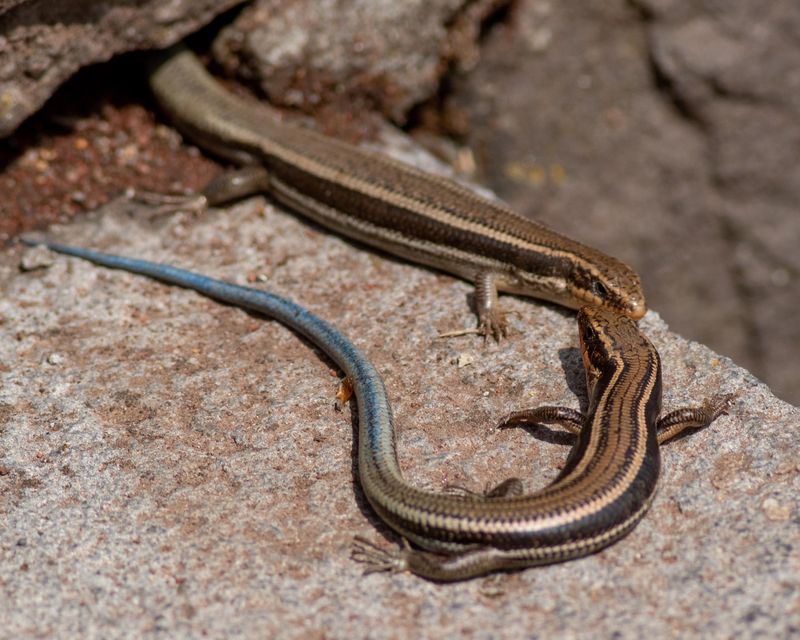
Leaf litter mixed into a mulch bed is like a bonus apartment for a ground skink.
When autumn leaves settle between wood chips or when homeowners add shredded leaves as a top dressing, the result is a layered, loose habitat that a skink can move through in every direction without ever being exposed to the open sky.
Exposure is a serious concern for ground skinks.
Hawks, domestic cats, larger snakes, and even some bold birds will eat them if given the chance. A deep layer of leaf litter gives a skink the ability to vanish in a fraction of a second.
That survival skill is one reason they thrive in suburban yards that have dense, well-maintained garden beds with good leaf coverage.
Leaves also hold heat differently than wood chips.
On a cool morning, a sun-warmed pile of leaves at the edge of a mulch bed can be several degrees warmer than the surrounding soil.
Ground skinks are ectotherms, meaning they rely on outside temperatures to warm their bodies. A sunny patch of leaf litter at the edge of a shaded bed offers the perfect temperature gradient for a skink to work with.
North Carolina gardeners who rake leaves into their beds rather than bagging them are doing something genuinely helpful for local wildlife.
Leaving a light layer of leaf debris through winter gives ground skinks and many other small animals a place to shelter during cold snaps. It is a small choice with a surprisingly big payoff for the backyard ecosystem.
6. Warm Edges Bring Quick Movement
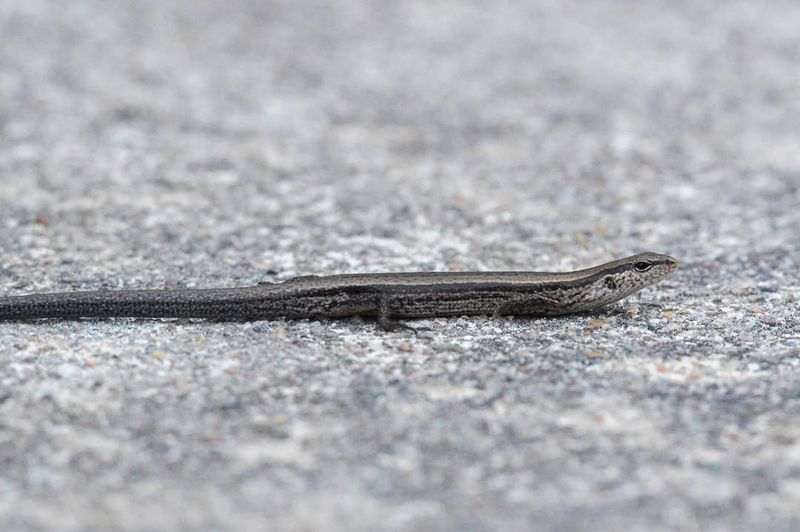
Catch a ground skink at the right moment and you will see it do something almost comical.
It darts out from under the mulch, sits perfectly still on a warm brick border for about four seconds, then disappears again like it was never there.
That behavior is not random. Basking at warm edges is a critical part of how ground skinks manage their body temperature each day.
Because skinks are ectotherms, they need external heat sources to get their muscles and digestion moving.
A mulch bed that borders a sunny sidewalk, a stone path, or a brick garden edging offers the perfect setup.
The hard surface absorbs heat from the sun and radiates it back out, creating a warm strip that a skink can use to raise its body temperature quickly before heading back into the cooler mulch to hunt.
Edges between sunny and shaded areas are some of the most ecologically active zones in any yard.
Biologists call this the edge effect, and it explains why so many animals favor the boundaries between two different habitat types.
A mulch bed that runs along a sunny driveway or a south-facing fence line is working double duty as both a cool refuge and a solar charging station.
North Carolina homeowners with mixed sun and shade garden layouts often see the most skink activity right at those transition points.
If you notice a skink basking on your garden border in the morning, it is just warming up for a full day of insect patrol. Hard-working little lizard, no complaints there.
7. Skinks Signal Living Soil
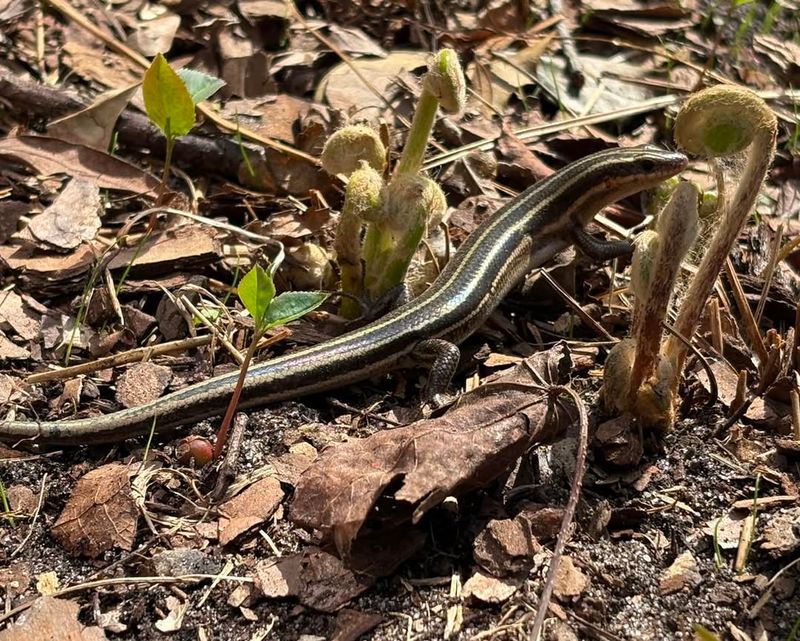
A gardener pulling weeds near a mulch bed and spotting a ground skink darting away has just received some genuinely good news.
The presence of ground skinks in a yard is a reliable indicator that the soil underneath is alive and functioning.
Healthy soil supports a layered food web, and skinks sit at one of the upper levels of that web in a backyard setting.
Living soil is full of microorganisms, fungi, worms, and insects working together to break down organic matter and cycle nutrients back into the ground.
That biological activity is what makes garden plants grow well, and it is also what feeds the insects that feed the skinks.
When a skink shows up in your mulch bed, it is essentially giving your soil a passing grade.
Yards that have been heavily treated with broad-spectrum pesticides often see far fewer skinks because the insect base that supports them has been reduced.
Choosing organic mulch materials, avoiding harsh chemical treatments near garden beds, and letting some natural debris accumulate all help maintain the kind of living soil that keeps skinks and many other beneficial creatures around.
Think of a skink sighting as a little report card from your yard.
Spotted one today? Your garden ecosystem just earned an A.
8. They Are Helpers Not Trouble
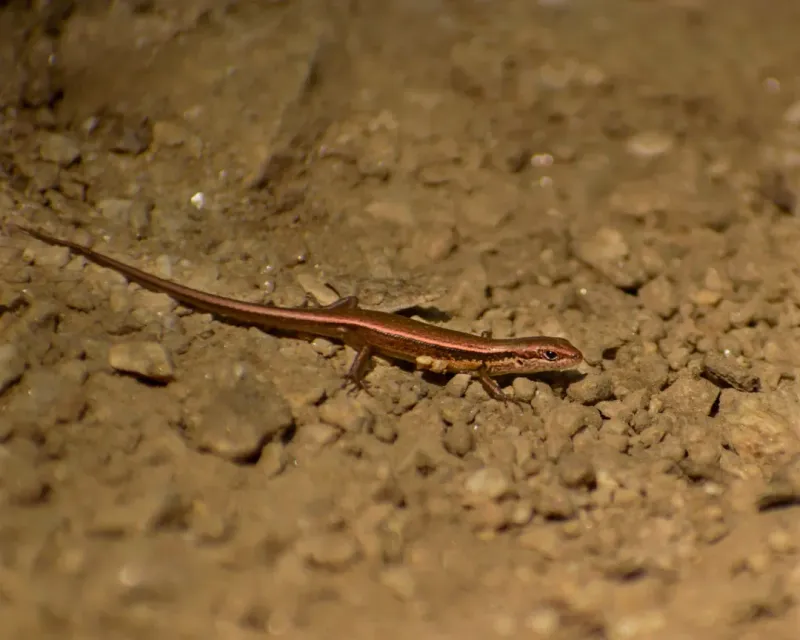
Many homeowners who spot a ground skink for the first time are not sure whether to be concerned.
The quick movement, the shiny scales, and the slightly snake-like way the skink slips through mulch can catch people off guard.
But ground skinks are harmless to people, pets, and plants, and they are genuinely useful members of a backyard community.
Ground skinks eat a wide range of pest insects.
Aphid-eating beetles, fungus gnats, small caterpillars, and plant-damaging beetles are all potential prey. Having a few skinks patrolling your garden beds means you have a free, chemical-free pest management team working the morning shift.
They are not flashy about it, but the work adds up over a season.
North Carolina Wildlife Resources Commission guidance consistently notes that native lizards like ground skinks should be left alone and appreciated as part of the state’s natural wildlife community.
They do not bite unless extremely provoked, they carry no venom, and they cause no damage to garden plants or soil.
If a child picks one up, the skink may drop its tail as a distraction, which regrows over time, and that is about the most dramatic thing they will ever do.
The best thing a homeowner can do when ground skinks appear in a mulch bed is simply leave them alone.
Skip the broad pesticides near garden borders, keep a bit of natural debris in the beds, and let these small, fast, helpful lizards do what they do best.
Your garden will be better for it, and so will they.