Why Japanese Anemone Is The Fall Shade Bloomer Missing From North Carolina Gardens
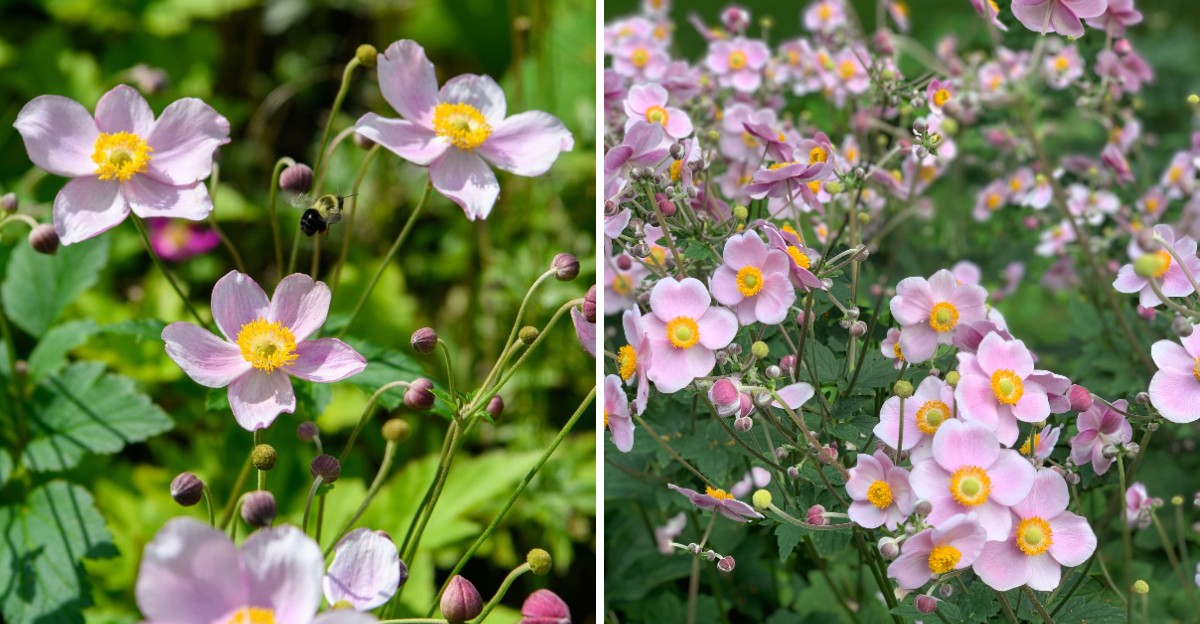
By October, most shade gardens have run out of color. Hostas turn yellow and ferns fade. Japanese anemone is just getting started.
Tall, wiry stems lift pink or white flowers above the leaves, and they sway in the breeze like small dancers. The blooms last for weeks, long after other perennials have stopped. Bees and butterflies find them right when food is scarce.
The plant spreads slowly into a generous clump and comes back year after year. It prefers morning sun and afternoon shade, which suits many North Carolina yards. Gardeners often overlook it because it looks plain in a pot at the nursery.
Give it space and a bit of patience, and it rewards you with the best fall show in the shade.
1. It Blooms When Most Shade Plants Are Done
Spring gets all the glory in a shade garden. Bleeding hearts, foamflowers, wild columbine, and hellebores put on a lovely show early in the year, but by August most of them have finished blooming.
That leaves many shady beds looking green, calm, and honestly a bit sleepy. Japanese anemone steps right into that gap.
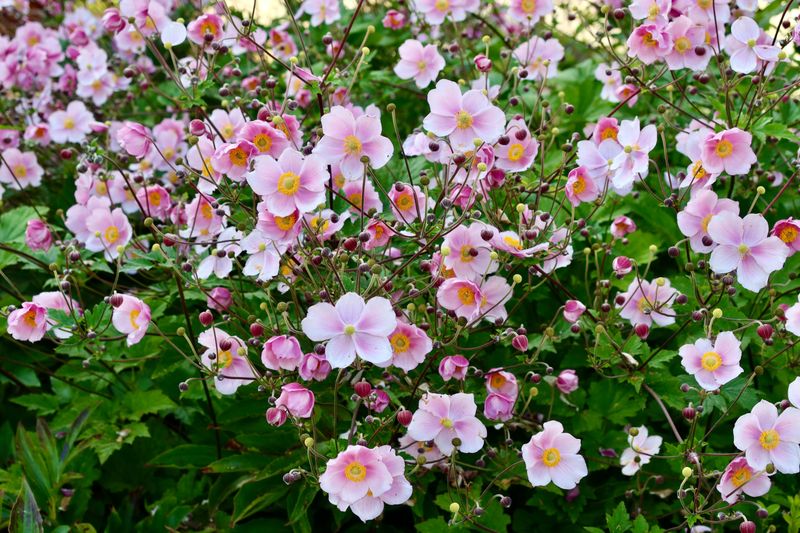
Sold as Anemone x hybrida and Anemone hupehensis, this perennial starts opening flowers in late summer and keeps going well into fall. Just when you think the garden season is winding down, fresh blooms appear on tall stems like a second spring.
Timing your planting makes a big difference. Spring is the best season to put it in the ground, because the roots get several months to settle before flower buds form. A plant set out in fall may survive, but it usually takes longer to get going.
Water matters most during that first season. Give new plants a deep drink about once a week when rain is scarce, and check the soil with your finger before watering again. Moist, not soggy, is the goal.
Patience pays off here. The first year often brings only a handful of flowers, which can feel a little disappointing. By the second or third year, though, a happy clump can carry dozens of blooms at once.
North Carolina gardeners will love that late show. Many shady yards across the state stay flowerless from midsummer until the maples and hickories finally turn color in October or November. Japanese anemone bridges those weeks with bright petals, so your shade garden has something new to say right up until the leaves start falling.
2. Its Flowers Float On Tall, Graceful Stems
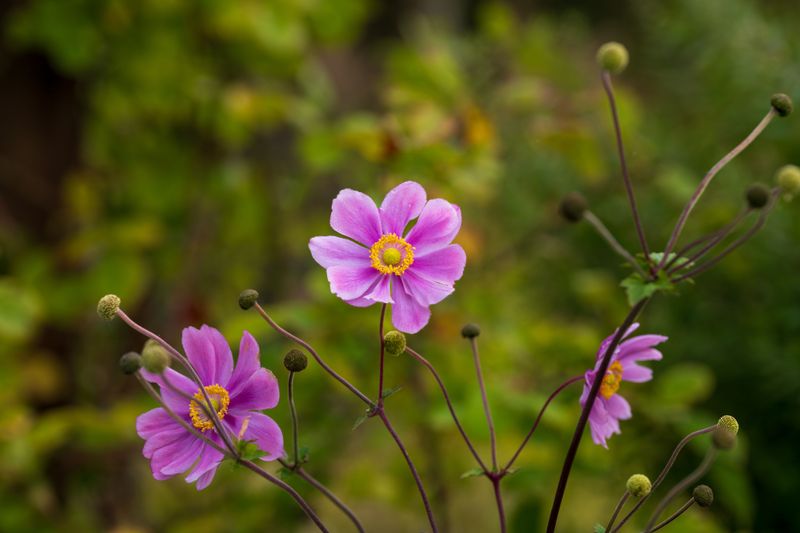
Some flowers shout for attention, and others simply dance. Japanese anemone belongs in the second group, with blooms that seem to hover in the air on thin, wiry stems. A light breeze sets them bobbing and swaying in a way that feels almost playful.
Each flower is simple and pretty. You can find single blooms with five or six rounded petals, or semi-double types with extra layers that look a bit fancier.
Colors range from crisp white to pale pink to a deeper rose, and nearly every flower has a bright ring of golden stamens in the middle.
Your North Carolina Garden Changes Every Week. Your Plan Should Too.
Gardening in North Carolina changes quickly throughout the season. Every Friday you’ll receive a simple weekly plan showing exactly what to plant, prune, fertilize, harvest, and protect so you never miss the right timing.
Below the flowers sits a mound of dark green, deeply lobed leaves. That leafy base stays fairly low while the stems shoot upward, often reaching 2 to 4 feet tall depending on the variety. The contrast gives the plant a relaxed, cottage garden charm.
Placement is the secret to showing it off. Tuck it toward the middle or back of a shady border, where it can rise above shorter plants like hostas, heucheras, and ferns. Putting a tall variety at the front would hide everything behind it.
Paths are another smart spot. When you plant a clump near a walkway or bench, you can see those golden centers up close and enjoy the bees visiting them. Popular picks include Honorine Jobert, a classic white, and September Charm, a soft pink.
Woodland gardens in North Carolina shine with these gentle colors in fall. White and pale pink flowers glow in dim light, especially at dusk, so they brighten shady areas under pines and hardwoods when the days start getting shorter.
3. It Grows Well In Partial Shade
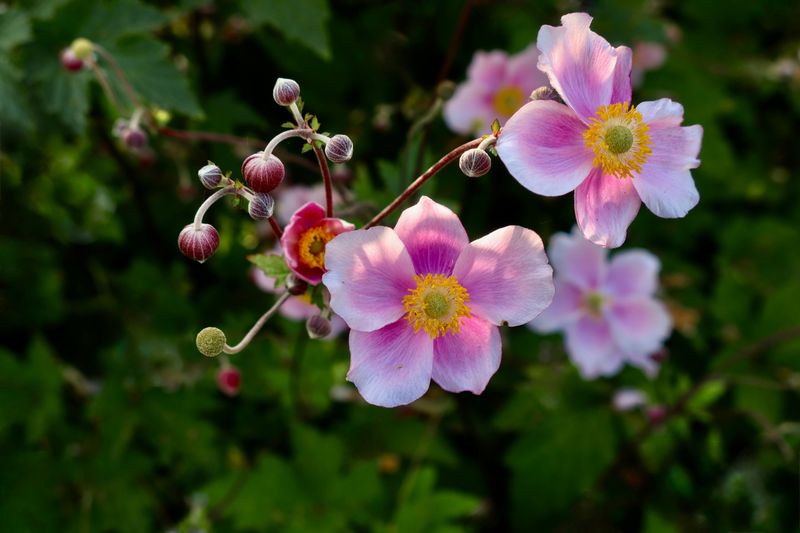
Finding the right light is half the battle with any plant. Japanese anemone has a clear favorite: gentle morning sun followed by afternoon shade. Bright, dappled light that flickers through tree leaves also suits it nicely.
Why does afternoon shade matter so much? The leaves can scorch when hot sun beats down on them in the middle of a summer day. Brown, crispy edges are a common sign that a plant is getting more heat than it wants.
High tree canopies make wonderful homes for it. Tall oaks, tulip poplars, and pines with their lower branches removed let in plenty of filtered light without blasting the plant.
The east side of a house or fence is another great choice, since it catches cool morning rays and then falls into shade by lunchtime.
Deep shade is a different story. Under dense evergreens or in a dark corner between buildings, Japanese anemone may grow leaves but produce very few flowers. A good rule of thumb is to aim for at least a few hours of soft sun each day.
Full afternoon sun is also a poor match in the South. Plants in those spots often look stressed by midsummer, with droopy, faded foliage. If you notice that happening, moving the clump in early spring can solve the problem.
North Carolina summers bring long stretches of heat and sticky humidity, from Charlotte to Raleigh and beyond.
Afternoon shade acts like a cool umbrella during those months, helping the plant keep its leaves fresh and save its energy for that big fall flower show.
4. Deer And Rabbits Usually Leave It Alone
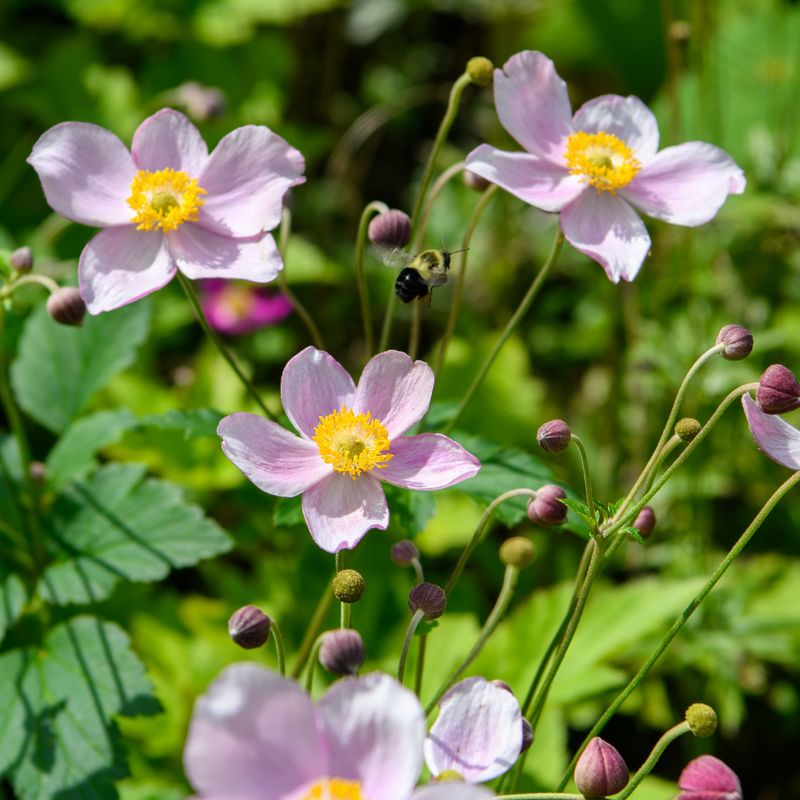
Ask any shade gardener about hostas, and you may hear a sad story. One night the leaves look perfect, and the next morning they are chewed down to stubs. Deer treat hostas like a salad bar, and rabbits are happy to join the feast.
Japanese anemone tends to escape that fate. Its leaves and stems contain natural compounds that give them a bitter taste and make them mildly toxic. Deer and rabbits usually take one sniff or nibble and move along to something tastier.
No plant is completely deer proof, of course. A very hungry deer in a dry year might sample almost anything. Still, Japanese anemone is regularly listed among plants that browsing animals generally avoid, which makes it a smart choice for trouble spots.
Think about the beds where your plants keep getting eaten. Swapping a few hostas for Japanese anemone can give you color that actually lasts until fall. You get to enjoy the flowers instead of fencing them in.
Good partners make the planting even stronger. Lenten rose, also called hellebore, is another plant deer usually skip, and it blooms in late winter. Ferns like Christmas fern and autumn fern add soft texture and are rarely touched.
Together, these plants create a bed with something happening in almost every season. Hellebores open first, ferns fill in during summer, and Japanese anemone wraps up the year.
Deer are everywhere in North Carolina, from mountain towns to busy suburbs. Many gardeners rank browsing as their number one shade garden headache, so a pretty plant that deer tend to ignore is worth its weight in gold.
5. It Provides Late Nectar For Pollinators
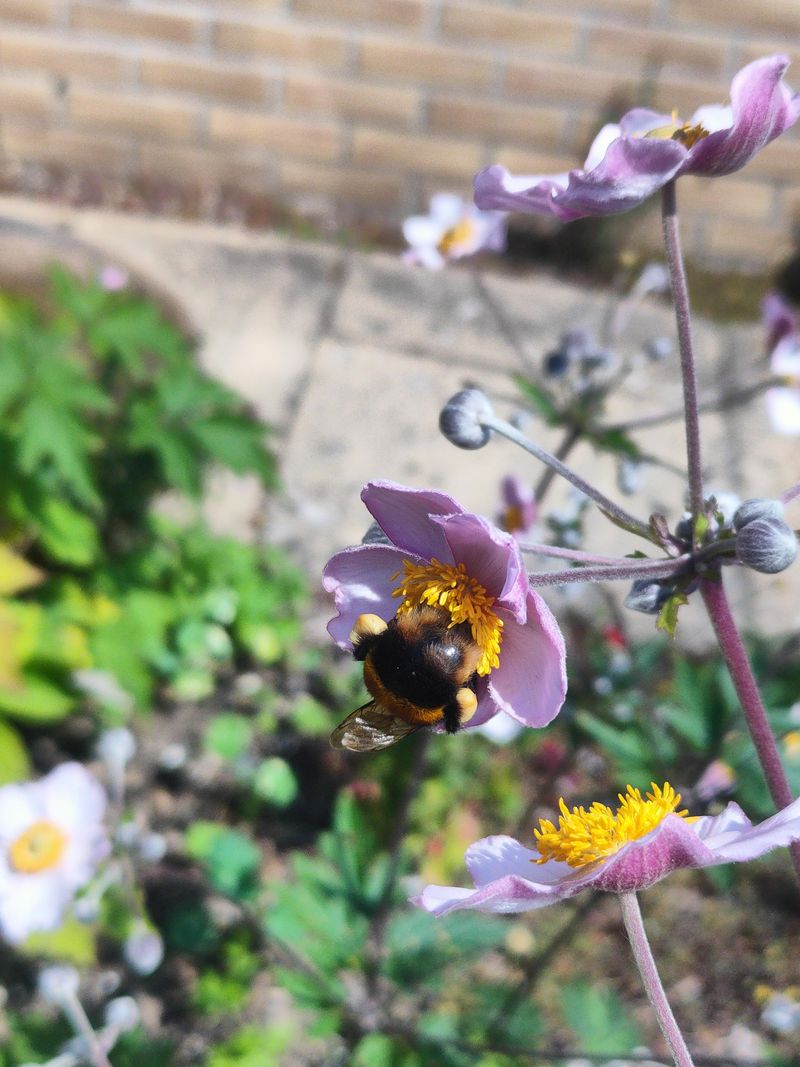
Watch a Japanese anemone on a sunny October afternoon, and you will likely spot a busy bumblebee rolling around in the middle of a flower. The bee seems to be having the time of its life. That cheerful scene is one of the best reasons to grow this plant.
The flower shape makes it easy for bees. Each bloom opens wide like a shallow cup, with a big cluster of golden stamens right in the center. Bees can land, grab pollen, and take off without having to squeeze into a narrow tube.
Timing makes that food even more valuable. By fall, few shade plants offer anything for pollinators, so bees have to search harder to stock up before winter. A patch of Japanese anemone can feel like a welcome rest stop along the way.
You can help the bees with a few simple habits. Skip insecticides on blooming plants, since many sprays can harm the very insects you want to support. If pests show up, try a strong spray of water or hand picking instead.
Leave the flowers in place until they fade, too. Each bloom keeps offering pollen for days, and the fluffy seed heads that follow look interesting in the garden.
Pairing plants extends the buffet. Try growing it near asters, goldenrods, and toad lilies, which also bloom late in the season. Even a small bed with three or four late bloomers can make a real difference.
North Carolina often enjoys mild, sunny days well into fall. Bees stay active during those warm stretches, so having flowers ready for them helps local pollinators finish the season strong.
6. It Needs The Right Soil To Thrive
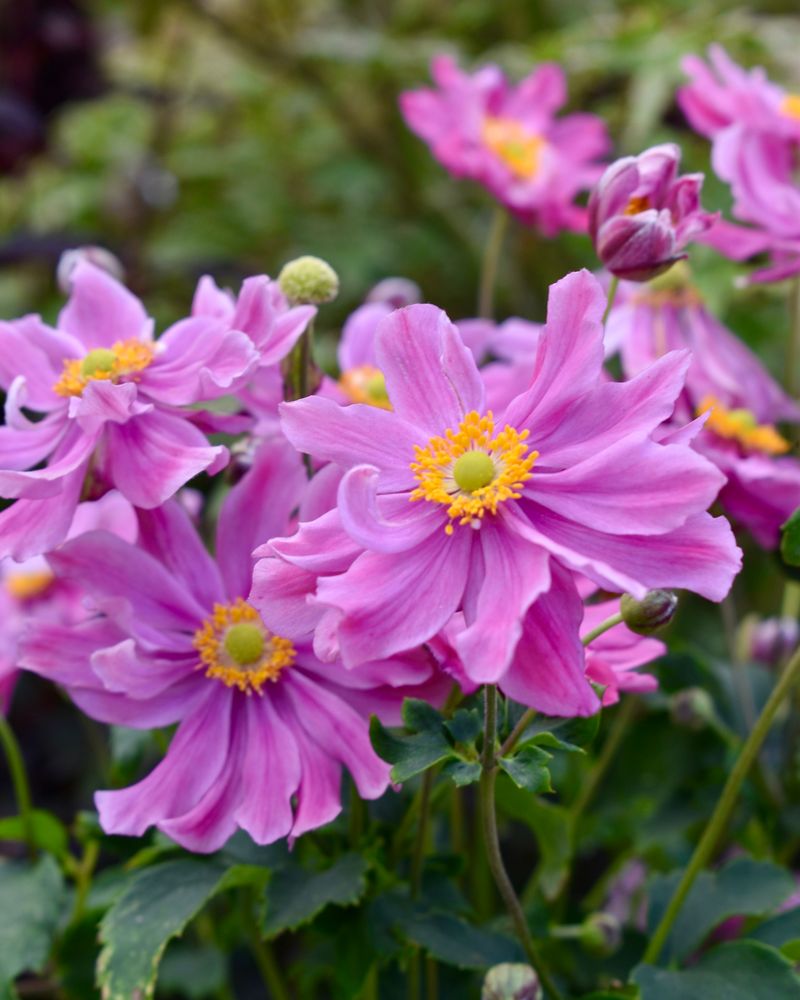
Great gardens start underground. Japanese anemone is not super fussy, but it does have strong opinions about soil, and giving it what it likes is the fastest way to a healthy clump.
Moist, rich, well-drained soil is its happy place. That means earth that holds some water after a rain but still lets extra water slip away. Picture soil that feels like a wrung-out sponge rather than a puddle or a dusty path.
Trouble shows up at both extremes. When soil dries out completely in summer, leaves droop and flowering suffers. When soil stays soggy all winter, the crown can rot, and the plant may not return in spring.
Compost is your best friend before planting. Spread a few inches over the area and mix it into the top 8 to 12 inches of soil. That extra organic matter loosens heavy ground, helps sandy soil hold moisture, and feeds helpful soil life.
Mulch finishes the job. Add 2 to 3 inches of shredded leaves or pine bark around the plants, keeping it a little away from the crown. The mulch keeps roots cool, holds in moisture, and slowly breaks down into more rich soil.
During dry spells, give plants a slow, deep soak once a week. Also avoid low spots where rainwater collects after storms, since those places stay wet far too long.
North Carolina gardeners know the struggle well. Heavy red clay across the Piedmont can hold water like a bowl, while summer dry spells can bake that same clay hard as brick. Steady compost and mulch help you win both battles.
7. It Spreads, So Plan Its Space
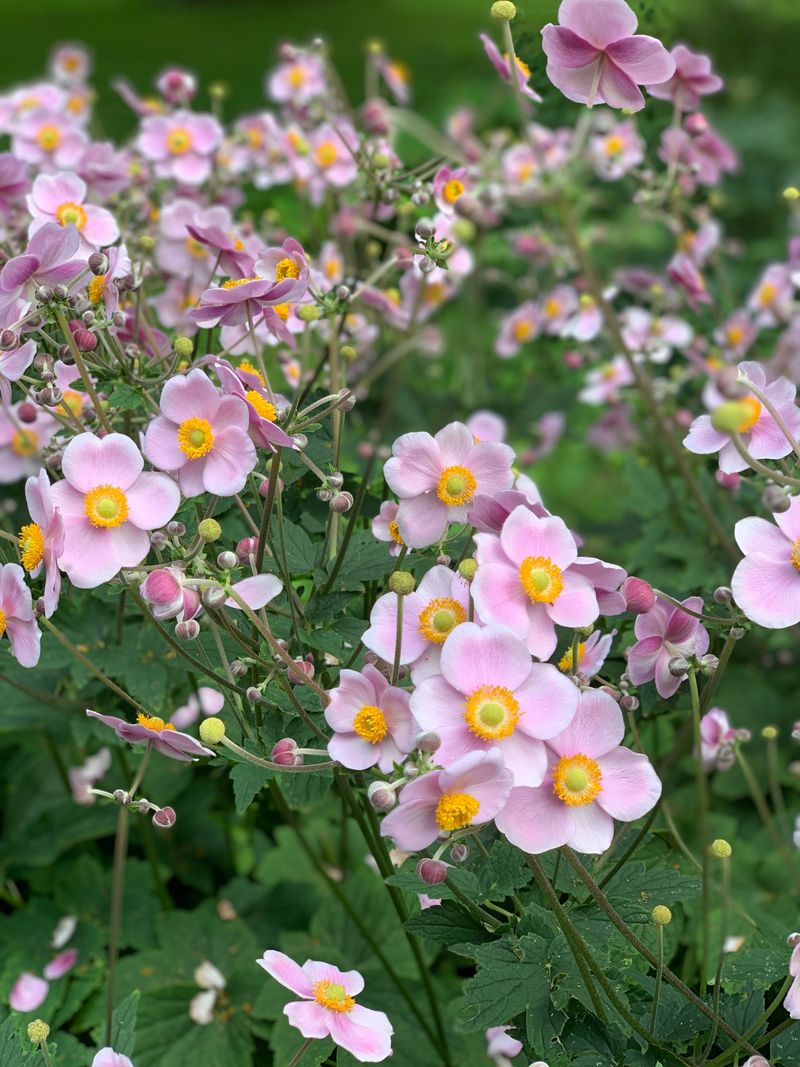
Here is a twist many gardeners do not see coming. The same plant that seems shy and slow in its first year can turn into a bold spreader a few seasons later. Japanese anemone likes to take its time, and then it likes to take some room.
Early on, patience is key. New plants often sit quietly for a year or two while their roots grow, and some gardeners worry they planted a dud.
Once settled in good conditions, though, the plant sends out underground runners that pop up as new shoots around the original clump.
Over time, those runners can fill a large area. In rich, moist soil, a single plant may become a wide drift, and smaller neighbors can get crowded out. That is wonderful in the right spot and frustrating in the wrong one.
Woodland borders and big beds are ideal places to let it roam. A sweeping patch under trees looks stunning in fall and needs little fuss. Tiny beds packed with delicate plants are better left to something less eager.
Control is easier than you might think. Metal or plastic edging, or a root barrier sunk several inches deep, helps keep it in bounds. Each spring, dig out any shoots that wander where you do not want them, and share the extras with friends.
Location within North Carolina shapes how fast it moves. Plants usually perform best in the cooler Mountains and the Piedmont, where they can spread steadily in rich, moist, partly shaded beds.
Coastal gardeners may see slower growth because of hotter summers and sandy soil.