Why May Is The Best Time To Fertilize Citrus Trees In Arizona
Citrus trees in Arizona can look fine early in the season, then start showing stress as temperatures rise. What happens in May often sets the tone for how they handle the months ahead.
Nutrients in the soil may not be where they need to be after spring growth, even if everything looks healthy on the surface. Timing matters more than many expect.
Feeding too early or too late can lead to uneven growth or weak development once heat builds. Conditions in May create a window where trees are active but not yet pushed to their limits, which makes every application count more.
Getting it right during this period can shape how trees grow, hold leaves, and move through the toughest part of the Arizona season without falling behind.
1. May Aligns With Active Citrus Growth
Right now, your citrus tree is doing more work than at almost any other point in the year. May in Arizona marks a period of intense biological activity inside every citrus tree, from the roots pulling in water to the canopy pushing out new shoots and leaves.
Feeding at this exact moment means nutrients go straight to where growth is actually happening, rather than sitting unused in the soil.
Citrus trees in Arizona typically complete their main spring flush of growth between March and May. By the time May arrives, that flush is in full swing or nearing its peak, and the tree has a strong demand for nitrogen, phosphorus, and potassium.
Applying fertilizer during this window connects your input directly to the tree’s output.
Skipping a May feeding can leave a tree underfueled during one of its most productive stretches. Nitrogen supports the new leaf tissue, while phosphorus helps with root development and early fruit formation.
Potassium plays a role in moving sugars through the plant efficiently.
Gardeners across the Phoenix metro and Tucson areas often notice that trees fed in May show noticeably stronger canopy development by early summer. That extra leaf coverage also helps shade the fruit later in the season when temperatures really climb.
Matching fertilizer timing to active growth cycles is one of the simplest adjustments you can make for stronger, more productive citrus in Arizona’s desert climate.
2. Warm Soil Helps Roots Take Up Nutrients
Soil temperature is something most home gardeners never think about, but it controls almost everything happening underground. In Arizona, soil temperatures in May typically range between 70 and 85 degrees Fahrenheit in the top several inches.
That range is almost ideal for the microbial activity and root function that allow citrus trees to absorb fertilizer efficiently.
When soil is too cold, roots slow down and nutrient uptake drops significantly. Fertilizer applied to cold soil in winter or early spring often just sits there, vulnerable to leaching or binding before the roots can use it.
By May across the Phoenix Valley and southern Arizona, that problem is essentially gone.
Soil microbes also become far more active as temperatures warm. These organisms break down organic material and convert nutrients into forms that plant roots can actually absorb.
Your Arizona Garden Changes Every Week. Your Plan Should Too.
Gardening in Arizona changes quickly throughout the season. Every Friday you’ll receive a simple weekly plan showing exactly what to plant, prune, fertilize, harvest, and protect so you never miss the right timing.
A soil that is biologically alive processes fertilizer much faster and more completely than cold, dormant soil.
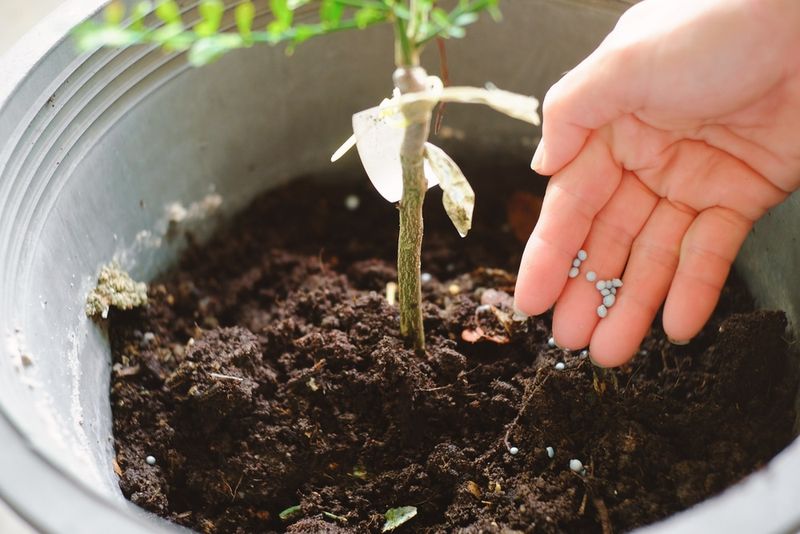
Granular fertilizers especially benefit from warm soil conditions because they rely on moisture and microbial activity to break down. Slow-release citrus fertilizers applied in May in Arizona get to work quickly because the environment is already set up for decomposition and absorption.
Liquid fertilizers also move through warm soil more efficiently and reach the root zone faster.
Matching your fertilizer application to the soil’s natural readiness is practical and cost-effective. You get more value out of every bag of fertilizer simply by paying attention to when the ground is actually prepared to receive it.
3. Spring Feeding Supports Fruit Development
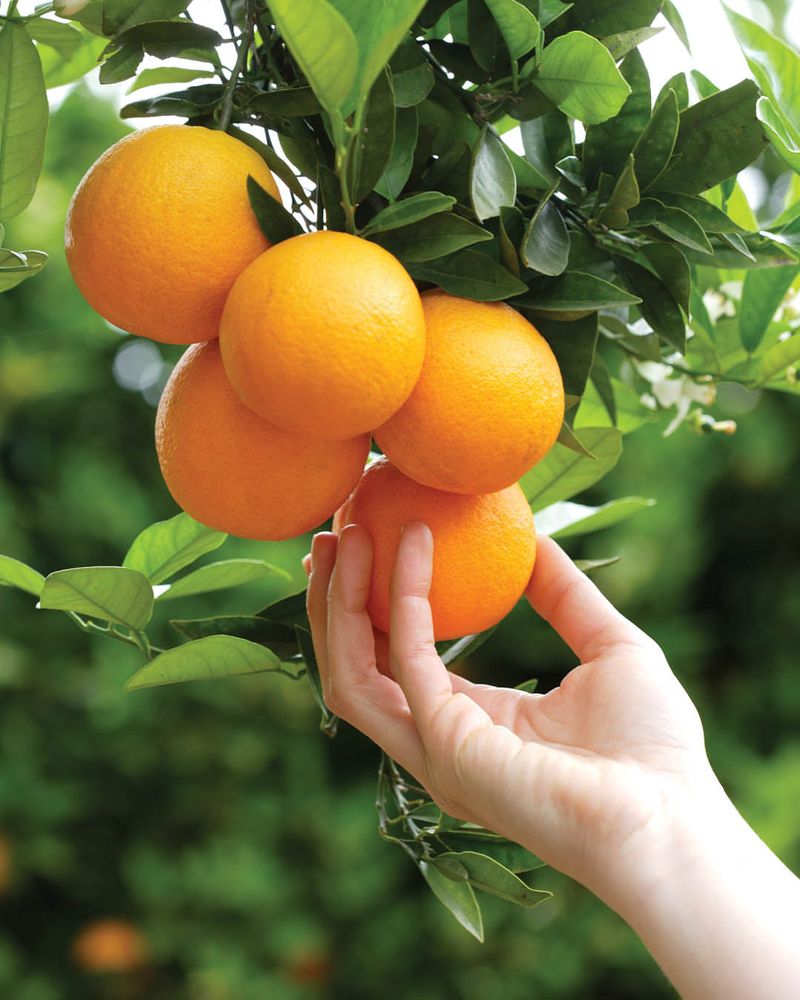
Fruit does not just appear out of nowhere. Every orange, lemon, or grapefruit on your Arizona citrus tree started as a flower, then a tiny fruitlet, and it needs a steady supply of nutrients to keep developing properly through spring and into summer.
May is when many of those fruitlets are going through a critical phase called cell division, where the final size of the fruit is largely determined.
Phosphorus and potassium are especially important at this stage. Phosphorus supports the energy transfers that fuel cell division and early fruit tissue formation.
Potassium helps regulate water movement within the fruit and contributes to sugar development as the season progresses.
Nitrogen still matters in May, but applying too much at this point can push the tree toward excessive leafy growth at the expense of fruit. A balanced citrus fertilizer with a moderate nitrogen level, combined with higher phosphorus and potassium, tends to give better results for fruit quality in Arizona’s climate.
Gardeners in Tucson and the greater Phoenix area who skip spring feeding often report smaller fruit or heavier fruit drop in early summer.
Some natural fruit drop is normal and healthy, but a nutrient-deficient tree tends to shed more fruit than necessary as a stress response.
Keeping the tree well-nourished through May gives developing fruit the best foundation possible. Consistent feeding during this window is one of the most direct ways Arizona citrus growers can influence both fruit size and overall yield before the intense summer heat sets in.
4. Citrus Requires Multiple Feedings Through Spring
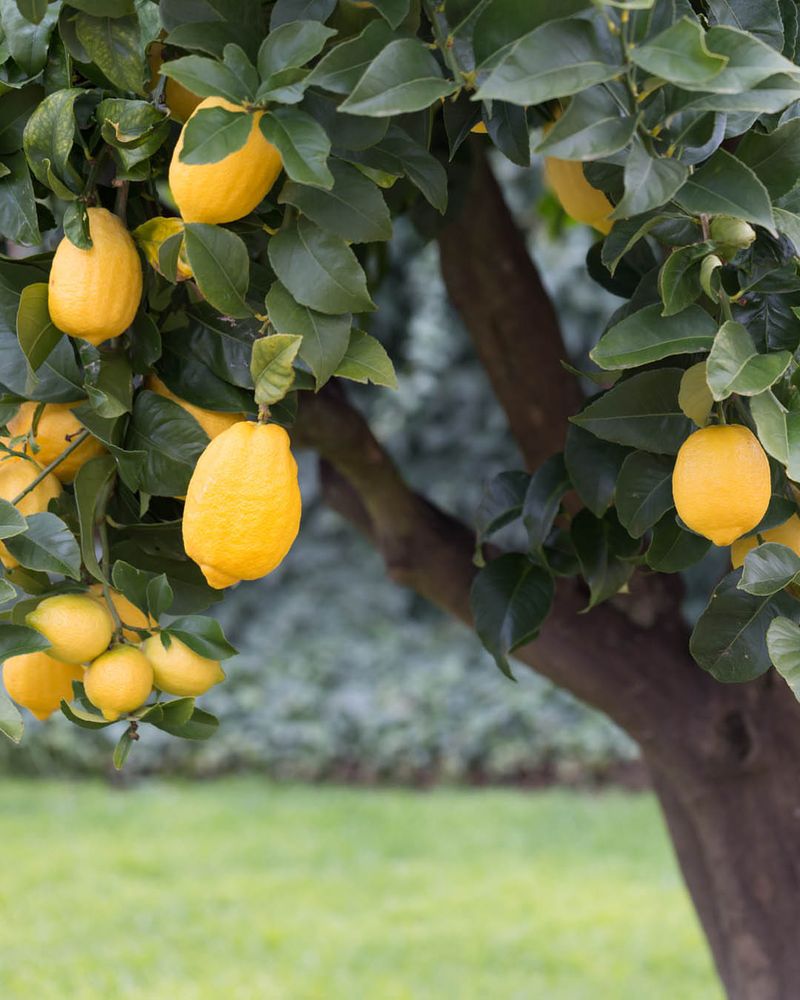
A single bag of fertilizer tossed under a citrus tree once a year will not cut it in Arizona.
Citrus trees are heavy feeders, and professionals who manage commercial groves across the state typically apply fertilizer in multiple smaller doses spread across the growing season rather than one large application.
May fits into that schedule as one of the most critical feeding windows.
Splitting fertilizer applications reduces the risk of nutrient runoff and gives the tree a more consistent supply of nutrition over time.
Applying too much at once can also lead to salt buildup in the soil, which is already a concern in many Arizona regions where water quality and soil alkalinity are ongoing challenges.
A practical spring schedule for Arizona citrus often includes a feeding in late February or March to kick off the season, followed by another application in May to support active growth and fruit development.
Some growers add a third application in late June before the monsoon season begins, letting summer rains help move nutrients deeper into the root zone.
Each application should be watered in thoroughly, especially in the dry weeks before monsoon moisture arrives. Deep watering after fertilizing helps carry nutrients down to where the feeder roots are actually located, which in mature citrus trees can extend well beyond the visible canopy edge.
Thinking of May as one chapter in a longer feeding story, rather than a standalone event, makes the whole approach more effective and easier to manage across the Arizona growing season.
5. Feeding Before Extreme Heat Helps Reduce Stress
Arizona summers are brutal, and citrus trees feel it. Once daytime temperatures push past 105 to 110 degrees Fahrenheit, which is common across the Phoenix area and low desert valleys by June, citrus trees shift their energy toward survival rather than growth.
Feeding a tree after that point is far less effective than building up its nutrient reserves before the heat arrives.
A well-nourished tree heading into summer has stronger roots, denser foliage, and better internal water regulation than one that was underfed in spring. Strong leaf coverage reduces the amount of direct sun reaching the fruit, which can prevent sunscald on exposed citrus.
That same canopy also helps shade the soil, slowing moisture evaporation around the root zone.
Fertilizing in May gives the tree roughly four to six weeks to process and use those nutrients before peak summer temperatures hit.
Roots are still active, soil microbes are processing fertilizer efficiently, and the tree can actually direct those resources toward reinforcing its structure before conditions become more demanding.
Applying fertilizer too late in the summer, especially in granular form, can stress a tree that is already working hard to manage heat and water balance. Salts from fertilizer concentrate in dry soil and can irritate feeder roots when moisture levels drop.
6. Late Spring Feeding Supports Ongoing Development
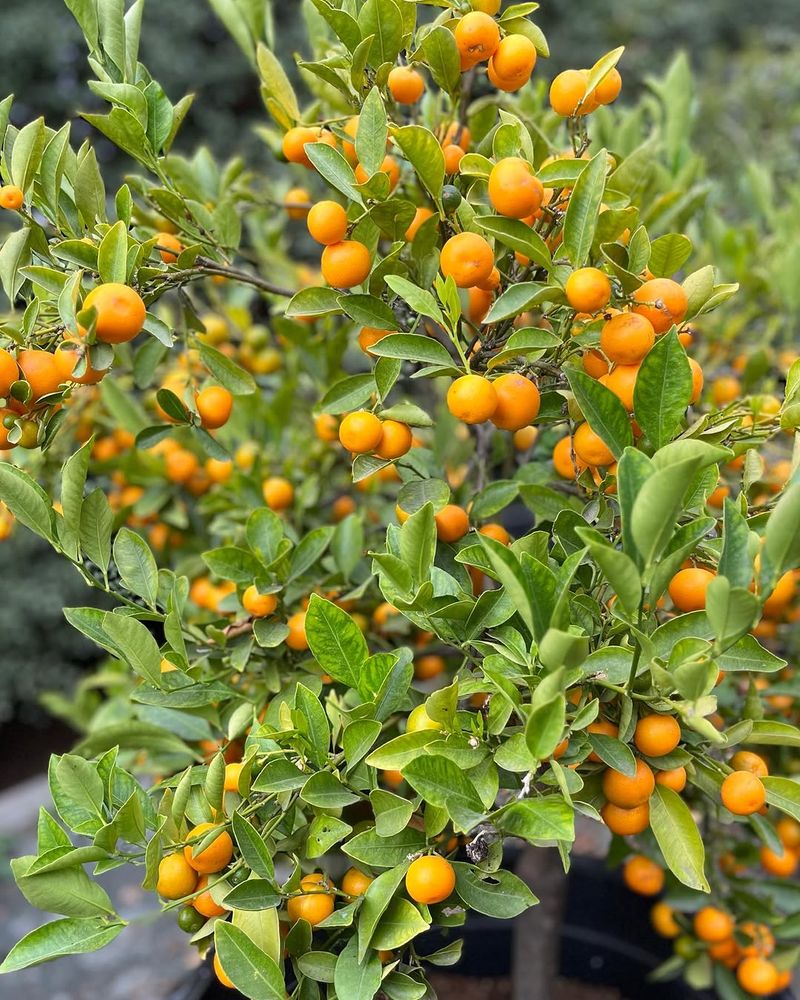
Not everything in a citrus tree wraps up neatly by the end of April. Late spring feeding in May supports the longer developmental processes that carry well into summer, including continued fruit enlargement, root expansion, and the buildup of carbohydrate reserves the tree will draw on during heat stress.
Treating May as a late-season afterthought misses how much biological work is still in progress.
Citrus varieties common across Arizona, including navel oranges, Valencia oranges, lemons, and grapefruit, all have slightly different development timelines.
Valencia oranges, for example, are still holding fruit from the previous season while simultaneously developing new fruit, making consistent spring nutrition especially important for that variety.
A May application covers multiple overlapping needs at once.
Root growth is also active in May before soil temperatures climb into ranges that slow root expansion. Feeding the tree at this point encourages deeper, more extensive root development, which improves drought tolerance and overall stability.
Stronger roots mean better performance not just in spring but through the entire year.
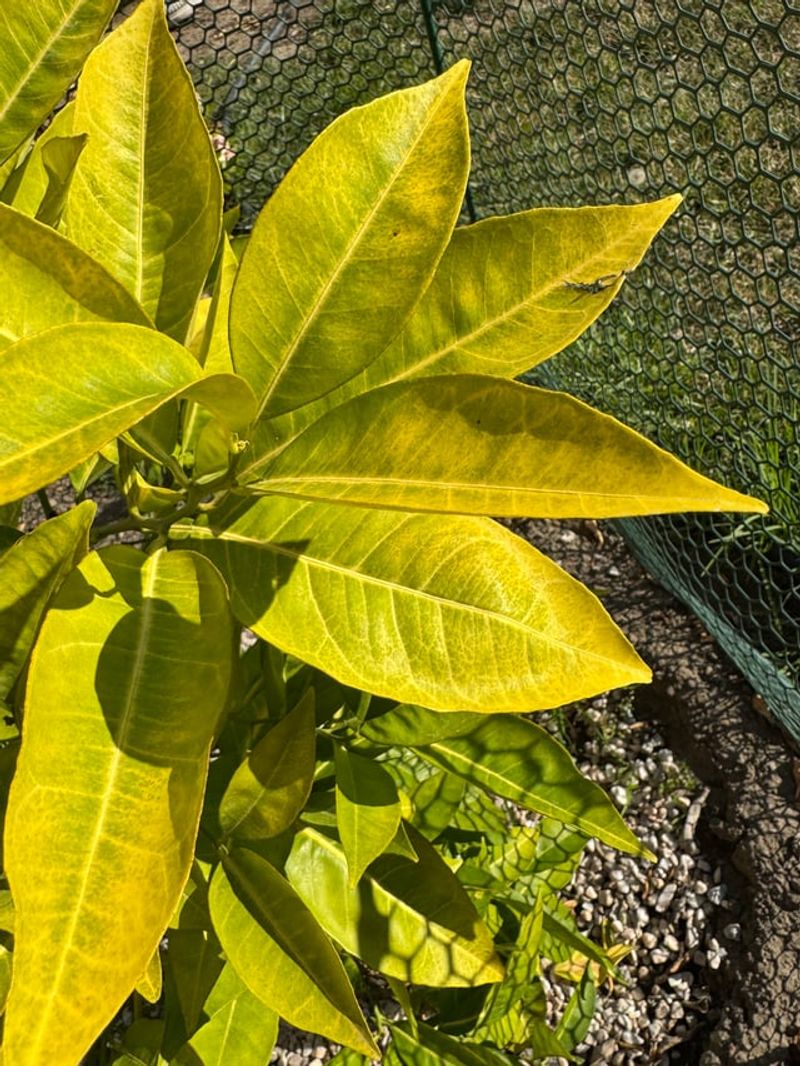
Micronutrient deficiencies, particularly iron and zinc chlorosis, are common in Arizona’s alkaline soils. A late spring fertilizer application that includes chelated micronutrients can address early signs of yellowing before they become more serious.