Why Monarch Butterflies Are Disappearing From Georgia Gardens And What Helps Bring Them Back
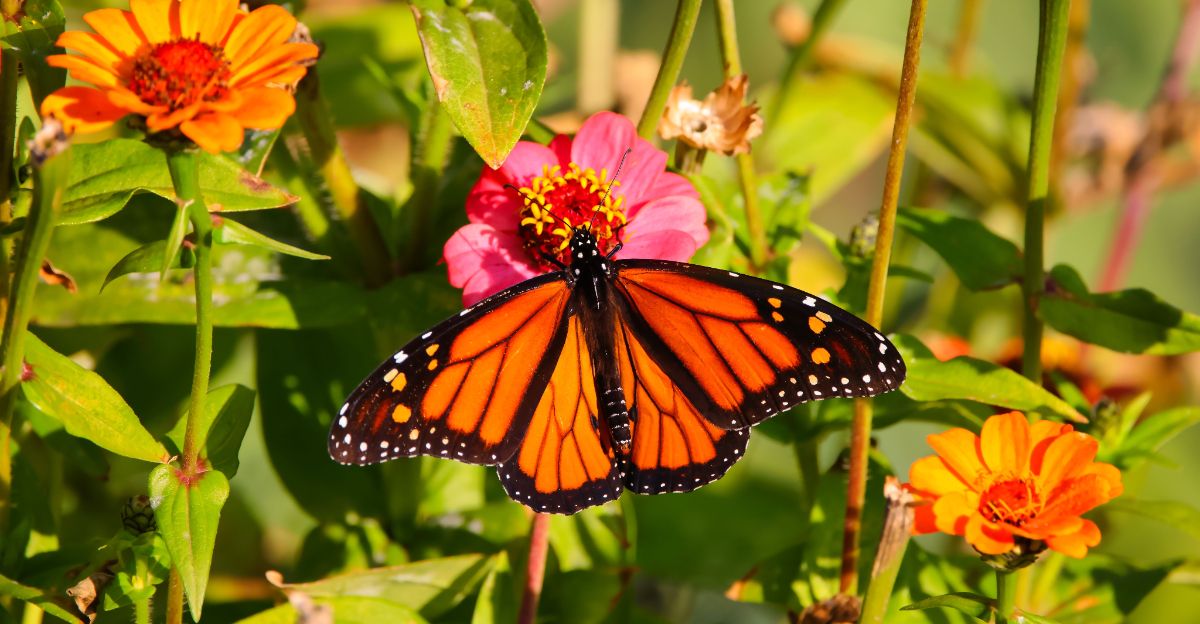
Fewer monarch butterflies have been showing up in Georgia gardens lately, and the difference has become hard to ignore.
Flower beds that once stayed active with butterflies through the warmer months can suddenly feel quieter from one season to the next.
Tiny changes in a yard often play a bigger role than expected. Missing host plants, heavy cleanup habits, and long stretches of extreme weather can slowly make gardens less useful for monarchs over time.
Butterflies still pass through neighborhoods every year, but they stay longer in spaces that provide the right mix of shelter and food during different stages of their life cycle. A few plants and small changes can completely shift how often they return.
That is why certain gardens keep attracting monarchs season after season while others rarely see them anymore.
1. Caterpillars Struggle Around Heavy Pesticide Use
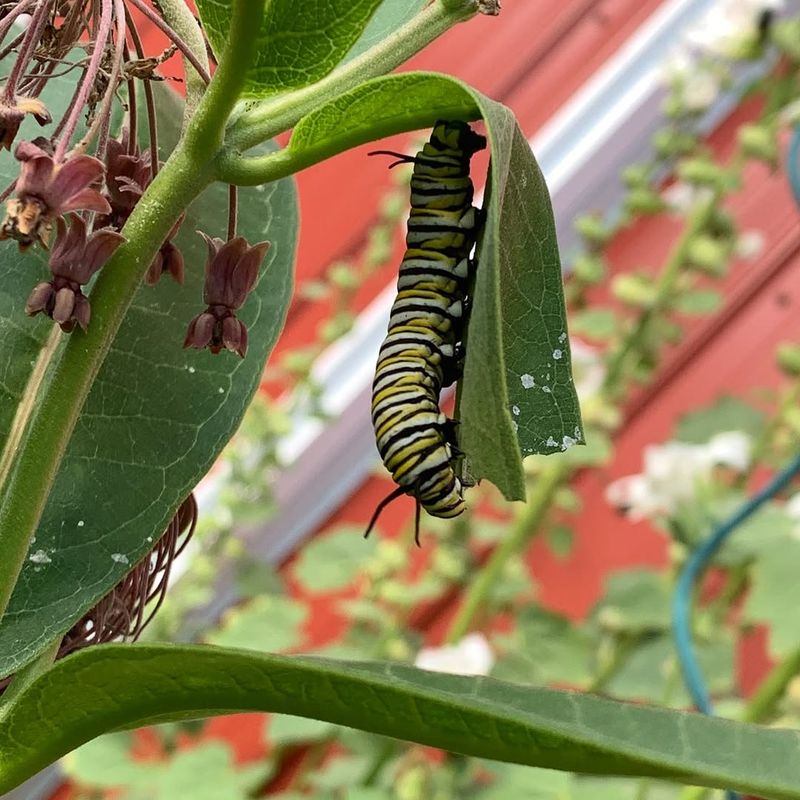
Pesticides are one of the biggest reasons monarch caterpillars never make it to adulthood. Sprays used on lawns, flowers, and vegetable beds often drift onto nearby milkweed plants.
A caterpillar feeding on a treated leaf can absorb enough chemical to stop growing entirely.
Broad-spectrum insecticides are especially harmful. Products containing pyrethroids or organophosphates are not selective.
They affect monarchs the same way they affect pest insects, which means using them near milkweed is risky even when the target is something else entirely.
Systemic pesticides are a separate concern. Some plants sold at garden centers are pre-treated with neonicotinoids.
Those chemicals stay inside the plant tissue for months. A monarch caterpillar munching on treated milkweed has no way to know the plant has been chemically altered.
Switching to targeted, organic pest control methods helps a lot. Neem oil, insecticidal soap, and hand-picking pests keep gardens healthy without broad chemical exposure.
Applying anything only at night also reduces contact with monarchs, which are most active during daylight hours.
Asking neighbors about their spraying habits matters too. Pesticides used two or three yards away can still reach your garden through wind or runoff.
Building a buffer of dense native plants near the property line adds a small but real layer of protection.
2. Missing Milkweed Leaves Fewer Egg Laying Spots
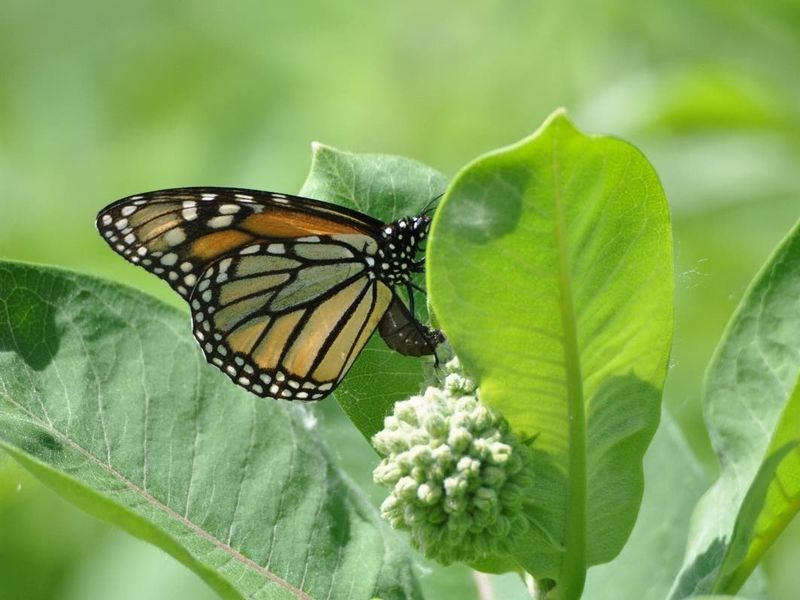
Monarchs do not lay eggs on just any plant. Milkweed is the only plant their caterpillars can eat, which makes it the only place a female monarch will deposit her eggs.
When milkweed disappears from a yard or neighborhood, egg-laying stops completely in that area.
Milkweed has been disappearing fast across the South. Development cleared large patches of wild milkweed that once grew along roadsides and in open fields.
Tidy lawn culture replaced weedy edges where milkweed naturally spread on its own.
Butterflyweed, also called Asclepias tuberosa, is a native milkweed that grows well in dry, sunny spots. It stays compact, produces bright orange blooms, and blends into a garden without looking out of place.
It is one of the easier milkweed varieties to establish from a transplant.
Common milkweed, Asclepias syriaca, spreads more aggressively but provides more leaf mass for caterpillars. Planting it along a fence line or in a corner where spreading is acceptable gives monarchs more surface area for egg deposits.
Your Georgia Garden Changes Every Week. Your Plan Should Too.
Gardening in Georgia changes quickly throughout the season. Every Friday you’ll receive a simple weekly plan showing exactly what to plant, prune, fertilize, harvest, and protect so you never miss the right timing.
A single female monarch can lay hundreds of eggs over her lifespan, but she needs enough milkweed to spread them out. Clusters of five or more milkweed plants give her enough options to lay comfortably without overloading one stem.
3. Swamp Milkweed Gives Butterflies A Safe Place To Grow
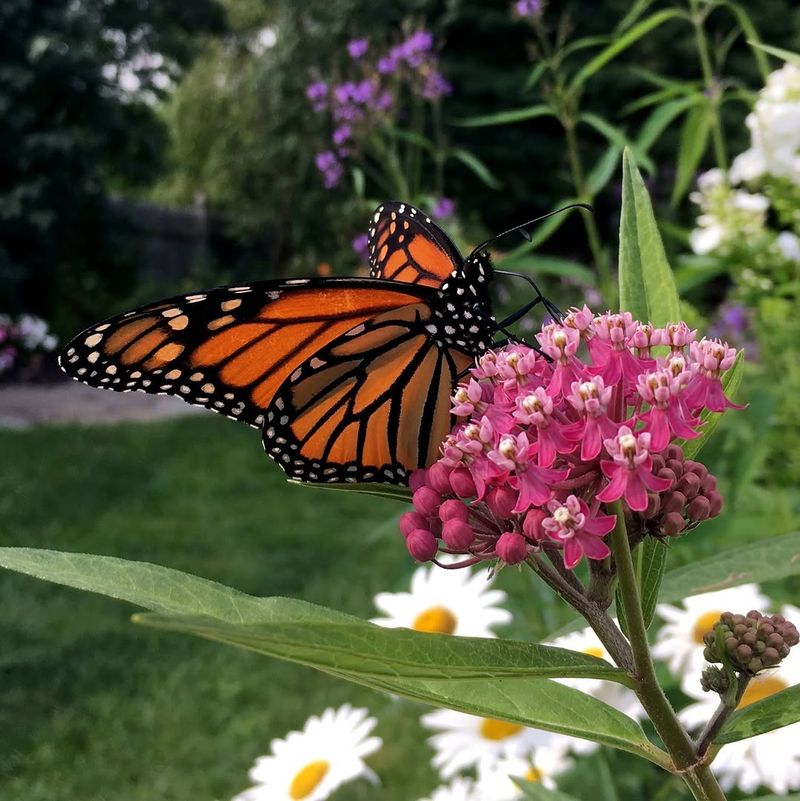
Swamp milkweed, Asclepias incarnata, thrives in spots most gardeners ignore. Low areas near downspouts, rain gardens, or soggy corners of a yard are exactly where this plant performs best.
It handles wet soil far better than other milkweed varieties.
Its pink flowers bloom in midsummer and attract monarchs during peak egg-laying season. The blooms are smaller than common milkweed but appear in dense clusters that are easy for passing butterflies to spot.
Native bees and swallowtails visit the flowers too.
One advantage swamp milkweed has over tropical milkweed is that it follows natural seasonal patterns. It goes dormant in winter and re-emerges in spring, which aligns with the monarch migration cycle.
Tropical milkweed, which stays green year-round in warm climates, can disrupt migration behavior by encouraging monarchs to stop moving south.
Swamp milkweed grows up to four feet tall in good conditions. Its height provides caterpillars with more vertical leaf surface and some protection from ground-level predators.
Taller stems also make it easier to spot eggs and young caterpillars during garden checks.
Planting swamp milkweed near a water feature or rain garden creates a small habitat zone that serves multiple stages of the monarch life cycle. Adults drink from shallow water sources nearby while caterpillars feed on the plant just feet away.
4. Fall Flowers Provide Energy During Migration
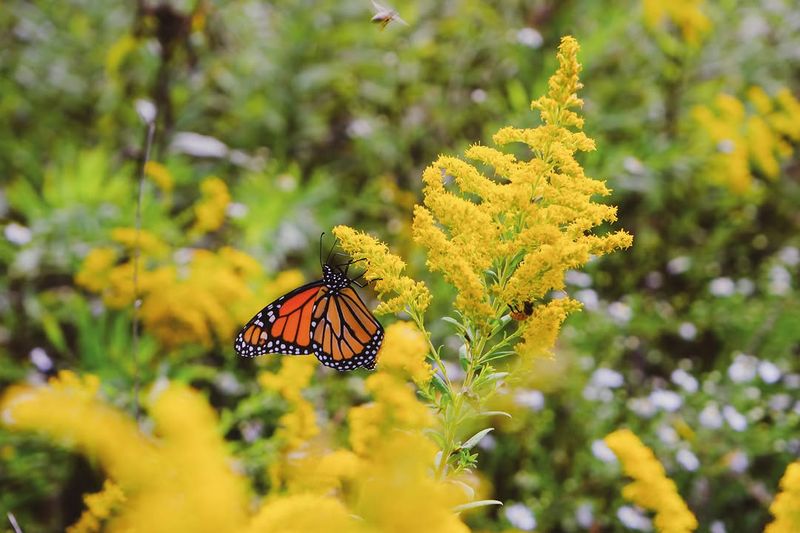
Monarchs traveling south in fall need constant fuel. Nectar is their only energy source during migration, and a garden with nothing blooming in September and October offers them nothing worth stopping for.
Skipping fall flowers is one of the quietest ways a garden loses monarch traffic.
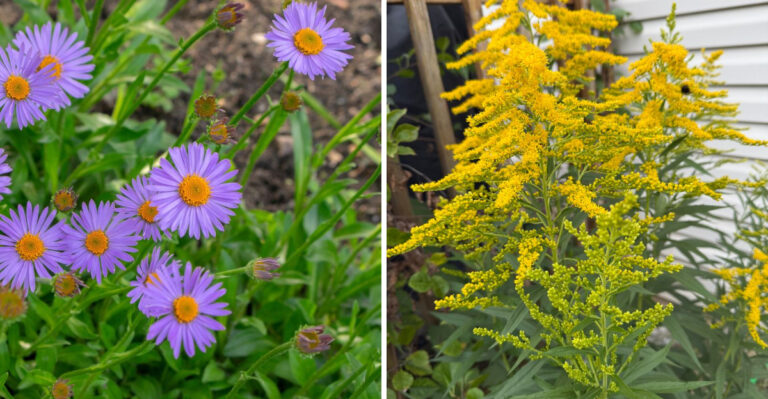
Goldenrod is one of the best fall nectar sources available in the region. It blooms heavily from late August through October and supports monarchs alongside dozens of other pollinators.
Solidago rugosa and Solidago odora both grow well in average to poor soil without much care.
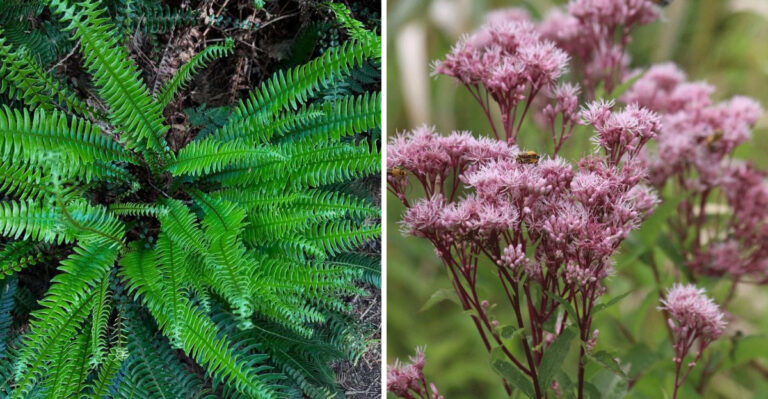
Ironweed, Vernonia species, produces deep purple blooms in late summer and early fall. Monarchs are strongly attracted to it.
It can get tall, sometimes reaching six feet, but cutting it back in early summer keeps it more compact without reducing bloom output significantly.
Mistflower, Conoclinium coelestinum, is a lower-growing native that spreads into patches and blooms from late summer into fall. It works well as a ground-level nectar source beneath taller plants, filling in gaps in a layered pollinator garden.
Planting fall bloomers in clusters rather than as single specimens increases visibility for passing monarchs. A mass of goldenrod is far more likely to catch a migrating butterfly’s attention than one or two isolated stems scattered around the yard.
5. Shallow Water Helps Tired Butterflies Rest
Butterflies cannot drink from deep water. A birdbath filled to the rim is actually useless to a monarch.
What they need is a shallow surface with exposed wet areas, somewhere their feet and proboscis can reach moisture without any risk of falling in.
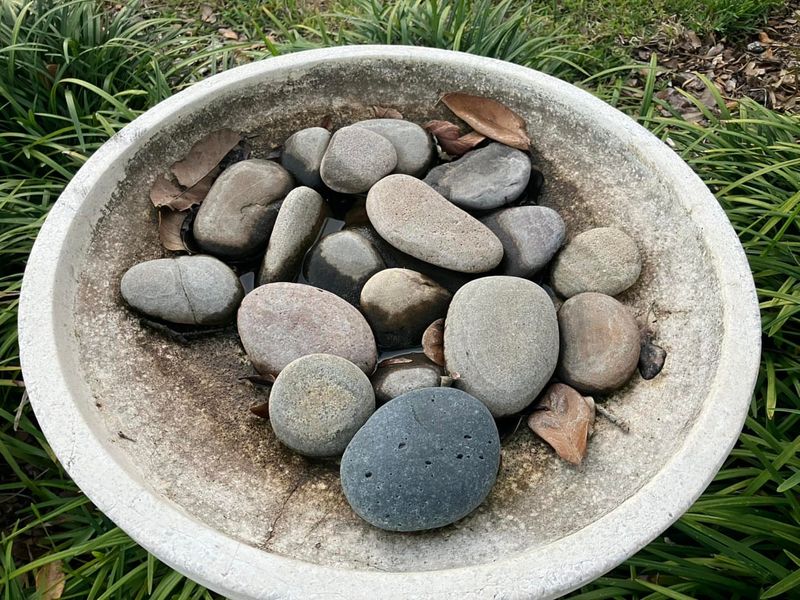
A simple fix is placing a shallow dish or tray in a sunny spot and filling it with clean pebbles. Pour in just enough water to reach the tops of the stones.
Monarchs land on the pebbles and drink from the water collected between them. Replacing the water every two days keeps it fresh and reduces mosquito breeding.
Mud puddles are another natural water source butterflies use. Puddling behavior, where butterflies cluster on wet soil, gives them access to minerals along with moisture.
Creating a small muddy patch near a water source mimics this naturally occurring behavior in a controlled garden setting.
Placement matters. Putting a water dish in a sheltered sunny spot near nectar plants increases the chance monarchs will find and use it.
A dish sitting in full shade with no flowers nearby may go unvisited even if it is perfectly set up.
Flat rocks near a water source give butterflies a place to bask and warm up. Monarchs are cold-blooded and depend on sunlight to regulate their body temperature.
A warm rock next to a water dish creates a small resting station that covers two needs at once.
6. Native Trees Create Better Protection From Wind
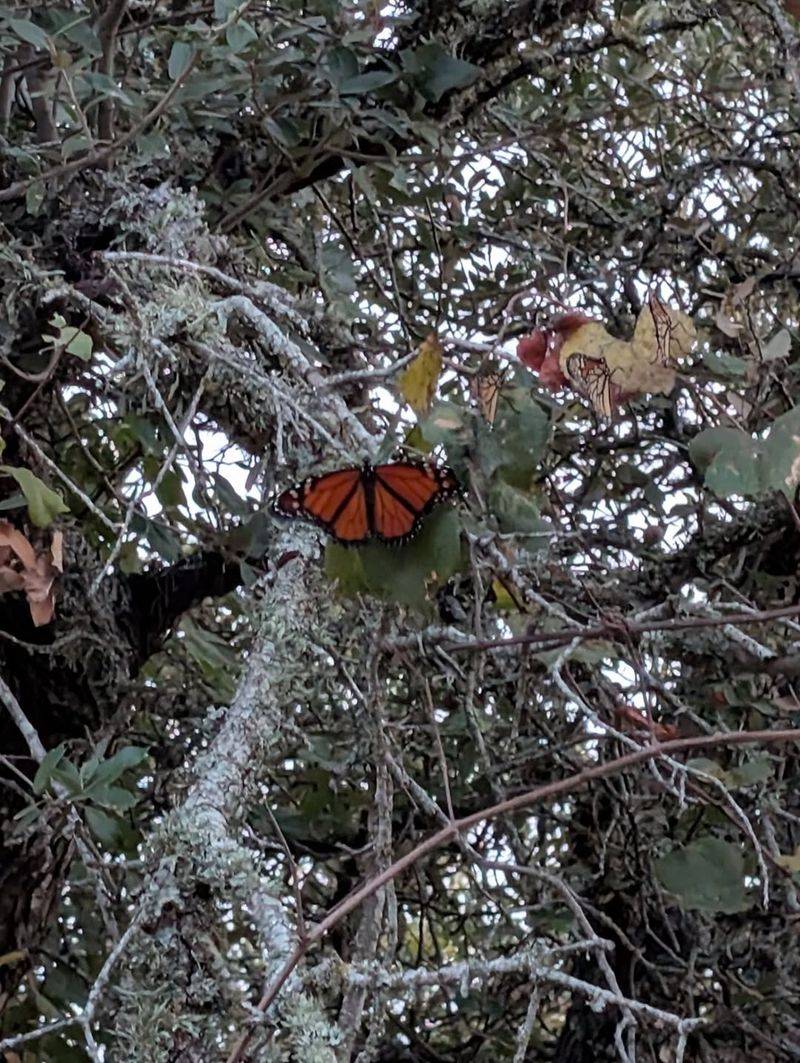
Strong wind is a real threat to migrating monarchs. Open yards with no tree cover force butterflies to fight against gusts instead of riding favorable currents.
Native trees planted strategically around a garden create natural windbreaks that make the whole space more usable.
Eastern red cedar, Juniperus virginiana, is a tough native evergreen that grows quickly and blocks wind year-round. Its dense branching provides overnight roosting spots for monarchs during fall migration.
Groups of three or more planted along a yard’s north or west edge reduce wind exposure significantly.
Live oaks offer broad canopy coverage and support a wide range of insects that monarchs encounter during migration. Their dense crowns break wind while still allowing filtered light to reach plants below.
Monarchs have been documented roosting in live oaks in large numbers during fall migration through the South.
Persimmon trees, Diospyros virginiana, are native to the region and provide both canopy cover and fruit that attracts other wildlife. Planting one near a pollinator garden adds vertical structure without overwhelming smaller plants with too much shade.
Layering tree placement with shrubs beneath them strengthens the windbreak effect. American beautyberry and native viburnums planted under tree canopies add mid-height structure that fills gaps wind would otherwise pass through.
7. Overgrown Yard Corners Give Butterflies More Cover
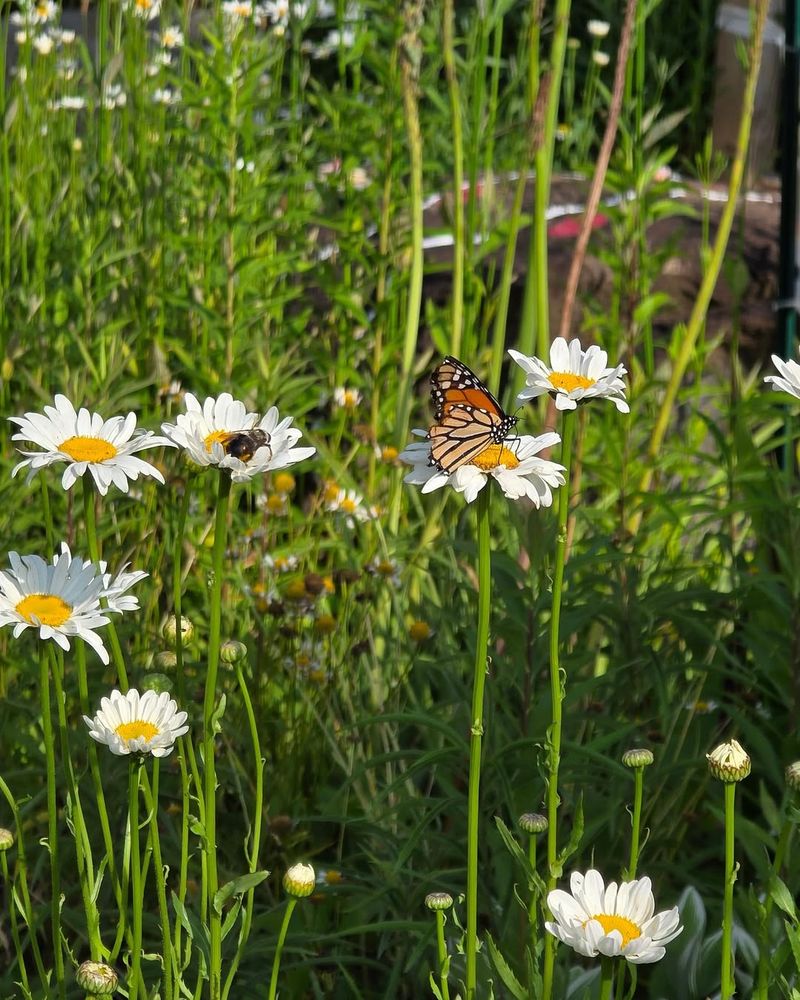
Not every part of a garden needs to be neat. Monarchs and other pollinators actually benefit from areas left a little rough around the edges.
Overgrown corners with native grasses, leaf litter, and unpruned stems offer cover that a manicured lawn simply cannot provide.
Native bunch grasses like little bluestem and Elliott’s lovegrass provide structure without taking over. Their upright stems give butterflies a perching surface and create small pockets of wind protection at ground level.
Both grasses look intentional even when left to grow naturally through fall and winter.
Leaf litter holds moisture and supports the insects monarchs encounter during migration. A thick layer of fallen leaves in a corner also insulates the soil, which helps native plants re-emerge more reliably in spring.
Raking everything out removes that benefit entirely.
Letting a section of the yard go unmowed from late summer onward gives late-season wildflowers room to bloom. Wild asters, which often appear on their own in disturbed soil, provide nectar well into October.
Monarchs passing through Georgia in fall depend on exactly this kind of opportunistic food source.
Brush piles made from trimmed branches add another layer of habitat. Small birds use them for cover, which reduces predator pressure near butterfly-friendly plants.
A contained brush pile in a back corner takes up minimal space but adds real ecological value.