Why North Carolina Tomato Leaves Curl In Summer (And How To Fix It)
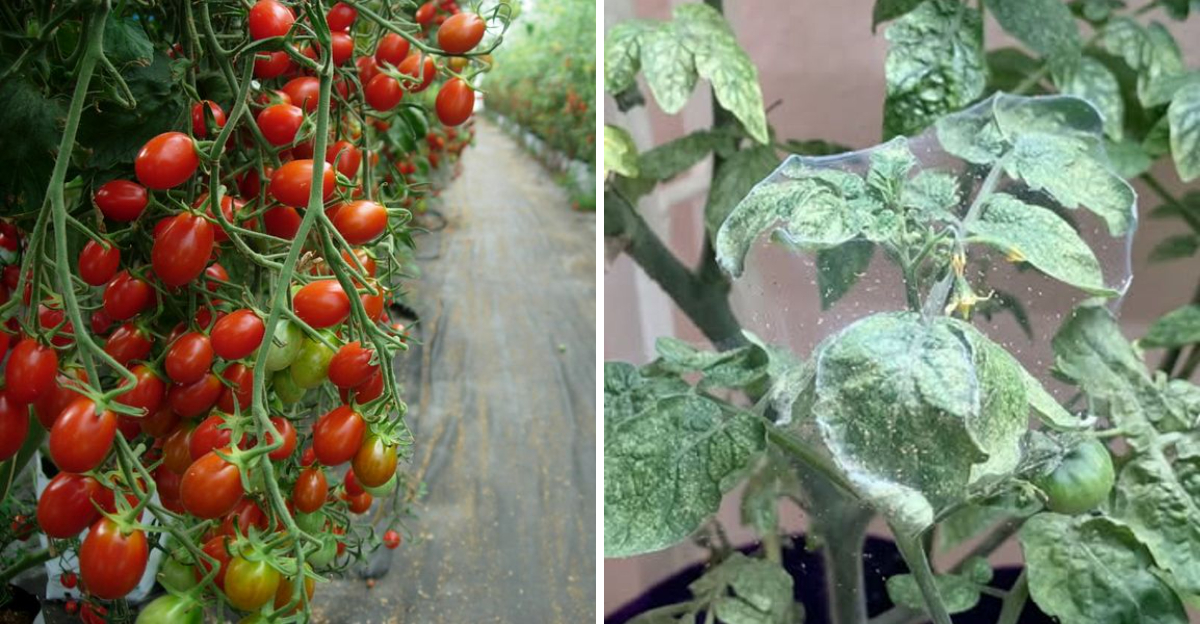
Every summer, many North Carolina gardeners stand in their tomato beds with that same sick feeling in their stomach. The leaves are curling.
Something is wrong. And the clock is ticking on an entire season’s worth of work.
But here is the truth that most gardening advice skips right over: curled tomato leaves don’t automatically mean your plants are doomed. They are actually your tomatoes communicating with you.
Once you understand their signals, you’ll never freak out over a curled leaf again. The problem is that not every curl has the same cause. Heat stress looks different from a pest infestation.
A virus shows up differently than a fertilizer mistake. Guess wrong, and you are just wasting time and money.
The faster you play detective and read the clues right, the better your chances of getting those leaves back to health.
Summer Heat Is Usually The First Culprit
North Carolina summers hit hard right from the start. They come in with scorching 90-degree temperatures.
The air is so humid you could practically squeeze it out. And winds? They suck moisture right out of plants before their roots even have a chance to react.
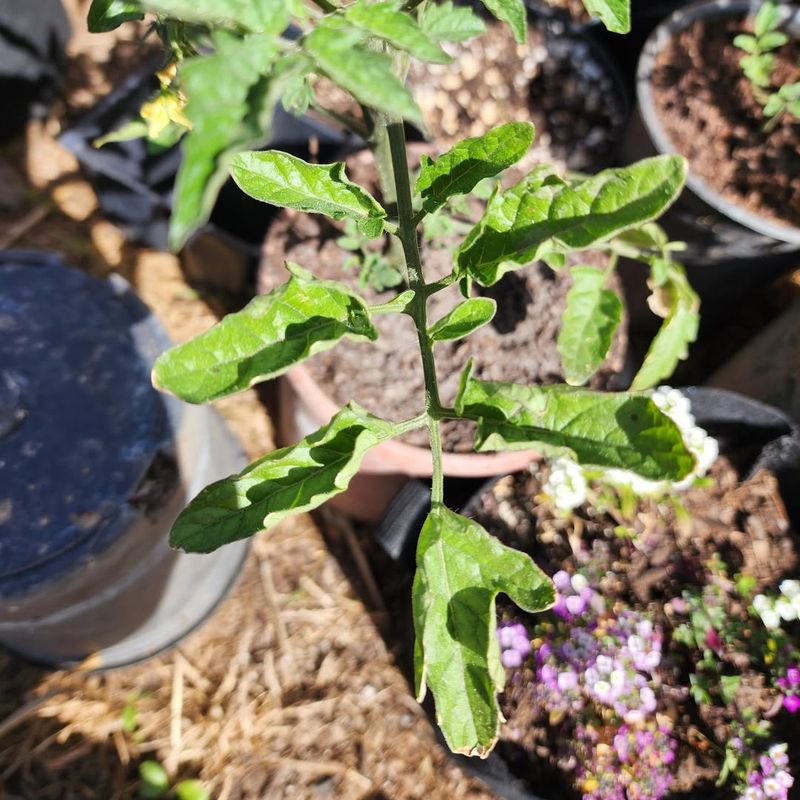
Tomato plants experience all of this, and they respond in the only way they know how. The leaves curl up along the center vein, folding inwards to reduce the surface area that is exposed.
A smaller surface area means less water loss. Think of it as your plant trying to keep it cool when the heat becomes too intense.
First, you’ll notice it on the lower and middle leaves. These leaves remain green and firm, with no spots, yellowing, or odd textures.
Just a simple curl. Once evening arrives or after a good watering, the leaves usually go back to normal on their own.
Rainfall patterns can complicate things as well. A two-week dry spell followed by a heavy rain can really shock the root system.
By keeping an eye on weather, you’ll become much better at distinguishing between a stressed plant and one that’s just coping with the heat.
If you see widespread upward curling on otherwise healthy green leaves, don’t worry. Your tomato isn’t sick. It’s just a bit overheated.
Every Curl Tells A Different Story
Not every curl tells a same story. Grabbing the fertilizer without understanding the issue first is one of the quickest ways to escalate a minor problem into a major one.
Take a moment to slow down. Walk around your plant. Bend down and check a few leaves. Look at the new growth at the tips, the older leaves at the bottom, and the stems in between.
The signs are there. You just need to observe. An upward curl on healthy leaves usually indicates heat or water stress. This is typically not a serious concern.
However, a downward curl, is a different matter. It can indicate a viral infection, herbicide drift, or a rapidly approaching pest issue.
If you notice yellowing along with the curl, it often suggests nutrient deficiencies or struggling roots. Spots, brown edges, or a powdery layer on the leaf surface can indicate fungal problems.
Your North Carolina Garden Changes Every Week. Your Plan Should Too.
Gardening in North Carolina changes quickly throughout the season. Every Friday you’ll receive a simple weekly plan showing exactly what to plant, prune, fertilize, harvest, and protect so you never miss the right timing.
If you see a sticky, shiny film on the leaves or nearby surfaces, it’s likely due to sap-sucking insects.
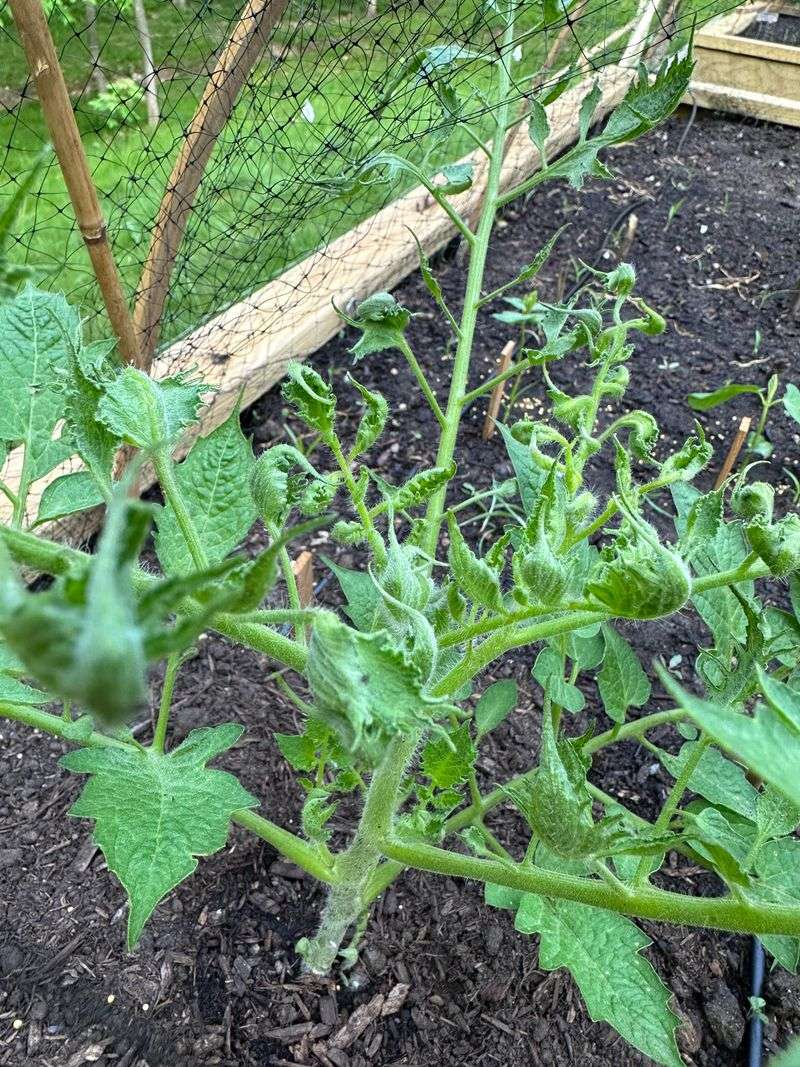
Pay close attention to the newest growth at the tips. Twisted, puckered, or distorted leaves there are a warning sign.
This pattern could indicate a virus or a broad mite infestation. Getting the right diagnosis not only helps save the plant but also protects your entire summer.
Shallow Watering Leaves Roots Stressed
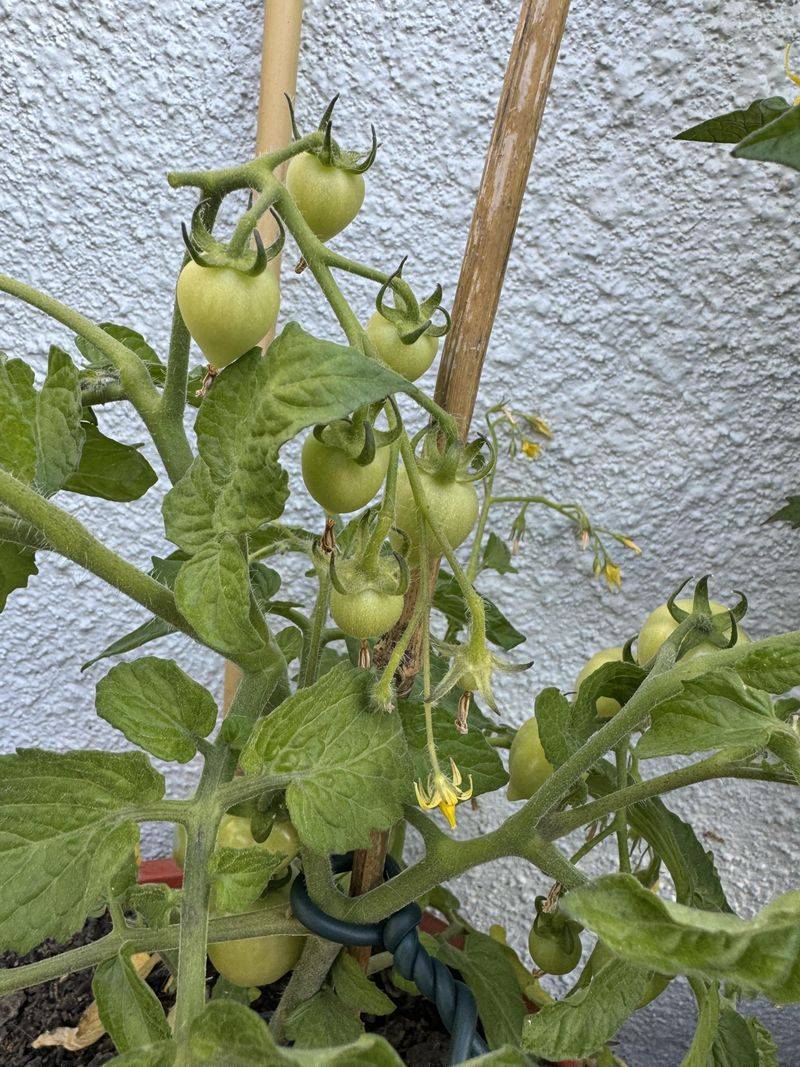
Yes, watering every day seems responsible. But for tomatoes, it can actually cause issues. Frequent, shallow watering keeps the roots close to the surface of the soil, where the summer heat can do the most harm.
When the roots get baked between waterings, the plant can only react in one way: the leaves start to curl.
The solution is to water less often, not more. Deep and infrequent watering is always better than shallow and daily watering.
Moisture should be pushed down six to eight inches into the soil, where the roots prefer to grow. For most garden beds in North Carolina, watering two to three times a week is sufficient.
Not every day. Allow the roots to seek out the water instead of waiting for it to be at the surface.
Soil type is also important in this situation. Sandy soils in the eastern part of the state drain quickly and dry out fast.
In contrast, clay-heavy soils retain moisture for a longer time. Understand what type of soil you have and adjust your watering schedule accordingly.
Unsure about when to water? Eliminate the guesswork. Insert your finger about two inches into the soil near the plant’s base. If it’s dry at that depth, it’s time to water. If it’s still damp, check back tomorrow.
Maintaining consistent moisture is not just a good habit. It is the most effective way to prevent leaf curl from occurring in the first place. Your plant will thank you.
The Soil Is Cooking Your Roots
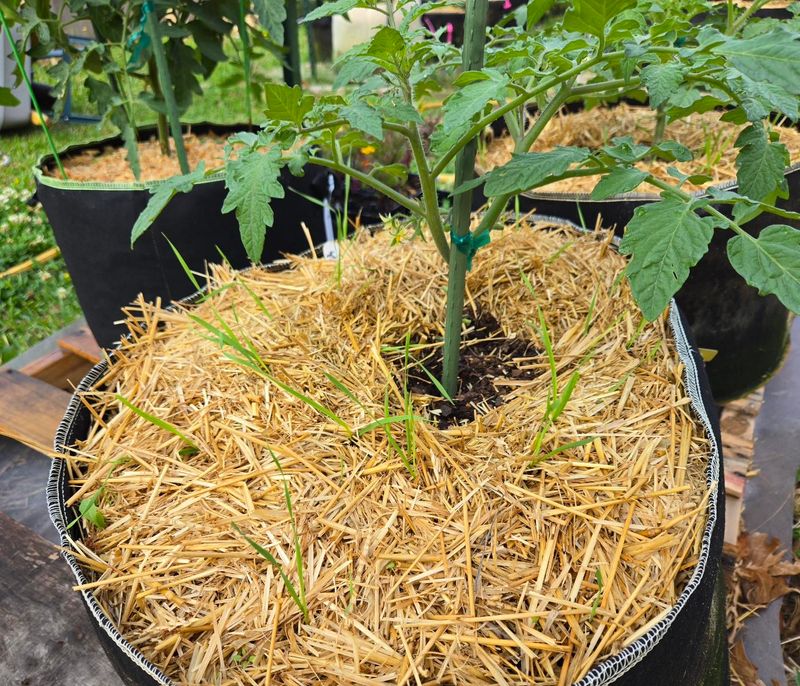
Bare soil can get really hot in the summer. Not just warm, but hot.
By midday, the ground around your tomato roots can hit temperatures that send stress signals up to the leaves. Luckily, the fix is almost embarrassingly easy. Just cover the soil.
A two-to-four-inch layer of organic mulch works like a sunhat for your garden bed. Straw, pine straw, shredded leaves, and wood chips all do a great job. Use whatever you can easily find and apply it before the heat gets too intense.
One important rule to remember: keep the mulch a few inches away from the main stem. If you pile it right against the base, it traps moisture at the crown and can cause rot.
Give the stem some space to breathe and let the mulch do its job from a distance. NC State Extension specifically advises mulching tomatoes throughout North Carolina for this very reason.
The benefits add up quickly. Mulch slows down evaporation, so the soil stays moist longer between waterings. Plus, as it breaks down over time, it adds organic matter back into the soil.
After heavy rain, always check your mulch layer. Water can wash it away quickly. A quick top-up in the middle of the season keeps everything working well through the toughest weeks of summer for your garden.
Too Much Fertilizer Can Twist Growth
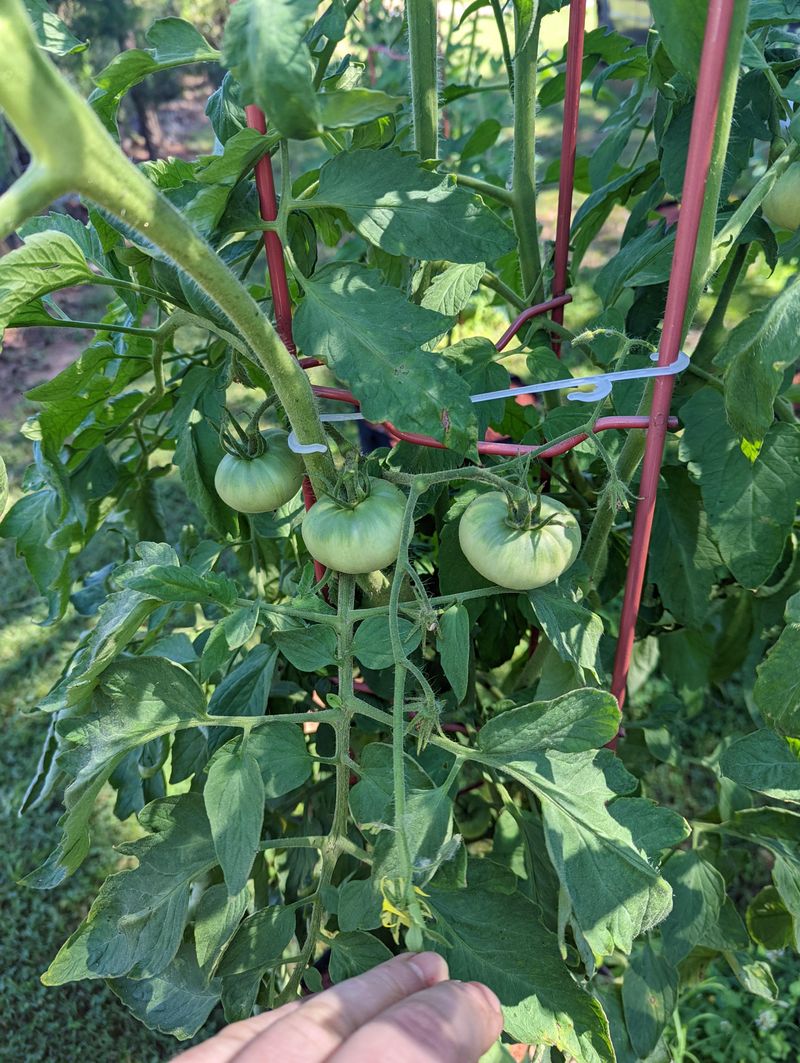
Fertilizing feels like good gardening. Just throw in enough and see those plants burst with green growth.
But the issue is that being lush and healthy are not the same thing. Too much fertilizer, especially in the hot North Carolina summer, makes tomato plants go into full leaf mode.
You get dark green, thick, gorgeous leaves, but hardly any fruit. Plus, the leaves start curling down and in as the plant struggles with the excess.
To make matters worse, all that soft leafy growth invites pests and diseases. More fertilizer doesn’t mean more love. It just adds more stress in a different form.
Getting a soil test from your local NC State Extension office is the smartest first step before adding anything to your garden.
It completely removes the guesswork and tells you exactly what your soil needs. If you can’t get a test, use a fertilizer made for tomatoes that has a balanced ratio.
However, always make sure to read the label and stick to it. Doubling the amount doesn’t mean you’ll get double the results.
Once your plants start producing fruit, add a granular fertilizer on the side and water it in well. Timing is also important, so avoid fertilizing during extreme heat.
Stressed roots don’t absorb nutrients well, which means you waste product and add more stress to a plant.
If you see dark green leaves, lots of foliage, and hardly any tomatoes? Cut back on feeding and let the plant find its balance. Sometimes, doing less is the most effective thing you can do.
Hidden Pests Make Leaves Twist And Curl
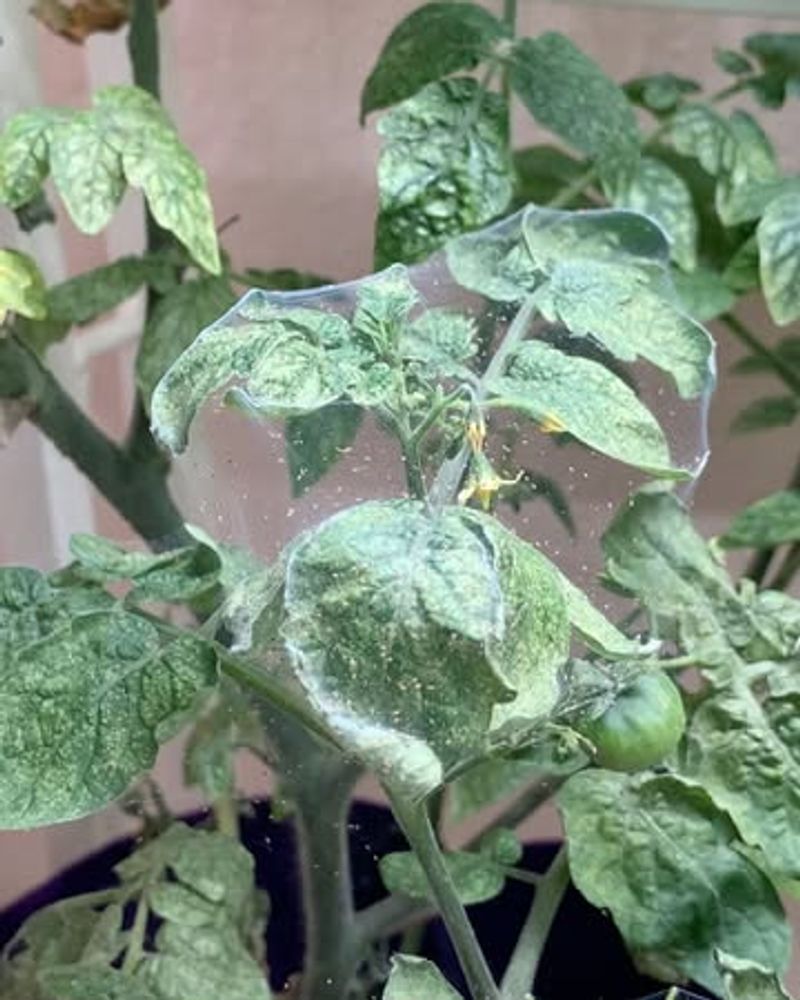
Turn a leaf over. Go ahead, do it right now. The bottom side of a tomato leaf is some of the most important space in your garden. The pests living there aren’t paying rent.
Aphids, whiteflies, spider mites, and their eggs all make their home there. Most gardeners walk right by them because they never think to check underneath.
Spider mites are the typical summer troublemakers in North Carolina. Hot, dry weather is their ideal environment, and the state provides it every year without fail.
Look for fine webs stretched between leaves or along stems. By the time you notice it, they’ve already been feeding for a while. Leaves start to look speckled and bronzed, then they curl up, and eventually fall off.
Aphids and whiteflies leave signs too. A sticky, shiny film on the leaf surface or on whatever is below the plant is their signature.
That residue is known as honeydew, and if left alone, it turns into a black sooty mold that makes the situation even worse.
However, be sure to not just check the older leaves. Start with the newest growth at the tips of the branches. Soft tissue is exactly what most pests like, and early colonies love to begin there.
Look for clusters of soft-bodied insects, tiny white bugs that scatter as soon as you touch the leaf. A small pest issue caught on a Tuesday is easy to fix. But, that same issue ignored until Friday? Much bigger problem.
Crowded Tomatoes Struggle To Breathe
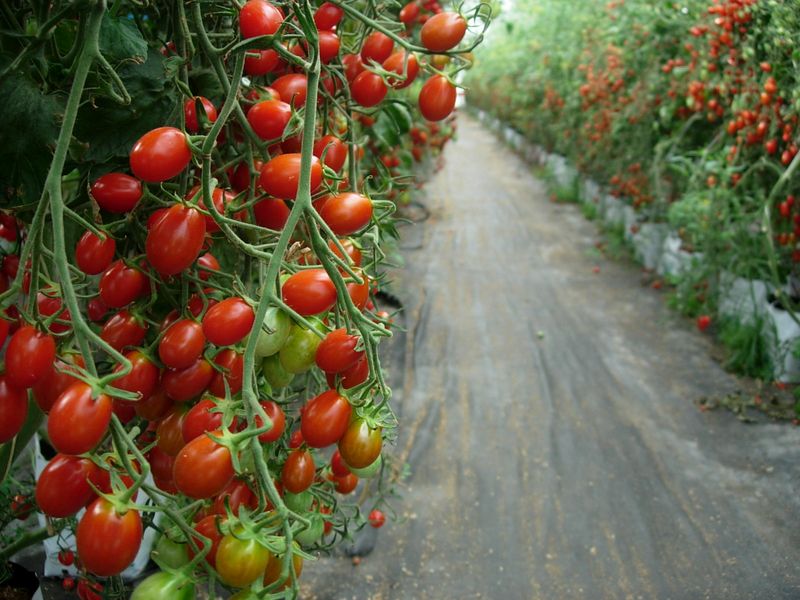
Tomatoes packed too closely together don’t make a garden. Instead, they create a trap for humidity.
When plants are too close, air can’t flow between them. This causes warmth and moisture to get trapped, creating an area ideal for stress, fungal diseases, and curled leaves.
In a North Carolina summer, where the air is already thick, poor spacing can quickly turn a situation into a chaotic one.
So, make sure each plant has at least two feet of space. This distance helps the leaves dry off between waterings and keeps air moving as it should.
Pruning suckers is beneficial as well. By removing the extra growth that crowds the center of the plant, you allow light and air to pass through.
Less clutter inside the plant means less moisture lingering on the leaves and stems. Think of it as giving your tomatoes their own personal space. They thrive much better when they have room to breathe.