Why Ohio Rhododendrons Turn Yellow In Spring And What That Usually Means
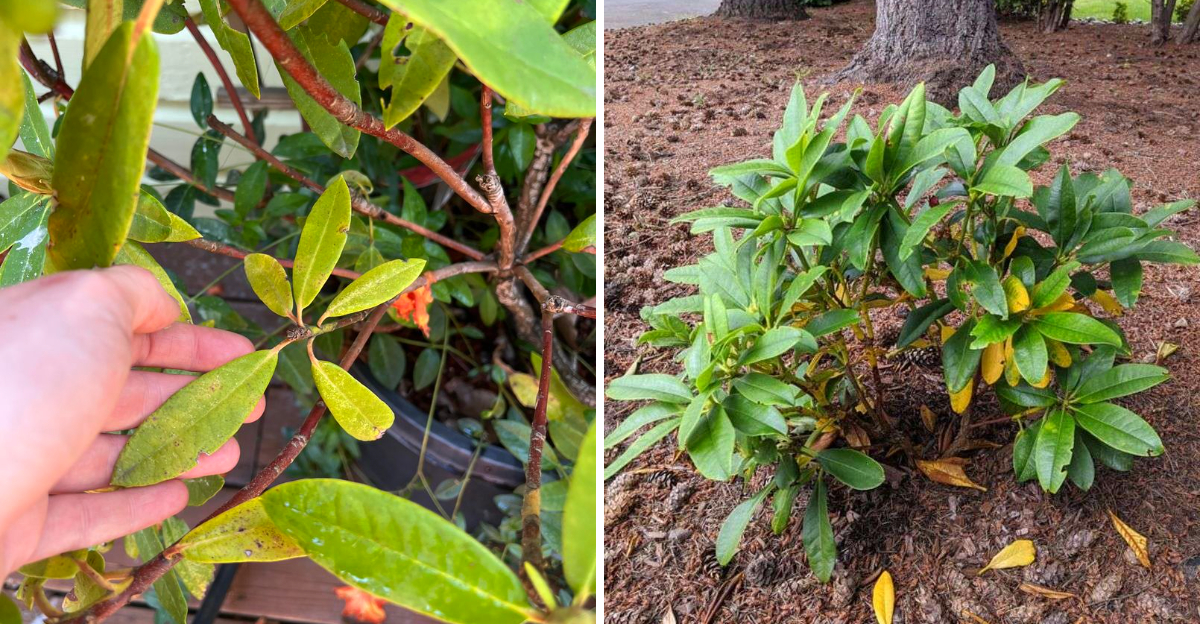
Stepping outside on a mild Ohio morning to see your rhododendron covered in yellow leaves is a major shock. These shrubs usually survive our winters with ease, so sudden discoloration feels like a cry for help.
However, spring yellowing in the Buckeye State rarely has just one culprit. Our unpredictable weather creates a perfect storm for these acid-loving plants.
Cold winds, waterlogged clay, and swinging temperatures all play a role. Even the natural alkalinity of our soil can stress them to the limit.
If you want to save your shrub, you have to decode what those leaves are actually saying.
1. High Soil pH Can Leave Ohio Rhododendrons Short On Iron
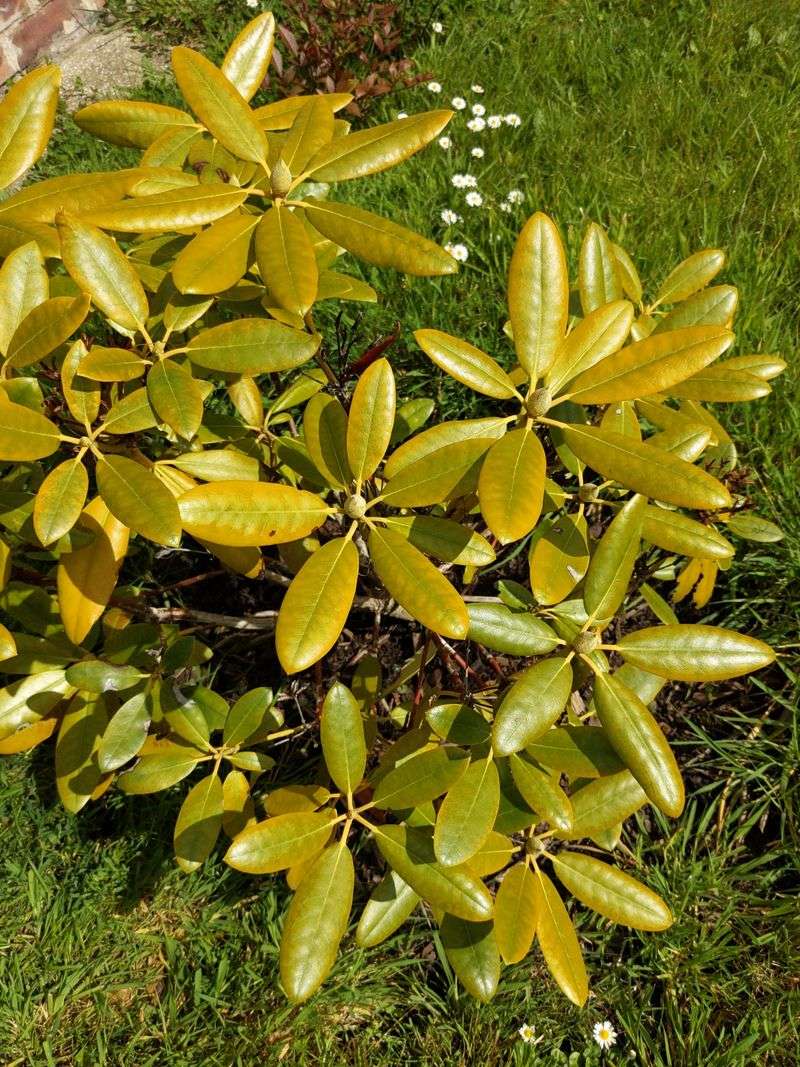
Many Ohio soils naturally lean alkaline, and that chemistry quietly works against rhododendrons long before any visible symptoms appear. Rhododendrons are acid-loving shrubs that genuinely prefer soil with a pH between 4.5 and 6.0.
When Ohio garden soil creeps above that range, the iron that is already present in the ground becomes chemically locked up and unavailable to the plant, even if the nutrient is technically there.
Ohio’s limestone-rich regions are especially prone to this issue. Soils near older construction sites can also run alkaline because concrete and mortar residue often leaches into surrounding ground.
Rhododendrons planted near foundations or driveways are worth checking for soil pH problems first before anything else is tried.
Lowering pH takes some patience but is absolutely doable. Elemental sulfur worked into the soil gradually acidifies it over weeks, while iron sulfate can offer a somewhat faster response.
Acidifying mulches like pine bark or pine needles also help maintain lower pH over time. Applying chelated iron as a foliar spray can give the plant a temporary boost while longer-term soil adjustments take hold.
The key is addressing the root cause rather than repeatedly treating symptoms, since high pH will keep triggering the same iron shortage season after season if the underlying soil chemistry is not corrected.
2. Yellow Leaves With Green Veins Often Signal Chlorosis
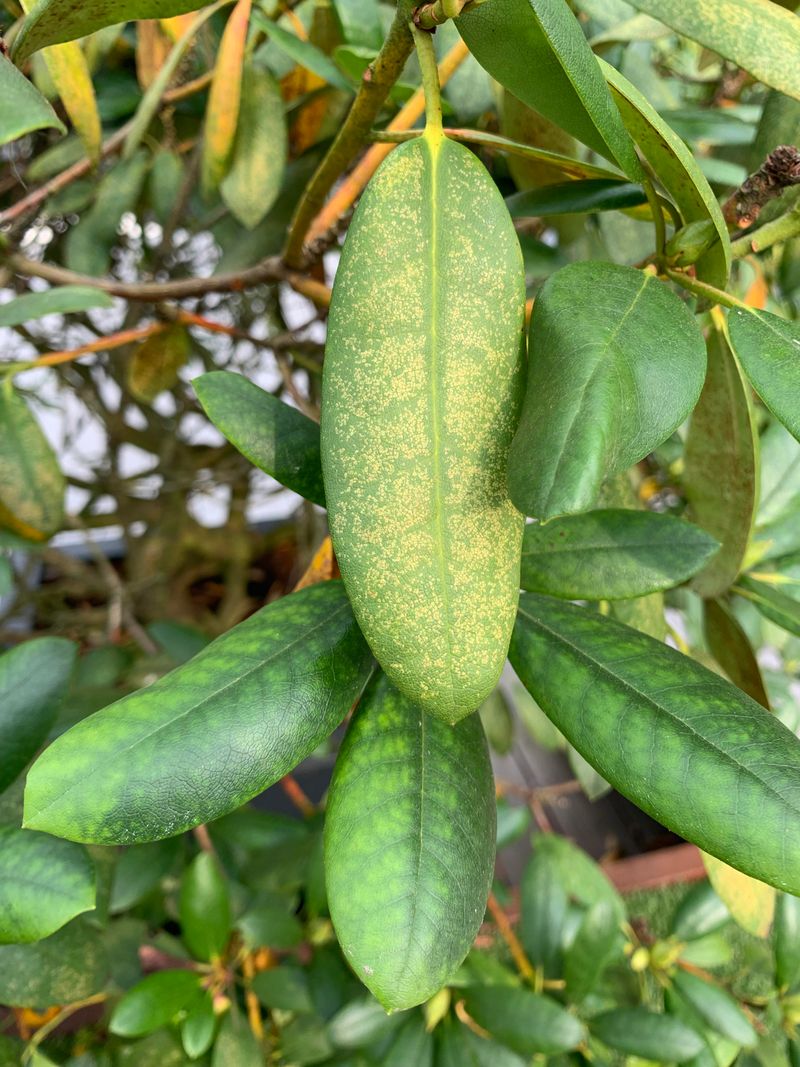
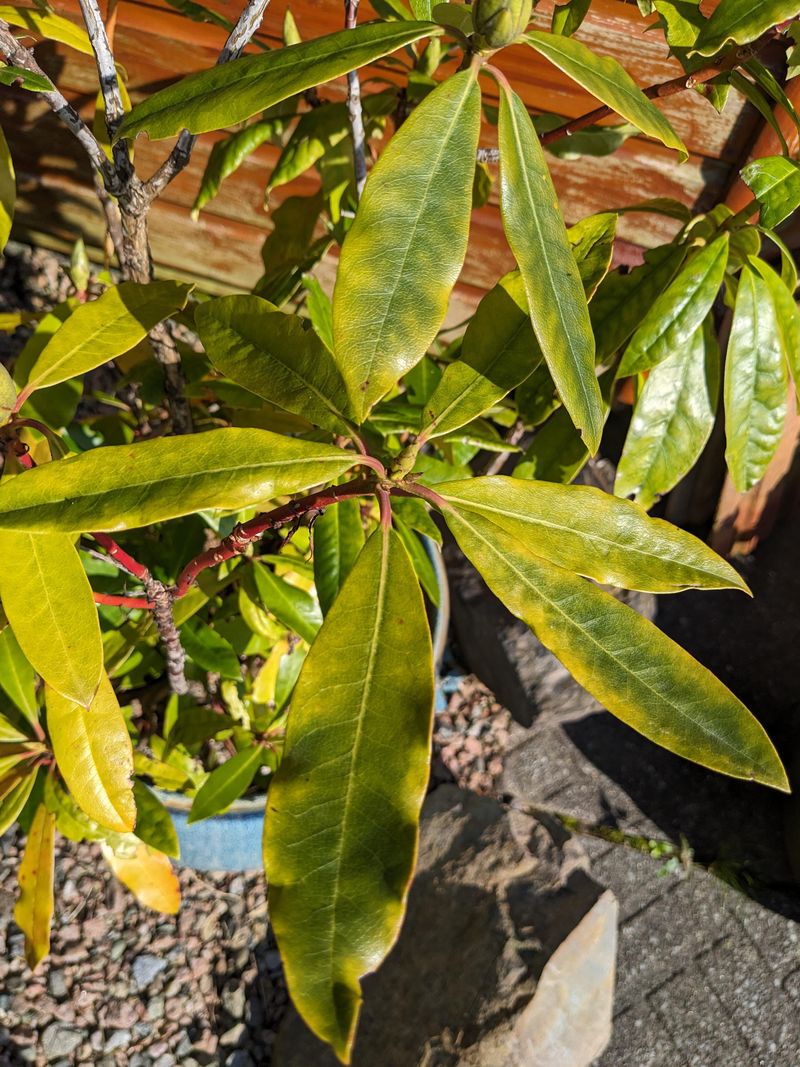
Gardeners who notice that the leaf tissue is turning yellow while the veins stay green are looking at one of the more recognizable patterns in rhododendron care.
That specific pattern is called interveinal chlorosis, and it points fairly clearly toward a nutrient uptake problem rather than a general decline.
Iron deficiency is the most common culprit behind this symptom in Ohio, though manganese deficiency can produce a similar appearance.
Chlorosis tends to show up on younger leaves first, which helps separate it from natural aging. When older inner leaves are yellowing uniformly without the green vein pattern, that is usually a different story altogether.
Spotting which leaves are affected and what the pattern looks like can save a lot of time and effort when figuring out next steps.
The frustrating part about chlorosis is that the fix is rarely as simple as adding fertilizer. If the soil pH is keeping iron unavailable, adding more iron-containing fertilizer without correcting the pH often does very little.
Soil acidification paired with a chelated iron treatment tends to produce better results. Mulching with organic materials like shredded oak leaves or pine bark helps maintain the slightly acidic conditions these shrubs need.
Your Ohio Garden Changes Every Week. Your Plan Should Too.
Gardening in Ohio changes quickly throughout the season. Every Friday you’ll receive a simple weekly plan showing exactly what to plant, prune, fertilize, harvest, and protect so you never miss the right timing.
Catching chlorosis early in spring gives Ohio gardeners the best window to make adjustments before the growing season gets fully underway.
3. Winter Stress Can Show Up Just As Spring Growth Begins
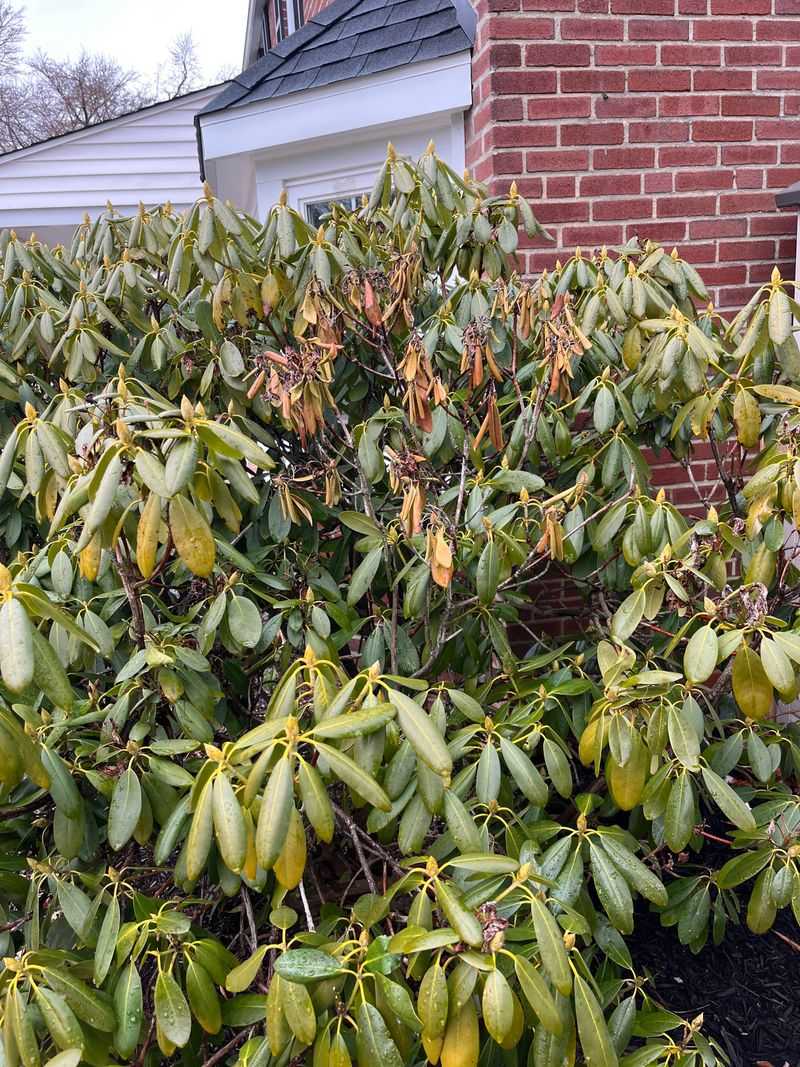
Ohio winters can be genuinely hard on broadleaf evergreens, and rhododendrons are no exception.
These shrubs keep their leaves through the cold months, which means they are exposed to drying winds, frozen ground, and temperature swings that can quietly damage tissue long before spring arrives.
By the time new growth pushes out in April or May, that accumulated stress often shows up as yellowing or browning on leaves that survived but were weakened.
One specific winter problem is called desiccation, where cold winds pull moisture from the leaves faster than frozen roots can replace it. Leaves may look mostly fine in January but show significant yellowing as the plant tries to push new growth in spring.
This kind of damage is often scattered rather than uniform, which helps distinguish it from a nutrient issue.
Sites with full wind exposure or reflected cold from nearby walls tend to produce more winter stress symptoms.
Rhododendrons planted in sheltered spots with some afternoon shade from structures or taller shrubs typically come through Ohio winters in better shape.
Applying a generous layer of organic mulch around the root zone before the ground freezes helps protect roots from the worst temperature swings.
Waiting until late spring to evaluate real plant health is wise, since many rhododendrons that look rough in March bounce back considerably once warmer, more stable temperatures settle in across Ohio.
4. Wet Soil Can Weaken Roots And Fade Leaf Color
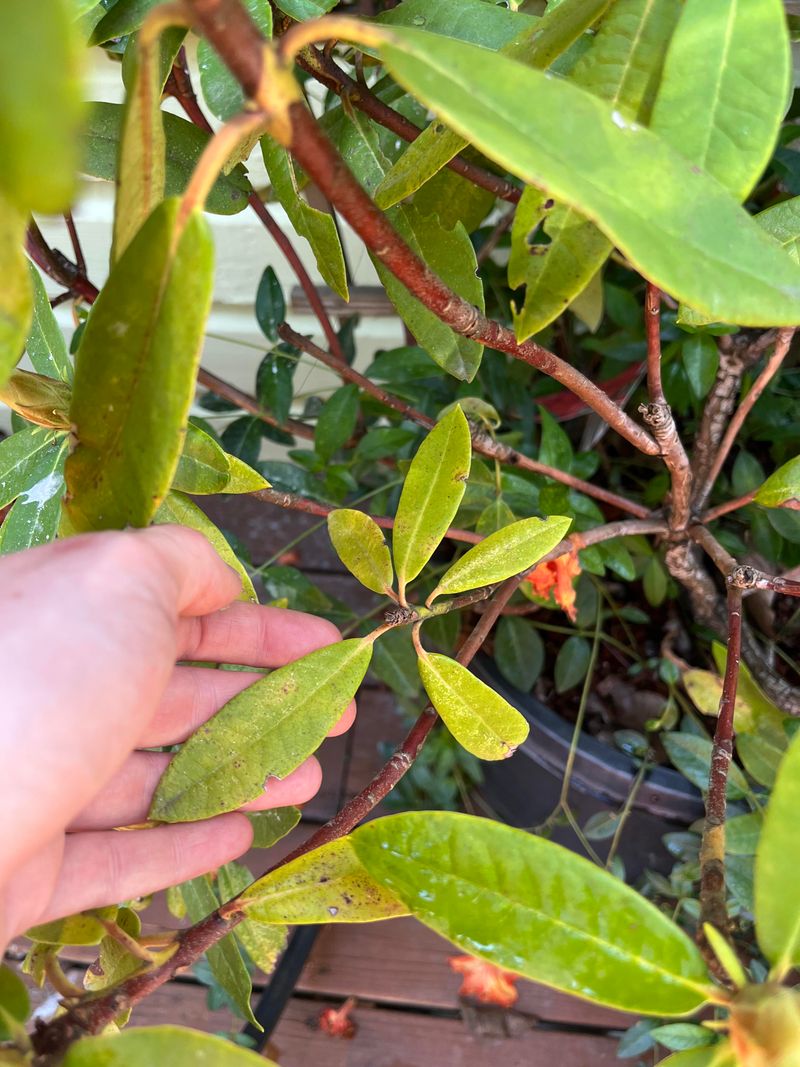
Ohio springs tend to arrive with a lot of rainfall, and rhododendrons planted in low spots or heavy clay soil can end up sitting in waterlogged conditions for weeks at a time.
These shrubs have relatively fine, shallow root systems that need oxygen in the soil to function well.
When the root zone stays saturated, those roots struggle to absorb water and nutrients efficiently, and the leaves often start to fade and yellow as a result.
Prolonged wet soil also creates conditions where root rot organisms can become active. Phytophthora root rot is a well-known concern for rhododendrons growing in poorly drained Ohio landscapes.
A plant dealing with root rot may look like it is simply nutrient-deficient from above, making drainage the first thing worth evaluating when yellowing appears after a rainy stretch.
Improving drainage around established rhododendrons can be done by working organic matter into surrounding soil, creating a slightly raised planting area, or redirecting water flow away from the root zone.
Raised beds are a genuinely useful option for Ohio gardeners dealing with heavy clay soils that hold water long after rain stops.
Rhododendrons planted on gentle slopes or elevated positions in the landscape tend to fare much better during wet Ohio springs.
Checking soil moisture before watering is also a helpful habit, since adding more water to already saturated soil only deepens the problem.
5. Older Inner Leaves May Be Aging Out Naturally
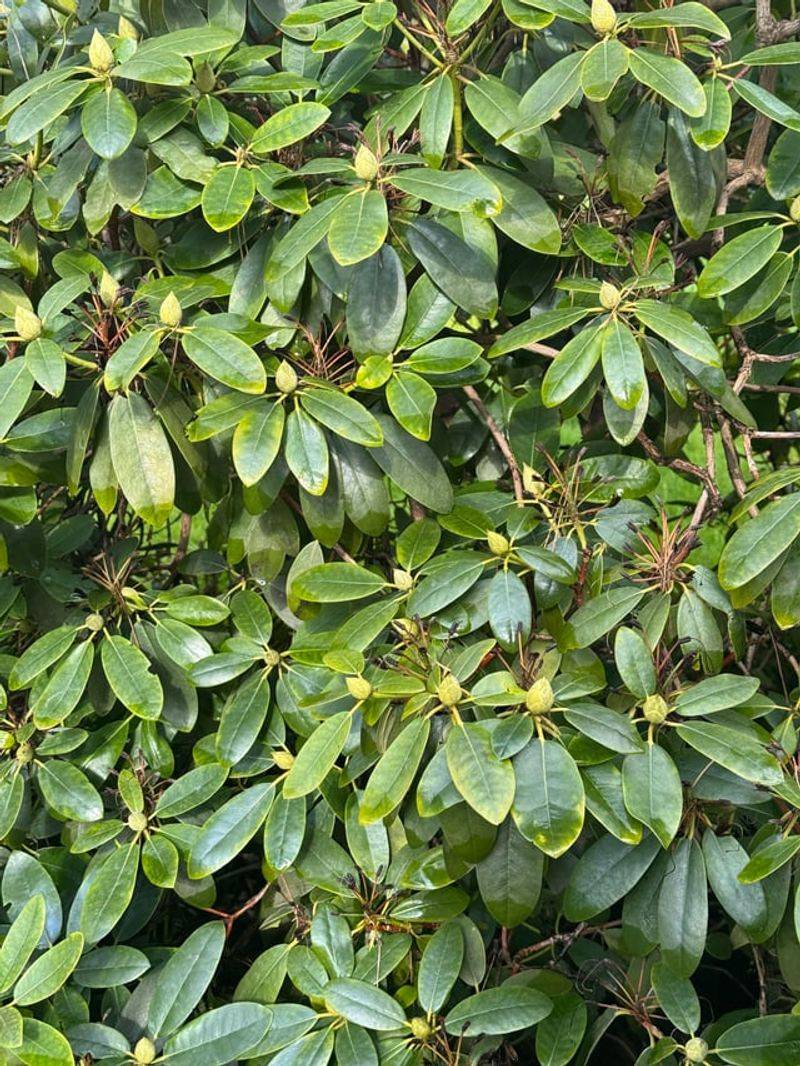
Not every yellow leaf on a rhododendron signals trouble, and this is a point that catches a lot of Ohio gardeners off guard in spring.
Rhododendrons shed older leaves on a natural cycle, and that process often becomes most visible in spring when new growth is actively pushing out.
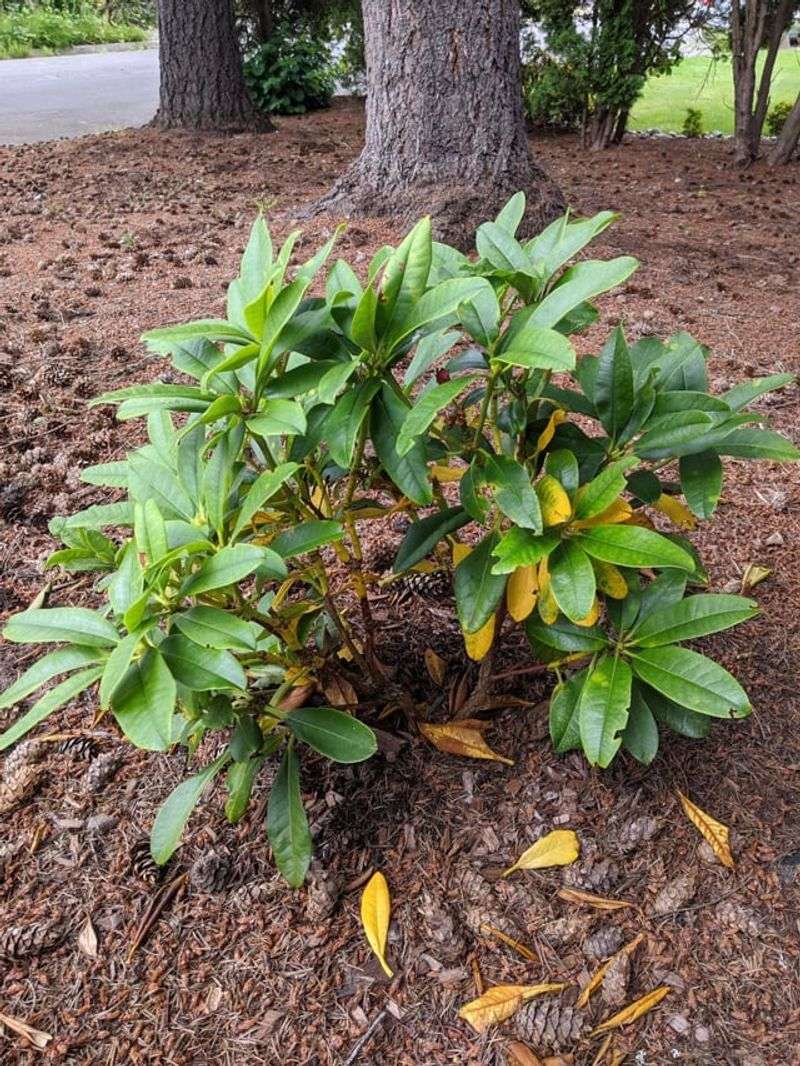
The leaves that turn yellow and drop are typically the oldest ones sitting deep inside the canopy, not the fresh growth at the branch tips.
Recognizing natural leaf aging versus a real problem comes down to location and pattern.
If the yellowing is concentrated on interior, older leaves while the outer foliage looks healthy and green, there is a reasonable chance the plant is simply cycling through normal leaf replacement.
Most rhododendron leaves last about two to three years before the plant moves on from them.
Spring is actually the most common time for this shedding to occur, which means it can easily be mistaken for a nutrient deficiency or disease issue by gardeners who are not familiar with the pattern.
A helpful rule of thumb is to observe whether new growth at the tips looks vigorous and healthy.
If the new leaves coming in are a good green color and the plant seems otherwise active, the inner yellowing is probably just the natural housekeeping process that rhododendrons go through each year, particularly after a long Ohio winter season.
6. Lace Bugs Can Make Spring Foliage Look Faded And Speckled
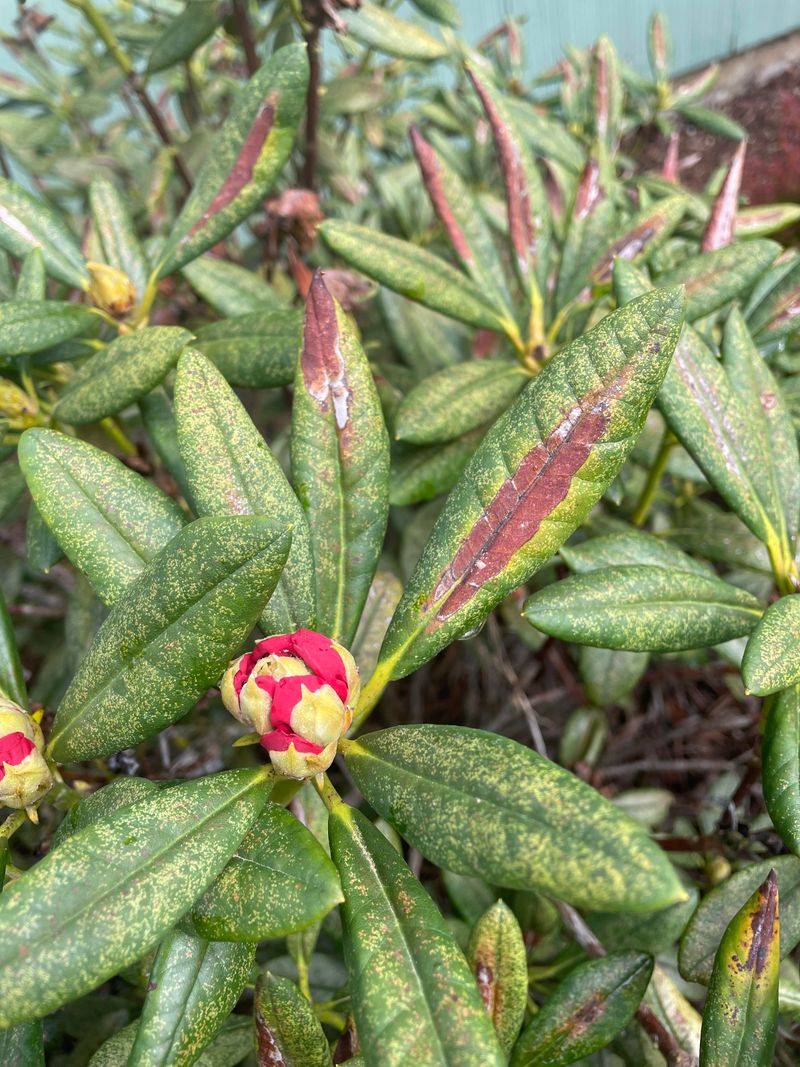
Tiny insects called lace bugs are one of the more underappreciated causes of rhododendron leaf discoloration in Ohio, and their damage can look a lot like a nutrient problem at first glance.
These small, flattened insects feed on the undersides of leaves by piercing the tissue and extracting cell contents.
The result on the upper leaf surface is a stippled, pale, washed-out appearance that can cover entire leaves in a fine speckled pattern.
Checking the undersides of leaves is the quickest way to figure out whether lace bugs are involved. Affected leaves typically show small dark spots of insect waste alongside the insects themselves, which are small enough to miss without a close look.
Lace bug populations tend to build through spring and into summer, so catching them early gives Ohio gardeners a real advantage before damage becomes severe.
Rhododendrons growing in full sun are more susceptible to lace bug pressure than those planted in shadier spots, which is worth keeping in mind for future planting decisions.
Horticultural oil or insecticidal soap applied to the undersides of leaves can reduce populations when applied carefully during the appropriate window.
Systemic insecticides are also an option for more established infestations.
Keeping plants healthy overall through proper soil conditions and appropriate moisture helps them tolerate moderate lace bug activity without showing dramatic foliage decline across the season.
7. Not Every Yellow Leaf Means The Plant Needs Feeding
Reaching for a bag of fertilizer the moment yellow leaves appear is a common instinct, but it is one that can sometimes make things worse rather than better.
Overfertilizing rhododendrons, especially with nitrogen-heavy products, can burn the shallow roots these shrubs rely on and create additional stress at exactly the time the plant is trying to push new spring growth.
Yellowing caused by drainage problems, pH imbalance, or winter stress will not improve with more fertilizer.
Rhododendrons in Ohio actually have fairly modest feeding needs compared to many other landscape shrubs. When feeding is genuinely warranted, products formulated for acid-loving plants tend to be the most appropriate choice.
These typically contain a balance of nitrogen, phosphorus, and potassium along with micronutrients that support healthy foliage without pushing excessive growth that the plant cannot sustain.
Timing matters too. Fertilizing too late in the season can push tender new growth that gets caught by Ohio’s unpredictable late frosts.
Early spring, just as growth is beginning, is generally the most effective window if feeding is actually needed.
Observing the overall pattern of yellowing, checking soil conditions, and considering recent weather all paint a much clearer picture than simply assuming the plant is hungry.
Feeding a rhododendron that has a drainage or pH issue without addressing the underlying cause is a bit like treating a symptom while ignoring what is actually causing it.
8. A Soil Test Can Help Confirm What Is Really Going On
Guessing at the cause of yellow rhododendron leaves can lead to a lot of wasted effort, and sometimes the most straightforward step is also the most overlooked one.
A basic soil test provides concrete information about pH, nutrient levels, and organic matter content, all of which can point directly toward or away from the most likely causes of yellowing.
Collecting a soil sample from the root zone of the affected rhododendron gives the most relevant results.
Taking small amounts of soil from a few different spots around the plant and mixing them together produces a more accurate picture than a single scoop from one location.
Results typically come back with specific recommendations for amendments, which takes a lot of the guesswork out of the process.
For Ohio gardeners dealing with recurring yellowing season after season, a soil test can reveal whether the problem is structural, meaning the soil chemistry itself needs adjustment, or situational, meaning recent conditions like heavy rain or late frost played a bigger role.
Retesting every few years after making amendments helps track whether soil pH is moving in the right direction.
Pairing test results with careful observation of leaf patterns, drainage, and plant history gives the clearest possible picture of what a struggling rhododendron actually needs to recover and thrive through Ohio’s varied growing seasons.