Why Ohio Spiderwort Spreads So Fast (And When To Keep It)
One small plant. That is all it takes.
Ohio spiderwort has a way of starting modestly and then quietly expanding until the gardener looks up one day and realizes something significant has happened in the flower bed.
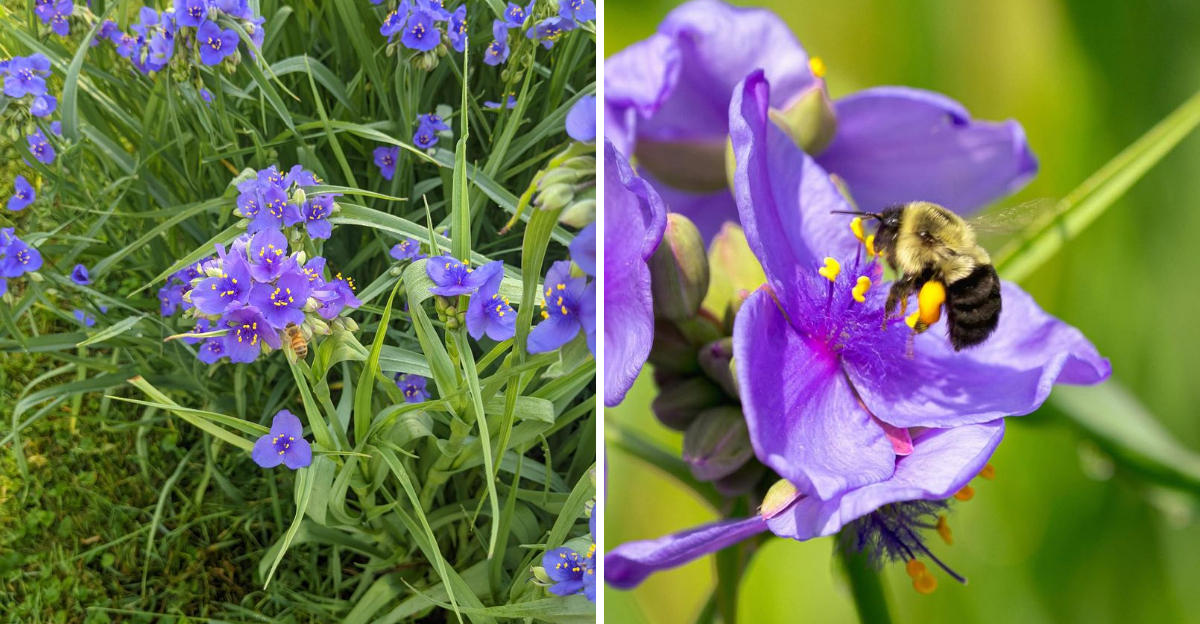
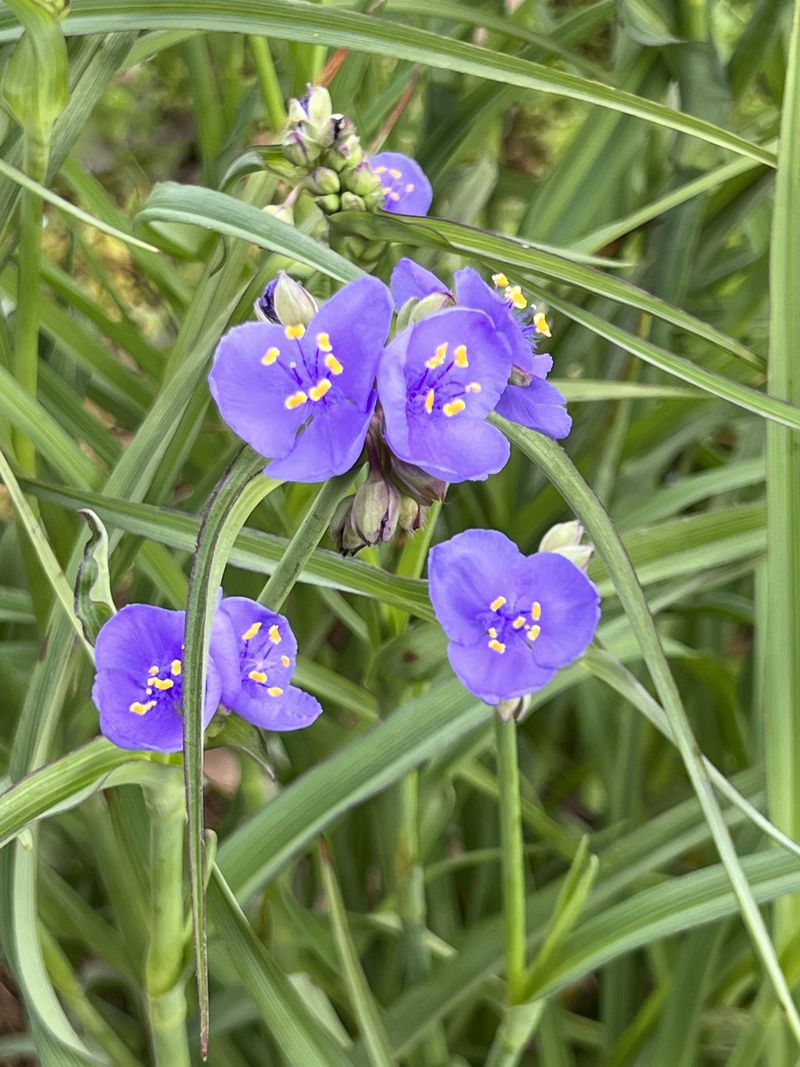
This native wildflower produces striking blue-purple blooms that open in the morning and close by noon. It looks delicate, almost shy. Underneath that beauty is a plant with serious ambition and a very efficient system for acting on it.
Understanding why it spreads so quickly changes how you manage it. More importantly, it changes whether you keep it at all.
Some gardeners pull it out before giving it a fair chance. Others let it run completely unchecked and end up with more than they planned for.
The sweet spot is somewhere in the middle, and getting there takes knowing how this plant actually operates from the roots up.
1. Native Roots Help It Settle Fast
Most plants spend their first season just figuring out where they are.
Spiderwort skips that phase entirely. As a true Ohio native, Tradescantia ohiensis evolved over thousands of years in this exact climate, with these exact soils, rainfall patterns, and seasonal shifts.
It does not need to adapt because it already belongs here.
That deep familiarity with Ohio conditions gives spiderwort a serious head start. Its root system establishes quickly because the soil chemistry, drainage patterns, and microbial communities already match what the plant expects.
Other ornamental plants from different regions spend energy adjusting. Spiderwort spends that energy growing.
Native plants generally require less intervention once established precisely because they are working with the land rather than against it. Spiderwort is one of the strongest examples of that principle in action.
Its roots anchor firmly, pull moisture efficiently, and support new shoot growth faster than many non-native alternatives.
For gardeners, this means one plant can become a thriving patch within a single growing season.
That speed is not a flaw. It is a feature built by generations of survival in Ohio landscapes.
Knowing this helps you place it intentionally from the start, because once those roots settle in, spiderwort is not going anywhere without a deliberate effort on your part. Plant it where you want it to stay.
2. Clumps Expand In Happy Soil
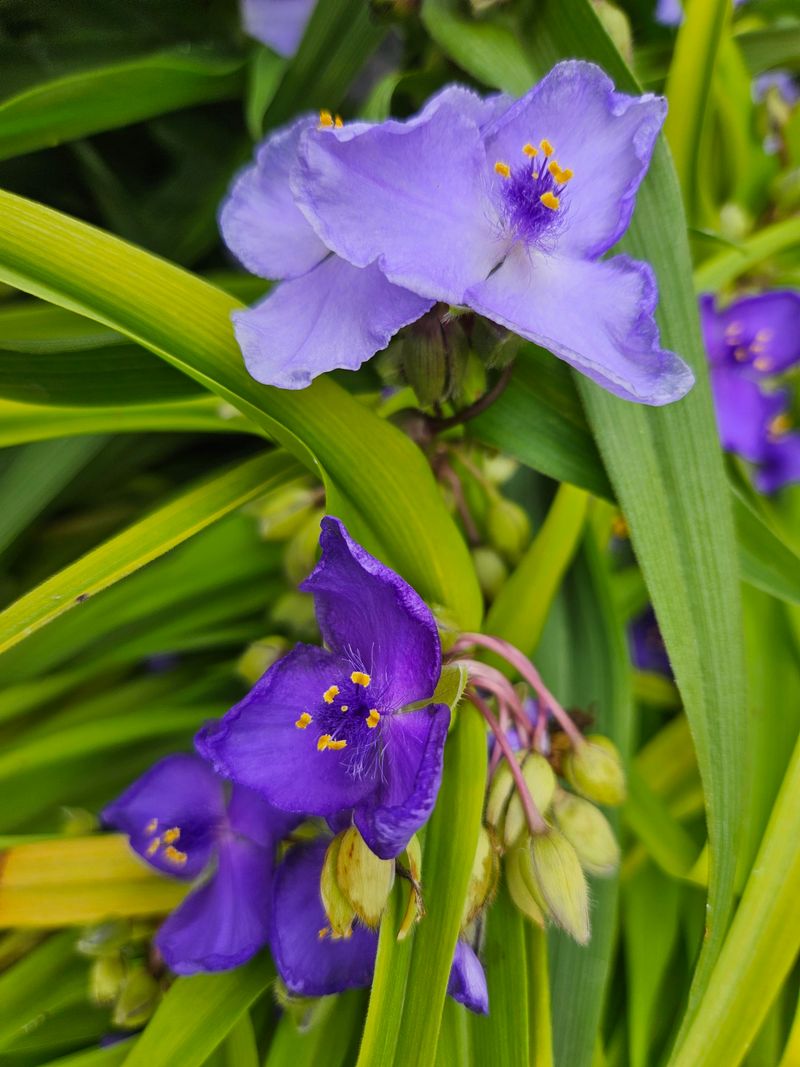
Give spiderwort good conditions and it will reward you generously, sometimes more generously than you planned.
The plant grows in a clumping habit, meaning new shoots emerge from the base of the existing plant and push outward season after season. Each year, the clump gets a little wider, a little fuller, and a little harder to ignore.
This clump expansion happens fastest in soil that holds some moisture without staying waterlogged.
Rich, loamy soil with decent organic matter is basically a welcome mat for spiderwort. Gardens that have been amended with compost or that sit near a natural water source tend to produce clumps that double in size every year or two.
The good news is that clumps are easy to manage compared to aggressive runners or underground rhizomes that pop up far from the original plant.
Your Ohio Garden Changes Every Week. Your Plan Should Too.
Gardening in Ohio changes quickly throughout the season. Every Friday you’ll receive a simple weekly plan showing exactly what to plant, prune, fertilize, harvest, and protect so you never miss the right timing.
You can see exactly where the growth is happening. Division is straightforward.
Simply dig up a section of the clump in early spring before active growth begins, move it to a new spot, and both pieces will thrive.
Dividing clumps every two to three years keeps individual plants healthier and more productive. Overcrowded clumps get floppy and produce fewer blooms.
Division acts as a reset button that benefits both the plant and your garden layout.
A well-divided spiderwort patch stays tidy, blooms reliably, and never outgrows its welcome in the right spot.
3. Seeds Add New Plants Nearby
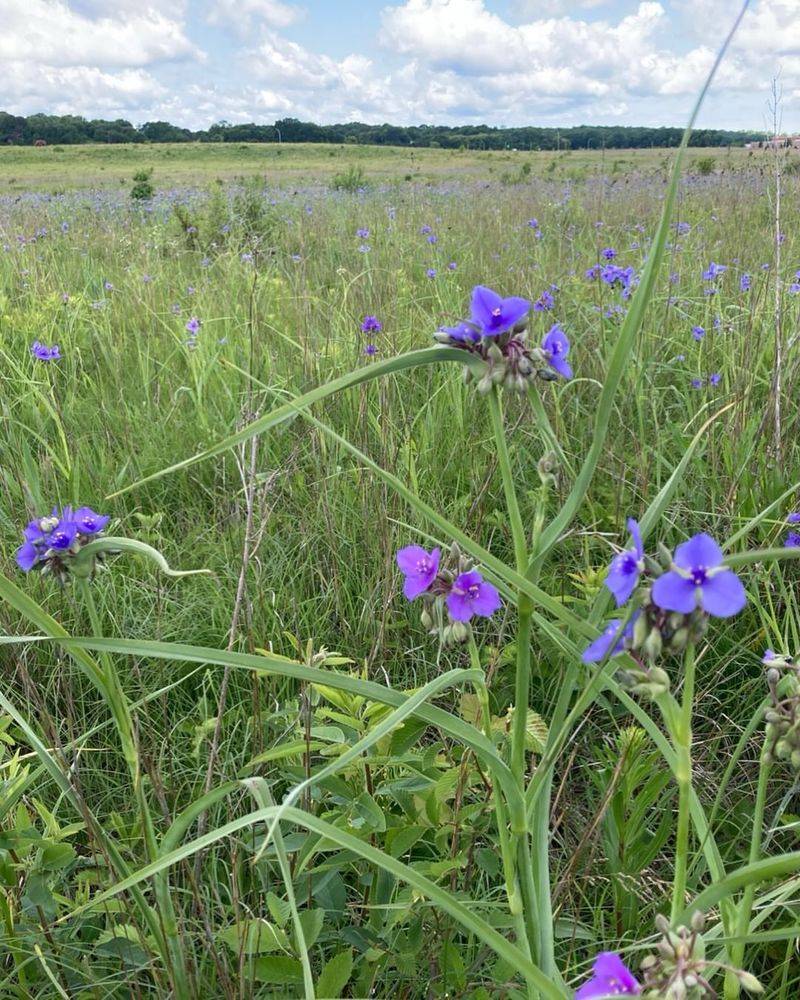
Beyond the clump, spiderwort has a second strategy for expansion, and it works quietly while you are not watching.
After the flowers fade, small seed pods form along the stems. When those pods dry out and split open, seeds drop to the ground nearby. Some get carried a short distance by wind, rain, or passing animals.
Come spring, new seedlings appear.
These volunteer seedlings are sometimes called self-sowers, and spiderwort is a reliable one.
In a bed with bare soil patches or thin mulch coverage, seedlings establish easily. A single mature plant can produce dozens of seeds in one season.
Multiply that across a few plants and a small planting becomes a much larger one without any help from you.
The seedlings are easy to spot once you know what to look for.
Young spiderwort plants have long, narrow, grass-like leaves that emerge in small tufts. They are distinct enough to identify before they get large, which makes early editing simple.
Pulling a seedling takes seconds. Waiting until it becomes a mature clump takes a shovel.
One practical tip from experienced native plant gardeners: cut the spent flower stems back to about half their height right after blooming ends in early summer.
You keep the foliage looking fresh, reduce seed production significantly, and still leave enough plant material to support the root system through the rest of the season.
That one habit makes a real difference in how many volunteers show up next spring.
4. Moist Beds Speed The Spread
Soil moisture is one of the biggest factors controlling how fast spiderwort spreads.
Put it in a dry, sandy spot and growth slows down noticeably. Plant it near a rain garden, a low area that collects runoff, or a bed with consistently moist soil, and the plant shifts into a noticeably higher gear.
Tradescantia ohiensis naturally grows along stream edges, woodland borders, and moist meadows throughout Ohio.
Those habitats provide exactly the conditions the plant is wired to exploit. Rich moisture encourages faster root development, more vigorous shoot production, and heavier seed set.
All three of those factors together compound the spread significantly over just a few seasons.
This is not a problem if you planned for it.
Moist areas in a yard are often difficult to plant because many ornamentals struggle with wet feet. Spiderwort handles those spots beautifully.
It can even tolerate occasional short-term flooding, which makes it genuinely useful along drainage swales or at the edges of rain gardens where other plants give up.
The caution is placing it in a moist bed that borders a lawn, a vegetable garden, or a formal planting area you want to keep tidy.
In those spots, the combination of moisture and open ground can lead to faster spread than most gardeners expect.
A simple edging barrier or a consistent trimming routine keeps it contained without slowing its energy in that productive spot.
Wet soil is its playground, so plan the neighborhood accordingly.
5. Cutting After Bloom Limits Reseeding
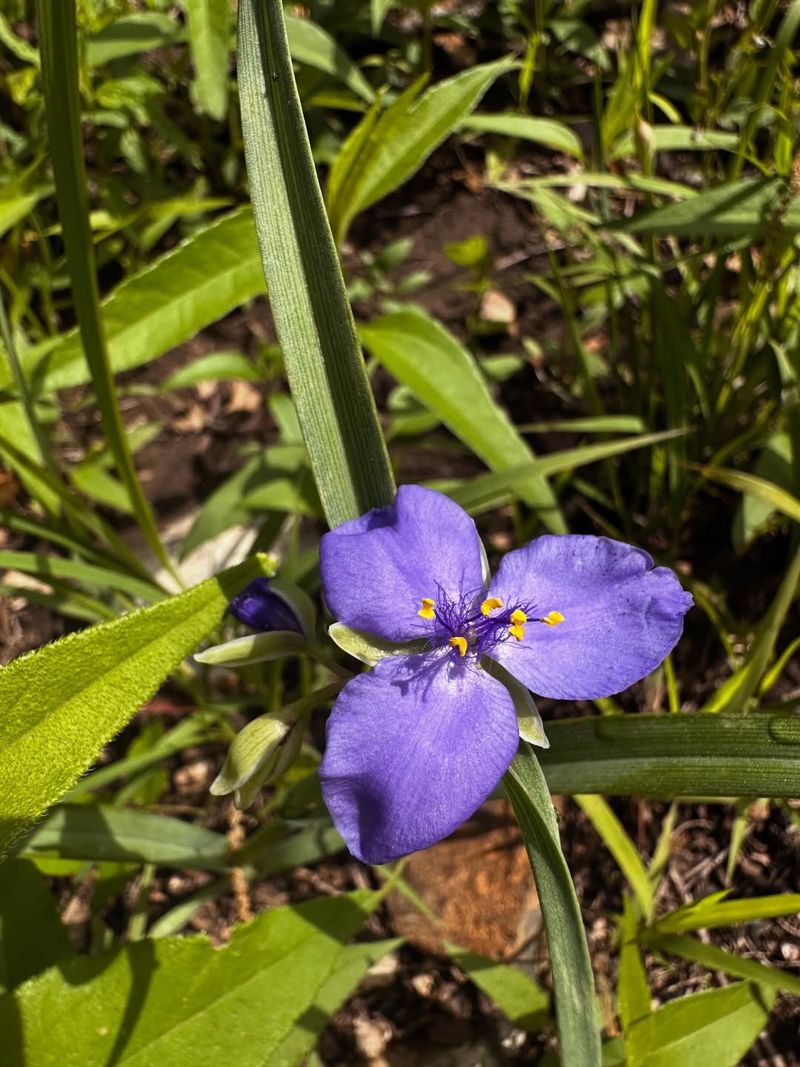
Here is a trick that experienced Ohio native plant gardeners swear by: cut spiderwort back hard right after the main bloom period ends.
In Ohio, that usually means sometime in late June or early July depending on your location and the specific season.
Cutting the stems down to about six to eight inches above the ground removes most of the developing seed pods before they mature and drop.
This single action dramatically reduces the number of volunteer seedlings you will find the following spring.
You are not stopping the plant from growing. You are just editing its reproduction strategy for that season.
The plant responds well to this treatment. It often pushes out a second flush of fresh foliage, and some gardeners even see a modest second bloom in late summer or early fall.
The regrowth that follows a post-bloom cutback tends to look tidier and more upright than the flopped, spent stems that would otherwise linger through summer.
This is especially useful in visible garden beds where aesthetics matter alongside ecological function.
You get the pollinator value during bloom season, then a cleaner look for the rest of summer. Sharp, clean tools make this job faster and reduce stress on the plant.
A little editing here saves a lot of weeding later, and that trade-off is almost always worth it.
6. Pollinators Make It Worth Keeping
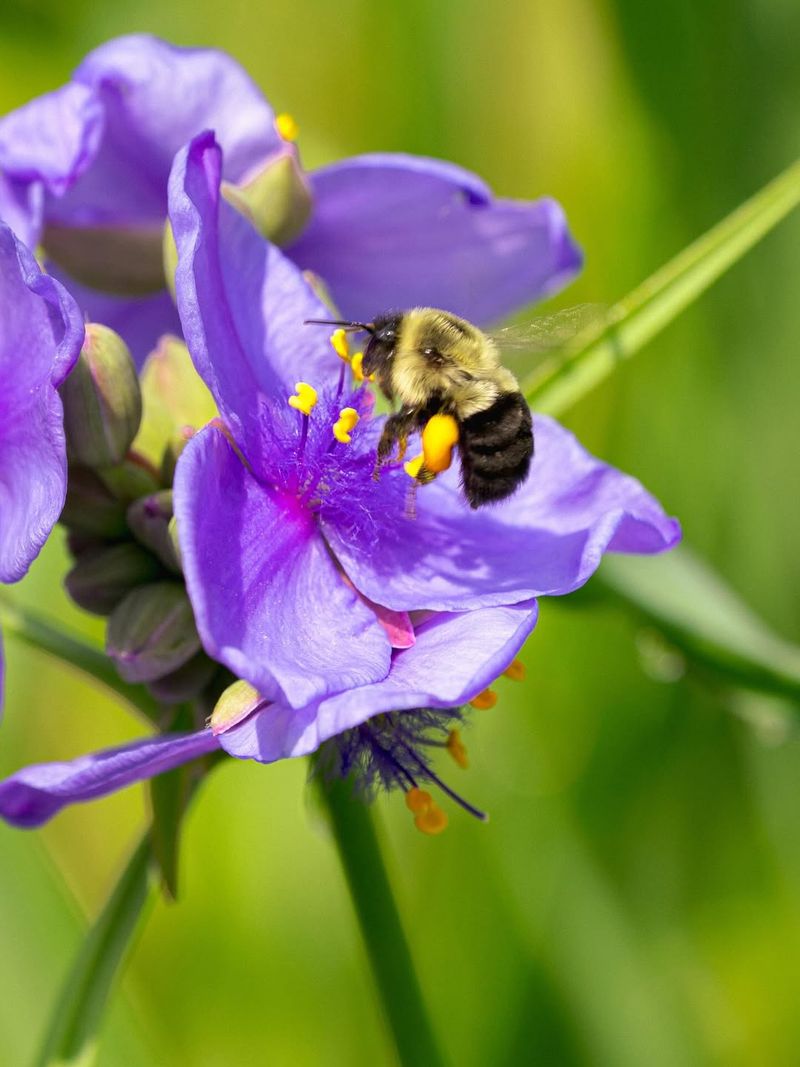
Before you decide to edit spiderwort out of your garden entirely, consider what it is doing for the wildlife around your yard.
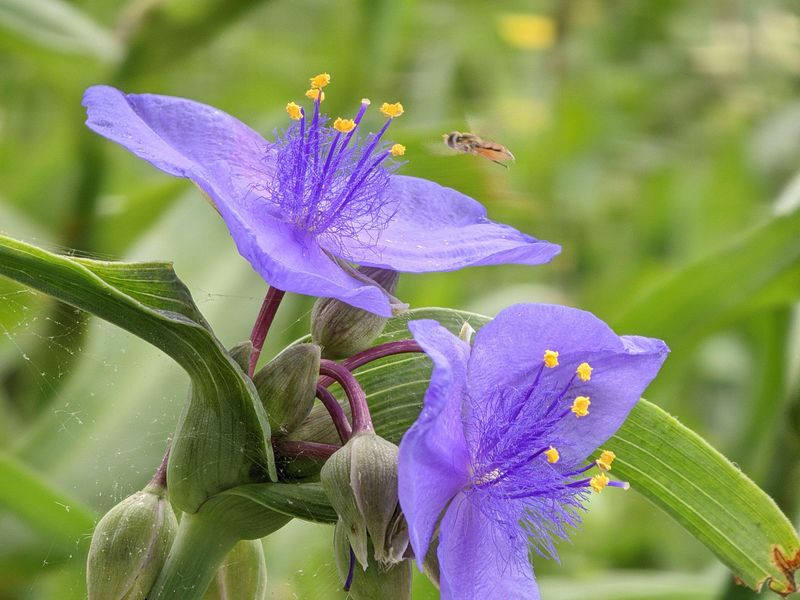
The flowers are small but significant in terms of pollinator value. Native bees, especially bumblebees, are strongly attracted to spiderwort blooms.
The pollen is bright blue, which is genuinely unusual in the plant world, and it is offered in generous amounts during the morning hours when the flowers are open.
Plants like spiderwort, which bloom in late spring and early summer, fill a critical window when other nectar and pollen sources are still ramping up.
Bees that emerge early in the season depend on early bloomers to fuel their colonies during the most vulnerable period of their annual cycle.
Beyond bees, spiderwort also attracts certain native bee species that specialize specifically in collecting pollen from Tradescantia.
These specialist bees rely on a narrow range of plant species, which makes preserving native plants like spiderwort more ecologically significant than it might appear at first glance.
For Ohio gardeners who want to support local pollinators without a complicated maintenance schedule, spiderwort is one of the most practical choices available.
It blooms reliably, requires no fertilizer, and asks for very little beyond occasional editing.
The pollinator activity it generates during its bloom window is genuinely impressive to watch on a calm morning, and that alone makes it a strong candidate for any naturalistic planting.
7. Edges Need Regular Editing
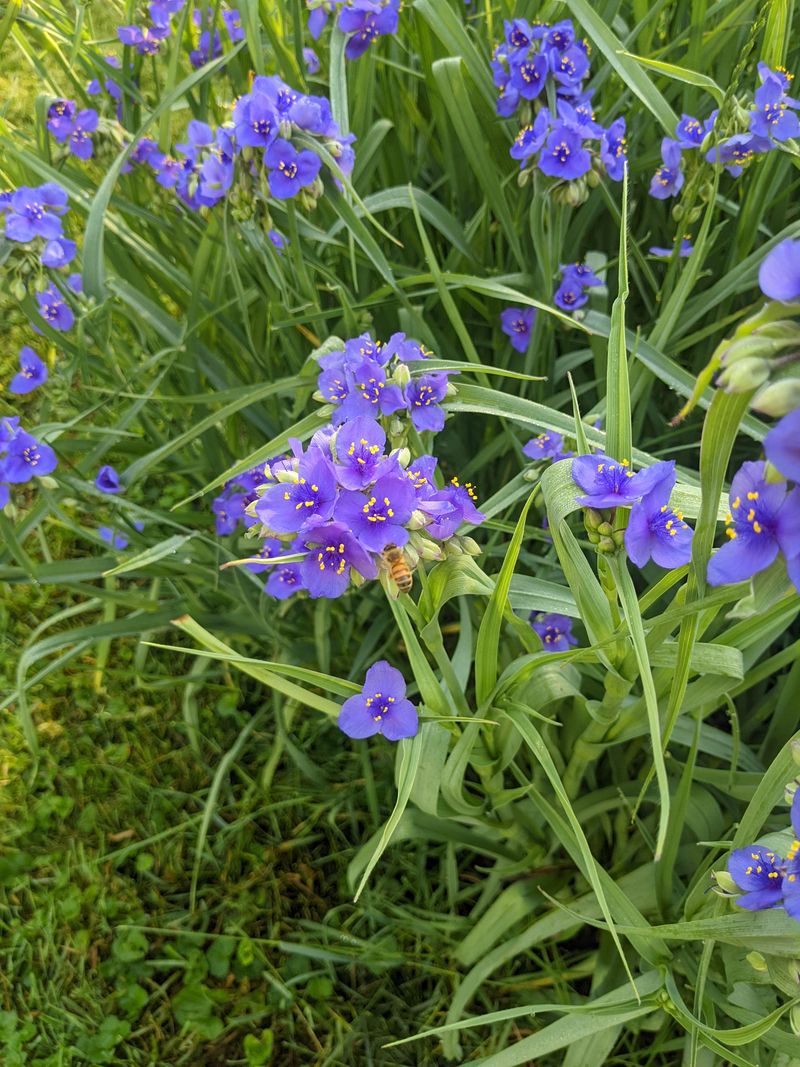
Spiderwort earns its keep in the right spot, but it does not always respect boundaries.
Along garden paths, near lawn edges, and at the borders of formal planting beds, it tends to creep outward one season at a time.
Left unchecked, a patch that started two feet from a walkway can be brushing your ankles within a few growing seasons.
Regular edge maintenance is the most effective way to keep spiderwort looking intentional rather than accidental.
A few times each season, walk the edges of any spiderwort planting and remove shoots or seedlings that have crossed into unwanted territory.
Early removal is always easier than late removal, and it takes far less time when you stay consistent.
A sharp spade or half-moon edger works well for cutting back along lawn borders. For beds near paths, hand-pulling young volunteers is usually sufficient.
The key is frequency. Monthly checks during the growing season catch problems before they become projects.
Some gardeners install a simple root barrier along one side of a spiderwort planting to slow lateral spread without eliminating the plant.
This works reasonably well for clump expansion but does not stop seeds from landing beyond the barrier.
Combining a physical barrier with post-bloom cutting gives you the best control while still allowing the plant to do its ecological work during bloom season.
Neat edges make a big difference in how the whole garden reads, and spiderwort rewards the gardeners who stay on top of them.
8. Tough Sites Benefit From Its Energy
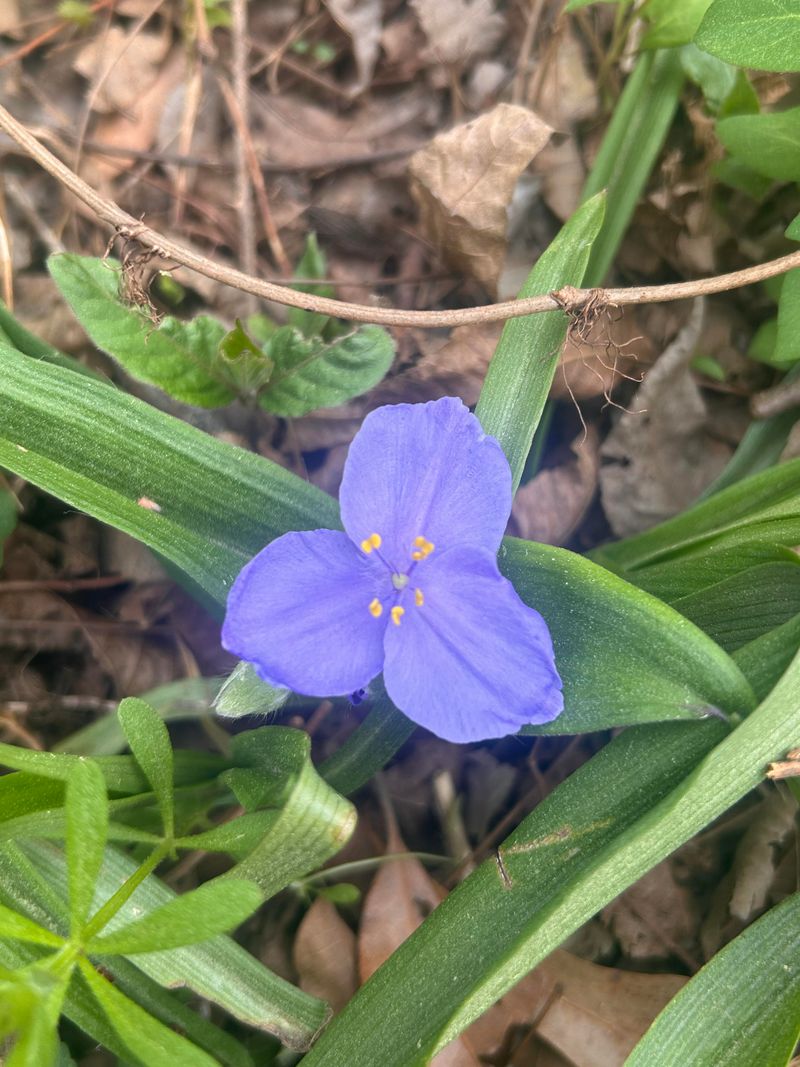
Not every corner of a yard is easy to plant.
Slopes that erode, shady dry areas under tree canopies, utility strips between the sidewalk and street, and spots where lawn grass has simply given up are all challenging for most ornamental plants.
Spiderwort handles many of these situations with a confidence that earns genuine respect.
Its ability to establish quickly and spread steadily makes it useful in spots where you want coverage without constant replanting.
A steep bank that loses soil during heavy Ohio rains benefits from spiderwort’s fibrous root system, which holds soil effectively while also providing seasonal color.
The spreading habit that can be a nuisance in tidy formal beds becomes a genuine asset in these wilder corners.
Partly shaded areas under deciduous trees are another strong match.
Spiderwort tolerates moderate shade well, especially when it receives morning sun. It often thrives in the dappled light at the edge of a woodland garden where other sun-loving natives struggle.
That adaptability is part of what makes it such a practical choice for Ohio landscapes that include varied conditions across a single yard.
Placing spiderwort intentionally in tough spots channels its spreading energy productively.
You stop fighting the plant and start working with it. That shift in approach is where native gardening really pays off.
A plant that spreads enthusiastically in the right location is not a problem. It is a solution wearing purple flowers, and Ohio has plenty of tough spots that could use exactly that kind of energy.