Why Pennsylvanians Are Seeing More White-Throated Sparrows In September
Your feeder got busy sometime last week.
Small striped birds hopping around underneath it, scratching through leaf litter, working the ground rather than the tray.
They weren’t there in August. Now there are four or five.
Here’s what happened, and it involves a considerable amount of travel.
Those birds spent summer in Canada and the northern edge of the United States, raising young in boreal forest and shrubby clearings.
Now the daylight up there is shrinking and conditions are shifting, so they’re moving south in stages.
Pennsylvania sits directly in that path.
They travel at night, which explains why a yard can go from empty to occupied overnight without any warning.
Some will continue on. Others plan to stay all winter.
Curious what’s actually visiting your yard?
1. Fall Migration Brings Them Through Pennsylvania
Every fall, Pennsylvania becomes a busy travel corridor for white-throated sparrows. These birds breed far to the north, then move south as summer ends.
That timing explains why people start noticing them again in September. The birds were genuinely absent through the warm months.
The species is a regular migrant and winter bird across much of the state rather than a new arrival. Long-established patterns rather than anything unusual.
Some birds pass through for a brief stop while others remain for months. Food and shelter quality determine which.
September often feels like the first real wave because migration builds during that period. A yard quiet in August suddenly produces scratchy leaf sounds and quick hops under shrubs.
Small flocks start checking feeders around the same time. The activity level changes noticeably.
White-throated sparrows travel at night, then rest and feed during the day. That schedule explains overnight appearances after a cool evening or weather shift.
The birds simply arrived while you slept. Nothing gradual about it.
Pennsylvania sits in an important zone between northern breeding grounds and wintering areas farther south. September becomes prime time for sightings as a result.
Check brushy yards, park edges, and feeder areas early in the morning. A notebook or bird app helps you track how numbers rise through the month.
2. Breeding Grounds Up North Are Emptying Out
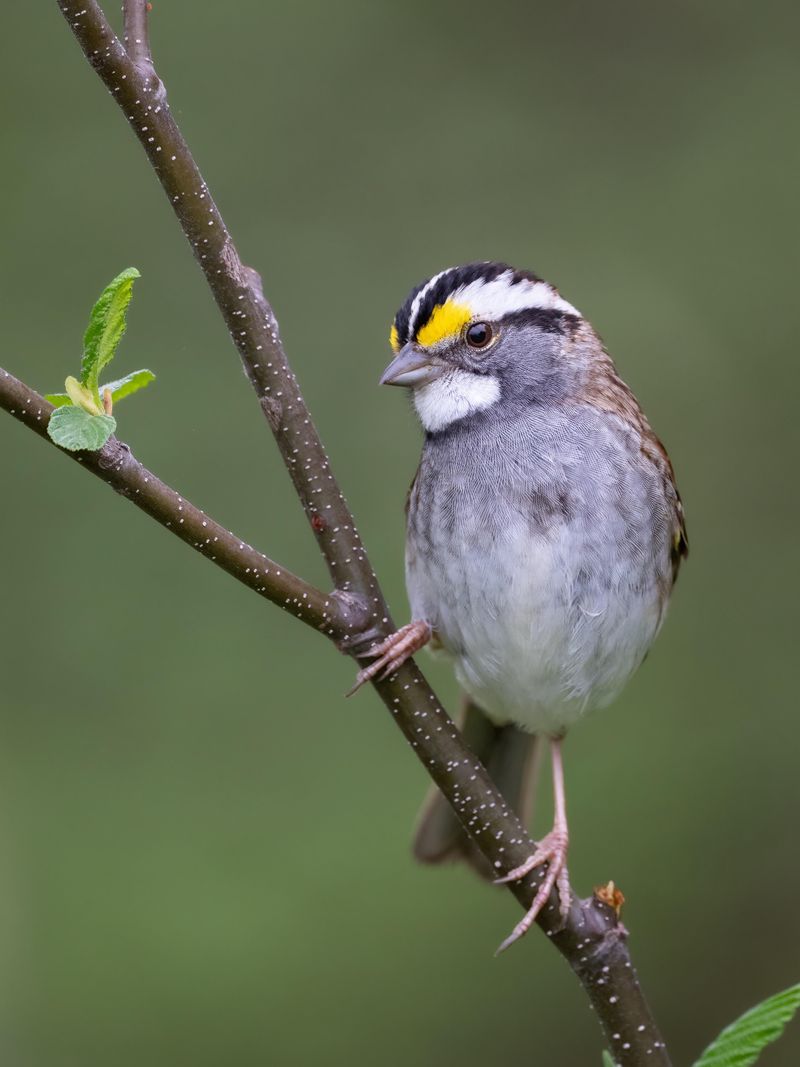
Far north of Pennsylvania, white-throated sparrows spend the nesting season in Canada and parts of the northern United States. Forest edges, shrubby clearings, and boreal habitat all suit them.
Summer insects and dense cover help them raise young there. Conditions that work well in July stop working in October.
By late summer that season winds down. Young birds have fledged and food patterns start shifting.
Shrinking daylight in northern latitudes signals departure time. Their bodies respond to that change directly.
That mechanism explains the September increase across Pennsylvania. Birds are leaving places where winter will soon make foraging difficult.
Shelter becomes less dependable up there too. Moving south is the practical response.
People sometimes assume a species is appearing for the first time when feeder numbers jump. White-throated sparrows have followed this route for a very long time.
Your Pennsylvania Garden Changes Every Week. Your Plan Should Too.
Gardening in Pennsylvania changes quickly throughout the season. Every Friday you’ll receive a simple weekly plan showing exactly what to plant, prune, fertilize, harvest, and protect so you never miss the right timing.
Pennsylvania sits directly in the path of that autumn shift. Nothing new about the pattern, only new to whoever noticed it.
Breeding ranges lie well north of where most Pennsylvanians see them. Striped heads and white throats in local yards mean northern landscapes are emptying in stages.
Picture a wave rolling down the map. Birds spread southward as conditions change, and Pennsylvania becomes an easy place to observe that movement.
3. Backyard Feeders Offer An Easy Stopover
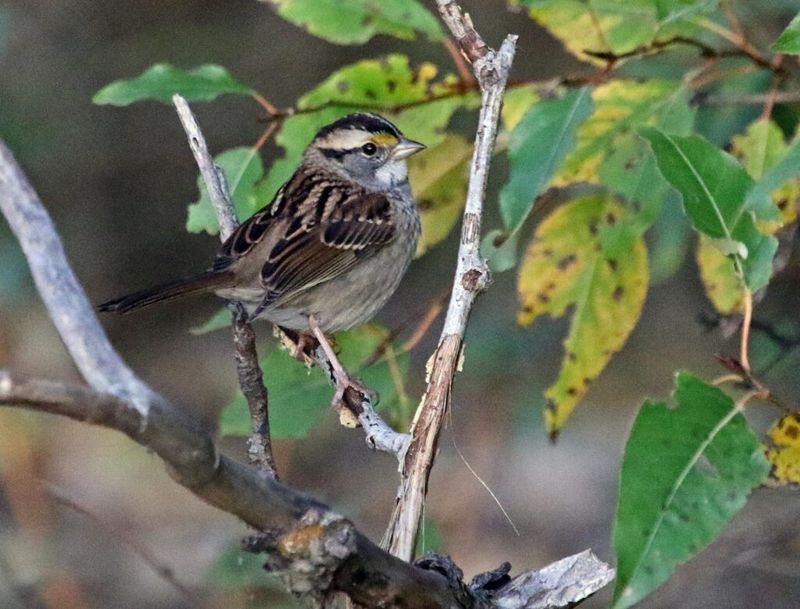
A feeder functions something like a roadside stop for migrating birds. After traveling overnight, sparrows look for places where food comes easily.
Many Pennsylvania yards provide exactly that. Convenience matters when you’ve flown a hundred miles in the dark.
This species feeds on the ground or very close to it. Tube feeders hold less appeal than the area underneath them.
They pick up fallen seed, scratch through leaves, and search for grains, berries, and insects. Ground-level habits shape where you’ll spot them.
That behavior makes September feeder areas genuinely useful during migration. Millet, sunflower chips scattered on the ground, brushy cover, and shallow water all help.
A yard offering those becomes a dependable refueling stop. Birds return to reliable locations.
Even a simple setup works. Leaving leaf litter under shrubs creates natural foraging space.
Placing seed near protective cover encourages shy sparrows to emerge more readily. Open lawn feels risky to them.
Busy migration mornings bring quick bursts of activity. One bird appears, then several more emerge from a hedge with soft chips.
Watch the ground rather than the feeder itself for better views. Field marks like the white throat and striped crown show clearly in calm morning light.
4. Cooler Nights Push Migration Into Gear
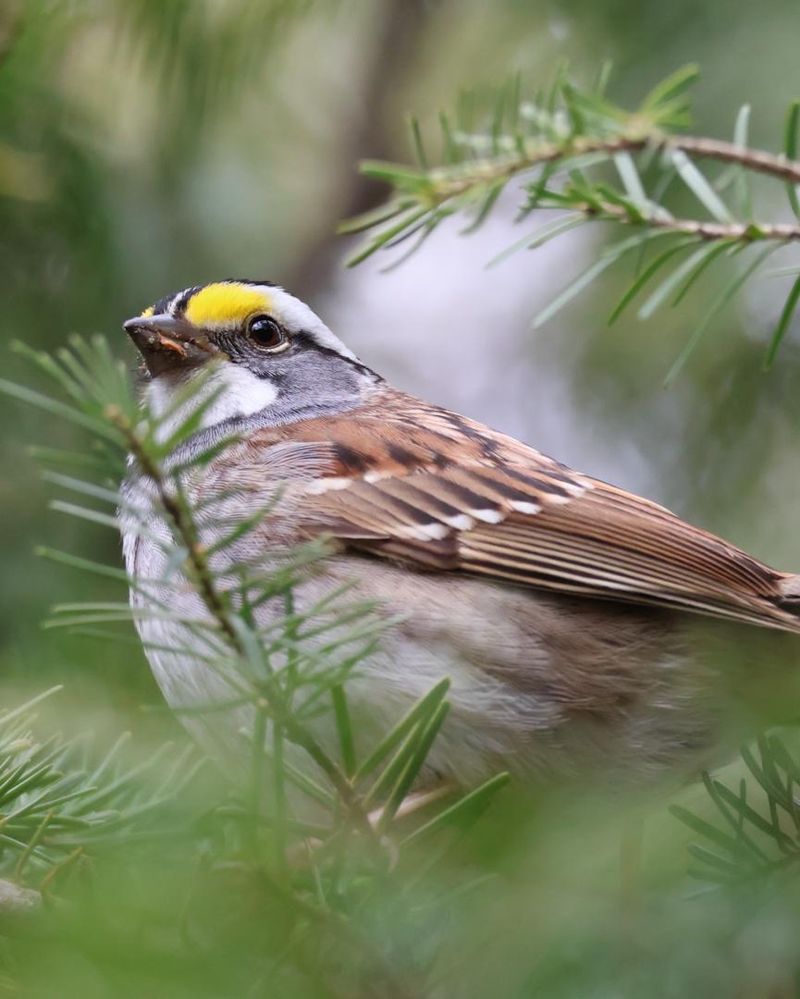
Some September changes register before sunrise. The air turns cooler, nights lengthen, and birds respond by increasing migration activity.
White-throated sparrows follow that pattern. Timing shifts noticeably as the month progresses.
Like many songbirds, they’re strongly guided by changing day length. Cooler weather aligns with signals already telling them to move.
Photoperiod does most of the work. Temperature reinforces rather than causes the change.
A single chilly night doesn’t create migration on its own. Falling temperatures, shortening days, food changes, and favorable winds all combine.
North winds particularly help southbound birds. Migration nights often follow a passing cold front.
For Pennsylvania observers, the result appears sudden. A yard with no sparrows one day hosts several the next morning.
Birds traveled overnight and dropped into nearby cover at first light. Nothing gradual about the arrival.
Watching weather makes September birding considerably more interesting. After a cool front or calm night, check shrubs and weedy edges early.
Newly arrived birds feed most actively then, since they’ve depleted reserves during the flight.
Seasonal light cues set the clock while autumn weather shapes the specific timing. Pennsylvania birders regularly connect their first strong sparrow pulse with cooler September nights.
5. Brushy Edges Attract Passing Flocks
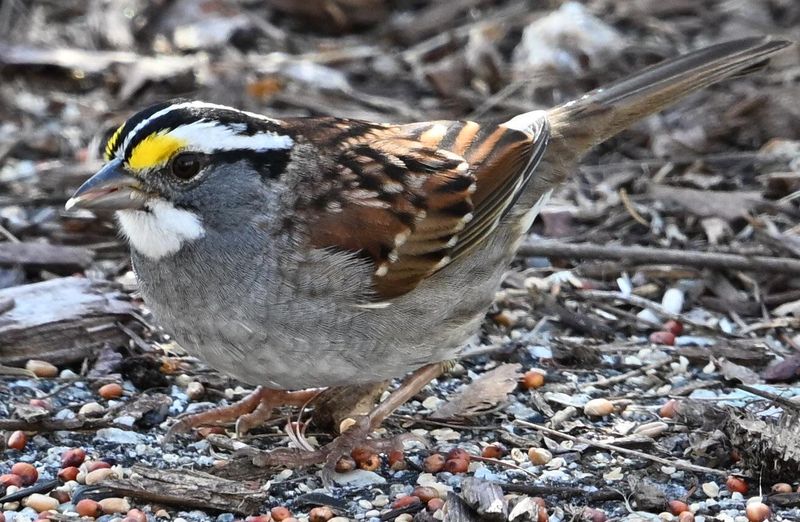
Not every bird wants open lawn. White-throated sparrows prefer places with cover, so brushy edges become the first spots migrating flocks settle.
Security matters more to them than visibility. That preference shapes where you’ll find them.
Thickets, woodland edges, shrubby tangles, and overgrown borders all suit them well. Those areas provide protection alongside foraging opportunities.
Seeds and insects both accumulate in leaf litter under shrubs. Two needs met in one location.
That explains why a manicured yard with only short grass misses them while a nearby overgrown lot fills with activity.
The birds stay low, hopping in and out of shade rather than perching in the open. Looking up rarely finds them.
Pennsylvania offers plenty of suitable stopover habitat in September. Suburban hedgerows, park margins, farm edges, and streamside shrubs all work as rest areas.
Southbound travel requires those stops. Habitat availability shapes migration success.
If you want to attract them, resist cleaning every corner thoroughly. A few native shrubs and some leaf litter make a real difference.
A less manicured border costs almost nothing to maintain.
Patience helps more than speed here. Stand quietly near brush, listen for soft calls, and watch for ground-level movement.
6. Some Will Stay Through The Winter
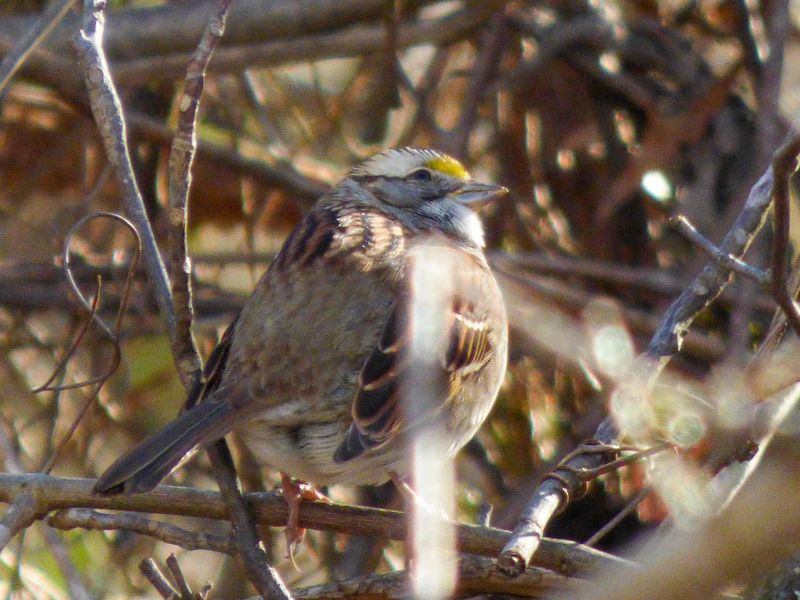
September visitors don’t all continue at the same pace. Many white-throated sparrows keep moving south while others remain in Pennsylvania.
Food and shelter reliability determines which birds settle. Individual decisions rather than a species-wide pattern.
That’s why the species stays familiar to birdwatchers long after migration peaks. Winter feeders host them regularly.
They often join mixed flocks with juncos and other sparrows, feeding near brushy cover.
Seeing them in January doesn’t mean migration failed. Part of the population uses Pennsylvania as a winter home.
Others travel farther into the Mid-Atlantic or Southeast. Both strategies work.
Local conditions shape how many remain. Mild weather, accessible seed, protective thickets, and consistent feeder activity all encourage birds to stay.
A yard offering all four becomes genuinely attractive for the season.
Winter care stays practical. Keep seed available, clear ground space when snow gets deep, and maintain nearby escape cover.
Fresh water during cold spells helps considerably, since open water gets scarce.
The seasonal continuity has some appeal. A sparrow noticed in September may not be the December bird, and the species remains part of the winter landscape either way.
7. Listen For Their Distinctive Whistled Song
Sometimes your ears find the bird before your eyes manage it. White-throated sparrows blend into shadows under shrubs effectively.
Their voices give them away though. Sound often confirms an identification that a quick glimpse couldn’t.
Many people know the species for its clear whistled song, remembered as Old Sam Peabody, Peabody, Peabody. Some hear it as Oh sweet Canada, Canada instead.
Either phrase captures the rhythm reasonably well. The whistled quality is distinctive.
During migration and winter you’ll more often hear shorter calls. Sharp chips coming from low cover are typical.
Full song appears occasionally in fall, particularly on mild mornings. Less frequent than spring but not rare.
That vocal identification helps in Pennsylvania yards where quick looks are difficult. A striped sparrow darting into leaves leaves you guessing otherwise.
Listening separates them from song sparrows and chipping sparrows. Different calls entirely.
Try stepping outside early before traffic noise builds. Stand near shrubs, pause a minute, and focus on repeated sounds near the ground.
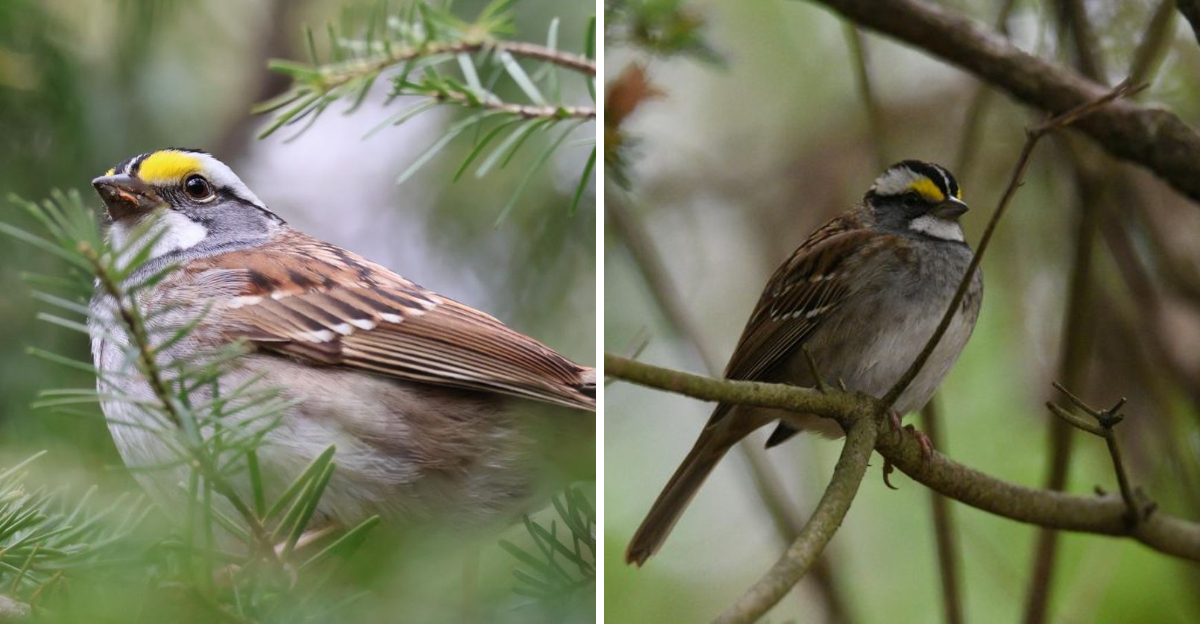
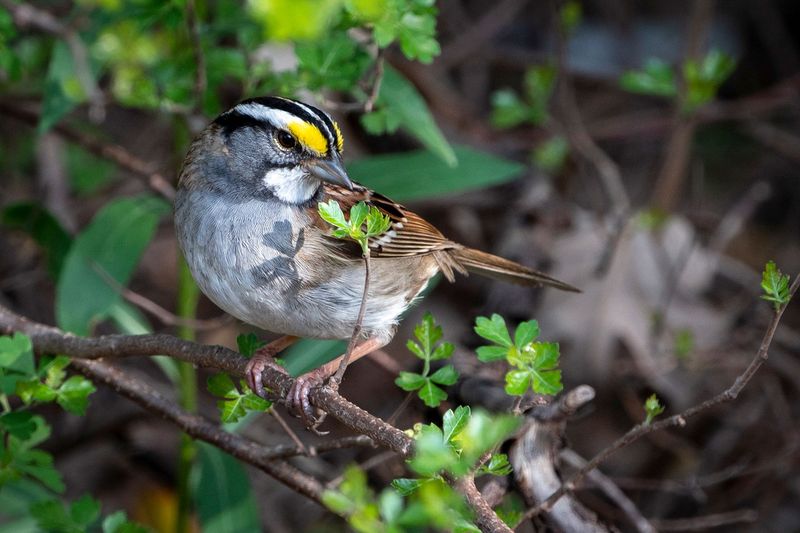
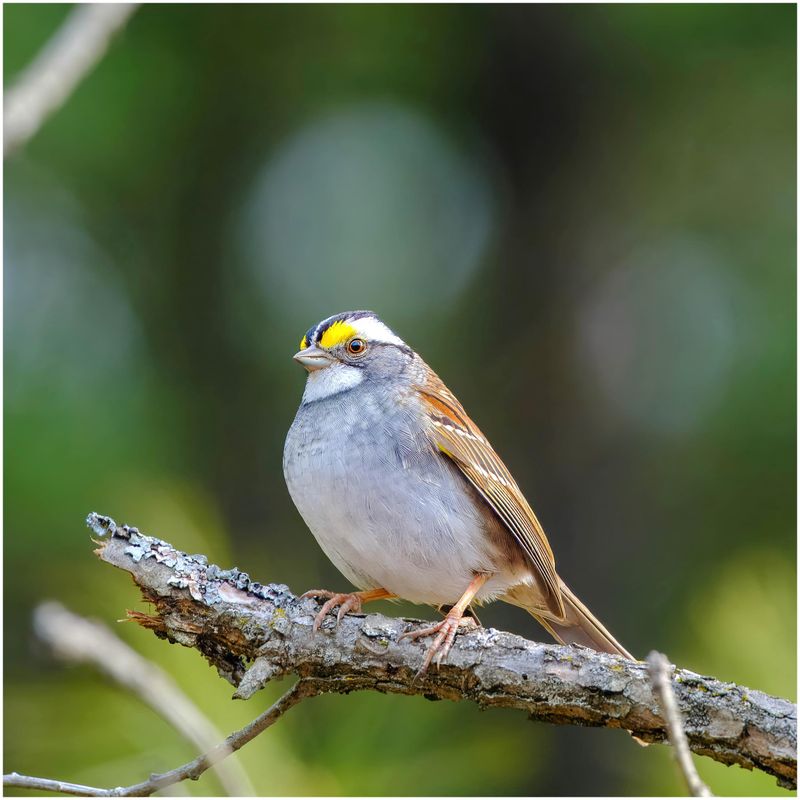
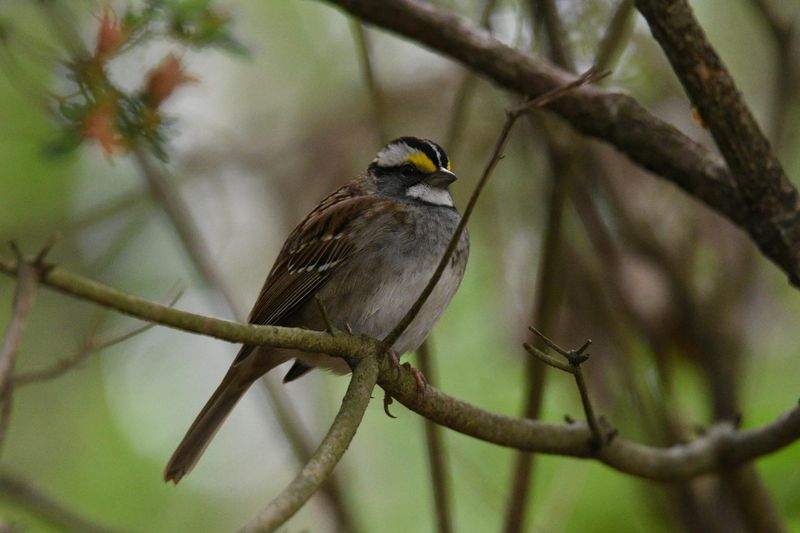
Field marks matter too. Look for the clean white throat, bold head stripes, and a small yellow spot in front of the eye.
Two color forms exist, with some birds showing tan stripes rather than bright white. Both are the same species.
8. How To Make Your Yard Worth Stopping For
A few adjustments turn a yard from adequate to genuinely attractive during migration. None require much effort.
Ground feeding matters most for this species. Scattering millet or sunflower chips on bare ground or a low platform suits them better than any hanging feeder.
Cracked corn works too and costs less than premium mixes. White proso millet is the seed they favor most.
Cover proximity determines whether shy birds actually use your feeding area. Seed placed ten feet from a shrub gets used more than seed in the middle of a lawn.
A brush pile in a back corner provides exactly the shelter they want. Stacked prunings work fine.
Leaf litter under shrubs is genuinely valuable rather than untidy. Sparrows scratch through it hunting insects and seeds.
Resisting the urge to rake every bed clears less habitat than most gardeners realize they’re removing.
Native shrubs producing fruit help extend the appeal. Viburnum, dogwood, and elderberry all contribute.
Water gets overlooked in fall planning. A shallow dish or ground-level birdbath serves ground feeders better than a pedestal.
Cats indoors makes more difference than any feature you could add. Ground-feeding birds are especially vulnerable.
Window collisions increase during migration too, so decals or screens on large panes prevent avoidable losses.