Native Pennsylvania Plants To Grow Instead Of English Ivy Along Fence Lines
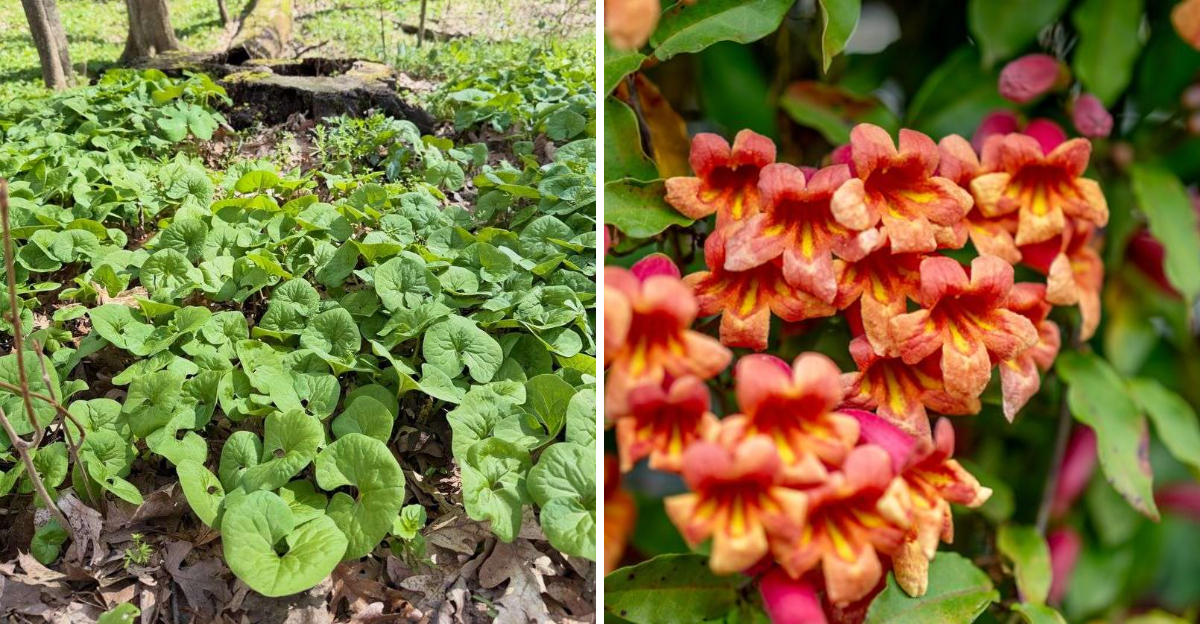
English ivy has covered Pennsylvania fence lines for decades, and it’s easy to understand why it became so popular.
It’s evergreen, it grows fast, it covers everything eventually, and for a long time it seemed like the obvious solution for any bare fence that needed dressing up.
But the problems with English ivy have become harder to ignore, and Pennsylvania gardeners are increasingly looking for something better.
English ivy is invasive. It escapes cultivated settings, spreads into natural areas, smothers native vegetation, and creates dense ground cover that disrupts local ecosystems in ways that are difficult to reverse.
It also damages the structures it climbs and provides very little value to native wildlife despite its year round presence.
The good news is that Pennsylvania has outstanding native alternatives that cover a fence beautifully, play by the rules ecologically, and actually contribute to the local ecosystem rather than undermining it.
These plants do everything English ivy promised without any of the consequences. Here’s what to grow instead.
1. Virginia Creeper
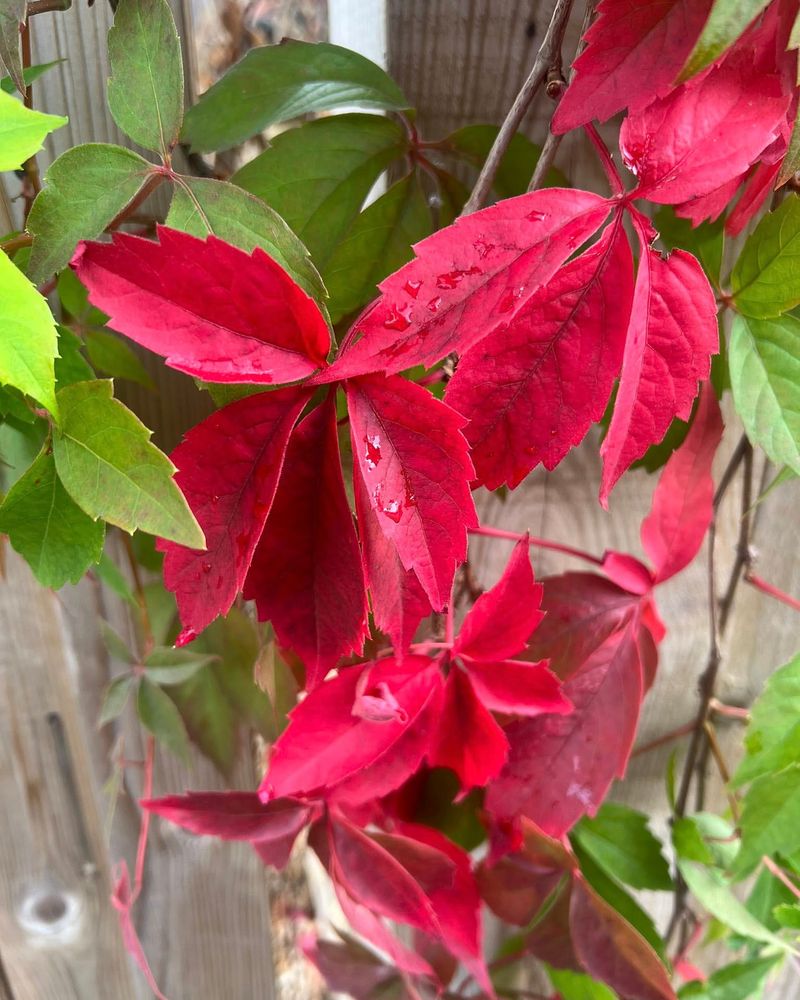
Few vines put on a fall color show quite like Virginia creeper. In summer, its deep green, five-leafed foliage creates a thick, lush wall of coverage along any fence.
Then, when autumn arrives, the whole plant blazes into brilliant shades of red and orange that honestly stop people in their tracks.
Virginia creeper is a true Pennsylvania native, meaning it evolved right here and knows exactly how to handle local conditions. It tolerates poor soil, drought, shade, and full sun, making it one of the most flexible vines you can plant.
Once established, it basically takes care of itself, which is great news for busy homeowners. Unlike English ivy, Virginia creeper actually supports local wildlife in meaningful ways.
Its small dark berries feed more than 35 species of birds, including thrushes, woodpeckers, and warblers. Pollinators also visit its tiny flowers during the warmer months.
Planting Virginia creeper along a fence is straightforward. Set young plants about 5 to 10 feet apart and give them a little water during the first season while their roots settle in.
After that first year, you can mostly step back and let the vine do its thing. It climbs using small adhesive pads, so it grips fences naturally without needing ties or extra support.
One thing to keep in mind is that Virginia creeper can spread enthusiastically. Trimming it back once or twice a year keeps it looking neat and prevents it from wandering into areas where you do not want it.
2. Coral Honeysuckle
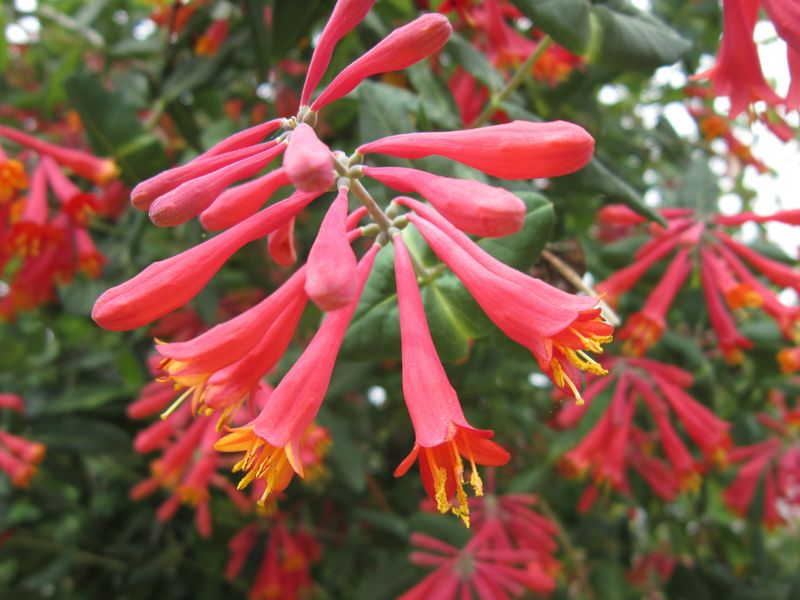
If you want a fence vine that puts on a genuine wildlife show, coral honeysuckle is the plant for you. This stunning native produces clusters of bright red and orange tubular flowers from spring all the way through fall, and hummingbirds absolutely cannot resist them.
Watching a ruby-throated hummingbird hover at a coral honeysuckle bloom is one of the best rewards a Pennsylvania gardener can experience.
Unlike the invasive Japanese honeysuckle, which has taken over roadsides and wild areas across the state, coral honeysuckle stays well-behaved and manageable.
Your Pennsylvania Garden Changes Every Week. Your Plan Should Too.
Gardening in Pennsylvania changes quickly throughout the season. Every Friday you’ll receive a simple weekly plan showing exactly what to plant, prune, fertilize, harvest, and protect so you never miss the right timing.
It twines gently around fence posts and rails without the aggressive spreading that makes its invasive cousin such a problem. You get all the beautiful coverage with none of the headaches.
Coral honeysuckle grows best in full sun to partial shade and prefers well-drained soil. It is drought-tolerant once established, though it appreciates a little extra water during very dry summers.
Planting it near a fence gives it the support it needs to climb and show off its blooms at their best.
Beyond hummingbirds, this plant also attracts native bees and butterflies. After the flowers fade, small red berries appear that birds like finches and thrushes eagerly snack on through the fall and winter months.
So even after the blooms are gone, the plant keeps working hard for local wildlife. Start with nursery-grown plants in spring for the best results.
Give each plant about 3 to 6 feet of fence space, and within a couple of seasons, you will have a thriving, gorgeous display.
3. Allegheny Spurge
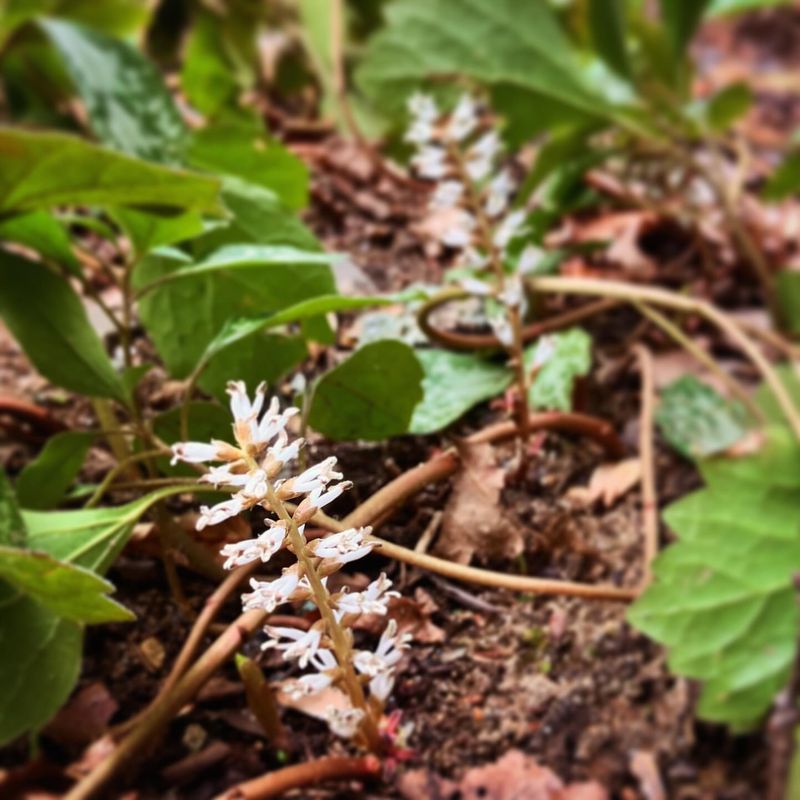
Allegheny spurge is one of those quiet, hardworking plants that does not get nearly enough attention. It grows low to the ground, spreading slowly into a dense, weed-smothering mat that looks polished and intentional without requiring much effort from you.
If you have a shady fence line where other plants struggle, this native evergreen ground cover might be exactly what you need.
Native to the Appalachian region, Allegheny spurge thrives in the same shaded, woodland-edge conditions found throughout much of Pennsylvania. It handles dry shade remarkably well, which is one of the hardest growing environments for most plants.
Its leathery, dark green leaves stay attractive through most of the year, even holding some color through mild winters.
In early spring, Allegheny spurge produces small spikes of white and pink flowers that are subtly beautiful up close.
They are not flashy, but they attract early pollinators like native bees that are just waking up and looking for food. That early season support makes a real difference for local bee populations.
Planting Allegheny spurge is easy. Space plants about 12 inches apart along the base of your fence, and water them regularly through the first growing season.
After that, they need very little care. A light top dressing of compost every spring helps them spread more quickly and keeps the foliage looking its best.
One great bonus is that deer tend to leave Allegheny spurge alone. In areas with heavy deer pressure, that kind of natural resistance is genuinely valuable and saves a lot of frustration.
4. Wild Ginger
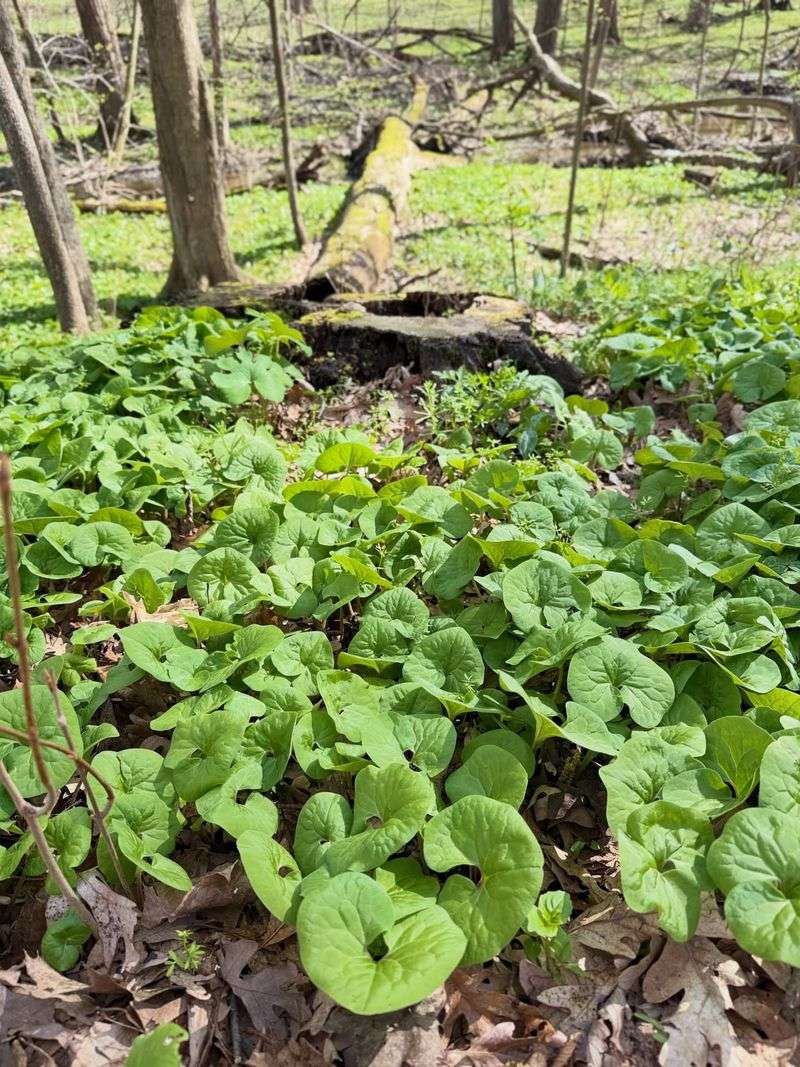
There is something almost tropical-looking about wild ginger, even though it is a completely native Pennsylvania woodland plant. Its large, heart-shaped leaves form a rich, dark green carpet that looks lush and full in even the deepest shade.
If you have a fence line that gets little to no direct sun, wild ginger might become your absolute favorite discovery.
Wild ginger spreads slowly by underground rhizomes, gradually filling in bare spots beneath fences and along shady borders. It does not race out of control the way English ivy does.
Instead, it expands at a steady, manageable pace, filling space without overwhelming neighboring plants. That measured growth makes it much easier to work with in a home garden setting.
In spring, wild ginger produces a small, unusual flower hidden right at soil level beneath its leaves. The flower is brownish-purple and shaped like a jug, which is fascinating to look for if you know where to search.
Certain flies and beetles pollinate it, which is another reminder of how well-connected native plants are to local ecosystems.
Planting wild ginger works best in moist, humus-rich soil with good shade coverage. Adding leaf mulch or compost at planting time mimics the forest floor conditions it naturally loves. Water it well through its first summer, and after that, it is remarkably self-sufficient.
Wild ginger also has a fun bonus feature. Crush a leaf gently between your fingers, and you will notice a mild, spicy scent similar to the ginger you use in cooking, though this plant is not related to culinary ginger at all.
5. Pennsylvania Sedge
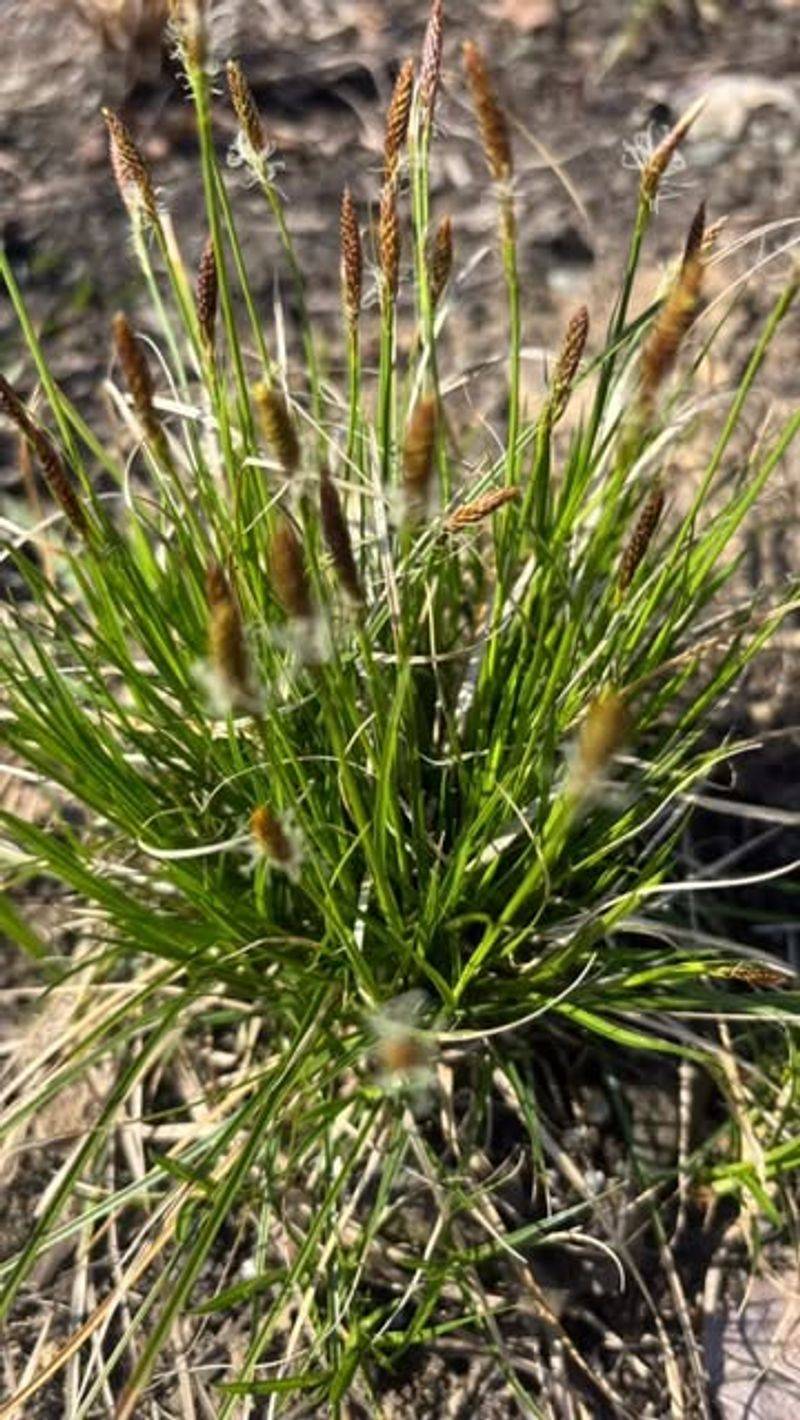
Pennsylvania sedge has a quiet elegance that most people do not expect from a grass-like plant. It forms soft, arching clumps of fine green blades that look completely natural and relaxed along a fence line.
Unlike turf grass, it stays low without mowing, which means you can plant it and largely forget about it once it settles in.
This native sedge is perfectly suited to Pennsylvania’s climate and soil conditions. It thrives in partial to full shade, making it ideal for fence lines that run along the north side of a house or under the canopy of large trees.
It also handles dry shade conditions better than most other low-growing plants, which is a genuinely rare quality.
One of the best things about Pennsylvania sedge is how little maintenance it demands. It does not need fertilizer, rarely needs watering after its first year, and never needs mowing unless you want to tidy it up in early spring.
For homeowners who want a low-maintenance, natural-looking border, it is hard to beat. Wildlife benefits are real too.
Pennsylvania sedge provides cover for ground-nesting insects and small mammals, and its seeds are eaten by sparrows and other small birds that forage along fence lines. Planting it creates a small but meaningful habitat corridor right in your own backyard.
Space plants about 12 to 18 inches apart for a natural, meadow-like look. They will gradually spread and fill in gaps over two to three seasons, creating a seamless, soft-textured edge that looks like it has always been there.
6. Foamflower
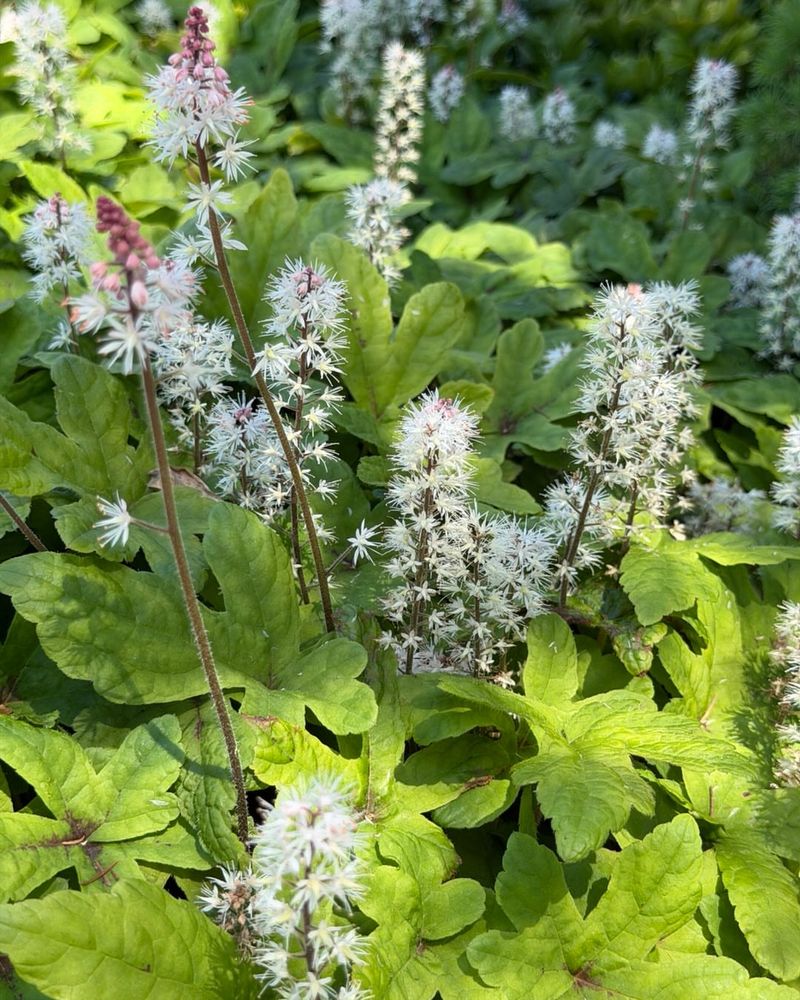
Walk past a patch of foamflower in full spring bloom and you will immediately understand how it got its name. The fluffy, white flower spikes rise above a low mat of scalloped leaves and genuinely look like little clouds of foam floating just above the ground.
It is one of the most charming native plants you can add to a shaded fence line, and it is surprisingly easy to grow.
Foamflower is native to eastern North American woodlands, including many parts of Pennsylvania.
It naturally grows along stream banks, forest edges, and shaded slopes, which means it is perfectly adapted to the moist, shaded conditions that often exist along fence lines near trees or buildings.
Give it some shade and decent moisture, and it will reward you generously. After its spring blooms fade, foamflower continues to look attractive through the rest of the growing season.
Its low-growing leaves, which are sometimes mottled with burgundy markings, form a tidy mat that suppresses weeds naturally.
Some varieties even hold their foliage through mild winters, giving you year-round ground coverage.
Foamflower spreads gently by surface runners, slowly filling in gaps without becoming aggressive or unmanageable.
It plays nicely with other shade-loving natives like wild ginger and Pennsylvania sedge, making it easy to mix into a layered, naturalistic planting along a fence.
Plant foamflower in spring or early fall in moist, well-drained soil enriched with compost. Water regularly through the first season, and after that, it needs very little extra attention to look its best year after year.
7. Crossvine
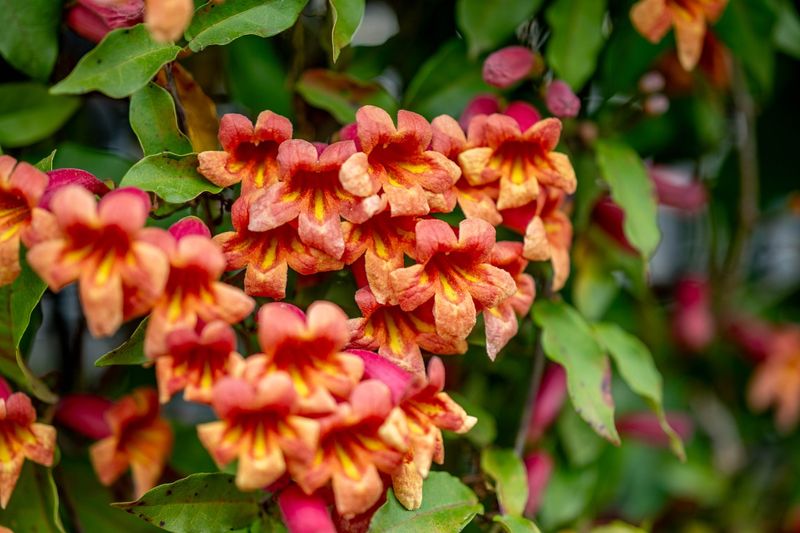
Crossvine is the fence climber that makes neighbors stop and ask what you are growing. Its large, trumpet-shaped flowers come in bold shades of orange, red, and yellow, and they appear in such abundance in spring that the whole fence can look like it is on fire in the best possible way.
If you want serious visual impact along a fence line, crossvine delivers it with confidence.
This native vine is a powerhouse when it comes to climbing. It uses small adhesive discs and tendrils to grip fences, walls, and trellises tightly, climbing aggressively without needing any help from you.
In good conditions, crossvine can reach 30 to 50 feet in length, so it is best suited for longer fence runs where you actually want full, dense coverage.
Crossvine is semi-evergreen in Pennsylvania, meaning it holds onto its glossy, dark green leaves through much of the fall and sometimes into early winter before dropping them. New foliage returns quickly in spring, just ahead of the spectacular bloom display.
That extended growing season gives you more months of attractive coverage compared to many other native vines.
Hummingbirds and native bees visit the flowers enthusiastically, making crossvine a genuine wildlife magnet during its bloom period. Planting it along a sunny fence creates a feeding station that local pollinators will return to season after season.
For best results, plant crossvine in full sun to light shade in well-drained soil. Water it through its first growing season, then step back and let this bold, beautiful vine take over the fence on its own terms.