Why Some Michigan Native Shrubs Look Messy In July But Are Quietly Blocking Weeds
A native shrub that looks slightly wild and unkempt through midsummer invites editing, and Michigan gardeners who act on that impulse consistently are unknowingly removing the most effective weed suppression happening in their beds.
The sprawling, messy growth of July serves a clear purpose. It casts dense shade on bare soil, blocking the light weed seeds need to sprout, and creates a ground-level microclimate that prevents unwanted plants from taking over.
The beds that stay cleanest through late summer in Michigan are often the ones that looked least controlled in July, tended by gardeners who learned to read untidy growth as productive rather than problematic.
1. Dense July Growth Shades The Soil
Shade is one of the most underrated weed fighters in any garden, and native shrubs deliver it naturally every summer.
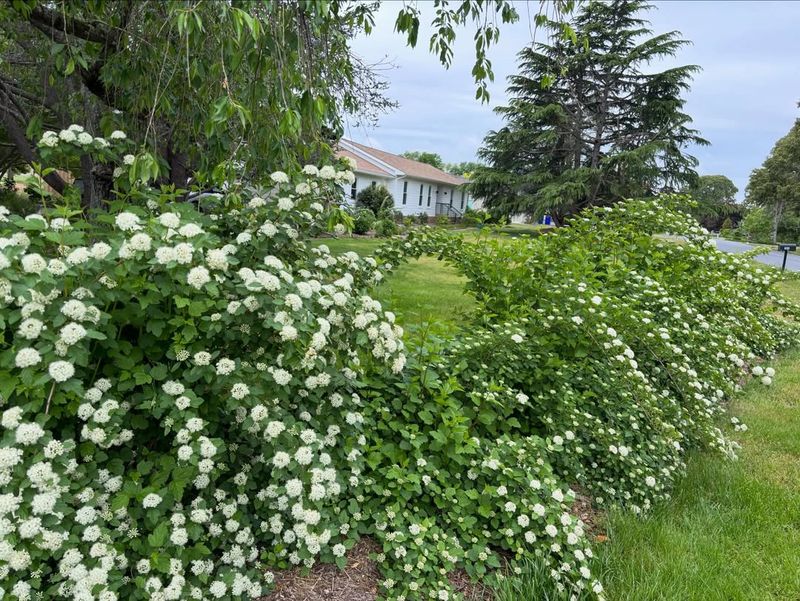
By July, many Michigan native shrubs have pushed out a full canopy of leaves that stretches wide and low, covering the ground below with cooling shadow.
Most weed seedlings are sun lovers, meaning they need bright, direct light to sprout and grow strong. When that light gets blocked, a lot of those seedlings simply never make it.
Picture a shrub like buttonbush or ninebark in mid-summer. The foliage is thick, layered, and overlapping.
Underneath, the soil stays noticeably cooler and darker than the surrounding open ground. That difference in light levels creates a real barrier for opportunistic weeds trying to establish themselves in your beds.
Gardeners sometimes feel the urge to thin out a shrub that looks overgrown in July, but pulling back that canopy actually opens up space for weeds to move in fast. The dense growth is not a sign of neglect.
It is the shrub doing exactly what it evolved to do in Michigan summers. Keeping that full canopy intact through the heat of the season means less hand-pulling and fewer surprise weeds popping up at the base.
Over a few growing seasons, a well-placed native shrub can dramatically reduce the amount of weeding needed in that corner of the yard, all without any extra effort on your part.
2. Suckers Fill Bare Gaps Around The Shrub
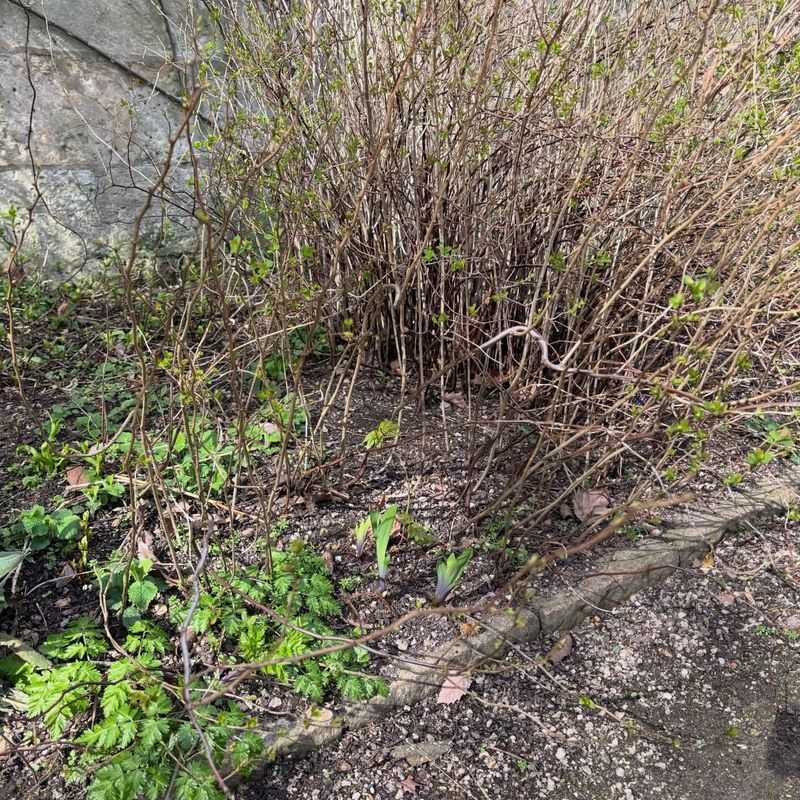
Bare soil is basically an open invitation for weeds. Any patch of uncovered ground in a garden bed will fill with something, and it usually fills fast.
Native shrubs that spread through suckers have a clever built-in solution for this problem. Instead of leaving gaps around their base, they send up new shoots from underground roots, slowly filling those open patches themselves.
Gray dogwood is one of the best Michigan examples of this habit. Over the course of a few seasons, a single plant can expand outward through a network of rhizomes, producing a cluster of stems that gradually covers more and more ground.
Each new sucker that emerges is one less bare spot where weed seeds can land and take hold. The colony essentially outcompetes weeds by claiming the space first.
For gardeners working with slopes, back corners, or naturalized edges, this spreading habit is genuinely useful. You are not just getting a single shrub.
Your Michigan Garden Changes Every Week. Your Plan Should Too.
Gardening in Michigan changes quickly throughout the season. Every Friday you’ll receive a simple weekly plan showing exactly what to plant, prune, fertilize, harvest, and protect so you never miss the right timing.
You are getting a ground-covering system that builds on itself over time. The trick is choosing the right location, somewhere with enough room for the colony to expand without crowding other plants you want to keep.
Once gray dogwood gets going in a suitable spot, it fills gaps steadily and dependably, reducing the need for mulch, ground covers, or constant weeding.
That expanding network of stems and roots is one of the reasons native shrubs like this one earn their place in low-maintenance Michigan landscapes.
3. A Natural Colony Can Work Like A Living Barrier
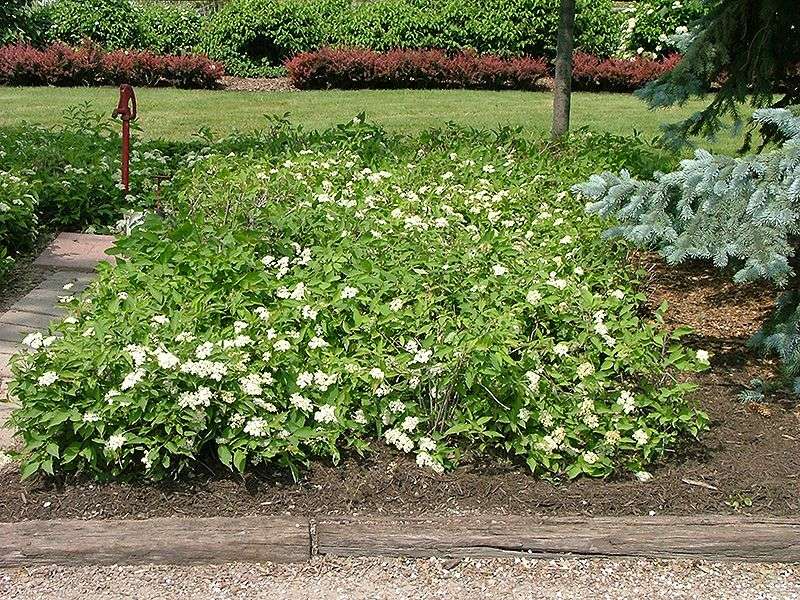
Some plants are solo performers. Others work best as a team, and colony-forming native shrubs fall firmly into that second category.
When a spreading shrub builds up a dense patch over several seasons, it starts to function less like an individual plant and more like a living wall.
That wall competes aggressively for light, moisture, and root space, making it genuinely hard for weeds to move in.
Along slopes and natural borders in Michigan gardens, this effect can be especially powerful. Slopes are notoriously difficult to weed because they are awkward to work on and prone to erosion.
A native shrub colony solves both problems at once. The roots hold the soil in place while the dense canopy above shades out most of the competition.
Back corners and wildlife-friendly edges benefit from the same dynamic, where the colony fills space that would otherwise require regular maintenance to keep clear.
The key thing to understand is that this barrier effect builds gradually. In the first year, a young shrub does not look like much.
By year three or four, the colony starts to feel substantial. By year five or six, it can hold a section of the garden almost entirely on its own.
Patience is the main ingredient here. Gardeners who give colony-forming natives enough time and the right spot often find that those areas of the yard become the lowest-maintenance zones they have.
The shrubs are quietly doing the hard work, season after season, without any extra help needed.
4. Gray Dogwood Is A Strong Michigan Example
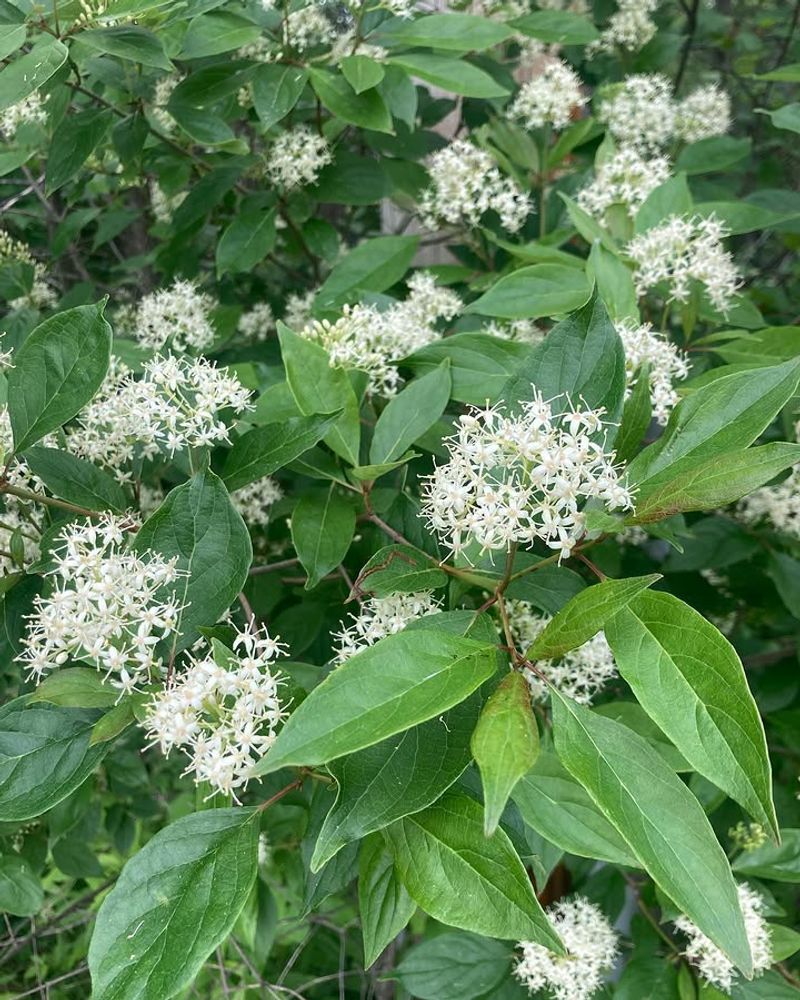
Not every native shrub earns a reputation for being tough, adaptable, and genuinely useful in the garden, but gray dogwood checks all those boxes with ease.
Native to Michigan and much of the Midwest, this shrub has a loose, informal look in July that might not win any awards in a formal landscape.
However, in the right setting, it is one of the hardest-working plants you can put in the ground.
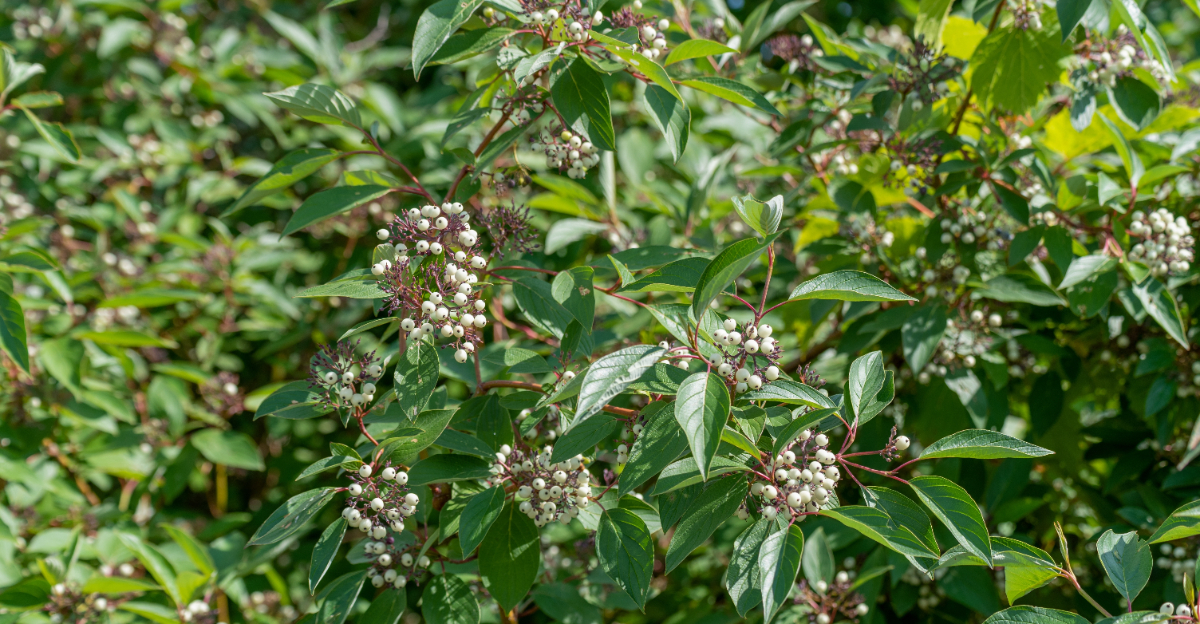
Gray dogwood spreads through rhizomes and suckers, building a colony that fills open ground and reduces weed pressure over time.
It establishes relatively quickly compared to some slower-growing natives, which means you start seeing results within a couple of seasons rather than waiting years for impact.
The dense cluster of stems it produces works well as a screen or informal hedge, blocking views and creating privacy without needing annual shearing to stay functional.
Beyond weed suppression, gray dogwood brings real ecological value to Michigan yards. It produces white flower clusters in late spring that attract pollinators, followed by white berries that many bird species actively seek out in late summer and fall.
The layered, multi-stem structure also provides excellent shelter for nesting birds and small wildlife. On slopes and embankments, the spreading root system helps anchor soil and reduce erosion during heavy rain events.
For gardeners looking for a native shrub that earns its keep across multiple seasons, gray dogwood delivers consistent value in a package that looks wild but works hard every single year.
5. Red Osier Dogwood Can Fill Moist Problem Spots
Every garden has that one spot nobody wants to deal with. Maybe it stays soggy after rain, or it sits along a low edge where water tends to collect.
Conventional plants struggle in those conditions, and weeds absolutely thrive there. Red osier dogwood was practically made for exactly this kind of situation.
Native across Michigan, red osier dogwood handles average moisture soils and genuinely wet areas with ease.
It spreads through a suckering habit similar to gray dogwood, sending up new stems from underground roots and gradually building a colony that covers open ground.
In moist garden edges, rain garden borders, and low-lying areas, that spreading habit is incredibly useful because it fills the space before weeds can get established.
The result is a naturalized patch that manages itself far better than bare mulch or struggling ornamentals ever could.
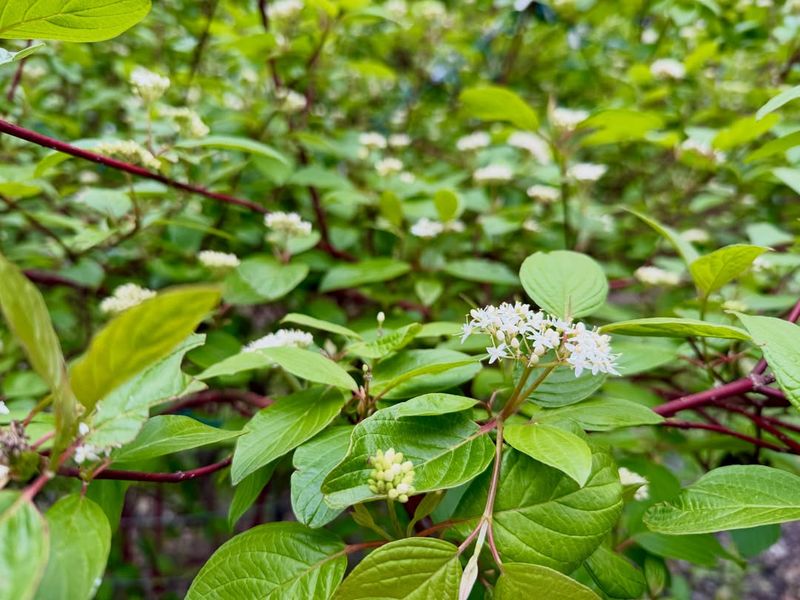
Red osier dogwood is probably best known for its vivid red stems, which light up the winter landscape when everything else looks dull and gray. In summer, the green foliage is full and layered, casting shade on the soil below and adding to the weed-suppressing effect.
White flower clusters appear in late spring, and the berries that follow attract birds and other wildlife.
For gardeners dealing with wet problem spots along fences, property edges, or drainage areas, red osier dogwood offers a solution that improves with age.
The longer it grows, the more ground it covers, and the less maintenance that difficult corner of the yard actually needs over time.
6. Leaf Drop And Mulch Strengthen The Weed Blocking Effect
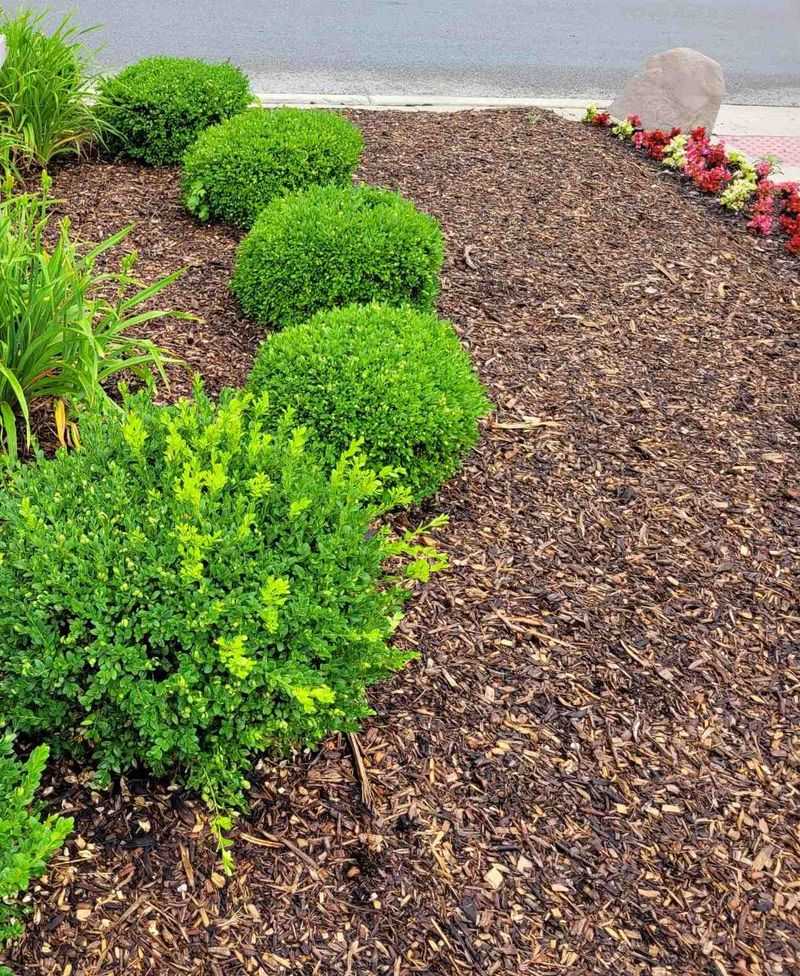
Native shrubs do not work alone. When you pair them with a good layer of mulch at the base, the weed-suppressing effect gets noticeably stronger.
Mulch does several things at once: it keeps the soil cooler during summer heat, holds in moisture so you water less often, and creates a physical barrier that makes it much harder for weed seeds to reach the soil surface and germinate.
What makes the combination especially effective is that the shrub canopy adds another layer of protection above the mulch.
During the growing season, the spreading foliage shades the mulched ground below, slowing the breakdown of the mulch and keeping conditions less favorable for weeds.
Some native shrubs also drop leaves throughout the season, which gradually add to the organic layer at the base and continue building soil health over time.
Applying two to three inches of wood chip or shredded bark mulch around the base of a native shrub in spring sets up a strong defense for the entire growing season.
Keep the mulch a few inches away from the main stems to avoid moisture buildup against the bark.
As the shrub matures and the canopy widens, the area that benefits from this layered shade-plus-mulch effect grows larger too. Over several seasons, that combination creates a zone around the shrub that is genuinely difficult for weeds to penetrate.
It is one of the simplest and most effective low-maintenance strategies available to Michigan gardeners working with native plants.
7. Messy Does Not Always Mean Neglected
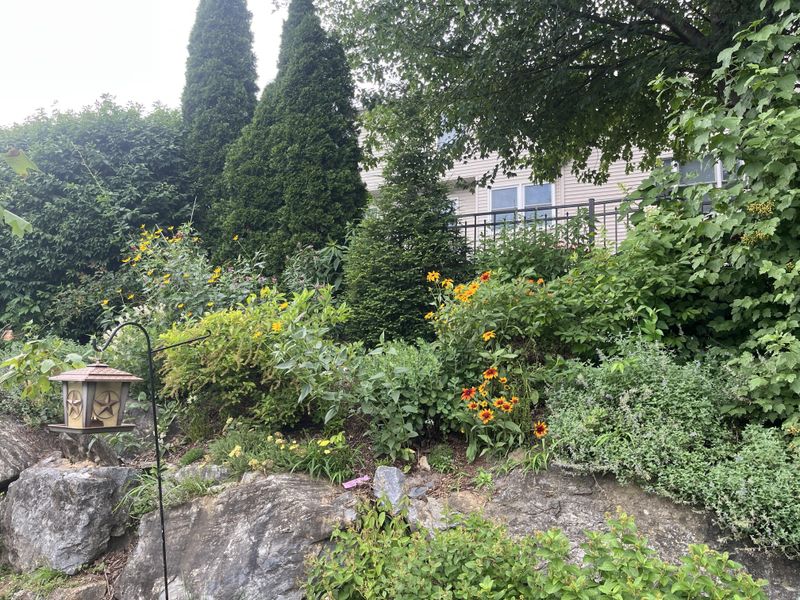
There is a moment in mid-July when a native shrub can look almost embarrassingly untidy. Stems arch outward at odd angles, new suckers pop up at the edges, and the overall shape has none of the crisp formality of a clipped boxwood or a trimmed yew.
For gardeners used to tidy ornamentals, that look can feel uncomfortable. The instinct to grab the pruners and clean things up is completely understandable.
Holding back on that instinct, though, is often the smarter move. Those arching stems and layered branches are not signs that something went wrong.
They are the natural growth form of a shrub doing exactly what it evolved to do. The uneven edges and spreading suckers cover more soil, create more shade, and leave fewer gaps for weeds to fill.
The informal shape also provides better structure for birds looking for nesting spots and wildlife seeking shelter in the heat of summer.
Thinking of a native shrub as a working plant rather than a decorative one makes the July messiness much easier to accept.
Formal gardens have their place, but naturalistic borders and wildlife-friendly edges thrive on exactly this kind of layered, relaxed growth.
Gardeners who lean into the wild look of a native shrub often find that their maintenance needs drop significantly. Less pruning, less weeding, and fewer inputs across the board.
The shrub looks after itself and the soil around it, quietly doing useful work even when it looks like it is just doing whatever it wants.
8. The Right Site Makes The Difference
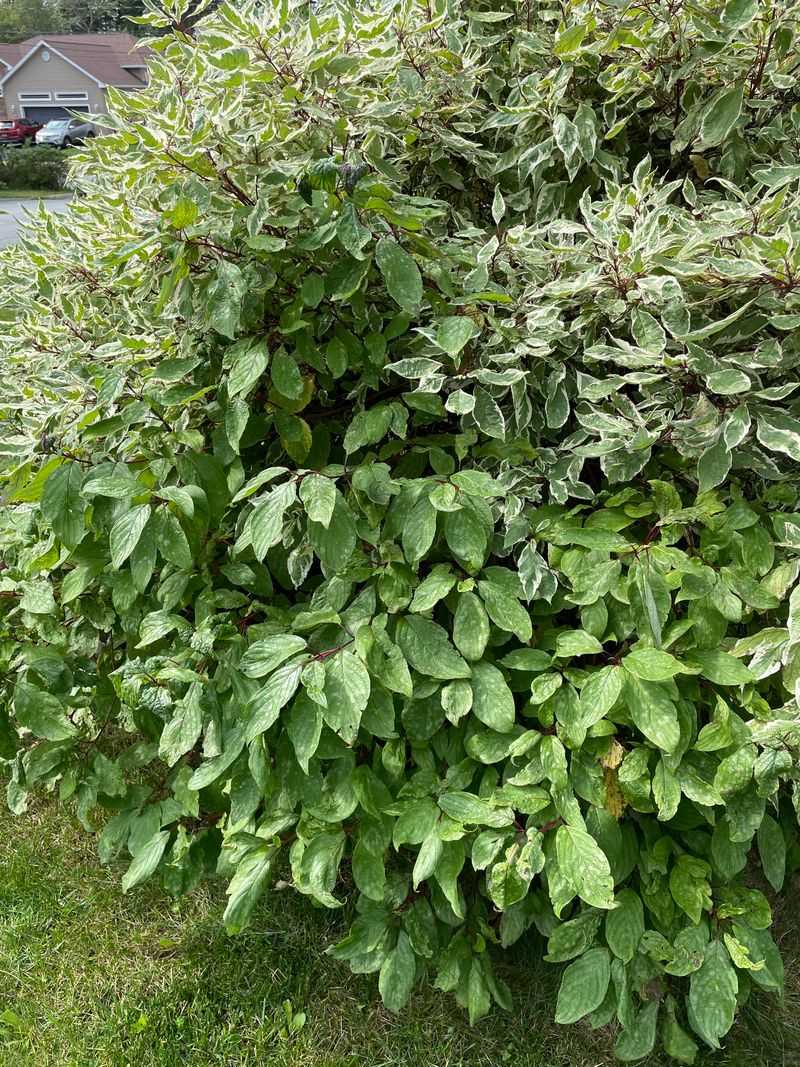
Colony-forming native shrubs are genuinely impressive plants, but they work best when you put them in a spot that suits their habits.
Planting a spreading shrub in a small, tidy formal bed almost guarantees frustration, because the suckers will constantly push past the edges and the informal shape will clash with everything around it.
The shrub is not doing anything wrong. It is simply in the wrong place. Gray dogwood and red osier dogwood both shine in situations where spreading is an asset rather than a problem.
Slopes that are hard to mow or maintain are ideal, since the spreading roots hold soil and the canopy covers ground without needing regular attention.
Natural screens along property lines, rain garden edges, moist low borders, and large informal beds all give these shrubs room to do what they do best. In those settings, the expanding colony becomes a feature rather than a headache.
Before planting, spend a few minutes thinking about how much space the shrub can realistically have over the next five to ten years.
Both gray dogwood and red osier dogwood can spread several feet beyond their original planting spot given enough time.
That expansion is the whole point in the right location, but it needs to be accounted for upfront.
When the site matches the shrub’s natural tendencies, the result is a low-maintenance, weed-suppressing, wildlife-supporting planting that improves with every passing season and rarely asks for much in return.