Why Texas Poinsettias Drop Leaves Right After Christmas
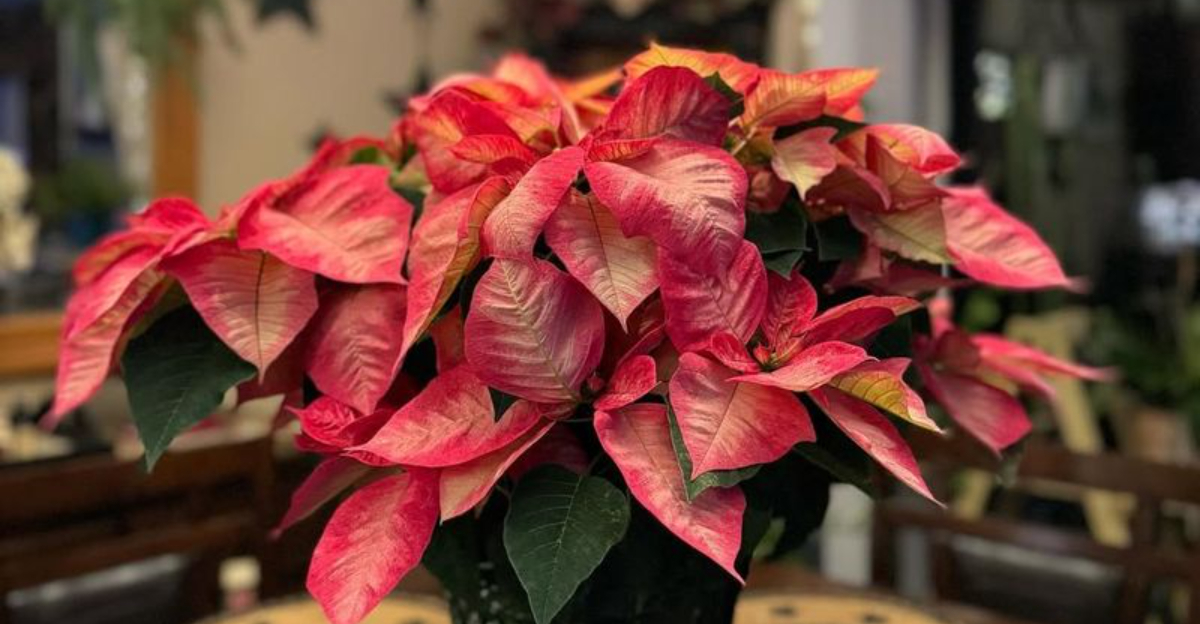
Poinsettias steal the spotlight in Texas homes during the holidays, but once Christmas passes, those bright plants can start to look rough around the edges.
Leaves drop without warning, stems thin out, and the plant that felt full of life just days ago suddenly seems on the ropes.
It can feel like holiday cheer packed up and left overnight.
This quick change often comes down to stress.
Poinsettias react fast to shifts in light, temperature, and moisture.
In Texas homes, warm days, cool nights, and indoor heating create a push and pull that throws these plants off balance.
Add in a change of location or a missed watering, and leaf drop becomes almost unavoidable.
The good news is that this reaction is common and not a sign of failure.
Poinsettias are sensitive by nature, and the holiday season puts them through a lot in a short time.
Understanding why they shed leaves helps take the mystery out of the problem and makes it easier to keep them healthy after the decorations come down.
With steady care, these plants can bounce back and keep growing well beyond the holidays.
1. Temperature Shock From Texas Weather Swings
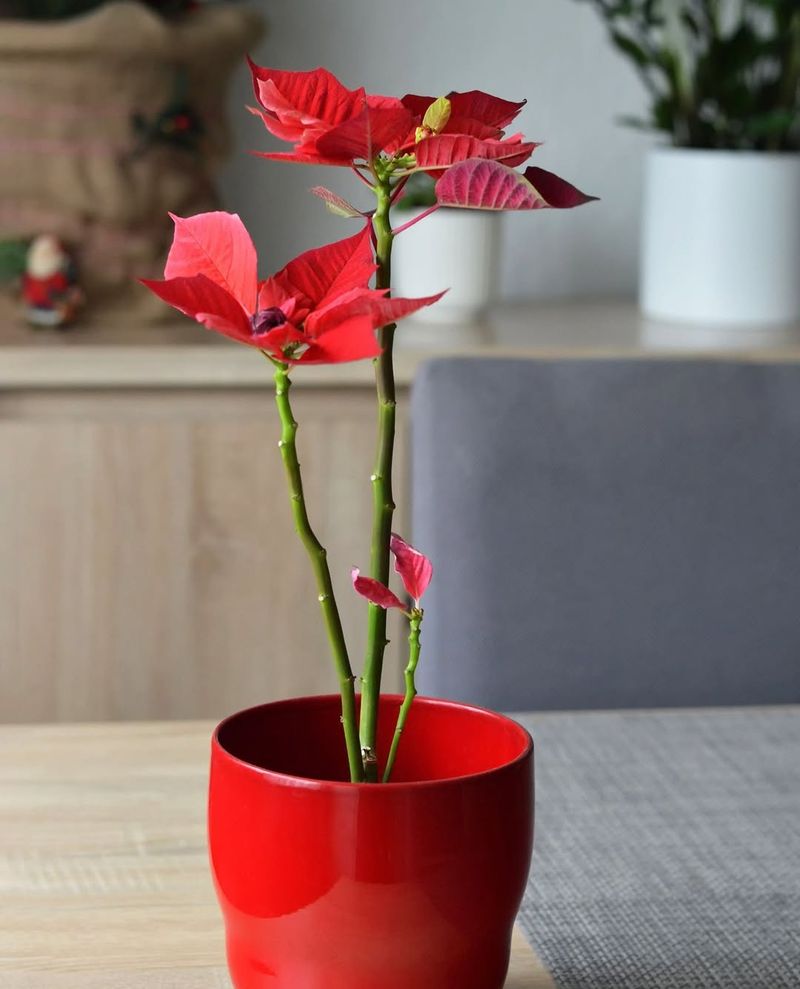
Texas weather during winter can be wildly unpredictable, and poinsettias absolutely hate sudden temperature changes.
Your plant might experience a comfortable 70-degree room one day, then get blasted with cold air from an open door or drafty window the next.
Poinsettias originally come from Mexico, where they grow in consistently warm conditions.
They prefer temperatures between 65 and 75 degrees Fahrenheit during the day.
When temperatures drop below 50 degrees, even for a short time, the plant goes into shock mode.
Many Texas homeowners place their poinsettias near windows or doorways where they look festive and welcoming.
Unfortunately, these spots often have the biggest temperature fluctuations.
Cold drafts sneak in through cracks, and the plant’s leaves start falling within days.
The stress from temperature shock causes the plant to conserve energy by shedding leaves.
It’s basically the plant’s survival mechanism kicking in.
Moving your poinsettia away from exterior doors, windows, and air conditioning vents can make a huge difference.
Room temperature stability matters more than you might think.
Even placing your plant near a fireplace that gets used occasionally can cause problems.
The alternating heat and cold confuses the plant.
If you transported your poinsettia home from the store without proper protection during cold Texas evenings, that initial exposure might be causing delayed leaf drop now.
Always wrap your plant in a sleeve or bag when moving it outdoors, even for just a few minutes.
Protecting your poinsettia from temperature extremes helps it keep its beautiful foliage much longer throughout the winter months in Texas.
2. Overwatering After The Holiday Rush
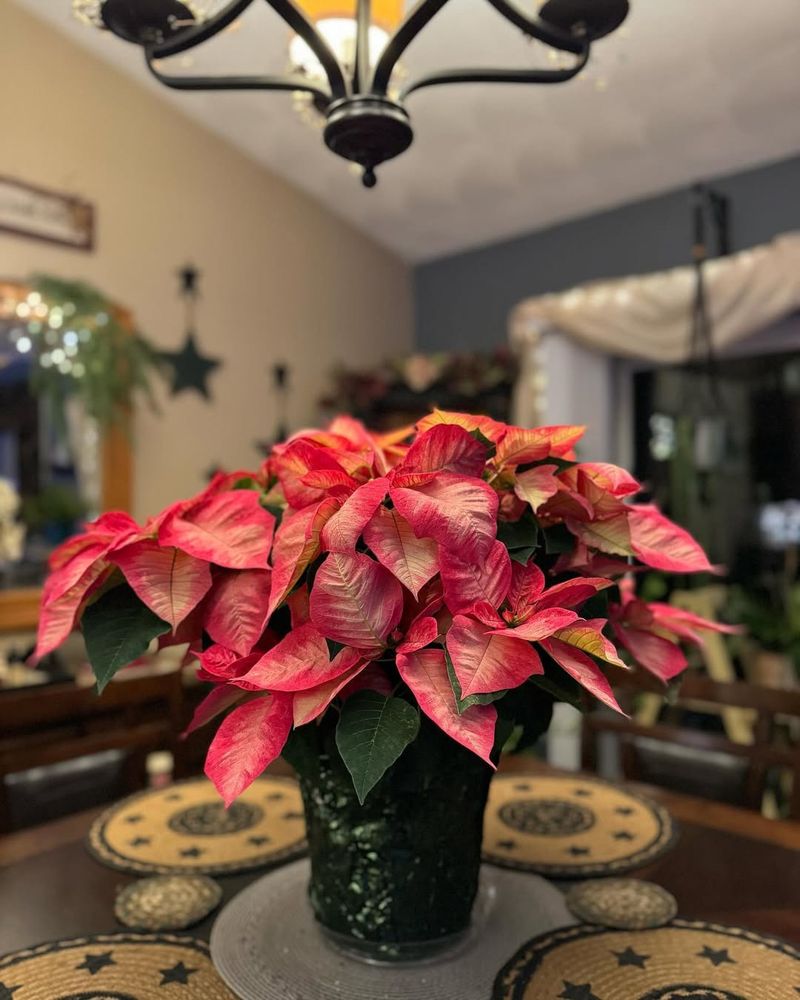
Watering seems simple enough, but it’s actually the number one reason poinsettias start losing leaves after Christmas.
People get busy during the holidays and either forget to water or overcompensate by watering too much.
Poinsettias need moist soil, but they definitely don’t want to sit in water.
When roots stay too wet for too long, they can’t breathe properly.
This leads to root rot, which then causes leaves to turn yellow and drop off rapidly.
Many folks receive poinsettias as gifts wrapped in decorative foil that traps water in the bottom of the pot.
That pretty metallic wrapping actually creates a mini swimming pool for your plant’s roots.
Remove the foil or at least punch drainage holes in it.
Check the soil before watering by sticking your finger about an inch deep into the potting mix.
If it feels damp, wait another day or two.
The soil should feel slightly dry to the touch before you add more water.
Texas homes often have heating running after Christmas, which can dry out the air but not necessarily the soil.
This tricks people into thinking their plant needs more water than it actually does.
The leaves might look a bit droopy from dry air, not from lack of water.
When you do water, do it thoroughly until water runs out the drainage holes, then empty the saucer underneath.
Never let your poinsettia sit in standing water.
Getting the watering schedule right takes practice, but it’s worth the effort to keep those colorful bracts and green leaves attached to the plant throughout January and beyond.
3. Not Enough Light After Decorations Come Down
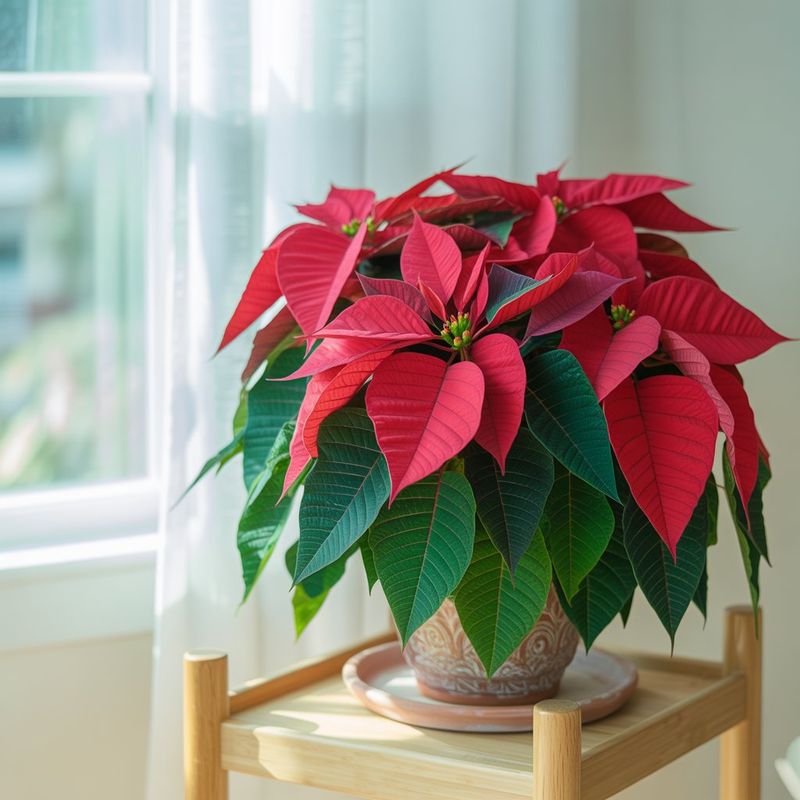
Poinsettias are light-loving plants that need plenty of bright, indirect sunlight to stay healthy.
During the holiday season, they often sit in prime spots where they get good light.
But once decorations come down, they sometimes get moved to less ideal locations.
Your plant needs at least six hours of bright, indirect light each day to maintain its leaves.
Without enough light, it can’t photosynthesize properly.
This means it can’t make the food it needs to support all those leaves.
Placing your poinsettia in a dim hallway or on a shelf far from windows will cause problems quickly.
The plant starts dropping leaves because it simply can’t sustain them without adequate light.
It’s not being dramatic; it’s just trying to survive with limited resources.
South-facing windows in Texas homes provide excellent light for poinsettias during winter months.
East or west-facing windows work well too.
Just make sure the plant isn’t touching cold window glass on chilly nights.
Some people worry about direct sunlight burning their poinsettia, but winter sun in Texas is usually gentle enough.
A sheer curtain can filter intense afternoon rays if needed.
The key is finding that sweet spot where your plant gets bright light without getting scorched.
If you notice your poinsettia’s leaves turning pale or yellowish before dropping, insufficient light might be the culprit.
The plant literally can’t maintain its color without proper light exposure.
Moving it to a brighter location can stop the leaf drop within a week or two, and new growth will eventually appear if you’ve caught the problem early enough and corrected it properly.
4. Dry Air From Heating Systems
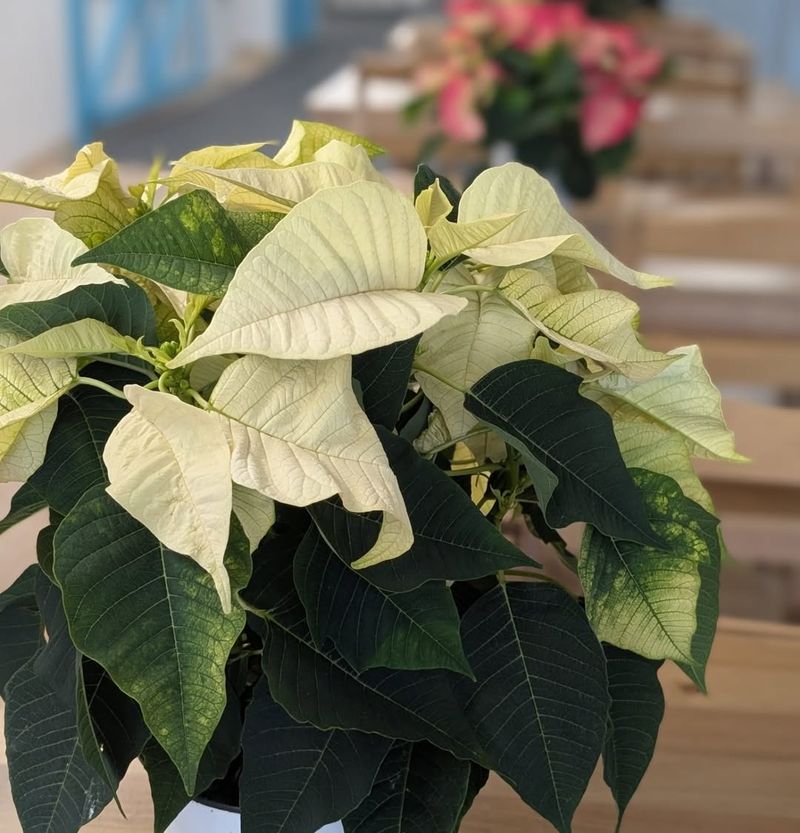
Central heating keeps Texas homes comfortable during winter cold snaps, but it also sucks moisture right out of the air.
Poinsettias, being tropical plants, really struggle when humidity drops too low.
They’re used to the humid conditions of their native Mexican habitat.
When indoor air becomes too dry, poinsettia leaves lose moisture faster than the roots can replace it.
The edges of leaves turn brown and crispy, then the whole leaf drops off.
You might notice this happening more on the side of the plant facing the heater vent.
Humidity levels in heated Texas homes often drop below 30 percent during winter.
Poinsettias prefer humidity around 50 to 60 percent.
That’s a significant difference that stresses the plant considerably.
You can increase humidity around your poinsettia in several ways.
Grouping it with other houseplants creates a micro-climate where plants release moisture through their leaves.
Setting the pot on a tray filled with pebbles and water works too, as long as the pot sits on the pebbles above the water line.
Misting the leaves sounds helpful, but it’s actually not the best solution.
The moisture evaporates too quickly to make much difference, and wet leaves can develop spots or fungal issues.
A small humidifier placed near your plants works much better.
Avoid placing your poinsettia directly next to heating vents or radiators.
The constant blast of dry, hot air will cause rapid leaf drop no matter how well you care for it otherwise.
Even a few feet of distance from heat sources can make a noticeable difference in how well your plant retains its foliage during the dry winter months across Texas.
5. Natural Aging Process After Blooming
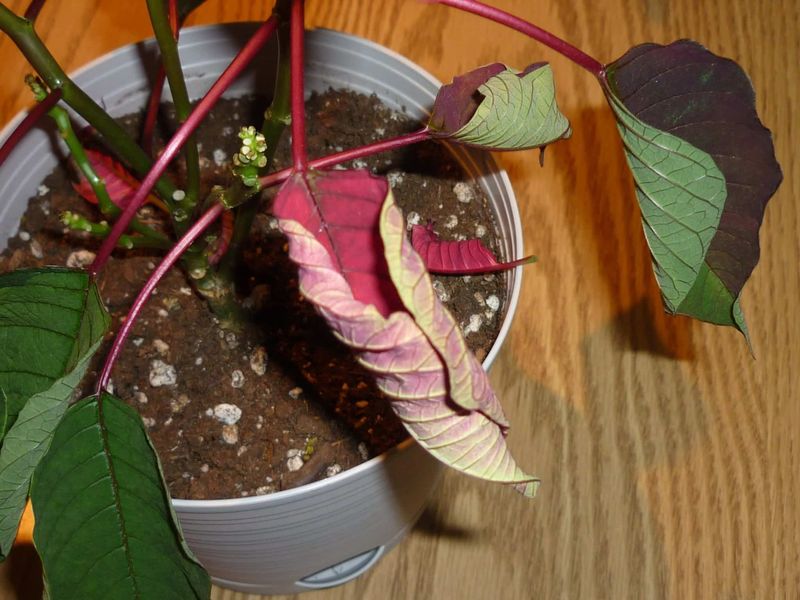
Sometimes leaf drop isn’t about something you did wrong at all.
Poinsettias go through a natural aging process, and the timing just happens to coincide with the post-Christmas period.
The colorful parts we think of as flowers are actually modified leaves called bracts.
These bracts typically last about two to three months under ideal conditions.
Most poinsettias sold in stores were forced to bloom for the holiday shopping season.
By late December or early January, they’ve been showing off their colors for quite a while already.
As the plant ages, the lower leaves naturally turn yellow and drop.
This is completely normal and doesn’t mean your plant is sick or stressed.
The plant is simply moving into the next phase of its growth cycle.
You might notice that the true flowers, those tiny yellow or red structures in the center of the bracts, start to fade and fall off first.
This signals that the showy display period is ending.
The bracts will eventually fade too, though they often last longer than the actual flowers.
Many Texas gardeners don’t realize that poinsettias are actually perennial plants that can be kept year-round.
With proper care, they’ll grow green foliage throughout spring and summer.
Getting them to produce colorful bracts again next December requires specific light manipulation, but it’s definitely possible.
If your poinsettia is dropping only the oldest, lowest leaves while the upper growth looks healthy, you’re probably just witnessing natural aging.
Continue caring for the plant properly, and it will transition into its growth phase.
Some leaf loss during this transition is expected and nothing to worry about in Texas or anywhere else.
6. Underwatering During Busy Post-Holiday Schedule
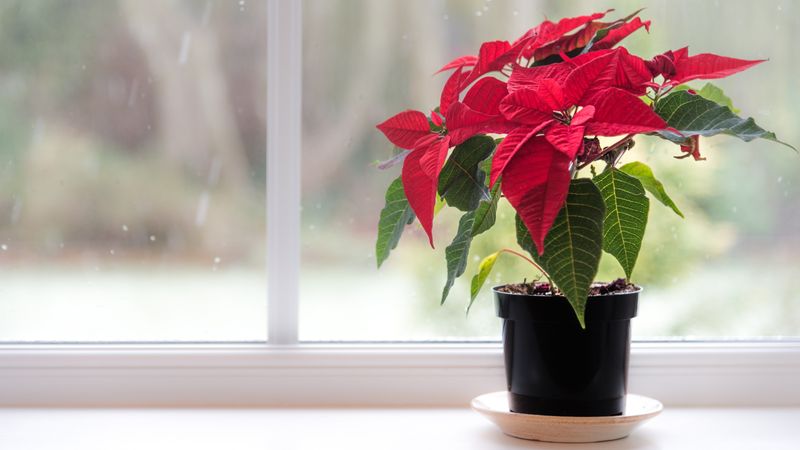
After the excitement of Christmas passes, life gets back to normal routines.
Kids return to school, work schedules resume, and suddenly that poinsettia you watered religiously during December gets forgotten.
Underwatering can cause just as much leaf drop as overwatering.
When soil dries out completely, the plant can’t absorb nutrients or transport water to its leaves.
The leaves wilt, turn brown at the edges, and eventually fall off.
Unlike gradual yellowing from overwatering, underwatering often causes leaves to drop while they’re still somewhat green.
Poinsettias have relatively shallow root systems that dry out faster than you might expect.
A plant sitting in a warm Texas home near a window can dry out surprisingly quickly.
Missing even a few waterings can stress the plant enough to trigger leaf drop.
The tricky part is that once a poinsettia gets too dry, it’s hard to rehydrate properly.
The soil can become hydrophobic, meaning water runs right through without being absorbed.
You might water it and think everything’s fine, but the root ball stays dry.
If you suspect your plant got too dry, water it thoroughly and then water again 15 minutes later.
This gives the soil time to absorb moisture properly.
You can also set the entire pot in a sink of water for 20 minutes to ensure complete hydration.
Establishing a regular watering schedule helps prevent this problem.
Check your poinsettia every few days, especially if your Texas home stays warm.
Setting a reminder on your phone can help during busy January when holiday routines fade away.
Consistent care makes all the difference between a plant that thrives and one that drops all its leaves within weeks of the new year starting.
7. Exposure To Ethylene Gas From Ripening Fruit
Here’s something most people never consider: ripening fruit can actually cause your poinsettia to drop its leaves.
Sounds strange, but it’s true.
Fruits like apples, bananas, and pears release ethylene gas as they ripen, and poinsettias are extremely sensitive to this natural plant hormone.
Ethylene gas triggers aging responses in plants.
In poinsettias, this means accelerated leaf yellowing and dropping.
Even small amounts of ethylene can cause problems, and you can’t see or smell it.
Many Texas homes have fruit bowls sitting on kitchen counters or dining tables.
If your poinsettia shares space with ripening fruit, especially in a smaller room, it’s getting exposed to ethylene.
The plant interprets this gas as a signal to shed its leaves.
Damaged or rotting fruit produces even more ethylene than fresh, ripe fruit.
That bruised apple you meant to throw away could be releasing enough gas to affect nearby plants.
Other sources of ethylene include some heating systems, car exhaust, and cigarette smoke.
The solution is simple: keep your poinsettia away from fruit bowls and other ethylene sources.
Don’t place it in the kitchen if you store fruit there.
A living room, bedroom, or home office usually provides a safer environment.
If you’ve recently moved your poinsettia near fruit and noticed sudden leaf drop, that’s probably the culprit.
Moving it to a different location should stop the problem.
Unfortunately, leaves that have already dropped won’t come back, but you can prevent further loss.
This issue surprises many Texas plant owners because everything else seems perfect with their care routine.
The plant gets good light, proper water, and stable temperatures, yet leaves keep falling.
Looking around for hidden ethylene sources often reveals the answer and saves the remaining foliage from the same fate.