Why Tomato Plants Wilt In Minnesota Summers (And What To Do About It)
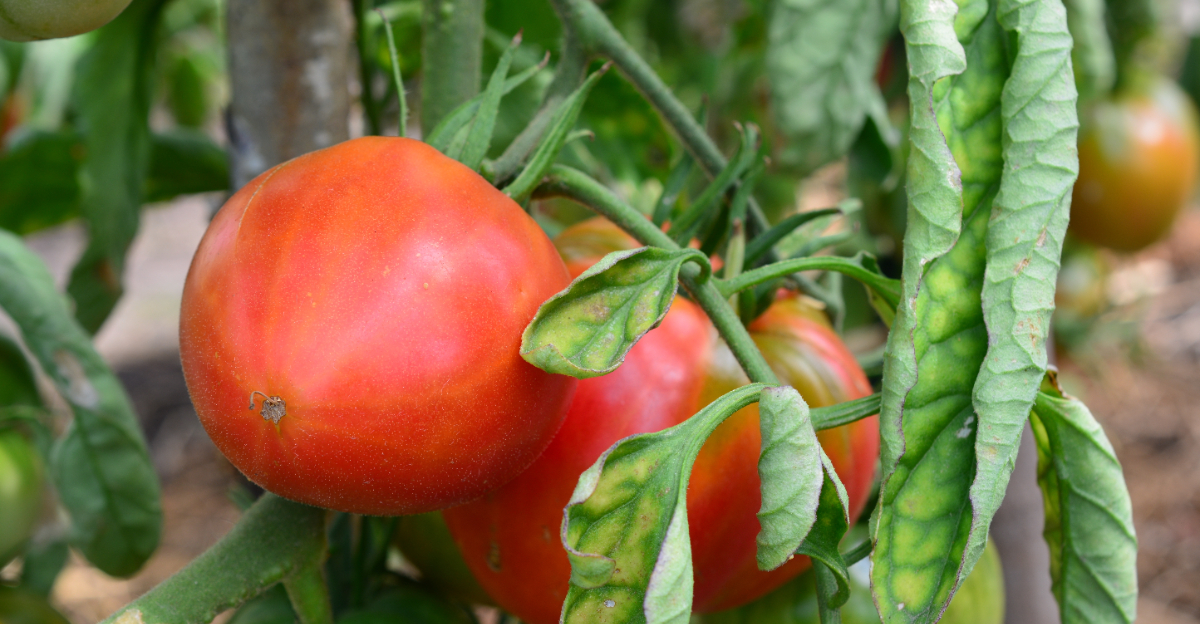
Uncertainty builds fast when your tomato leaves suddenly wilt under intense sun. Minnesota heat waves push your plants into defensive mode. Humidity swings across Minnesota confuse even seasoned growers.
Water isn’t always the missing piece behind that limp, sagging look. Sometimes roots work overtime, pulling moisture from soil turning difficult. Other times disease hides behind what looks like simple heat stress.
Every drooping leaf tells you something specific. Reading that message separates thriving plants from ones quietly struggling. Nothing about this wilting pattern is random or accidental.
Answers exist for every strange version of summer stress you face. Knowledge turns your uncertain guessing into fast, confident decisions. Your plant’s condition depends on what you decide within hours.
Certain signs demand attention before your plants decline further. You won’t fix anything until you understand exactly why those leaves gave up.
Midday Sun Triggers Protective Wilting
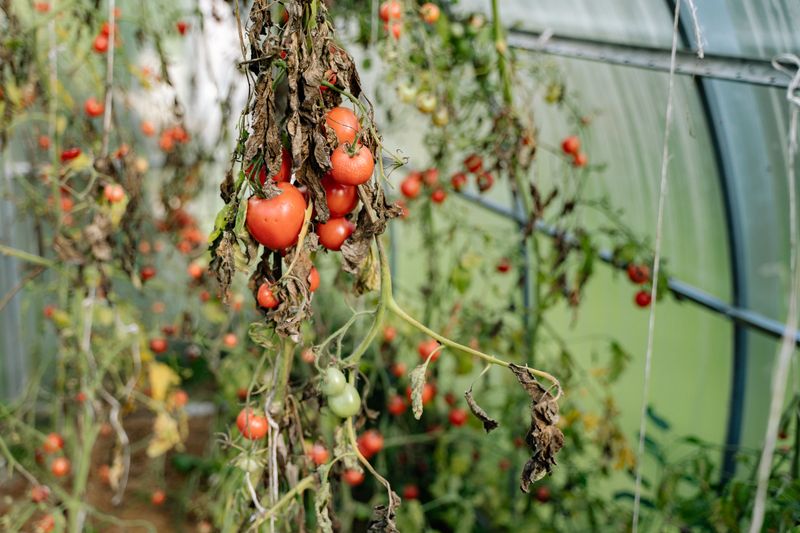
Your tomato plant is not giving up. Around noon on a hot Minnesota day, leaves curl and droop as a built-in survival response.
Tomatoes close their leaf pores to slow water loss as temperatures climb, with 90 degrees often cited as a general trigger point. This process is called transpiration control, and it is actually smart plant behavior.
The drooping reduces the leaf surface exposed to direct sunlight. Less surface area means less heat absorbed and less water escaping through the leaves.
By late afternoon, when the sun shifts and temperatures drop slightly, most plants bounce back without any help from you. If your tomato looks fine by evening, midday wilting was the cause.
This kind of droop happens even in well-watered plants, which surprises a lot of gardeners. Checking your tomato at 7 a.m. and again at 7 p.m. tells you far more than a midday glance ever could.
Gardeners who panic and water heavily at noon often cause more harm than good. Wet soil under intense sun can actually heat up and stress the roots further.
Pay attention to patterns across several days. Consistent midday wilting followed by evening recovery is a sign your plant is coping well with summer heat.
Minnesota tomato leaves droop at midday for a reason. Trust the plant, skip the noon watering, and check back after dinner instead.
Shallow Roots Can’t Keep Up With Heat
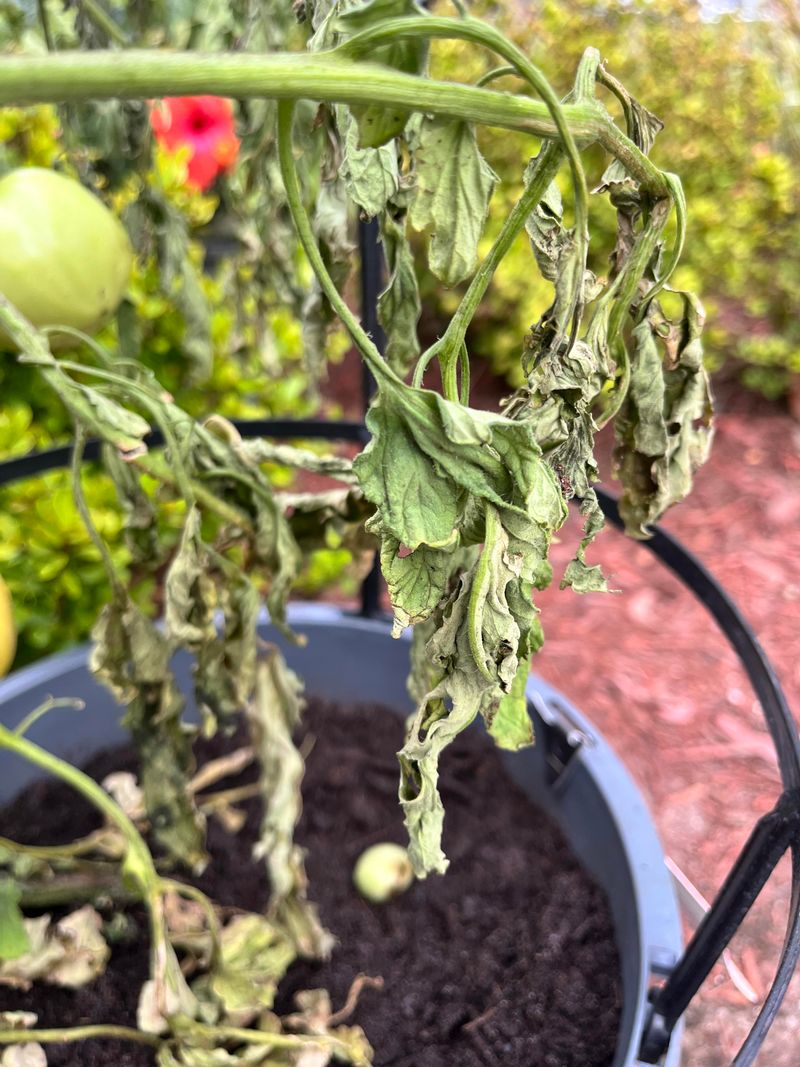
Roots are the engine of every tomato plant. When those roots stay shallow, the engine sputters on hot days.
Many gardeners water lightly and often, which trains roots to stay close to the surface. Surface soil dries out fast under summer sun, leaving roots with nothing to pull from.
A plant with shallow roots will wilt earlier in the day and recover more slowly in the evening. That pattern is a clear signal the root system needs to go deeper into cooler, moister soil layers.
Shallow roots also struggle because the top two inches of soil can reach well over 100 degrees on a hot afternoon, depending on sun exposure and soil color. Roots exposed to that kind of heat lose their ability to absorb water efficiently.
Your Minnesota Garden Changes Every Week. Your Plan Should Too.
Gardening in Minnesota changes quickly throughout the season. Every Friday you’ll receive a simple weekly plan showing exactly what to plant, prune, fertilize, harvest, and protect so you never miss the right timing.
The fix starts with changing how you water. Longer, slower watering sessions push moisture deeper into the soil profile, encouraging roots to follow it downward.
Deep roots tap into cooler zones that hold moisture longer. Plants with strong deep roots handle heat waves far better than those clinging to the surface.
Transplanting deeply also helps. Burying the stem up to the lowest set of leaves gives your tomato a head start on building a strong underground network.
If your tomato wilts before noon and struggles to recover, shallow roots are likely the reason. Give those roots somewhere worth going, and your plant will reward you all season.
Humidity Swings Stress The Plant
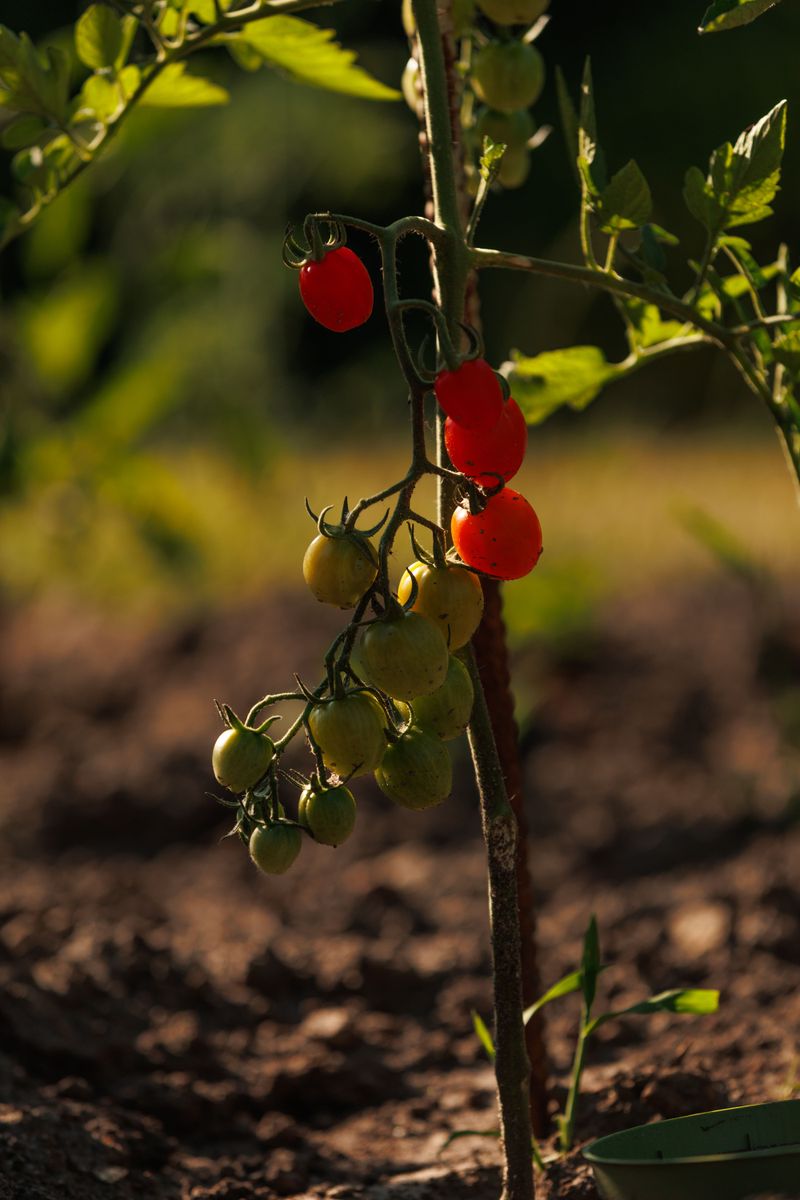
Minnesota humidity is unpredictable, and tomato plants feel every shift. One morning can be thick and muggy, and by afternoon a dry wind rolls through and changes everything.
When humidity drops suddenly, tomatoes lose moisture through their leaves faster than roots can replace it. The result is rapid wilting that looks alarming but often has a simple explanation.
High humidity creates a different problem. When the air is already saturated with moisture, the plant struggles to release heat and regulate its temperature properly.
Both extremes put stress on the same system. The leaves droop because the plant is working overtime to balance moisture in and moisture out.
Many Minnesota gardeners notice this pattern during mid-July weather swings. A thunderstorm drops humidity overnight, then dry northwest winds follow by noon.
There is not much you can do to control the weather, but you can buffer your plants against it. Consistent soil moisture acts as a stabilizer when the air around the plant changes rapidly.
Mulching the soil surface also helps slow the moisture swings that humidity shifts cause underground. A stable root zone gives the plant one less thing to fight against.
Humidity stress rarely travels alone. Pair it with heat or inconsistent watering and the drooping gets worse fast, so keep your soil steady when the sky cannot make up its mind.
Soil Dries Out Faster Than Expected
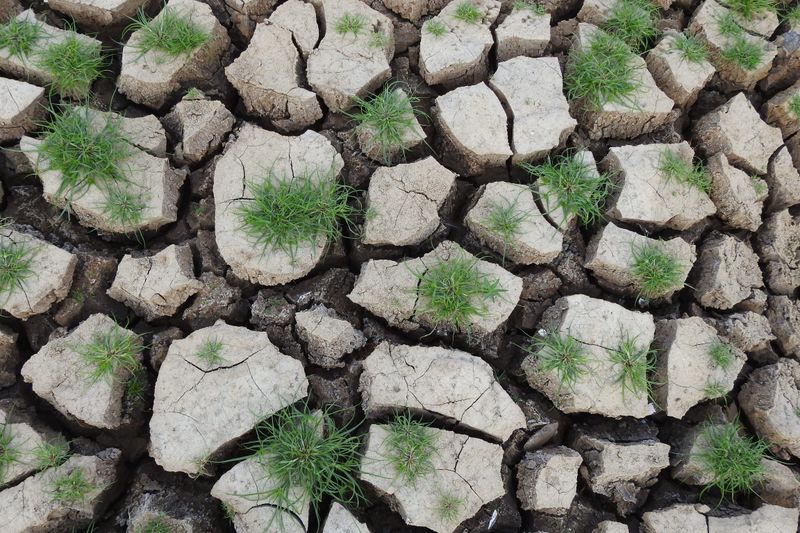
Sandy or loamy Minnesota soils can drain fast. What felt like a good soaking yesterday might be bone dry by tomorrow afternoon.
Many gardeners underestimate how quickly soil loses moisture once temperatures climb into the mid-80s and a breeze is blowing. A plant that had plenty of water in the morning can be moisture-stressed by 2 p.m.
Tomato roots trigger a response when soil moisture drops below a certain threshold. That signal shows up as drooping leaves, which is the plant’s way of conserving what little water remains.
Container-grown tomatoes face this problem even more severely. Pots heat up faster than ground soil, and the limited volume dries out in hours rather than days.
Checking soil moisture before assuming a plant needs water is always the right move. Push your finger two inches into the soil near the base of the plant.
If it feels dry at that depth, watering is needed. If it still feels cool and slightly damp, the droop is likely heat-related rather than drought-related.
Amending your soil with compost improves its ability to hold moisture between waterings. Compost acts like a sponge, slowing drainage and keeping roots cooler.
Soil that dries out faster than expected is one of the most common hidden causes of summer wilting. Fix the soil structure and your watering schedule becomes much easier to manage.
Roots Need Deeper Watering
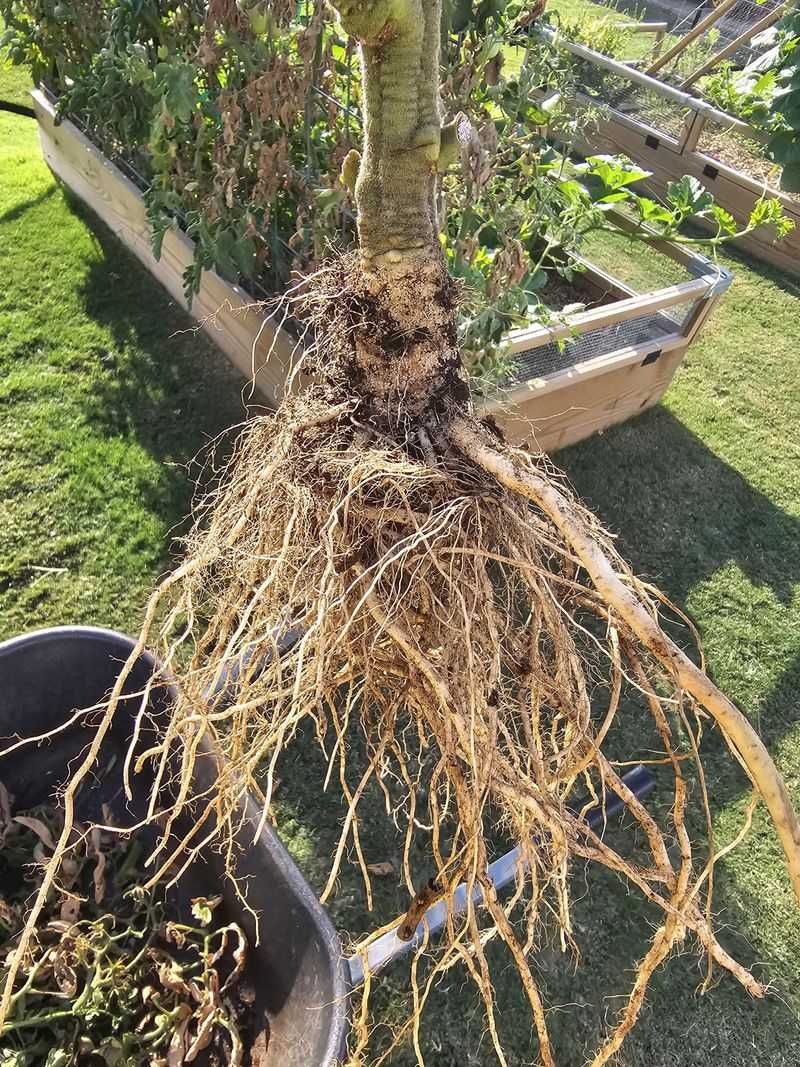
A quick splash at the base of your tomato plant feels helpful, but it rarely does the job on a hot summer day. Surface watering wets the top inch of soil and evaporates before roots can use it.
Deep watering means getting moisture down six to eight inches below the surface. That is where roots need to be, and that is where water needs to reach.
The best way to water deeply is slowly. A soaker hose or drip system left running for a longer, slower stretch (roughly 30 to 45 minutes, depending on soil type) delivers water at a rate the soil can actually absorb.
Overhead watering with a hose for five minutes does more for your peace of mind than it does for your plant. Most of that water runs off or evaporates before it reaches the roots.
Watering in the early morning gives moisture time to soak in before afternoon heat speeds up evaporation. Evening watering works too, but wet foliage overnight can invite fungal problems.
Frequency matters as much as volume. Watering deeply two or three times per week is more effective than light watering every single day.
A simple rain gauge or soil moisture meter takes the guesswork out of the process entirely. These tools are inexpensive and available at most garden centers.
Minnesota tomato leaves droop when roots run dry. Give those roots a deep, slow drink and watch how quickly your plant stands back up with confidence.
Mulch Is Missing From The Soil
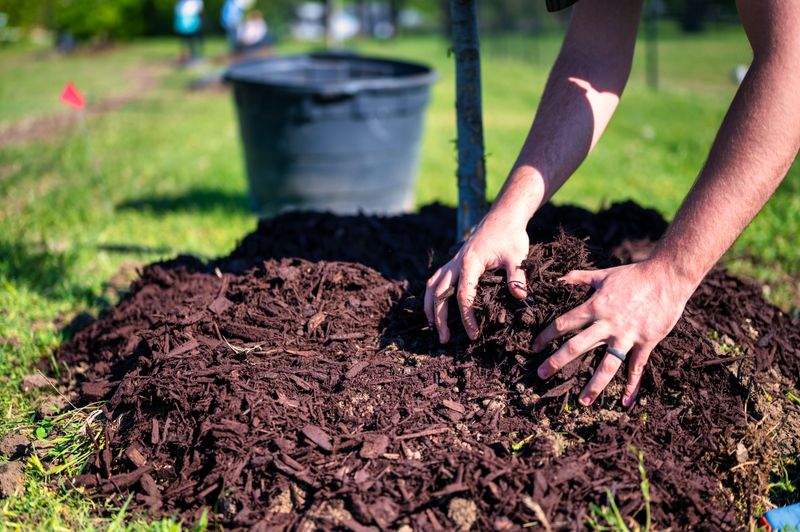
Bare soil is an easily overlooked issue in summer gardens. Without a protective layer on top, the sun heats the ground and moisture evaporates quickly.
Mulch acts as insulation between the hot air above and the soil below. A two to three inch layer of straw, wood chips, or shredded leaves can meaningfully lower soil temperature, in some cases by several degrees.
Cooler soil holds moisture longer. That means roots stay hydrated between waterings, and the plant has a steadier supply of water to pull from during peak afternoon heat.
Gardeners who skip mulch often find themselves watering daily just to keep up. Adding a simple layer of organic material can noticeably cut that workload within days.
Mulch also protects against the soil-splash that spreads fungal disease during heavy rains. It is one of the most underrated tools in any vegetable garden.
Straw is a popular choice for tomato beds because it is loose, breathable, and easy to apply. Wood chips work well too, though they break down more slowly over the season.
Apply mulch after your first deep watering session of the season. Locking moisture in from the start gives your plants a strong foundation before summer heat peaks.
If your tomato leaves droop regularly and your soil looks pale and cracked, missing mulch is almost certainly part of the problem. A bag of straw is inexpensive and solves more than you’d expect.
Afternoon Shade Could Help
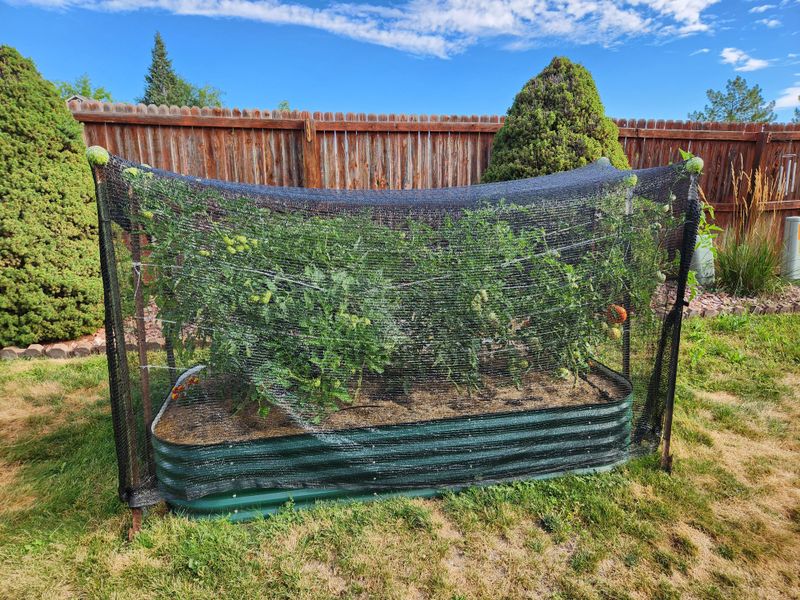
Full sun is great for tomatoes in spring and early summer. By mid-July in Minnesota, that same full sun can become too much of a good thing.
When afternoon temperatures climb into the 90s, even sun-loving tomatoes tend to struggle with direct exposure from 1 to 5 p.m. Leaves droop, blossoms drop, and fruit production slows noticeably.
Providing partial afternoon shade can make a real difference without hurting overall plant health. Tomatoes need six to eight hours of sun daily, and morning sun is the most productive part of that window.
A shade cloth rated at 30 to 40 percent can be draped over plants during the hottest part of the day. These are available at most garden supply stores and are easy to set up with simple stakes.
Natural shade from a fence, tall companion plants, or a garden structure can also buffer afternoon intensity. Sunflowers planted on the west side of a tomato bed create a helpful windbreak and shade source.
Some gardeners worry that shade will reduce their harvest. Protecting plants from extreme afternoon heat can increase fruit set because blossoms tend to survive better in moderate temperatures.
Tomato blossoms often drop when nighttime temperatures stay above the mid-70s or daytime temps push past the mid-90s. Afternoon shade helps keep both of those numbers in a more productive range.
Afternoon shade is not a sign of a struggling garden. It is a smart seasonal adjustment that keeps your plants producing when summer heat would otherwise slow everything down.
Overwatering May Be The Issue
Not every drooping tomato is a thirsty tomato. Overwatering is one of the most common mistakes gardeners make, and it causes the same wilting symptoms as drought.
When soil stays soggy for too long, roots are deprived of oxygen. Oxygen-starved roots lose their ability to absorb water and nutrients, so the plant wilts even though the ground is wet.
Overwatered plants often show yellowing leaves alongside the droop. The combination of yellow color and limpness is a strong indicator that roots are sitting in too much moisture.
Checking your soil before each watering session is the single best habit you can build. If the soil two inches down still feels damp, skip that day and check again tomorrow.
Heavy clay soils, found in various parts of Minnesota, tend to hold water longer than sandy or loamy ground. Gardeners working with clay need to water less frequently than those with well-draining beds.
Raised beds and containers with good drainage holes reduce overwatering risk significantly. They allow excess water to escape rather than pooling around the root zone.
If you suspect overwatering, stop watering for two to three days and see if the plant improves. Pulling back often gives roots the breathing room they need to recover.
Minnesota tomato leaves droop for many reasons, and overwatering is one that gets overlooked. Sometimes the kindest thing you can do for your garden is simply put the hose down and walk away.