Why Turtlehead Is A Native Fall Bloomer Made For Damp North Carolina Shade
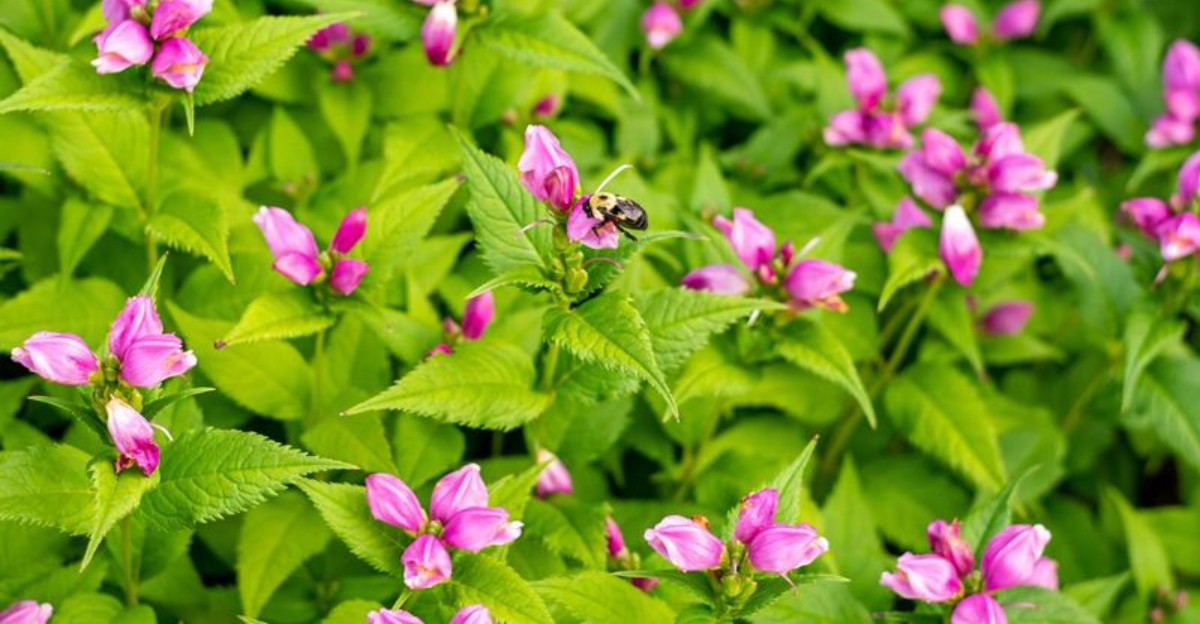
Most shade plants quit blooming by August. Turtlehead is just getting started. This North Carolina native sends up sturdy stems topped with pink or white flowers shaped like a turtle’s open mouth. The blooms last well into fall, when color is scarce.
It loves moist soil, which makes it perfect for low spots, stream edges, and rain gardens. Bees, especially bumblebees, push their way into the flowers.
Turtlehead is also a host plant for the Baltimore checkerspot butterfly. The plant is tough and returns each year, forming slowly expanding clumps.
It needs consistent moisture, so a dry corner will disappoint. Plant it where the ground stays damp, and it rewards you with a quiet, lasting show.
1. It’s Native To North Carolina’s Wet Woods And Streambanks
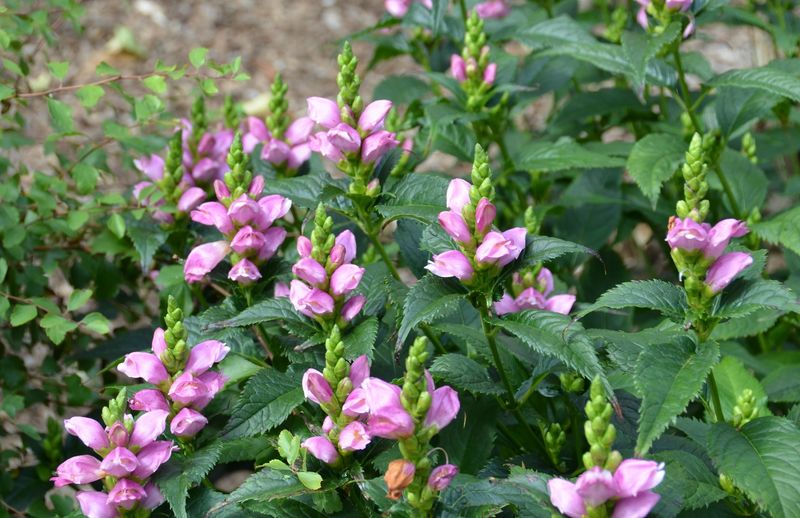
Walk along a quiet creek in the North Carolina mountains in early fall, and you might spot a cluster of odd little flowers leaning toward the water. That plant is turtlehead, known to botanists as Chelone.
The group includes white turtlehead, Chelone glabra, and pink turtlehead, Chelone lyonii, which is native to the Southern Appalachians.
Home for turtlehead has always been a wet place. In the wild, it grows in moist woods, along streams, and in soggy meadows where the ground rarely dries out.
Because it evolved in those conditions, it handles the damp, shady patches that leave many gardeners scratching their heads.
Think about the low spot in your yard where water collects after a storm. Most perennials sulk there, with roots that rot and leaves that turn yellow.
Turtlehead, on the other hand, feels right at home and settles in happily. Getting started is simple. Choose a place with part shade and moist, rich soil, ideally with plenty of leaf litter or compost worked in.
Morning sun with afternoon shade works well, especially in the hotter Piedmont and coastal regions.
Shopping smart makes a big difference too. Whenever you can, buy locally native species from native plant nurseries instead of big box stores.
Plants grown from regional seed tend to be better suited to local weather and support local wildlife more closely.
Across North Carolina, turtlehead fits beautifully into woodland gardens, rain gardens, and damp corners near downspouts or ponds. It brings a wild, natural look that blends with ferns, sedges, and other shade lovers.
Best of all, you are growing a piece of the state’s own landscape right outside your door.
2. It Blooms When Most Shade Plants Have Finished
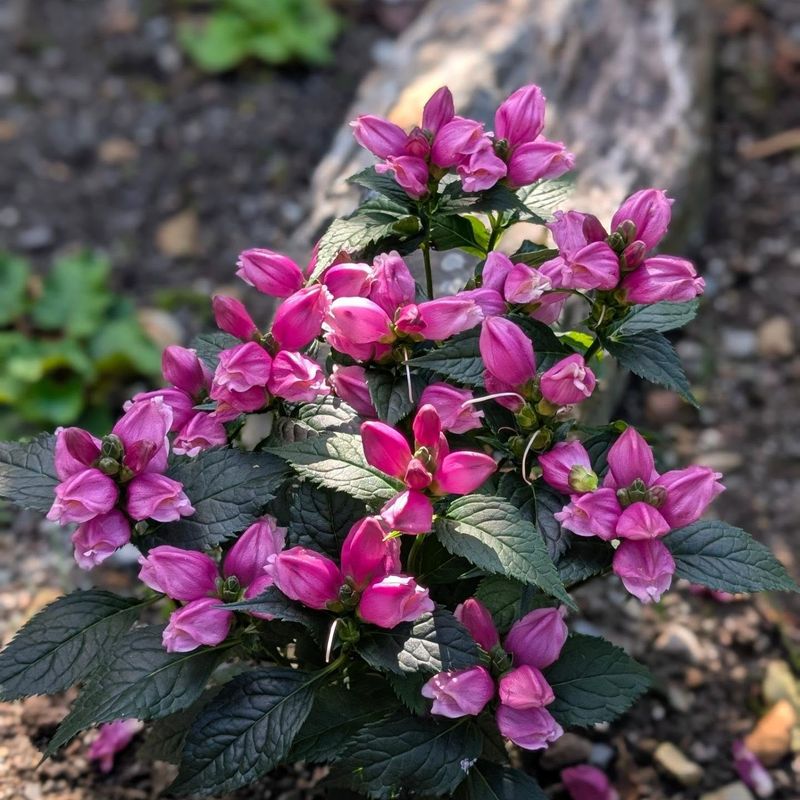
Spring is easy in a shade garden. Trilliums, foamflowers, and wild ginger all put on a lovely show in April and May, and then things grow quiet. By August, many shady beds are nothing but green leaves.
Right about then, turtlehead wakes up and gets busy. Its flowers open from late summer into fall, usually starting in August and carrying on through September and sometimes into October.
That timing fills a gap that frustrates plenty of gardeners.
Expect sturdy, upright stems that reach roughly two to three feet tall. At the top of each one, a spike of tightly packed blooms appears in white, pink, or rosy shades depending on the species.
Your North Carolina Garden Changes Every Week. Your Plan Should Too.
Gardening in North Carolina changes quickly throughout the season. Every Friday you’ll receive a simple weekly plan showing exactly what to plant, prune, fertilize, harvest, and protect so you never miss the right timing.
The show often lasts several weeks, since the flowers open a few at a time from the bottom of the cluster upward.
Such long-lasting color makes planning easier. Tuck turtlehead behind spring bloomers so it takes over once they fade, or mix it with ferns for a soft backdrop.
Plants grouped in drifts of three or five look especially striking when they all flower together.
Here in North Carolina, fall color in shady gardens can be surprisingly hard to find. Trees eventually turn gold and red, but the ground below often looks tired. Turtlehead adds fresh, bright blooms at eye level just when your garden needs a lift.
Cut a few stems for a vase while you are at it. They hold up well indoors and bring a little woodland charm to your kitchen table during those first cool evenings of the season.
3. Its Flowers Really Look Like Turtle Heads
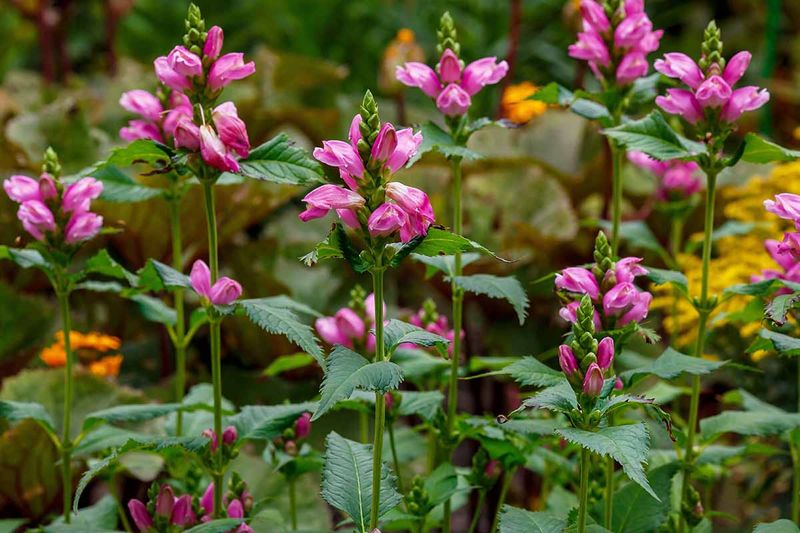
Some plant names leave you guessing. Turtlehead is not one of them, and once you see the flowers up close, you will laugh at how fitting the name is.
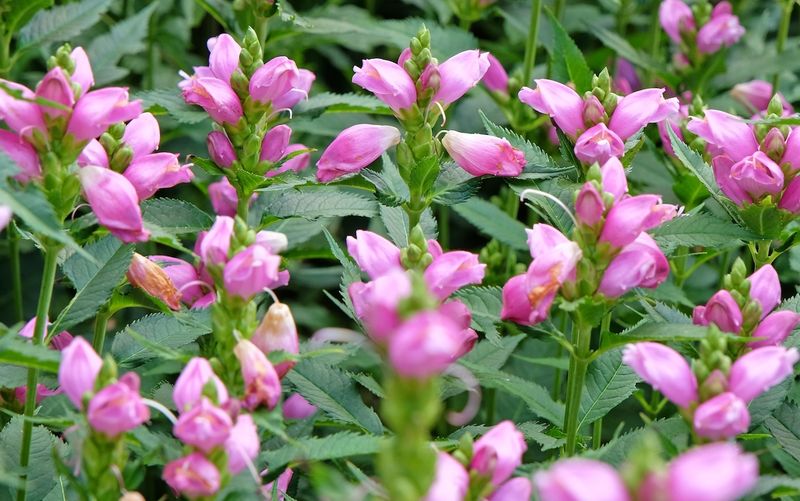
Each bloom is shaped like the head of a turtle poking out of its shell. The upper part curves over like a little hooded face, and the lower lip hangs slightly open, as if the turtle is about to snap at a bug.
Some people even say the flowers look like tiny snapdragons with an attitude.
Blooms gather in tight clusters at the very tops of the stems. From a distance they look like neat spikes of color, but lean in and you will notice dozens of small turtle faces staring back at you.
Kids especially love this plant. Gently squeeze the sides of a flower between your thumb and finger, and the mouth pops open like a puppet.
Children can spend a happy half hour making the turtles talk, which makes turtlehead a wonderful way to get young gardeners curious about nature.
Visitors tend to stop and ask about it, too. Few native plants spark conversation quite like this one, and you get to share a neat story every time someone points.
The scientific name has its own tale. Chelone comes from a Greek myth about a nymph who was turned into a tortoise, so the turtle theme goes back a very long way.
For North Carolina gardeners, turtlehead offers something rare: a true local native with a quirky, memorable look. It proves that growing native plants can be fun, not just responsible.
4. Bumblebees Know How To Get Inside
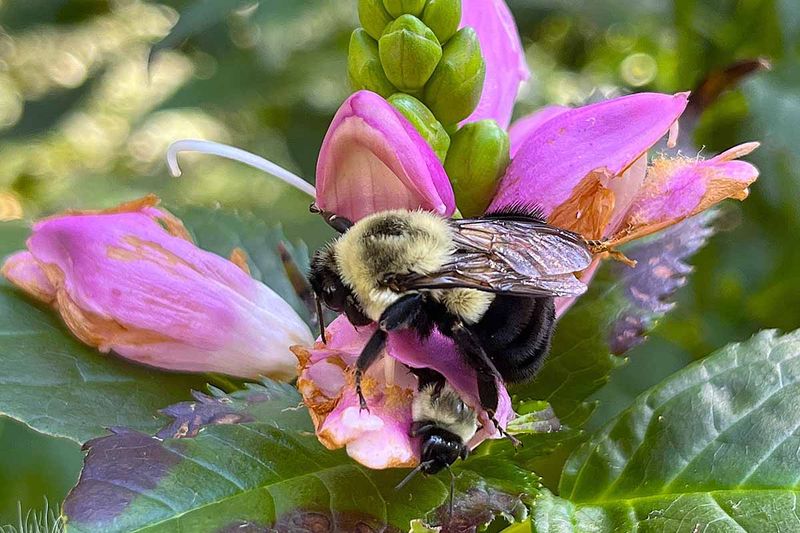
Watch a turtlehead plant on a sunny September afternoon, and you will see something that looks like a magic trick. A fat, fuzzy bumblebee lands on a flower, wiggles its way in, and vanishes completely.
A few seconds later, it backs out covered in pollen and buzzes off to the next bloom. Those closed flowers are the secret. Turtlehead blossoms stay tightly shut, which keeps out small or weak insects.
Bumblebees, though, are strong enough to pry open the lips and crawl inside to reach the nectar and pollen tucked away at the back.
That arrangement works out well for both sides. The plant gets reliable pollinators, and the bees get a private food supply that few other insects can reach.
Late in the season, when wildflowers are fading, turtlehead becomes an important meal for these hardworking bees.
Want more bumblebee visits? Plant turtlehead in groups instead of single plants scattered around the yard. A big patch is much easier for bees to find and saves them energy as they forage.
Skip the insecticides, too, especially while the plants are flowering. Even products labeled as gentle can harm bees that crawl deep inside the blooms. A few chewed leaves are a small price for a lively, buzzing garden.
Across North Carolina, bumblebee colonies keep working into fall as new queens fatten up before winter. Those queens need plenty of food to survive the cold months and start fresh colonies in spring.
Every turtlehead you grow helps fuel that cycle, and you get a front-row seat to one of the garden’s most entertaining shows.
5. It Hosts The Baltimore Checkerspot Butterfly
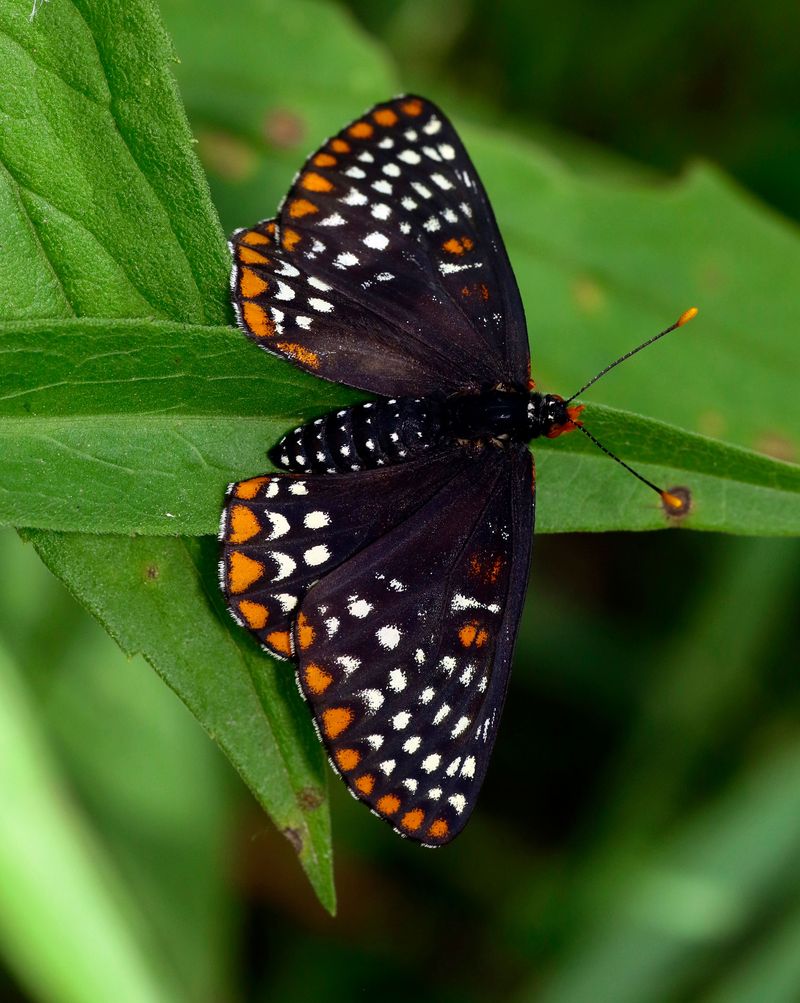
Bright orange, inky black, and dotted with creamy white, the Baltimore checkerspot looks like a butterfly dressed for a party. It got its name from the colors of Lord Baltimore, an early Maryland colonist, and the Baltimore oriole shares the same honor.
Spotting one in the wild feels like finding treasure. Behind that beauty is a close bond with turtlehead. White turtlehead, Chelone glabra, is the main host plant for checkerspot caterpillars.
Females lay clusters of eggs on the leaves, and the young caterpillars feed together in silky webs.
Many butterflies depend on just a few plants to raise their young. Without those hosts, adults simply cannot complete their life cycle, no matter how many flowers are around.
Planting turtlehead gives this striking species a place to start, wherever it already lives nearby. So what should you do if you find caterpillars munching away? Let them eat.
The plant usually bounces back just fine, and those spiny black and orange larvae are the next generation of butterflies.
Avoid spraying insecticides anywhere near your turtlehead patch. Even organic sprays can harm caterpillars.
Growing turtlehead in moist spots alongside other native plants, like Joe Pye weed and native asters, creates a richer habitat that butterflies and other insects can use.
Baltimore checkerspots are uncommon and local in North Carolina, mostly showing up in the mountains and nearby areas with wet meadows. You may not see one right away.
Still, native host plants are one of the best ways to support local butterfly populations, and your garden becomes part of a bigger web of life.
6. Deer Usually Leave It Alone

Anyone who has woken up to find their hostas chewed down to stubs knows the frustration. Deer seem to treat shade gardens like a salad bar, and hostas are often first on the menu.
Turtlehead tells a happier story. Its leaves have a bitter taste, so deer usually pass it by in favor of tastier snacks.
Many gardeners find their turtlehead standing tall and blooming while plants nearby get nibbled.
A word of caution, though. No plant is completely deer proof, and a hungry deer in a tough winter or dry summer may sample almost anything. Young, tender plants are also more likely to get a test bite than older, established clumps.
Smart placement helps. Use turtlehead along woodland edges, near streams, and in shady beds where deer wander through often.
Those are exactly the spots where it grows well, so you get beauty and protection in one move.
Pairing helps even more. Combine turtlehead with other deer-resistant natives such as Christmas fern, wild ginger, golden ragwort, and blue mistflower. A planting full of plants deer dislike sends a clear message to move along.
Throughout North Carolina, deer browsing is one of the most common headaches in shade gardens, from mountain cabins to suburban neighborhoods around Raleigh and Charlotte.
Replacing a few deer favorites with turtlehead can save you money, time, and plenty of disappointment.
Picture fewer fences, fewer sprays, and more flowers that actually make it to bloom time. For many gardeners, that alone makes turtlehead worth a spot in the yard.
7. It’s Easy To Grow In The Right Spot
Good news for busy gardeners: turtlehead asks for very little once it lands in the right place. Give it moisture and some shade, and it mostly takes care of itself.
Wet soil is where it really shines. Many perennials struggle when their roots stay soggy, but turtlehead handles it with ease.
Over a few years, it spreads slowly into a full, tidy clump without running wild across your beds.
One problem can pop up, and it is worth knowing about. Powdery mildew, a white dusty coating on the leaves, may appear if the soil dries out or the air around the plant stays still. Keeping plants watered and giving them a little breathing room usually prevents it.
Steady moisture is the main rule. Water deeply during dry spells, and add a layer of shredded leaves or mulch to hold water in the soil.
Checking with your finger every few days in summer is an easy habit. Pinching is a handy trick too. In late spring, snip the stem tips back by a few inches. Plants grow bushier, stand sturdier, and often produce more flowers.
Come fall, resist the urge to tidy up. Leave seed heads standing through winter for texture and shelter for insects, then cut stems back in early spring before new growth starts.
North Carolina summers can swing from soaking rains to weeks of drought. In a dry year, regular watering becomes essential for moisture lovers like turtlehead.
Keep up with it, and you will enjoy a dependable, cheerful native that returns stronger every autumn.