Why Vine Maple Deserves A Spot In More Oregon Backyards
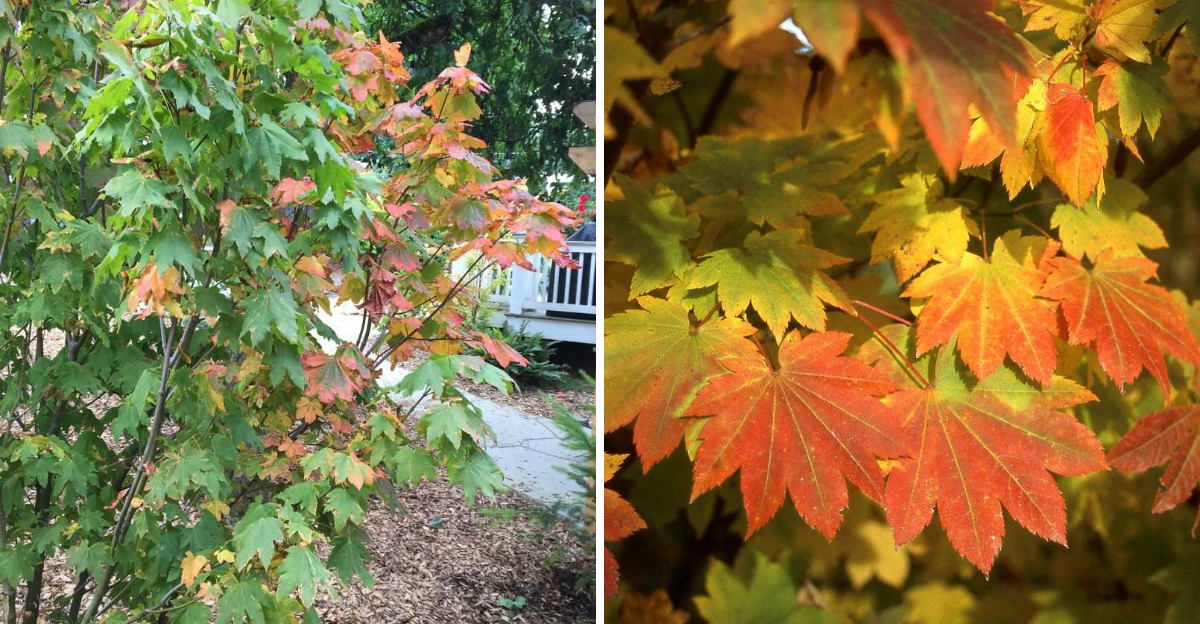
An Oregon backyard can feel surprisingly hard to finish once every tree option starts sounding too large, too formal, or too demanding.
The empty corner beside a patio needs height, but not a future canopy over the roof. The shaded edge beneath taller trees needs structure, but not another shrub that disappears into the background.
By autumn, the same space may still be waiting for something that can make the whole planting feel settled.
One native plant answers those problems in a way that changes with the site.
Its shape can become upright or arching. Its color can shift with exposure. Even its role in the garden changes depending on what grows above and below it. That flexibility is easy to miss when the plant is treated as just another maple.
So what makes it different from the bigger trees filling nursery rows?
The answer starts with scale, light, moisture, and a natural form that Oregon landscapes have been refining for generations without needing a hedge trimmer or towering canopy.
1. Use Vine Maple As A Small Native Tree
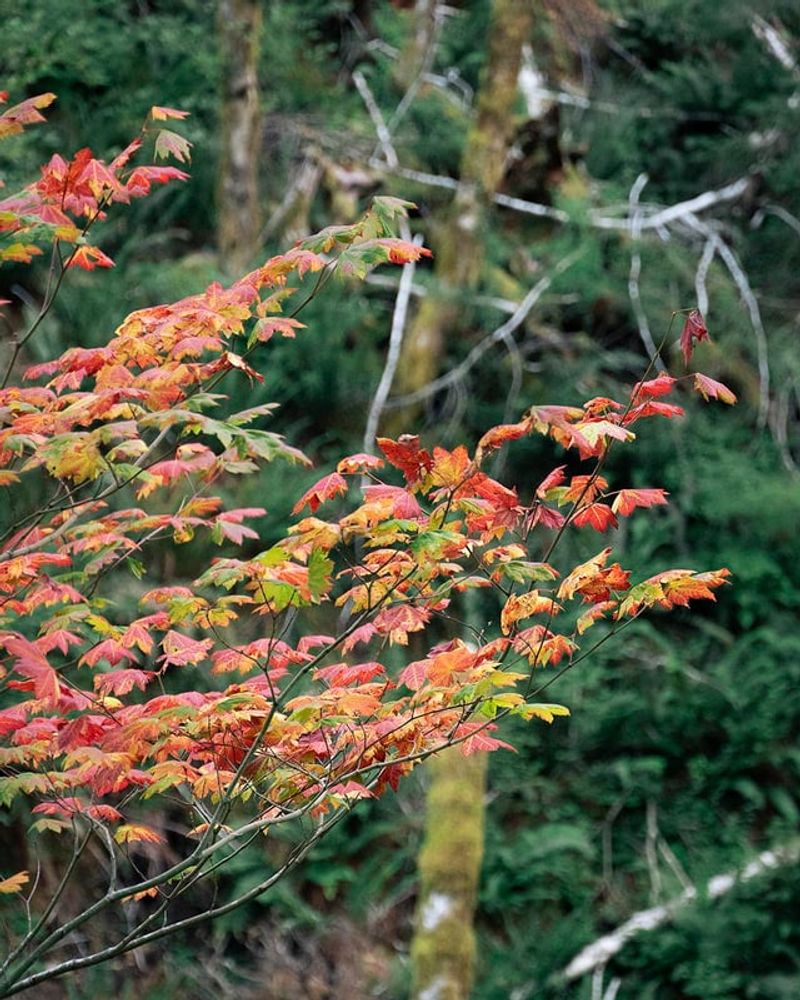
A vine maple can give a backyard real tree character without taking over the entire property.
Acer circinatum usually grows as a broad deciduous shrub or small tree, often around 10 to 20 feet tall in landscape use, though favorable sites can produce larger specimens.
Its natural habit is multi-stemmed, spreading, and irregular rather than narrowly upright. That scale fits patios, woodland edges, layered borders, and smaller lots far more comfortably than a full-size canopy maple.
The regional connection matters too.
Vine maple is native from British Columbia south through western Oregon into northern California, where it grows in moist woods and along stream banks.
In Oregon gardens west of the Cascades, that background makes it especially easy to place within a native or woodland-style planting.
Central Oregon gardeners can also use it in suitable moist, protected sites, but a hot, exposed, dry yard asks much more from the plant.
Measure width as carefully as height.
A vine maple can spread broadly, especially in shade, so a narrow strip beside a walkway may become cramped even though the tree never gets towering. Give the stems room to arch and overlap naturally.
The appeal is not that vine maple stays tiny forever.
It is that the plant delivers the presence of a real small tree without automatically turning a modest backyard into a future canopy-management project.
2. Let Multi Stem Growth Add Natural Structure
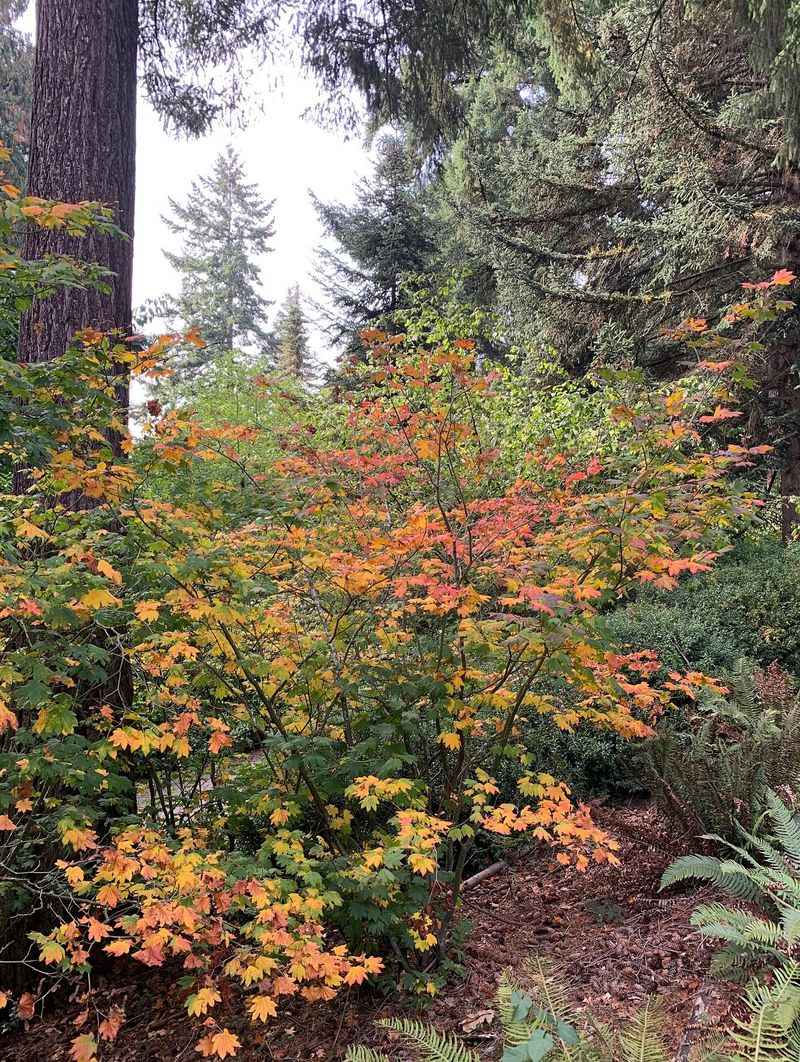
The most memorable part of vine maple may be the way its stems arrange themselves without much help.
In brighter sites, the plant often grows denser and more upright. Under forest shade, stems can stretch outward and develop the layered, arching habit that gives the species its common name.
That change in form is part of the plant’s normal response to light, not evidence that a shaded specimen has lost its structure.
Let several strong stems carry the design.
A multi-trunk form creates depth at eye level, shows off smooth young bark, and gives the tree a graceful winter silhouette after the leaves fall.
Your Oregon Garden Changes Every Week. Your Plan Should Too.
Gardening in Oregon changes quickly throughout the season. Every Friday you’ll receive a simple weekly plan showing exactly what to plant, prune, fertilize, harvest, and protect so you never miss the right timing.
Forcing every specimen into one straight trunk can erase much of the character that makes vine maple distinct from larger landscape maples.
Selective editing works better than constant shaping.
Remove a branch that rubs another, crosses awkwardly, or grows into a path, then stop and look again before making another cut. Heavy pruning can strip away the horizontal grace that develops naturally, especially on plants grown in shade.
The result should still look like vine maple.
A two-stem, three-stem, or broader clump can all work, depending on the space and the individual plant. The branches do not need to line up like fence posts.
This is one of those rare backyard trees where a little asymmetry is an advantage. The plant already knows how to make woodland architecture. The pruners mostly need to avoid submitting a competing blueprint.
3. Brighten Fall With Red And Orange Leaves
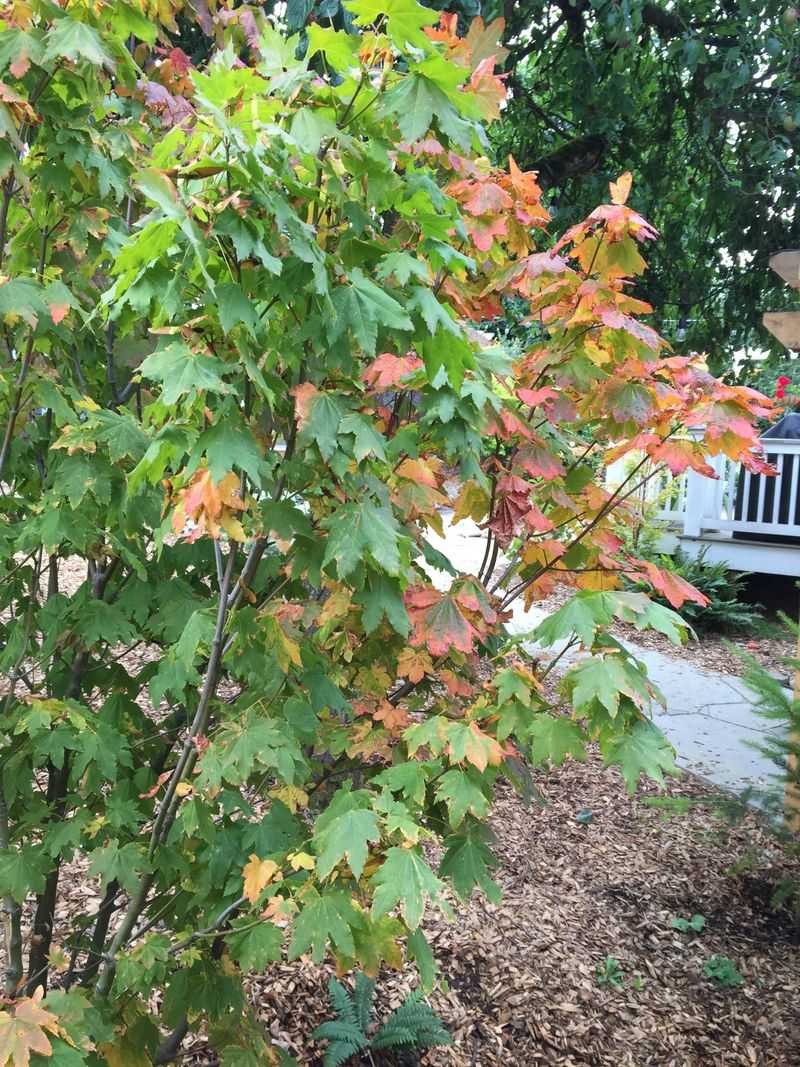
October can turn vine maple into the plant everyone suddenly notices.
Its rounded, lobed leaves may shift through yellow, orange, and red as the season closes. Stronger sun often produces more vivid red and orange tones, while shaded plants may lean more toward yellow.
The exact display varies from plant to plant, so a nursery tag promising one guaranteed shade should be treated as enthusiasm rather than a contract.
Light changes more than color.
A sunnier vine maple generally develops a denser, bushier shape, while one in forest-like shade can become broader and more arching.
That gives gardeners two design tools at once: exposure can influence both the autumn palette and the silhouette.
Do not chase red color by putting the tree in a punishing site.
A hot, dry, fully exposed position can stress vine maple during Oregon’s summer drought period. Partial sun, morning light, or a site with some afternoon protection can still provide handsome fall color while keeping the root zone more comfortable.
Gardeners shopping in autumn have one useful advantage.
Buying while plants are changing color lets you see the individual tree’s current tendency rather than guessing from a photograph.
Genetics, weather, and exposure can still influence future seasons, but the nursery display gives a better clue than a generic label.
Vine maple does not offer one standardized October uniform.
That variability is part of the appeal. The backyard gets a tree with its own fall personality instead of another identical red exclamation point.
4. Give It Afternoon Shade In Hotter Sites
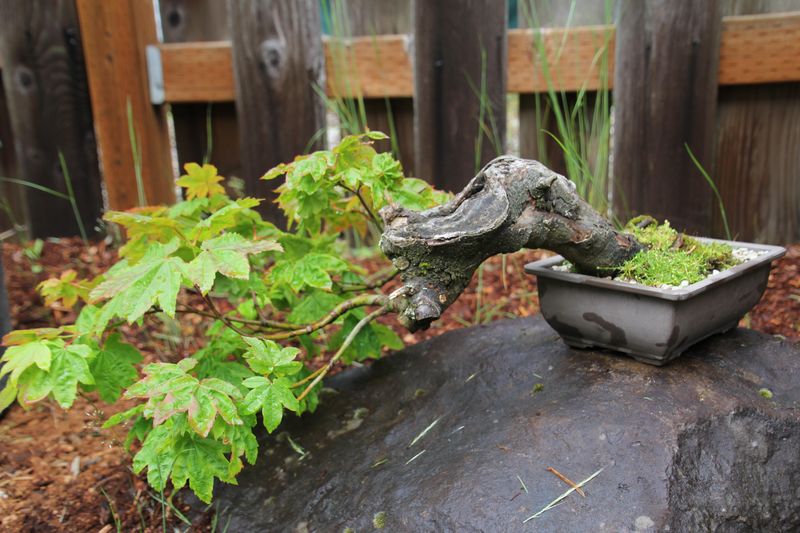
Oregon summer is where good placement starts paying for itself.
Vine maple prefers moist, shaded conditions and can tolerate sun, but hot, sunny, dry sites are not its strongest setting.
West of the Cascades, summer rainfall often drops sharply just as temperatures rise, so a tree planted in exposed reflected heat may need more irrigation than its woodland reputation suggests.
Give hotter sites afternoon relief.
Morning sun followed by light afternoon shade often suits a backyard planting better than an open south- or west-facing position.
The protection becomes even more useful beside pavement, masonry, or other surfaces that add heat around the root zone.
Mulch helps hold the advantage.
A broad layer of organic mulch can slow moisture loss and buffer soil temperatures through the dry season. Keep the material away from direct trunk contact and water deeply enough to moisten the root zone rather than giving the surface a quick splash.
Do not confuse native status with complete independence.
A plant can belong to Oregon and still have strong habitat preferences.
Vine maple naturally favors moist woods and streamside settings, so an exposed inland yard may need careful siting and regular summer water, especially while the tree establishes.
That distinction matters more east of the Cascades and in hotter southwestern valleys.
Vine maple can succeed outside its easiest western-Oregon setting, but the gardener has to provide the moisture and protection that the site no longer supplies automatically. Native does not mean every zip code comes with the same instructions.
5. Use It Beneath Taller Oregon Trees
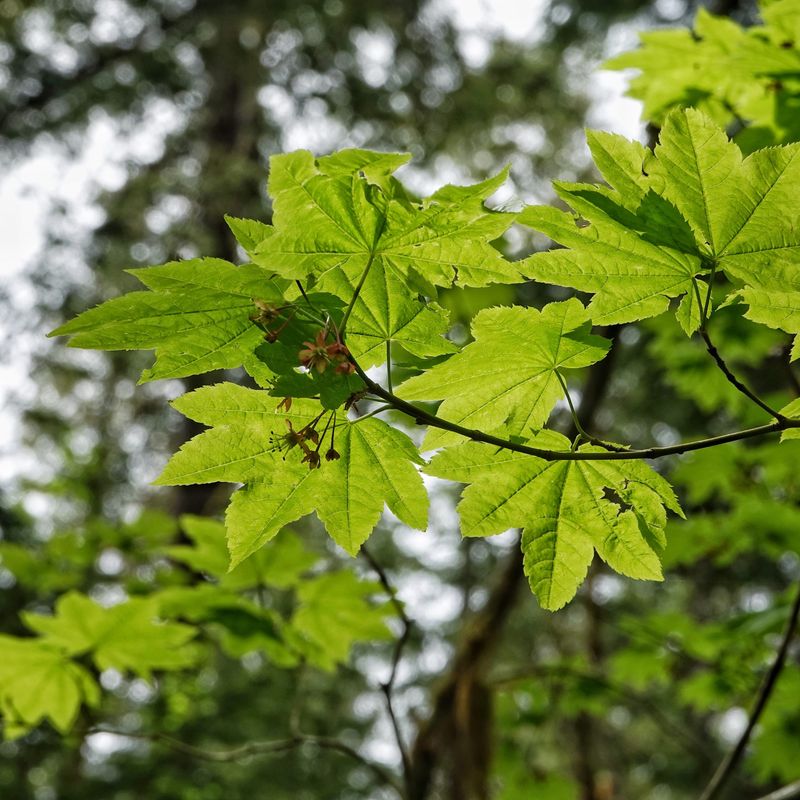
A backyard with mature conifers often has an awkward empty layer between the tree canopy and the ground.
Vine maple fits that middle zone naturally. In forests it grows beneath taller trees, where filtered light shapes the stems into broad, graceful layers.
In a home landscape, that habit can connect large Douglas-firs, cedars, or other canopy trees with ferns, woodland perennials, and smaller shrubs below.
The best shade is not always the darkest shade.
Deep cover can produce a looser plant and softer fall color, while broken light or partial sun often creates a fuller form. A bright woodland edge can provide enough light for strong growth without exposing the tree to the harshest afternoon heat.
Give the roots a fair start.
Do not wedge a new vine maple against the trunk of an established tree where large roots dominate the soil.
Choose a spot with room for the new root system, then keep moisture available through its establishment period and during extended summer dryness.
Layer the planting instead of filling every opening.
Sword fern, evergreen huckleberry, salal, osoberry, or red-flowering currant can occupy different heights around the maple where site conditions suit them.
The goal is a sequence of canopy, small tree, shrub, and ground layer rather than one crowded wall of foliage.
Vine maple becomes especially convincing in that arrangement.
It does not look like a decorative tree dropped beneath a forest. It looks like the missing middle story was finally invited back into the yard.
6. Let Flowers Support Beneficial Insects
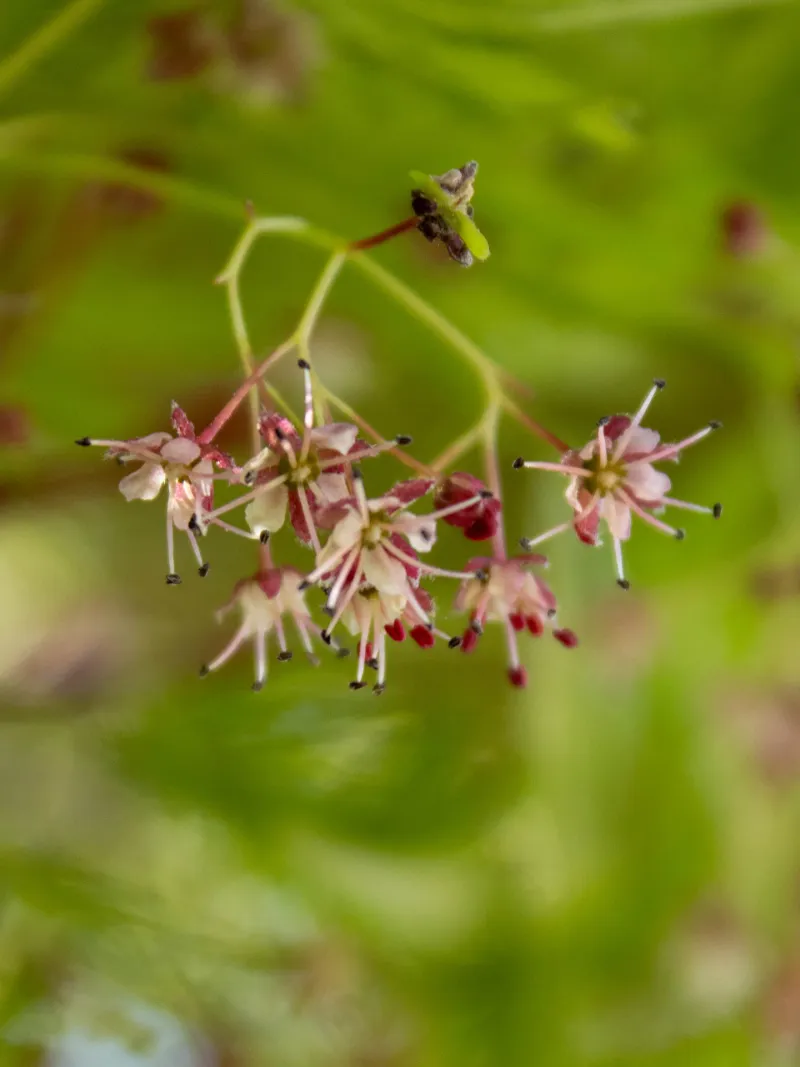
Spring flowers are easy to miss until you stand close enough to see what is visiting them.
Vine maple produces small flower clusters as the leaves expand. The flowers carry reddish sepals and greenish-white petals, a subtle combination compared with showier ornamental trees.
Their value is not limited to human display. The species is recognized as supporting bees and other beneficial insects, which gives the spring canopy another job beyond producing leaves.
That early activity matters in a layered garden.
A small native tree adds flowers several feet above the ground while perennials and shrubs provide resources at other heights. The result gives insects more than one place to forage as the season changes.
Later, the tree produces paired winged fruits called samaras.
Those fruits deepen in color as they mature and add another seasonal detail to the branches.
The plant is also recognized for supporting birds or mammals and native butterfly caterpillars, making it useful as part of a broader habitat planting rather than as a single ornamental feature.
Avoid turning that value into a promise that one tree will transform the entire yard.
Wildlife benefits build through diversity. Vine maple contributes more when it sits near other locally appropriate trees, shrubs, flowers, and groundcovers that offer different food and shelter across the year.
The flowers may never steal attention from a rhododendron.
That is fine. The insects are not judging the spring garden by curb appeal, and vine maple quietly gives them another reason to stop.
7. Fit It Where Big Maples Overwhelm
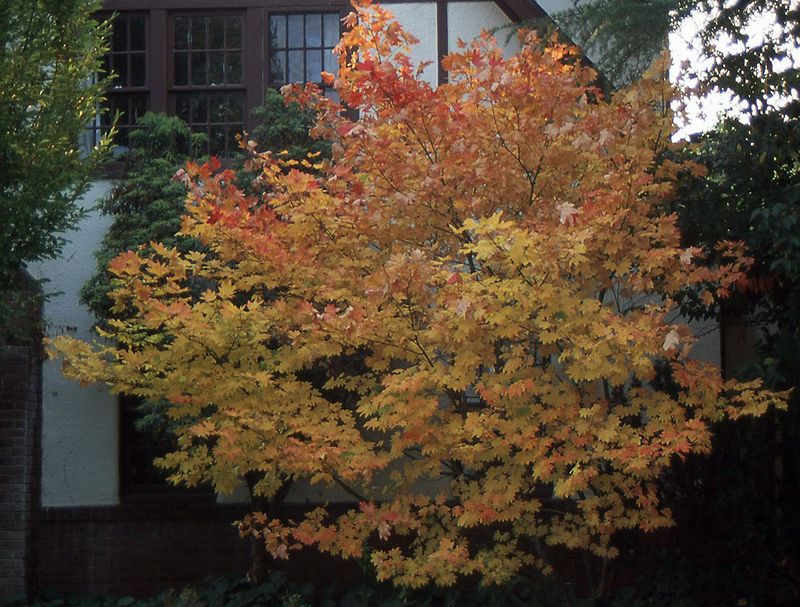
A small yard often needs vertical structure in exactly the spot where a large maple makes no sense.
Vine maple usually stays within a scale that works near patios, side gardens, woodland paths, and other spaces where a broad canopy tree would eventually overwhelm the layout.
Standard plants commonly reach roughly 10 to 20 feet, while some landscape references place mature specimens closer to 15 to 30 feet under favorable conditions.
Width still deserves respect.
The species can spread as wide as it grows tall, especially in shade. A tree that fits safely below overhead space may still push across a path or fence when planted too close.
Measure the available footprint before buying, not after the branches begin negotiating with the neighbor.
Cultivars can solve even smaller spaces.
Dwarf selections such as ‘Little Gem’ and ‘Pacific Sprite’ remain much shorter than the species, while ‘Pacific Fire’ offers bright bark and a more compact form.
Other selections emphasize unusual leaves or spring color. Cultivar availability changes by nursery, so the standard species may still be the easiest choice to find.
Do not use small stature as an excuse to plant directly beneath utility lines without checking mature dimensions and clearance requirements.
The real advantage is flexibility.
Vine maple gives Oregon gardeners several scales of the same regional character, from broad woodland forms to compact selections.
That makes it easier to fit the plant to the yard rather than spending the next decade trying to make the yard fit the plant.
8. Prune Lightly And Keep The Natural Form
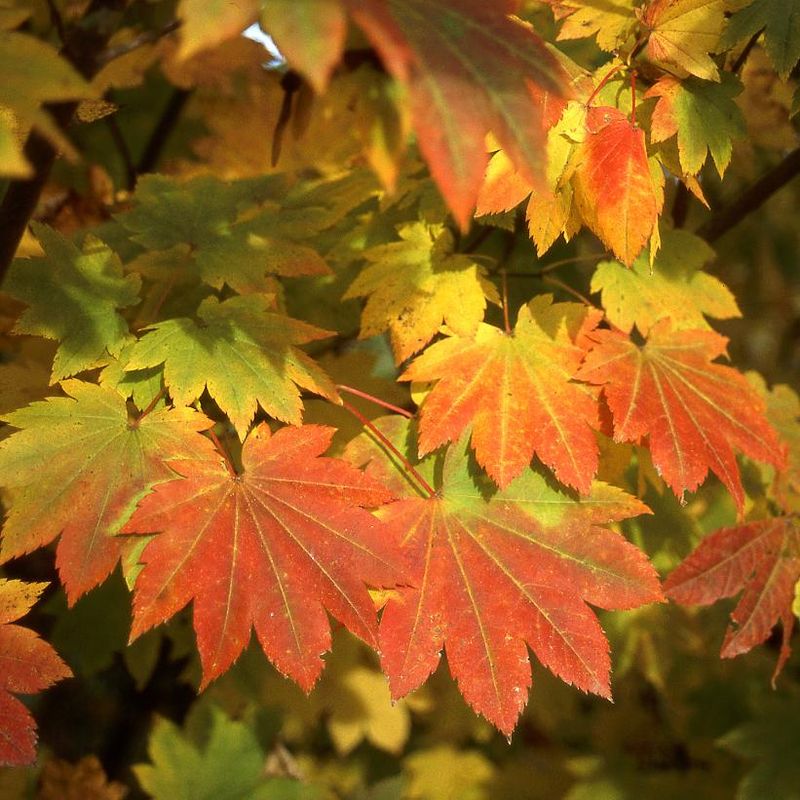
Vine maple looks best when pruning protects its natural form instead of replacing it.
The species can be upright and dense in sun or broad and horizontally graceful in shade. Heavy cutting removes the exact architecture that makes a mature plant worth keeping, so routine shearing is a poor match for its growth habit.
Use selective cuts for actual problems.
Damaged, broken, crossing, or rubbing branches are reasonable candidates for removal. Cuts should return to an appropriate branch or branch collar rather than leaving stubs or shaving flush against the trunk.
On a healthy specimen with enough space, the annual pruning list may remain pleasantly short.
Keep several trunks when they suit the plant.
A multi-stem form is normal for vine maple, not a defect that needs correction. Remove a stem only when clearance, damage, crowding, or the intended design gives a clear reason.
Stripping the clump down to one trunk simply to make it resemble a conventional street tree sacrifices much of its natural character.
Step away between cuts.
Branches that seem awkward from twelve inches away can make perfect sense from the patio. This tree benefits from editing at landscape distance rather than pruning by impulse with your face inside the canopy.
The hedge trimmer can stay in the garage.
A vine maple should finish pruning day looking recognizably like the same plant, only cleaner where genuine problems existed.
The less the gardener fights the species’ architecture, the more valuable that architecture becomes with age.