Why Florida Desert Roses Start Turning Yellow As September Arrives
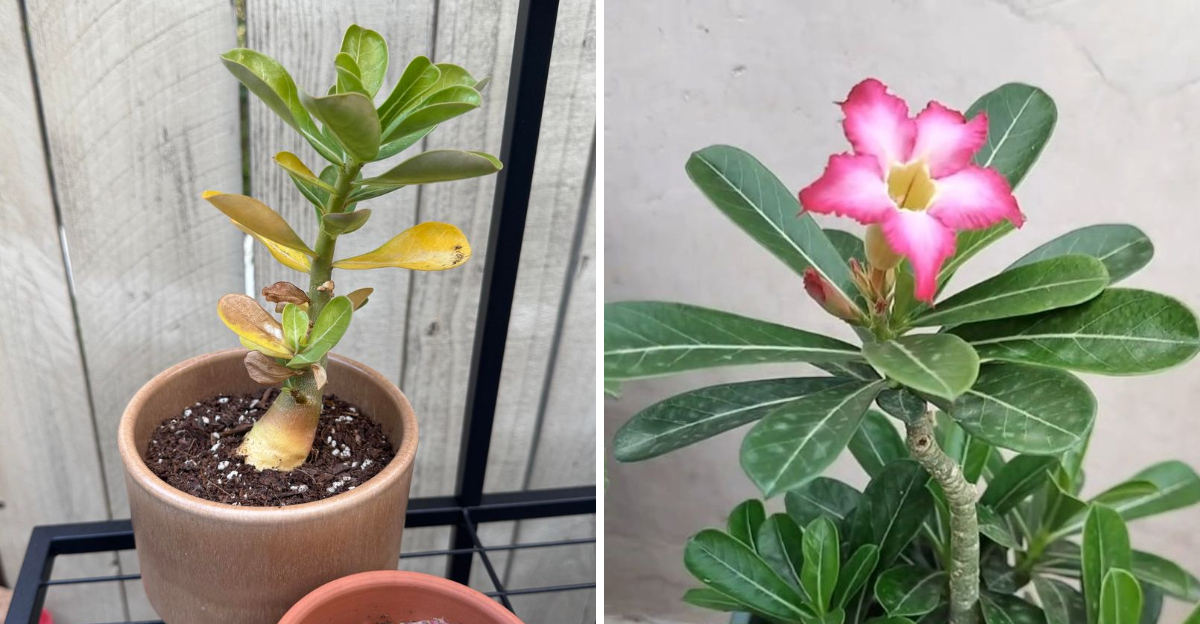
A desert rose can sail through the hottest part of a Florida summer, then lose its rich green color just as September arrives. A few yellow leaves may show up near the base first.
Days later, more can follow, which makes the change feel sudden and suspicious. The timing is rarely random.
Desert roses react sharply to shifts in moisture, daylight, heat, and root conditions, and early fall can bring several of those changes at once. The tricky part is that the same yellow color can point to a harmless seasonal response or a problem that needs attention.
The leaves themselves often give away which one you are dealing with. Look at where the yellow starts, how fast it spreads, and what the plant has faced over the past few weeks.
September may be the month your desert rose finally shows what summer has been asking of it.
1. September Yellowing Is Not Always A Fall Problem
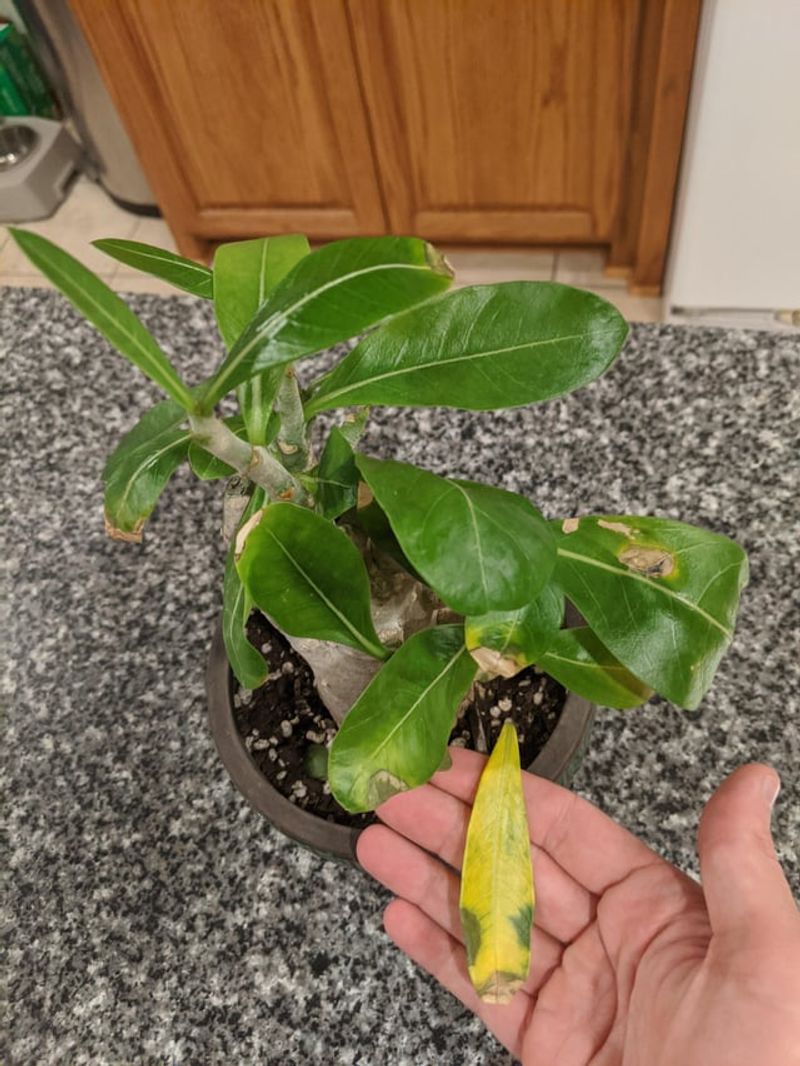
A few yellow leaves showing up in early September can send a Florida gardener straight into problem-solving mode. The instinct to act fast is understandable, but the date on the calendar is rarely the most useful clue.
September in the southern part of the state can still feel very much like midsummer, with daytime highs pushing into the upper 80s and 90s.
Watering habits, recent rainfall, soil drainage, and available sunlight often matter far more than the month. A plant sitting in a well-drained pot with firm tissue and strong light may just be shedding a leaf or two naturally.
That is a very different situation from one sitting in wet soil with multiple yellowing leaves and soft tissue at the base.
Looking at the pattern of yellowing offers better clues than the date alone. Yellowing that starts at the bottom of the plant and moves upward can point to moisture issues.
Yellowing spread evenly across the canopy may suggest something else entirely. Not every September leaf change signals an abnormal event, but each one deserves a closer look at the whole plant before drawing conclusions.
2. Heavy Late Summer Rain Can Leave The Roots Too Wet
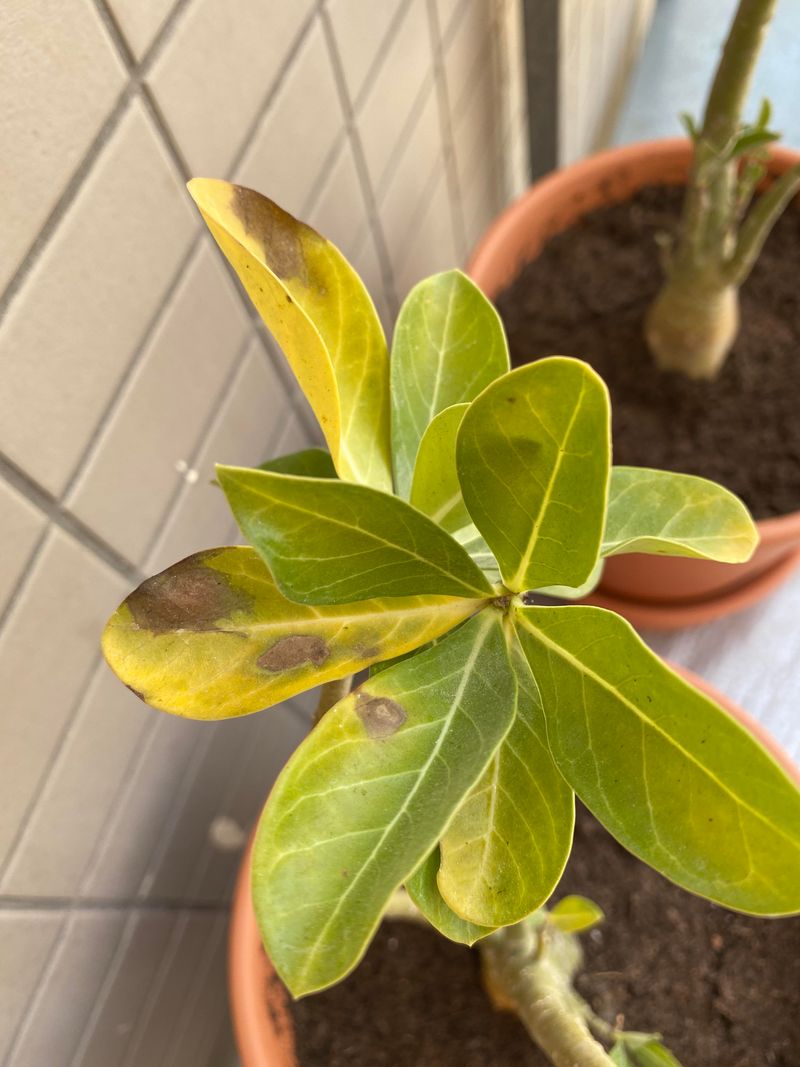
Rain-soaked pots are one of the most common culprits behind yellow leaves in late summer. Adenium obesum is native to dry, rocky environments and is built for well-drained conditions.
Repeated afternoon downpours, which are common in Florida through August and into September, can keep container soil wetter than it appears on the surface.
Gardeners who stick to a fixed summer watering schedule may not realize the soil never fully dried out between storms. Adding more water on top of already saturated soil compounds the problem quickly.
Roots sitting in consistently wet conditions cannot take up oxygen properly, and stressed roots often show their distress through yellowing leaves above the soil line.
According to UF/IFAS Gardening Solutions, Adenium obesum requires excellent drainage and does not tolerate waterlogged conditions. Checking soil moisture a few inches below the surface before watering is a practical habit during rainy stretches.
Your Florida Garden Changes Every Week. Your Plan Should Too.
Gardening in Florida changes quickly throughout the season. Every Friday you’ll receive a simple weekly plan showing exactly what to plant, prune, fertilize, harvest, and protect so you never miss the right timing.
Pressing a finger two inches into the potting mix gives a much clearer picture than looking at the top of the soil. Skipping a scheduled watering when the soil already feels moist is often the right call, especially during a wet weather pattern.
3. A Soft Caudex Makes Yellow Leaves More Concerning
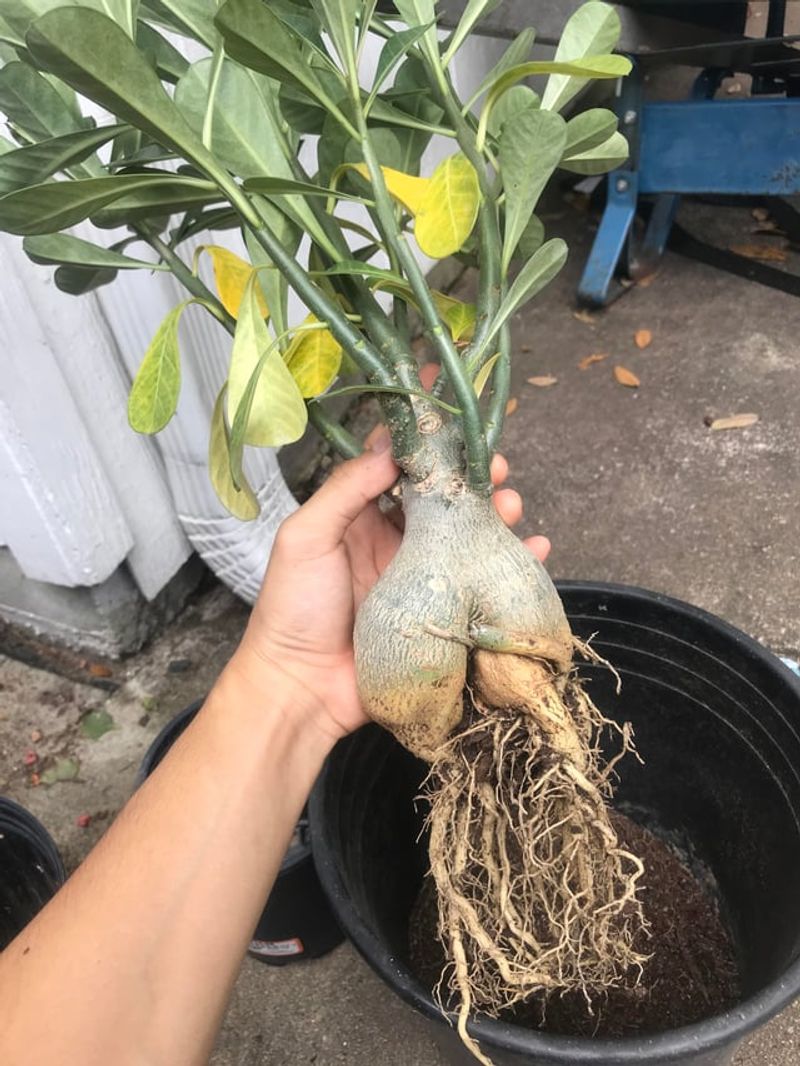
Not all yellow leaves carry the same message. Squeezing the thick, swollen base of the plant, called the caudex, can quickly change how you interpret what you are seeing.
The caudex stores water and nutrients, and a healthy one feels firm and solid when gently pressed.
A noticeably soft or squishy caudex is more concerning when the soil is wet and leaves are yellowing. That combination may signal a more serious problem below the surface.
Soft tissue at the base combined with declining growth is a pattern worth taking seriously. UF/IFAS succulent-care resources note that tissue softening in water-storing plants often reflects excess moisture.
It is not necessarily a simple seasonal change.
A plant with a firm caudex dropping a few lower leaves as conditions shift tells a much calmer story. Mild softness after very heavy rain that firms back up once the soil dries is different from persistent softness that does not improve.
Checking the caudex regularly during rainy stretches gives you a more complete picture than observing the leaves alone. Use the whole plant as your guide, and let the caudex condition inform how urgently you respond to yellowing leaves.
4. Cooler Nights Can Start A Normal Leaf Drop
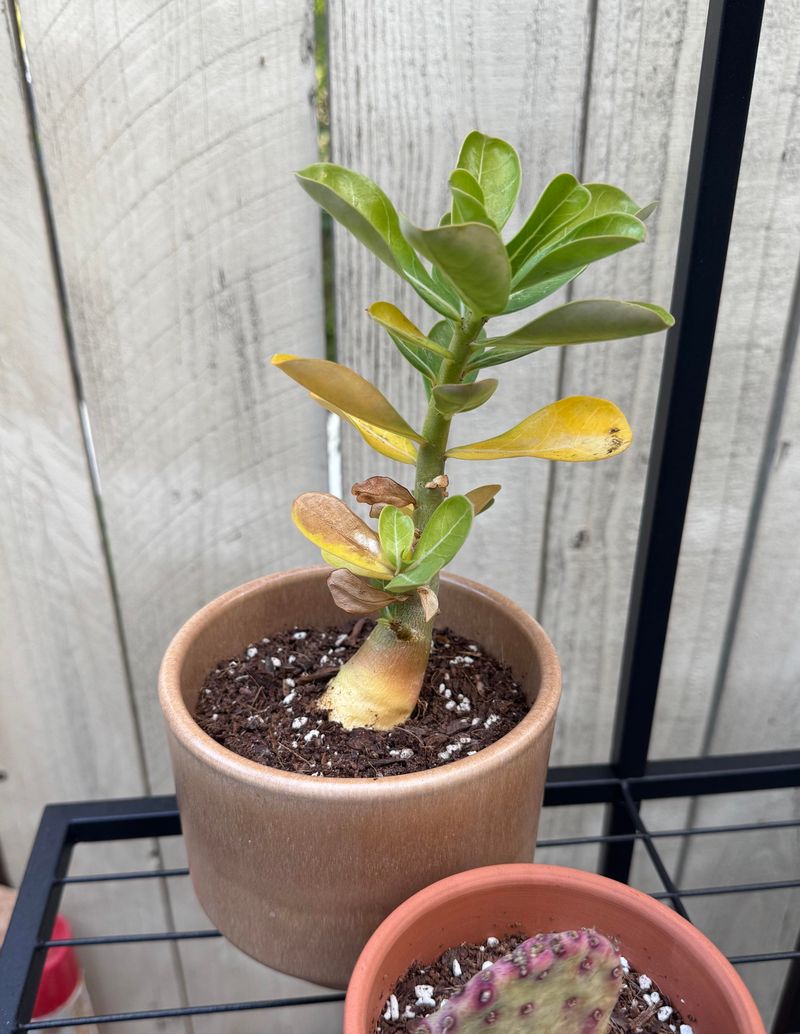
Cooler evenings have a way of nudging desert roses into a quieter phase. As nighttime temperatures begin to drop, growth naturally slows and some leaf yellowing and shedding can follow.
Adenium obesum is sensitive to temperature shifts, and a cooling trend can trigger a gradual seasonal slowdown.
North Florida gardeners may notice this seasonal shift earlier in fall. In Central and South Florida, warm nights often persist well into October or even November.
Seasonal leaf drop tied to cooling temperatures is a normal part of the plant’s annual cycle, not a sign of a care failure. UF/IFAS notes that Adenium is cold-sensitive and begins to slow when nighttime temperatures consistently drop toward the 50s.
Not every plant becomes fully bare, and not every plant responds to the same temperature threshold in the same way. Some individuals hold most of their leaves through mild winters, while others drop more heavily.
Watching nighttime lows alongside the pattern of leaf drop helps you decide whether the plant is simply responding to seasonal cues.
A gradual, steady loss of older leaves as cool nights arrive is generally far less worrying than a sudden drop of many leaves with no temperature change to explain it.
5. Less Sun Can Make The Yellowing Worse
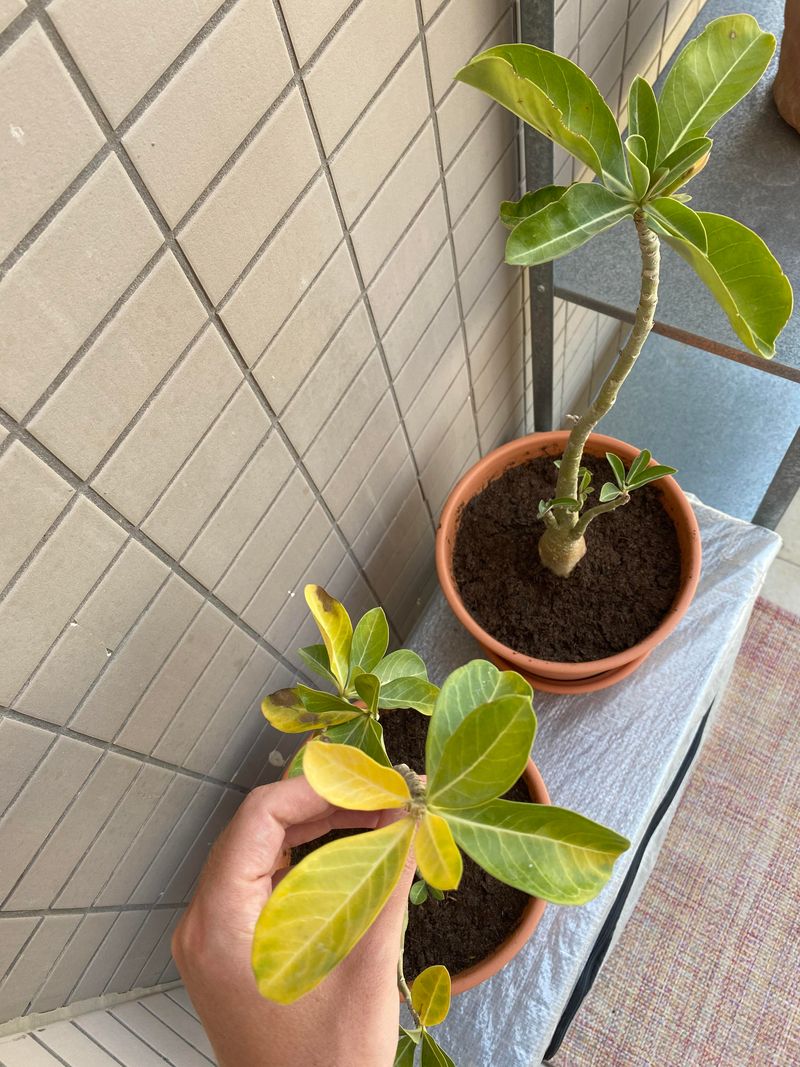
Shaded patios, screened lanais, and covered porches can quietly reduce the light a desert rose receives without the change feeling dramatic.
Moving a container under an overhang to protect it from heavy rain, or shifting it closer to a wall, can cut available sunlight significantly.
Adenium obesum thrives in bright, direct sun and can struggle when light levels drop below what it needs.
UF/IFAS Gardening Solutions recommends full sun for desert rose, noting that reduced light affects both flowering and overall plant vigor.
Pale or yellowing leaves on a plant that recently moved to a shadier spot may be responding to that change rather than to anything happening in the soil.
Checking whether the plant’s position changed in recent weeks is a useful diagnostic step.
Sun angles also shift as summer turns to fall, meaning a spot that received full sun in July may get noticeably less direct light by late September. A container that was in full sun on a south-facing patio may now spend part of the day in shadow.
Rotating or repositioning the pot to restore better light exposure can make a real difference. Confirming that light, not moisture or temperature, is the variable that changed helps you apply the right fix.
6. Too Much Fertilizer Can Look Like A Care Problem
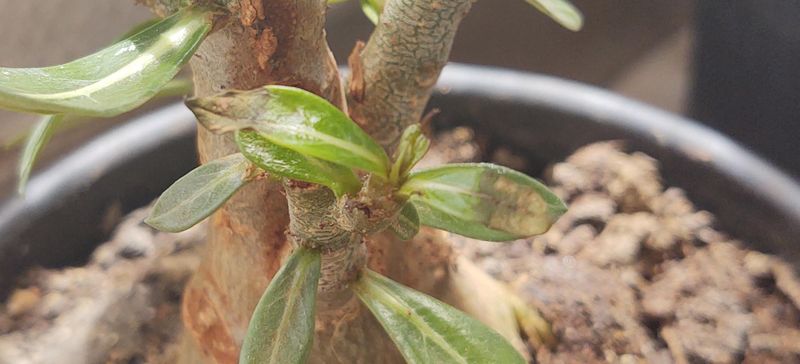
Grabbing a fertilizer bottle is a natural response when leaves start looking pale or yellow. The logic seems sound: the plant looks off, so feed it more.
But adding fertilizer to a stressed or slowing plant can create new problems rather than solving the original one.
Adenium obesum benefits from feeding during active growth. But fertilizing during wet-root stress, low light, or a seasonal slowdown can push the plant in the wrong direction.
Excess fertilizer salts can accumulate in the potting mix and stress roots that are already struggling. UF/IFAS container-care guidance recommends matching fertilizer applications to active growth periods.
Follow label directions instead of increasing feeding frequency when a plant looks unhealthy.
Pale or yellowish leaves do not automatically mean the plant needs more nutrients. They can just as easily reflect too much water, too little light, or a natural shift in growth rate.
Before adding any product to the pot, check soil moisture, review recent weather, look at the caudex, and consider how much light the plant is receiving. Fertilizer applied during a stress period or a slowdown rarely produces the improvement gardeners hope for, and it can make the underlying issue harder to read.
7. A Pot That Stays Wet Can Undo Good Watering Habits
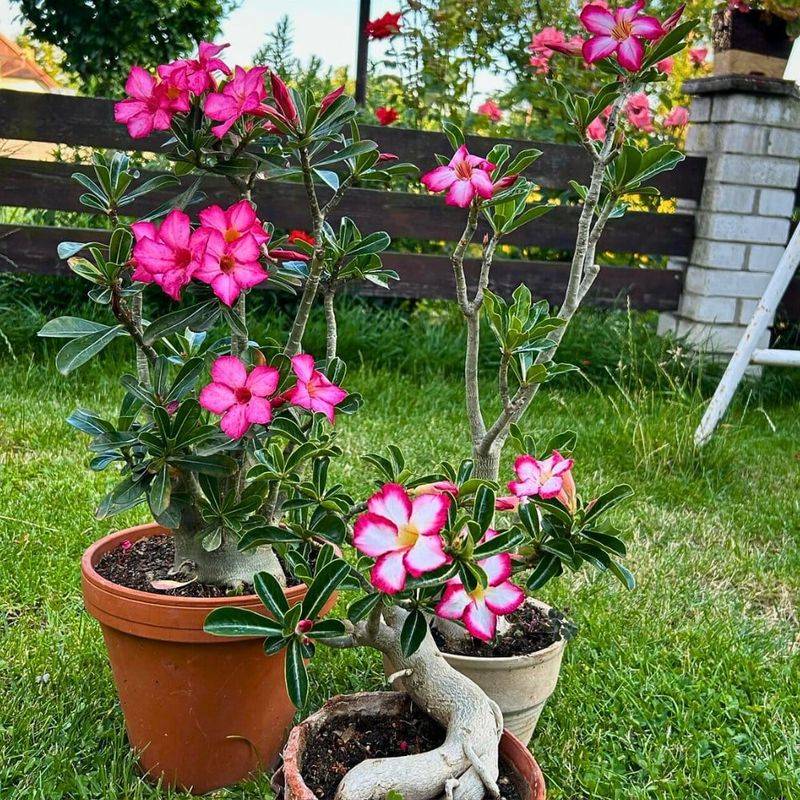
Even a Florida gardener who waters carefully can end up with soggy roots if the container setup does not allow water to exit quickly. The potting mix matters just as much as how often you water.
A standard moisture-retaining mix designed for tropical houseplants holds far more water than Adenium obesum prefers.
Drainage holes that are partially blocked by compacted mix or debris can slow water movement significantly. Saucers left filled with water beneath a pot allow the lower roots to sit in standing moisture, even if the top of the soil looks dry.
Containers that collect runoff from surfaces or rooflines can stay wet from rainfall alone. No additional watering may be needed to create a moisture problem.
UF/IFAS recommends that succulents and drought-adapted plants be grown in a fast-draining mix, often amended with perlite or coarse material to improve aeration.
Checking that water flows freely out of the drainage holes after each watering is a simple but effective habit.
Emptying saucers after rain or after watering prevents water from wicking back up into the root zone. Good drainage turns careful watering into effective watering, and without it, even restrained habits may not protect the roots.
8. The Leaves Tell You Less Than The Whole Plant Does
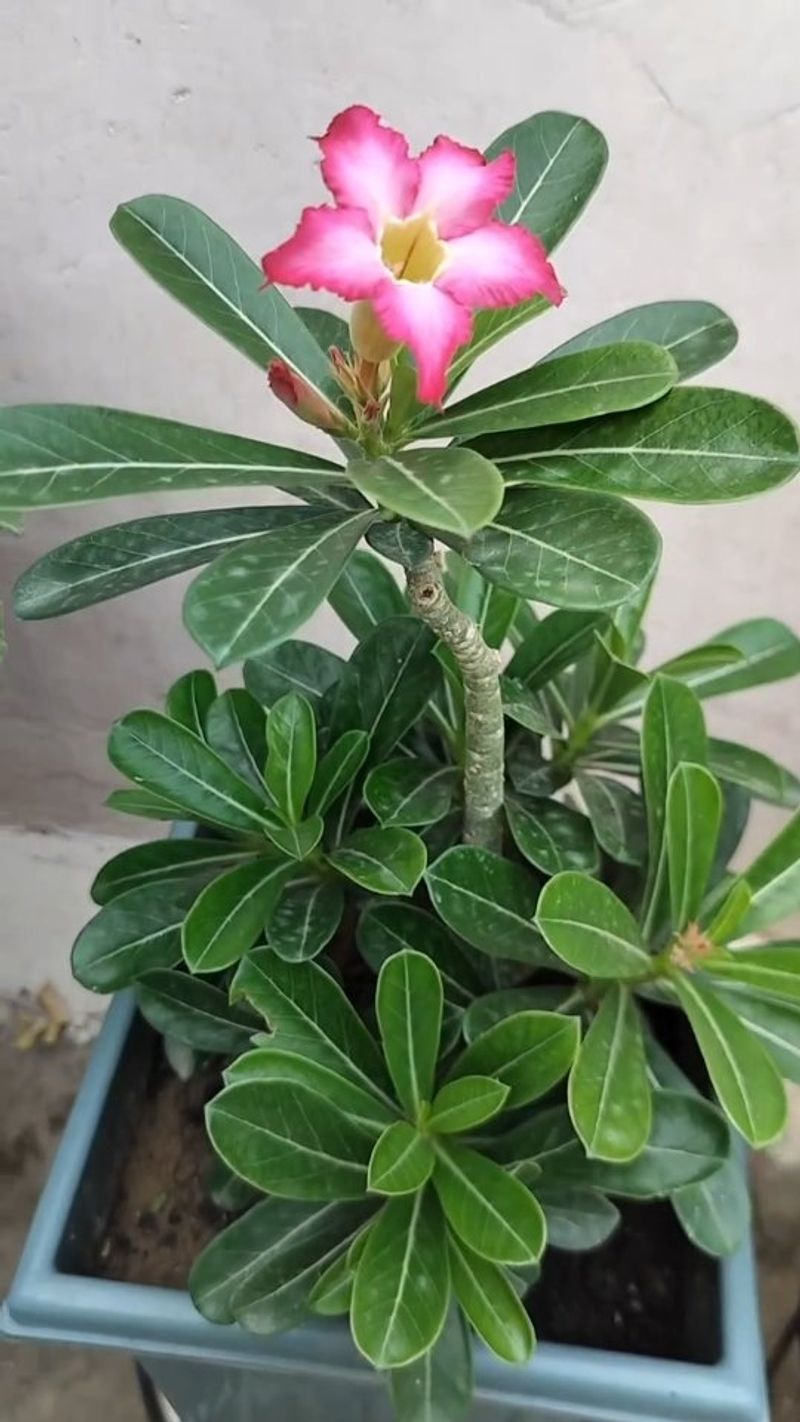
Yellow leaves are a symptom, not a diagnosis. Reacting to them without checking everything else the plant is telling you can lead to a fix that makes things worse.
Assess more than leaf color alone. Soil moisture, drainage, rainfall, caudex firmness, light, fertilizer history, nighttime temperatures, and the speed of leaf loss all matter.
A plant with a firm caudex, dry soil, and a few yellowing lower leaves during a stretch of cooler evenings is almost certainly doing something normal.
A plant sitting in wet soil with soft tissue at the base, dropping leaves quickly, and showing no new growth is a very different situation that deserves prompt attention.
Lumping both under the label of September yellowing and treating them the same way misses the point entirely.
Observation before reaction is the most practical approach. Spend a few minutes checking each variable before reaching for a watering can, a fertilizer bottle, or any other product.
September yellowing deserves careful attention because seasonal change may be involved. But the real cause could still be developing quietly inside the pot.
Reading the whole plant, not just the leaves, is what separates a well-timed response from one that adds more stress to an already struggling Adenium.