Why You Should Grow Coral Honeysuckle Along Your Fence In Florida
Some fences in Florida do their job and nothing more. They mark the boundary, hold the yard together, and quietly sit there year after year.
But every now and then, a plant comes along that turns that plain stretch of wood or wire into something far more interesting to look at. Coral honeysuckle has a way of doing exactly that.
This native vine doesn’t just climb a fence, it softens it. Stems begin weaving through the slats, green leaves fill in the gaps, and before long the whole structure starts looking more like part of the landscape than a barrier.
What really surprises many gardeners is how naturally it fits Florida yards. It grows with the climate instead of fighting it, and the color it brings often catches attention long before anyone realizes what plant it is.
Once it settles in, a fence can suddenly feel like the most lively corner of the yard.
1. Coral Honeysuckle Is A Hummingbird Magnet
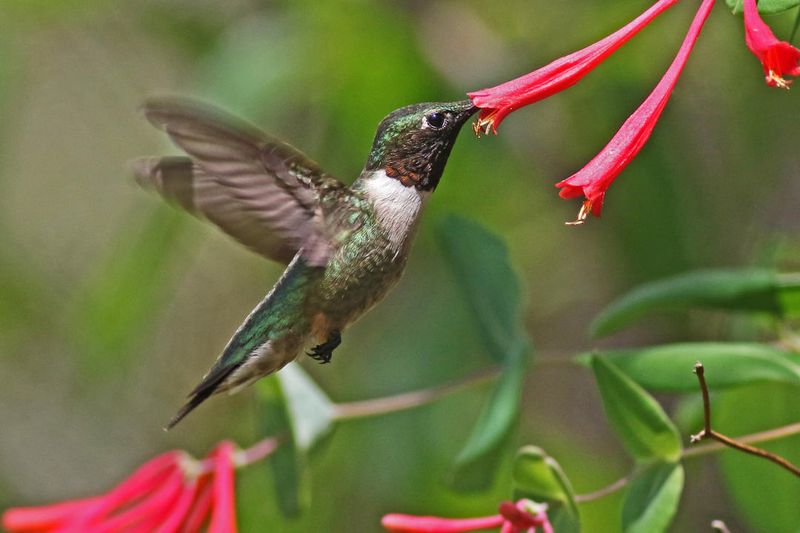
Picture this: a tiny ruby-throated hummingbird hovering just inches from your fence, its wings a blur as it sips nectar from a bright red coral honeysuckle bloom. That magical moment can happen in your own backyard when you plant this stunning native vine.
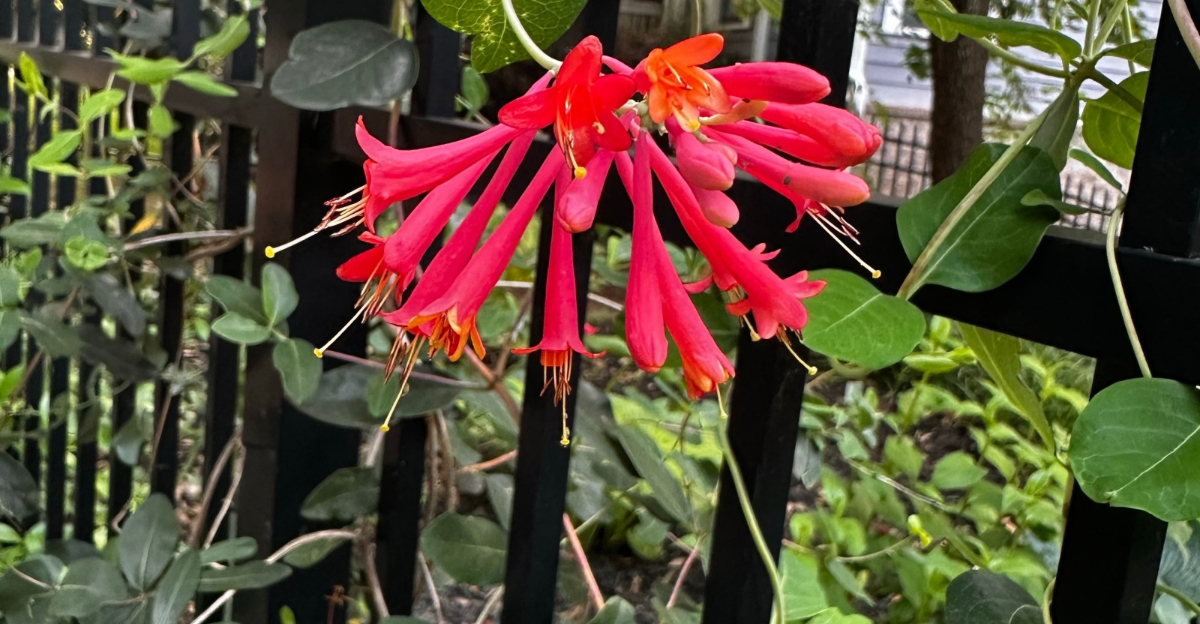
Coral honeysuckle, known scientifically as Lonicera sempervirens, produces long, slender, trumpet-shaped flowers that are perfectly designed for hummingbird feeding.
The blooms appear most heavily in spring but continue throughout the summer and even into fall in many parts of Florida. This extended bloom period means your yard becomes a reliable pit stop for hummingbirds during both their nesting season and their annual migrations.
Bees and butterflies are also frequent visitors, making your fence a full-on pollinator hub.
To keep the blooms coming and the wildlife visiting, give your coral honeysuckle a sunny spot with well-drained soil. Light pruning after the main bloom flush encourages fresh growth and more flowers.
According to the University of Florida IFAS, this vine is one of the top recommended plants for creating wildlife-friendly gardens across the state. You really cannot go wrong planting it.
2. It Feeds Songbirds All Year Long
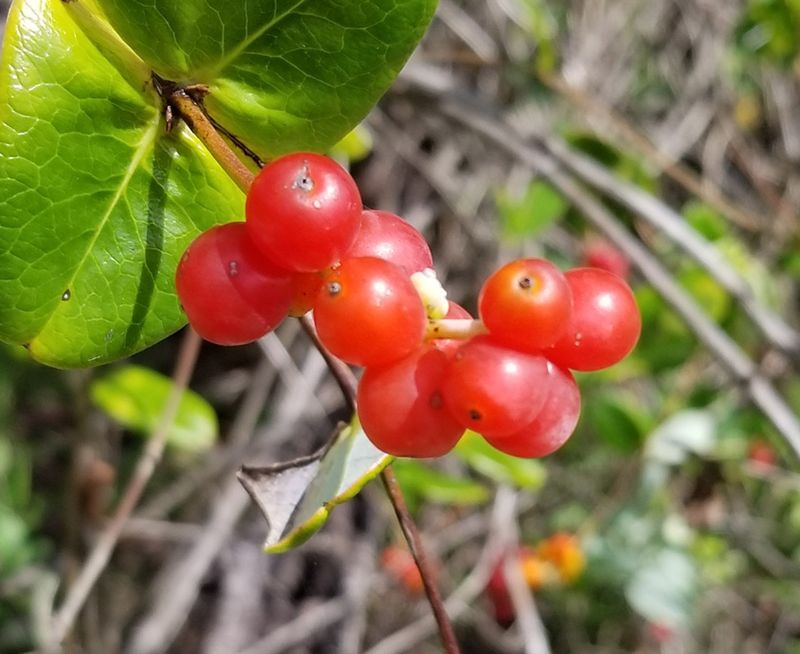
Most gardeners fall in love with coral honeysuckle because of its flowers, but the berries that follow are just as exciting. After the blooms fade, the vine produces clusters of small, glossy red berries that ripen through the summer and fall.
These berries are a favorite food source for many Florida songbirds, including robins, hermit thrushes, and purple finches.
What makes this especially valuable is the timing. By the time the berries appear, many other natural food sources in the garden have slowed down.
Your fence becomes a living buffet that helps local bird populations stay healthy and well-fed through the leaner months of the year. Watching birds flock to your yard is a reward that keeps on giving.
Unlike bird feeders that require constant refilling and cleaning, coral honeysuckle provides food naturally and sustainably. Once the vine is established, it handles most of the work on its own.
Florida gardeners who want to support local wildlife without a lot of extra effort will find this vine to be one of the most rewarding plants they can grow. It truly earns its place along any fence.
3. A Native Gem That Won’t Take Over
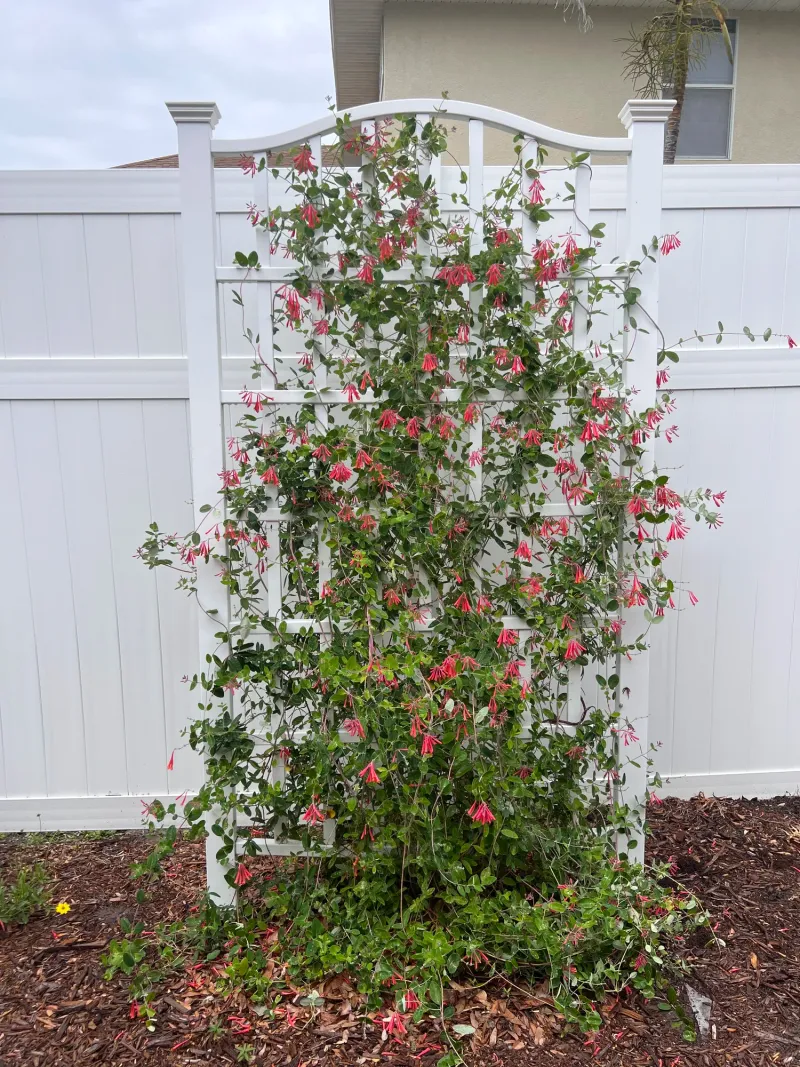
Florida gardeners know the frustration of dealing with invasive plants that spread out of control and crowd out everything else. Japanese honeysuckle, for example, is a notorious invader that smothers native plants and is considered a serious ecological threat across the southeastern United States.
Coral honeysuckle is a completely different story.
As a plant native to Florida and much of the eastern United States, coral honeysuckle has evolved alongside local ecosystems for thousands of years. It grows vigorously enough to cover a fence beautifully but does not spread aggressively or reseed itself in ways that cause problems.
The University of Florida IFAS has long recommended it as a responsible choice for Florida landscapes precisely because it supports rather than disrupts local ecology.
Choosing native plants like coral honeysuckle is one of the most meaningful things a Florida homeowner can do for the environment. Native plants require fewer resources, support more local wildlife, and help maintain the natural balance of Florida’s diverse ecosystems.
When you plant coral honeysuckle instead of an invasive alternative, you are making a choice that benefits your yard, your neighborhood, and the broader Florida environment for years to come.
4. Low-Maintenance Beauty
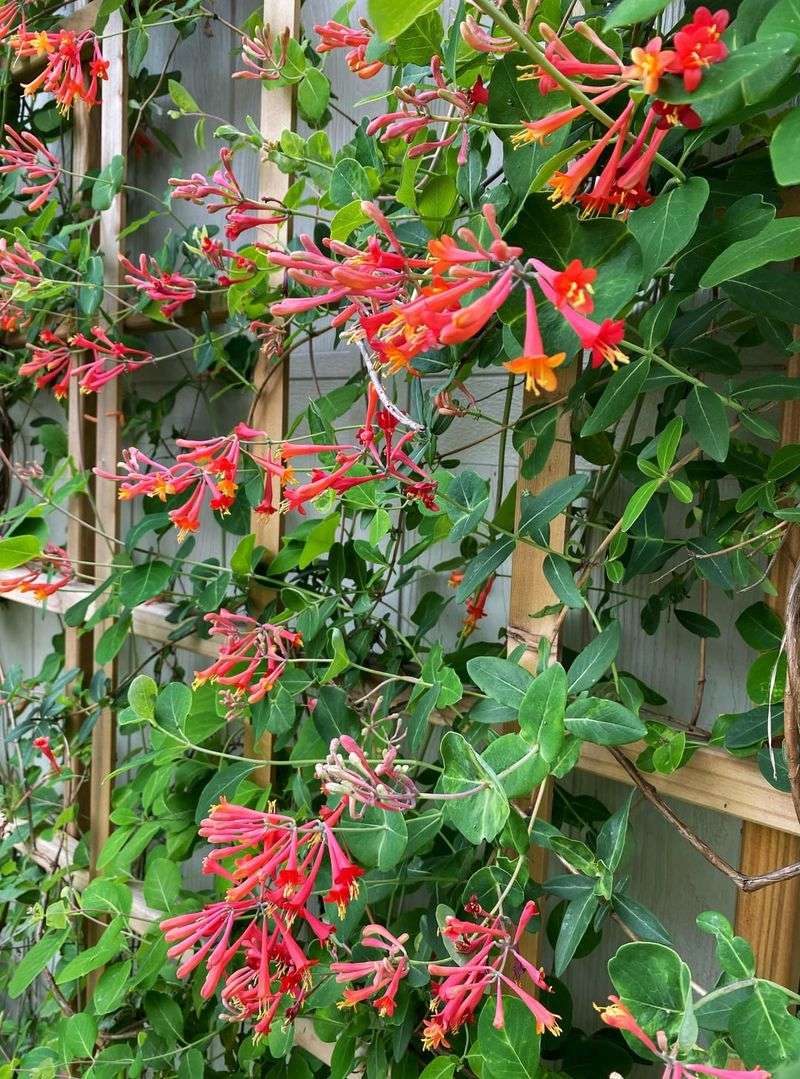
Not every gardener has hours to spend watering, fertilizing, and fussing over plants. If you want a vine that looks incredible without demanding constant attention, coral honeysuckle is your answer.
Once established, this tough native is remarkably drought-tolerant, meaning it can handle Florida’s dry spells without wilting or struggling.
Pest pressure is also minimal with coral honeysuckle. It is naturally resistant to most of the insects and diseases that plague other garden plants.
You will not need to spray it with chemicals or treat it with special products to keep it healthy and blooming. That is a huge advantage for gardeners who prefer to keep their yards as natural and chemical-free as possible.
Planting is straightforward too. Give it a sunny to partly shady spot, some well-drained soil, and a fence or trellis to climb, and it will do the rest.
A little slow-release fertilizer in the spring can give it a helpful boost, but even that is optional. According to Florida-friendly landscaping guidelines, coral honeysuckle is one of the best vines to use when you want maximum visual impact with minimum maintenance.
It is truly a plant that works hard so you do not have to.
5. Create Natural Privacy With Ease
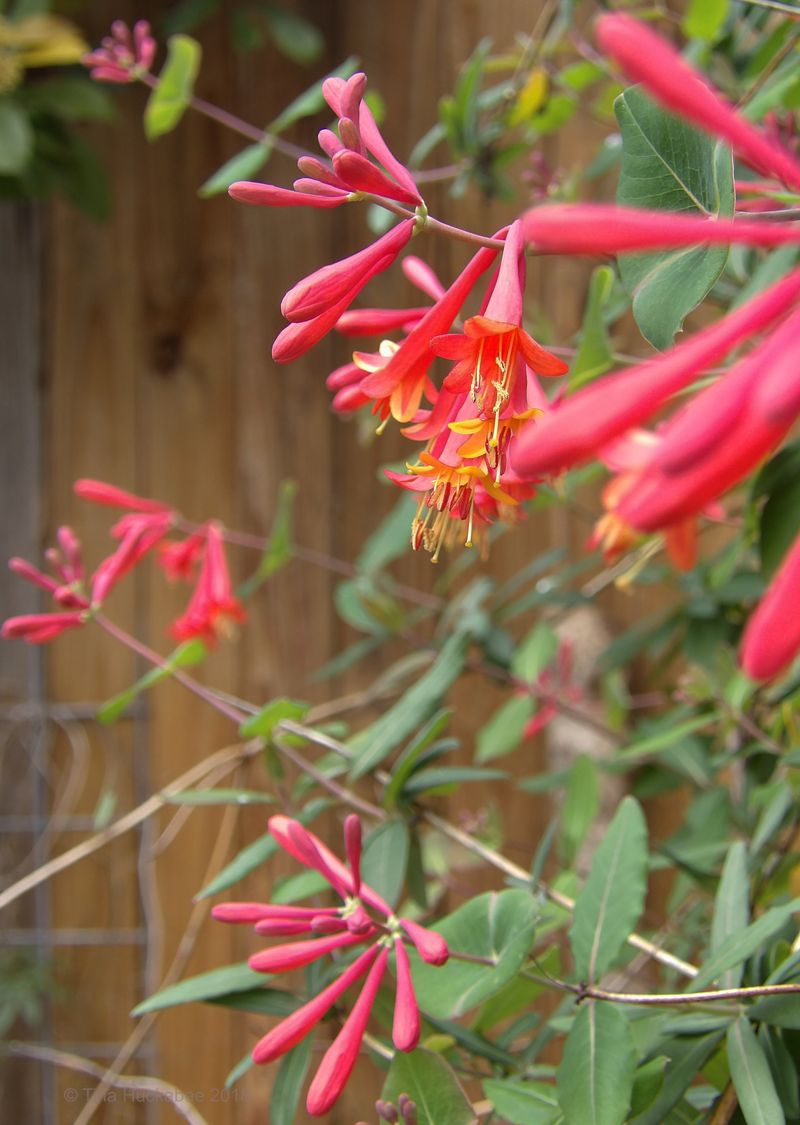
Privacy fences do their job, but a bare wooden or chain-link fence can feel stark and unwelcoming. Coral honeysuckle transforms that same fence into a lush, living wall that feels warm, natural, and inviting.
The vine climbs quickly once established, weaving through fence slats and creating a thick curtain of green foliage dotted with brilliant red flowers.
For Florida homeowners who want to block the view of a neighboring yard, hide an unsightly structure, or simply create a more secluded outdoor space, this vine is a practical and beautiful solution. It softens the hard edges of fences and adds layers of texture and color that no painted board or vinyl panel can match.
Your outdoor living space instantly feels more like a garden retreat.
The vine grows at a moderate pace, typically reaching lengths of 10 to 20 feet, which is ideal for covering a standard backyard fence without getting out of hand. Training it along the fence early in its growth helps guide it in the right direction.
A little guidance in the first season goes a long way toward creating a full, even screen that provides both privacy and natural beauty throughout the year.
6. Supports Local Wildlife And Ecosystem Health
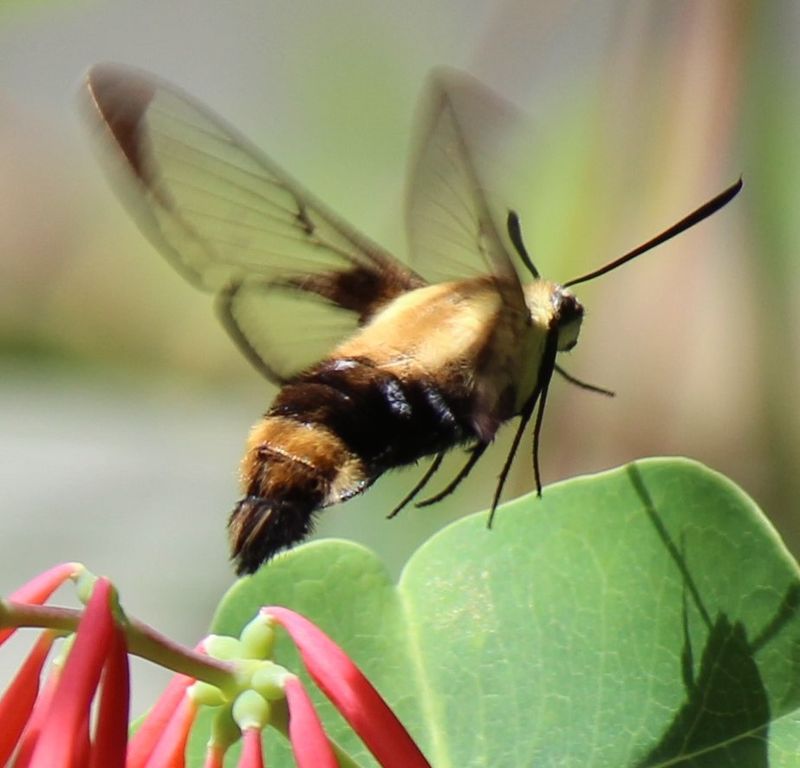
Every plant you choose for your yard is a decision about what kind of ecosystem you want to support. Coral honeysuckle is one of those rare plants that gives back to the environment in multiple ways at once.
Its nectar-rich flowers feed hummingbirds, bees, and butterflies, while its berries nourish songbirds, and its dense foliage provides shelter for small animals and nesting birds.
Florida’s natural ecosystems are under significant pressure from development, habitat loss, and the spread of invasive species. When homeowners plant native species like coral honeysuckle, they help create corridors of habitat that allow wildlife to move, feed, and reproduce.
Even a single fence covered in this vine can make a measurable difference for local pollinators and birds.
Gardening with an ecological mindset does not mean sacrificing beauty or convenience. Coral honeysuckle proves that a plant can be stunning, easy to grow, and genuinely good for the environment all at the same time.
Organizations like the Florida Native Plant Society actively encourage homeowners to incorporate natives like this vine into their landscapes. Supporting local wildlife starts right in your own backyard, and coral honeysuckle makes it effortlessly rewarding.
7. Thrives In Florida’s Sun And Soil
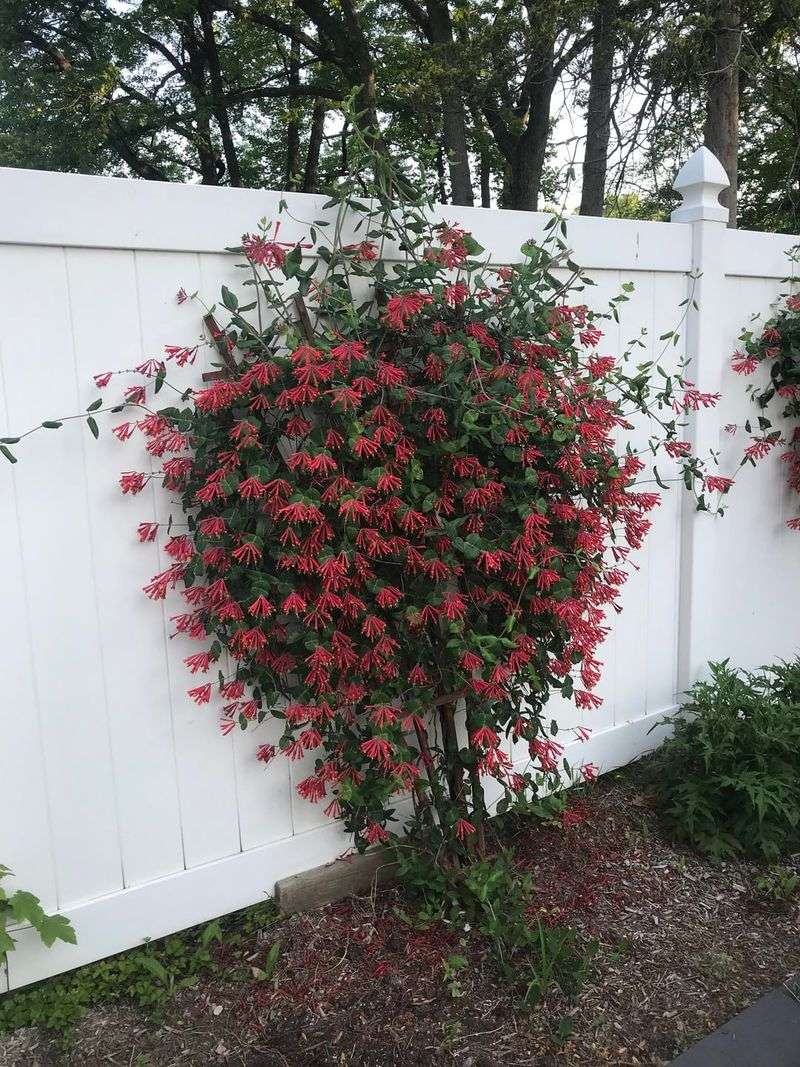
Florida’s climate can be tough on plants. Between the blazing summer sun, sandy soils, and occasional flooding, many garden plants struggle to thrive year after year.
Coral honeysuckle, however, seems almost tailor-made for Florida conditions. It grows naturally across the state, from the panhandle all the way down to South Florida, adapting to a wide range of soil types and climate zones.
Full sun is where this vine truly shines, producing the most flowers and the densest growth when it receives at least six hours of direct sunlight per day. It also tolerates partial shade, which makes it flexible enough for fences that face different directions.
Sandy, loamy, or even clay-heavy soils are all acceptable as long as drainage is decent and the roots do not sit in standing water.
Planting in the fall or early spring gives coral honeysuckle the best start, allowing roots to establish before the heat of summer arrives. Water it regularly for the first few months, then step back and let the plant do what it does naturally.
North Florida gardeners may see it go briefly dormant in winter, but it bounces back reliably each spring with fresh growth and a fresh flush of gorgeous blooms.
8. Year-Round Color And Texture
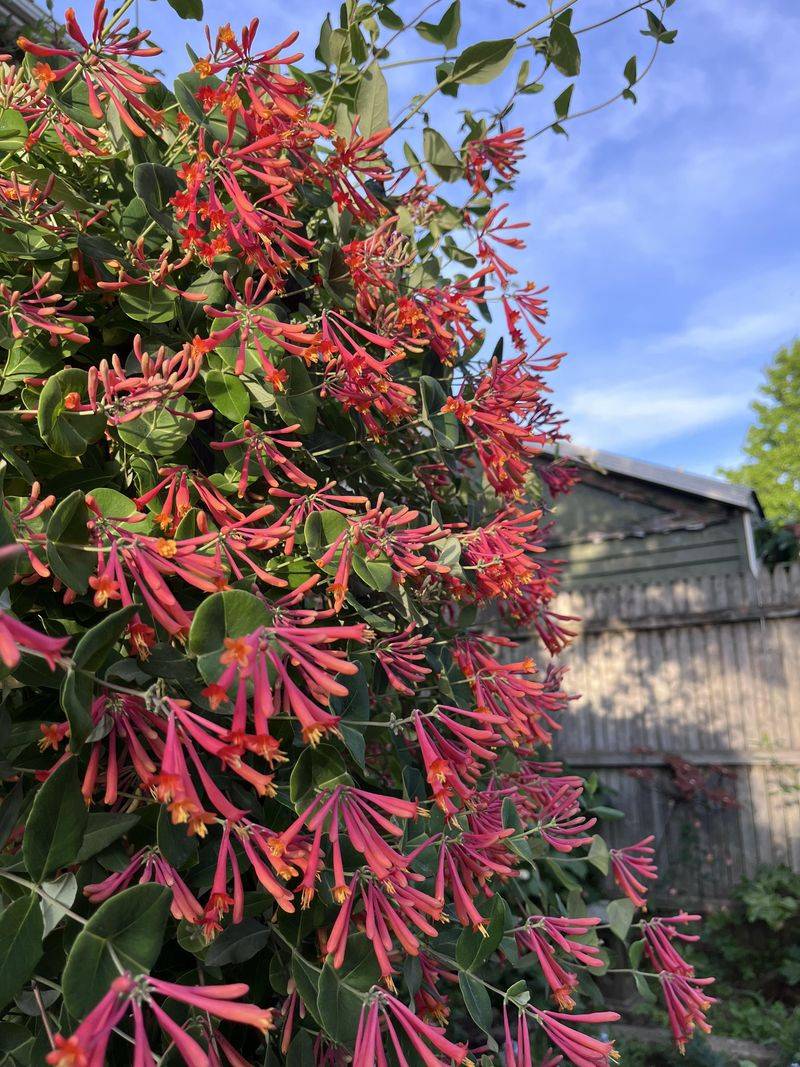
One of the best-kept secrets about coral honeysuckle is how much visual interest it provides across every season. In spring, the vine explodes with its signature red blooms, turning your fence into a showstopper.
Summer brings a steady continuation of flowers along with the development of those attractive red berries. By fall, the berries are fully ripe and the foliage remains lush and green.
In Central and South Florida, coral honeysuckle behaves as a semi-evergreen plant, holding onto most of its leaves even through the mild winters. This means your fence stays covered and attractive year-round rather than looking bare and abandoned during the cooler months.
Even in North Florida, where the vine may drop its leaves in a cold winter, new growth returns quickly and enthusiastically in early spring.
Few vines offer this kind of consistent, multi-season appeal without requiring a lot of extra care. The combination of bold red flowers, glossy green leaves, and colorful berries gives your landscape texture and depth that changes subtly with each passing month.
For Florida gardeners who want a fence planting that looks great in January just as much as it does in June, coral honeysuckle is simply one of the finest choices available.