Why Your Lawn Is Turning Brown While The Weeds Stay Green
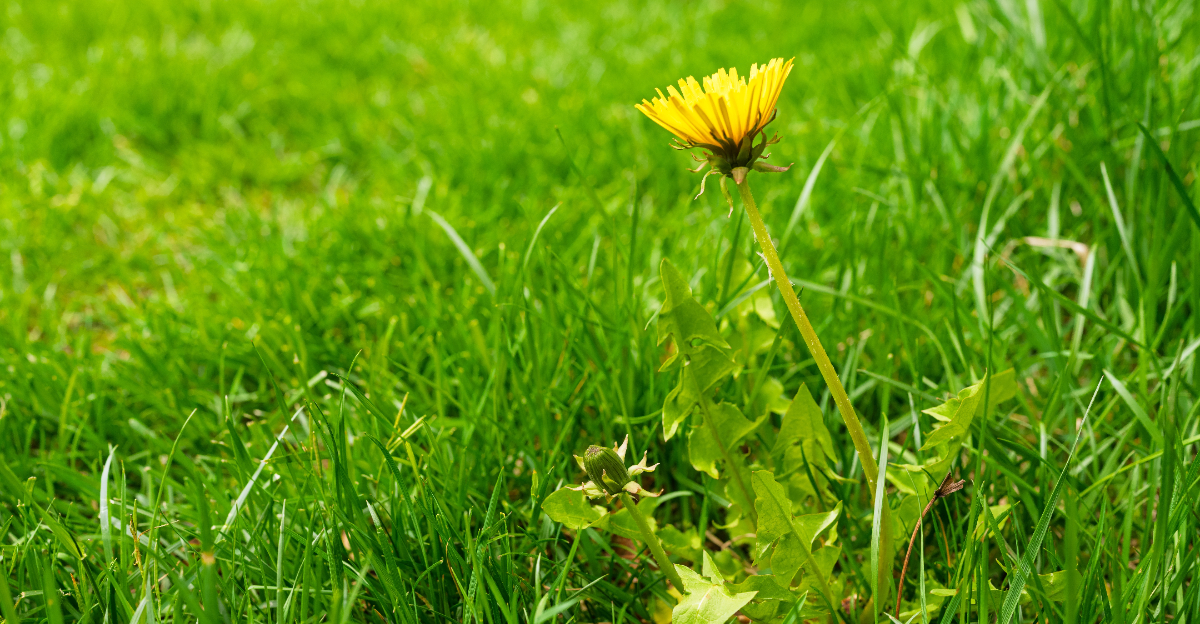
Most of the yard has gone tan and brittle, faster than you expected. The scattered low patches of green look like they never noticed the weather changed at all.
Nothing obvious separates the tan areas from the green ones. One group of plants is fading while the other is putting on growth without any help from you.
It is not a watering mistake or a bad batch of seed. Those two groups are not playing by the same rules below the surface, and the gap stays hidden until a dry stretch pulls them apart.
Here are nine reasons your turf loses color while its neighbors keep theirs, plus what to do about each one.
1. Deeper Roots Give Weeds The Water Advantage
Picture two straws in a glass of water. One reaches halfway down, the other touches the bottom.
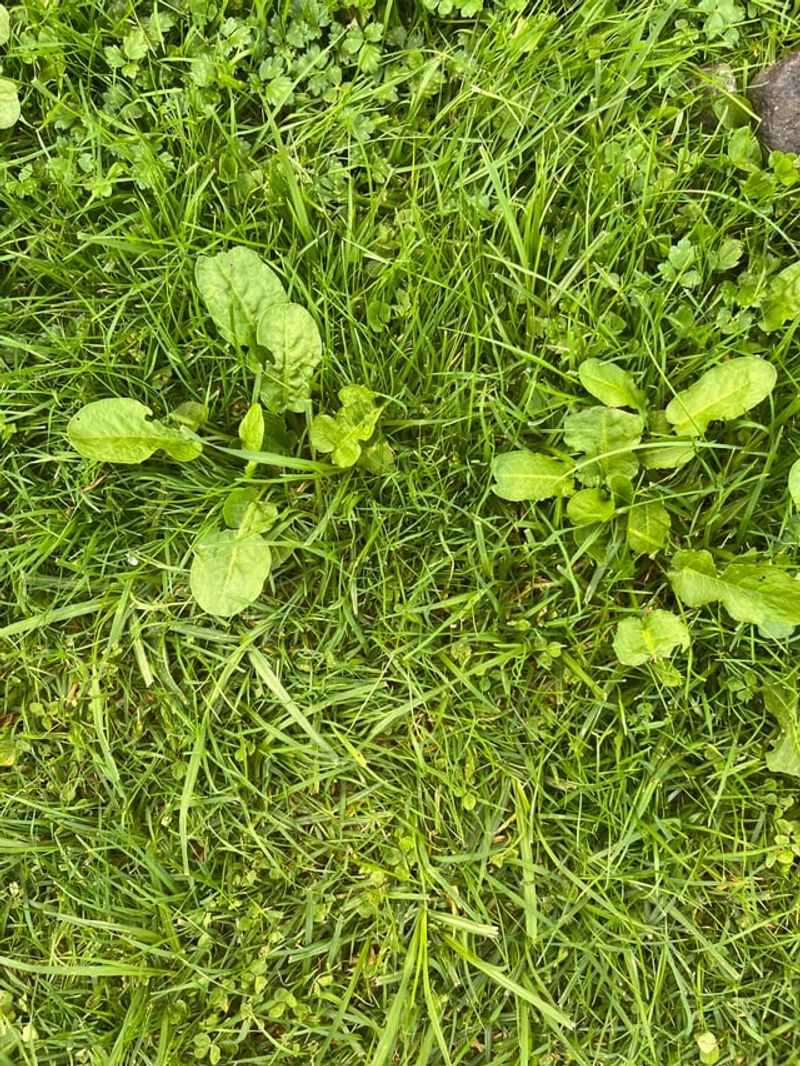
Lawns that get frequent shallow watering often keep most of their roots in the top two to four inches of soil, though tall fescue roots far deeper when watering is less frequent. Dandelions and Canada thistle send roots down eight, ten, sometimes eighteen inches or more.
When the surface soil bakes in July heat, your grass has nothing left to sip. The weeds are quietly pulling moisture from a layer your turf has never reached.
Frequent light sprinkling makes the problem worse. Grass roots follow water, so if moisture only sits in the top inch, the roots stay shallow.
The fix is slower and deeper. Water about one inch per week in one or two long sessions instead of ten-minute daily bursts, and let the top layer dry between soakings.
Check the depth with a long screwdriver or a soil probe an hour after watering. If it slides down six inches without much force, the moisture is reaching where you want it.
Core aeration in fall pays off as well. Pulling small plugs of soil opens channels for water and air, and roots follow those channels downward.
Give grass a season of deep drinks and it starts competing on more even footing. It will not out-root a dandelion overnight, but it stops thinning out at the first hot week.
Patience matters here. Root systems rebuild over months, not weekends, and the payoff shows up the following summer.
2. Compacted Soil Suffocates Grass But Suits Tough Invaders
Walk the same path across your yard a hundred times and you create a highway. Underneath, the soil particles squeeze together until air pockets vanish.
Grass roots need oxygen just as much as water. In compacted ground they stall out, turning thin and yellow while the blades above lose color.
Several weeds do well in exactly these conditions. Broadleaf plantain, knotweed, and annual bluegrass are known for colonizing packed pathways, playground edges, and the strip beside the driveway.
Clay soils compact fastest, and so do lawns that get heavy foot traffic, parked trailers, or repeated mower passes in the same direction. Wet soil compacts even more easily than dry.
Diagnosing it is simple. Try pushing a screwdriver into moist soil, and if you have to lean your weight on it, compaction is a real issue.
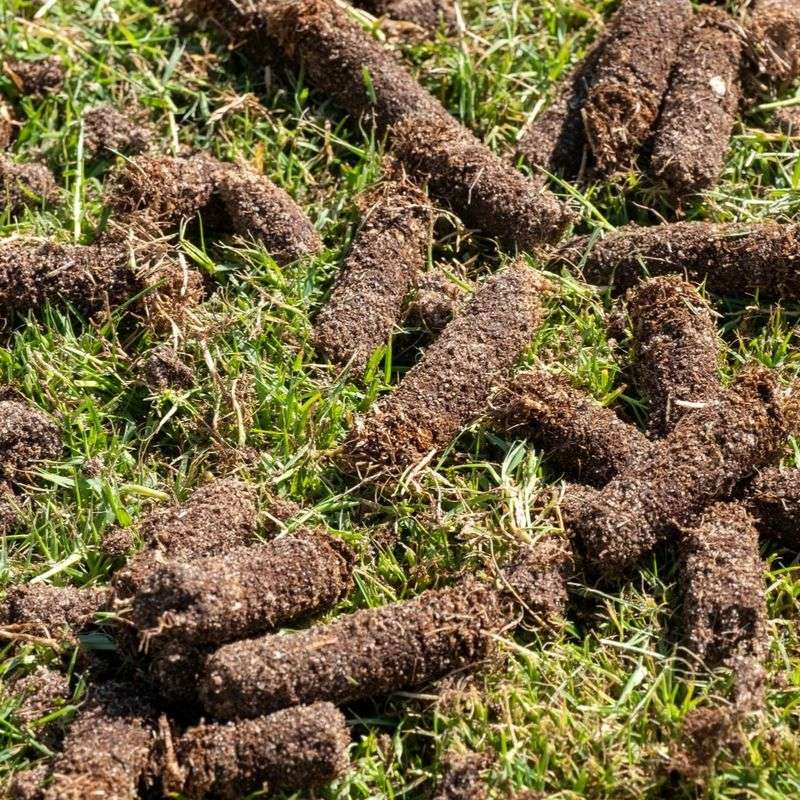
Core aeration is the reliable answer. Rent a machine or hire it out in early fall for cool-season grass, or late spring for warm-season types.
Leave the soil plugs on the surface to break down naturally. They return organic matter and helpful microbes right where they are needed.
Topdressing with a quarter inch of compost after aerating pays off too. Earthworms carry that material down and gradually loosen the layers below.
Rerouting traffic helps as well. A stepping stone path or a simple gravel strip keeps feet off the turf and gives grass room to recover.
3. Grass Naps Through Summer While Weeds Punch The Clock
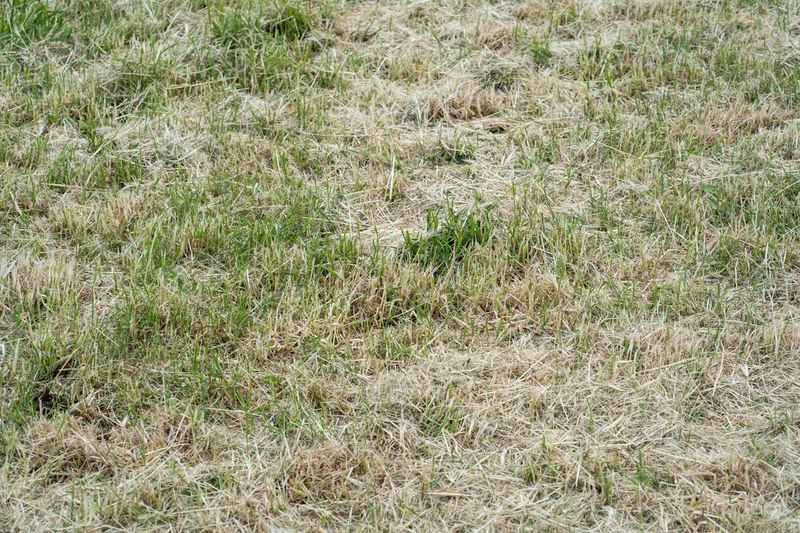
Here is the plot twist most homeowners miss. That brown lawn may be perfectly healthy and simply taking a nap.
Cool-season grasses like fescue, bluegrass, and ryegrass evolved for spring and fall. When air temperatures settle into the high eighties and the soil warms with them, growth slows and the plants go dormant to conserve energy.
Meanwhile crabgrass, spurge, and purslane are warm-season plants. Blazing heat is exactly their favorite weather, so they surge while your turf snoozes.
The color difference gets dramatic in August. Your lawn looks like straw and the weeds look like they were watered on a schedule.
You can tell dormancy from real trouble with a tug test. Grab a handful of brown blades and pull, and if the crowns hold firm in the soil, the plant is resting, not gone.
Dormant turf usually greens back up within a couple of weeks of cooler weather and steady rain. Cool-season turf usually tolerates about four to six weeks of drought dormancy, and a quarter inch of water every two to three weeks keeps the crowns viable through a longer dry spell.
If you want green through summer, commit to about an inch of water weekly and stay consistent. Bouncing between dormant and awake stresses the plant more than either state alone.
Otherwise, let it rest and focus your energy on fall. September and October are the golden months for seeding, feeding, and rebuilding density.
Warm-season lawns flip the script and go tan in winter instead. Same principle, different calendar.
4. Mowing Too Short Hands Weeds An Open Invitation
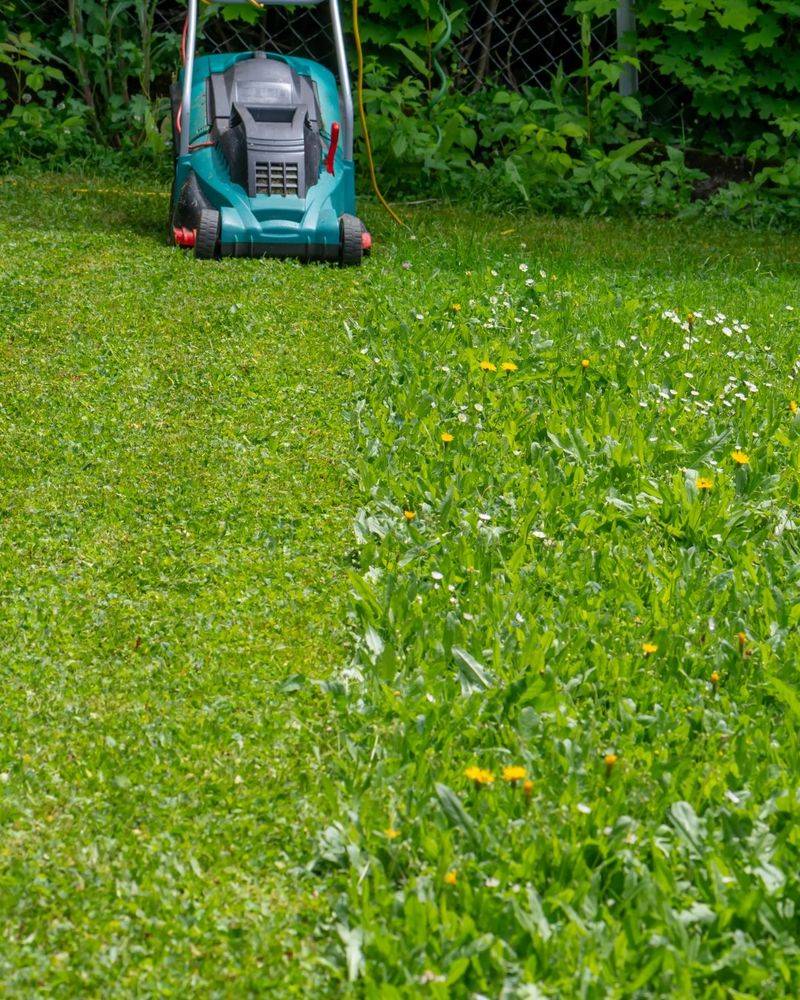
Scalping the lawn feels productive. It looks tidy for about four days, and then reality arrives.
Short blades mean less leaf surface for photosynthesis, so the plant makes less food and grows weaker roots. Cutting off more than a third of the blade height at once shocks the whole system.
Sunlight then hits bare soil directly. Crabgrass and other weed seeds sitting in that top layer need warmth and light to sprout, and you just gave them both.
Cool-season blades at three to four inches shade the soil, keep it cooler, and block the light signal weed seeds are waiting for. Bermuda and zoysia are managed differently and stay closer to one or two inches.
Set your mower deck higher and check it with a ruler rather than trusting the numbers on the lever. Many decks sit lower than the setting suggests.
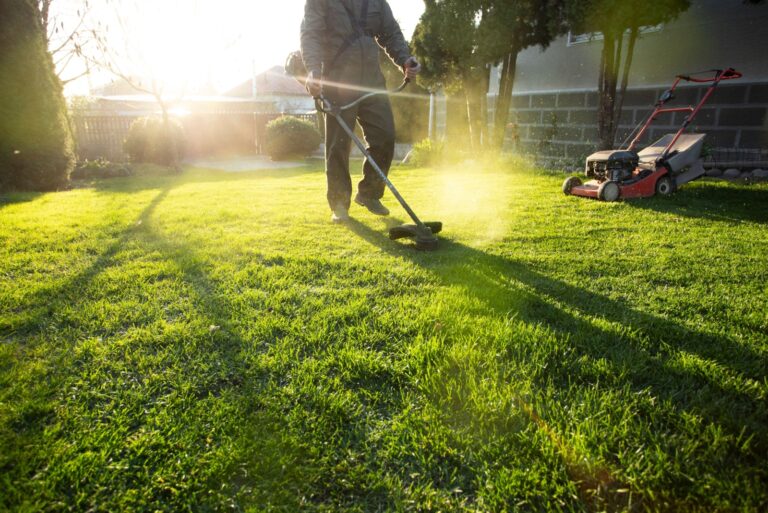
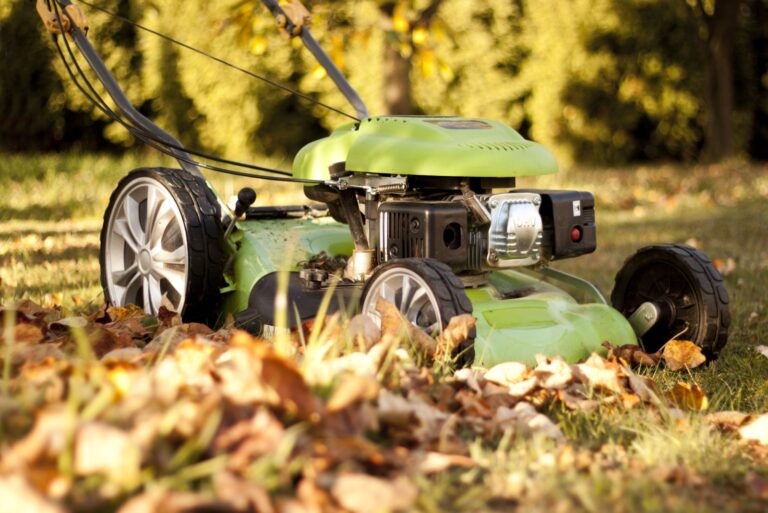
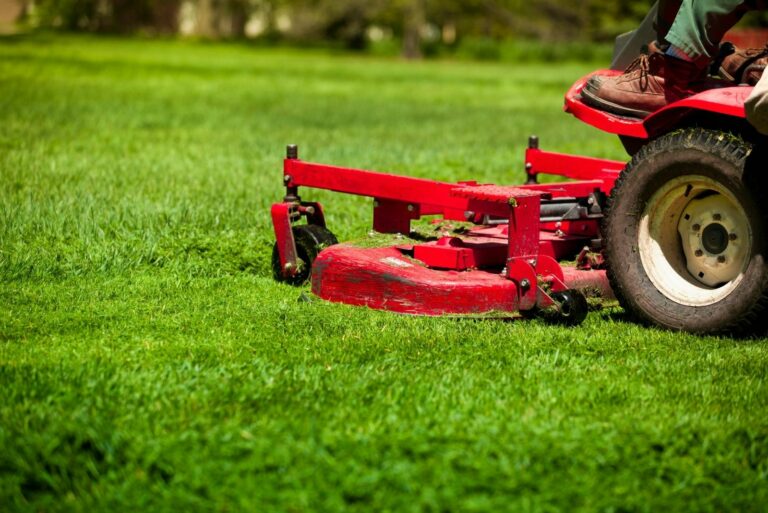
Sharp blades matter too. A dull mower tears and shreds the tips, leaving frayed white ends that brown out quickly once heat arrives.
Sharpen at least once each season, more if you mow frequently or hit the occasional pinecone. The difference in cut quality is visible within a day.
Mow when grass is dry, and change direction each time so blades do not learn to lean. Varying the pattern also reduces wheel ruts.
Leave the clippings on the lawn. They break down quickly and return a meaningful share of the nitrogen your turf needs each year.
5. Poor Soil Chemistry Slows Turf While Weeds Shrug It Off
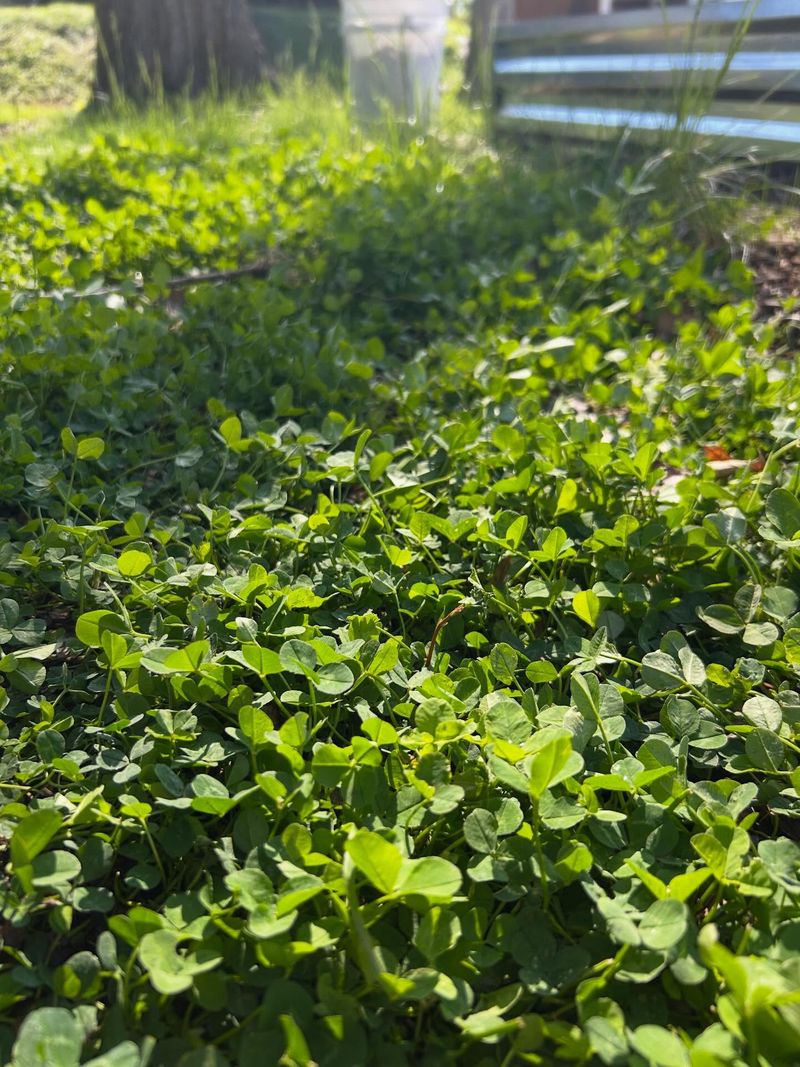
Turf grass is a bit of a diva about nutrition. It wants steady nitrogen, decent phosphorus, and a soil pH somewhere between 6.0 and 7.0.
Weeds are far less picky. Clover partners with soil bacteria that pull nitrogen from the air, which is why it stays green in lawns running on empty.
Sorrel points toward acidic soil, while moss usually says more about shade, moisture, and compaction than about pH. Chicory and bindweed often show up where the ground is alkaline or heavily compacted.
Species patterns hint at what is out of balance, though they work as clues rather than proof. Each one is worth noting as you plan a fix.
Start with a soil test from your county extension office. For a modest fee you get real numbers instead of guesses, often within a couple of weeks, though turnaround varies by office and season.
Then feed on a schedule that matches your grass type. Cool-season lawns benefit most from feeding in early fall and again in late spring.
Slow-release nitrogen beats a quick jolt. Fast fertilizer produces a burst of soft growth that browns out quickly once heat arrives.
Lime raises pH and elemental sulfur lowers it, but both work gradually over months. Apply based on the test recommendation rather than tossing lime around out of habit.
Organic matter smooths everything out. A yearly compost topdressing improves nutrient holding, water retention, and microbial life all at once.
Well-fed turf grows thick, and thick turf crowds out seedlings before they establish.
6. Thatch Buildup Blocks Water From Reaching Grass Roots
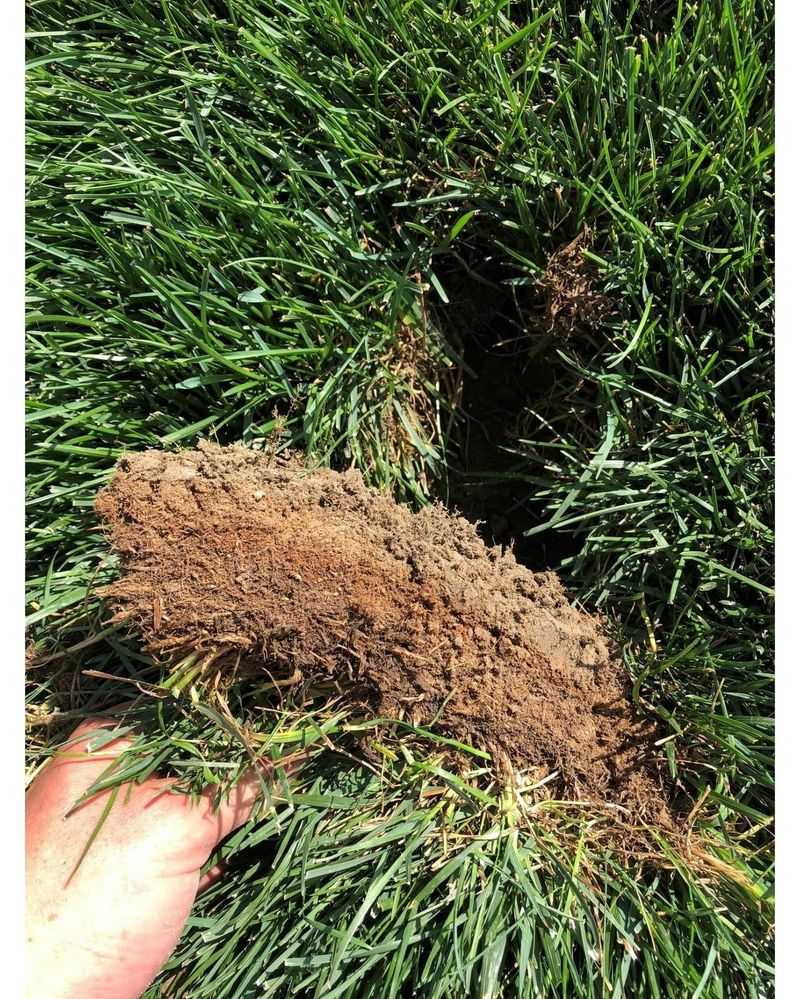
Squish across your lawn and notice if it feels springy, almost like walking on a mattress. That bounce is often thatch.
Thatch is a mat of stems, roots, and runners that builds up between the green blades and the soil surface. A thin layer under half an inch is harmless and even helpful.
Past that, trouble starts. A thick mat repels water, so sprinkler output runs off sideways instead of soaking down to the roots.
Grass then makes a poor trade. It starts rooting into the thatch itself, which dries out fast and offers almost no nutrition.
Weeds that spread by runners, like creeping charlie above ground and nutsedge below it, move through the mat without trouble. They stay green while the turf above the thatch crisps up.
Check the depth by slicing out a wedge with a spade. Measure the spongy brown layer between soil and green growth.
Over three-quarters of an inch calls for action. A dethatching rake handles small yards, while a power rake or vertical mower suits larger ones.
Time it during active growth so the lawn recovers quickly. Early fall works for cool-season grass, late spring for warm-season varieties.
Preventing return matters more than the one-time cleanup. Heavy nitrogen feeding, overwatering, and low microbial activity all speed thatch accumulation.
Compost topdressing introduces the organisms that digest thatch naturally. Aeration keeps the process moving along.
7. Lawn Grubs Chew Roots While Weeds Stay Untouched
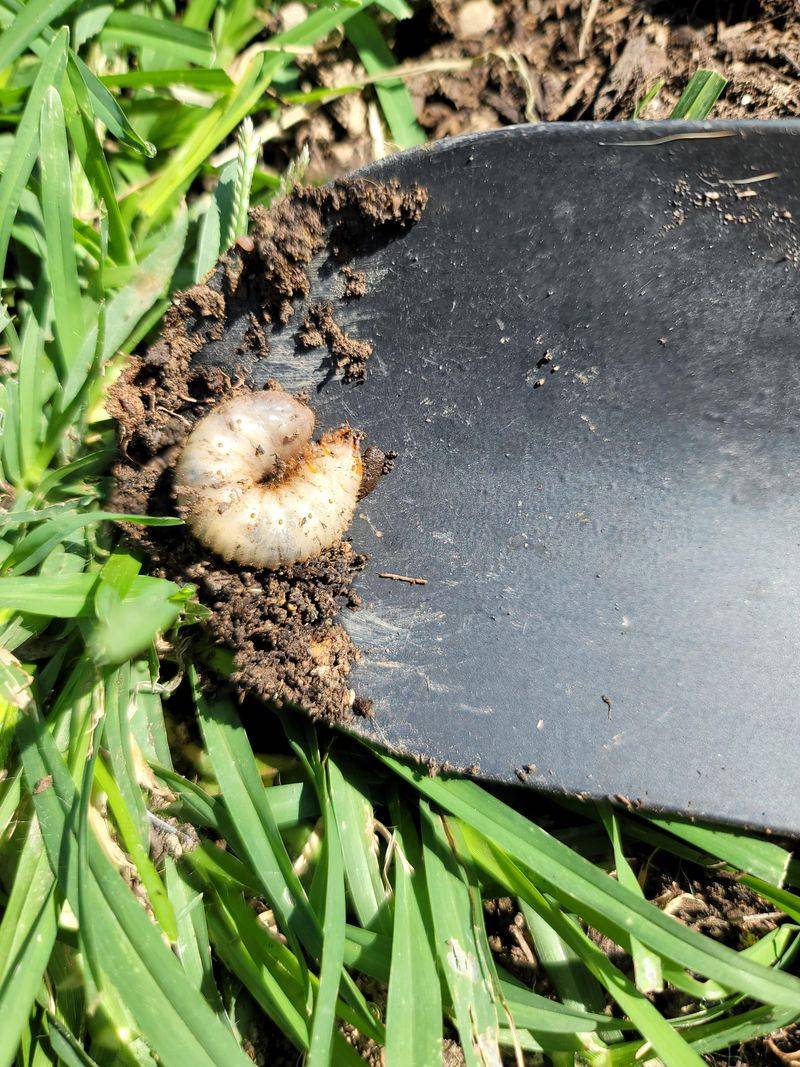
Irregular brown patches that peel back like carpet are a classic clue. If the turf lifts with no resistance, look underneath.
White C-shaped larvae, roughly the size of a nickel when curled, are beetle grubs. They feed on grass roots through late summer and early fall.
Broadleaf weeds are largely ignored by these larvae. Their thick taproots and different tissue make less appealing food than tender fibrous grass roots.
So the lawn thins and browns while dandelions and plantain sit there untouched. The comparison is not close.
Extra clues include skunks, raccoons, or crows digging small holes overnight. Those animals are after the protein snack below.
Dig a one-foot square of sod four inches deep and count what you find. More than six to ten larvae per square foot generally justifies treatment.
Timing matters more than product strength. Preventive products applied in early summer target newly hatched larvae, when they are small and near the surface.
Beneficial nematodes offer a lower-impact route. Apply them in the evening to moist soil and water in well, since sunlight harms them.
Milky spore targets Japanese beetle larvae specifically and builds up in soil over several seasons. Results come slowly, and research on how well it performs in cooler soils is mixed.
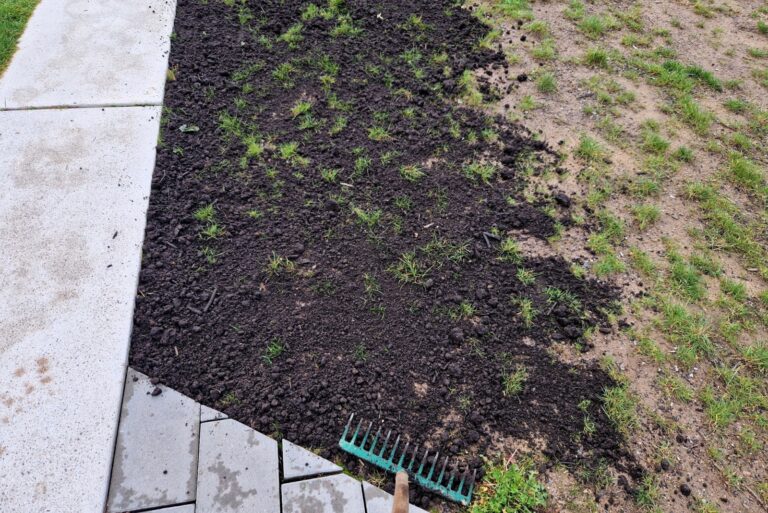
Repair damaged spots by raking out the loose debris and overseeding. Thick recovery growth is the best long-term defense.
8. Sprinkler Blind Spots Create Random Brown Streaks
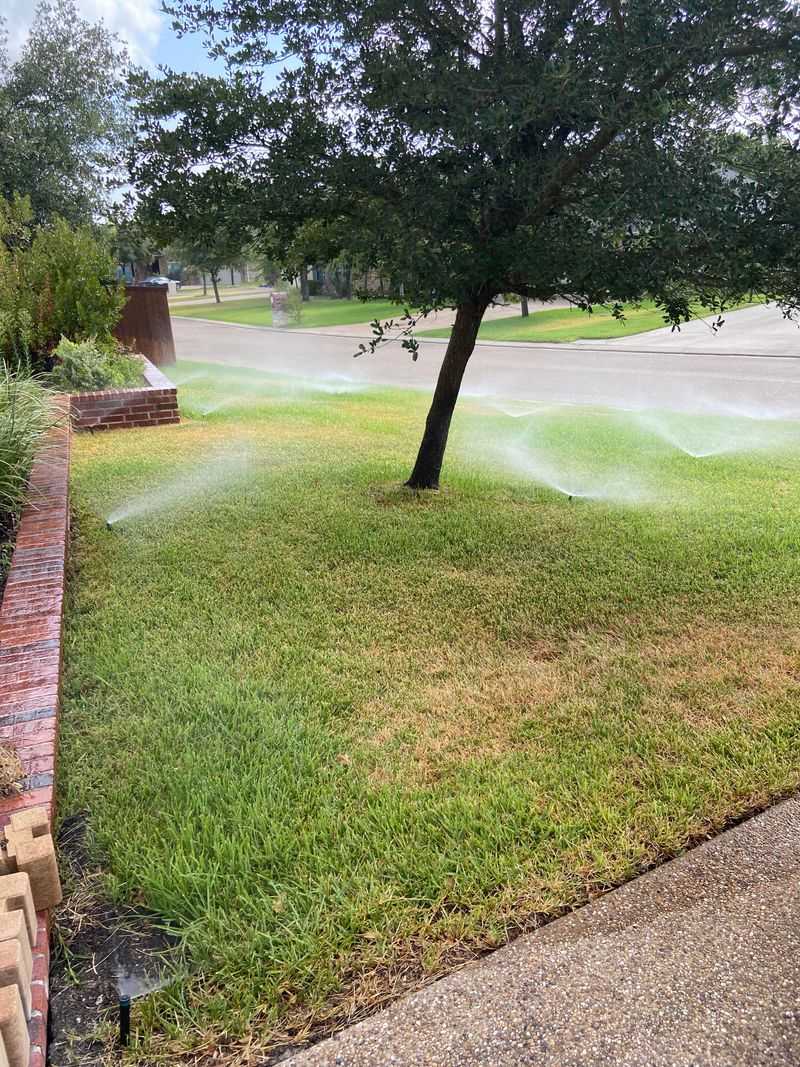
Ever notice how the brown areas form odd stripes, wedges, or crescents? Nature rarely draws shapes that geometric.
Uneven sprinkler coverage is usually the culprit. Heads get bumped by mowers, clogged with grit, or blocked by a shrub that grew six inches taller.
Weeds with deeper or wider root systems bridge the dry gaps easily. Grass in those same spots gets a fraction of the water and shows it fast.
Run a catch-can test to see the truth. Set out six to eight identical containers, tuna cans work great, and run the system for fifteen minutes.
Measure the water in each can. Big differences between containers mean your coverage is uneven, and the drier zones are your brown zones.
Adjust spray arcs so patterns overlap head to head. Sprinkler systems are designed for that overlap, not for neat side-by-side circles.
Check pressure too. Misting fog at the nozzle signals pressure that is too high, while weak dribbling means it is too low or a line is leaking.
Slopes and south-facing strips need extra attention. Water runs downhill and evaporates faster on hot exposed edges near driveways and walls.
Water early, between 4 and 9 in the morning. Less evaporation, less wind drift, and blades dry before evening, which discourages fungus. Small adjustments here often solve what looked like a mysterious disease.
9. Fungal Disease Targets Grass Species Weeds Ignore
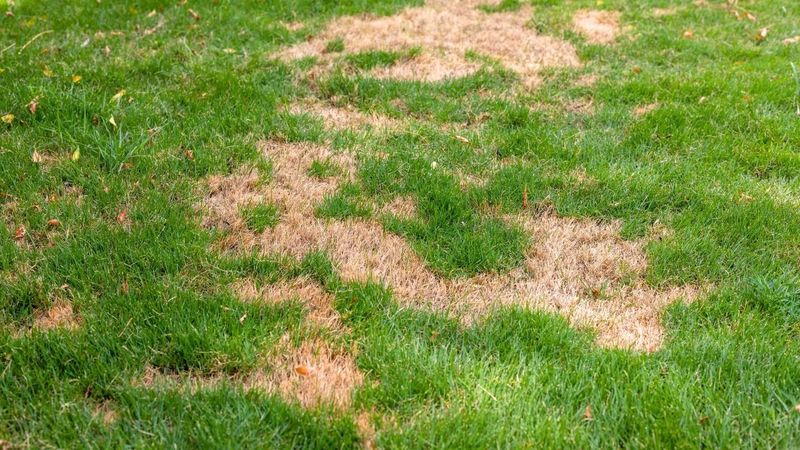
Fungal pathogens are surprisingly picky eaters. Brown patch, dollar spot, and red thread specialize in turf grasses and mostly leave broadleaf plants alone.
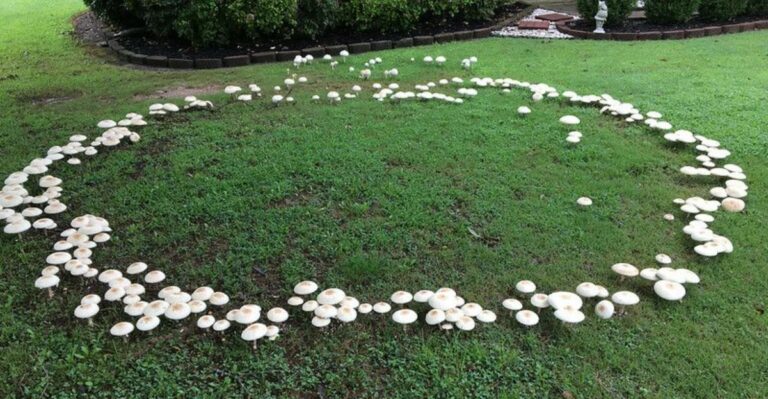
That selectivity explains a lot. Circular tan rings spread through your fescue while the clover inside those rings stays untouched and vivid.
Warm nights near 68 degrees and above, combined with humidity and long leaf wetness, create ideal conditions. Evening watering is a common trigger.
Look closely for identifying signs. Dollar spot leaves small silver-dollar sized bleached spots with hourglass lesions on individual blades.
Red thread produces pinkish threadlike strands at the blade tips, most visible on damp mornings. Brown patch can show a smoky gray edge as it expands, most visible on closely mown turf early in the morning.
Cultural fixes handle most cases. Shift watering to early morning, improve air movement by thinning nearby shrubs, and avoid heavy nitrogen during humid stretches.
Mow with clean sharp blades and rinse the deck after cutting an affected area. Spores hitch rides on equipment more often than people realize.
Do not bag clippings from healthy sections, but do remove them from actively diseased patches. It reduces the spore load.
Fungicides exist and work, though they are usually a last resort for prized lawns. Rotate active ingredients if you use them repeatedly.
Most turf recovers on its own once weather shifts. Overseeding with disease-resistant cultivars in fall makes future outbreaks far less dramatic.